Tag: Salafi

  • Senior Wahabi Cleric: ‘ISIS Is A True Product Of Salafism’

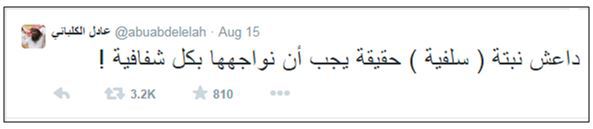
    Shaykh Kalbani Tweet that rocked the Salafis
    Shaykh Kalbani – Tweet that rocked the Salafis

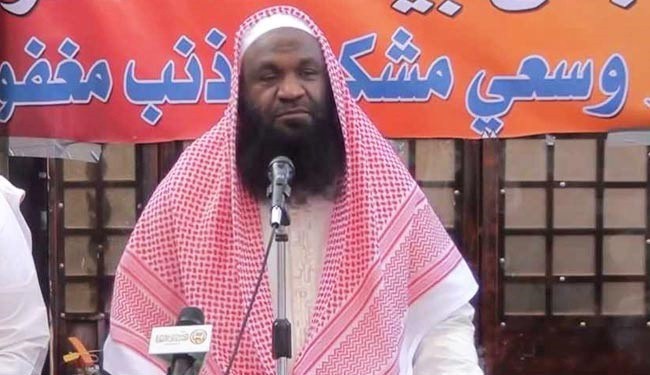
    Sheikh ‘Aadel Al-Kalbani, former imam of the Grand Mosque in Mecca has announced that ISIS is the result of the Salafi version of Islam, and therefore there needs to be changes within the Salafi sect itself.

    “ISIS is a true product of Salafism, and we must deal with it with full transparency.” This statement was made not by liberal Muslim elements, who regularly criticize Salafism, but by Sheikh ‘Aadel Al-Kalbani, former imam of the Grand Mosque in Mecca and a Salafi himself, hence its importance. Al-Kalbani is not the first Salafi to come out against ISIS but Al-Kalbani has gone farther in his criticism: he has come out against the principles of the Salafi perception from which ISIS and its ilk draw, and has called for a rationalistic approach to Islam’s distant past and what it means for Islam today instead of a blind reenactment of it.

    Abu Abdella al-Kalbani
    Adel Abu Abdella al-Kalbani

    In two articles in the daily Al-Riyadh, Al-Kalbani criticized elements in the Salafi stream for appropriating the truth and Islam and for permitting the killing of their opponents, and likewise criticized clerics and society that dared not come out against them. He stated that the call to blindly reenact the path of the Prophet Muhammad and of the forefathers of Islam stems from a faulty grasp of the essence of this path, and that Muhammad himself had rejected blind adoption of the perceptions of the past and blind following of the path of his predecessors, choosing instead a rationalistic approach appropriate for a changing reality. Al-Kalbani stated that clerics must take their heads out of the sand and move with the spirit of the times instead of rejecting and condemning any new idea.

    This is not the first time that Al-Kalbani has challenged the mainstream clerics. He has harshly attacked suicide bombings,  published a fatwa permitting poetry and called for allowing women to drive cars.

    The following are translated excerpts from his two recent articles in Al-Riyadh: 

    “ISIS Is A True Product Of Salafism And We Must Deal With It With Full Transparency”

    On August 15, 2014, Sheikh Al-Kalbani tweeted (@abuabdelelah): “ISIS is a true product of Salafism and we must deal with it with full transparency.”  DIRECT LINK TO TWEET HERE.

    This statement sparked reactions across the social networks, and 10 days later, on August 24, Al-Kalbani wrote in an Al-Riyadh article titled “Is Terrorism A Salafi Product?”: “Every time we see the fitna network sweeping up young people from among our sons… [and pitching them into] to a very deep abyss from which they will emerge only by means of idioms that drip blood, our conscience torments us and we wonder: From whence has this come upon us? How have they fallen into this?  As if we could not do a thing before then.

    “But the opposite is true: The main reason for their deviation is our neglect – and by ‘our’ neglect I mean the [neglect of the] generation of the parents, and of the honorable members of society among the clerics, teachers, preachers, jurisprudents, and sociologists who are linked directly to that society. The words, the books, the sermons, the dramas, and all the artistic creativity and the essential link [to the audience] that these people present in all the media, whether print, radio, or television, [allow them] to monitor the ideas of the young people and to participate in balancing them. I exclude [of course] that tiniest of minorities whose throat is parched from warning about the extremism of theSalafis.

    “Yes, this is the plant that has sprouted in the garbage dump of those who excessively pass judgment on others and pretend to represent Salafism. How gravely they have accused others of apostasy, of deviating from the right path, of heresy, and of licentiousness – as if the arena lies open before them and there is nobody to condemn them and no judge to punish them. Furthermore, they are received with feigned respect and admiration, and opportunities have been opened to them to plant in the minds of our young people that this one has gone astray and that one is an infidel and the other one is lax in religion. Even the greatest of clerics, past and present, are not spared their arrows. They spread the principles of Islam in a twisted manner that makes them incomprehensible or distorted, and preserve things that negate Islam. They measure the judge, the educated, and the student, and even the simple folk by what they [i.e. these extremists] have learned by heart [but] do not understand, and think that they are entitled to rule that the above mentioned are apostates and to call down upon them the punishments of Allah that are no longer implemented and [by so doing, they think that they will] restore the glory and splendor of monotheism.

    “This group thinks that no one but itself and its supporters are the source of good and the defenders of monotheism – because [its members] imbibed with their mothers’ milk [the view] that all Muslims worldwide do not understand [monotheism] and that they are not worshipping only Allah but are polytheists who worship graves… and that there are no just clerics besides their own clerics and their disciples. [They think that] only a cleric whom they love, whom they heed and obey, and on whose say they reject or validate [others] – only he holds the truth and acts in accordance with the ways of[Islam’s] just forefathers… They spread out and multiply, and publicly call for following in the footsteps of some sheikh and for accepting his words in full. They have begun to classify people, preachers, and clerics – [for example,] this sheikh shouldn’t be listened to because he is more loathsome than the Jews and the Christians, and that fatwa deviates [from the right path], so it is forbidden to pray behind anyone who adopts it, or to sit with him, eat with him or respect him. They have begun… to separate the young people from the clerics who understand the result of [this activity by them] and what difficulties they are going to cause the nation.

    “Actually, there is no connection between the path of these extremists and the [true] path of the Salafis – which is tolerance, compassion, and gentleness, and in which there is no place for extremism and [religious] fanaticism. [Salafism] is a path that spreads love, brotherhood, and acceptance of the other among Muslims and coexistence with non-Muslims. But the thing is to understand it and to implement it – and not [just to] pretend [to do so] – in a way that is compatible with the deep roots of the past and with the demands of the present.

    “[However,] what is needed is a perception for reforming ideas, not admonitions, reproof, reactions and word-sparing that deal with the symptom and ignore the disease! There is still enough time to rehabilitate [these ideas], ideologically and practically, and to prevent society from splitting into sects and groups that throng after dignitaries who are enveloped in an aura of immunity [to sin and error] and sanctity, with each group thinking that it has the right to guide the nation and recruit its young people.

    “A plant is always like its roots. If we want a good, fruitful plant, it is incumbent upon everyone to care for its roots, its water sources, the spread of its branches, and the fertility of the earth [from which it grows], and to protect it from ideas and viruses that turn its fruit and seeds to poison from which the generations sip and on which the young people grow up; from [these seeds] sprouts a plant that has in it no place for compassion and to whom love and friendship are totally alien.”

    The Chains of the Past

    On August 31, 2014, Al-Kalbani published another article, “The Chains of the Past,” in which he criticized the Salafism that advocates uncritical reliance on Islam’s past, and called for a rationalistic critical approach. He wrote: “We never stop elevating the past at any cost, so much so that it has taken over our lives and thwarted our management of our present, and I do not know what it will do to our future. We claim that the past is the perception, the deeds, and the outlook of the forefathers [of Islam], to the point where if a catastrophe happens to one of us, he hastens to seek a solution for his catastrophe in a book written hundreds of years ago! And then we shout loudly, ‘Islam is compatible with every time and every place[!]’

    “What is very strange is that we remain trapped in the dungeons of the very distant past, chewing over the words of Malik [bin Anas], may the peace of Allah be upon him, ‘The last of this ummah will not be successful unless they follow the same [pattern] that was successful in the hands of its first ones,’ and think that what it means is that we must remain in the first century of the era of the mission [of the Prophet Muhammad], in the same style of life, and in the same patterns and knowledge that he had.

    “From these words [of Malik bin Anas] I do not understand that our past [must] control our present and constrain our future; rather, I understand that [the past] is what caused the Prophet’s honorable Companions to change their perception, and brought about their wonderful transition from the caves of darkness and straying into the light of truth… What improved the situation of the first generation [of Islam] was not preserving the heritage of the forefathers and the ideas of the previous generations, but the complete opposite. The first generation [of Islam] abandoned the [pattern] of blind imitation, and with the descent [of Koran 96:1] ‘Recite in the name of your Lord,’ the use of the mind began, after it was neglected for many centuries; the wagon of change began to move and to shift the bitter reality full of oppression, backwardness, and idolatry with lofty and clear rational truths. They [the members of the first generation] opened their eyes to what had [always] been in front of them, but which the fog of imitating what their forefathers did had prevented them from seeing… until the honored Koran arrived and removed this fog and enabled them to see what they had been blind to, and to distinguish what they had not noticed [before].

    “In the same spirit, I want the past to free us from the yoke of the backwards present – not drag us towards it. I want our past to make us see reality as it is, and for us to rely on it in the areas of development and culture, and for us to emerge from it with momentum towards the horizons of the future and with an enlightened perception. This [should be done] under the direction of the two revelations [the Koran and the Sunna] – and not by means of the opinions of people who have invested most of their efforts in studying that era [of early Islam].

    “We should rely on the past as a foundation from which we head out to the future and to the building of the present; this is better than turning the past into [something] that binds our hands and arouses among us rivalry, conflict, and opinions for which we fight and as a result of which we weaken and splinter. Had we done this [from the outset], we would be sitting on the throne of the pinnacle of culture.

    “We must acknowledge that our past contains things that are not compatible with our present. The religious collapse of the West happened only after it became fully aware of the depth of the yawning chasm between the scientific knowledge that serves the culture that the human mind has attained and the religious beliefs and laws set out by the church, which included beliefs that had been distorted or misunderstood, or were not appropriate for every time.

    “From among those who call for absolute adherence to the past there has emerged a young generation that  defends and fights for opinions and ways that are devoid of the [the correct] Islamic concepts and religious views that can guide the ummah in the right direction. This gang, that has granted itself the right to banish minds, has not grasped the situation of the ummah, and has not managed to adapt to [today’s reality]; therefore its path is to subdue the other or to accuse him of apostasy and of deviating from the right path. [These people] can be found in all walks of life, preventing men of insight from advancing and catching up to the present, and anyone who criticizes them and points out their mistakes is accused of being Khawarij[1] – an accusation tailored for such [critics]. Anyone who talks about women’s rights is deviating from the right path and is loathsome and is lax in religion. Anyone who expresses a wise opinion that has been covered up and ignored because it contradicts their Salafism, is going against the vast majority of the people… and so on…

    “What is strange is that these radical extremists who accuse their opponents of heresy and of apostasy acknowledge neither the stagnation of their own perception and ideas nor the worthlessness of their religious law, and thus do not recognize that they have left seeds that are today inflicting suffering and torment on the ummah.”

    Notes:

    [1] Term referring to a rebel cult in early Islam that split off from the army of Ali ibn Abi Talib at the Battle of Siffin in 657.

  • Asking “Ya Shaykh Madad!” – Istighatha/Isti`ana

    Asking “Ya Shaykh Madad!” – Istighatha/Isti`ana

    Al-Madad = “Help!”

    This Madad was asked by Musa (AS) from his countryman with the word istaghaatha “he asked for help” (28:15) and by Dhul-Qarnayan using the term “help me” in Surat al-Kahf (a`eenuni) (18:95) which is the same root as “we turn for help” (nasta`een) in the Fatiha.

    Following are proofs from the Sunna for calling out to an invisible helper in a situation of need:

    1. Al-Bukhari narrates in his Sahih that our mother Hajar, when she was running in search of water between Safa and Marwa, heard a voice and called out: “O you whose voice you have made me hear! If there is aghawth (help/helper) with you (then help me)!” and an angel appeared at the spot of the spring of Zamzam.

    2. Abu Ya`la, Ibn al-Sunni, and al-Tabarani in al-Mu`jam al-Kabir narrated that the Prophet (saws) said: “If one of you loses something or seeks help or a helper (ghawth), and he is in a land where there is no one to befriend, let him say: “O servants of Allah, help me! (ya `ibad Allah, aghithuni), for verily Allah has servants whom one does not see.”  Al-Haythami said in Majma` al-Zawa’id (10:132): “The men in its chain of transmission have been declared reliable despite weakness in one of them.”

    Another wording:

    3. Al-Bayhaqi narrates on the authority of Ibn `Abbas in “Kitab al-Aadaab” (p. 436) and with a second chain mawquf from Ibn `Abbas in “Shu`ab al-Iman” (1:445-446=1:183 #167; 6:128 #7697) and a third from Ibn Mas`ud in “Hayat al-Anbiya’ ba`da Wafatihim” p. 44: “Allah has angels on the earth – other than the [two] record-keepers – who keep a record [even] of the leaves that fall on the ground. Therefore, if one of you is crippled in a deserted land where no-one is in sight, let him cry out: a’ĂŽnĂť ‘ibâd Allâh rahimakum Allâh, ‘Help, O servants of Allah, may Allah have mercy on you!’  Verily he shall be helped, if God wills.”  Ibn Hajar said its chain is fair (isnaduhu hasan) in “al-amali“.

    Narrated by al-Tabarani in al-Kabir with a fair chain (according to Ibn Hajar in al-Amali) of sound narrators according to al-Haythami (10:132), al-Bazzar (#3128) – as cited by al-Shawkani in Tuhfa al-Dhakirin (p. 219=p. 155-156) -, and Ibn Abi Shayba (7:103).

    4. Ibn Abi Shayba relates in his “Musannaf” (7:103) from Aban ibn Salih that the Prophet (saws) said: “If one of you loses his animal or his camel in a deserted land where there is no-one in sight, let him say: “O servants of Allah, help me! (yâ ‘ibâd Allâh a’ĂŽnĂťnĂŽ), for verily he will be helped.”

    Al-Zahawi said in al-Fajr al-Sadiq, a book he wrote in refutation of Wahhabism:

    <<It is not said that all that is meant by the “servants of Allah” in the hadiths cited above are only angels, or Muslims among the jinn, or men of the realm of the invisible: for all of these are living. Hence, the hadith would not give evidence for asking aid from the dead, but this is not the case.  We mention this because there is nothing explicit in the hadith whereby what is meant by “servants of  Allah” are the categories we mentioned above and nothing else. Yet even if we were to concede this, the hadith would still be a proof against the Wahhabis from another standpoint, and that is the calling on someone invisible. The Wahhabis no more allow it than the calling on the dead.>>

    Al-Shawkani also allows the calling on someone invisible:

    In the hadith (of a`inu) there is evidence that it is permissible to ask help from those one does not see among the servants of God, whether angels or good jinn, and there is nothing wrong in doing it, just as it is permissible for someone to seek the help of human beings if his mount becomes unmanageable or runs loose. Tuhfat al-Dhakirin p. 155-156.

    5. Ahmad relates in his Musnad (4:217) that at the time of the greatest fitna of the Dajjal, when the Muslims will be at their weakest point, and just before `Isa ibn Maryam descends at the time of salat al-fajr, people will hear a caller calling out three times: “O people, al-ghawth (the helper) has come to you!”

    6. Ibn Kathir in his history, al-Bidaya wal- Nihaya [7:91, Year 18] narrates that `Umar (ra) sought help and relief from drought and famine in Madina by writing to `Amr ibn al-As and Abu Musa al-Ash`ari in Egypt and Basra respectively, each with the words, “Yaa ghawthaah li Ummati Muhammad! = Help! Help! for the Community of Muhammad!” If this is not istighaatha and isti`aana then there is no istighaatha and isti`aana.

    Al-Zahawi said in al-Fajr al-Sadiq:

    <<Al-Subki, al-Qastallani in al-Mawahib al-laduniyya, al-Samhudi in Tarikh al-Madina, and al-Haythami in al-Jawhar al-munazzam said that seeking help with the Prophet and other prophets and pious persons, is only a means of imploring Allah for the sake of their dignity and honor (bi jahihim). The one doing the asking seeks from the One asked that He assign him aid (ghawth) on behalf of the one higher than him. For the one being asked in reality is Allah. The Prophet is but the intermediary means (wasita) between the one asking for help and the One asked in reality. Hence, the help is strictly from Him in its creation (khalqan) and being (ijadan), while the help from the Prophet is strictly in respect to secondary causation (tasabbuban) and acquisition from Allah (kasban)…..

    <<As for the invocations of common Muslim people in Arabic like: “O `Abd al-Qadir Gilani look at me (Ya `Abd al-Qadir adrikni)!” and “O Ahmad al-Badawi give us support (Ya Badawi madad)!” they belong to the figurative language of the mind just as the application of someone who would say to his food: “Satisfy me!” or to his water: “Quench my thirst!” or to his medicine: “Heal me!”  The food does not satisfy, nor does the water quench the thirst, nor the medicine heal.  But the One who is the real Satisfier of our hunger, the Quencher of our thirst and the Healer of our ills is Allah alone.  The food, the water, the medicine are only the proximate or secondary causes which custom has established on the surface of things by our mind’s regular association of them with certain concomitant events.>>

    Shaykh Khayr al-Din Ramli in his Fatawa Khayriyya (p. 180-181) was asked about “those who say: O Shaykh `Abd al-Qadir! O Shaykh Ahmad! O Rifa`i! [Give us] something for the sake of Allah (shay’un lillah) O `Abd al-Qadir! and such, at which time they become greatly entranced and experience states that make them jump up and down etc. He answered – Allah have mercy on him: ‘Know first of all that among the famous rules that are firmly put to use in the books of the Imams is the rule that matters are judged according to their ends… as taken from the hadith of the Two Shaykhs al-Bukhari and Muslim: Actions are only according to intentions…. and none denies the reality of the Sufis except every ignorant, foolish soul.’”

    And Allah knows best.

    See also the relevant pages at https://sunnah.org/publication/encyclopedia/html/tawassul.htm

    An Incident of Istighatha During the Lifetime of the Prophet (s)

    It is related that:

    One night, the Prophet of Allah – may Allah bless him and grant him peace – was in his house and was heard to proclaim ‘I am here!’ (labayk!) three times and ‘You have been granted help’ also three times (nusirta!). Umm al- Mu’minin, Maymunah – may Allah be well pleased with her – asked the Prophet – may Allah bless him and grant him peace – whom he had been talking to since there was no one present. He – may Allah bless him and grant him peace – replied, ‘I was talking to a person called Rajiz from the tribe of Bani Ka`ab. He asked for help from me against the Quraysh.’ Umm al- Mu’minin, Maymunah – may Allah be well pleased with her – said that when she finished Fajr prayer the next morning, she heard Rajiz calling out in the streets of Madina: “Ya Rasul Allah! Help us and call the servants of Allah to help us.”[1]

    Additional Relevant Narrations

    By Raffiq Ahmed

    1. Al-Bukhari’s narration of the Prophet – Allah bless and greet him – from `Abdullâh Ibn `Umar – Allah be well-pleased with him -:

    “Truly the sun shall draw so near on the Day of Resurrection that  sweat shall reach to the mid-ear, whereupon (ISTIGHÂTHÛ bi âdam  thumma bi mĂťsâ thumma bi muHammadin Sallallâhu `alayhi wa sallama) they shall ASK HELP from Adam – upon him peace -, then from Musa –  upon him peace – , then from Muhammad – Allah bless and greet him –  who will intercede (fa yashfa`u)… and that day Allah shall  raise him to an Exalted Station, so that all those who are  standing [including the unbelievers] shall glorify him (yahmaduhu  ahlul-jam`i kulluhum).” [SahĂŽh al-BukhârĂŽ (QadĂŽm Kutub Khâna, Karachi, 1381H), 1:199 (Cf.  Prof. Tahir-ul-Qadri, `Aqida-e-tawassul, p. )]

    Obviously, they are not going to be forgetting Allah on that day.  The people seeking help by these Prophets is the same as using  them as a means (wasĂŽla) to Allah and the Hadith continues that  the intercession of the Prophet Muhammad Sallallâhu `alayhi wa  sallam will be accepted. Will those who are against that in this life, be in favour of it in the next? It is for this reason, that  Ala Hazrat (ra) states: “âj madad mâng un se, âj panâ le un se, qal na mânenge qayâmat” “Take his madad today, take his pana, it might not be accepted in qayamat.”

    2. The following quote is from Shaikh `Ali Mahfuz who died in 1361  (1942 A.D.) and was one of the great `ulama’ of Jami` al-Azhar  (Egypt), who praises Ibn Taymiyya and Muhammad `Abduh very much in  his book Al-ibda’. Nevertheless, he says in there: “It is not right to say that the great awliya‘ (rahimahum-Allahu  ta`ala) dispose worldly affairs after death, such as curing the  ill, rescuing those who are about to be drowned, helping those who  are against the enemy and having lost things found. It is wrong to  say that, because the awliya are very great, Allahu ta`ala has  left these tasks to them or they do what they wish or that one who  clings to them will not go wrong. But whether they are alive or  dead, Allahu ta`ala blesses, among His awliya‘, the ones whom He  wills, and, through their karamat, He cures the ill, rescues those  who are about to be drowned, helps those who are fighting an enemy  and recovers lost things. This is logical. Also Qur’an al-karim  reveals these facts.” [Shaikh `Ali Mahfuz, Al-ibda’, p. 213, Cairo, 1375 (1956 A.D.);  `Abdullah ad-Dasuqi and Yusuf ad-Dajwi, professors at Jami` al- Azhar, wrote eulogies praising the book at the end of Al-ibda’.  (Cf. The Sunni Path)]

    3. Lastly, the Hadith ash-Sharif written in Sahihayn, the two genuine Hadith books, one by al-Bukhari and the other by Muslim  states that the Holy Prophet (Sallallaahu `alayhi wa sallam)  visited the graves of the martyrs of Uhud exactly ONE YEAR after  they died. A minbar was BUILT in the graveyard for him to deliver  a sermon. `Uqba ibn Amir (radi-Allahu `anh), the relater of the Hadith ash-Sharif, said, ‘Rasulullah (sall-Allahu Ta`ala `alaihi wa sallam),  ascended the minbar. It was the last time I saw him on the minbar.  He declared: “I do not fear whether you will become polytheists  after I die. I fear that you, because of worldly interests, will  kill one another and thus be destroyed like ancient tribes.” ‘

    The profound scholar Shaykh Sulayman ibn `Abd al-Wahhâb an-NajdΠ (rahimah-Allahu ta’ala), the author of “as-sawâ’iq al-ilâhiyya” comments on this HadĂŽth as follows in refutation of his younger  brother and the rebellious movement started by him in partnership  with the British and al-Sa`Ăťd family: “Rasulullah (sall-Allahu ta`ala `alaihi wa sallam) foretold all  that would happen to his Ummah till the Resurrection. This sahih hadith states that his Ummah will never worship idols, that he was  assured of it. This hadith ash-Sharif demolishes Wahhabism by the  roots, for the Wahhabite book claims that the Ummat al- Muhammadiyya worship idols, that Muslim countries are full of  idols, that tombs are idol-houses. It says that one also becomes a  disbeliever by not believing that he who expects help or  intercession at shrines is a disbeliever. However, Muslims have visited graves and asked the mediation and intercession of awliya‘  for centuries. No Islamic scholars have called such Muslims  polytheists; they regarded them as Muslims.” [Sulaiman ibn `Abd al-Wahhab an-Najdi, As-sawa’iq al-ilahiyya fir- raddi `alal-Wahhabiyya (Nukhbat al-Akbar press, Baghdad, 1306  A.H), p. 44 (Cf. Advice for the Muslim, Cp. 5)]


    Peace and Blessings upon the Prophet, his Family, and his Companions

  • The Hadith: “Whoever Visits My Grave, My Intercession Is Guaranteed For Him”

    [Excerpted from Appendix, Repudiation of the Innovators of Najd]

    The hadith “Whoever visits my grave, my intercession will be guaranteed for him” (Man zâra qabrî wajabat lahu shafâ`atî)[1] is a fair (hasan) narration as concluded by Imam Abu al-Hasanat al-Lacknawi[2] and his student `Abd al-Fattah Abu Ghudda in the latter’s notes on Imam Malik’s Muwatta’ according to Muhammad ibn al-Hasan’s narration (chapter 49: On the Prophet’s – Allah bless and greet him – grave) as well as Shaykh Mahmud Mamduh,[3] although some early scholars had declared it sound (sahîh) such as Ibn al-Sakan in al-Sunan al-Sihah and `Abd al-Haqq al-Ishbili in al-Ahkam, followed by Shaykh al-Islam al-Taqi al-Subki in Shifa’ al-Siqam in view of the totality of the chains.[4] Other hadith scholars who considered it authentic are Ibn Hajar’s student the hadith master al-Sakhawi,[5] the hadith master of Madina al-Samhudi,[6] and Shaykh al-Islam al-Haytami in al-Jawhar al-Munazzam. Al-Ghassani (d. 682) did not include it in his compendium of al-Daraqutni’s weak narrations entitled Takhrij al-Ahadith al-Di`af min Sunan al-Daraqutni.[7] Some late scholars, beginning with Ibn Taymiyya, remained undecided whether to grade this hadith weak or forged.

    Al-Lacknawi said about this hadith:

    There are some who declared it weak [e.g. al-Bayhaqi, Ibn Khuzayma, and al-Suyuti], and others who asserted that all the hadiths on visitation of the Prophet – Allah bless and greet him – are forged, such as Ibn Taymiyya and his fol­lowers, but both positions are false for those who were given right understanding, for verification of the case dictates that the hadith is hasan, as Taqi al-Din al-Subki has expounded in his book Shifa’ al-Siqam fi Ziyara Khayr al-Anam.”[8]

    Among those who fall into the category of “Ibn Taymiyya and his followers” on this issue:

    • Ibn `Abd al-Hadi who wrote al-Sarim al-Munki fi al-Radd `ala al-Subki in violent refutation of al-Subki’s book on visitation but contradicted his own position in another book of his.[9] Shaykh Mah­mud Mamduh refuted his weakening of this hadith in great detail[10] and stated that al-Sarim al-Munki is at the root of all subsequent generalizations in weakening the hadiths that concern the desirability of visitation.[11]
    • the late Wahhabi shaykh `Abd al-`Aziz Bin Baz who reiter­ated Ibn Taymiyya’s imprudent verdict: “The hadiths that concern the visita­tion of the grave of the Prophet – Allah bless and greet him – are all weak, indeed forged”;[12]
    • Nasir al-Albani,[13] who claimed that the visit to the Prophet – Allah bless and greet him – ranks among the innovations;[14]
    • and Nasir al-Jadya`, who in 1993 obtained his Ph.D. with First Honors from the University of Muhammad ibn Sa`ud after writing a 600-page book entitled al-Tabarruk in which he perpetuates the same aberrant claim.[15]

    Al-Sakhawi:

    The emphasis and encouragement on visiting his noble grave is mentioned in numerous hadiths, and it would suffice to show this if there was only the hadith whereby the truthful and God-confirmed Prophet promises that his intercession among other things becomes guaranteed for whoever visits him, and the Imams are in complete agreement from the time directly after his passing until our own time that this [i.e. visiting him] is among the best acts of drawing near to Allah.[16]

    There is no contest among the jurists of the Four Schools as to the probative force of the narration of Ibn `Umar, as it is adduced time and again by the jurists to support the strong desirability of visiting the Prophet – Allah bless and greet him – in Madina. See, for example, among Hanbali sources alone:

    • Ibn Qudama’s al-Mughni (3:297)
    • Ibn Muflih’s al-Mubdi` fi Sharh al-Muqni` (3:259)
    • Al-Buhuti’s Kashshaf al-Qanna` (2:515; 5:36)
    • Ibn Dawyan’s Manar al-Sabil (1:256).

    See also the additional sound texts illustrating the visit to the Prophet – Allah bless and greet him –, among them that of the Companion Bilal ibn Rabah al-Habashi – Allah be well-pleased with him – all the way from Shâm, as well as the Companions’ practice of seeking the Prophet – Allah bless and greet him – as a means for their needs by visiting his grave, such as Bilal ibn al-Harith al-Muzani, Abu Ayyub al-Ansari, and `A’isha – Allah be well-pleased with them – all as cited in the sections on Tawassul and Visitation in Shaykh Hisham Kabbani’s Encyclopedia of Islamic Doctrine. And Allah knows best
    * A forthcoming publication of As-Sunna Foundation of America, soon to be available through Islamic Shopping Network.


    NOTES

    [1]Narrated from Ibn `Umar by al-Daraqutni in his Sunan (2:278 #194), Abu Dawud al-Tayalisi in his Musnad (2:12), al-Dulabi in al-Kuna wa al-Asma’ (2:64), al-Khatib in Talkhis al-Mutashabih fi al-Rasm (1:581), Ibn al-Dubaythi in al-Dhayl `ala al-Tarikh (2:170), Ibn Abi al-Dunya in Kitab al-Qubur, al-Bayhaqi in Shu‘ab al-Iman (3:490), al-Hakim al-Tirmidhi in Nawadir al-Usul (p. 148), al-Haythami (4:2), al-Subki in Shifa’ al-Siqam (p. 12-14), Abu al-Shaykh, Ibn `Adi in al-Kamil (6:235, 6:351), al-`Uqayli in al-Du`afa’ (4:170), al-Bazzar in his Musnad with a very weak chain containing `Abd Allah ibn Ibrahim al-Ghifari [cf. Ibn Hajar’s Mukhtasar (1:481 #822)] with the wording “my intercession shall take place for him” (hallat lahu shafâ`atî), and Ibn Hajar who indi­cated its grade of hasan in Talkhis al-Habir (2:266) as it is strengthened by other hadiths which both he and al-Haythami mention, such as:

    • “Whoever visits me without any avowed purpose other than my visit, it is in­cumbent upon me to be his intercessor on the Day of Resurrection.” Nar­rated by al-Tabarani in al-Awsat and al-Kabir with a chain containing Mas­lama ibn Salim and by Ibn al-Sakan in his Sunan al-Sihah as stated by al-Shirbini in Mughni al-Muhtaj (1:512).
    • “Whoever makes pilgrimage then visits me after my death it is as if he visited me in my life.” Narrated by al-Tabarani in al-Kabir (12:406) and al-Daraqutni (2:278) with a chain contai­ning Hafs ibn Abi Dawud al-Qari, whom only Ahmad declared passable (sâlih). Mamduh said (p. 337-340) it is more da`ĂŽf than other weak hadiths in this chapter.
    • “Whoever visits my grave after my death is as those who visited me in my life.” Narrated by al-Tabarani in al-Kabir (12:406) and al-Awsat (1:94) with a chain containing `A’isha bint Yunus, whose status is uncertain, and from Hatib by al-Daraqutni (2:278) with another chain which al-Dhahabi said was one of the best chains in that chapter. Mamduh said (p. 330-334) it is da`ĂŽf but not mawdĂť` contrary to the claims of Ibn Taymiyya and his imitators. Abu Ghudda cites a fourth narration:
    • “Whoever makes pilgrimage and does not visit me, has been rude to me.” Narrated by al-Daraqutni in his Sunan. Abu Ghudda said: “It is not forged as Ibn al-Jawzi and Ibn Taymiyya said, rather, a number of scholars considered its chain fair, and a number considered it weak.” Mamduh (p. 344-346) con­siders it forged.

    Al-`Uqayli in al-Du`afa’ (4:170) declared the chains of Ibn `Umar’s narration “soft” (layyina) as did al-Dhahabi, the latter adding – as did al-Bayhaqi and al-Fattani in Tadhkirat al-Mawdu`at – that they strengthened each other as none contains any liar nor forger, as stated by al-Suyuti in al-Durar al-Muntathira, al-Munawi in Fayd al-Qadir, and al-`Ajluni in Kashf al-Khafa (2:328-329).

    [2]In Zafar al-Amani (p. 422) and al-Ajwiba al-Fadila (p. 155).

    [3]In his Raf` al-Minara (p. 280 and p. 318).

    [4]As related by Ibn Hajar in Talkhis al-Habir (2:267). Cf. al-Shawkani in Nayl al-Awtar (5:95) and al-Sindi in his notes on Ibn Majah.

    [5]In al-Qawl al-Badi` (p. 160).

    [6]In Sa`adat al-Darayn (1:77).

    [7]Published at Ryad: Dar `Alam al-Kutub, 1991.

    [8]Al-Lacknawi, Zafar al-Amani (p. 422).

    [9]Ibn `Abd al-Hadi makes much ado about the reliability of `Abd Allah ibn `Umar al-`Umari in al-Sarim al-Munki, but relies upon him in another book, al-Tanqih (1:122) as pointed out by Mamduh in Raf` al-Minara (p. 12).

    [10]In Raf` al-Minara (p. 280-318).

    [11]In Raf` al-Minara (p. 9).

    [12]In his annotations on Ibn Hajar’s Fath al-Bari (1989 ed. 3:387), echo­ing the exact words used by Ibn Taymiyya in his Minhaj al-Sunna al-Nabawiyya (1986 ed. 2:441) and Majmu`at al-Fatawa (27:119).

    [13]In his Irwa` al-Ghalil (4:337-338) in which he imitated Ibn `Abd al-Hadi’s claims.

    [14]In Talkhis Ahkam al-Jana’iz (p. 110) and elsewhere in his writings.

    [15]Nasir al-Jadya`, al-Tabarruk (p. 322). Note that all these books are presently available in print, but not Shifa’ al-Siqam!

    [16]Al-Sakhawi, al-Qawl al-Badi` (p. 160). He contradicts himself in al-Maqasid al-Hasana (p. 413) where he adopts al-Dhahabi’s opinion that “the chains of the hadith of visitation are all ‘soft’ (layyina) but strengthen each other because none of them contains any liar.”

    Peace and Blessings upon the Prophet, his Family, and his Companions

  • 73 Groups and Only One in Paradise

    Question:

    I am new in Islam, and have read that at the end of the age the Muslimeen will be parted into 73 groups. only one will be in paradise, that is Ahlu ‘s-Sunnah wa ‘l-Jama`ah. The scholar interpretate that Ahlu ‘s-Sunnah refers to Salafi, but on the other hand, I’ve been informed that Salafi da`wah is a deviation. Anybody can help me please clarify since we are intending to perform our life according to Sunnah and Qur’an. and the one who are closest to this practise is the Companions, Tabi`in, they are all according to my knowledge is the Salafu ‘s-saleh,and their method is Salafi da`wah.

    Answer:

    “Salafi” is the name of a new school that claims to follow no school in Islam. We call this “la-madhhabiyya.”

    Da`wa is da`wa to Islam, and our understanding of Islam is that of the majority of Muslims since the beginning of Islam until now. They are known as Ahl al-Sunna wa al-Jama`a, not “Salafis.” Shaykh Hisham Kabbani examined this question comprehensively in his book Islamic Beliefs and Doctrine According to Ahl al-Sunna: A Repudiation of “Salafi” Innovations, in seven volumes.

    May Allah guide us to the right path, the path shown by the Prophet and followed by the Companions, the Tabi`in, and all those who follow them until Qiyama.

    Hajj Gibril Haddad

  • Refutation of al-Khumayyis

    Refutation of al-Khumayyis

    Muhammad ibn `Abd al-Rahmân al-Khumayyis is the author of:

    UsĂťl al-DĂŽn `ind al-Imâm AbĂŽ HanĂŽfa; Manhaj al-Ash`ariyya fĂŽl-`Aqâ’id; Manhaj al-MâturĂŽdiyya fĂŽl-`Aqâ’id; Al-TanbĂŽhât al-Saniyya `alâ al-Hafawât fĂŽ Kitâb al-Mawâhib al-Lâduniyya; Al-MajmĂť` al-MufĂŽd fĂŽ Naqd. al-QubĂťriyyati wa-Nusrati al-TawhĂŽd.

    One of the latest Saudi pseudo-Ahl al-Sunna wal-Jamâ`a popelets of misguided auto-da-fĂŠs against the real Ahl al-Sunna wal-Jamâ`a, al-Khumayyis began his career with a doctoral thesis at the University of Muh.ammad ibn Sa`Ăťd entitled Us.Ăťl al-DĂŽn `ind al-Imâm AbĂŽ H.anĂŽfa which he turned into a 650-page brick he published in the same town, at Riyadh’s Dâr al-S.umay`ĂŽ, to once more hurl at the Umma the NajdĂŽ misrepresentation of the early Muslims, the Sacred Law, and the Religion as a whole, making them say the contrary of what they said. In predictable betrayal of the title, the book is only another self-absorbed, complacent manifesto of Wahhâbism by a WahhâbĂŽ promoted by Wahhâbis for the consumption of Wahhâbis. Among its aberrations:

    – Al-Khumayyis claims that the seventeen Musnads of Imâm AbĂť H.anĂŽfa, Allâh be well-pleased with him, were compiled after his time and are therefore attributed to him unreliably. This is like the claim of the non-Muslims and their ignorant acolytes that the h.adĂŽth was compiled after the time of the Prophet, upon him blessings and peace: what matters is not the time of the final compilation but the veracity of transmission and attribution, while it is established that setting pen to paper took place at the earliest stages of h.adĂŽth transmission from the Prophet himself, upon him blessings and peace, let alone from the Imâms of later generations such as Sufyân al-ThawrĂŽ, Ibn Jurayj, al-Awzâ`ĂŽ, or AbĂť H.anĂŽfa, Allâh be well-pleased with them.

    The attack against AbĂť H.anĂŽfa the Musnid is enshrined in two lines of the TankĂŽl (1:214) originally written in refutation of Imâm al-KawtharĂŽ’s Ta’nĂŽb al-Khat.ĂŽb by the Lâ-MadhhabĂŽ WahhâbĂŽ `Abd al-Rah.mân al-Mu`allimĂŽ then rehashed by Muh.ammad `Abd al-Razzâq H.amza, Muh.ammad Nas.ĂŽf, and Nâs.ir al-AlbânĂŽ(1) in which al-Mu`allimĂŽ’s confused pen (and/or others) wrote of the MasânĂŽd of Imâm AbĂť H.anĂŽfa: “Most of the compilers of those MasânĂŽd came late, a group of them are accused of lying, and whoever among them is not accused has in his chains to AbĂť H.anĂŽfa, for the most part, narrators of undependable  rank.” Such a statement is itself a litotic exercise in vagueness and unreliability since it backs its assertions with nothing, and the assertions themselves are so vague as to be meaningless.

    One should also beware of the pronouncements of WahhâbĂŽs against early H.anafĂŽ narrators from AbĂť H.anĂŽfa, since their business is to discredit such narrations on principle according to their lusts and not on a scientific basis. This fact becomes abundantly clear when critics are faced with the inevitable question: What compilers do you mean exactly? The MasânĂŽd of AbĂť H.anĂŽfa, as listed by the h.adĂŽth masters AbĂť al-Mu’ayyad Muh.ammad ibn Mah.mĂťd al-KhwârizmĂŽ (d. 655) in his Manâqib AbĂŽ H.anĂŽfa, Muh.ammad ibn YĂťsuf al-S.âlih.ĂŽ (d. 942) in `Uqud al-Jumân, and Ibn T.ĂťlĂťn (d. 953) in al-Fihrist al-Awsat., are narrated with their chains by the following:

    1. al-H.âfiz. AbÝ Muh.ammad `Abd Allâh ibn Muh.ammad ibn Ya`qÝb al-H.ârithÎ al-BukhârÎ.(2)

    2. al-H.âfiz. AbÝ al-Qâsim T.alh.a ibn Muh.ammad ibn Ja`far al-Shâhid.

    3. AbÝ al-H.asan Muh.ammad ibn al-Muz.affar ibn MÝsâ.

    4. al-H.âfiz. AbÝ Nu`aym Ah.mad ibn `Abd Allâh ibn Ah.mad al-As.bahânÎ al-Shâfi`Î.

    5. AbÝ Bakr Muh.ammad ibn `Abd al-BâqÎ al-Ans.ârÎ Qâd.Î Mâristân.

    6. al-H.âfiz. AbĂť Ah.mad `Abd Allâh ibn `AdĂŽ al-JurjânĂŽ al-Shâfi`ĂŽ the author of al-Kâmil fĂŽl-D.u`afâ’.

    7. AbĂť al-H.asan Muh.ammad ibn IbrâhĂŽm ibn H.ubaysh from al-H.asan ibn Ziyâd al-Lu’lu’ĂŽ.

    8. Qâd.Î AbÝ al-H.asan `Umar ibn al-H.asan al-AshnânÎ.

    9. AbÝ Bakr Ah.mad ibn Muh.ammad ibn Khâlid al-Kalâ`Î.

    10. al-H.âfiz. AbÝ `Abd Allâh al-H.usayn ibn Muh.ammad ibn KhusrÝ al-BalkhÎ.

    11. al-H.âfiz. Qâd.ĂŽ AbĂť YĂťsuf’s Âthâr.

    12. Muh.ammad ibn al-H.asan al-ShaybânĂŽ’s samâ`.

    13. H.ammâd ibn AbÎ H.anÎfa.

    14. Muh.ammad ibn al-H.asan al-ShaybânĂŽ’s Âthâr.

    15. Qâd.Î AbÝ al-Qâsim `Abd Allâh ibn Muh.ammad ibn AbÎ al-`Awwâm.

    16. al-H.âfiz. AbĂť Bakr ibn al-Muqri’.

    17. al-H.âfiz. AbÝ `AlÎ al-BakrÎ.

    Each one of the narrators between each of the above scholars and Imâm AbĂť H.anĂŽfa is mentioned by name though not documented by al-KhwârizmĂŽ, al-S.âlih.ĂŽ, and Ibn T.ĂťlĂťn. Yet anti-H.anafĂŽs muqallids cling to the ijmâlĂŽ disparagement they find in the TankĂŽl without firsthand knowledge of the narrators. In addition, Imâm al-KawtharĂŽ and his editor in the Ta’nĂŽb, Ah.mad KhayrĂŽ, also mention five more MasânĂŽd which, unlike the foregoing ones, are no longer extant except for Zufar’s, narrated by the following:

    18. al-H.âfiz. al-Dâraqut.nÎ, which al-Khat.Îb said he had in his possession in Shâm.

    19. al-H.âfiz. Ibn ShâhÎn, which al-Khat.Îb said he had in his possession in Shâm.

    20. al-H.âfiz. Ibn `Uqda, mentioned by al-Badr al-`AynÎ in his TârÎkh al-KabÎr and containing 1,000+ h.adÎths.

    21. Muh.ammad ibn Makhlad al-DĂťrĂŽ al-Bazzâz, mentioned in al-Khat.ĂŽb’s TârĂŽkh Baghdâd.

    22. al-H.âfiz. AbĂť al-Hudhayl Zufar ibn al-Hudhayl al-‘AnbarĂŽ’s Âthâr.

    – Al-Khumayyis claims that none of the doctrinal texts attributed to AbĂť H.anĂŽfa are authentically his except the `AqĂŽda of Imâm al-T.ah.âwĂŽ. This is an orientalist speculation which WahhâbĂŽs are only glad to endorse since it suits their hawâ. Al-Khumayyis himself shows that early H.anafĂŽ doctrinal works all have well-known chains of transmission but he chooses to discard them on the basis of his own specious discreditation of the narrators:

    I. Al-Fiqh al-Akbar. It is narrated by Nas.r or Nus.ayr ibn Yah.yâ al-BalkhÎ (d. 268), from Muh.ammad ibn Muqâtil al-RâzÎ, from `Is.âm ibn YÝsuf ibn MaymÝn al-BalkhÎ, from H.ammâd ibn AbÎ H.anÎfa, from his father.

    The above narrators are all truthful. Al-BukhârĂŽ alone declared Ibn Muqâtil weak – as mentioned by al-KhalĂŽlĂŽ in al-Irshâd – but without explanation, hence Ibn H.ajar dismisses this weakening as based on a difference in Madhhab and the fact that Ibn Muqâtil, like all H.anafĂŽs, was considered a Murji’.(3) Ibn Sa`d declared `Is.âm weak but this is also rejected as unconfirmed since Ibn Sa`d’s severity against the Kufans is known, and Ibn H.ibbân, although a rabid enemy of H.anafĂŽs, declared him “highly reliable despite occasional errors” while al-KhalĂŽlĂŽ graded him “truthful” (s.adĂťq). As for H.âmmâd, al-`UqaylĂŽ declared him weak then Ibn `AdĂŽ but their case is the same as Ibn H.ibbân and Ibn Sa`d regarding H.anafĂŽs. Hence, AbĂť al-Muz.affar al-IsfarâyĂŽnĂŽ declared this chain sound in al-Tabs.ira fĂŽl-DĂŽn.

    II. Al-Fiqh al-Absat.. Its text is in catechetical format and differs from the first in content as well. Its chain contains al-H.usayn ibn `AlÎ al-Alma`Î al-KâshgharÎ and AbÝ Mut.Î` al-H.akam ibn `Abd Allâh ibn Muslim al-BalkhÎ who are both weak although their religion is beyond reproach according to al-Sim`ânÎ and Ibn al-Mubârak respectively. Al-Khumayyis confuses AbÝ Mut.Î` with AbÝ Salama al-H.akam ibn `Abd Allâh ibn Khat.t.âf, whom AbÝ H.âtim accused of lying, while he only declared AbÝ Mut.Î` weak.(4)

    III. Al-`Âlim wal-Muta`allim. It contains a noted emphasis on the necessity of learning kalâm for the protection of one’s faith and the defense of religion, identical to Istih.sân al-Khawd. fĂŽ `Ilm al-Kalâm, which Imâm al-Ash`arĂŽ wrote after the H.anbalĂŽ AbĂť Muh.ammad al-BarbahârĂŽ slighted his Ibâna. It is at the very least a work by the student of Imâm AbĂť H.anĂŽfa, AbĂť Muqâtil H.afs. ibn Salm al-SamarqandĂŽ, and the first of its two chains adduced by al-Khumayyis is impeccable and formed of Imâms of fiqh up to AbĂť Muqâtil who is upright but weak as a narrator.

    IV. Risâla ilâ `Uthmân al-BattĂŽ.(5) Undoubtedly written by the Imâm and narrated from AbĂť YĂťsuf, its chain is impeccable and comes through al-MarghĂŽnânĂŽ the author of the Hidâya (misspelled as “MarghiyânĂŽ”), AbĂť al-Mu`ĂŽn al-NasafĂŽ the Mutakallim, and other Imâms.

    V. Al-Was.iyya. The chain adduced by al-Khummayis is similar to the previous one but he shows no knowledge that there are several Was.iyyas attributed to the Imâm, not just one.

    The same Khumayyis also produced two books against the Ash`arĂŽs and the MâturĂŽdĂŽs, respectively entitled Manhaj al-Ash`ariyya fĂŽl-`Aqâ’id and Manhaj al-MâturĂŽdiyya fĂŽl-`Aqâ’id, which the Jordanian researcher Ustadh Sa`ĂŽd Fawda in his al-Naqd wal-TaqwĂŽm said were characterized by the following flaws:

    – deep ignorance of the doctrines of Ahl al-Sunna wal-Jamâ`a; – inability to probe the issues in the way of the great mujtahid Imâms of kalâm; – confinement to taqlĂŽd without real understanding of Sunni `aqĂŽda; – sanctification of Ibn Taymiyya and his followers as part of the said taqlĂŽd.

    The same Khumayyis also produced a thirty-five page libel he named al-TanbĂŽhât al-Saniyya `alâ al-Hafawât fĂŽ Kitâb al-Mawâhib al-Lâduniyya published by the same house, which he begins with an epigraph from another zealot of Wahhâbism, Mah.mĂťd ShukrĂŽ al-AlĂťsĂŽ’s (d. 1342) Ghâyat al-AmânĂŽ (2:14): “Al-Qast.allânĂŽ was among the extremists of the tomb lovers (al-qubĂťriyya) [!]. He affirms the intermediary of the polytheistic type (al-wâsit.at al-shirkiyya) [!!] by making an analogy between Allâh Most High and the kings of this world.” In addition to heinous envy of the Friends of Allâh, such a charge exhibits a Mu`tazilĂŽ type of disavowal of intercession and, what is worse, materialist disbelief in the realities of Barzakh established from the Prophetic reports through mass transmission.(6) {And you will find them greediest of mankind for life and greedier than the idolaters} (2:96).

    Khumayyis then proceeds to list what he claims are mistakes Imâm al-Qast.allânĂŽ, Allâh be well-pleased with him, committed, in which list he himself reveals his ignorance of Qur’ân, Sunna, and Consensus. For example:

    – He takes al-Qast.allânĂŽ to task for mentioning the h.adĂŽths in support of the desirability of visiting the Prophet, upon him blessings and peace, in MadĂŽna and the ruling that it is among the greatest acts of drawing near (min a`z.am al-qurĂťbât). We have documented the former in our introduction to Imâm Ibn Jahbal’s refutation of Ah.mad ibn Taymiyya (AQSA Publications). As for the latter, al-Qast.allânĂŽ is only expressing the Consensus of Ahl al-Sunna, in addition to his remark that some MâlikĂŽs held the ziyâra to be obligatory, whether the materialists and intercession-deniers like it or not!

    – He says that Imâm al-Qast.allânĂŽ, Allâh be well-pleased with him, said lâ yas.ih.h. of the h.adĂŽth “Whoever makes pilgrimage and does not visit me, has been rude to me” then, “despite this admission, he builds on this h.adĂŽth his claim that the visit of the Prophet’s grave is obligatory… how can they build their minor and major analogies and its results on a h.adĂŽth they admit to be a falsehood (bât.il)??” This criticism shows ignorance of the difference between the fiqhĂŽ application to a h.adĂŽth of the expression “it is not s.ah.ĂŽh.” – such as the identical expression of Imâm Ah.mad concerning the Basmala before wud.Ăť’ whose h.adĂŽths are only h.asan – and its preclusion from being used in absolute terms as if it were forged and “a falsehood”! As for the h.adĂŽth “Whoever makes pilgrimage and does not visit me, has been rude to me,” al-Dâraqut.nĂŽ narrated it in his Sunan and  Imâm al-LacknawĂŽ in his  marginalia on Imâm Muh.ammad’s Muwat.t.a’ (chapter 49: On the Prophet’s grave, upon him blessings and peace) said: “It is not forged as Ibn al-JawzĂŽ and Ibn Taymiyya said, rather, a number of scholars consider its chain fair, and a number consider it weak.”

    – He takes to task Imâm al-Qast.allânĂŽ, Allâh be well-pleased with him, for adducing the saying of Allâh Most High {If they had only, when they wronged themselves, come unto you and asked the forgiveness of Allâh, and the Messenger had asked forgiveness for them, they would have found Allâh indeed Oft-Returning, Most Merciful} (4:64) as a proof for the obligatoriness of visiting the grave of the Prophet, upon him blessings and peace and not only in his lifetime the way the advocates of ta`t.ĂŽl would have it. Yet the ruling cited by al-Qast.allânĂŽ is the established understanding of the noble verse and found in the recognized sources for the Four Schools, among them:

    Shâfi`Îs:

    Al-NawawĂŽ, al-Adhkâr (Makka 1992 ed. p. 253-254), MajmĂť‘ (8:217), and al-Îd.âh., chapter on visiting the grave of the Prophet, upon him blessings and peace. Ibn ‘Asâkir, Mukhtas.ar TârĂŽkh Dimashq (2:408). Ibn KathĂŽr, TafsĂŽr (2:306) and al-Bidâya wal-Nihâya (Ma’ârif ed. 1:180). Ibn Jamâ’a, Hidâyat al-Sâlik (3:1384). Al-SamhĂťdĂŽ, Khulâsat al-Wafâ (p. 121, from al-NawawĂŽ). TaqĂŽ al-DĂŽn al-SubkĂŽ, Shifâ’ al-Siqâm (p. 52) and al-Sayf al-S.aqĂŽl fĂŽl-Radd `alâ Ibn ZafĂŽl [= Ibn al-Qayyim]; Al-HaytamĂŽ, al-Jawhar al-Munaz.z.am fĂŽ Ziyârat al-Qabr al-Mukarram. Dah.lân, Khulâs.at al-Kalâm (year 1204).

    H.anafĂŽs:

    Al-NasafĂŽ’s TafsĂŽr and al-AlĂťsĂŽ’s TafsĂŽr (6:124-128). Al-ShurunbulâlĂŽ’s NĂťr al-Îd.âh.. Ibn al-Humâm’s Sharh. Fath. al-QadĂŽr (2:337, 3:179-180). Anwar Shâh KashmĂŽrĂŽ’s Fayd. al-BârĂŽ (2:433). Ibn `ÂbidĂŽn, H.âshiya (2:257).

    MâlikÎs:

    Qâd.ĂŽ `Iyâd. in al-Shifâ’. Al-Qurt.ubĂŽ, TafsĂŽr of verse 4:64 in Ah.kâm al-Qur’ân (5:265). Al-Nu`mân ibn Muh.ammad al-TilimsânĂŽ’s (d. 683) Mis.bâh. al-Z.alâm fĂŽl-MustaghĂŽthĂŽna bi-Khayr al-Anâm `Alayhi al-S.alât wal-Salâm. Al-ZurqânĂŽ in Sharh. al-Mawâhib and al-Burhân fĂŽ `UlĂťm al-Qur’ân. Ibn Qunfudh al-Qusant.ĂŽnĂŽ in WasĂŽlat al-Islâm bil-NabĂŽ `Alayhi al-S.alât wal-Salâm.

    H.anbalĂŽs:

    Ibn ‘AqĂŽl, al-Tadhkira. Ibn Qudâma, al-MughnĂŽ (3:556-557=3:298=5:465). Ibn Muflih., Mubdi’ (3:259). Shams al-DĂŽn Ibn Qudâma, al-Sharh. al-KabĂŽr (3:494-495). Al-BuhĂťtĂŽ, Kashshâf al-Qinâ’ (2:515=5:30). Ibn al-JawzĂŽ, MuthĂŽr al-Gharâm al-Sâkin ilâ Ashraf al-Amâkin (p.. 490) and his TafsĂŽr. Ibn al-Najjâr, Akhbâr al-MadĂŽna (p. 147).

    – Al-Khumayyis overtly lies about the commentary of the h.adĂŽth master al-ZurqânĂŽ – whom he calls a H.anafĂŽ! – on Imâm al-Qast.allânĂŽ’s denunciation of Ibn Taymiyya’s innovation in forbidding travel to visit the graves of the Prophet, upon him blessings and peace. He cites al-ZurqânĂŽ’s citation of Ibn `Abd al-HâdĂŽ’s defense of his teacher but leaves out al-ZurqânĂŽ’s own words directly following Ibn `Abd al-HâdĂŽ’s citation, in utter rejection of the latter’s excuses and in confirmation of the condemnation of Ibn Taymiyya as an innovator in the matter, per the JumhĂťr of the Ulema of the Three Schools and many H.anbalĂŽs as well such as the Shat.t.âs of Damascus. This is the very tah.rĂŽf the Qur’ân and Sunna attribute to the Ahl al-Kitab who changed the meanings of the Book, leaving out what runs counter to their hawâ.

    – Al-Khumayyis quotes from al-AlĂťsĂŽ’s Qur’ânic commentary that the latter supposedly criticized “al-Tâj al-SubkĂŽ for rebuking al-Majd [Majd al-DĂŽn Ibn Taymiyya the grandfather], as is his habit” but [1] this is not Tâj al-DĂŽn but his father TaqĂŽ al-DĂŽn in Shifâ’ al-Siqâm, and [2] such a mistake is not from the hand of al-AlĂťsĂŽ the Commentator but from his WahhâbĂŽ successors who tampered with his book as exposed by Imâm al-KawtharĂŽ in his Maqâlât, since the original author distinguishes effortlessly between al-SubkĂŽ father and son in over three dozen passages of his TafsĂŽr, and he calls the father “Mawlânâ”! No doubt he would curse anyone who so offends Ahl al-Sunna as to call one of their foremost authorities a qubĂťrĂŽ since such disparagement is the unmistakable mark of heresy.

    At any rate, the passage in question regards Imâm al-SubkĂŽ’s rejection of Imâm Majd al-DĂŽn Ibn Taymiyya’s endorsement of the position attributed to Imâm AbĂť H.anĂŽfa in prohibition of tawassul through the person of the Holy Prophet, upon him blessings and peace. We addressed this misunderstanding in our Four imâms and Their Schools where we said:

    Imâm AbĂť H.anĂŽfa nowhere objected to tawassul but only – as narrated from AbĂť YĂťsuf in Kitâb al-Âthâr – to the use of specific wordings in supplication, namely, “by the right You owe to So-and-so” (bi-h.aqqi fulâni ‘alayk) and “by the joints of power and glory in Your Throne” (bima’âqid al-‘izz min ‘arshik).(7) The reason for this is that, on the one hand, Allâh owes no-one any right whatsoever except what He Himself condescends to state on His part as in the verse {To help believers is incumbent upon Us (h.aqqun ‘alaynâ)} (30:47). On the other hand, “by the right owed so-and-so” is an oath and is therefore a formula restricted to Allâh Most High Himself on pains of shirk. Imâm AbĂť H.anĂŽfa said: “Let one not swear any oath except by Allâh alone, with a pure affirmation of tawh.ĂŽd and sincerity.”(8) A third reason is that the expression “the joints of power and glory in Your Throne” is a lone-narrator report and is therefore not retained nor put into practice, in accordance with the rule for any such reports that might suggest anthropomorphism.

    Those that claim(9) that the Imâm objected to tawassul altogether are unable to adduce anything to support such a claim other than the above caveat, which is not against tawassul but against a specific, prohibitive wording in tawassul. A proof of this is that it is permissible in the H.anafĂŽ School to say “by the sanctity/honor of so-and-so in Your presence” (bi-h.urmati/bi-jâhi fulân). This is stated in the Fatâwâ Bazzâziyya (6:351 in the margin of the Fatâwâ Hindiyya) and is also the position of AbĂť al-Layth al-SamarqandĂŽ and Ibn ‘ÂbidĂŽn.

    Even so, there is authentic evidence in [1] the h.adĂŽth of Fât.ima bint Asad,(10) [2] the h.adĂŽth “O Allâh, I ask You by the right of those who ask You (bi-h.aqqi al-sâ’ilĂŽna ‘alayk),”(11) [3] the h.adĂŽth: “O Allâh, I ask You by the joints of power in the Throne,”(12) and [4] the h.adĂŽth: “Do you know the right owed to Allâh by His slaves and the right owed by Allâh to his slaves?”(13) to support the permissibility of such a wording. If the above objection is authentically reported from AbĂť H.anĂŽfa then either he did not deem these h.adĂŽths authentic by his standards, or they did not reach him. An illustration of this is that AbĂť YĂťsuf permitted the formula “By the joints of power&#8230;”.(14) Further, the opposite is also reported from AbĂť H.anĂŽfa, namely, that he permitted tawassul using those very expressions. Ibn ‘ÂbidĂŽn said: “In the Tatârkhâniyya: The Âthâr also report what shows permissibility.” Then he cites – from al-QârĂŽ’s Sharh. al-Niqâya, al-MunâwĂŽ quoting Ibn ‘Abd al-Salâm (cf. the very first of his Fatâwâ in the printed Risâla edition), and al-SubkĂŽ – further explanations that it is permitted, then he cites the fatwa by Ibn AmĂŽr al-H.ajj in the thirteenth chapter of Sharh. al-Munya that permissibility is not limited to tawassul through the Prophet, upon him blessings and peace, but extends to the S.âlih.ĂŽn.(15)

    – Al-Khumayyis rages at Imâm al-Qast.allânĂŽ for stating that one faces the Noble Grave when making du`â during ziyâra although this, too, is a matter of the JumhĂťr approving and condoning this as we have shown in our documentations of the exchange to that effect between Imâm Mâlik and the Caliph al-Mans.Ăťr and the ensuing positions of the Four Schools in our Four Imâms and Their Schools where we said:

    The position is held by some of the H.anafĂŽ Masters such as AbĂť al-Layth al-SamarqandĂŽ and those that followed him such as al-KirmânĂŽ and al-SarrĂťjĂŽ as well as al-KamushkhânawĂŽ in Jâmi’ al-Manâsik, his commentary on Rah.mat Allâh al-SindĂŽ’s JamĂŽ’ al-Manâsik, that AbĂť H.anĂŽfa forbade the facing of the Noble Grave during supplication. However, al-QârĂŽ in al-Maslak al-Mutaqassit. – his large commentary on the same work by al-SindĂŽ – said: (1) Ibn al-Humâm said that it is belied by AbĂť H.anĂŽfa’s own narration in his Musnad from Ibn ‘Umar that it is part of the Sunna to face the Noble Grave and turn one’s back to the Qibla; (2) Ibn al-Humâm also said, “This [narration of Ibn ‘Umar] is the sound position (al-s.ah.ĂŽh.) in the madhhab of AbĂť H.anĂŽfa, and AbĂť al-Layth’s claim that his madhhab is the contrary, is untenable because the Messenger of Allâh, upon him blessings and peace, is alive, and whoever comes to someone who is alive, faces him”; (3) al-QârĂŽ added, this is confirmed by al-FayrĂťzâbâdĂŽ’s narration [in Sifr al-Sa’âda?] from Ibn al-Mubârak that AbĂť H.anĂŽfa observed al-SakhtiyânĂŽ do the same during the latter’s visitation.(16) Allâh knows best.

    The same Khumayyis produced another 600-page brick entitled al-MajmĂť` al-MufĂŽd fĂŽ Naqd. al-QubĂťriyyati wa-Nus.rati al-Tawh.ĂŽd which he published at Riyadh’s Dâr At.las [!] and where he hurls insults and anathema at the Sunnis who visit graves and believe in the intercession of the righteous.

    Such is the enmity to knowledge that movement promotes while they loudly pretend to defend the Sunna, and the Umma witnesses the continuing publication of their drivel helplessly. Yet, no sooner do we warn Muslims of the dangers of their institutes and websites in the West than their ignorant defenders accuse us of the very divisiveness and takfÎr they themselves have specialized in, alone among all the sects of the last two hundred years. There is no change nor might except in Allâh Most High. May Allâh Most High requite {every sinful, false one} with his just desert!

    NOTES

    1. As stated by Imâm al-KawtharĂŽ himself in the introduction to his counter-refutation, al-Tarh.ĂŽb bil-TankĂŽl and as indicated to me by Dr. NĂťr al-DĂŽn `Itr when I asked him about the TankĂŽl: “Which of the TankĂŽls do you mean? For several hands mixed their stamp to that of al-Mu`allimĂŽ.” I was also told by Wâ’il al-H.anbalĂŽ in Damascus that `Abd al-Rah.mân ibn Nâs.ir al-AlbânĂŽ told him that the reason al-AlbânĂŽ fell out with Zuhayr al-ShâwĂŽsh was over the royalties from the publication of the TankĂŽl which contained the (uncredited) alterations and additions of al-AlbânĂŽ.

    2. AbĂť Zur`a said he was weak.

    3. See our documentation of Sunni versus non-Sunni irjâ’ in our Four Imâms and Their Schools.

    4. Al-DhahabĂŽ in al-‘UlĂťw attributes al-Fiqh al-Akbar to AbĂť Mut.ĂŽ’ al-BalkhĂŽ as mentioned by Shaykh Shu’ayb al-Arna’Ăťtt. in his edition of AqâwĂŽl al-Thiqât (p. 63) but he means the version known as al-Fiqh al-Absat.. The orientalists name the two versions respectively Fiqh al-Akbar I and Fiqh al-Akbar II cf. Watt’s Islamic Creeds.

    5. We translated this letter in full in our Four Imâms and Their Schools.

    6. See our translation of Shaykh al-Islâm fĂŽl-Balad al-H.arâm Sayyid Muh.ammad ibn `AlawĂŽ al-MâlikĂŽ’s writings on the topic entitled The Prophets in Barzakh.

    7.Cf. al-ZabĂŽdĂŽ, Ith.âf (2:285), Ibn AbĂŽ al-‘Izz, Sharh. al-‘AqĂŽda al-T.ah.âwiyya (1988 9th ed. p. 237), Durr (2:630), Fatâwâ Hindiyya (5:280), al-QudĂťrĂŽ, Sharh. Mukhtas.ar al-KarhkĂŽ, chapter on detested matters.

    8. Cf. al-KâsânĂŽ, Badâ’i’ al-S.anâ’i’ (3:8).

    9. Cf. Ibn Taymiyya, MajmĂť’ al-Fatâwâ (1:202-203) and his imitators.

    10. Narrated from Anas by al-T.abarânĂŽ in al-KabĂŽr (24:351) and al-Awsat. (1:152) and AbĂť Nu’aym in his H.ilya (1985 ed. 3:121) with a chain containing Rawh. ibn S.alâh. concerning whom there is difference of opinion among the authorities. He is unknown according to Ibn al-JawzĂŽ in al-‘Ilal al-Mutanâhiya (1:260-270), Ibn ‘AdĂŽ in al-Kâmil (3:146 §667), and al-Dâraqut.nĂŽ in al-Mu’talif wal-Mukhtalif (3:1377); Ibn MâkĂťlâ in al-Ikmâl (5:15) declared him weak while al-H.âkim asserted was trustworthy and highly dependable (thiqa ma’mĂťn) – as mentioned by Ibn H.ajar in Lisân al-MĂŽzân (2:465 §1876), Ibn H.ibbân included him in al-Thiqât (8:244), and al-FasawĂŽ considered him trustworthy (cf. MamdĂťh., Raf’ [p. 148]). Al-HaythamĂŽ(9:257) said: “Al-T.abarânĂŽ narrated it in al-KabĂŽr and al-Awsat., its chain contains Rawh. ibn S.alâh. whom Ibn H.ibbân and al-H.âkim declared trustworthy although there is some weakness in him, and the rest of its sub-narrators are the men of sound h.adĂŽth.” I was unable to find AbĂť H.âtim’s declaration of Rawh. as trustworthy cited by Sayyid Muh.ammad ibn ‘AlawĂŽ cf. MafâhĂŽm (10th ed. p. 145 n. 1). Nor does Mah.mĂťd MamdĂťh. in his discussion of this h.adĂŽth in Raf’ al-Minâra li-TakhrĂŽj Ah.âdĂŽth al-tawassul wal-Ziyâra (p. 147-155) mention such a grading on the part of AbĂť H.âtim although he considers Rawh. “truthful” (s.adĂťq) and not “weak” (d.a’ĂŽf), according to the rules of h.adĂŽth science when no reason is given with regard to a narrator’s purported discreditation (jarh.  mubham ghayr mufassar). MamdĂťh. (p. 149-150) noted that although AlbânĂŽ in his Silsila D.a’ĂŽfa (1:32-33) claims it is a case of explicated discreditation (jarh.  mufassar) yet he himself declares identically-formulated discreditation cases as unexplicated and therefore unacceptable in two different contexts! Al-MâlikĂŽ adds that the h.adĂŽth is also narrated from Ibn ‘Abbâs by Ibn ‘Abd al-Barr – without specifying where – and from Jâbir by Ibn AbĂŽ Shayba, but without the du’â. Imâm al-KawtharĂŽ said of this h.adĂŽth in his Maqâlât (p. 410): “It provides textual evidence whereby there is no difference between the living and the dead in the context of using a means (tawassul), and this is explicit tawassul through the Prophets, while the h.adĂŽth of the Prophet, upon him blessings and peace, from AbĂť Sa’ĂŽd al-KhudrĂŽ [see next note] constitutes tawassul through the generality of the Muslims, both the living and the dead.”

    11. Hasan h.adĂŽth of the Prophet, upon him blessings and peace, according to Mah.mĂťd MamdĂťh. in his monograph Mubâh.athat al-Sâ’irĂŽn bi-H.adĂŽth Allâhumma InnĂŽ As’aluka bi-H.aqqi al–Sâ’ilĂŽn narrated from AbĂť Sa’ĂŽd al-KhudrĂŽ by Ah.mad in his Musnad with a fair chain according to H.amza al-Zayn (10:68 §11099) – a weak chain according to al-Arna’Ăťt. (17:247-248 §11156) who considers it, like AbĂť H.âtim in al-‘Ilal (2:184), more likely a mawqĂťf saying of AbĂť Sa’ĂŽd himself; Ibn Mâjah with a chain he declared weak, Ibn al-SunnĂŽ in ‘Amal al-Yawm wal-Layla (p. 40 §83-84), al-BayhaqĂŽ in al-Da’awât al-KabĂŽr (p. 47=1:47 §65), Ibn Khuzayma in al-Tawh.ĂŽd (p. 17-18=1:41) [and his S.ah.ĂŽh. per al-BĂťs.ĂŽrĂŽ, Zawâ’id (1:98-99)], al-T.abarânĂŽ in al-Du’a (p. 149=2:990), Ibn Ja’d in his Musnad (p. 299), al-BaghawĂŽ in al-Ja’diyyât (§2118-2119) and – mawqĂťf – by Ibn AbĂŽ Shayba (6:25=10:211-212) and Ibn AbĂŽ H.âtim, ‘Ilal (2:184). Al-‘IrâqĂŽ in TakhrĂŽj Ah.âdĂŽth al-Ih.yâ’ (1:291) graded it h.asan as a marfĂť’ h.adĂŽth as did the h.adĂŽth Masters al-Dimyât.ĂŽ in al-Muttajir al-Râbih. fĂŽ Thawâb al-‘Amal al-S.âlih. (p. 471-472), Ibn H.ajar in AmâlĂŽ al-Adhkâr (1:272-273) and al-MundhirĂŽ’s Shaykh the h.adĂŽth Master AbĂť al-H.asan al-MaqdisĂŽ in al-TarghĂŽb (1994 ed. 2:367 §2422=1997 ed. 2:304-305) and as indicated by Ibn Qudâma, MughnĂŽ (1985 Dâr al-Fikr ed. 1:271). MamdĂťh. in his monograph rejected the weakening of this h.adĂŽth by Nâs.ir AlbânĂŽ and H.ammâd al-Ans..ârĂŽ.

    12. Narrated from [1] the Companion Qayla bint Makhrama by al-T.abarânĂŽ in al-KabĂŽr (25:12) with a fair chain according to al-HaythamĂŽ (10:124-125); [2] Ibn Mas’Ăťd by al-BayhaqĂŽ in al-Da’awât al-KabĂŽr (2:157 §392) – Ibn al-JawzĂŽ in al-Mawd.Ăť’ât (2:142) claimed that it was forged as cited by al-Zayla’ĂŽ in Nas.b al-Râya (4:272-273) but this ruling was rejected by al-SuyĂťt.ĂŽ in al-La’âli’ (2:68); [3] maqt.Ăť’ from Wuhayb by AbĂť Nu’aym in the H.ilya (1985 ed. 8:158-159); [4] AbĂť Hurayra by Ibn ‘Asâkir with a very weak chain cf. Ibn ‘Arrâq, TanzĂŽh al-SharĂŽ’a (1:228); and [5] AbĂť Bakr in al-TadwĂŽn and al-Firdaws.

    13. Narrated from Mu’âdh in the Sunan and Ah.mad save al-Nasâ’ĂŽ.

    14. Cf. al-KâsânĂŽ, Badâ’i’ al-S.anâ’i’ (5:126).

    15. Ibn ‘ÂbidĂŽn, H.âshiya (6:396-397).

    16.Al-QârÎ, al-Maslak al-Mutaqassit. (p. 282), Ibn al-Humâm, Fath. al-QadÎr (3:180).

    WAllahu a`lam.

    GF Haddad


  • Wahhabism: Understanding the Roots and Role Models of Islamic Extremism

    Condensed and Edited by ASFA staff

    Introduction

    The most extremist pseudo-Sunni movement today is Wahhabism (also known as Salafism). While many may think that Wahhabi terror is a recent phenomenon that has only targeted non-Muslims, it will surprise many to know that the orthodox Sunni Muslims were the first to be slaughtered in waves of Wahhabi massacres in Arabia hundreds of years ago. One only has to read the historical evolution of Saudi Arabia to know the gruesome details of the tragedy – a tragedy in which thousands of Sunni and Shi`ite Muslims perished at the hands of Wahhabi militants.

    The extremist interpretations of Wahhabism, although previously confined to small pockets of people in Arabia, has survived to this day under the protection, finance, and tutelage of the Saudi state religious organs. This has transformed Wahhabism – and related Salafi groups that receive inspiration and support from them – from a regional to a global threat to be reckoned with by the world community. To a Wahhabi-Salafi, all those who differ with them, including Sunni Muslims, Shi`ite Muslims, Christians, and Jews, are infidels who are fair targets.

    Do the majority of Sunnis support Wahhabism? Are Sunnis and Wahhabis one and the same?

    What is a Wahhabi?

    Because Wahhabis claim to be ‘true Sunnis,’ it is difficult for one who is unfamiliar with Wahhabism to distinguish it from orthodox Sunni Islam. If a Wahhabi is asked if he/she is Sunni, he/she will always reply in the affirmative. When asked if they are Wahhabis, they reply with an emphatic ‘no’ as they consider it an insult to what they believe and stand for:

    • Purity of worship and reverence to God alone. The authentic carriers of Islam from the time of the Prophet (s)[1] until now.
    • Calling them Wahhabis implies that they learned ideas from a man Muhammad ibn Abdul-Wahhab  instead of the Qur’an and Sunnah – the two great sources of Islam. Irrespective of what they think, they are not following the Islamic sources authentically, but the wrong interpretations of the founder of the Wahhabi movement who appeared in the 1700s. Sunnis and other Wahhabi detractors have labeled them as Wahhabis to differentiate them from orthodox Sunnis.

    Wahhabis as Salafis: deceptive semantics

    Wahhabis differentiate themselves from orthodox Sunnis by labeling themselves Salafis, which refers to the word salaf — the time period in which the early Muslims lived in the first 300 years after the Hijra, or emigration, of Prophet Muhammad from Mecca to Medina in 622.  The Companions (Sahaba), those who followed the Companions (Tabi`een), and those who followed those who followed the Companions (Taba al-Tabi`een) who lived in the time period of the Salaf are exemplars par excellence of what Muslims should be, as Prophet Muhammad (s) had praised these Muslims as being the best of Muslims.  Therefore, it has been the aim of every Muslim since the time of Prophet Muhammad (s) to adhere to and to follow the footsteps of the adherents of the salaf.  This means that when a Wahhabi calls himself a Salafi, he claims to be a genuine follower of pristine Islam. This, however, is far from the truth.

    Orthodox Sunni Muslims believe that they are the true bearers of pristine Islam since the time period of the Salaf. Because there were time gaps between the noble period of the Salaf and centuries that followed, the authentic positions of the early Muslims were passed by scholars in those times and afterwards to later generations via meticulous, systematic, and methodological means of preservation. The knowledge was passed from qualified scholars to other qualified scholars through the centuries, who passed it to the masses.  This uninterrupted chain of knowledge from the time of the Salaf until now has been authentically preserved by the orthodox Sunnis.  Orthodox Sunnis, therefore, have roots in the Salaf, and are represented today by the four surviving authentic schools of Islamic jurisprudence:  Hanafi, Shafi`i, Maliki, and Hanbali schools (madhahib).

    The Wahhabis, by calling themselves Salafis, not only claim to follow the footsteps of the early Muslims, but also use semantics to fool and allure less informed Muslims into accepting Wahhabism. Wahhabis say, ‘You must follow the Muslims of the Salaf.’ (This is undoubtedly true.) Then the Wahhabi semantics: ‘Therefore you must be a Salafi and nothing else. Following anything else means you’re following a path that is different from the Muslims of the Salaf.’ By such deceptive semantics, the less informed Muslims believe that Salafis must truly represent the pristine interpretations of the early Muslims of the Salaf.  After all, the word Salafi sounds like Salaf, so it must truly be representative of it. Far from it.  When the less informed goes beyond semantics and blind faith and investigates what a Salafi believes, the truth unveiled is that the understanding of Salafis (Wahhabis) is different and contradictory to the understanding and positions of the pious Muslims who lived in the Salaf and the majority of Muslims who have ever lived (Sunnis).

    Wahhabi-Salafi variety

    The Wahhabi-Salafis believe that Sunnis have been vehemently wrong for the past 1,000+ years and aim to bring the Muslims out of a state of ignorance (jahilliyya) that has existed, in their minds, since the time of the pious adherents of the Salaf.  Even if the majority of orthodox Sunni Muslims were strong today, indeed if they ruled an empire that stretched far to every corner of the globe, it would still be a failure to Salafis because to them the foundations of such a political system would have been based on reprehensible innovation (bid`a) and blasphemy (kufr).

    To the Salafi, the presence and power of Sunni orthodoxy, in all of its manifestations as illustrated throughout Islamic history, is just as impure as the rising European hegemony in all of its manifestations since the demise of the Muslim Ottoman Empire. To the Salafis, a minority in this world, the world is an abode of blasphemy, ruled and occupied by infidels that demands reformation through both non-violent and violent means to bring about a supposedly pure Islamic world system.

    Wahhabi–Salafis come in various strains, some being more extreme than others. The variety in strains is due to differences in approach of bringing the Muslims back to a state of strengthened belief based on the example of the pious ancestors. It must be emphasized that although all Wahhabis are called Salafis, all Salafis are not purely Wahhabi.  ‘Salafi Muslims’ include those like Syed Qutb who wish to eradicate the supposed current state of ignorance (jahiliyya) and bring Muslims back to a state of purity – a purity reminiscent of the purity of Muslims who lived in the time period of the Salaf.  However, all Salafi Muslims, whether they are Wahhabi or Qutbi, admire with exaggeration the role models Muhammad ibn Abdul-Wahhab and Ahmad Ibn Taymiyah, whose hard-line interpretations have inspired revolutionaries today. Therefore, although all Salafis are not Wahhabis, they admire many of the same role models  – role models who have been rejected and condemned by masses of orthodox Sunni scholars for their unauthentic representations of pristine Islam. It can also be said that all Wahhabis consider themselves to be Salafis and prefer to be called by this name (instead of Wahhabi), even though differences exist between Salafi groups.

    Although there are differences in approach among Salafis, they have nonetheless allied themselves in an attempt to make the Salafi vision a reality by both non-violent and violent means.

    An example of this are the Salafi-oriented Deobandis and their alliance with the Wahhabis.   The alliance between the Muslim Brotherhood (and its various factions and offshoots) and the Wahhabis in Saudi Arabia was strengthened during the 1950s and 1960s in the struggle of the Muslim Brotherhood against Egypt`s Nasserist regime. Saudis had provided refuge for some leaders of the Brotherhood, and also provided assistance to them in other Arab States. The Wahhabi-Salafi alliance was further strengthened as a response to the growing threat of Shi`ah power when the Ayatollah Ruhollah Khomeini of Iran revolted and overthrew the U.S.-allied Shah in 1979.

    Lastly, the alliance made itself manifest in the holy struggle (jihad) against the atheist/Communist Soviets in Afghanistan.  Salafis of all strains worked together as the ‘righteous Sunnis’ to counter the Shi`ah-Communist threat, from proselytizing to killing to make their Salafism prevail. Indeed, Salafis have used both proselytizing and revolutionary means to express their message using both political and apolitical approaches. So-called ‘Sunni terrorism’ today is perpetrated by radical Salafis who desire to replace ‘infidel’ governments with myopic ‘scholars’ who adhere to their fanatical interpretations and ideologies. Their tentacles are spread to all corners of the globe, including Bosnia, Albania, Indonesia, Philippines, Uzbekistan, England, Malaysia, South Africa, Lebanon, Afghanistan, and Pakistan.   Salafis have demonstrated the havoc they are capable of wreaking in recent decades.