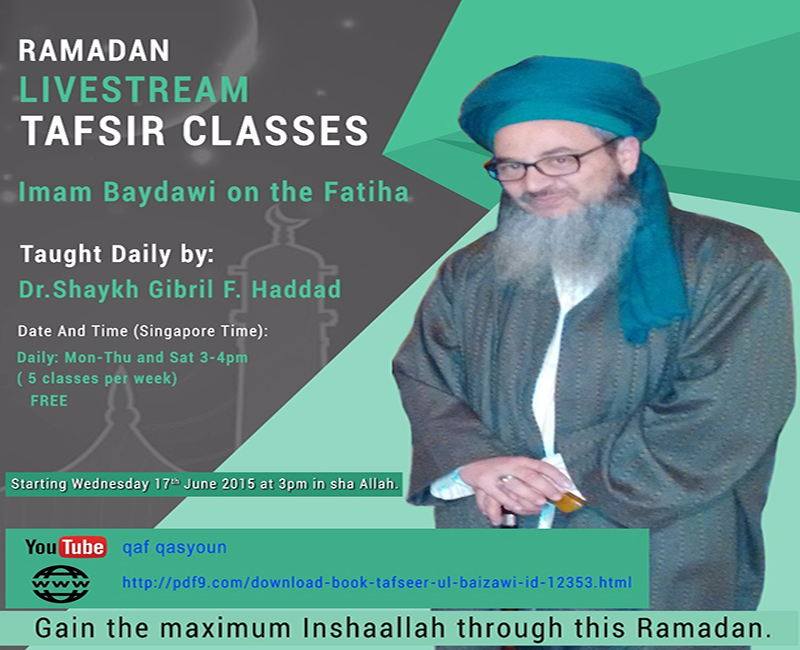
Author: Shaykh Gibril Fouad Haddad

  • Imam Abu Bakr al-Bazzar

    Imam Abu Bakr al-Bazzar

    Full Name and Lineage

    He is Abu Bakr Ahmad ibn ‘Amr ibn ‘Abd al-Khaliq al-‘Ataki al-Basri, famously known as al-Bazzar. Al-Dhahabi described him as the Shaykh, Imam, and great Hafiz (hadith memorizer), author of the Musnad al-Kabir al-Mu’allal in which he explained the chains of transmission.

    Birth and Upbringing He was born in the city of Basra around the year 213 AH (c. 828 CE). Al-Dhahabi noted that he was “born sometime after 210 AH,” suggesting he was born in the mid-3rd century AH. He grew up in Basra, where he began studying hadith in his youth and rose to prominence among the leading hadith scholars of his time.

    Teachers Imam al-Bazzar studied under numerous senior hadith scholars in Basra and elsewhere. Some of his most notable teachers include:

    • Hudbah ibn Khalid al-Qaysi (Abu Khalid)
    • ‘Abd al-A’la ibn Hammad al-Narsi
    • ‘Abdullah ibn Mu’awiyah al-Jumahi
    • Muhammad ibn Yahya ibn Fayyad al-Zamani
    • Muhammad ibn Ma’mar al-Qaysi
    • Bishr ibn Ma’adh al-‘Aqadi
    • ‘Isa ibn Harun al-Qurashi
    • Sa’id ibn Yahya al-Umawi
    • ‘Abdullah ibn Ja’far al-Barmaki
    • ‘Amr ibn ‘Ali al-Fallas
    • Ziyad ibn Ayyub
    • Ahmad ibn al-Muqaddam al-‘Ajli
    • Ibrahim ibn Sa’id al-Jawhari
    • Muhammad ibn Bashshar (Bandar of Basra)
    • Muhammad ibn al-Muthanna al-Zaman

    …and many more. The diversity and number of his teachers show that he traveled widely seeking hadith.

    Students and Those Who Narrated From Him He taught and dictated hadith to many students across the Islamic world. His most notable students include:

    • Abu al-Qasim Sulayman ibn Ahmad al-Tabarani (author of the three Mu’jams)
    • Abu al-Shaykh al-Asbahani
    • Ibn Qani’
    • Abu Bakr al-Khatli
    • Ahmad ibn Ja’far ibn Sallam
    • ‘Abd al-Rahman ibn Muhammad al-Kisa’i
    • Abu Muslim ‘Abd al-Rahman ibn Muhammad al-Siyar

    …and many others. One of his sessions was reported to have included narrations from over 20 of his direct students.

    Journeys and Teaching

    Though he lived much of his life in Basra and Baghdad, he traveled in his later years to various regions teaching hadith, including Isfahan, Baghdad, Egypt, Mecca, and Ramla (in Palestine). Al-Dhahabi said: “He traveled in old age spreading his hadith and taught in Isfahan, Baghdad, Egypt, Mecca, and Ramla.”

    Major Works

    His most famous work is the Musnad al-Kabir, also known as al-Bahr al-Zakhkhar, in which he collected hadiths and commented on their chains and defects. He also compiled a smaller Musnad. Other attributed works include a commentary on the Muwatta’ of Imam Malik, a book on salawat upon the Prophet (peace be upon him), and a treatise on intoxicants.

    Methodology in Hadith

    Al-Bazzar was especially known for identifying and explaining defects (al-‘ilal) in hadith chains. However, he relied heavily on his memory when narrating, which led to occasional mistakes. Al-Daraqutni said: “He is trustworthy but makes many errors, relying on memory.” He narrated his Musnad in Egypt without his original books, which resulted in numerous errors, as reported by critics.

    Scholarly Status

    Despite some critiques, he was widely respected and recognized as a leading hadith authority. Abu al-Shaykh al-Asbahani said: “He was one of the great hadith preservers of the world.” In Isfahan, it was said that no one after ‘Ali ibn al-Madini was more knowledgeable in hadith than him.

    Comments by Hadith Critics

    • Al-Daraqutni: “Trustworthy, but errs often due to reliance on memory.”
    • Abu Ahmad al-Hakim: “He makes mistakes in isnad and matn.”
    • Al-Nasa’i: Criticized him (exact phrase not preserved).
    • Ibn Younus: “A hadith hafiz; he died in Ramla in 292 AH.”
    • Al-Khatib al-Baghdadi: “He was a trustworthy hadith master and explained the chains of transmission.”
    • Al-Dhahabi: “Famous and truthful.”
    • Ibn Hajar: Echoed Al-Dhahabi and noted his remarkable memory.

    Death

    He died in Ramla (Palestine) in Rabi’ al-Awwal, 292 AH (c. 905 CE) at the age of approximately 79. His death occurred while on a journey to disseminate hadith.

    Conclusion

    Imam Abu Bakr al-Bazzar was a distinguished hadith master of the 3rd century AH. Though criticized for relying too heavily on memory, his wide travels, significant contributions to hadith literature, and compilation of a massive Musnad make him one of the important transmitters in Islamic scholarship. His Musnad remains a valuable source for unique hadiths and critical analysis.

    Wa salla’Llahu `alaa khayri khalqihi Sayyidina Muhammad wa `alaa aalihi wa sahbihi wa sallam


    Sources:

    Adh-Dhahabi: Siyar Aalaam An-Nubalaa, Tadhkirat al-Huffaazh
    As-Suyuti: Tabaqaat al-Huffaazh
    Al-Khatib al-Baghdadi: Tarikh Baghdad
    Ibn Hajar: Lisaan al-Meezaan
    Abu Shaykh: Tabaqaat al-Muhadiththeen bi-Asbahaan

  • Jaliyat al-Akdar

    Jaliyat al-Akdar

    wal-Sayful Battar Bil-Salat `ala al-Nabi al-Mukhtar

    //www.youtube.com/embed/4LvNjMp5sFQ

    A RECITATION OF ALLAH’S DIVINE NAMES, SALAWAT ON THE PROPHET ﷺ AND NAMES OF THE COMPANIONS OF THE BATTLE OF BADR

    Jaliyat al Akdar wal-Sayful Battar Bil-Salat `ala al-Nabi al-Mukhtar (The Remover of Harms and Trenchant Sword by Invoking Blessings on the Chosen Prophet Muhammad) is a major supplication in Arabic by the polyglot Grandmaster of the Naqshbandi Tariqa from Shahrazur (Iraqi Kurdistan), Mawlana Khalid al-Baghdadi (1190-1242/1776-1827) through the 99 Divine Names, the Great Invocations of Blessings on the Prophet through his Names and Attributes, and the Names of the 313 Companions of the Great Battle of Badr (Ramadan 2/March 624) recited in full by Gibril Fouad Haddad as ordered by Qutb al-Mutasarrif and the Grandmaster of the Naqshbandi Sufi Way, Mawlana Shaykh Hisham Kabbani (b. 1364/1945) and with his isnad (chain of transmission, see below) to Mawlana Khalid, on 17 Ramadan 1441/11 May 2020.  

    The full PDF of the typeset Arabic text of the supplication can be downloaded here. It is read here in the 1411/1991 Ihlas Wakfi offset edition of its original calligraphied Turkish print. Shaykh Gibril apologizes for his errors in recitation. Mawlana Khalid al-Baghdadi died of the plague in Damascus in his early fifties along with his foremost student and immediate appointed successor Shaykh Isma`il al-Anarani who died 16 days after him and was buried next to him, and some relatives of Mawlana Shaykh Khalid — also buried nearby — on the top of the holy Mount Qasyoun in Damascus, referred to in the Qur’an as “The Fig” in the Sura of the same name. Mawlana Khalid had supplicated Allah to remove the plague from the people of Damascus and put it in him instead, and his prayer was answered. Muhammad Amin Ibn `Abidin the arch-jurist of Damascus saw himself in dream praying the funeral prayer over our liege-lord the Rightly-Guided Caliph `Uthman b. `Affan (Allah be well-pleased with him) and mentioned it to his teacher, Mawlana Shaykh Khalid. The latter said: “The dream you saw represents me, as Sayyidina `Uthman is my ancestor. You shall pray the funeral prayer over me.” And this took place not long afterwards.

    The recitation of the names of the Companions of Badr carries immense blessing and constitutes one of the most powerful intercessory prayers to Allah which the Umma has practiced in times of calamities, plague and pestilence and also as a means of victory over enemies. It is most effective as a remedy against the harm of one’s own rebellious soul, which is each person’s ultimate arch-enemy. It is read on 17 Ramadan, the day of the anniversary of the Battle of Badr which represents the triumph of belief over unbelief. This anniversary coincides with the traditional celebration of the Descent of the Qur’an (Nuzul al-Qur’an) in one block to the nearest heaven, of which the spiritual culmination takes place on the Night of Power (Laylat al-Qadr) on 27 Ramadan. It is for such events, among other blessings, that the month of Ramadan has been called the Month of Allah and also the Month of the Umma, i.e. the time when all post-Prophetic humanity enjoys the holiest of its states on earth despite our difficulties and shortcomings.

    ISNAD OF JALIYAT AL-AKDAR

    بسم الله الرحمن الرحيم أنبأني سيدي ومولاي القطب المتصرِّف مولانا الشيخ محمد هشام قبّاني بن الحاج محمد سليم قباني الحسيني النقشبندي الحقاني اللبناني الشافعي (ولد يوم الأحد 14 صفر 1364/28 كانون الثاني يناير 1945) حفظه الله تعالى وسيدي سلطان الأولياء الشيخ محمد ناظم الحقاني (1341-1435) رحمه الله تعالى، قال الأول: عن سيدي سلطان الأولياء الشيخ محمد ناظم عادل القبرصي الحقاني وسيدي سلطان الأولياء، واعظ الأمة مولانا الشيخ عبدالله فائز بن الحاج حسين بن الحاج عبد الله الداغستاني (1294-1393) رحمهما الله تعالى، وقال الثاني: عن سيدي سلطان الأولياء، واعظ الأمة مولانا الشيخ عبدالله فائز الداغستاني، عن شيخه الشيخ شرف الدين زين العابدين الداغستاني الرَّشادي (ت 1354)، عن خاله الشيخ أبي محمد المدني الداغستاني الرَّشادي القادري (ت ؟)، عن الشيخ أبي أحمد حاج عبد الرحمن أفندي الداغستاني الثُّغُري (ت 1299)، عن الشيخ السيد جمال الدين أفندي الغازي الغُموقي الحسيني القادري (ت 1292) – وكان يذكر جهراً، كلاهما عن الشيخ محمد أفندي بن إسحاق اليَراغي الكَورالي (ت 1260)، عن خاص محمد أفندي الشِّيرْواني الداغستاني (ت 1254)، كلاهما عن الشيخ ضياء الدين إسماعيل أفندي ذبيح الله القَفْقازي الشِّيرْواني الكُرْدامِيري الداغستاني (ت ؟)، عن الشيخ إسماعيل الأناراني (ت 1242) – الذي سمعت مولانا الشيخ ناظم يروي عن مولانا الشيخ خالد فيه: سيجلس الشيخ إسماعيل الأناراني على سجادتي ومن بايعه فقد بايعني، لكن انتقل بعد الشيخ خالد بقليل، قيل 16 يوما (ثم انظر نعته في (الحدائق الوردية) للشيخ عبد المجيد الخاني)، كلاهما ـ الكُرْدامِيري والأناراني ـ عن مولانا الشيخ ضياء الدين خالد ذي الجَناحين أحمد بن حسين الشَّهْرَزوري السُليماني البغدادي ثم الدمشقي النقشبندي العثماني (1190 أو 1193-1242) — وكان يوقّع بتوقيع (أضعف العباد خالد النقشبندي المجددي القادري السهروردي الكبروي اﻟﭽﺸﺘﻲ)، قال: جَالِيَةُ الأَكْدَار وَالسَّيْفُ البَتَّار بِالصَّلاةِ عَلَى النبيِّ المُخْتَار صلَّى اللهُ عَلَيْهِ وَآلِهِ وَصَحْبِهِ وَسَلَّم.

    A RECITATION OF ALLAH’S DIVINE NAMES, SALAWAT ON THE PROPHET ﷺ AND NAMES OF THE COMPANIONS OF THE BATTLE OF BADR

    Jaliyat al Akdar wal-Sayful Battar Bil-Salat `ala al-Nabi al-Mukhtar (The Remover of Harms and Trenchant Sword by Invoking Blessings on the Chosen Prophet Muhammad) is a major supplication in Arabic by the polyglot Grandmaster of the Naqshbandi Tariqa from Shahrazur (Iraqi Kurdistan), Mawlana Khalid al-Baghdadi (1190-1242/1776-1827) through the 99 Divine Names, the Great Invocations of Blessings on the Prophet through his Names and Attributes, and the Names of the 313 Companions of the Great Battle of Badr (Ramadan 2/March 624) recited in full by Gibril Fouad Haddad as ordered by Qutb al-Mutasarrif and the Grandmaster of the Naqshbandi Sufi Way, Mawlana Shaykh Hisham Kabbani (b. 1364/1945) and with his isnad (chain of transmission, see below) to Mawlana Khalid, on 17 Ramadan 1441/11 May 2020.  

    The full PDF of the typeset Arabic text of the supplication can be downloaded here. It is read here in the 1411/1991 Ihlas Wakfi offset edition of its original calligraphied Turkish print. Shaykh Gibril apologizes for his errors in recitation. Mawlana Khalid al-Baghdadi died of the plague in Damascus in his early fifties along with his foremost student and immediate appointed successor Shaykh Isma`il al-Anarani who died 16 days after him and was buried next to him, and some relatives of Mawlana Shaykh Khalid — also buried nearby — on the top of the holy Mount Qasyoun in Damascus, referred to in the Qur’an as “The Fig” in the Sura of the same name. Mawlana Khalid had supplicated Allah to remove the plague from the people of Damascus and put it in him instead, and his prayer was answered. Muhammad Amin Ibn `Abidin the arch-jurist of Damascus saw himself in dream praying the funeral prayer over our liege-lord the Rightly-Guided Caliph `Uthman b. `Affan (Allah be well-pleased with him) and mentioned it to his teacher, Mawlana Shaykh Khalid. The latter said: “The dream you saw represents me, as Sayyidina `Uthman is my ancestor. You shall pray the funeral prayer over me.” And this took place not long afterwards.

    The recitation of the names of the Companions of Badr carries immense blessing and constitutes one of the most powerful intercessory prayers to Allah which the Umma has practiced in times of calamities, plague and pestilence and also as a means of victory over enemies. It is most effective as a remedy against the harm of one’s own rebellious soul, which is each person’s ultimate arch-enemy. It is read on 17 Ramadan, the day of the anniversary of the Battle of Badr which represents the triumph of belief over unbelief. This anniversary coincides with the traditional celebration of the Descent of the Qur’an (Nuzul al-Qur’an) in one block to the nearest heaven, of which the spiritual culmination takes place on the Night of Power (Laylat al-Qadr) on 27 Ramadan. It is for such events, among other blessings, that the month of Ramadan has been called the Month of Allah and also the Month of the Umma, i.e. the time when all post-Prophetic humanity enjoys the holiest of its states on earth despite our difficulties and shortcomings.

    ISNAD OF JALIYAT AL-AKDAR

    بسم الله الرحمن الرحيم أنبأني سيدي ومولاي القطب المتصرِّف مولانا الشيخ محمد هشام قبّاني بن الحاج محمد سليم قباني الحسيني النقشبندي الحقاني اللبناني الشافعي (ولد يوم الأحد 14 صفر 1364/28 كانون الثاني يناير 1945) حفظه الله تعالى وسيدي سلطان الأولياء الشيخ محمد ناظم الحقاني (1341-1435) رحمه الله تعالى، قال الأول: عن سيدي سلطان الأولياء الشيخ محمد ناظم عادل القبرصي الحقاني وسيدي سلطان الأولياء، واعظ الأمة مولانا الشيخ عبدالله فائز بن الحاج حسين بن الحاج عبد الله الداغستاني (1294-1393) رحمهما الله تعالى، وقال الثاني: عن سيدي سلطان الأولياء، واعظ الأمة مولانا الشيخ عبدالله فائز الداغستاني، عن شيخه الشيخ شرف الدين زين العابدين الداغستاني الرَّشادي (ت 1354)، عن خاله الشيخ أبي محمد المدني الداغستاني الرَّشادي القادري (ت ؟)، عن الشيخ أبي أحمد حاج عبد الرحمن أفندي الداغستاني الثُّغُري (ت 1299)، عن الشيخ السيد جمال الدين أفندي الغازي الغُموقي الحسيني القادري (ت 1292) – وكان يذكر جهراً، كلاهما عن الشيخ محمد أفندي بن إسحاق اليَراغي الكَورالي (ت 1260)، عن خاص محمد أفندي الشِّيرْواني الداغستاني (ت 1254)، كلاهما عن الشيخ ضياء الدين إسماعيل أفندي ذبيح الله القَفْقازي الشِّيرْواني الكُرْدامِيري الداغستاني (ت ؟)، عن الشيخ إسماعيل الأناراني (ت 1242) – الذي سمعت مولانا الشيخ ناظم يروي عن مولانا الشيخ خالد فيه: سيجلس الشيخ إسماعيل الأناراني على سجادتي ومن بايعه فقد بايعني، لكن انتقل بعد الشيخ خالد بقليل، قيل 16 يوما (ثم انظر نعته في (الحدائق الوردية) للشيخ عبد المجيد الخاني)، كلاهما ـ الكُرْدامِيري والأناراني ـ عن مولانا الشيخ ضياء الدين خالد ذي الجَناحين أحمد بن حسين الشَّهْرَزوري السُليماني البغدادي ثم الدمشقي النقشبندي العثماني (1190 أو 1193-1242) — وكان يوقّع بتوقيع (أضعف العباد خالد النقشبندي المجددي القادري السهروردي الكبروي اﻟﭽﺸﺘﻲ)، قال: جَالِيَةُ الأَكْدَار وَالسَّيْفُ البَتَّار بِالصَّلاةِ عَلَى النبيِّ المُخْتَار صلَّى اللهُ عَلَيْهِ وَآلِهِ وَصَحْبِهِ وَسَلَّم.

    A RECITATION OF ALLAH’S DIVINE NAMES, SALAWAT ON THE PROPHET ﷺ AND NAMES OF THE COMPANIONS OF THE BATTLE OF BADR

    Jaliyat al Akdar wal-Sayful Battar Bil-Salat `ala al-Nabi al-Mukhtar (The Remover of Harms and Trenchant Sword by Invoking Blessings on the Chosen Prophet Muhammad) is a major supplication in Arabic by the polyglot Grandmaster of the Naqshbandi Tariqa from Shahrazur (Iraqi Kurdistan), Mawlana Khalid al-Baghdadi (1190-1242/1776-1827) through the 99 Divine Names, the Great Invocations of Blessings on the Prophet through his Names and Attributes, and the Names of the 313 Companions of the Great Battle of Badr (Ramadan 2/March 624) recited in full by Gibril Fouad Haddad as ordered by Qutb al-Mutasarrif and the Grandmaster of the Naqshbandi Sufi Way, Mawlana Shaykh Hisham Kabbani (b. 1364/1945) and with his isnad (chain of transmission, see below) to Mawlana Khalid, on 17 Ramadan 1441/11 May 2020.  

    The full PDF of the typeset Arabic text of the supplication can be downloaded here. It is read here in the 1411/1991 Ihlas Wakfi offset edition of its original calligraphied Turkish print. Shaykh Gibril apologizes for his errors in recitation. Mawlana Khalid al-Baghdadi died of the plague in Damascus in his early fifties along with his foremost student and immediate appointed successor Shaykh Isma`il al-Anarani who died 16 days after him and was buried next to him, and some relatives of Mawlana Shaykh Khalid — also buried nearby — on the top of the holy Mount Qasyoun in Damascus, referred to in the Qur’an as “The Fig” in the Sura of the same name. Mawlana Khalid had supplicated Allah to remove the plague from the people of Damascus and put it in him instead, and his prayer was answered. Muhammad Amin Ibn `Abidin the arch-jurist of Damascus saw himself in dream praying the funeral prayer over our liege-lord the Rightly-Guided Caliph `Uthman b. `Affan (Allah be well-pleased with him) and mentioned it to his teacher, Mawlana Shaykh Khalid. The latter said: “The dream you saw represents me, as Sayyidina `Uthman is my ancestor. You shall pray the funeral prayer over me.” And this took place not long afterwards.

    The recitation of the names of the Companions of Badr carries immense blessing and constitutes one of the most powerful intercessory prayers to Allah which the Umma has practiced in times of calamities, plague and pestilence and also as a means of victory over enemies. It is most effective as a remedy against the harm of one’s own rebellious soul, which is each person’s ultimate arch-enemy. It is read on 17 Ramadan, the day of the anniversary of the Battle of Badr which represents the triumph of belief over unbelief. This anniversary coincides with the traditional celebration of the Descent of the Qur’an (Nuzul al-Qur’an) in one block to the nearest heaven, of which the spiritual culmination takes place on the Night of Power (Laylat al-Qadr) on 27 Ramadan. It is for such events, among other blessings, that the month of Ramadan has been called the Month of Allah and also the Month of the Umma, i.e. the time when all post-Prophetic humanity enjoys the holiest of its states on earth despite our difficulties and shortcomings.

    ISNAD OF JALIYAT AL-AKDAR

    بسم الله الرحمن الرحيم أنبأني سيدي ومولاي القطب المتصرِّف مولانا الشيخ محمد هشام قبّاني بن الحاج محمد سليم قباني الحسيني النقشبندي الحقاني اللبناني الشافعي (ولد يوم الأحد 14 صفر 1364/28 كانون الثاني يناير 1945) حفظه الله تعالى وسيدي سلطان الأولياء الشيخ محمد ناظم الحقاني (1341-1435) رحمه الله تعالى، قال الأول: عن سيدي سلطان الأولياء الشيخ محمد ناظم عادل القبرصي الحقاني وسيدي سلطان الأولياء، واعظ الأمة مولانا الشيخ عبدالله فائز بن الحاج حسين بن الحاج عبد الله الداغستاني (1294-1393) رحمهما الله تعالى، وقال الثاني: عن سيدي سلطان الأولياء، واعظ الأمة مولانا الشيخ عبدالله فائز الداغستاني، عن شيخه الشيخ شرف الدين زين العابدين الداغستاني الرَّشادي (ت 1354)، عن خاله الشيخ أبي محمد المدني الداغستاني الرَّشادي القادري (ت ؟)، عن الشيخ أبي أحمد حاج عبد الرحمن أفندي الداغستاني الثُّغُري (ت 1299)، عن الشيخ السيد جمال الدين أفندي الغازي الغُموقي الحسيني القادري (ت 1292) – وكان يذكر جهراً، كلاهما عن الشيخ محمد أفندي بن إسحاق اليَراغي الكَورالي (ت 1260)، عن خاص محمد أفندي الشِّيرْواني الداغستاني (ت 1254)، كلاهما عن الشيخ ضياء الدين إسماعيل أفندي ذبيح الله القَفْقازي الشِّيرْواني الكُرْدامِيري الداغستاني (ت ؟)، عن الشيخ إسماعيل الأناراني (ت 1242) – الذي سمعت مولانا الشيخ ناظم يروي عن مولانا الشيخ خالد فيه: سيجلس الشيخ إسماعيل الأناراني على سجادتي ومن بايعه فقد بايعني، لكن انتقل بعد الشيخ خالد بقليل، قيل 16 يوما (ثم انظر نعته في (الحدائق الوردية) للشيخ عبد المجيد الخاني)، كلاهما ـ الكُرْدامِيري والأناراني ـ عن مولانا الشيخ ضياء الدين خالد ذي الجَناحين أحمد بن حسين الشَّهْرَزوري السُليماني البغدادي ثم الدمشقي النقشبندي العثماني (1190 أو 1193-1242) — وكان يوقّع بتوقيع (أضعف العباد خالد النقشبندي المجددي القادري السهروردي الكبروي اﻟﭽﺸﺘﻲ)، قال: جَالِيَةُ الأَكْدَار وَالسَّيْفُ البَتَّار بِالصَّلاةِ عَلَى النبيِّ المُخْتَار صلَّى اللهُ عَلَيْهِ وَآلِهِ وَصَحْبِهِ وَسَلَّم.

  • Three New Books: Sunna Notes Series

    HADITH HISTORY AND PRINCIPLES

    THE EXCELLENT INNOVATION IN THE QURAN AND HADITH

    THE BINDING PROOF OF THE SUNNA

    Series: Sunna Notes Volume 1 – Studies in Hadith & Doctrine

    Author: Shaykh Gibril Fouad Haddad

    It pleased our bountiful Creator to make knowledge of Hadith and its ancillary sciences the exclusive characteristic of Muslim civilization. Alone among the nations that walked the face of the earth, this Umma received and kept this Divine trust together with the Last Testament the Qur’an to pass it on to posterity unchanged with an ever-refined array of disciplines for verification and authentication.

    Among those disciplines, Hadith methodology and criticism ensured that nothing alien crept into the pure Prophetic Sunna as conveyed by upright and precise transmitters under the strict perusal of their peers and subsequent experts. When Ibn al-Mubarak was asked about the forged Hadiths he replied, “The giant scholars dispose of them!” Then he recited, ‘Lo! We, even We, have revealed the Reminder, and lo! We verily are its Guardian‘ (15:9). Thus he reiterated in the pithiest way that the Prophetic Sunna and authentic Hadith are part and parcel of the Final Revelation – which no Muslim denies! – and that the Lawgiver preserves His Dhikr through the surest human means imaginable.

    The book also contains the translation of Imam Ibn Hajar al-`Asqalani’s Nukhbat al-Fikar.

    ISBN: 9789547540422
    227 pages

    Series: Sunna Notes Volume 2 – Studies in Hadith & Doctrine

    Author: Shaykh Gibril Fouad Haddad

    Sayyidina ‘Umar (r) during his caliphate gathered the multi-farious groups praying tarawih into a single congregation. Ubay ibn Ka‘b (r) said: ‘This was not done before!” Sayyidina ‘Umar (r) said “I am fully aware of this, but it is excellent!”
    Nowhere in the field of Islamic jurisprudence is a blatant tampering with the truth felt more than in the re-definition of “Sunna” and “bid‘a”. The understanding of for these terms is arrogantly cast aside. The crystal-clear distinction of the pious Salaf such as Imam al-Shafi‘i, “Bid‘a is of two kinds; praiseworthy innovation and blameworthy innovation” is being abandoned, while later, controversial figures are invoked as “more representative of the Salaf”. The discourse on right and wrong has been perverted and entire generations of Muslims have been weaned on these false notions. Choice victims for this campaign of disinformation in our time are Muslims in the West.
    The intent of this book is to do away with these perilous misconceptions and to present over 160 proofs for the Sunni understanding of Sunna and bid‘a as set forth in classical, moderate, mainstream Islam according to the Sunni Salaf and Khalaf, including the four Schools of Fiqh. Additionally, the book provides case studies on topics such as collective supplication, partitions for women in mosques, and proofs for visitation of graves by women. 

    The book also contains the translation of Imam Ibn Hajar al-ʿAsqalani’s explanation of the Hadith on Islam, Iman and Ihsan also known as Gibril’s hadith from the Fathul-Bari.

    ISBN: 9781938058790
    276 pages

    Series: Sunna Notes Volume 3 – Studies in Hadith & Doctrine

    Author: Shaykh Gibril Fouad Haddad

    ‘The Sunna is the first subsidiary source (masdar farʿi) after the Qur’an among the sources of Islamic law. We describe it as a subsidiary source because it is the Qur’an that actually indicated that it is a source, and the basis of everything is the Qur’an. The Qur’an commanded us to follow the messenger of Allah: therefore we follow the messenger of Allah.’

    ~Shaykh Muhammad Saʿid Ibn Mulla Ramadan al-Buti

    “The meaning of the expression Binding Proof of the Sunnah is that the Sunna points to the judgment of Allah Most High, either as definitive knowledge (ʿilm) or as as probable knowledge (zann), bringing it out and disclosing it for us. We understand the Divine rulings by means of the Sunna and it becomes binding upon us to put its content into practice, So the real meaning of the Sunna as binding proof is exposition and proof-inference necessitating obligatory practice of their results because the latter is the Divine decision.”

    ~Dr. ʿAbd al-Ghani ibn ʿAbd al-Khaliq
     

    The book also contains the translation of Ibn Rajab’s The Sunna of the Caliphs.

    ISBN: 9781938058806
    228 pages

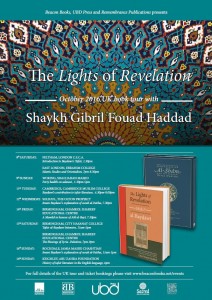
    Shaykh Gibril Fouad Haddad is author of Four Imams and Their Schools, The Musnad of Ahl al-Bayt and The Muhammadan Light among other works. Among his translations to English from Arabic are: Qadi Yusuf an-Nabahani’s The Prophet Muhammad’s Knowledge of the Unseen, the acclaimed The Lights of Revelation and the Secrets of Interpretation: Hizb One of the Commentary on the Quran by Imam al-Baydawi, Ibn Khafif’s Correct Islamic Doctrine, Ibn `Arabi’s Doctrine of the Muslims, Shaykh Muhammad ibn `‘Alawi al-Maliki’s The Prophet’s Night Journey and Heavenly Ascent and many other esteemed works.


  • About Marriage to Ahl al-Bayt

    Al-Tabarani and al-Hakim narrated it from `Abd Allah b. Abi Awfa. Al-Shirazi also narrated in al-Alqab from Ibn `Abbas that the Messenger of Allah – upon him blessings and peace – said, “I asked my Lord that I not marry off but to people of Paradise and that I not marry into other than people of Paradise.” Ahmad and al-Hakim narrated from al-Miswar that the Prophet said: “Fatima is a piece of my flesh, whatever distresses her distresses me and whatever delights her delights me. Verily lineages will all be cut off on the Day of Resurrection except my lineage and my line and relationships to me.” This report is fully documented in the chapter on Abu Ya`la’s Musnad.

    Munawi said in Fayd al-Qadir: “It appears that this [privilege] includes whoever marries or gets married off among his descendants; this means great tidings for whoever becomes related through marriage to a Sharif or a Sharifa.”

    The fact that Ahl al-Bayt spouses and in-laws are all bound for bliss is clarified by what Ibn `Asakir narrated in al-Arba`in fi manaqib Ummahat al-mu’minin, Hadith 37, from ‘Sayyidina `Ali (r) that the Prophet – upon him blessings and peace – said: “None that marries into me or that I marry into enters Hellfire.” He added, “This is a fair hadith from the Commander of the believers Abu al-Hasan `Ali b. Abi Talib – may Allah ennoble his countenance – and in this hadith there is evidence for the virtue of his brothers and sons-in-law, and this is a testimony that they are in Paradise as long as they are believers, and Allah knows best.”

    Al-Harith also narrated from Muhammad b. al-Hanafiyya – in mursal mode – as did Abu Ya`la, Ibn Abi al-Dunya and Ibn `Asakir from Abu Hurayra that al-Hasan and al-Husayn wrestled in the presence of the Messenger of Allah – upon him blessings and peace – and the latter was saying, “Go, Hasan!” whereupon Fatima said: “Messenger of Allah, it seems he is more beloved to you than al-Husayn?” He replied, “Jibril is helping al-Husayn, and I love to help al-Hasan.”

    [Excerpted from Musnad Ahl al-Bayt]

  • Ibn Khafif

    Ibn Khafif

    Ibn Khafif, Muhammad ibn Khafif ibn Asfakshad, Abu `Abd Allah al-Shirazi al-Dibbi al-Shafi`i al-Sufi (276?-371). Al-Sulami said of him: “The Folk (al-qawm, i.e. the Sufis) do not have anyone older than him nor more complete in his state and reality today.” He took kalam from al-Ash`ari , fiqh from Ibn Surayj, and tasawwuf from Ruwaym, al-Jariri, and Abu al-`Abbas ibn `Ata’. Al-Dhahabi said of him: “He is at the same time one of the most knowledgeable shaykhs in the external sciences (`ulum al-zahir).” Ibn Taymiyya names him among the great Sufi representatives of the Sunna:

    “The great shaykhs mentioned by Abu `Abd al-Rahman al-Sulami in Tabaqat al-Sufiyya and Abu al-Qasim al-Qushayri in   were adherents of the school of Ahl al-Sunna wa al-Jama`a and the school of Ahl al-Hadith, such as Fudayl ibn `Iyad, al-Junayd ibn Muhammad, Sahl ibn `Abd Allah al-Tustari, `Amr ibn `Uthman al-Makki, Abu `Abd Allah Muhammad ibn Khafif al-Shirazi, and others, and their speech is found in the Sunna, and they composed books about the Sunna.”

    Ibn Khafif reported from his teacher Ibn Surayj that the proof that love of Allah was a categorical obligation (fard) was in the verses: “Say: If your fathers, and your sons, and your brethren, and your wives, and your tribe, and the wealth you have acquired, and merchandise for which you fear that there will be no sale, and dwellings you desire are dearer to you than Allah and His messenger and striving in His way: then wait till Allah brings His command to pass. Allah guides not wrongdoing folk.” (9:24) For punishment is not threatened except due to a categorical obligation. He once said to the followers of Ibn Maktum: “Busy yourself with the acquisition of some knowledge, and do not let the words of the Sufis [to the contrary] fool you. I myself used to hide my inkwell and pen inside my clothes, and go secretly to visit the scholars. If they [the Sufis] had found out, they would have fought me and they would have said: You will not succeed. Later they found themselves needing me.”

    When Ibn Khafif became too weak to stand in his habitual supererogatory prayers, he prayed double their number sitting, in view of the Prophet’s report whereby “The prayer of one sitting is half that of one standing.” Ibn Bakuyah related from Ibn Khafif that he said: “In my beginnings I would recite in one rak`a “Qul huwa Allahu ahad” [Sura 112] ten thousand times, or recite the entire Qur’an in one rak`a.” “Never in forty years was the Ramadan-end purification tax (zakat al-fitr) incumbent upon me.” Al-Sulami said: “Abu `Abd Allah came from a family of princes, but he practiced asceticism (zuhd) to the point that he said: ‘I would collect rags from refuse-heaps, wash them, and mend whatever I could use for clothing, and I spent fourteen months breaking my fast at night with a handful of beans.’”

  • Who Are the Habashis?

    The Ahbash of Lebanon are a sect founded by the Ethiopian Abdullah al-Harari who hated Mawlana Grandshaykh and Mawlana Shaykh Nazim out of jealousy just like shaytan hated Sayyidina Adam and Sayyidina Muhammad (s) out of jealousy.
    They are big in Australia and North America, they have unlimited funds, they pose as Ahl as-Sunnah wa ‘l-Jama`ah by fighting Wahhabis worldwide and they convince a lot of scholars and organizations that they are genuine Ahl as-Sunnah wa ‘l-Jama`ah. In reality they are takfiris just like the Wahhabis and that they hold non-Sunni beliefs, as declared in many fatwas by Ahl as-Sunnah wa ‘l-Jama`ah `ulema such as Dr. Ali Gomaa in 1999 and others. They will never repent from their enmity towards Awliya Allah. They have to be refuted just as Wahhabis have to be refuted.
    Below please find the Ahbash Refutation text first posted on Sunna-Principles in December 2011, both in Arabic and English:
    Markaz al-Nasr li Ahl al-Sunnah wal-Jamaah
    Jakarta
    مركز النصر لأهل السّنّة والجماعة
    جاكرتا
  • Prophetic Guidance – Repentance, Prayer & Charity in Times of Earthquakes

     
    وَمَا نُرْسِلُ بِٱلْـَٔايَـٰتِ إِلَّا تَخْوِيفًا
    {And We never send the signs except to instill fear} (Surat al-Isra’ 17:59).
     
    The Prophet said, upon him blessings and peace: (i) “The Hour will not come until knowledge is taken back, earthquakes abound, time shortens, strifes predominate, and harj abounds–namely killing” (Bukhari).
     
    (ii) “Allah has made the punishment of my Umma in this world killing, earthquakes and strifes” (Ahmad, Abu Dawud, al-Hakim).
     
    (iii) “There will be a tremor (rajfa) in my Community in which shall perish ten thousand, twenty thousand, thirty thousand, and which Allah Most High shall make an admonishment for the Godfearing, a mercy for the Believers and a punishment for the disbelievers.” Narrated by Ibn `Asakir in Tarikh Dimashq and Ibn al-Sakan in Ma`rifat al-Sahaba.
     
    Ibn `Asakir also narrated that Allah Most High said: “I shall cause a tremor in the best of nights, whatever disbeliever dies in it, it will be because his term of life has reached him, and whatever Believer dies in it, it will be for him shahada.”
     
    Anas asked our Mother `A’isha about earthquakes: “Is it a punishment?” She replied: “A mercy and a blessing and an admonishment for the Believers, and an exemplary punishment and wrath and bane on the disbelievers.” Ibn Abi al-Dunya narrated it in al-`Uqubat and al-Hakim in the Mustadrak.
     
    So the Believers are also meant to be rebuked by such terrible events. There was an earthquake in al-Kufa in the time of Ibn Mas`ud whereupon he said: “O people! Your Lord is rebuking you, so do what He is commanding you.” Al-Tabari narrated it in his Tafsir. Ibn Mas`ud also said: “We the Companions of Muhammad (upon him blessings and peace) were shown signs of blessings… we would hear the tasbih (glorification) of food while it was being eaten… while you all are shown only signs of terror.” Al-Darimi narrated it in his Musnad.
     
    `Ata’ al-Khurasani said, “When five things happen five consequences follow: when riba is consumed there are sinkholes and earthquakes; when governors commit injustice rain is blocked; when fornication appears death abounds; when zakat is withheld livestock perishes; and when protected non-Muslims are victimized reverses in power follow.” (Abu Nu`aym, Hilya)
     
    Ibn `Abbas said, the Messenger of Allah — upon him blessings and peace — said, “When you see a great sign, prostrate” (Abu Dawud, Tirmidhi–hasan— and Bayhaqi). [I.e. pray.]
     
    Hence both the congregational Kusuf prayer and individual voluntary prayers should be prayed in such an event… but in our school “it is desirable to pray all the prayers of the acts of God other than the two eclipses (earthquake, intense darkness, tempests and hurricanes) INDIVIDUALLY NOT IN CONGREGATION” (Nawawi, Majmu`)…, much du`a and dhikr raised,* and almsgiving including freeing slaves as narrated from `Ali, Ibn `Abbas, `A’isha, Ibn Mas`ud, and Samura ibn Jundub Abu Dawud, Ibn Abi Shayba’s Musannaf, al-Shafi`i’s Umm and al-Muzani’s Mukhtasar, and al-Bayhaqi in his Sunan. 
    * Especially tasbih, takbir, and salat on the Prophet upon him blessings and peace [al-Suyuti].
     
    Al-Shafi`i in al-Umm and al-Bayhaqi in the Sunan narrated from `Ali b. Abi Talib — may Allah honor him — that he prayed at the time of an earthquake [two rak`as totalling] 6 ruku`s and 4 prostrations. Namely, in the first rak`a, 5 ruku`s and two prostrations, and in the second rak`a one ruku` and two prostrations.
    Al-Bayhaqi said: “It is well-established on the part of Ibn `Abbas.” Sa`id b. Mansur narrated that Ibn `Abbas prayed it as imam and he made takbir then recited, bowed, then raised his head and recited, then bowed, then raised his head and recited, then bowed, then raised his head and recited, then bowed, after which he prostrated, whereby his prayer consisted in 6 rak`ats and two prostrations.”
    (Ibn Abi Shayba; al-Sunan al-Kubra; Sunan Sa`id b. Mansur).
     
    Ibn Abi Shayba narrated with a sound chain from `A’isha — Allah be well-pleased with her — that she said, “The prayer of the great signs of Allah is six ruku`s with four sujuds” (Muslim, Ibn Abi Shayba).
    The righteous caliph `Umar ibn `Abd al-`Aziz ordered such a prayer in his time as well as massive alms-giving.
     
    Source for all of the above: Imam al-Suyuti, Kashf al-Salsala `an Wasf al-Zalzala (The Piercing Alarm Fully Describing Earthquakes), ed. `Abd al-Rahman b. `Abd al-Jabbar al-Faryawa’i (Medina: Maktabat al-Dara, 1404/1984).
     
    Blessings and peace on the Prophet, his Family, his Companions and all his Umma.
  • Mawlid: Celebrating the Birth of the Prophet Muhammad (s)

    Mawlid: Celebrating the Birth of the Prophet Muhammad (s)

     In the Name of Allāh all-Beneficent Most Merciful

    “It is beyond me how someone who has strong īmān can possibly dispute
    the manifestation of joy on the occasion we consider the dearest and most
    auspicious of all―the dawning of the Muhammadan light on this world.”1

    Badr al-Dīn al-Kattānī. 

    Glory to Allāh Who has illuminated existence with the rising of the light of the Best of Creation, our Master Muhammad – upon him and his Family blessings and peace!

    According to the majority of the Ulema, the celebration of the Prophetic birth, called Mawlid al-Nabī or Mīlād al-Nabī, is among the qurubāt or recommended beneficial acts through which one hopes to obtain the good pleasure of Allāh (swt) and shows gratitude for His greatest favor to worlds in the person of the Final Prophet, the Messenger of Allāh (swt).

    This ruling of recommendation and desirability was stated by the following authorities among others:

    • ‘Abd al-Sāmī al-Rampūrī. A Khalīfa of Hajjī Imdād Allāh, he wrote a book titled al-Anwār as-Sāti‘a fī Ithbāt al-Mawlid wal-Fātiha.
    • Abū Shāma. The hāfiz and historian Abū Shāma (599-665), the Shaykh of Imām al-Nawawi, said in his book on innovations titled al-Bā‘ith ‘alā Inkār al-Bida‘ wa al-Hawādith (p. 23): “Among the best innovations in our day is the remembrance of the birthday of the Prophet (s).”
    • Al-‘Alā’ī. The Hanafī hāfiz Salāh al-Dīn Khalīl ibn Kīkaldī al-‘Alā’ī in his book al-Durra al-Saniyya fī Mawlidi Khayr al-Bariyya (s).
    • Al-Bakrī. Shaykh Abū al-Hasan ibn ‘Abd Allāh al-Bakrī in his seven part book al-Anwār wa Miftāh al-Surūr wal-Afkār fī Mawlid al-Nabī al-Mukhtār (“The Lights and the Key to Happiness and Reflection Concerning the Birth of the Elect Prophet (s)”).
    • Al-Bursawī. The Ottoman Shaykh al-Islām Sulaymān al-Bursawī (d. >800), Imām to the Sultan Yild Bayram Bāyazīd, authored a Mawlid text that achieved great fame and was recited in Mawlid gatherings for a long time.
    • Dahlān. The Shaykh al-Islām and Mufti of Makka al-Sayyid Ahmad ibn Zaynī Dahlan, in his large book al-Sīra al-Nabawiyya wal-Āthār al-Muhammadiyya, said (p. 51): “To celebrate the Mawlid and to remember the Prophet (s) is accepted by all the Ulema of the Muslims.”
    • Al-Dirdīr. The Mālikī Faqīh Sīdī al-Dirdīr in his Mawlid.
    • Al-Fayrūzābādī The Shāfi‘ī Imām, hāfiz, and lexicographer Majd al-Dīn Abū Tāhir Muhammad ibn Ya‘qūb al-Fayrūzābādī al-Shīrāzī (d. 817) in his book al-Nafhat al-‘Anbariyya fī Mawlidi Khayri al-Bariyya (s).
    • Hajjī Imdād Allāh Muhājir Makkī (d. 1317/1899), the murshid of Shaykh Rashīd Ahmad Gangohī, held Mawlid gatherings each year during which he would stand and recite invocations of blessings and peace upon the Prophet (s).2
    • Al-Haytamī. The Imām and hāfiz of Makka and pre-eminent Jurist of the Shāfi‘ī School, Ibn Hajar al-Haytamī, in his books such as the Fatāwā Hadīthiyya; al-Ni‘mat al-Kubrā ‘alā al-‘Ālam fī Mawlidi Sayyidi Waladi Ādam (s); Tahrīr al-Kalām fi al-Qiyāmi ‘inda Dhikri Mawlidi Sayyidi al-Anām (s); Tuhfat al-Akhyār fī Mawlidi al-Mukhtār (s).
    • Al-Himyarī. Shaykh ‘Īsā al-Himyarī’s Bulūgh al-Ma’mūl fī al-Ihtifā’ wa al-Ihtifāl bi-Mawlid al-Rasūl (s).
      Ibn Dihya. The Mālikī hāfiz Abū al-Khattāb ‘Umar ibn al-Hasan, known as Ibn Dihya al-Kalbī (d. 633) in his book al-Tanwīr fī Mawlid al-Sirāj al-Munīr.
    • Ibn Hajar al-‘Asqalānī. He issued a fatwa declaring the praiseworthiness of the celebration of Mawlid as quoted in full by al-Suyūtī in Husn al-Maqsid:
      An authentic primary textual basis from which its legal validity is inferable has occurred to me, namely the rigorously authenticated (sahīh) hadīth in the collections of al-Bukhārī and Muslim that the Prophet (s) came to Mādīna and found the Jews fasting on the tenth of Muharram.3 (‘Āshūrā’), so he asked them about it and they replied: “It is the day on which Allāh drowned Pharaoh and rescued Mūsā, so we fast in it to give thanks to Allāh (swt),” which indicates the validity of giving thanks to Allāh for the blessings He has bestowed on a particular day in providing a benefit, or averting an affliction. We repeat our thanks on the anniversary of that day every year, giving thanks to Allāh with various forms of worship such as prostration, fasting, giving charity or reciting the Qur’ān… Then what blessing is greater than the birth of the Prophet (s), the Prophet of mercy, on this day? In light of which, one should take care to commemorate it on the day itself in order to conform to the above story of Mūsā and the tenth of Muharram, [but] those who do not view the matter thus do not mind commemorating it on any day of the month, while some have expanded its time to any of day the year, whatever exception may be taken at such a view.3
    • Ibn al-Humām’s father. Burhān al-Dīn Abū al-Safā’ ‘Alī ibn Abī al-Wafā’ al-Shāfi‘ī al-Maqdisī (d. 887) in his book Fath Allahū Hasbī wa Kafā fī Mawlid al-Mustafā (s).
    • Ibn Nās.ir al-Dīn. The hāfiz of Damascus Muhammad ibn Abī Bakr al-Qaysī, known as Ibn Nāsir al-Dīn al-Dimashqī (777-842) in three books:
      Jāmi‘ al-Āthār fī Mawlid al-Nabī al-Mukhtār (“The Compendium of Reports on the Birth of the Chosen Prophet (s)), al-Lafz al-Rā’iq fī Mawlid Khayr al-Khalā’iq (“The Shining Expressions Concerning the Birth of the Best of Creation (s)) and Wird al-Sādī bi Mawlid al-Nabī al-Hādī (“The Continuous Spring: the Birth of the Guiding Prophet”). In the latter book he cited al-Bukhārī’s narration in his Sahīh that every Yawm al-Ithnayn [Monday] the punishment of Abū Lahab – the disbelieving uncle of the Prophet (s) – is diminished in the grave in recognition of his once freeing his slave-girl Thuwayba when she announced him the news of the birth of his nephew.4

    Download the complete book here.


    Footnotes

    1In the daily “al-Mīthāq,” published by Rābitat ‘Ulamā’ al-Maghrib, #488 (10 Rabī‘al-Awwal 1404 = 15 December 1983). 

    2Faysla-i-Haft Mas’ala (p. 111).

    3Ibn Hajar as quoted in al-Suyūtī, Husn al-Maqsid in al-Hāwī li al-Fatāwā as
    translated by Keller in The Reliance of the Traveller, section w58.0.
    4There is doubt as to the connection of Thuwayba’s manumission with the Prophet’s (s) birth despite the apparent statement to that effect in ‘Urwa’s version. Al-Bukhārī’s narration states: Narrated ‘Urwa: Thuwayba was the freed slave girl of Abū Lahab whom he manumitted and/then she nursed the Prophet (s) (kāna Abū Lahabin a‘taqahā fa’ard a‘at al-Nabī (s) cf. Ibn Sa‘d, Abū ‘Awāna in his Musnad, ‘Abd al-Razzāq in his Musannaf, Abū Nasr al-Marwazī in al-Sunna, al-Bayhaqī in the Shu‘ab, al-Kilā‘ī in al-Iktifā’, Ibn Taymiyya in al-Sārim al-Maslūl, Ibn Kathīr in al-Bidāya, al-Zayla‘ī in Nas. b al-Rāya, the Sīra Halabiyya, al-Suyūtī in the Khasā’is, etc.). When Abū Lahab died, one of his relatives saw him in a dream in a very bad state and asked him: “What have you found?” Abū Lahab said: “I have not found any rest since I left you, except that I have been given water to drink in this (the space between his thumb and other fingers) and that is because of my manumitting Thuwayba.” However, evidence from Ibn Sa‘d’s Tabaqāt (1:108), and other books of Sīra cf. Muhibb al-Dīn al-Tabarī’s Dhakhā’ir al-‘Uqbā (1:259) indicates that Abū Lahab manumitted Thuwayba in connection with the Prophet’s (s) migration rather than his birth cf. Ibn Hajar, Fath. (9:145) and Is. āba, book of the Women, under “Thuwayba” (8:36 =7:548), citing the narration from Ibn Sa‘d in his Tabaqāt, chapter of “those who nursed the Prophet (s)”: “Thuwayba was the Prophet’s (s) milknurse and he would treat her as his family while he was in Makka, and Khadīja would treat her with great respect; at that time she was owned by Abū Lahab andKhadīja asked him to sell her to her, but he refused. When the Prophet (s) migrated, Abū Lahab manumitted her.” And Allāh (swt) knows best.

  • Quietism and End Times Reclusion in Quran and Hadith

    al-Nābulusī and his Book Takmīl al-nuʿūt within the ʿUzla Genre


    ʿAbd al-Ghanī al-Nābulusī’s (1050-1143/1641-1731) “Perfecting the Qualities: On Keeping to Homes” is a 39-folio treatise that epitomizes eight centuries of Islamic works on the theme of social reclusion (ʿuzla) away from latter-day strifes (fitan) and has received two editions 21 years apart, the latter of which I received from and read with its editor, the Ḥumṣī grammarian and exegete Munīr al-Ḥāyik, from beginning to end in Beirut. ʿUzla built upon the Qurʾānic and Hadith texts enjoining social withdrawal and political quietism for the sake of preserving one’s religion and safety, practicing repentance (tawba), keeping to simple living (zuhd) and sparing others one’s own harm. The author begins by quoting scholarly poetry then about 60 hadiths related to reclusion, which he follows up with a lament on the dissolution of morals in his time as well as previous times. As did his predecessors, he demarcates reclusion from un-Islamic practices such as monasticism and clears it from any suggestion of divisiveness. He concludes his work with examples of past authorities who all practiced one form or another of qualified asociality. This article situates his work within the literature of ʿuzla in the Sunni tradition and its development of the sub-themes of safeguarding one’s faith, social disengagement and informal eremitism, the refocus on personal priorities, pacifism in the face of intra-Muslim strife, misanthropy and the struggle against egotism.

    Download the article.

  • Principles of Ahl as-Sunnah wa ‘l-Jama’ah which Malaysian Wahabis Openly Deny

    From Ibn ‘Umar that ‘Umar b. al-Khattab said one day, addressing the people in al-Jabiya :

    The Prophet ﷺ stood among us and said: “Whoever wants to reside in the midst of Paradise, let him stick to the Congregation (al-jamâ‘a).” (al-Tirmidhi, hasan sahih).

  • Exposing a Wahhabi’s buhtaan (calumnies) against Hadith Narrators Past and Present

     
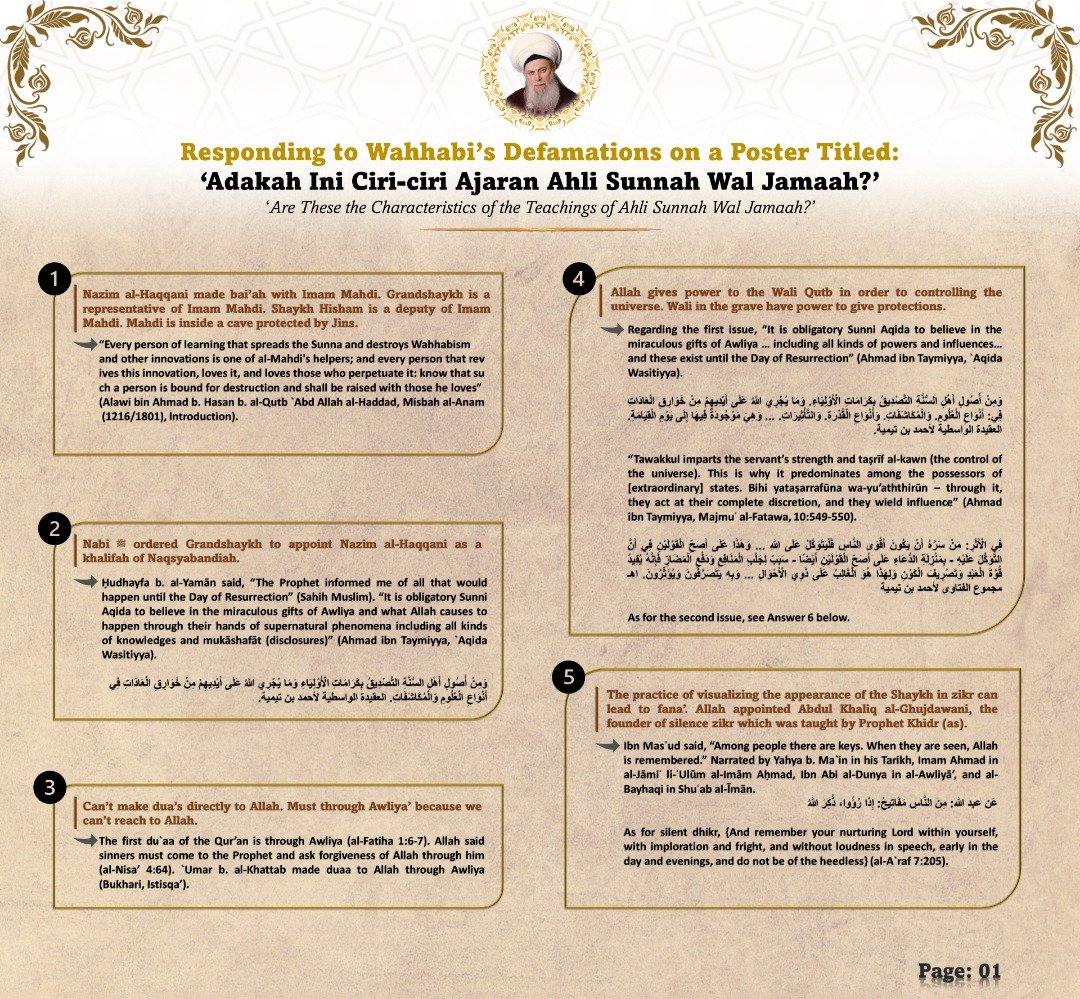
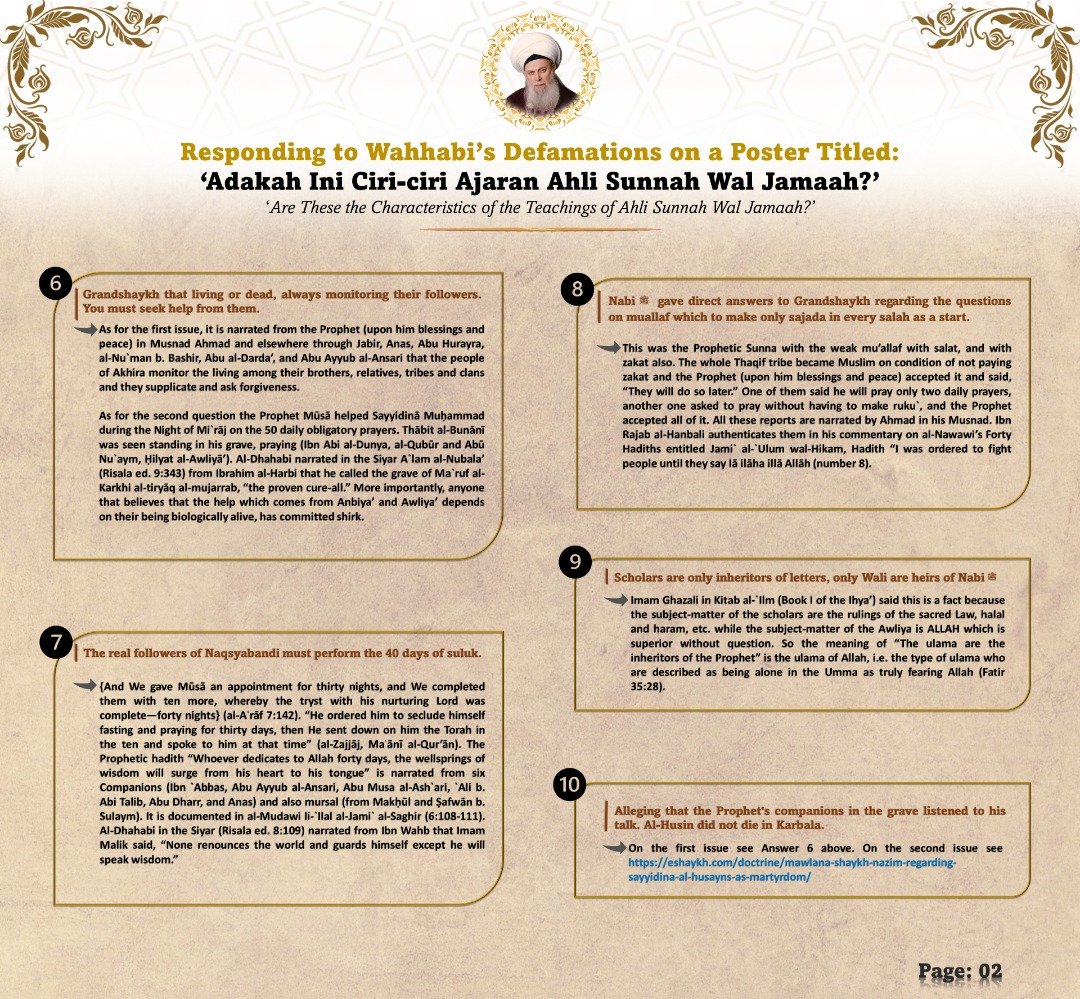
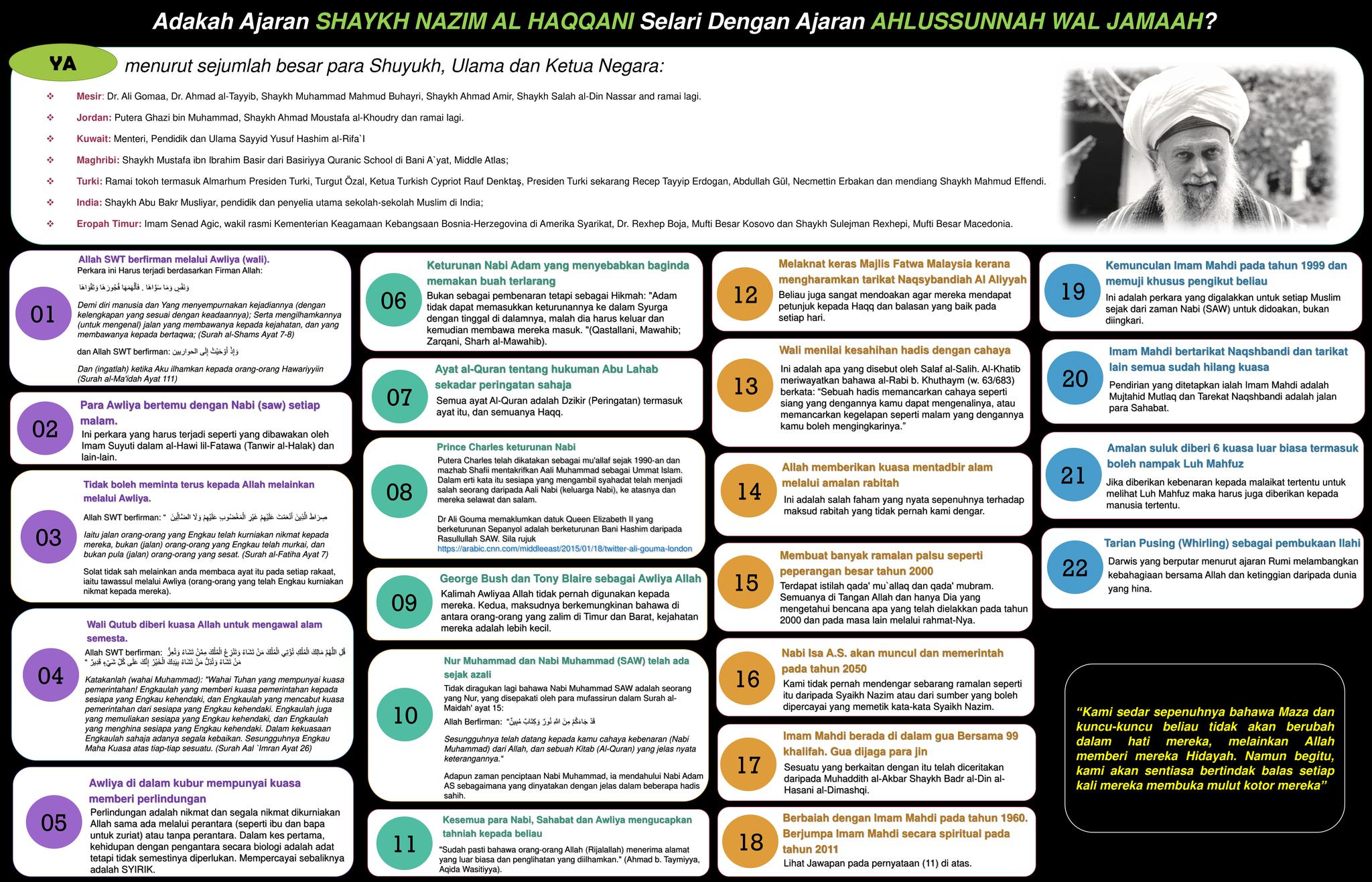
  • Replies to the Malaysia Wahhabi Accusations against Mawlana Shaykh Nazim al-Haqqani (q)

    Replies to the Malaysia Wahhabi Accusations against Mawlana Shaykh Nazim al-Haqqani (q)

    > Are the teachings of Shaykh Nazim Al Haqqani in line with the teachings of Ahlussunnah Wal Jamaah?

    Yes, according to a vast number of the Shuyukh of Hijaz, Yemen, Syria, Lebanon, Jordan, Palestine, Egypt, the Maghreb, Turkey, India, Pakistan, Central Asia and Southeast Asia and their communities.

    Hijaz: Shaykh Muhammad bin Alawi al-Maliki

    Yemen: Habib Umar, Habib Ali Jafri, Habib Salim Shatri

    Syria: Shaykh Abd Allah Sirajuddin, Mufti of Syria Shaykh Ahmad Kuftaro, Shaykh Rajab Deeb, Mufti of Damascus Shaykh Adnan Afyumi, Dr. Nur al-Din `Itr, Shaykh Adnan al-Majd, Shaykh Fatih al-Kattani, Dr. Abd Allah al-Kattani, and others;

    Lebanon: Mufti of Lebanon Shaykh al-`Arabi al-`Azzuzi, Mufti of Lebanon Hasan Khalid, Mufti of Lebanon Rashid Kabbani, Mufti of Bekaa Khalil al-Mays, Director of Dar al-Fatwa Shaykh Salah Fakhri, and others;

    Jordan: Prince Ghazi bin Muhammad, Shaykh Ahmad Moustafa al-Khoudry and others.

    Egypt: Dr. Ali Gomaa, Dr. Ahmad al-Tayyib, Shaykh Muhammad Mahmud Buhayri, Shaykh Ahmad Amir, Shaykh Salah al-Din Nassar and others.

    Kuwait: Minister of State, educator and scholar Sayyid Yusuf Hashim al-Rifa`i

    Morocco: Shaykh Mustafa ibn Ibrahim Basir of the Basiriyya Quranic School in Bani A`yat, Middle Atlas;

    Turkey: many figures including the late president of Turkey, Turgut Özal, the Turkish Cypriot leader Rauf Denktaş, the current President Recep Tayyip Erdogan, Abdullah Gül, Necmettin Erbakan, and the late Shaykh Mahmud Effendi.

    India: Shaykh Abu Bakr Musliyar the largest educator and overseer of Muslim schools in India, and others;

    Eastern Europe: Imam Senad Agic, official Representative of the Bosnia-Herzegovina National Ministry of Religion in the US, Dr. Rexhep Boja, Grand Mufti of Kosovo, and Shaykh Sulejman Rexhepi, Grand Mufti of Macedonia.

    > 1) Allah swt speaks through Awliyaa (saints).

    Any denial that Allah speaks through Awliya is kufr. Allah s.w.t. said:
    وَنَفْسٍ وَمَا سَوَّاهَا (7) فَأَلْهَمَهَا فُجُورَهَا وَتَقْوَاهَا ( 8 ) Surat al-Shams
    and he said:
    وَإِذْ أَوْحَيْتُ إِلَى الحواريين (111) Surat al-Ma’ida.

    > 2) The Awliyaa meet the Prophet (peace be upon him) every night.

    This is possible as established by Imam Suyuti in al-Hawi lil-Fatawa (Tanwir al-Halak) and others.

    > 3) Can’t ask God directly except through Awliyaa.

    صِرَاطَ الَّذِينَ أَنْعَمْتَ عَلَيْهِمْ غَيْرِ الْمَغْضُوبِ عَلَيْهِمْ وَلَا الضَّالِّينَ (7) Surat al-Fatiha
    Salat is invalid unless you read that verse in every rakaa, which is tawassul through Awliyaa.

    > 4) Wali Qutub was given authority by God to control the universe.

    قُلِ اللَّهُمَّ مَالِكَ الْمُلْكِ تُؤْتِي الْمُلْكَ مَنْ تَشَاءُ وَتَنْزِعُ الْمُلْكَ مِمَّنْ تَشَاءُ وَتُعِزُّ مَنْ تَشَاءُ وَتُذِلُّ مَنْ تَشَاءُ بِيَدِكَ الْخَيْرُ إِنَّكَ عَلَى كُلِّ شَيْءٍ قَدِيرٌ (26) Surat Aal `Imran

    > 5) Awliyaa in the grave have the power to provide protection.

    Protection is a blessing and all blessings are God-given whether through intermediaries (such as a mother and father for procreation) or without intermediary. In the first case the biological life of the intermediaries is customary but not inherently necessary. To believe otherwise is SHIRK.

    > 6) Adam’s descendants caused him to eat the forbidden fruit.

    Not as a justification but as a Hikma: “Adam could not bring his descendants into Paradise by staying in it, rather he had to go out and then bring them in” (Qastallani, Mawahib; Zarqani, Sharh al-Mawahib)

    > 7) The Quranic verse about Abu Lahab’s punishment is just a reminder.

    All of the Qur’an is a Dhikr (Reminder) including that verse, and it is all Haqq.

    > 8 ) Prince Charles is a descendant of the Prophet.

    Prince Charles has been said to be a mu’allaf (sympathetic) since the 1990s and the Shafii madhhab defines Aal Muhammad as the Umma of Islam. In that sense anyone who takes shahada has become one of the Aal of the Prophet, upon him and them blessings and peace.

    Additionally, Dr Ali Gomaa the former Mufti of Egypt said “it is said” that Queen Elizabeth II’s Spanish female ancestor was a Hashimi descendant of the Prophet (upon him blessings and peace). https://arabic.cnn.com/…/01/18/twitter-ali-gouma-london

    > 9) George Bush and Tony Blair as awliyaa of Allah.

    The words awliyaa of Allah were never applied to them. Second, the meaning may have been that among the tyrants of east and west they were the lesser evils.

    > 10) Nur Muhammad and Prophet Muhammad (peace be upon him) have existed since time immemorial (azali).

    There is no question that the Prophet Muhammad, upon him blessings and peace, is a Nur by agreement of the mufassirun in Surah al-Maidah
    قَدْ جَاءَكُمْ مِنَ اللَّهِ نُورٌ وَكِتَابٌ مُبِينٌ (15)
    As for the time of the Prophet’s creation it predates Adam as clearly stated in several authentic hadiths.

    > 11) All the Prophets, companions and awliyaa congratulated him.

    “It is definitely established that the Friends of Allah receive extraordinary addresses and visionary disclosures.” (Ahmad b. Taymiyya, `Aqida Wasitiyya)

    > 12) Strongly cursed the members of the Malaysian Fatwa Council for banning the Naqshbandiah Al Aliyyah order.

    He also strongly made duaa for them to be guided to Haqq and Sawab on a daily basis.

    > 13) Wali evaluates the authenticity of hadith with light.

    This is a rule cited by the Salaf al-Salih. Al-Khatib narrated that al-Rabi` b. Khuthaym (d. 63/683) said: “A hadith shines a light like daylight by which you may recognize it, or casts a darkness like that of night by which you may disown it.”

    > 14) God gives the authority to govern the world through the practice of rabitah.

    This is a complete misrepresentation of the meaning of rabitah which we have never heard of.

    > 15) Making false predictions like a big war in the year 2000.

    There is qada’ mu`allaq and there is qada’ mubram. It is all in the hand of Allah and only He knows what disaster was avoided in 2000 and other times through His mercy.

    > 16) Prophet Jesus A.S. will emerge and rule in 2050.

    We have never heard of any such prediction from Shaykh Nazim or from a reliable source quoting Shaykh Nazim.

    > 17) Imam Mahdi is in a cave with 99 caliphs. The cave is guarded by jinn.

    Something to that effect was related from the Muhaddith al-Akbar Shaykh Badr al-Din al-Hasani al-Dimashqi.

    > 18) Pledged allegiance to Imam Mahdi in 1960. Met Imam Mahdi spiritually in 2011.

    See Answer to point (11) above.

    > 19) The appearance of Imam Mahdi in 1999 and special praise for his followers.

    This is something every Muslim from the time of the Prophet (upon hiom blessings and peace) is encouraged to pray for, not disbelieve in.

    > 20) Imam Mahdi of the Naqshbandi order and other orders have all lost power.

    The established position is that Imam Mahdi is a Mujtahid Mutlaq and that the Naqshbandi Tariqa is the way of the Sahaba.

    > 21) The practice of suluk is given 6 extraordinary powers including being able to see Luh Mahfuz.

    If permission is given to certain angels to see the Lawh al-Mahfuz then it is possible for it to be given to certain human beings also.

    > 22) Whirling dervishes as a divine opening.

    Whirling dervishes according to the teachings of Rumi represent happiness with Allah and elevation from the lowliness of dunya.

  • Misguidance of Muhammad Asri Zainul Abidin Concerning Hadith – Penyelewengan MAZA Mengenai Hadis

    A critical assessment by Shaykh Gibril Fouad Haddad of the 50-page booklet entitled “Negative Impact Of Fabricated Hadith Upon The Image Of Islam” authored and published in 2019 by the Mufti of Perlis Muhammad Asri Zainul Abidin (https://ms.wikipedia.org/wiki/Penahan…, who subscribes to newfangled views on a number of Islamic issues including Usul al-Hadith (Hadith Principles).

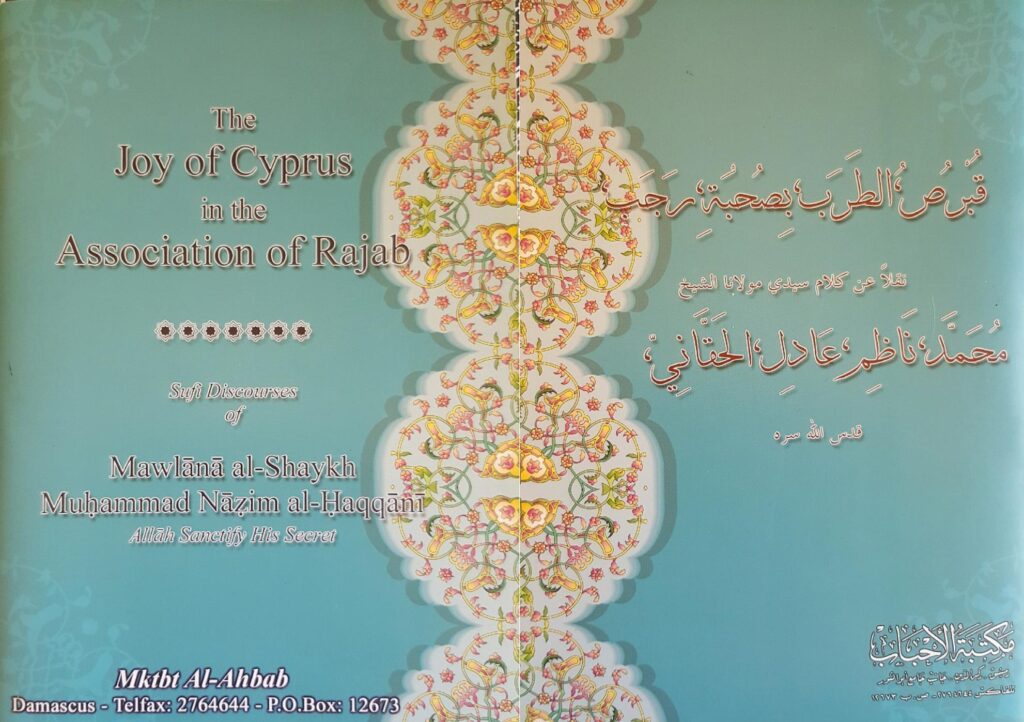
  • The Joy Of Cyprus In The Association Of Rajab – قبرص الطرب بصحبة رجب

    by Gibril Fouad Haddad

    Mawlana [Shaykh Nazim al-Haqqani] gave us the gift of light-filled association of the blessed visit that travellers from Divinely-protected Sham paid him in the last two weeks of the sacred month of Rajab in the year 1422 – October 2001 – in his house and zawiya in the Turkish Cypriot town of Lefke. His discourse shook us, too our souls swimming in the higher orbits, sat king-like on the throne of our minds and hearts!

  • Muhyiddin ibn `Arabi

    A BRIEF BIOGRAPHY SHEIKH MUHYIDDIN IBN AL-ARABI

    Born in the Spanish township of Murcia on 17th of Ramadan 561 AH (27th or 28th of July 1165 AD) with respectable family roots of Banu Tayy, this unique mystic of Islam, Muhammad Muhyiddin ibn ‘Ali ibn Muhammad ibn al-‘Arabi al-Ta’i al Hatmi is universally known as al-Shaykh al-Akbar (The Greatest Master). His father, ‘Ali ibn Muhammad served in the Army of Ibn Mardanish, and later when Ibn Mardanish died in 1172 AD, he swiftly shifted his allegiance to the Almohad Sultan, Abu Ya’qub Yusuf I , and became one of his military advisers. While still a boy of eight years old the family of Ibn ‘Arabi left Murcia and took Seville for their home. In Stephen Hartenstein’s words: “Ibn ‘Arabi (ق) spent his youth age in the most advanced city of that time, an atmosphere steeped in the most important ideas – philosophical, scientific and religious – of his day. For the young Ibn ‘Arabi, twelfth century Seville was no doubt the equivalent of today’s London, Paris and New York” (Hirtenstein 36).

    EDUCATION

    Sheikh Ibn ‘Arabi’s (ق) dogmatic and intellectual training began in the cultural and civilized centre of Muslim Spain as Seville was known in 578 AH. Most of his teachers mentioned in the ijaza wrote to King al-Muzaffar were the ‘ulama’ of the Almohad era and some of them also held the official posts of Qadi or Khatib (Addas 97). He was just a young boy when his father sent him to the renowned jurist Abu Bakr ibn Khalaf to study Qur’an. Ibn ‘Arabi (ق) learnt the recitation of the Qur’an from the book of Al-Kafi in the seven different readings (qira’at). The same work was also transmitted to him by another muqri, ‘Abd al-Rahman ibn Ghalib ibn al-Sharrat (Addas 44). At the age of ten, he was well-versed in the Qira’at; afterwards he learned the sciences of Hadith and Fiqh from the famous scholars of the time. 

    He studied Hadith and Sira with the muhaddith ‘Abd al-Rahman al-Suhayli, who taught him all of his works. He also attended lectures of Qadi Ibn Zarkun, who transmitted to him Kitab al-Taqassi of Al-Shatibi and issued him an Ijaza (permission of transmission to others.)

    Later he studied under ‘Abdal-haqq al-Azd al-Ishbili his works on Hadith; these are Ahkam al-Kubra, al-Wusta and al-Sughra. In addition to his own works, he also transmitted to Ibn ‘Arabi (ق) the writings of the famous Zahiri scholar, Ibn Hazm al-Andalusi (Addas 45). The complete list of his teachers and masters can be found in a scholarly certificate Ijaza given to Sultan al-Ashraf al-Muzaffar, in this document Ibn Arabi (ق) mentioned 70 of his teachers and masters (Ibn ‘Arabi, “Ijaza li Malik al-Muzaffar”).

    THE SUFI PATH

    Ibn ‘Arabi (ق) was about sixteen when he went into seclusion. He himself never explicitly mentioned the reasons behind it. Yet the following factors are worth considering: A story heard 150 years after his death relates that Ibn ‘Arabi (ق) was at a dinner party which rounded off with wine. As he took the wine cup to his lips, he heard a voice: “O Muhammad, it was not for this that you were created! ” (Addas 36). This gave him an urge to quit worldly pursuits and to embark upon the search of God. Another important cause of this retreat was a vision of the three great Prophets, Jesus, Moses and Muhammad (s). Ibn ‘Arabi (ق) says: “When I turned to this path, it was accomplished through a dream-vision (mubashshira) under the guidance of Jesus, Moses and Muhammad (s).

    In it, Jesus urged him to take to asceticism (Zuhd), Moses divulged to him that he would get to the infused knowledge called “al-‘ilm al-ludunni ” and the Prophet Muhammad (s) advised him to follow him step by step; “Hold fast to me and you will be safe!” (Addas 41). As a consequence of this retreat and the spiritual insights granted to him, two things seem to have happened: firstly, he began to study Qur’an and Hadith and secondly, Ibn‘Arabi (ق) was sent by his father to meet the great philosopher Ibn Rushd (Averroes, 1126-98).

    The meeting was very significant in the sense that Ibn ‘Arabi (ق) answered his questions in ‘Yes’ and ‘No;’ and Ibn Rushd declared: “I myself was of the opinion that such a thing (i.e. spiritual knowledge without learning) is possible, but never met anyone who had experienced it” (OY: II, 372).

    THE SPIRITUAL MASTERS

    Ibn ‘Arabi’s (ق) contact with spiritual masters began in Seville. At that time the pursuit of the spiritual life normally involved keeping company with many different masters instead of only one master. Ibn ‘Arabi has described brief biographies of his masters in his book Ruh al-Quds. Al-‘Uryabi of ‘Ulya was one of those masters who visited Seville nearly in 1184, and Ibn ‘Arabi (ق) met him at that stage of his life when he had already embarked on the Path. One can call al-‘Uryabi as his first teacher (al-murshad al-awwal), a relationship which is always of significance in Sufism. Shaykh al ‘Uryabi had reached the high spiritual state of total servitude (‘ubudiyya), which in Ibn ‘Arabi’s (ق) eyes surpass all others. Later on meetings with his Shaykh transformed Ibn ‘Arabi’s (ق) life so quickly that he wrote in Futuhat : “While our Shaykh al-‘Uryabi was ‘Isawi at the end of his life. I was ‘Isawi at the beginning of my life on this path. I was then taken to the states of Musawi sun illumination. Then I was taken to Hud (as), and after that to all the Prophets, there after I was taken to Muhammad (s). That was the order for me in this path” (OY: III, 361-2). Some of his masters are:

    1. Abu al-Abbas al-‘Uryabi
    2. Abu al-Hajjaj al-Shubarbuli
    3. Abu Ya’qub Yusuf al-Kumi
    4. Abu Yahyh al-Sanhaji
    5. Abu ‘Abd Allah Ibn Qassum
    6. Abu ‘Abd Allah al-Sharafi
    7. Abu ‘Abbas al-Kashshab
    8. Abu ‘Imran al-Murtuli
    9. Salih al-‘Adawi
    10. Abd al-‘Aziz al-Mahdawi
    11. ‘Abd Allah al-Mawruri
    12. Abu Madyan al-Ghawth (Rahmatullahi `Alayhi)

    Detail about his masters and their relationship with Ibn ‘Arabi (ق) can be found in Ruh al-Quds, Durrat al-Fakhira and Futuhat al-Makkiyya.

    MEETING WITH KHIDR (as)

    Factually speaking, Shaykh al-‘Uryabi (ق) initiated Ibn ‘Arabi’s (ق) contact with Khidr in Seville, when he was only a youth. Ibn ‘Arabi (ق) says: “I met Khidr (as) in Qus al-haniyya in Seville, and he said to me: “Accept what the Shaykh says!” I immediately turned to the Shaykh [‘Uryabi (ق)] and before I spoke he said: “O Muhammad, does that mean that every time you contradict me, I will have to ask Khidr (as) to instruct you in submission to the masters?” I replied: “Master, was that person Khidr?” He answered: “Yes!” (I, 331; Addas 63). That was his first meeting with Khidr (as). Later Ibn ‘Arabi (ق) met Khidr (ق) several times. In 1193 at the age of 28 Ibn ‘Arabi (ق) visited Tunis and the main intention behind this visit was to meet with the great disciples of Abu Madyan, notably ‘Abd al-‘Aziz al-Mahdawi and Ab┴ Muhammad ‘Abdallah al-Kinani. He stayed there for less than a year during which he realized the station of pure servant-hood and the Muhammadian inheritance.

    On return from Tunis, he met Khidr (as) for the second time; it happened when he was returning from Tunis by boat, on a lunar night he saw a man walking on the water towards him. On reaching the boat, Khidr (as) stood on the sea and showed him that his feet were still dry. After that Khidr (as) conversed with Ibn ‘Arabi (ق) in a language which is peculiar to him (OY: III, 182).

    On reaching Andalusia in late 590 AH, Ibn ‘Arabi (ق) had his third meeting with Khidr (as), this time Khidr (as) performed a miracle to provide evidence to a companion of Ibn ‘Arabi (ق) who denies the existence of miracles. A common feature of all these meetings with Khidr (as) was that they took place in the presence of a high rank spiritual master initiating Ibn ‘Arabi (ق) into the knowledge of Divine mysteries.

    GREAT VISION IN CORDOBA

    In the year 586, Ibn ‘Arai (ق) had a rare vision in Cordoba, in which he met all the Prophets from the time of Adam to Muhammad (s) in their spiritual reality. Prophet Hud (as) spoke to him and explained him the reason for their gathering. We can trace what Hud (as) told him in Ruh al-Quds when Abu Muhammad Makhluf al-Qaba’ili – a saint of Cordoba – died, the Prophet Hud (as) said: “We came to visit Abu Muhammad Makhluf al-Qaba’ili” (Ibn ‘Arabi (ق), “Ruh al-Quds” 116). According to a tradition among the direct disciples of Ibn ‘Arabi (ق), Hud (as) explained that the real reason for their gathering was to welcome him (Ibn ‘Arabi (ق)) as the Seal of Muhammadan Sainthood (khatm al-wilaya al- muhammadiyya), the supreme heir (Addas 76).

    Stephen Hartenstein writes in Unlimited Mercifier: “It is from his return from Tunis, we find the first evidence of Ibn ‘Arabi (ق) beginning to write; later in 1194, he wrote one of his first major works, Mashahid al-Asrar al-Qudusiyya (Contemplation of the Holy Mysteries) for the companions of al-Mahdawi and perhaps around the same time, in a space of four days, also composed the voluminous Tadbirat al-Ilahiyya (Divine Governance) in Mawrur (Moron) for Shaykh Abu MuHammad al-Mawruri” (Hirtenstein 91).

    IBN AL-ARABI (ق) IN FEZ

    The next five years were a time when Ibn ‘Arabi (ق) entered into a different world. Having been brought up under the instruction and guidance of various spiritual masters of the West, he now came into his own as a Muhammadan heir. As from this point the real genius of Ibn ‘Arabi (ق) began to emerge and he became universal. Shortly after his return to Andalusia from North Africa in 1194 AD, Ibn ‘Arabi’s (ق) father died and within a few months his mother also died. Now the responsibility of the upbringing of his two young sisters fell upon his shoulders. His cousin came to him with the request that he should take up his wordly duties, and give up the spiritual life (Hirtenstein 110). It was a time of great uncertainty for Seville because of War. The third Sultan, Abu Yusuf Ya’qub al Mansur offered him a job but Ibn ‘Arabi (ق) refused both the job and an offer to marry off his sisters and within days he left Seville heading toward Fez, where they settled.

    In Fez Ibn ‘Arabi (ق) met two men of remarkable spirituality, one of them was a sufi Pillar (awtad), his name was Ibn Ja’din and the second one known as al-Ashall (literally, “the withered” for the reason that he had a withered hand) who was the Pole (qutub) of his time. It was a happy period of his life, where he could utterly dedicate himself to spiritual work. In Fez in 593 AH, he entered a new degree of vision in the form of light. In that vision, when he was leading a Prayer in the al-Azhar Mosque, he saw a light which was more visible than what was in front of him, he says:

    “I lost the sense of behind [or front]. I no longer had a back or the nape of a neck. While the vision lasted, I had no sense of direction, as if I had been completely spherical (dimensionless).” (II, 486)

    THE MIRAJ

    This light vision is a kind of foretaste of his great journey of light; in 594 AH at the age of ,33 Ibn ‘Arabi (ق) was taken on one of the most extraordinary journeys of all: the ascension (al-mi’raj). Ibn ‘Arabi (ق) wrote a book named Kitab al-Isra (Book of the Night Journey) immediately after this spiritual experience. Some sections of Futuhat and Risalat al-Anwar (Epistle of Light) also elaborate the hidden meaning of these ascensions. It is quite interesting that Ibn ‘Arabi’s (the Muhammadan heir) ascension is an exact and faithful replication of the Prophet Muhammad’s ascension; while the Prophet’s ascension took place bodily, his ascension was a dream, vision of a heart or the vision of forms. These divine events are determining the way forward for his ultimate role as the Seal of Muhmmadan Sainthood. Ibn ‘Arabi (ق) tells us that in 594AH, in Fez Allah laid bare to him its true import and showed him the signs of his function. In al-Futuhat al-Makkiyya Chapter 43 starts with an open claim to the Seal of Muhammadian Sainthood, he says:

    “I am the Seal of Sainthood without any doubt, by virtue of the inheritance of the Hashimite, along with the Messiah” (OY: IV, ;71 Elmore, “Islamic Sainthood” 56.)

    These lines have no possible room for doubt: Ibn ‘Arabi (ق) is identifying himself categorically and explicitly with the Muhammadan Seal like Jesus (as).

    A LIFETIME FRIEND

    In Fez 594 AH, ‘Abdallah Badr al-Habshi first met Ibn ‘Arabi (ق) and for the rest of his life became a soul mate and a faithful friend, accepting Ibn ‘Arabi (ق) as his master and guide. Al-Shaykh al-Akbar said about him in Futuhat:

    “[He is a man] of unadulterated clarity, a pure light, he is a Habashi named ‘Abdallah, and like a full moon (badr) without eclipse. He acknowledges each person’s right and renders it to him; he assigns to each his right, without going further. He has attained the degree of true discrimination. He was purified at the time of fusion like pure gold. His word is true, his promise sincere.”
    (OY: I, ;72 Hirtenstein 123.)

    In the year 595AH Ibn ‘Arabi (ق) returned to the Iberian Peninsula for the last time and it seems he had two intentions: to introduce al-Habashi to his friends and masters and to depart finally from the land of his birth. In December 595AH, Ibn ‘Arabi (ق) was in Cordoba, at the funeral of Ibn Rushd, whom once he met some 18 years earlier. When the coffin was loaded upon a beast of burden, his works were placed upon the other side to counterbalance it. Ibn ‘Arabi (ق) said the following verse on that day:

    “Here the master, there his works – Would that I know if his hopes have been fulfilled!”

    From Cordoba they travelled to Granada and met with ‘Abdallah al-Mawruri and Abu Muhammad al-Shakkaz. From Granada to Murcia, the town of his birth and stayed with an old friend Abu Ahmed Ibn Saydabun, a famous disciple of Abu Madyan who at the time of their meeting was evidently going through a period of fatra or suspension. They travelled again to Almeria, where they spent the month of Ramadan in 595AH and Ibn ‘Arabi (ق) wrote Mawaqi‘ al-Nujum over a period of eleven nights. Perhaps in Almeria also, he started writing ‘Anqa’ Mughrib where a full explanation about the Seal of Saints can be found.

    These were his last days in the West, where he started visiting his masters for the last time, and he collected his writings and ensured that he must at least have a single copy of all of his works as now he was departing toward the East forever. When he left Andalusia for the last time he appeared to have a vision of his future destiny at the shores of the Mediterranean as he later told his stepson Sadr al-din al-Qanawi:

    “I turned towards God with total concentration and in a state of contemplation and vigilance that was perfect: God then showed me all of my future states, both internal and external, right through to the end of my days. I saw that your father, Ishaq ibn Muhammad, would be my companion and you as well.”
    (Hirtenstein 127).

    In the year 597 AH/1200 AD, he was in Morocco and took his final leave from his master Yusuf al-Kumi, who was living in the village of Salé at that time. This shows that he had finally completed his training under the teachers of his early years and was now ready to go to a new world. On his way to Marrakesh of that year he entered the Station of Proximity (maqam al-qurba).

    “I entered this station in the month of Muharram in 597 AH… In joy I began to explore it, but on finding absolutely no one else in it, I felt anxiety at the solitude. Although I was realized in [this station], but I still did not know its name.”(II, 261).

    Later Ibn ‘Arabi (ق) finds Abu ‘Abd al-Rahman al-Sulami in it and he told Ibn ‘Arabi (ق) that this station is called, the station of proximity (maqam al-qurba) (Hirtenstein 128).

    VOYAGE TO CENTRE OF THE EARTH

    Having left behind all the traces of his past, Ibn ‘Arabi began his long journey to the East from Marrakesh where he had a marvellous vision of the Divine Throne. In that vision, he saw the treasures beneath the Throne and the beautiful birds flying about within them. One bird greeted Ibn ‘Arabi (ق), saying that he should take him as his companion to the East. This companion was Muhammad al-Hassar of Fez. He started travelling with his friends towards the East. After visiting the tombs of his uncle Yahya and Abu Madyan in ‘Ubbad near Tlemcen, he stopped at Bijaya (Bougie) during Ramadan and saw a remarkable dream about the secrets of letters and stars. He saw himself united like the union in marriage with all the stars of heavens, after the stars the letters were given his union, and he united with all of them (Ibn ‘Arabi (ق), “Kitab al-Ba’” 10-11). This dream was later interpreted as the great Divine knowledge which was bestowed upon Ibn ‘Arabi (ق).

    His next stop was Tunis 598 AH where he happened to see Shaykh ‘Abd al-‘Aziz al-Mahdawi whom he had met about six year ago. At the same time he continued writing works like Insha’ al-Dawa’ir for his friend al-Habashi. Resuming his travels, he arrived in Cairo in 598 AH/1202 AD where he met his childhood friends, the two brothers, ‘Abdallah Muhammad al-Khayyat and Abu al-Abbas Ahmad al-Harrari and stayed at their house in the month of Ramadan. That was a period of great devastation, terrible famine and plague for Egypt. Perhaps the death of his companion Muhammad al-Hassar was due to this plague. Ibn ‘Arabi (ق) saw this devastation with his own eyes and a passage of Ruh al-Quds tells us that when people made light of Allah’s statutes He imposes the strictures of His Law upon them (Yusuf 240).

    Ibn ‘Arabi (ق) resumed travelling toward Palestine, and his route took him to all the major burial places of the great Prophets: Hebron, where Abraham (as) and other Prophets are buried; Jerusalem, the city of David (as) and the later Prophets; and then Medina, the final resting place of the Prophet Muhammad (s).

    PILGRIM AT MAKKAH

    At the end of his long journey he finally arrived at Makkah, the mother of all cities, in 598 AH (July 1202 AD). The Makkan period of Ibn ‘Arabi’s (ق) life can be viewed as the fulcrum of his earthly existence; he spent 36 years of his life in the West and the upcoming 36 years in the East, with about 3 years in Makkah in between. This three year period both connects and differentiates the two halves of his life. It was in Makkah that he started writing the very best of his works Al-Futuhat al-Makkiyya.

    It was in Makkah that his status as Seal of Muhammadian sainthood was confirmed in the glorious vision of the Prophet; it was in Makkah that he had the dream of the two bricks and his encounter with the Ka‘ba; (Hirtenstein 148) it was in Makkah that the love of women was first evoked in his heart by the beautiful Nizam, (Hirtenstein, 149) who became the personification of wisdom and beauty. It was in Makkah that he first savoured the pleasures of married life, marrying and becoming a father. His first wife was Fatima bint Yunus and their first son Muhammad ‘Imaduddin was probably born in Makkah (Hirtenstein 150).

    Again it was in Makkah that he produced the very best of his works, like the first chapters of Futuhat, the Ruh al-Quds, the Taj al-Rasa’il, the Hilyat al-Abdal and a collections of hadith qudsi named Mishkat al-Anwar. It is also worth mentioning that in Makkah he met some of the eminent scholars of Hadith of his time. Amongst them was Abu Shuja’ Zahir bin Rustam, father of the beautiful Nizam and Yunus ibn Yahya al-Hashimi (ق), who had been a pupil of the great ‘Abd al-Qadir al-Jilani (ق) in Baghdad. He not only introduced Ibn ‘Arabi (ق) to the Prophetic tradition but also transmitted to him the teachings of the most famous saint in Egypt in the ninth century, Dhu’l-Nun al-Misri. Yunus ibn Yahya also invested him in front of the Ka‘ba with the Khirqa (Mantle) of ‘Abd al-Qadir al-Jilani (ق). (Ibn ‘Arabi (ق), “Nasab al-Khirqa”; Elmore “Mantle of Initiation” 1-33). It is believed that after wearing this Khirqa Ibn ‘Arabi (ق) formally joined the Qadriyya Tariqah.


  • Sayyidina `Uthman’s Preservation of Qur’an

    Imam al-Bukhari narrates in his Sahih (6:183-184) from Anas ibn Malik (RA) that Hudhayfa ibn al-Yaman came to `Uthman at the time the people of Sham were battling for the conquest of Armenia and Azerbaijan [~year 25H] with the people of Iraq. Their divergences in Qur’anic reading had alarmed Hudhayfa, so he said to `Uthman: “O Commander of the Believers! Rescue (adrik) this Umma before they differ over the Book the way the Jews and Christians differed.” Whereupon `Uthman wrote to Hafsah: “Send us the folios (suhuf) so that we copy them then we shall return them to you.” Hafsa then sent them to `Uthman who ordered Zayd ibn Thabit, `Abd Allah ibn al-Zubayr, Sa`id ibn al-`As, and `Abd Allah ibn al-Harith ibn Hisham who copied those folios into the volumes (masahif). `Uthman said to the group – the three Qurayshis: “If you find yourselves differing, [the three of] you and Zayd ibn Thabit in anything of the Qur’an, write it in the tongue of the Quraysh. For it was not revealed but in their tongue.” They did [as instructed] and when they finished copying the folios into the volumes, `Uthman returned the folios to Hafsa, sent one mushaf to each region from those they had copied, then ordered that all other [copies] of the Qur’an in each and every folio or volume be burnt.

    In his commentary on the above hadith in Fath al-Bari, at the line “when they finished copying the folios into the volumes, `Uthman returned the folios to Hafsa,” Ibn Hajar says:

    “Abu `Ubayd [a tashif for Abu `Ubayda al-Qasim ibn Sallam as proven below] and Ibn Abi Dawud [in Kitab al-Masahif] added: with a chain from Shu`ayb, from Ibn Shihab who said: Salim ibn `Abd Allah ibn `Umar told me:

    “‘Marwan used to send courier to Hafsa – meaning, when he was governor of al-Madina on behalf of Mu`awiya – asking her for the folios from which the Qur’an had been copied [kutiba minha] but she would refuse to give them to him.’ Salim continued: ‘When Hafsa died and we returned from her burial, Marwan sent an imperative request to `Abd Allah ibn `Umar for those folios to be sent to him, whereupon `Abd Allah ibn `Umar sent them to him. Then Marwan gave an order so they were ripped up (fashuqqiqat). He said: ‘I only did this because I feared that after the passing of time, some doubter might foster doubt with regard to those folios.’

    “The wording in Abu `Ubayda’s narration has: ‘so they were torn up’ (famuzziqat). Abu `Ubayd [sic] said: ‘It is unheard of that Marwan tore up the folios except in this narration.’ I say: Ibn Abi Dawud narrated it with a chain from Yunus ibn Yazid, from Ibn Shihab, in a similar wording which has:

    “‘When Marwan was governor of Madina he sent courier to Hafsa asking her for the folios but she refused him access to them.’ He [Ibn Shihab al-Zuhri] said: ‘Salim ibn `Abd Allah [ibn `Umar] narrated to me saying: “When Hafsa died…”‘ and he narrated it [as above] and said in it: ‘So he had them ripped up and burnt’ (fashaqqaqaha wa harraqaha).

    “And this addition also came up in the narration of `Umara ibn Ghuzayya, also an abridged one, but he, also made it part of the narration of Zayd ibn Thabit who said in it: ‘So he had it washed out thoroughly (faghassalaha ghaslan)’…. And all this can be reconciled by saying that this was done with all the folios – renting, them washing out, then burning – and it is possible that the word [harraqaha] be read ‘kharraqaha’ (he had them rent) so that he has them first torn up then washed out, and Allah knows best.”

    These Suhuf were the Mushaf of Abu Bakr (RA) kept by `Umar, then kept by his daughter Hafsa the Mother of the Believers, wAllahu a`lam.  

  • Imam Suyuti’s 101 Special Attributes of Jumu`ah

    View the Readings here.

    A complete reading and English translation and explanation of Imam al-Suyuti’s description of the 101 special attributes of the day of Jumua Prayer (Congregation/Friday) entitled Nur al-Lum`a fi Khasa’is al-Jum`a by Shaykh Gibril Fouad Haddad held during the “self-isolation” Jumu`as of Rajab, Sha`ban and Ramadan 1441 / April-May 2020.

  • Shaykh Dr. Samer al-Nass on Quranic Expertise

    https://www.facebook.com/AlmdrstAlqranytFyAldyarAlshamyt/videos/443810089603542/?t=80

    SHAYKH DR. SAMER AL-NASS: “QURANIC EXPERTISE USED TO BE MIXED WITH THEIR FLESH AND BLOOD, BUT NOW IT IS A TITLE”

    “Ibn al-Jazari in Ghayat al-Nihaya cites a Qur’an master who had three teachers, with the third of whom he read 90 khatmas of Qur’an (complete readings under examination) in the different canonical readings. Let me be frank with you: I only read a total of three khatmas with two different shaykhs. The one that read 90 khatmas, for sure knows more than the one who read 60, and the latter for sure knows more than the one who read 30. Their taste, their sense, their understanding of the discipline has become their flesh and blood. Now, I am sorry to say, we have covetous title-seekers. ‘Reading with ijaza‘? What is that? I never heard of that. Since when does every student who finishes a book automatically become qualified to teach it?? We will not ‘give you ijaza‘ just because you did a reading and just ‘to make you pleased’ but we will pound you like kebbeh in the old-style stone mortar until you are truly ready!

    “It is the same, I am sorry to say, with some fatwas we hear nowadays. Such as that ‘for the Baccalaureate exams it is OK not to fast [in Ramadan]’. I went to the examination center and saw the fast-breakers, not two or three or a few, but the whole lot sitting and smoking openly. Of course these are criminals, but do you not think that the one who gave them that fatwa is their partner in crime?

    “We have something the other communities do not have. We have the HERITAGE OF THE PROPHET (upon him blessings and peace) and if we do not keep that jealously then we are completely worthless.”

  • Jaliyat al-Akdar: Salawat of the Khalidi-Naqshbandi Grandmasters through the Companions of Badr

    Jaliyat al Akdar wal-Sayful Battar Bil-Salat `ala al-Nabi al-Mukhtar (The Remover of Harms and Trenchant Sword by Invoking Blessings on the Chosen Prophet Muhammad) is a major supplication in Arabic by the polyglot Grandmaster of the Naqshbandi Tariqa from Shahrazur (Iraqi Kurdistan), Mawlana Khalid al-Baghdadi (1190-1242/1776-1827) through the 99 Divine Names, the Great Invocations of Blessings on the Prophet through his Names and Attributes, and the Names of the 313 Companions of the Great Battle of Badr (Ramadan 2/March 624) recited in full by Gibril Fouad Haddad as ordered by Qutb al-Mutasarrif and the Grandmaster of the Naqshbandi Sufi Way, Mawlana Shaykh Hisham Kabbani (b. 1364/1945) and with his isnad (chain of transmission, see below) to Mawlana Khalid, on 17 Ramadan 1441/11 May 2020.

    The full PDF of the typeset Arabic text of the supplication can be downloaded here.  It is read here in the 1411/1991 Ihlas Wakfi offset edition of its original calligraphied Turkish print. Shaykh Gibril apologizes for his errors in recitation.

    Mawlana Khalid al-Baghdadi died of the plague in Damascus in his early fifties along with his foremost student and immediate appointed successor Shaykh Isma`il al-Anarani who died 16 days after him and was buried next to him, and some relatives of Mawlana Shaykh Khalid — also buried nearby — on the top of the holy Mount Qasyoun in Damascus, referred to in the Qur’an as “The Fig” in the Sura of the same name. Mawlana Khalid had supplicated Allah to remove the plague from the people of Damascus and put it in him instead, and his prayer was answered.

    Muhammad Amin Ibn `Abidin the arch-jurist of Damascus saw himself in dream praying the funeral prayer over our liege-lord the Rightly-Guided Caliph `Uthman b. `Affan (Allah be well-pleased with him) and mentioned it to his teacher, Mawlana Shaykh Khalid. The latter said: “The dream you saw represents me, as Sayyidina `Uthman is my ancestor. You shall pray the funeral prayer over me.” And this took place not long afterwards.

    The recitation of the names of the Companions of Badr carries immense blessing and constitutes one of the most powerful intercessory prayers to Allah which the Ummah has practiced in times of calamities, plague and pestilence and also as a means of victory over enemies. It is most effective as a remedy against the harm of one’s own rebellious soul, which is each person’s ultimate arch-enemy. It is read on 17 Ramadan, the day of the anniversary of the Battle of Badr which represents the triumph of belief over unbelief. This anniversary coincides with the traditional celebration of the Descent of the Qur’an (Nuzul al-Qur’an) in one block to the nearest heaven, of which the spiritual culmination takes place on the Night of Power (Laylat al-Qadr) on 27 Ramadan.

    It is for such events, among other blessings, that the month of Ramadan has been called the Month of Allah and also the Month of the Ummah, i.e. the time when all post-Prophetic humanity enjoys the holiest of its states on earth despite our difficulties and shortcomings.

    بسم الله الرحمن الرحيم

    أنبأني سيدي ومولاي القطب المتصرِّف مولانا الشيخ محمد هشام قبّاني بن الحاج محمد سليم قباني الحسيني النقشبندي الحقاني اللبناني الشافعي (ولد يوم الأحد 14 صفر 1364/28 كانون الثاني يناير 1945) حفظه الله تعالى وسيدي سلطان الأولياء الشيخ محمد ناظم الحقاني (1341-1435) رحمه الله تعالى،
    قال الأول: عن سيدي سلطان الأولياء الشيخ محمد ناظم عادل القبرصي الحقاني وسيدي سلطان الأولياء، واعظ الأمة مولانا الشيخ عبدالله فائز بن الحاج حسين بن الحاج عبد الله الداغستاني (1294-1393) رحمهما الله تعالى،
    وقال الثاني: عن سيدي سلطان الأولياء، واعظ الأمة مولانا الشيخ عبدالله فائز الداغستاني،
    عن شيخه الشيخ شرف الدين زين العابدين الداغستاني الرَّشادي (ت 1354)،
    عن خاله الشيخ أبي محمد المدني الداغستاني الرَّشادي القادري (ت ؟)،
    عن الشيخ أبي أحمد حاج عبد الرحمن أفندي الداغستاني الثُّغُري (ت 1299)،
    عن الشيخ السيد جمال الدين أفندي الغازي الغُموقي الحسيني القادري (ت 1292) – وكان يذكر جهراً،
    كلاهما عن الشيخ محمد أفندي بن إسحاق اليَراغي الكَورالي (ت 1260)،
    عن خاص محمد أفندي الشِّيرْواني الداغستاني (ت 1254)،
    كلاهما عن الشيخ ضياء الدين إسماعيل أفندي ذبيح الله القَفْقازي الشِّيرْواني الكُرْدامِيري الداغستاني (ت ؟)،
    عن الشيخ إسماعيل الأناراني (ت 1242) – الذي سمعت مولانا الشيخ ناظم يروي عن مولانا الشيخ خالد فيه: سيجلس الشيخ إسماعيل الأناراني على سجادتي ومن بايعه فقد بايعني، لكن انتقل بعد الشيخ خالد بقليل، قيل 16 يوما (ثم انظر نعته في (الحدائق الوردية) للشيخ عبد المجيد الخاني)،
    كلاهما ـ الكُرْدامِيري والأناراني ـ عن مولانا الشيخ ضياء الدين خالد ذي الجَناحين أحمد بن حسين الشَّهْرَزوري السُليماني البغدادي ثم الدمشقي النقشبندي العثماني (1190 أو 1193-1242) — وكان يوقّع بتوقيع (أضعف العباد خالد النقشبندي المجددي القادري السهروردي الكبروي اﻟﭽﺸﺘﻲ)، قال: جَالِيَةُ الأَكْدَار وَالسَّيْفُ البَتَّار بِالصَّلاةِ عَلَى النبيِّ المُخْتَار صلَّى اللهُ عَلَيْهِ وَآلِهِ وَصَحْبِهِ وَسَلَّم.

  • Why Do Prayers Vary in Rakats?

    Question:
    Why are the various Fard prayers a particular number of rakats; for instance, why is Fajr just two, all of the other four, except for Maghrib (three)?

    Answer:

    Because we pray the way our Blessed Prophet prayed, and that is the way the Prophet Muhammad  was taught Salat by Sayyidina Gibril.

    Also, there are many great open and hidden blessings in the way we pray: standing-bowing-prostrating-sitting etc., the number of rak`ats, the supplications we say, their words and numbers, etc. Among those blessings: healing of the heart, mind, and body; taming the dragons that nest in the breast; purification; concentration; discipline; connection with our Lord and the Highest Assembly, the angels; obedience of our Prophet; oneness with the Believers; rehearsing thanks and adoration of our Lord; placing our hopes and fears in His Hands; obtaining forgiveness; losing oneself in His Highest praise; acknowledging that we are nothing and only He remains; surrendering to His Will…

    Hajj Gibril Haddad

  • Awliya and Qutb

    Awliya and Qutb

    Question:

    In defense against those who believe that Islam is devoid of spiritual ranks of merit, mysticism, or miracles; what is the basis for belief concerning the awliya and their hierarchy? What is agreed upon as regards their existence and the existence of the Qutb? Can anyone recommend a book demonstrating how the idea of the qutb has been mentioned in the works of Ahl al-Sunnah throughout history;

    Answer:

    Wa `alaykum as-Salam

    The Holy Qur’an explicitly mentions the Awliya and describes them as the Believers who fear Allah. So we must all agree that there are Awliya and that they exist co-terminally, which means co-everlastingly, with the Religion.

    Next, the Holy Qur’an explicitly mentions that the Believers have “levels” (darajaat), and that “He raises” (yarfa`u) some of the Believers above others, and that “above every knowledgeable one there is one more knowledgeable,” and that “those whom Allah has particularly graced” are defined as “the Prophets, the Siddiqs, the Shuhada‘, and the
    Righteous” in that order, and that some Prophets were exalted above others. So we must all agree that there is a hierarchy of Believers in general, and hierarchies of Awliya and Prophets in particular.

    The early scholars of hadith were very interested in the topic of the Awliya’ and they gathered not only the hadiths but even non-Prophetic accounts about their states and miraculous gifts, and even dreams. For example, Ibn Abi al-Dunya’s al-Awliya and the compilations respectively entitled al-Awliya‘ and Karaamaat al-Awliya’ by the two Hanbalis al-Khallal and al-Lalika’i.

    These books are available to us but ignorance is human and people tend to be the enemies of what they don’t know, including “those who believe that Islam is devoid of spiritual ranks of merit… or miracles.” The Holy Prophet, upon him blessings and peace, said that the only cure for the malady of ignorance is to ask. Sufyan ibn `Uyayna said, “The learned scholar does not care for people’s positions or feelings when he disseminates the Divine wisdom; if you accept he praises Allah, and if you reject he praises Allah.” (As for the term “mysticism,” it is best to steer clear of it since it is largely misunderstood to mean something ethereal or purely spiritual and tends to betray the fact that the
    Awliya are the most practical and act-oriented people of humankind.)

    As for a specific terminology for the Awliya’ the Prophet, upon him blessings and peace, did use certain terms such as Abdal (substitutes), or certain qualifications of intercession such as the hadiths in which he refers to certain arch-intercessors such as our liegelords `Uthman ibn `Affan and Uways al-Qarani. Ibn `Asakir in his Tarikh (51:282)
    narrates with his chain that when Imam al-Shafi`i finished memorizing the Qur’an he said to himself: “You have obtained the Qutb al-A`zam” i.e. the greatest axis or authority around which the Religion revolves.

    However, the terms “ghawth”, “qutb” and the like to mean individuals among the Awliya’ may have been devised as a convention among later scholars (see, for example, the treatises by al-Suyuti in al-Hawi lil-Fatawi and Ibn `Abidin in his Rasa’il) and are not binding upon the Muslims as terminology. As the scholars say, “la mushahata fil-mustalah,” meaning: Don’t nag about how we call things.

    The Risala of the Imam of fiqh and Sufi of superlative adab: Ibn `Abidin on these categories and their evidence, in print [in one such book]. Allah have mercy on him! It is part of his 2 volumes of Rasa’il. I got my copy in a
    bookstore in Makka al-Mukarrama. It is sad and ironic that all other copies that I saw in Damascus have been expurged of that particular treatise as well as Ibn `Abidin’s treatise in defense of his Shaykh, Mawlana Khalid al-Naqshbandi.
    There is no alternative that compares to the breadth and length of Ibn Abidin’s treatment since he recapitulates the dala’il and the entire literature with frequent reference to Shaykh Muhyi al-Din Ibn `Arabi, however, there is also the fatwa of Imam al-Suyuti in al-Hawi lil-Fatawi, entitled al-Khabar al-Dall `ala Wujud al-Qutbi wal-Ghawth wal-Abdal, which is a good start for brushing up on the proofs on the topic. This particular fatwa was also published by itself by Shaykh `Abd Allah al-Ghumari, Allah have mercy on all of them. See also the Yawaqit al-jawahir of Imam al-Sha`rani on which Inb Abidin also draws.

    Ahadith Regarding Qutb, Abdal, Nuqaba, Nujaba, Awtad

    Imam Jalaluddin as-Suyuti wrote an essay in his collection of fatwas, al-Hawi lil Fatawi, and called it: “The narrations which demonstrate the existence of the Qutb and the Awtad and Nujaba and Abdal.” At the beginning of it, he writes:
    “It has reached me that some of those who possess no knowledge deny what is famously known among the noble Awliya’, namely, that among them exist Abdal (substitutes), Nuqaba (chiefs), Nujaba (nobles), Awtad
    (supports, or pegs), and Aqtab (poles, or axial pivots), while there are numerous hadiths and narrations which affirm their existence and reality. So I have collected these narrations in this booklet to be of benefit. And know that the denial of the stubborn is not to be given any weight or importance… So I say, it is authentically narrated from (and then he lists 18 Companions and Followers), and those after them, innumerable reports which attest to the above.”39

    Then for the next 15 pages he lists over 50 narrations to demonstrate his point, from which we will choose a few, also adding some that he did not mention.1) From Umm Salamah: “Disagreement will occur at the death of a Khalif and a man of the people of Madina will come quickly to Makka. Some of the people of Makka will come to him…and swear allegiance to him between the Corner (Rukn) and Maqam. An expeditionary force will be sent against him from Syria…when the people see that, the Abdal of Syria and the best people of Iraq will come to him and swear allegiance to him…” 40

    This hadith alone suffices as evidence of their existence to the end of times.

     2) From Abu Sa’id al-Khudri: “The Abdal from my nation did not enter into Paradise with their actions, but rather through the mercy of Allah, through the unparalleled generosity of their souls, the fact that they hold no grudge or hatred against anyone and their hearts being at peace with everyone, and through mercy for the entirety of Muslims.” 41
    3) From Abu Darda’: “The Abdal have not come to be greater than the rest of the people by performing much fasting or prayers or tasbih, but rather by excellent morals, being true in their scrupulousness, their sound intentions, their hearts being at peace with all Muslims, and giving others sincere counsel for the sake of Allah.” 42
    4) Abu Darda’ said: “When Prophethood ended – and they were the supports (Awtad) of the earth – Allah substituted their places with 40 men from the nation of Muhammad (blessings and peace be upon him), who are named “Abdal” (the Substitutes). Not one of them dies except that Allah replaces him with another one to take his place, and they are now the supports of this earth. The hearts of 30 of them contain the same certainty (yaqin) which
    Sayyidina Ibrahim (asws) had. They did not succeed or rise above the other people with much fasting or prayer…but rather through being truthful in their scrupulousness, having noble intentions, having sound wholesome hearts, and giving all the Muslims sincere counsel, desiring by that the Pleasure of Allah, with patient forbearance, and a merciful core (of being), and humility without being meek. They do not curse anyone, or harm anyone, nor
    do they see themselves as being higher or nobler than anyone under them, or envy those above them. They do not fake their humility, nor fake their being dead to the world, nor are they ostentatiously impressed with themselves. They do not love the world, nor love for its sake…” 43
    5) Hudhayfa ibn Yaman said: “The Abdal in my community are in Syria, and they are 30 men on the way of Ibrahim (asws)… And the group (of righteous Awliya’) in Iraq are 40 men… 20 of them are on the way of ‘Isa (asws), and 20 of them have been given some of the instruments which the Khalifa Da’ud (asws) was given.” 44
    6) From ‘Ali: “The Abdal are in Syria, and they are 40 men. Whenever one of them dies, Allah substitutes another in his place. By means of them, Allah brings down the rain, gives victory over enemies, and diverts punishment from the people of Syria.” 45
    7) Also from Imam ‘Ali: “Do not curse the people of Syria, for the Abdal are among them, but curse their injustice.” 46
    8) Also from Imam ‘Ali: “The Abdal are from Syria, and the Nujaba’ are from Egypt, and the elite righteous servants (‘isaba) are from Iraq.” 47
    9) From Anas: “The earth will never be empty of 40 men who are similar to the Intimate Friend of Allah (Sayyidina Ibrahim). By them rain falls and victory is granted. Not one of them dies except that Allah replaces him with another.” Qatada said, “We do not doubt that Hasan al-Basri is one of them.” 48
    10) From ‘Ubada ibn Samit: “The Abdal in this community are thirty, their hearts like the heart of Ibrahim (asws) the Intimate of the All-Merciful. Whenever one of them dies, Allah substitutes another one in his place.” 49
    11) Also from ‘Ubada: “The Abdal in my community are thirty. By them, the earth is established (bihim taqum al-Ard), and by them you are sent rain, and by them you are granted help and victory.” 50
    12) Abu Hurayra said: “I entered upon the Messenger of Allah (blessings and peace be upon him) in the mosque, and he said to me, “O Abu Hurayra, in this hour, a man will walk through this door, who is one of the seven people of the world through whom Allah diverts punishment from the Earth’s inhabitants.” Just then a Habashi (Ethiopian) entered in through that door. He was bald and maimed, and was carrying a container of water on his
    head. So he said, “O Abu Hurayra, that’s him,” and then said to the man three times, “Welcome to Yasaar (other versions mention Hilal).” This man used to sweep and clean the Mosque, and he was a servant of Mughira ibn Shu’ba. 51
    13) From Abu Qilaba: “There will never cease to be in my Ummah seven, and they will never ask Allah without Him answering them. By means of them, you are given rain, victory, and protection (from enemies, harm, etc…).” 52
    14) Abdullah ibn ‘Amr narrated that the Prophet (salla allahu alayhi wa sallam) said: “In every generation of my community, there will be Sabiqun (forerunners).” 53
    15) “The land of greater-Syria (Sham) is the quintessence (safwa) of Allah’s lands on earth, and to it He draws His elect (safw) worshippers.” 54
    16) “The folk (Ahl) of the Qur’an are the folk of Allah (Ahl ul-Laah) and His elect.” 55
    The previous two hadiths support the meanings of the previous hadiths, which state that Allah has special elect servants, and that they are concentrated in Sham, among other places.
    17) From Anas: Allah said, “The most beloved of My worshippers to Me are those who love each other purely for My sake, who frequent the masajid, and ask forgiveness in the predawn hours. These are the ones whom I would bring to My attention when I wish to punish My creation, and then I divert My punishment from My creation because of them.” 56
    18) From Abu Hurayra: “Verily, there are supports (Awtad) for the masajid, whose sitting companions
    are the angels, seeking them out. So if they are in need, they (the angels) help them; and if they fall ill, they visit them; … and when they are present (in the masajid), they say, “invoke Allah, may Allah invoke you.” 57
    19) Another hadith which supports the meaning of many of the above narrations is related on the authority of Sa’d, which states: “Indeed, Allah supports this Ummah by their weak members, through their prayers, supplications, and sincerity,” and in another narration, “Is it not through the weak among the Ummah that you are granted provision and victory?” 58
    Abu Hurayra and others also related that the Messenger of Allah (asws) said: “Were it  not for servants of Allah bowing, infants feeding, and animals grazing, then Divine wrath would pour down upon you.” 59
    And from Ibn ‘Umar: “Allah repels calamities from 100 households due to the presence of one righteous Muslim amongst them.” 60
    20) Finally, Ibn ‘Asakir (1:299) and Ibn Abi Khaythama narrate that Uthman ibn ‘Ata was having a conversation with his father, who told him, “The Abdal are forty Insan (humans).” So he said to his father, “Forty men?” and his father replied, “Do not say men, but rather say humans, for there could be women among them.” 61
    This indicates that this hierarchy of Awliya’ is not only occupied by men, but also by women. Hafiz Sakhawi in his Maqasid al-Hasana (p. 10 #8) and Hafiz Suyuti in his Hawi lil Fatawi (2:250-51) state that Ibn ‘Asakir (Tarikh Dimashq 1:300) and Hafiz al-Khatib (Tarikh Baghdad 3:75-76) both relate that Abu Bakr al-Kattani said: “The Nuqaba are 300, the Nujaba are 70, the Abdal are 40, the Akhyar are 7, the ‘Umud (supports) are 4, and the Ghawth is 1. So the dwelling of the Nuqaba are in the Maghrib, the Nujaba in Egypt, the Abdal in Sham, the Akhyar travel throughout the Earth, the ‘Umud are in the corners of the Earth, and the Ghawth is in Makka. So when a need arises among the commonality, the Nuqaba plead to Allah to fulfill it, then the Nujaba, then the Abdal, then the Akhyar, then the ‘Umud, and if they are answered by Allah (it stops with them), and if not, then the Ghawth pleads, and he
    does not complete his request until it is answered.”Shaykh al-Yafi’i wrote in his book Kifayat al-Mu’taqid (“Sufficiency of the Believer”):

    “The righteous (Saliheen) are many, and they mix with the common people for the sake of their worldly and other-worldly benefit. And the Nujaba’ are fewer in number than the righteous, and the Nuqaba’ are fewer in number than the Nujaba’, and they mix with the elect servants. And the Abdal occupy the great countries of the earth. They only occupy a country one after another, so blessed be the people of a land among whom are two Abdal. And the Awtad are 4, one in Syria, one in Yemen, one in the East, and one in the West. And Allah causes the Qutb to travel the four horizons of the Earth, just as the constellations travel their course across the sky. And the states of the Qutb are veiled from the common and the elect, out of Allah’s jealousy for him, except that he is seen to be (at the same time) knowledgeable and ignorant, dim-witted and intelligent, taking and leaving, near and far, gentle and harsh, safe and dangerous…(meaning that he combines in himself the opposites). And the states of the Awtad are revealed to the elect. And the states of the Abdal are revealed to the elect and the Gnostics (who are under the elect). And the states of the Nuqaba’ and the Nujaba’ are veiled from the common, but they are revealed to each other. And the states of the righteous are revealed to both the common and the elect, so that Allah’s plans may be enacted. The number of the Nujaba’ are 300, and the number of the Nuqaba’ are 40, and the number of the Abdal is said to be 30, or 14, or 7 (and this is the most correct number), and the number of the Awtad are four. So when the Qutb dies, Allah replaces him with the best of the four Awtad. And when one of the four die, Allah replaces him with the best of the seven Abdal…and so on. And when Allah desires to start the Day of Judgment, He takes the life of all of them. Because of them and through them, Allah sends down rain from the sky and averts His punishment and tribulations from His servants… And the Qutb is the one mentioned who is upon the heart of the angel Israfil (upon him be peace), and his relation to the rest of the Awliya’ is like the center of the circle in relation to the circumference, and thus it is through him that Allah sets right the affair of the world… the Prophet (upon him be blessings and peace) did not mention anyone as being upon his heart, since Allah never created anyone whose heart could be comparable to his heart in its luminousness, subtlety, and nobility. So the hearts of the remaining Prophets and Angels and Awliya’ are to his heart like the light of the distant stars compared to the perfect light of the proximate Sun.”

    This was repeated and confirmed by Ibn Hajar al-Makki al-Haytami in his Fatawa Hadithiyya (p. 322-23), and by Ibn ‘Abidin al-Hanafi in his fatwa on the Abdal called “Ijabat al-Ghawth.” Hafiz Sakhawi states in his Maqasid (p. 9 #8):
    “…And what strengthens these hadiths (about the Abdal) and confirms them, and indicates their prevalence among the ‘Ulama is that Imam Shafi’i would sometimes comment about someone and say, “We used to count so and-so as one of the Abdal,” and Bukhari would say, “They would not doubt that so-and-so
    was one of the Abdal,” and other Imams and Huffaz 62 who would describe people in such a way.”
    This shows that it was a known and accepted truth among the Salaf that these categories of Awliya’ existed. For more examples, see Suyuti’s Hawi lil-Fatawi (2:251-55).
    Finally, Ibn ‘Abidin quoted Hafiz Ibn Hajar who said in his Fatwas:
    “The Abdal were mentioned in numerous narrations, some of them authentic (Sahih), and others not authentic. As for the Qutb, he was mentioned in some later narrations (Athar). And as for the Ghawth – in the description given him common among the Sufis – it is not established (in any authentic narration).”
    Then Ibn ‘Abidin commented:
    “We will quote in what follows Imam Shafi’i’s explanation of the Ghawth as being the Qutb, and this proves its being established and that they refer to one and the same thing, so know this. And the intention of the Hafiz (Ibn Hajar) was that mention of the Ghawth is not found in any Sahih hadith, but the fact that it is widespread and well-known, and frequently mentioned among the people of this pure path (the Sufis), is enough to indicate its established basis.”
    Was-Salam,
    GF Haddad


  • Sports in the Sunnah of Prophet Muhammad (s)

    Question:

    1) are there any forms of exercise that the Prophet (peace and blessings be upon him) and his companions did?
    2) what are the benefits of these
    3) which methods have been recommended
    4) how often should these be done
    5) i would welcome any other information on Islam and exercise

    Answer:

    A beautiful and important question.

    In the ancient world, sport did not originate for its own sake but, even in the West, in close connection with warfare, its arts and self-sacrificing, nation-building ethics. Nothing illustrates this better than the battle of Marathon giving its name to the highlight event of the modern Olympic games.

    The sports and physical skills practiced and recommended by the Prophet Muhammad, upon him blessings and peace, were all related to military training, such as archery, camel and horse racing, sword and spear among other weapon training, hunting (including tracking game and scouting), running, swimming and wrestling. All these sports and activities are part of the Prophetic Sunnah.

    Shaykh Muhammad `Alawi al-Maliki said in his 1999 book entitled “The Connection of Sport with Religion and Its Role in the Upbringing of Muslim Youth” (Silat al-Riyadatu bil-Din wa-Dawruha fi Tanshi’ati al-Shabab al-Muslim), in which he used al-Kattani’s al-Taratib al-Idariyya’s review of the sports practiced in Madina, that even though the Prophet (s) was “imbued with a highly sportsmanlike spirit”, yet his rank is too exalted to be thus described, although he gathered in his noble person every excellent attribute imaginable, including physical ones.

    It is right to say that the Prophet, upon him blessings and peace, was the apex of “futuwwa“, a word that is is both nobler and more inclusive of moral qualities than the modern Arabic word for sport, “riyada” and which denotes four meanings: youth, virility, bravery, and generosity. Among the ideals subsumed in these four attributes is the modern concept of sportsmanship.

    ARCHERY (al-rami)

    “Archery is part of man’s primordial disposition” (al-rami min al-fitra), the Prophet is related to have said. Arabic bows are famed for their light weight, strength, and precision. Several hadith monographs were devoted to the topic of archery, perhaps the most reliable being al-Sakhawi’s al-Qawl al-Tamm fi Fadl al-Rami bil-Siham. A Turkish compilation of 40 such hadiths was translated into English.The Prophet said: “Practice archery. It is truly among your best distractions (fa’innahu min khayri lahwikum).” Narrated by al-Bazzar (§1146) with a strong chain cf. al-Haythami (5:268).When the verse {Make ready for them all you can of force and of horses tethered} (8:60) was revealed, the Prophet, upon him blessings and peace, said: “Lo! Truly, force is archery. Lo! Truly, force is archery.” Narrated by Muslim. He also said: “Truly, Allah Most High brings three people into Paradise because of a single arrow: its maker who intended goodness out of it, the archer, and the arrowhead fitter. So shoot or ride, but I love better that you shoot rather than ride.” (Abu Dawud) He also said: “Whoever abandons archery after learning it, becoming uninterested, it is a blessing he has denied.” Abu Dawud. In Muslim: “He has disobeyed.” In Ibn Majah: “He has disobeyed me.”

    In one of the most moving and lesson-rich hadiths in the whole Sunna, the Prophet, upon him blessings and peace, passed by two groups competing in archery, whereupon he said, “Shoot, Banu Isma`il! Truly your forefather was an archer; and I am with the Banu Fulan.” Hearing this they stopped, so the Prophet said: “What is the matter? Why don’t you shoot?” They said: “Messenger of Allah, how can we shoot [against them] when you are with them?” So he said: “Shoot! I am with all of you.” Narrated by al-Bukhari. Ibn Hajar revealed in Fath al-Bari that the unnamed party was Mihjan ibn al-Adhra`.

    In battle, the Prophet, upon him blessings and peace, encouraged Sa`d ibn Abi Waqqas to shoot with a unique encouragement: “Shoot, may my father and mother be your ransom!” Our liegelord `Ali said, may Allah ennoble his face: “I never heard him ransom any man thus after Sa`d.” Al-Bukhari.

    Sa`d himself explained the reason behind this immense honor: “I am the very first Arab ever to shoot an arrow for the sake of Allah Most High.” (Al-Bukhari and Muslim) This latter reason is paramount for any military act to qualify for jihad: “My love is a must,” the Prophet said, “for whoever walks between the two targets carrying MY bow, not Chosroes’s bow.” Narrated by Abu Nu`aym in Riyadat al-Abdan.

    Imam al-Shafi`i was a master of archery. Ibn Zhahira in al-Jami` al Latif (p. 266) mentions that al-Shafi`i had actually drunk Zamzam to three intentions: preexcellence in learning, archery, and entering Paradise.

    The benefits of these sports are self-discipline and ennoblement as well as a noble social pastime and regimen of fitness and alertness with obvious applications to wartime preparations. The Prophet said, upon him blessings and peace: “The strong believer is better than the weak believer” (Sahih Muslim). The primary application of this hadith is physical as in the Qur’anic verse already cited (8:60), then spiritual. He also said: “Do not practice pelting (la takhdhifu), for neither can it be used for hunting, nor for checking the enemy; all it does is put out eyes and shatter teeth.” Al-Tabarani and Abu Nu`aym, Riyadat al-Abdan.

    The Prophet also said that, except for a man’s training of his own horse, restringing or shooting his bow, and playing with his spouse, all sports are “idle and meaningless” (batil). The meaning of this hadith, however, is that everything that qualifies as preparation for jihad is constructive and meaningful. Moreover, the “batil” in the hadith is not an excoriation but a recommendation of preference. The proof for this is in the mursal Prophetic hadith from Ibn Shihab in Abu Dawud’s Marasil: “Relax the hearts from time to time.” Al-Bukhari strengthened this narration as stated in Fayd al-Qadir. It is in this sense that Abu al-Darda’ relatedly said: “Truly I recreate my soul with some of the batil so that I can arise for haqq.” Similarly, our liegelord `Ali, Allah be well-pleased with him and all the Companions: “Recreate those hearts, for they tire the way bodies tire.”

    EQUITATION and camel-racing including breeding, training and competition

    The Prophet, upon him blessings and peace, preferred horses above all other animals (al-Nasa’i). He was able to ride without saddle, as mentioned in the report in which one night a loud noise startled the people of Madinans who gathered and went out in the direction of the noise. They met up with the Prophet (s), who had already gone out to check and was now coming back, mounted on a saddleless horse and girded with his sword, and reassuring them with the words: “Fear not, fear not.” (Al-Bukhari and Muslim)
    Among the hadiths on horses: “Goodness is tied to the forelocks of horses until the Day of Resurrection” (al-Bukhari) and “Let there be no race except between camels, horses, or arrows.” (Abu Dawud)
    Al-Bukhari narrates that the Prophet, upon him blessings and peace, organised horse races and used both normal horses and horses which had been prepared for racing and warfare, called “mudammara“. The process of tadmir involves a reduced dietary regimen and the inducement of profuse sweating so the horse becomes lean and strong.He also narrated that when a nomad’s camel outpaced the Prophet’s she-camel, al-`Adhba’, which was known to be always first in racing, the Muslims felt sad. The Prophet consoled them and taught them the proper demeanour in sportsmanlike support of one’s team: “Almighty Allah has decreed that nothing shall have a permanent glory.”
    Among the works composed on horses and horsemanship mentioned by al-Kattani in al-Taratib al-Idariyya are al-Hasan ibn `Arafa’s al-Khayl, Siraj al-Din al-Bulqini’s Qatr al-Sayl fi Amr al-Khayl (an adaptation of a work by al-Dimyati), Wali al-Din al-`Iraqi’s Fadl al-Khayl, al-Suyuti’s Jarr al-Dhayl min `Ilm al-Khayl, Ibn al-Qayyim’s al-Furusiyya, Ibn Hudhayl al-Andalusi’s Halbat al-Fursan wa-Shi`ar al-Shuj`an as well as Tuhfat al-Anfus wa Shi`ar Sukkan al-Andalus in two parts: jihad and weaponry including horses, Muhammad ibn al-Amir `Abd al-Qadir al-Jaza’iri’s al-Safinat al-Jiyad (The Very Fast Steeds), and Shams al-Din al-Bakhshi al-Khalwati’s Rashahat al-Midad fima Yata`allaqu bil-Safinat al-Jiyad.

    SWORDSMANSHIP AND SPEARSMANSHIP

    The Prophet, upon him blessings and peace, owned several swords, among them one named Dhul-Fiqar (thus called because there were some small holes in its blade) which he had gained among the spoils in the battle of Badr as narrated from Ibn `Abbas by al-Tirmidhi and others, and another sword made by the Banu Hanifa who were famous for their craftsmanship. The day he entered Mekkah as a conqueror, he wore a sword whose handle and/or hand-guard was overlaid with gold and silver. He seldom parted with his sword and often delivered khutbah  leaning either on his sword or his bow. This gesture is actually a Sunna in the Jumuah prayer which is fulfilled by using any staff to lean on.
    The Prophet was a keen spearsman as well. When Ubay ibn Khalaf showed up dressed in his armor on top of his horse at the battle of Uhud, shouting, “May I not survive if Muhammad survives!”, he wreaked havoc on the Muslims. Several of them intercepted him but none of them was mounted, so Ubay killed or maimed them all in one charge after another, including a woman, Umm `Umara Nasiba bint Ka`b, an Ansari woman of the Banu Najjar who fought together with her husband and her two sons. She got gashed in her shoulder, among other wounds she suffered in that battle. Then the Prophet ordered them to clear the way. When Ubay charged again, the Prophet took a spear and, according to the narrator, “sprang up with a motion that sent us scampering away from him like gadflies off the back of a camel”. He sighted the clavicle Ubay showing through a gap between the helmet and the breastplate, and he speared him there.

    SPRINT RACING (sibaq al-`adwi) and long distance walking

    The Quran in Surat Yusuf (verse 17) has the brothers of the Prophet Yusuf, saying to their father, the Prophet Ya`qub, upon our Prophet and them blessings and peace, {O father, we went racing with one another…} The term “nastabiq” in the original Arabic clearly refers to a race the brothers claimed they participated in. In the same Sura, verse 12 states: {Send him (Yusuf) with us tomorrow so that he may revel and play with us}.One time the Prophet raced with his wife `A’isha, upon him and her blessings and peace, and she beat him. Some time later, they raced again and he beat her. The Prophet then said: “One all!” (hadhihi bi-tilk). Abu Dawud, Ahmad, and Ibn Majah.

    Ibn Sa`d narrated from Nafi` that when Waqid ibn `Abd Allah died of dropsy, Ibn `Umar prayed over him and buried him then he called the bedouins to gather around him and organized sprint races. Nafi` said: “I asked him: ‘You buried Waqid just now and you’re having the Bedouins race?’ He replied: ‘Woe to you, Nafi`! When you see Allah Most High bring something to pass, let it go (falhi `anh).’”

    Ibn Mas`ud narrates that on the battle of Badr, which took place on Ramadan 17, the under-equipped, fasting Muslims went out three to each camel. The Prophet was teamed with `Ali and Abu Lubaba. When it was the Prophet’s turn to ride they would say: “You ride and we two shall walk” but he would answer: “Neither are the two of you stronger than me in walking, nor am I less in need of the reward than you!” (Ahmad and al-Hakim)

    SWIMMING

    The Prophet said, upon him blessings and peace: “Everything other than the remembrance of Allah is idle talk and heedlessness except four things: walking between two targets [during archery practice]; training his horse; entertaining his spouse; and teaching swimming.” (Al-Nasa’i, al-Bazzar, al-Tabarani, al-Baghawi, al-Diya’ and others with a strong chain according to al-Haythami). Our liegelord `Umar ibn al-Khattab wrote to the Muslims of Syro-Palestine to make sure they taught their sons swimming. (Ibn Hibban, al-Tahawi and others)

    Al-Bayhaqi and others narrated that he also said: “Teach your sons swimming and archery and teach women spinning.” Another version states: “What excellent distraction for the female believer in her home is spinning!”

    WEAPONRY

    Abu Dawud narrated from Anas that the Abyssinians practiced and played with their spears in Madina.

    Upon seeing the Abyssinians “dance” (tazfinu) with swords, spears and shields in Madina the Prophet, upon him blessings and peace, approved and said: “Let the Jews [of the city] know that, in our religion, there is leeway (fus-ha). I was sent with forgiving, pristine faith.” (Ahmad, al-Humaydi, al-Harith, and others.) Some versions precedes it with his harangue: “Play, Banu Arfada!” The Prophet also called his young wife `A’isha to watch. This play took place on more than one occasion.

    Many great Muslims including the likes of the great general Salah al-Din al-Ayyubi were outstanding exponents of the art of fencing.

    WRESTLING (mutaraha and musara`a)

    Al-Tabarani with a strong chain according to al-Haythami, and Abu Nu`aym in Riyadat al-Abdan narrate that the Prophet would allow youths to join up for jihad only if they passed a wrestling test.

    Imam al-Suyuti in his book on wrestling entitled al-Musara`a ila al-Musara`a (Nimbly to Wrestling), mentions that the Meccans were famed for besting all the other tribes at wrestling, and that our liegelord `Ali ibn Abi Talib was a particularly fearsome wrestler.

    Rukana ibn `Abd Yazid, the strongest of the Quraysh in physical power, happened one day to meet the Messenger of Allah, upon him blessingsand peace, in one of the mountain passes, and the latter said: “Will you not fear Allah, and accept the revelation which I offer you?” He replied, “If I knew what you say to be true, I would follow you!” The Prophet asked, “Will you know my statements to be true if I wrestle you to the ground?” Rukana said yes. The Prophet continued, “Then rise that I may throw you down.” Rukana rose to the attack, but as soon as the Prophet seized him, Rukana fell to the ground helpless. He said, “Once more, Muhammad!” But he was knocked down again. Rukana ran away saying: “This is sorcery! I never saw anything like it. By Allah, I was completely helpless until he pinned me down.” Ibn Ishaq in his Sira, Abu al-Qasim al-Taymi in Dala’il al-Nubuwwa, Abu Nu`aym in the Hilya, and al-Suhayli in al-Rawd al-Unuf.

    Ibn `Asakir narrated mursal in his Tarikh (59:87) from the junior Tabi`i `Urwa ibn Ruwaym that a Bedouin came to the Prophet, upon him blessings and peace, and said, “Wrestle with me.” Mu`awiya got up and said, “I shall wrestle with you!” The Prophet said: “Mu`awiya will never lose!” Then he wrestled down the Bedouin. At Siffin, our liegelor `Ali said: “Had I remembered that saying I would have never fought Mu`awiya!”

    The Prophet, upon him blessings and peace, asked: “Whom do you consider a wrestler among you?” The people replied: “The man whom the others cannot defeat in wrestling.” He said: “No, it is he who controls himself when he is angry.” (Abu Dawud.) This is confirmed by Ibn `Abbas’ reaction when he came across some weight-lifters who were practicing jerk-and-lift with rocks (yarba`un hajaran): “Allah’s workers are stronger than those.” Abu Nu`aym, Riyadat al-Abdan, and Lisan al-`Arab.

    The Prophet’s physical strength, upon him blessings and peace, is also illustrated by the report in which he asked a man to place a rock on top of `Uthman ibn Mazh`uns grave; when he was unable to move it, the Prophet rolled up his sleeves and helped him and the whiteness of his arms was visible. Narrated from an unnamed Companion by Abu Dawud and al-Bayhaqi in al-Sunan al-Kubra (3:412) with fair chains cf. Ibn Hajar, Talkhis al-Habir (2:134); Ibn al-Mulaqqin, Tuhfat al-Muhtaj (2: 29), and al-Arna’ut’s edition of Ibn al-Qayyim’s Zad al-Ma`ad (1:506).

    The Naqshbandi sources mention that the great and pious Sayyid Amir Kulal al-Bukhari was a champion wrestler in his youth. One day, a spectator thought to himself: “How is it that a person who is the descendant of the Prophet and a scholar, is practicing this sport?” Later, he dreamt that the Day of Judgement had risen. He felt that he was in great difficulty and that he was drowning. Sayyid Amir Kulal appeared before him and rescued him, saying “Did you witness my power in wrestling and my power in intercession?”

    In Bosnia to this day, the highlight of the Sunnet or “circumcision festival” is oil-wrestling competitions between adult males as boys (up to 150 all at once) get circumcised.

    From all the evidence above it can be deduced that martial arts, riflery, sharpshooting and markshmanship, riding and racing (including motoring), and all the traditional forms of athleticism are also recommendable, as well as individual or organized outdoor activities such as fishing, camping, trekking, and scouting.

    Next in recommendation are the sports that develop fitness, coordination, and team work since all these attributes are needed in jihad. In such a scenario, rugby, soccer, handball come before tennis, squash and badminton. But the primary benefits of such as golf, bowling, and pool billiards are {but play and distraction (la`ibun wa- lahw)} as Allah Most High described human life in three places in the Qur’an (6:32, 47:36, 57:20), meaning batil in the meaning discussed above, although some professionals derive a good living from such sports.

    And yet the Prophet, upon him blessings and peace, also countenanced and tolerated physical displays unconnected with jihad but purely festive, such as the Abyssinian type of light male dancing already mentioned, as well as the “hajal” which some Companions of the First Emigration extemporaneously took up around him once. Our liege-lord `Ali, Allah be well-pleased with him, said:

    I visited the Prophet, Allah bless and greet him, with Ja`far (ibn Abi Talib) and Zayd (ibn Haritha). The Prophet, Allah bless and greet him, said to Zayd: ‘You are my freedman’ (anta mawlay), whereupon Zayd began to hop on one leg around the Prophet (hajala). The Prophet, Allah bless and greet him, then said to Ja`far: ‘You resemble me in my creation and my manners’ (ashbahta khalqi wa-khuluqi), whereupon Ja`far began to hop behind Zayd. The Prophet, Allah bless and greet him, then said to me: ‘You are part of me and I am part of you’ (anta minni wa-ana mink) whereupon I began to hop behind Ja`far. Narrated by Ahmad and Ibn Hibban.

    Sports should be practiced in moderation and should not interfere, among other obligations, with the fulfillment of worship and the pursuit of livelihood. To a student who wished to learn archery the early Hanafi master and ascetic Dawud al-Ta’i said: “Archery is fine but your days are counted; look well how you spend them.”

    The Prophet warned about the self-delusion of many people when it came to the proper use of two things: health and free time. Many Shuyukh have said time and again how extremely sad it is to see Muslims East and West waste the precious leisure time of their lives as well as their resources on watching grown men kick an air-filled hide back and forth for hours on end, chasing after the news of profligate, tattooed soccer players as if they were role models, and displaying their images and even the cross-emblazoned flags of their favorite teams on their cars, in their homes, and on their very heads and chests with caps and shirts. When some football club thousands of miles away defines who you and your family are, you are a truly bankrupt person.

    Sports fanaticism giving way to hooliganism and other disordered behavior, and gladiator-like competitiveness bordering on brutality and cruelty are, of course, even more out of order.

    Blood sports are extinct, but, alas, not yet for animals. Certain gladiator-like spectator animal sports thrive on cruelty to animals such as cock-fighting, dog-fighting, and other such duels. In Asia, dung-beetles are set upon one another in ludicrous “beetle sumo” matches until one snaps the other in two, to the oohs and aahs of children watching.

    The Prophet, upon him blessings and peace, strenuously forbade the use of live animals for target practice or exposing them to suffering for entertainment. This is an important aspect of the Religion which is unfortunately ignored in many parts of the Gulf as well as elsewhere in the Muslim world (such as one Central Asian nation most recently in the news), where live pigeons or even cubs and pups are routinely used by falconers as practice preys for their hunting birds.

    To conclude, some luminous words on sports in Islam from Shaykh Seraj Hendricks of South Africa:

    It would do us well to remember that in Islam sport has a number of very specific functions. Firstly, it has a military function whereby the discipline of sport may be harnessed to prepare the individual for the exacting task of fighting a legitimate battle. Allah says in surah Anfaal, verse 60 : {Against them make ready your strength to the utmost of your power, including steeds of war...}

    Secondly, it has a social function in bringing people together which is in keeping with one of the chief purposes of Islam and that is to foster a spirit of mutual love, co-operation, respect, and friendship amongst all members of society. In Islam the spirit of sport is one of seeking the general upliftment of everyone, and not a spirit which encourages competition against the other, where the ‘other’ is imagined to be different in race, religion, or nationality. Hitler’s attempt at the Berlin Olympic Games to show the superiority of the ‘Aryan Race’ over everyone else is one example of what the Islamic spirit is most decidedly not. Barbarous discrimination in sport, apartheid style, is another.

    Thirdly, and closely linked to the second, is the recommended attempt at developing mastery and control of the self. While to win might be a commendable achievement, in Islam to overcome and conquer the lower self is even more commendable. It was Lao Tzu who correctly observed that ‘he who overcomes others is strong; [but] he who overcomes Himself is mighty.’

    Fourthly is the relationship between the body and soul. In Islam divisions between the sacred and secular hold little meaning. Everything we do here in the earthly domain has an immediate impact on the sacred and spiritual domain. A healthy body can act as nothing less than a healthy home for the numerous challenges and demands made upon the soul. Ghazi ibn Muhammad in his work, ‘The Sacred Origin of Sport and Culture’ says: ‘Indeed, a proper balance of work and relaxation is the way to strengthen the soul’s capacity and endurance for work, just as a proper balance of physical exercise and rest makes the body strong and fitter. Thus one of the Companions of the Prophet, Abu al-Darda, explained: ‘I entertain my heart with something trivial in order to make it stronger in the service of the truth.’

    And Allah Most High knows best.

    References:

    `Abd al-Hayy al-Kattani. Nizam al-Hukumat al-Nabawiyya. [Al-Taratib al-Idariyya].
    Abu Nu`aym. Riyadat al-Abdan.
    Al-Maliki. Silat al-Riyadati bil-Din wa-Dawruha fi Tanshi’ati al-Shabab al-Muslim.
    “Sport and Islam” by Shaykh Seraj Hendricks, Muslim Views (November 1998).

    Was-Salam,

    GF Haddad

  • The Lights of Revelation: Shaykh Gibril Haddad Book Tour UK

    shaykhgibrilbooktourbeaconuk World renowned hadith scholar Shaykh Dr. Gibril Fouad Haddad,  currently a visiting fellow at the University of Brunei, will be undertaking a one week book tour promoting his latest book The Lights of Revelation. This is an English translation of the first Hizb of al-Baydawi’s Anwar al Tanzil. This is possibly the most popular work on tafsir in the world.   All events are free. Click here for further details.
  • Sayyidina `Ali ibn Abi Talib (r)

    2000px-rashidun_caliph_ali_ibn_abi_talib_-_%d8%b9%d9%84%d9%8a_%d8%a8%d9%86_%d8%a3%d8%a8%d9%8a_%d8%b7%d8%a7%d9%84%d8%a8-svg

    `Ali ibn Abi Talib `Abd Manaf ibn `Abd al-Muttalib ibn Hashim ibn `Abd Manaf, Abu al-Hasan al-Qurashi al-Hashimi (d. 40), Amîr al-Mu’minîn, the first male believer in Islam, the Prophet’s standard-bearer in battle, the Door of the City of Knowledge, the most judicious of the Companions, and the “Possessor of a wise heart and enquiring tongue.” The Prophet nicknamed him Abu Turâb or Father of Dust. His mother was Fatima bint Asad, whom the Prophet called his own mother and at whose grave he made a remarkable intercession. He accepted Islam when he was eight, or nine, or fourteen, depending on the narrations, but it is established from Ibn `Abbas that he was the first male Muslim after the Prophet, Khadija being the first Muslim. He was killed at age fifty-eight. From him narrated Abu Bakr, `Umar, his sons al-Hasan and al-Husayn, Ibn `Abbas, `Abd Allah ibn al-Zubayr, and countless others.

    `Ali was a skilled and fearless fighter, and the Prophet gave him his standard to carry on the day of Badr and in subsequent battles. At the same time he was the repository of Prophetic wisdom among the Companions. The latter, when asked about difficult legal rulings, deferred to others the responsibility of answering, while `Ali, alone among them, used to say: “Ask me.” `Umar said: “I seek refuge in Allah from a problem which Abu al-Hasan cannot solve.” Similarly `A’isha said: “He is the most knowledgeable about the Sunna among those who remain,” and Ibn `Abbas: “If a trustworthy source tells us of a fatwa by `Ali, we do not seek any further concerning it.” Sulayman al-Ahmusi narrated from his father that `Ali said: “By Allah! No verse was ever revealed except I knew the reason for which it was revealed and in what place and concerning whom. Verily my Lord has bestowed upon me a wise heart and a speaking tongue.” At the same time `Ali humbly declared: “What cools my liver most, if I am asked something I know not, is to say: ‘Allah knows best’.”

    Imam Ahmad said: “There is no Companion concerning whom are reported as many merits as `Ali ibn Abi Talib.” Following are some of the hadiths to that effect.

    On the eve of the campaign of Khaybar, the Prophet said: “I shall give the standard to a man who loves Allah and His Messenger, and whom Allah loves and also His Messenger.” `Umar said: “I never liked to be entrusted leadership before that day.” The next day the Prophet summoned `Ali and gave him the flag.

    Salama ibn `Amr narrated that the day of Khaybar, the Prophet summoned `Ali who came led by the hand, as he was suffering from inflammation of the eyes. The Prophet then blew on his eyes and gave him the flag. Another version states that Ibn Abi Layla told his father to ask `Ali why he wore summer clothes in winter and winter clothes in summer. `Ali said: “The day of Khaybar the Prophet summoned me when my eyes were sore. I said to him: ‘O Messenger of Allah! I have ophtalmia.’ He blew on my eyes and said: ‘O Allah! remove from him hot and cold.’ I never felt hot nor cold after that day.”

    The Prophet left `Ali behind in the campaign of Tabuk. The latter said: “O Messenger of Allah! Are you leaving me behind with the women and children?” The Prophet replied: “Are you not happy to stand next to me like Harun next to Musa, save that there is no Prophet after me?”

    The Prophet said: “I am the city of knowledge and `Ali is its gate.” Another version states: “I am the house of wisdom and `Ali is its gate.”

    When Allah revealed the verse: “Come! We will summon our sons and your sons, and our women and your women, and ourselves and yourselves, then we will pray humbly and invoke the curse of Allah upon those who lie” (3:61), the Prophet summoned `Ali, Fatima, Hasan, and Husayn, and said: “O Allah! These are my Family.”

    The Prophet said: “Anyone whose protecting friend (mawla) I am, `Ali is his protecting friend.” `Umar said: “Congratulations, O `Ali! You have become the protecting friend of every single believer.”

    The Prophet said: “`Ali is part of me and I am part of `Ali! No-one conveys something on my behalf except I or he.” The context of this hadith was the conveyance of Sura Bara’a to the Quraysh and the rescinding of the Prophet’s pact with them. The scholars have explained that the Prophet’s phrase “X is part of me and I am part of X” is a hyperbole signifying oneness of path and agreement in obeying Allah. The Prophet said that phrase also about the following: the Companion Julaybib who was found dead after a battle next to seven enemies killed by him; the Ash`aris; and the Banu Najya.

    Some people complained to the Prophet about `Ali, whereupon he stood and said: “Do not accuse `Ali of anything! By Allah, he is truly a little rough (la’ukhayshan) in Allah’s cause.”

    When the Prophet sent `Ali to Yemen the latter said: “O Messenger of Allah, you are sending me to people who are older than me so that I judge between them!” The Prophet said: “Go, for verily Allah shall empower your tongue and guide your heart.” `Ali said: “After that I never felt doubt as to what judgment I should pass between two parties.”

    The Prophet said: “The most compassionate of my Community towards my Community is Abu Bakr; the staunchest in Allah’s Religion is `Umar; the most truthful in his modesty is `Uthman, and the best in judgment is `Ali.” `Umar said: “`Ali is the best in judgment among us, and Ubayy is the most proficient at the Qur’anic readings.” Ibn Mas`ud similarly said: “We used to say that the best in judgment among the people of Madina was `Ali.” It is a measure of al-Hasan al-Basri’s greatness that `Ali once followed his recommendation in a judicial case.

    `Amr ibn Sha’s al-Aslami complained about `Ali upon returning from Yemen where he had accompanied him. News of it reached the Prophet who said: “O `Amr! By Allah, you have done me harm.” `Amr said: “I seek refuge in Allah from harming you, O Messenger of Allah!” He said: “But you did. Whoever harms `Ali harms me.” The Prophet also used the terms “Whoever harms X has harmed me” about his uncle al-`Abbas.

    Umm Salama said to Abu `Abd Allah al-Jadali: “Is Allah’s Messenger being insulted among you?! [in Kufa]” He said: “Allah forbid!” She said: “I heard Allah’s Messenger say: ‘Whoso insults `Ali, insults me.’”

    `Ali said: “In truth the Prophet has made a covenant with me saying: ‘None loves you except a believer, and none hates you except a hypocrite.” Abu Sa`id al-Khudri subsequently said: “In truth we recognized the hypocrites by their hatred for `Ali.” Jabir said: “We did not know the hypocrites of this Community except by their hatred for `Ali.”

    The innovations of those who bore excessive love and admiration for `Ali appeared in his own lifetime and he himself fought them in word and deed. To those that claimed that the Prophet had appointed him as successor after him he said: “In truth, Allah’s Messenger did not appoint any successor” and: “The Prophet was taken from us, then Abu Bakr was made the successor, so he did as the Prophet had done and according to his path until Allah took him from us; then `Umar was made the successor, so he did as the Prophet had done and according to his path until Allah took him from us.” To those that claimed that he deserved the Caliphate better than Abu Bakr and `Umar he said: “The best of this Community after its Prophet are Abu Bakr and `Umar.” To those that either hated him or overly loved him `Ali said: “Two types of people shall perish concerning me: a hater who forges lies about me, and a lover who over-praises me.” To those that claimed that he or his family possessed other than the Qur’an which all Muslims had he said: “Whoever claims that we have something which we read other than the Qur’an has lied.” Finally, when a group of people came to him saying: “You are He, you are our Lord! (anta Hû anta Rabbuna)” he had them executed and then ordered the bodies burnt.

    When `Ali was given allegiance as Caliph he moved from Madina to Kufa in Iraq and made it his capital. His tenure lasted five years (35-40) marred by three great dissensions which tore apart the fabric of the Muslim Community: the battle of the Camel (year 36) against the party of `A’isha the Mother of the Believers, the battle of Siffin (year 37) aganst the party of Mu`awiya ibn Abi Sufyan, and the campaign against the Khawârij in the following two years, until he was assassinated by one of them in Kufa as he came out for the dawn prayer. The pretext for the meeting of the armies on the day of the Camel and the day of Siffin was the demand for `Uthman’s killers on the part of `A’isha and Mu`awiya, but the winds of war were fanned by sowers of discord from inside all three camps until events escaped the control of the Companions. It is related that `Ali often expressed astonishment at the dissension and opposition that surrounded him. The Prophet had predicted these events, notably the battle of the Camel with the words: “One of you women shall come out riding a long-haired camel, and the dogs of Haw’ab [between Mecca and Basra] will bark at her. Many shall be killed to her right and her left, and she shall escape after near death.” At any rate, Ahl al-Sunna adopted as theirs the position taken by one of the Salaf who said: “Those from whose blood Allah has kept our swords pure, we shall not soil our tongues with their slander.” The most reliable book written on the divergences of the Companions is Abu Bakr ibn al-`Arabi’s (d. 543) al-`Awasim min al-Qawasim fi Tahqiq Mawaqif al-Sahaba Ba`da Wafati al-Nabi Sallallahu `Alayhi wa Sallam.

    Another innovation fought by `Ali was that of the Khawârij or “Seceders,” also known as Hurûriyya after the village of Hurur, near Kufa, where they set up military quarters. They were originally a group of up to twenty thousand pious worshippers and memorizers of the Qur’an (`ubbâd wa qurrâ’) who were part of `Ali’s army but walked out on him after he accepted arbitration in the crises with Mu`awiya ibn Abi Sufyan and `A’isha the Mother of the Believers. Their strict position was on the basis of the verse “The decision rests with Allah only” (6:57, 12:40, 12:67). `Ali said: “A word of truth by which falsehood is sought!” He sent them the expert interpreter of the Qur’an among the Companions, Ibn `Abbas, who recited to them the verses “The judge is to be two men among you known for justice” (5:95) and “Appoint an arbiter from his folk and an arbiter from her folk” (4:35) then said: “Allah has thereby entrusted arbitration to men, although if He had wished to decide He would have decided. And is the sanctity of the Community of Muhammad not greater than that of a man and a woman?” Hearing this, four thousand of the Khawârij came back with him while the rest either left the field or persisted in their enmity and were killed in the battles of Nahrawan (year 38) and al-Nukhayla (year 39).

    The Prophet had predicted that `Ali would fight the Khawârij with the words: “In truth there will be, among you, one who shall fight over the interpretation of the Qur’an just as I fought over its revelation.” Abu Bakr and `Umar asked: “Am I he?” The Prophet said: “No, it is the one who is mending the shoes.” He had given his shoes to `Ali to mend. The Prophet also predicted `Ali’s martyrdom with the words: “This shall be dyed red from this” and he pointed to `Ali’s beard and head respectively.

    The Khawârij are the first doctrinal innovators in Islam. They considered all sinners apostates, as well as all those who opposed them. By this takfîr, they justified to themselves the killing and spoliation of Muslims including women and children. Muslims who joined them were forced to first declare themseves disbelievers then enter Islam again. They distinguished themselves by shaving their heads out of austerity, a practice which they innovated and which the Prophet had foretold. Yet the Khawârij deemed themselves scrupulously pious and the only true Muslims on earth. When `Ali’s murderer, `Abd al-Rahman ibn Muljam al-Muradi, was dismembered and blinded he remained impassive and recited the Sura “Recite! In the Name of Thy Lord” (96:1) in its entirety, but when they moved to pull out his tongue he resisted; asked for the reason he said: “I hate to spend a single moment on earth not mentioning Allah.” He was then executed and burnt. His forehead bore the trace of frequent prostration.

    The Khawârij pre-dated the Rawâfid in their vilification of Abu Bakr and `Umar. `Ali declared it licit to fight them because they had killed the Companion Khabbab ibn al-Arathth and his wife for praising the four Caliphs. The Prophet had predicted their appearance in many hadiths. Among them:

    `Ali sent the Prophet a treasure which the latter proceeded to distribute. The Quraysh became angry and said: “He is giving to the nobility of Najd and leaving us out!” The Prophet said: “I am only trying to win their hearts over to us.” Then a man came with sunken eyes, protruding cheeks, big forehead, profuse beard, and shaven head. He said: “Fear Allah, O Muhammad!” The Prophet replied: “And who shall obey Allah if I disobey him? Does Allah trust me with the people of the earth, so that you should not trust me?” One of the Companions û Khalid ibn Walid û asked permission to kill the man but the Prophet did not give it. He said: “Out of that man’s seed shall come a people who will recite the Qur’an but it will not go past their throats. They will pass through religion the way an arrow passes through its quarry. They shall kill the Muslims and leave the idolaters alone. If I live to see them, verily I shall kill them the way the tribe of `Ad was killed.” Ibn Taymiyya cited this hadith as proof that the Khawârij shaved their heads.

    “The Khawârij are the dogs of Hell-fire.”

    `Ali was described as having white hair which he parted in the middle, a very large white beard, and large, heavy eyes. He was heavyset and his height was medium to short. He was blunt in his renunciation of the world even in his own dress. When Ibn al-Nabbah came to him with the news that the treasury-house was filled with gold and silver `Ali summoned the people of Kufa and distributed everything to them with the words: “O Yellow, O White! Go fool other than me.” Then he ordered the treasury-house swept, and he prayed two rak`a in it. Jurmuz said: “I saw `Ali coming out of his palace wearing a waist-cloth that reached to the middle of his shank and an outer garment tucked up at the sleeves, walking in the marketplace while hitting a small drum (dirra) and enjoining upon people Godwariness and honesty in transactions. He would say: ‘Observe good measure and do not bloat up the meat.’” When one of the Khawârij criticized him for what he was wearing, he said: “What do you want with my clothing? This is farther from arrogance and more suitable for me as I am imitated by Muslims.”

    Al-Hasan ibn `Ali narrated that the morning of his murder `Ali said: “Last night I woke up my family [to pray] because it was the night before Jum`a and the morning of Badr ûthe seventeenth of Ramadan û then I dozed off and the Prophet came before me. I said: ‘O Messenger of Allah! What crookedness and contention have I found coming from your Community!’ He said: ‘Supplicate against them.’ I said: ‘O Allah! Substitute them with something that will be better for me, and substitute me with something that will be worse for them.’” Then `Ali went out to pray preceded by the mu’adhdhin Ibn al-Nabbah and followed by al-Hasan. `Ali came out of the gateway calling the people to prayer and was faced by two men armed with swords. Ibn Muljam struck him on the head with a poisoned sword and was caught, while the other hit the arch of the gate and fled. `Ali said: “Feed the prisoner and give him water, if I live I shall decide about him, and if I die, kill him as I was killed without further enmity. ‘Lo! Allah loves not aggressors’(2:190, 5:87, 7:55).”

    It was decided to make `Ali’s grave a secret lest the Khawârij dig it up. After his son al-Hasan prayed the funeral prayer over him, he was buried at the Caliphal palace in Kufa, then all traces of his grave were effaced. It is also narrated that al-Hasan conveyed the body in a coffin to Madina and that on the way the camel that carried the coffin got lost by night and was found by members of the Tayyi’ tribe who buried the body and slaughtered the camel.

    Among `Ali’s sayings narrated by Abu Nu`aym with his chains:

    From al-Husayn ibn `Ali: “The most sincere of people in their actions and the most knowledgeable of Allah are those who are strongest in their love and awe for the sanctity of the people of lâ ilâha illallâh.”

    From `Abd Khayr: “Goodness does not consist in having much property and children, but in doing many good deeds, increasing your gentle character, and adorning yourself before people with the worship of your Lord. Then, if you do well, glorify Allah; if you do ill, ask forgiveness of Him. There is no good in the world except for two types of people: someone who sins and then follows up with repentence, and someone who races to do good deeds. What is done in Godwariness is never little, and how can something be little if accepted by Allah?”

    From Abu al-Zaghl: “Remember five instructions from me in following which you shall sooner exhaust your camels than run out of their benefit: let no servant hope for anything except from his Lord; let him not fear anything except his own sin; let no ignorant person feel ashamed to ask about what he knows not; let no knowledgeable person, if asked about what he knows not, feel ashamed to say Allah knows best; and patience is in relation to belief like the head to the body, one has no belief if he has no patience.”

    From Muhajir ibn `Umayr: “What I fear most is the hankering after idle desires and long hopes. The former blocks one from the truth and the latter causes forgetfulness of the hereafter. In truth the world has gone its way out, in truth the hereafter has come journeying to us û and each of the two has its own sons. Therefore be a son of the hereafter and do not be a son of the world! Today there are deeds without accounts, and tomorrow, accounts without deeds.”

    From Abu Araka: “I have seen a remnant of the Companions of Allah’s Messenger. I see no-one that resembles them. By Allah! They used to rise in the morning disheveled, dust-covered, pale, with something between their eyes like goat’s knees, as they had spent the night chanting Allah’s Book, turning from their feet to their foreheads. If Allah was mentioned they swayed the way trees sway on a windy day, then their eyes poured out tears untilû by Allah! û they soaked their clothes. By Allah! It is as if folks today sleep in indifference.”

    From al-Hasan ibn `Ali: “Blessed is the servant that cries constantly to Allah, who has known people while they have not known him, and Allah has marked him with His contentment. These are the true beacons of guidance. Allah repels from them every wrongful dissension and shall enter them into His own mercy. They are not the wasteful tale-bearers nor the ill-mannered self-displayers.”

    From `Asim ibn Damura: “The true, the real faqîh is he who does not push people to despair from Allah’s mercy, nor lulls them into a false sense of safety from His Punishment, nor gives them licenses to disobey Allah, nor leaves the Qur’an for something else. There is no good in worship devoid of knowledge, nor in knowledge devoid of understanding, nor in inattentive recitation.” This is comparable to al-Hasan al-Basri’s own definition: “Have you ever seen a faqîh? The faqîh is he who has renounced the world, longs for the hereafter, possesses insight in his Religion, and worships his Lord without cease.”

    From `Amr ibn Murra: “Be wellsprings of the Science and beacons in the night, wearing old clothes but possessing new hearts for which you shall be known in the heaven and remembered on the earth.”

    “This world lasts for an hour: Spend it in obedience.”

    “Thus does Knowledge die: when those who possess it die. By Allah, I do swear it! The earth will never be empty of one who establishes the proofs of Allah so that His proofs ans signs never cease. They are the fewest in number, but the greatest in rank before Allah. Through them Allah preserves His proofs until they bequeath it to those like them (before passing on) and plant it firmly in their hearts. By them knowledge has taken by assault the reality of things, so that they found easy what those given to comfort found hard, and found intimacy in what the ignorant found desolate. They accompanied the world with bodies whose spirits were attached to the highest regard. Ah, ah! How one yearns to see them!”

    Imam al-Nawawi narrated a remarkable patrolinear chain for a hadith going back to `Ali: “Among the best of the narrations of the type ‘sons from fathers’ is that of al-Khatib with a chain going back to `Abd al-Wahhab ibn `Abd al-`Aziz ibn al-Harith ibn Asad ibn al-Layth ibn Sulayman ibn al-Aswad ibn Sufyan ibn Yazid ibn Akina al-Tamimi who said: I heard my father (Yazid) say: I heard my father (Sufyan) say: I heard my father (al-Aswad) say: I heard my father (Sulayman) say: I heard my father (al-Layth) say: I heard my father (Asad) say: I heard my father (al-Harith) say: I heard my father (`Abd al-`Aziz) say: I heard my father (`Abd al-Wahhab) say: I heard `Ali ibn Abi Talib say: ‘The compassionate (al-hannân) is he who comes to the one who shunned him. The granter of favor (al-mannân) is he who extends the favor before he is asked for it.”

    Main sources: Abu Nu`aym, Hilya al-Awliya’ 1:100-128 #4; al-Dhahabi, Siyar A`lam al-Nubala’ 1/2:615-660 #5.

  • Sayyidina `Uthman ibn `Affan (r)

    Sayyidina `Uthman ibn `Affan (r)

    220px-rashidun_caliph_uthman_ibn_affan_-_%d8%b9%d8%ab%d9%85%d8%a7%d9%86_%d8%a8%d9%86_%d8%b9%d9%81%d8%a7%d9%86_%d8%ab%d8%a7%d9%84%d8%ab_%d8%a7%d9%84%d8%ae%d9%84%d9%81%d8%a7%d8%a1_%d8%a7%d9%84%d8%b1

    `Uthman ibn `Affan ibn Abi al-`As ibn Umayya ibn `Abd Shams, Abu `Amr, Abu `Abd Allah, Abu Layla al-Qurashi al-Umawi (d. 35), the Prophet’s Friend, Amîr al-Mu’minîn, the third of the four Rightly-Guided Successors of the Prophet and third of the Ten promised Paradise. He is named Dhu al-Nûrayn or “Possessing Two Lights,” a reference to his marriage with two daughters of the Prophet, Ruqayya then Umm Kulthum. He is among those who emigrated twice: once to Abyssinia, and again to Madina. He gathered together the Qur’an which he had read in its entirety before the Prophet. During his tenure as Caliph, Armenia, Caucasia, Khurasan, Kirman, Sijistan, Cyprus, and much of North Africa were added to the dominions of Islam. He related 146 hadiths from the Prophet. Among the Companions who narrated from him in the Nine Books are Anas, Abu Hurayra, Jundub, `Abd Allah ibn al-Zubayr, `Abd Allah ibn `Abbas, `Abd Allah ibn `Umar. A host of prominent Followers narrated from him, among them al-Zuhri, Ibn al-Musayyib, al-Dahhak, and `Alqama.

    `Uthman was extremely wealthy and generous. When he heard the Prophet say: “Whoever equips the army of al-`Usra, Paradise is for him,” he brought the Prophet a thousand gold dinars which he poured into his lap. The Prophet picked them up with his hand and said repeatedly: “Nothing shall harm `Uthman after what he did today.” It is also narrated that equipped the army of al-`Usra with seven hundred ounces of gold, or seven hundred and fifty camels and fifty horses.

    The Prophet said: “The most compassionate of my Community towards my Community is Abu Bakr; the staunchest in Allah’s Religion is `Umar; and the most truthful in his modesty is `Uthman.” The pebbles were heard by Abu Dharr glorifying Allah in the hands of the Prophet, Abu Bakr, `Umar, and `Uthman. The Prophet particularly praised `Uthman for his modesty and said: “Shall I not feel bashful before a man when even the angels feel bashful before him?”

    He was humble and was seen at the time of his caliphate sleeping alone in the mosque, wrapped in a blanket with no one around him, and riding on a mule with his son Na’il behind him.

    It is related through several sound chains that `Uthman recited the Qur’an in a single rak`a. Ibrahim ibn Rustum al-Marwazi said: “Four are the Imams that recited the entire Qur’an in a single rak`a: `Uthman ibn `Affan, Tamim al-Dari, Sa`id ibn Jubayr, and Abu Hanifa.” Ibn al-Mubarak also narrated that `Uthman used to fast all year round. `Ali ibn Abi Talib said: “`Uthman was one of those who were ‘mindful of their duty and [did] good works, and again [were] mindful of [their] duty, and [believed], and once again [were] mindful of their duty, and did right. Allah loves those who do good.’ (5:93)” Ibn `Umar said that `Uthman was meant by the verse “Is he who pays adoration in the watches of the night, prostrate and standing, bewaring of the Hereafter and hoping for the mercy of his Lord. . .” (39:9).

    Anas narrated: When Hudhayfa campaigned with the people of Iraq and al-Sham in Armenia, the Muslims contended with regard to the Qur’an in a reprehensible manner. Hudhayfa came to `Uthman and told him: “O Commander of the Believers, rescue this Community before they differ in the Qur’an the way Christians and Jews differed in the Books.” `Uthman was alarmed at this and sent word to Hafsa the Mother of the Believers: “Send me all the volumes in which the Qur’an has been written down.” When she did, `Uthman ordered Zayd ibn Thabit, Sa`id ibn al-`As, `Abd Allah ibn al-Zubayr, and `Abd Al-Rahman ibn al-Harith ibn Hisham to copy them into volumes. He said: “If you all differ with Zayd concerning the Arabic, then write it in the dialect of Quraysh, for truly the Qur’an was only revealed in their dialect.” There is Consensus around the integral contents of `Uthman’s volume. This means that one who denies or questions it in whole or in part has left Islam.

    `Uthman was neither tall nor short, extremely handsome, brunet, large-jointed, wide-shouldered, with a large beard which he dyed yellow and long hair which reached to his shoulders, and gold-braced teeth. `Abd Allah ibn Hazm said: “I saw `Uthman, and I never saw man nor woman handsomer of face than him.”

    The plot to kill `Uthman marked the onset of Dissension (fitna) in the Community. Together with deadly division, the great sign of this Dissension was the beginning of falsehood. The timing of the spread of falsehood was foretold by the Prophet in the hadith: “I entrust to you the well-being of my Companions, and that of those that come after them. Then falsehood will spread.” To counter this, the sciences of hadith and hadith criticism were innovated within the half-century which followed `Uthman’s death in order to sift true Prophetic and Companion-reports from false ones. This was done by verifying the authenticity of transmission chains (isnâds) embodied in the honesty and competence of transmitters, and by examining the conditions and contents of transmission in their minutest historical, linguistic, and doctrinal details. Ibn Sirin (d. 110) said: “We used to accept as true what we heard, then lies spread and we began to say: Name your transmitters.” Confirming this is al-Hasan al-Basri’s (d. 110) reaction to someone who requested his isnâd: “O man! I neither lie nor was ever called a liar!” Later scholars such as Ibn al-Mubarak (d. 181) declared: “Isnâd is an integral part of the Religion, otherwise anyone can say anything.”

    The principle of authentication was founded by the Prophet himself and used by the Companions. This is proved by the Prophet’s questioning of the man who said he had seen the new moon of Ramadan: “Do you bear witness that there is no God except Allah and that Muhammad is the Messenger of Allah?” When he replied in the affirmative, the Prophet accepted his news. Similarly, Ibn `Abbas said: “If a trustworthy source tells us of a fatwa by `Ali, we do not seek any further concerning it.” This shows that they already distinguished between true and dubious sources. Furthermore, all the Companions are considered trustworthy sources according to Allah’s saying: “You are the best community that has been raised up for mankind” (3:110) and several other verses and hadiths to that effect. This evidence was listed by al-Khatib in al-Kifaya and Ibn Hajar in al-Isaba.

    The Prophet spoke of `Uthman’s forthcoming martyrdom on numerous occasions:

    “Give him [`Uthman] the tidings of Paradise after a trial that shall befall him.”

    “A dissension shall surge like so many bull’s horns. At that time, he [indicating a man wearing a veil] and whoever is with him are on the side of right.” Ka`b ibn Murra al-Bahzi then ran to the man, lifted his veil, and turned him towards the Prophet saying: “Him, O Messenger of Allah?” The Prophet said yes. It was `Uthman ibn `Affan.

    `Uthman said: “The Prophet took a covenant from me [not to fight at the time of my martyrdom] and I shall fulfill it.”

    “O `Uthman! It may be that Allah shall vest you with a shirt. If they demand that you remove it, do not remove it.”

    Ibn `Umar said: “As `Uthman was delivering a sermon, Jahjah al-Ghafari walked up to him, snatched his stick, and broke it on his knee. A shard of wood entered his thigh and it got gangrened and was amputated. Then he died within the year. Al-Qadi `Iyad relates in his book al-Shifa’, chapter entitled “Esteem for the things and places connected with the Prophet,” that this staff had belonged to the Prophet.

    `Abd Allah ibn Salam said to the Egyptians at the time they were besieging the Commander of the Believers `Uthman ibn `Affan: “Never did Allah’s sword not remain sheathed from harming you since the Prophet came to it until this very day.” Yazid ibn Abi Habib said: “I have heard that most of those that rode to kill `Uthman were later seized by demonic possession.” Al-Dhahabi mentioned that `Ali had pronounced a curse on `Uthman’s killers. One of the reasons for the climate of hatred stirred up against the Caliph was the grievance of some parties from Egypt and Iraq that `Uthman was favoring his relatives among the Banu Umayya with public offices and demanded that he remove them.

    Ibn al-Musayyib related that a group of seven hundred Egyptians came to complain to `Uthman about their governor Ibn Abi Sarh’s tyranny, so `Uthman said: “Chose someone to govern you.” They chose Muhammad ibn Abi Bakr, so `Uthman wrote credentials for him and they returned. On their way back, at three days’ distace from Madina, a black slave caught up with them with the news that he carried orders from `Uthman to the governor of Egypt. They searched him and found a message from `Uthman to Ibn Abi Sarh ordering the death of Muhammad ibn Abi Bakr and some of his friends. They returned to Madina and besieged `Uthman. The latter acknowledged that the camel, the slave, and the seal on the letter belonged to him, but he swore that he had never written nor ordered the letter to be written. It was discovered that the letter had been hand-written by Marwan ibn al-Hakam. `Uthman was besieged for twenty-two days during which he refused both to give up Marwan and to resign. He was killed on the last day of Dhu al-Hijja, on the day of Jum`a, by several men who had crept into his house.

    Ibn `Umar related from `Uthman that the previous night the latter had seen the Prophet in his dream telling him: “Be strong! Verily you shall break your fast with us tomorrow night.” When his assailants came in they found him reading the Qur’an. `Uthman was first stabbed in the head with an arrow-head, then a man placed the point of his sword against his belly, whereupon his wife Na’ila tried to prevent him with her hand, losing several fingers. Then `Uthman and Na’ila’s servant were killed as the latter fought back. She ran out of the house screaming for help and the killers dispersed. It is narrated that `Uthman was killed as he was reading the verse “And Allah will suffice you for defense against them. He is the Hearer, the Knower.” (2:137) Several reports state that at the time of `Uthman’s siege and death Zayd ibn Thabit had marshalled three hundred Ansâr in his defense together with Abu Hurayra, Ibn `Umar, al-Hasan, al-Husayn, `Abd Allah ibn al-Zubayr, but `Uthman forbade all of them to fight.

    Among `Uthman’s sayings:

    “If I were between Paradise and the Fire, unsure where I will be sent, I would choose to be turned into ash before finding out where I was bound.”

    “I swear by Allah that I never committed fornication in the Time of Ignorance nor in Islam. Islam only increased me in modesty.”

    His servant Hani’ narrated: “Whenever `Uthman stood before a grave he wept until his beard was wet. He was asked: ‘You have seen battle and death without a tear, and you cry for this?’ He said: ‘The grave is the first abode of the hereafter. Whoever is saved from it, what follows is easier; whoever is not saved from it, what follows is harder. The Prophet said: “I have not seen anything more frightful than the punishment in the grave.”’” `Uthman also related from the Prophet that whenever the latter finished burying someone, he would stand by the grave and say: “All of you, ask Allah to forgive your brother and make him steadfast, for he is now being questioned.”

    The Prophet said: “More men will enter Paradise through the intercession of a certain man than there are people in the tribes of Rabi`a and Mudar.” The elders considered that this was `Uthman ibn `Affan.

    Main sources: Abu Nu`aym, Hilya al-Awliya’ 1:92-100 #3; al-Dhahabi, Siyar A`lam al-Nubala’ 1/2: 566-614 #4.

  • Does Islam permit burning a human being?

    Question:

    Does Islam allow burning alive as a punishment? Some sources have mentioned that Hazrat Abubakr RA burnt apostates and gave permission to Khalid bin Walid RA to burn some people and Ibn Taymiyyah RA and Ibn Hajar Asqalani RA approved of burning a person?

    Answer:

    1) Burning anyone alive is categorically prohibited (haram) in Islam. There are at least two Quranic verses and five authentic hadiths prohibiting that act:

    (i) The verse:

    فَلاَ يُسْرِف فِّي الْقَتْلِ

    “Let one not commit excess in killing” (al-Isra’ 17:33)

    which was deemed to be a prohibition of disfigurement (muthla) by Samura b. Jundub, `Imran b. Husayn, Ya`la b. Murra and Talq b. Habib (Suyuti, al-Durr al-Manthur under that verse). “Burning is disfigurement” (al-tahriqu muthla) (Ibrahim al-Nakha`i as narrated by `Abd al-Razzaq, Musannaf 5:213), as is also castration (Qurtubi under al-Nisa’ 4:119) or the display of decapitated heads, which Abu Bakr al-Siddiq (r) called “the cursed fashion of the Persians and the Romans.” “Disfigurement together with killing in the sense of reprisals such as cutting the nose or the ear or gouging out the eye and so forth; that is the meaning of committing excess in killing” (Qunawi, Hashiya on Baydawi 11:497).

    However, if proportion and exact talion is kept then it is not excess even in the case of disfigurement, including that of the enemy dead as per the hadith of `Imran b. Husayn: “The Messenger of Allah never addressed us in any sermon except he ordered us to give away charity and he forbade us to disfigure even the unbelievers after we kill them. Therefore we do not disfigure them after killing, we do not cut off their ears or their noses and we do not eviscerate them, unless they did so with us first, in which case we do that to them just as they did.” Ibn Taymiyya quotes this hadith which he introduces by stating, “Disfigurement in killing is impermissible except as talion (qisas),” but concludes: “however, leaving that is superior, as Allah Most High said, ‘And when you retaliate, then retaliate in proportion to the injury that was done to you; but if you endure patiently, it is certainly far better for those who endure patiently! Do endure patiently! Indeed, your patience endurance is with none else but Allah’ (al-Nahl 16:126-127). It was said this was revealed after the disfigurement of the Muslim dead of Uhud by the enemies, whereupon the Prophet had vowed revenge in identical terms.” Just before this passage Ibn Taymiyya also states that “crucifixion as an exemplary punishment is implemented after death according to the vast majority of the scholars.” Majmu`at al-fatawa li-Shaykh al-Islam Ibn Taymiyya, ed. `Amir al-Jazzar and Anwar al-Baz, 3rd ed., 37 vols. (al-Mansura, Egypt: Dar al-Wafa’, 1426/2005) 28:173-174.

    (ii) The verse:

    وَلاَ يَجْرِمَنَّكُمْ شَنَآنُ قَوْمٍ عَلَى أَلاَّ تَعْدِلُواْ اعْدِلُواْ هُوَ أَقْرَبُ لِلتَّقْوَى وَاتَّقُواْ اللّهَ

    “Let not the hatred of a people incite you not to act fairly. Act fairly! That is highest unto piety. And beware of Allah!” (al-Ma’ida 5:8)

    which al-Qurtubi commented, “Even if they kill our women and children to demoralize us, it is not permissible for us to equally kill their women and children to demoralize them.” In his encyclopedia of comparative fiqh entitled al-Mughni, Ibn Qudama forwarded consensus on the matter: “Question: And when the enemy is fought, they are not to be burnt by fire. As for the enemy, once they are overpowered, it is not permissible to burn them with fire. There is no dispute over this that we know of. Abu Bakr, Allah be well-pleased with him, did command the burning of the apostates with fire, and Khalid b. al-Walid implemented this, but as for today I do not know of any difference of opinion over it among the people.” (Ibn Qudama, al-Mughni, al-Turki ed. 13:138-139)

    مسألة : قال : وإذ حورب العدو لم يحرقوا بالنار  أما العدو إذا قدر عليه فلا يجوز تحريقه بالنار بغير خلاف نعلمه وقد كان  أبو بكر رضي الله عنه يأمر بتحريق أهل الردة بالنار وفعل ذلك خالد بن  الوليد بأمره فأما اليوم فلا أعلم فيه بين الناس خلاف

    This qualitative limit to the permissibility of retaliation in kind is a given of classical jihad theory and was reiterated by the contemporary jurist Yusuf al-Qaradawi in his 1650-page summa published in 2009, Fiqh al-jihad: “The preponderant ruling is the prohibition of disfigurement in war generally speaking, and even if they [enemies] disfigure us we do not disfigure them.” al-Qaradawi, Fiqh al-jihad (1:763).

    (iii) The hadith “Do not punish with the punishment reserved for Allah!” i.e. by burning them. (Bukhari, Sunan, Ahmad, al-Hakim etc. from Ibn `Abbas).

    (iv) The hadith “None may punish with fire except Allah” (Bukhari from Abu Hurayra; Abu Dawud from Ibn Mas`ud and Hamza al-Aslami; al-Bazzar from Abu al-Darda’). One version has “except the Lord of the fire.” That makes five Companions relating the above. Ibn Hajar in his commentary on Abu Hurayra’s narration of this hadith in Fath al-Bari said: “The manifest [meaning] of the forbiddance in this [Hadith] is categorical prohibition (hurma).”

    (v) The hadith “Raid the enemy in the name of Allah but do not disfigure!” (la tamthulu / la tumaththilu). Mass-transmitted, related from almost 20 Companions. “Burning is disfigurement” (al-tahriqu muthla) (Qurtubi citing Ibrahim al-Nakha`i under Surat 2:36 as already mentioned).

    (vi) The hadith of the Companion Hisham b. Hakim b. Hizam who passed by a group of non-Arab peasants in Syria [Homs] who had been made to stand in the sun, and oil had been poured over their heads. He asked, “What is this?” They told him: “They are being tortured over [evading] the tribute (jizya).” Hisham said: “I bear witness that I heard the Messenger of Allah (s) say, ‘Verily Allah shall torture those who torture people in this world.’” He went in and told this to the governor and the latter let them go. (Muslim, Abu Dawud, Musnad Ahmad.) Al-Haytami said in al-Zawajir `an iqtiraf al-kaba’ir (no. 74): “This is for torture by means of the sun; what to say of using fire!”

    (vii) The hadith of Ibn `Umar who passed by a group of archers using a live hen for target practice, whereupon they dispersed and he said: “The Prophet (s) said that Allah curses anyone who does such a thing [use a live being as a deadly target].” (Bukhari and Muslim.) Al-Haytami said in al-Zawajir `an iqtiraf al-kaba’ir (no. 74): “Torture by fire is like torture by using it as a target, or worse.”

    2) Absolutely no one was ever reported to have been burnt alive by the Prophet (s) in the sources. As for the Companions, Ibn Hajar said in Fath al-Bari (6:150 al-Jihad wal-siyar, bab: la yu`adhdhabu bi-`adhabillah): “The Salaf differed over burning: `Umar, Ibn `Abbas and others abominated it in absolute terms–whether in dealing with apostasy, or in the context of combat, or as talion-law, while `Ali, Khalid b. al-Walid and others allowed it.”

    واختلف السلف في التحريق: فكره ذلك عمر وابن عباس وغيرهما مطلقا سواء كان ذلك بسبب كفر أو في حال مقاتلة أو كان قصاصا، وأجازه علي وخالد بن الوليد وغيرهما

    3) Several versions of the report that Hadrat `Ali b. Abi Talib (r) had some apostates burnt (Bukhari, Sunan, Musnad and elsewhere) (or idol-worshippers or zindiqs depending on the version, see Fath al-Bari 12:270, Istitabat al-murtaddin, bab: hukm al-murtadd) leave it unclear whether this was a live or post-mortem burning. At least three versions explicitly state that the burning was after execution by the sword, namely:

    (i) the hadith of al-Tabarani in al-Awsat through Suwayd b. Ghafla that “`Ali heard news that some people had reneged from Islam so he summoned them, gave them a meal, then called them to Islam. They refused. He dug a pit, brought them, beheaded them and cast them into it. Then he threw some firewood over them and burnt them. Then he said, ‘Allah spoke truth and so did His Prophet.’” Ibn Hajar cites it.

    روى الطبراني في الأوسط من طريق سويد بن غفلة أن علياً بلغة أن قوماً ارتدوا عن الإسلام فبعث إليهم فأطعمهم ثم دعاهم إلى الإسلام فأبوا فحفر حفيرة ثم أتى بهم فضرب أعناقهم ورماهم  فيها ثم ألقى عليهم الحطب فأحرقهم ثم قال صدق الله ورسوله.

    (ii) the hadith narrated from Abu Raja’ by al-Tabari in Tahdhib al-Aathaar (Musnad of `Ali b. Abi Talib p. 80 no. 142): “Some people from the Yemenis reneged from Islam in the time of `Ali b. Abi Talib, whereupon `Ali sent Jariya b. Qudama and he sent an army with him. I was part of that army. He marched and when he reached the gorges of `Adiy and Taym, he decided to go faster, so he left men behind and he left me behind as well, and marched faster. When he reached the locality he gathered those who had apostatized from Islam, beheaded them and burnt their bodies with fire. *Thus had `Ali commanded him to do.*”

    (iii-iv) the two hadiths narrated from Abu al-Tufayl by al-Tabari in Tahdhib al-Aathaar (Musnad of `Ali b. Abi Talib p. 82 nos. 147-148): “A group of zindiqs were brought in front of `Ali and they said: ‘You are He’ (anta Hu). He said: ‘Who am I?’ They said, ‘You are He.’ He said: ‘A curse upon you! Who am I?’ They said: ‘You are their Lord’ (anta rabbuhum). `Ali said, ‘The people of Ibrahim became angered for their gods, so they decided to burn Ibrahim with fire; we have greater right to become angry for our Lord.’ Then he called Qanbar who beheaded them, after which he dug pits in which he stoked a fire and threw them in.”

    See also for the latter: Musnad al-Humaydi (1:145); Sunan al-Bayhaqi (9:71); Fath al-Bari (6:106). However, Al-Munawi in Fayd al-Qadir (entry “la tu`adhdhibu bi-`adhabillah“) asserts that “`Ali burnt them alive.”

    4) The reports show that Hadrat `Ali reacted with surprise when news of Ibn `Abbas’s reaction to the burning reached him (at that time Ibn `Abbas was governor of Basra), in which the latter said: “Lo! Had it been for me to decide I would have killed them in conformity with the Hadith of the Prophet (s), ‘Whoever reneges from his religion, kill him,’ but not burnt them, due to the Hadith of the Prophet (s), ‘Do not punish with the punishment reserved for Allah.’” `Ali reportedly just said: “Wayh Umm Ibn `Abbas” (Woe to the mother of Ibn `Abbas!) and in another version “Wayh Ibn `Abbas!” (Woe to Ibn `Abbas). This reaction is ambiguous and Ibn Hajar (Fath al-Bari 12:270) showed that it can be interpreted two ways: either as a “Woe” of mercy to mean: “Woe to him for taking the hadith of prohibition as strict and categorical when it is only a prohibition of preference (lil-tanzih)!” i.e. he rejected Ibn `Abbas’s objection. The second possible meaning is “Woe to him for being right!” The latter interpretation implies that “the Hadith had not reached him [`Ali] before”: al-Hazimi, al-I`tibar fi bayan al-nasikh wal-mansukh min al-aathaar (1940 ed. p. 195). It is the interpretation preferred by the contemporary Egyptian Shaykh Mohamad Said Raslan, in this video’s impassioned comments on Ibn Hajar’s discussion of this particular issue:

    5) Furthermore, the hadith of the ruling on apostates is explicit that the sword and nothing else is to be used: “Whoever reneges his religion, strike his neck.” (Muwatta’, bab al-qada’ fiman irtadda `an al-islam, mursal of Zayd b. Aslam; Musnad al-Shafi`i; al-Bayhaqi, al-Sunan al-Kubra).

    6) Most of the reports about Hadrat Abu Bakr (r), Khalid b. al-Walid (r) and `Abd Allah b. al-Zubayr burning apostates or sodomites have very weak chains, and most come through Sayf b. `Umar al-Dabbi and his book al-Ridda wal-Futuh, who is discarded in Hadith. However, they are strengthened by contextual corroborants such as the report of Hadrat `Umar b. al-Khattab’s (r) strenuous objection to Abu Bakr concerning Khalid’s treatment of the apostates: “Are you going to leave that one (Khalid b. al-Walid (r)) alone when he is punishing with the punishment reserved for Allah?” Abu Bakr replied: “I am not going to sheathe a sword Allah drew against the polytheists.” (`Abd al-Razzaq, Musannaf 5:212). This might mean burning alive, but Ibn `Abbas voiced the same argument to `Ali b. Abi Talib even when he had apparently applied the burning post-mortem.

    7) Furthermore, the authentic position retained from the above-mentioned Companions was that the apostate be executed by the sword and the sodomite by stoning, not by fire. This is the position of Ibn `Abbas, `Ali b. Abi Talib, Abu Bakr al-Siddiq, `Abd Allah b. al-Zubayr, al-Sha`bi, al-Zuhri, Jabir b. Zayd, Rabi`a b. Malik, al-Shafi`i, and Ishaq b. Rahawayh. Ibn al-Musayyib said it was an established old Sunna. See al-Bayhaqi, al-Sunan al-kubra (8:231-233 bab ma ja’ fi hadd al-luti) and al-Mughni, chapter on the ruling pertaining to sodomites.

    Note: al-Mawsu`a al-Fiqhiyya al-Kuwaytiyya (44:25) here mistakenly asserts that all of the above viewed that both are executed by the sword.

    8) According to the Kufans also, there is no punishment with fire but only with the sword (or stoning or just lashing for the sodomite) whether as a criminal penalty (hadd) or otherwise: Ibrahim al-Nakha`i, Sufyan al-Thawri and Abu Hanifa and his school as well as `Ata’ among the scholars of Hijaz as narrated by al-Hazimi, al-I`tibar fi bayan al-nasikh wal-mansukh min al-aathaar (1940 ed. p. 194). Al-Mawardi said in al-Ahkam al-Sultaniyya: “Burning is categorically prohibited (haram), whether the living or the dead.”

    However, al-Hazimi on the same page mentions that one who murdered another by fire in cold blood is executed in the same fashion, i.e. by fire, as a judiciary criminal penalty, according to Malik b. Anas and the scholars of Medina, al-Shafi`i and his companions, Ahmad b. Hanbal and Ishaq b. Rahuyah. Its gist is related from al-Sha`bi and `Umar b. `Abd al-`Aziz as well.

    This “talion-law ruling” (qisas) is how the firebrand-eye-gouging of the bedouin murderers from `Ukl and `Urayna (Bukhari and Muslim from Anas) is understood as a judiciary sentence and not as something applicable in the conduct of war, “so the preponderant ruling is the prohibition of disfigurement in war generally speaking, and even if they [enemies] disfigure us we do not disfigure them” according to al-Qaradawi, Fiqh al-jihad (1:763). Furthermore, such punitive use of the firebrand was abrogated by the verse of qisas even as a talion-law punishment and is thus impermissible in absolute terms according to Ibn Sirin as also narrated by al-Hazimi.

    9) Therefore all the burning reports are understood (i) as post-mortem, as stated explicitly in one version through Ja`far al-Sadiq, from his father, from `Ali b. Abi Talib, “the sodomite is stoned to death then burnt” (al-Bayhaqi, al-Sunan al-kubra 8:232-233); and, in the case of apostates, (ii) in the heat of battle using military pyrotechny (see discussion below); or (iii) as a retaliation (qisas) for their murder of Muslims as explicitly mentioned in this report by al-Tabari in Tahdhib al-Aathaar (Musnad of `Ali b. Abi Talib p. 83 no. 149) and his Tarikh (3:233): al-Sariy b. Yahya al-Hanzhali wrote me saying, Shu`ayb narrated to us, from Sayf [b. `Umar], from whoever narrated to him, from Nafi`, that Abu Bakr wrote to Khalid b. al-Walid during his fighting with the apostates: “Do not catch any *killer of Muslims* but that you kill him and make an example of him. Whoever you like among those who defied or opposed Allah, if you see benefit in it, kill them….” In this latter case the rationale was therefore that the apostates had committed both apostasy and crimes (ridda wa haraba). Abu Bakr’s burning of al-Fuja’a (Iyas b. `Abd Allah b. `Abd Layl) in al-Baqi` for the murder of Muslims on a large scale (Ibn Kathir, Bidaya) is of the same order.

    10) Whatever qualified approval Ibn Taymiyya actually gave of “disfigurement” (muthla, which includes burning) in war was apparently meant as a limited dispensation given to commanders on the field to have the bodies of slain enemy combatants thus used strictly on two conditions: (i) as retaliation (qisas) if and only if such disfigurement had been committed by the enemy prior to that time, a stipulation similar to the judiciary context mentioned above; and (ii) for deterrent effect (rad`, tarhib) as part of the conduct of war, if they assessed that it might deter enemies from such acts in the future. The words related from him in this context are:

    وَإِنْ مَثَّلَ الْكُفَّارُ بِالْمُسْلِمِينَ فَالْمُثْلَةُ حَقٌّ لَهُمْ فَلَهُمْ فِعْلُهَا لِلِاسْتِيفَاءِ وَأَخْذِ الثَّأْرِ وَلَهُمْ تَرْكُهَا، وَالصَّبْرُ أَفْضَلُ وَهَذَا حَيْثُ لَا يَكُونُ فِي التَّمْثِيلِ السَّائِغِ لَهُمْ دُعَاءٌ إلَى الْإِيمَانِ وَحِرْزٌ لَهُمْ عَنْ الْعُدْوَانِ فَإِنَّهُ هُنَا مِنْ إقَامَةِ الْحُدُودِ وَالْجِهَادِ

    “If the unbelievers disfigure the Muslims, then disfigurement becomes their [the Muslims’] due right: they have the choice to either do it so as to reclaim their right and exact revenge or to leave it–steadfast endurance being superior–but the latter case is when mutilation, [although] justifiable for them (al-tamthīl al-sa’igh lahum), neither conveys a call to faith nor achieves any security for them from further hostility. For here its status [i.e. mutilation] is that of applying criminal penalties and waging jihad.” Ibn Taymiyya, al-Fatawa al-kubra (`Ilmiyya ed. 5:540).

    The above passage was variously paraphrased by subsequent Hanbali jurists such as Ibn Mufliḥ, al-Furu` (Risala ed. 10:265); al-Ba`lī, al-Ikhtiyarat al-fiqhiyya (Misr 1329 ed. pp. 185-186); and al-Buhuti, Kashshaf al-qina` (Riyadh 2005 ed.7:81-82).

    11) The principle of talion or “identical retaliation” (mithliyya) is based on the saying of Allah in the Qur’an,

    فَمَنِ اعْتَدَى عَلَيْكُمْ فَاعْتَدُواْعَلَيْهِ بِمِثْلِ مَا اعْتَدَى عَلَيْكُمْ

    “Whoever aggresses you, aggress them in identical proportion (bi-mithl) to their aggression of you” (al-Baqara 2:194) and:

    وَإِنْ عَاقَبْتُمْ فَعَاقِبُواْ بِمِثْلِ مَا عُوقِبْتُم بِهِ

    “If you make reprisals, do so in identical proportion (bi-mithl) to what you were harmed with” (al-Nahl 16:126).

    The two prohibitory verses and five prohibitory hadiths we mentioned in Paragraph 1 are understood as limitations for both the application of these two retaliatory verses (as pointed out by al-Qurtubi) and that of the jurists’ dispensation.

    12) Even burning to death a live insect such as a flea was counted among the enormities (kaba’ir) by the early jurists. See on this the 74th chapter of al-Haytami’s Encyclopedia of enormities, al-Zawajir `an iqtiraf al-kaba’ir. There is not even a word big enough to condemn the act of burning a human being.

    13) All of the above refers to deliberate burning in cold blood. As for hurling fire at the enemy ranks or fortifications in battle–for example with catapults and mangonels (manjaniq)–or water to drown them, the consensus of the jurists is that it is impermissible if the enemy can be overcome without use of fire or water; but if not, the majority deem it permissible, even if the enemy are using Muslim captives as their cover. The Companions did this (using fire or water) in their military campaigns. (Mawsu`a Kuwaytiyya 2:125, 12:244, 16:152)

    And Allah knows best.

    Hajj Gibril Haddad

  • Hadith: The Prophet (s) said, “Seek knowledge even in China,”

    Bismillah ir-Rahman ir-Raheem
    wa salli `ala nabiyyihi Muhammadin wa `ala aalihi wa saahbihi ajmaa`een
    Hadith:
    ‘Utlub il ‘ilma wa law fis-Sin.

    Hadith HASAN MASHHÛR – “fair, famous.” Note: Applied to a hadith, the term mashhûr refers to a type of ahad narration that has five to nine narrators at each link of its chain and is therefore nearly mass-narrated (tawatur). Note that this is not an index of its authenticity as a mashhûr hadith may be either sahîh, hasan, or da`îf. Also, the label of mashhûr is sometimes given to merely famous narrations which are not nearly-mass-narrated.

    Narrated from Anas by al-Bayhaqi in Shu`ab al-Imaan and al-Madkhal, Ibn `Abd al-Barr in Jami` Bayaan al-`Ilm, and al-Khatib through three chains at the opening of hisal-Rihla fi Talab al-Hadith (p. 71-76 #1-3) where Shaykh Nur al-Din `Itr declares it weak (da`îf). Also narrated from Ibn `Umar, Ibn `Abbas, Ibn Mas`ud, Jabir, and Abu Sa`id al-Khudri, all through very weak chains. The hadith master al-Mizzi said it has so many chains that it deserves a grade of fair (hasan), as quoted by al-Sakhawi in al-Maqaasid al-Hasana. Al-`Iraqi in his Mughni `an Haml al-Asfar similarly stated that some scholars declared it sound (sahîh) for that reason, even if al-Hakim and al-Dhahabi correctly said no sound chain is known for it. Ibn `Abd al-Barr’s “Salafi” editor Abu al-Ashbal al-Zuhayri declares the hadith hasan in Jami` Bayaan al-`Ilm(1:23ff.) but all the above fair gradings actually apply to the wording: “Seeking knowledge is an obligation upon every Muslim.”

    The first to declare the “China” hadith forged seems to be Ibn al-Qaysarani (d. 507) in his Ma`rifa al-Tadhkira (p. 101 #118). This grading was kept by Ibn al-Jawzi in hisMawdu`at but rejected, among others, by al-Suyuti in al-La’ali’ (1:193), al-Mizzi, al-Dhahabi in Talkhis al-Wahiyat, al-Bajuri’s student Shams al-Din al-Qawuqji (d. 1305) in his book al-Lu’lu’ al-Marsu` (p. 40 #49), and notably by the Indian muhaddith Muhammad Taahir al-Fattani (d. 986) in his Tadhkira al-Mawdu`at (p. 17) in which he declares it hasan.

    Al-Munawi, like Ibn `Abd al-Barr before him, gave an excellent explanation of the hadith in his Fayd al-Qadir (1:542). See also its discussion in al-`Ajluni’s Kashf al-Khafa’ under the hadith: “Seeking knowledge is an obligation upon every Muslim,” itself a fair (hasan) narration in Ibn Maajah because of its many chains as stated by al-Mizzi, although al-Nawawi in his Fatawa (p. 258) declared it weak while Dr. Muhammad `Ajaj al-Khaatib in his notes on al-Khatib’s al-Jami` (2:462-463) declared it “sound due to its witness-chains” (sahîh li ghayrih). Cf. al-Sindi’s Hashya Sunan Ibn Maajah (1:99), al-Munawi’s Fayd al-Qadir (4:267) and al-Sakhaawi’s al-Maqaasid al-Hasana (p. 275-277).

    © As-Sunnah Foundation of America

  • About Homosexuality

    Q. What does the Quran say about Homosexuality? What are we to do if we know a homosexual moslem who refuses to give up his sexual orientation? Should we severe all ties with him or keep speaking to him to change(apparently he can’t change) or maintain ties and never bring about the topic again?

    A. Allah condemns homosexuality explicitly in the Qur’an: “Do you approach the males of humanity, leaving the wives Allah has created for you? Nay, You are a people who transgress.” (26:165-166) It is the sin of the people of Lut and its Arabic word is lutiyya. Liwat is the word for sodomy, under which heading the topic of homosexuality is found in the books of fiqh.

    Under shari`a both the (same-sex) sodomizer and sodomized are passible of death. The laws of other religions were similar until not so long ago. The Companions considered it so abhorrent that they subjected the culprits to burning, an extreme punishment not meted out for any other offense. As for lesbianism, the Prophet, blessings and Peace upon him said that it consisted in zina (adultery) and so it is subject to the same ruling as zina, which is death for the married, and lashes for the unmarried.

    Our relaxed attitude in this day and age is purely a product of the times in which we live, where morals have been completely liquefied so that we no longer know the difference between black and white so to speak. If someone was covered with dirt from head to toes and insists that it is his way of life, we would not keep company with them for one second. What about someone who insists on his transgression when even the shari`a of Jews and Christians explicitly condemn it?

  • Recorded Sessions: Muhasibi – Advice for Those Asking Guidance

    Shaykh Gibril Haddad: al-Harith al-Muhasibi Risalat al-Mustarshidin Series
    Shaykh Gibril Haddad: al-Harith al-Muhasibi Risalat al-Mustarshidin Series

    Readings from al-Muhasibi’s Risalat al-Mustarshidin

    A reading and English translation of the early Sufi classic by Imam al-Harith b. Asad al-Muhasibi (165-243/782-857) entitled Risalat al-Mustarshidin, comparable to wisdom literature (Hikam).
    Themes/Lessons:
  • Those Who Are Imitated In Islam

    (al-muqalladûn fî al-Islâm)

    Baqiyya ibn al-Walid said that al-Awza`i said: “O Baqiyya! Do not mention any of your Prophet’s Companions except kindly. O Baqiyya! Knowledge (al-‘ilm) is whatever came to us from the Companions of Muhammad . Whatever did not come to us from them, is not knowledge.”

    Imam Malik — Allah be well-pleased with him — founded his school on the principle of imitation of the scholars of Madina the Resplendent because he considered that they were the closest of all people on earth to accurately represent the practice of the Prophet and his Companions. The Muwatta’ therefore abounds with the remark: “This what I have seen the knowledgeable people of Madina do.”

    Ibn al-Qayyim said: “There is an obligatory imitation (taqlîd wâjib), a forbidden imitation, and a permitted imitation.. . . The obligatory one is the imitation of those who know better than us, as when a person has not obtained knowledge of a proof from the Qur’an or the Sunna concerning something. Such an imitation has been reported from Imam al-Shafi`i in many places, where he would say: ‘I said this in taqlid of ‘Umar’ or ‘I said that in taqlid of `Uthman’ or ‘I said that in taqlid of ‘Ata`.’ As al-Shafi`i said concerning the Companions: ‘Their opinion for us is better than our opinion to ourselves.’ ”

    A similar, though more strictly imitative path is reported from Imam Ahmad ibn Hanbal: ”

    Know that the Religion is nothing but imitation itself (al-dîn innama huwa al-taqlîd). This imitation is for the Companions of Allah’s Messenger .” Ahmad also said: “Allah, Allah! [Remember Him] concerning your soul. Cling to the transmitted reports, those who transmit them, and imitation. For Religion is nothing other than imitation itself. That is, imitation of the Prophet , his Companions — Allah be well-pleased with them –, and those who came before us and did not induce us into error – imitate those without fear.

    Al-Dhahabi said in Siyar A`lam al-Nubala’ (Dar al-Fikr ed. 7:410):

    Those who are imitated (al-muqalladûn) are:

    * The Prophet’s Companions — Allah be well-pleased with them — provided the chain of transmission back to them is firmly established.

    * Then the [senior] imams of the Successors such as:
    `Alqama [ibn Qays] (d. 62);
    Masruq [ibn al-Ajda’] (d. 63);
    `Abîda al-Salmani (d. 74);
    Sa`id ibn al-Musayyib or al-Musayyab (d. 93);
    Abu al-Sha`tha’ [Jabir ibn Zayd al-Azdi] (d. 93);
    Sa`id ibn Jubayr (d. 94);
    `Ubayd Allah ibn `Abd Allah (d. 98 or 99);
    `Urwa [ibn al-Zubayr] (d. 93-101?);
    al-Qasim [ibn Muhammad] (d. 106);
    al-Sha`bi (d. 104 or 105 or 106);
    al-Hasan [al-Basri] (d. 110);
    Ibn Sirin (d. 110);
    and Ibrahim al-Nakha’i (d. 96) — Allah be well-pleased with them –.

    * Then [the junior imams of the Successors] such as:
    al-Zuhri (d. 124),
    Abu al-Zinad (d. 130),
    Ayyub al-Sikhtyani (d. 131),
    Rabi`a (d. 136), and their biographical layer — Allah be well-pleased with them –.

    * Then such as:
    Abu Hanifa (d. 150),
    Malik (d. 179),
    al-Awza`i (d. 157),
    Ibn Jurayj (d. 150),
    Ma`mar [ibn Rashid] (d. 154),
    [Sa`id] Ibn Abi `Aruba (d. 156),
    Sufyan al-Thawri (d. 161),
    the two Hammads [ibn Salama (d.167) and ibn Zayd (d. 179)],
    Shu’`ba [ibn al-Hajjaj] (d. 160),
    al-Layth [ibn Sa`d] (d. 175),
    Ibn al-Majishun,
    and Ibn Abi Dhi`b (d. 158) — Allah be well-pleased with them –.

    * Then such as:
    Ibn al-Mubarak (d. 215),
    Muslim al-Zanji (d. 180),
    al-Qadi Abu Yusuf (d. 208),
    al-Hiql ibn Zyad (d. 179),
    Waki’ (d. 196),
    al-Walid ibn Muslim (d. 195), and their layer — Allah be well-pleased with them –.

    * Then such as:
    al-Shafi`i (d. 204),
    Abu ‘`Ubayd [al-Qasim ibn Sallam] (d. 224),
    Ahmad [ibn Hanbal] (d. 241),
    Ishaq [ibn Rahuyah] (d. 238),
    Abu Thawr (d. 240),
    al-Buwayti (d. 231),
    and Abu Bakr ibn Abi Shayba (d. 235) — Allah be well-pleased with them –.

    * Then such as:
    al-Muzani (d. 264),
    Abu Bakr al-Athram (d. 260),
    al-Bukhari (d. 256),
    Dawud ibn `Ali [al-Zahiri] (d. 275),
    Muhammad ibn Nasr al-Marwazi (d. 294),
    Ibrahim al-Harbi (d. 285),
    and Isma`il [ibn Ishaq ibn Isma`il] al-Qadi (d. 282) — Allah be well-pleased with them –.

    * Then such as:
    Muhammad ibn Jarir al-Tabari (d. 310),
    Abu Bakr ibn Khuzayma (d. 311),
    Abu al-`Abbas [Ahmad ibn `Umar] ibn Surayj (d. 303),
    Abu Bakr [Muhammad ibn Ibrahim] ibn al-Mundhir (d. 318),
    Abu Ja`far al-Tahawi (d. 321),
    and Abu Bakr al-Khallal (d. 311) — Allah be well-pleased with them –.

  • Mas’alat al-Qubur – About Graves

    Part One – TOUCHING THE GRAVE AND KISSING IT OUT OF LOVE (MAHABBAH) AND TO OBTAIN BLESSINGS (TABARRUK) IS PERMISSIBLE ACCORDING TO IMAM AHMAD BIN HANBAL AND EVEN DESIRABLE (MUSTAHABB)

    Wahhabis recently wrote an article in which they accused my teacher Mawlana Shaykh Hisham Kabbani of making sujud on top of a grave and towards a grave on the basis of a picture which they published in a newspaper article, and a video which they produced and posted on youtube. All these claims are un-Islamic and false but typical of the method of Wahhabis in tampering and manipulating and distorting the truth to create FITNAH AND CHARACTER ASSASSINATION. From the Islamic perspective and the Shar’i obligation we must know the following points with regards to those fabrications and lies:

    1. Mufti Ali Jumu`a (Allah preserve him) said: The honor of the Muslim deserves better than to be violated on the basis of what the eye sees or the ear hears through electronic devices. Shari’ah has the highest standards of verification. And Wahhabis are subject to it like everyone else, they are not above the law. Allah said:

    قُلْ هَاتُوا بُرْهَانَكُمْ إِن كُنتُمْ صَادِقِينَ

    “Qul hatu burhanakum in kuntum sadiqeen”
    {Say: Give us your proof and demonstration if you speak truth!} (al-Baqarah 2:111).

    And everyone knows that media productions are the easiest things to manipulate in order to represent falsehood in the guise of truth. For example: even if a punishable act is seen on video, it does not constitute proof of Shari`ah, you still need four witnesses. Otherwise the accuser is lashed for libel (qazf) and sent on his way and marked as a FASIQ. Let alone, when there is no authentic evidence to that effect, but rather anonymous claims and tampered pictures, spread by anonymous cowards. Beware also of false witness (Shahadat az-zur) which is one of the top five gravest sins (Kaba’ir) next to shirk, murder and treachery.

    2. Furthermore, the claimed prostration may not be a prostration at all, even if it looks like it, such as looking for something under a chair, or helping the shaykh put on his Khuffs (leather socks). But from a distance it looks like a prostration; or bowing such as kissing the hands of one’s parents, or entering though a low door. This was mentioned by Habib Ahmad Mashhur Al-Haddad in his book Miftahul Jannah. So the one looking from a distance may refuse to give the benefit of good opinion and blame the innocent good Muslim for no reason. This happened when the Khalif Marwan ibn Abdul Malik came one day and saw a man putting his face on the grave of Prophet (saw). He grabbed him by the neck an said, “Do you have any idea what you are doing?” The man turned around and said “yes,” and it was Abu Ayyub Al-Ansari (r). He said “You must know that I came to the Prophet (saw), not to some stone! Furthermore, I heard the Prophet say: ‘Don’t weep over religion as long as it has qualified leaders in charge, but weep over it when the rabble (ruwaybidha) take over!’” Imam Ahmad narrated this report in his Musnad, and also Majd Ad-Din Ibn Taimiyyah (the grandfather of Ahmad ibn Taymiyyah) in his book of “Carefully Selected Hadiths of the Prophet” (Al-Muntaqa fi Ahadith al-Mustafa).
    The same act of kissing the grave and crying over it is related from the great tabi`ee Muhammad ibn Al-Munkadir, whom Imam Sufyan ibn Uyaynah called an ocean of truthfulness. Imam Adh-Dhahabi – whom Wahhabis respect and adore – even excused someone who prostrates for the grave out of love, saying : “Allah is most forgiving and most merciful, and I swear by Allah, that the Muslim only gets emotional and cries out and kisses the walls and weeps, because he loves Allah and His Messenger, and THAT LOVE IS THE ONLY CRITERIA OF DIFFERENCE BETWEEN THE PEOPLE OF PARADISE AND THE PEOPLE OF HELLFIRE!”

    3. Imam Abdullah bin Ahmad, the son of Imam Ahmad Bin Hanbal, asked his father: “What do you say about someone who touches the minbar of Prophet (saw) and tries to get its blessings (tabarruk) by touching it, and kisses it; and he does the same thing with the grave, or anything else of that sort, asking to draw nearer to Allah?” IMAM AHMAD SAID: “THERE IS NO HARM IN THAT” (La ba’sa bihi). This is narrated in the book of Imam Ahmad “Al-‘Ilal wa Ma’rifat Ar-Rijal” Volume 2 page 492, and in “Almu`jam Al-Kabeer” of Imam Dhahabi volume 1 page 73 – Saudi edition. Then Adh-Dhahabi comments, “Show me the cretin who will criticize Imam Ahmad! MAY ALLAH PROTECT YOU AND ME FROM THE HERESIES AND INNOVATIONS OF THE KHAWARIJ.”

    See how Abu Musa Al-Ash`ari and Imam Dhahabi are calling those people — LIKE THE WAHHABIS OF TODAY — UNQUALIFIED DEVIANTS, REBELS, HERETICS, INNOVATORS, CRETINS, KHAWARIJ, AND PEOPLE OF HELLFIRE. The Khawarij are those fanatic extremists who split the Ummah, always condemning other Muslims and fighting them, in the past and in our time.

    4. Ibn Muflih Al-Hanbali said in his encyclopedia of fiqh entitled “Al-Mubdi`” (Extraordinary reference-book) in Hanbali fiqh – vol. 2 page 281: “It is mustahabb (desirable) for someone making ziyarah to stand in front of the grave, as close as he would if he visited him in his life. And it is allowed to touch the grave with his hand, because it resembles handshaking the living, especially if he hopes to obtain his blessings (barakah). The same is found in the faqih Mar’i Al-Karmi al-Hanbali’s book “Ghayatul Muntaha” volume 1, page 259.

    5. Kissing the grave of your parents is allowed in the Hanafi Madhhab. This is explicitly mentioned in the encyclopedia of fatawa called “Fatawa Hindiyyah”, also known as “Fatawah Alamgiriyyah”, and in the commentary on Mishkat al-Masabih by Abdul Haqq Muhaddith Dihlawi entitled “Ashi`atu al-Lama`at” chapter on burial. Futhermore Imam Nawawi said, a Shaykh is more important than a biological father. He said this in his book “At-Taqrib wat-Taysir fi Marifati Sunan al-Bashir an-Nadhir”. Therefore our Shuyukh are more deserving of our love and respect in this life, and after their death. Allah said:

    عِندَ رَبِّهِمْ يُرْزَقُونَ بَلْ أَحْيَاء

    {Bal Ahya’un ‘`nda rabbihim yurzaqun}{Rather, they are alive in the presence of their Lord and receiving provision} (Al `Imran 3:169).

    May Allah subhan wa ta`ala save Malaysia and all Muslim countries of the FITNAH AL WAHHABIYYA and their batil. All previous great Muftis and true Ulema in our time have warned against the Wahhabiyya such as Sayyid Ahmad Zayni Dahlan, Sayyid `Alawi bin Taher Al Haddad the Mufti of Johore, Sayyid Muhammad bin `Alawi al-Maliki, `Allamah al-Sawi, Sayyid Yusuf bin Hashim al-Rifa`i, `Allama Muhammad Amin Abidin al-Shami, Sayyid Zayn bin Sumayt and countless others. It is time now to warn against them yet again and this is the real jihad to defend the Word of Haqq against jawr (crime) and batil (falsehood). Stay with the Ahl as-Sunnah wa ‘l-Jama`ah , keep respect for Ahl al-Haqq and Tasawwuf, keep love for Ahlul Bayt, make dhikr and Salawat, keep Silatur Rahm with Awliya whether in dunya or Barzakh, fast and pray, and throw out fitnah and the people of fitnah who try to divide the Ummah.

    This is just one quick rebuttal but we have much more and many more proofs that will be published in due time according to need insha’Allah. Prophet (saws) described these false teachers as wolves disguised as sheep and he said Allah (swt) said of them, “Are these false teachers not afraid of me? Are they trying to provoke Me?” And Allah said:

    بَلْ نَقْذِفُ بِالْحَقِّ عَلَى الْبَاطِلِ فَيَدْمَغُهُ فَإِذَا هُوَ زَاهِقٌ وَلَكُمُ الْوَيْلُ مِمَّا تَصِفُونَ

    {Nay, We hurl the Truth against falsehood, and it knocks out its brain, and behold, falsehood doth perish! Ah! woe be to you for the (false) things ye ascribe (to Us)} (al-Anbiya 21:28). Walhamdu lillahi Rabbil-`Alamin.

    Part Two: VISITING GRAVES IS LAWFUL AND ENCOURAGED, NOT JUST OUR PROPHET’S GRAVE (saws)

    One of their Wahhabi propagandists said: “A highly authentic text (nas sahih) supports only visiting the tomb of the Prophet Muhammad, and not for others.” This is a grave lie against the Qur’an, the Sunna, the Shari`ah and the Religion of Islam as shown by the following proofs:

    1. There is not in Islam a single nass whether authentic or inauthentic which says to visit only the grave of the Prophet Muhammad (saws). To claim such a thing is unheard of. Even the Wahhabis of the past 200 years never fell to such a low level of heart-blindness and cancer of ignorance as to lie through their teeth in such a way against Allah and His Prophet.

    2. Allah swt said: وَمَا آتَاكُمُ الرَّسُولُ فَخُذُوهُ “And whatever the Prophet (saws) brings you, take it.” (al-Hashr 59:7) And the Prophet (saws) said: زوروا القبور فإنها تذكر الموت ZURUL QUBURA “Visit the graves!” This is narrated by Imam Muslim in his Sahih as well as in the book of Sunan and others such as al-Hakim, Ibn Hibban, al-Tabarani and the Musnad of Imam Ahmad ibn Hanbal. Al-Tirmidhi said:

    عن سليمان بن بريدة عن أبيه قال قال رسول الله صلى الله عليه وسلم قد كنت نهيتكم عن زيارة القبور فقد أذن لمحمد في زيارة قبر أمه فزوروها فإنها تذكر الآخرةقال وفي الباب عن أبي سعيد وابن مسعود وأنس وأبي هريرة وأم سلمة قال أبو عيسى حديث بريدة حديث حسن صحيح والعمل على هذا عند أهل العلم لا يرون بزيارة القبور بأسا وهو قول ابن المبارك والشافعي وأحمد وإسحق

    Burayda (r) related that the Prophet (saws) said: “I had forbidden you in the past from visiting graves but Muhammad was granted permission to visit the grave of his mother, therefore visit them, for truly they remind you of the hereafter.” Al-Tirmidhi said: “It is related also from Abu Sa`id, Abu Hurayra and Umm Salama, and the hadith of Burayda is hasan sahih, and THIS IS THE PRACTICE AMONG THE PEOPLE OF KNOWLEDGE.”

    3. Ibn Hajar in Fath al-Bari said Ibn Hazm even considered visiting the graves obligatory (wajib) at least once in a lifetime. This shows that visiting the graves of other than the Prophet (saws) is also accepted and put into practice by the people of knowledge in Islam, and wajib according to some of them, which conversely means that those who prohibit it or see something wrong with it are the PEOPLE OF IGNORANCE according to Imam al-Tirmidhi (rah) and HERETICAL UNBELIEVERS according to Ibn Hazm al-Zahiri (rah).

    4. This is exactly the attribute of Wahhabis in our time, as they claim to defend religion with dalil (proof) but they do not even know the dalil; and if they do, they misunderstand it and distort its meaning (tahrif), or interpret it away (ta`til); and if they understand it, they do the very same tahrif and ta`til by quoting it out of context or disputing its authenticity. They keep banging their heads between three walls: ignorance, stupidity and bad faith. They end up saying the complete contrary of what Allah and His Prophet (saws) said, so we ask Muslim and especially our `Ulama of Ahl as-Sunnah wa ‘l-Jama`ah  in Malaysia and everywhere: What is the status of those who hear that the Prophet commanded something and they answer “No”?

    5. This is why our beloved defender of Ahl as-Sunnah wa ‘l-Jama`ah in Egypt Dr Ali Gomaa (hafizahullah) calls the Wahhabis of today al-Nabitah – “weed.” They grow like mushrooms after yesterday’s rain and are useless or even poisonous; and our beloved defender of Ahl as-Sunnah wa ‘l-Jama`h in Syria Dr Nur al-Din `Itr calls them Zahiriyya Jadida i.e. neo-literalists, but he always adds: “With the difference that the original Zahiris were knowledgeable and pious, not like the rawaybidha (rabble) of today.” May Allah save our Ummah from the rawaybidha that keep coming up and challenging Allah and His Prophet (saws) and attacking His Awliya! Allah will leave no one of those who attack his Awliya safe. On the contrary He will wipe them out and finish them, and that is what we will see soon in sha Allah.

    Part Three: AWLIYA (RIGHTEOUS MUSLIMS) IN THEIR GRAVES BENEFIT THE UMMAH – THE SHIRK OF THE WAHHABIYYA

    The same Wahhabi propagandist said: “The claim that says Wali Songo [9 most famous Awliya of Indonesia whose graves everyone visits] will beg the Prophet Muhammad to forgive us is not acceptable – that is wrong. Only the Prophet can say so. Even the wife, children, grandchildren of Prophet cannot say that.”

    The above claim is either incoherent or a lie, in both of which cases an irresponsible and false claim. In addition such a claim shows nifaq (hypocrisy) and disrespect toward the Prophet (saws) and his Family, because he singled them out to put them down on top of his deviancy in claiming what he does not know.

    1. The claim is incoherent because MUSLIMS DO NOT BEG THE PROPHET (S) FOR FORGIVENESS. Rather, all Muslims beg Allah (swt) for forgiveness and come to the Prophet (s) as a wasila or means, ASKING THE PROPHET TO BEG ALLAH (SWT) for forgiveness on behalf of the Ummah as definitely established in the noble verse:

    وَلَوْ أَنَّهُمْ إِذْ ظَلَمُوا أَنْفُسَهُمْ جَاءُوكَ فَاسْتَغْفَرُوا اللَّهَ وَاسْتَغْفَرَ لَهُمُ الرَّسُولُ لَوَجَدُوا اللَّهَ تَوَّابًا رَحِيمًا

    {and if only they had, after they wronged themselves, come to you [Muhammad] and asked forgiveness of Allah, and the Messenger had asked forgiveness on their behalf, they would have most certainly found Allah All-Forgiving, All-Merciful} (al-Nisa’ 4:64).

    The above verse is mentioned with that precise application of USING PROPHET AS A MEANS TO OBTAIN ALLAH’S FORGIVENESS (tawassul) IN THE FIQH BOOKS OF ALL FOUR MADHHABS OF AHLUS SUNNA WAL JAMA`A, BOOK OF HAJJ, CHAPTER OF ZIYARA including the Hanbali Madhhab. We gave the full documentation in the section on Ziyara in the Encyclopedia of Islamic Doctrine.

    2. However, if we assume that the Wahabi propagandist actually meant to say that “The claim that says Wali Songo [9 most famous Awliya of Indonesia whose graves everyone visits] will BEG ALLAH TO FORGIVE US is not acceptable – that is wrong. Only the Prophet can say so. Even the wife, children, grandchildren of Prophet cannot say that” then his claim graduates from being incoherent to being an outright lie bordering on blasphemy (kufr), as shown by the following proofs:

    3. Claiming that Awliya in Barzakh definitely cannot ask Allah for forgiveness for us is kufr on several levels because:

    (i) Denying the reality of the life of Barzakh (interlife) for pious Muslims is a rejection of Ahl as-Sunnah wa ‘l-Jama`ah `Aqida and a promotion of the heresies of Mu`tazila, Jahmiyya, philosophers, secularists and materialists who deny the life in the grave which is established by Tawatur (mass transmission) as mentioned in Hadith compilations such as Kitab al-Mawt wal-Qubur by Ibn Abi al-Dunya, al-Baath wal-Nushur by Imam al-Bayhaqi, al-`Aqibah by Abd al-Haqq al-Ishbili, al-Tadhkirah li Ahwal al-Mawt wal-Akhirah by al-Qurtubi, al-Ruh and Hadi al-Arwah by Ibn Qayyim al-Jawziyyah, Sharhus Sudur by Imam Suyuti, and many books of Aqida such as Usul al-Din by Imam Abd al-Qahir al-Baghdadi, Ibana of al-Ashari, Fiqhul Akbar of Abu Hanifa, Aqida Nasafiyya, Tahawiyya, Wasiyya of Abu Hanifa, Adudiyya, and countless others.

    (ii) Denying the reality of the life of Barzakh constitutes a claim to know the unseen. Imam al-Nawawi and others said that anyone who makes an unfounded claim (i.e. not based on evidence) about the unseen has committed unbelief (kufr) by ijma` (consensus) in the Ummah.

    (iii) Claiming that pious Muslims in Barzakh cannot make dua for us contradicts all the Ayats and Hadiths stating that they are alive, sustained, making dua and istighfaar etc. Imam al-Nawawi said in Sharh Sahih Muslim “THE LIFE OF BARZAKH IS ALL DU`A AND DHIKR.” All the proofs and mu`tabar (well-respected) fatwas to that effect are gathered in the book “The Life of Prophets in the Grave” which includes the rulings pertaining to non-Prophets.

    4. The Wahhabi’s claim that Awliya cannot ask forgiveness for others after death shows his ignorance of hadith and of `Aqidat al-Tawhid as practiced by the Major Sahaba (r) as shown by the following proofs. Imam Muslim narrated in his Sahih, book of Iman, chapter on those who die on pure monotheism they will enter Paradise:

    عن الصنابحي، عن عبادة بن الصامت؛ أنه قال: دخلت عليه وهو في الموت، فبكيت فقال: مهلا. لم تبكي؟ فوالله! لئن استشهدت لأشهدن لك. ولئن شفعت لأشفعن لك.
    ولئن استطعت لأنفعنك.

    “Al-Sunabihi said: I went in to see `Ubada ibn al-Samit as he was dying. I wept, whereupon he said: ‘Wait! WHY ARE YOU CRYING? I swear that if I am called upon to witness, I shall most certainly witness on your behalf! AND IF I AM TOLD TO INTERCEDE I SHALL MOST CERTAINLY INTERCEDE FOR YOU! AND IF I CAN BENEFIT YOU I SWEAR I WILL BENEFIT YOU!”

    Observe how `Ubada ibn al-Samit (r) – one of the foremost Sahaba whom Sayyidina `Umar (r) described as “one in a thousand” – keeps perfect adab and at the same time trusts in Allah’s promise of Paradise for him, based on his being a sincere Muslim and going to Paradise for saying La ilaha illallah Muhammadun Rasulullah (as stated in the rest of that hadith) and on that basis he promises to intercede (shafa`ah) for his student after death so that his student should be happy, not sad.

    5. The upshot of the above report is that Ahlus Sunnah wal Jama`ah are happy and not sad, because all of their pious predecessors are making shafa`ah (intercession) for them: The Holy Prophet (saws) is making shafa`ah, the Ahlul Bayt are making shafa`ah, the Sahaba are making shafa`ah, and the rest of the Salafus Salih are making shafa`ah for us! Allah (swt) said:

     وَيَسْتَبْشِرُونَ بِالَّذِينَ لَمْ يَلْحَقُوا بِهِم مِّنْ خَلْفِهِمْ أَلَّا خَوْفٌ عَلَيْهِمْ وَلَا هُمْ يَحْزَنُونَ

    {And they rejoice about those who did not yet join them and remain behind (still living), telling them they have nothing to fear nor will they ever grieve!} (Ali `Imran 3:170)

    6. Ibn Kathir (rah) in his Tafsir of the above verse adduces the following report from Bukhari and Muslim, saying:

    وقد ثبت في الصحيحين عن أنس ، رضي الله عنه ، في قصة أصحاب بئر معونة السبعين من الأنصار ، الذين قتلوا في غداة واحدة ، وقنت رسول الله صلى الله
    عليه وسلم على الذين قتلوهم ، يدعو عليهم ويلعنهم ، قال أنس : ونزل فيهم قرآن قرأناه حتى رفع : ” أن بلغوا عنا قومنا أنا لقينا ربنا فرضي عنا وأرضانا

    “It is firmly established as authentic in the two Sahihs from Anas (r), with regard to the seventy Ansar Companions who were murdered at the Well of Ma`una in a single morning, after which the Messenger of Allah (saws) imprecated against their killers inside Salat, cursing them, whereupon Anas said: ‘Qur’an was revealed concerning them, and we used to recite that until it was raised up (i.e. the verse was taken back and no longer kept as part of the Qur’an), saying: Convey to our people on our behalf the news that we have met our Lord and He was well-pleased with us and made us well-pleased!’”

    Here we may see that the expression “AND MADE US WELL-PLEASED” (WA-ARDANA) in the above report refers to their being happy about those who are still living and making dua` and intercession for them, as found in the verse وَلَسَوْفَ يُعْطِيكَ رَبُّكَ فَتَرْضَى wa-la-sawfa yu`tika Rabbuka fa-tarda, {Allah shall most certainly give you everything to MAKE YOU WELL-PLEASED} in Surat al-Duha (verse 5), which was explained as INTERCESSION (SHAFA`A) by Imam al-Baghawi in his Tafsir, and he added the Hadith Qudsi: “O Jibril, go to Muhammad and tell him, WE SHALL MAKE YOU WELL-PLEASED concerning your Ummah, and We will never slight you in the least over them.”

    ولسوف يعطيك ربك فترضى : قال عطاء عن ابن عباس : هو الشفاعة في أمته حتى يرضى ، وهو قول علي والحسن . وروينا عن عبد الله بن عمرو بن العاص أن النبي – صلى الله عليه وسلم – قال : ” اللهم أمتي أمتي وبكى ، فقال الله : يا جبريل اذهب إلى محمد فقل له إنا سنرضيك في أمتك ، ولا نسوءك فيهم “

    7. As for Wahhabis they are worried, angry and sad because they reject intercession by fabricating conditions like the one we quoted above (“Prophet only, not others!”) as they do not believe in its reality even with regards to the Prophet (saws). They are not following the Tawhid of Sahaba and Ahl as-Sunnah wa ‘l-Jama`ah nor do they understand Tawhid despite all their claims of defending it. Rather, they try their best to restrict, narrow down, reduce, gainsay and ultimately deny all the above meanings because in their hearts they do not believe in the power of Allah to grant life in Barzakh in more real terms than this material life, and to grant intercession to whomever He wishes, however He wishes.

    8. O Muslims of all Schools, and all people who believe that life and death in only in the Hand of Allah! Whenever you hear Wahhabis claiming that the power of a human being to help necessarily stops after death, know that SUCH WAHHABIS ARE MAKING SHIRK (ASSOCIATING) OF BIOLOGICAL LIFE WITH ALLAH. As it is obligatory to know and believe that THE CRITERIA OF ABILITY TO HELP IS NOT OUR BIOLOGICAL LIFE BUT THE QUDRA (POWER) OF ALLAH AND THE KHALIQIYYA (CREATORSHIP) OF ALLAH WITHOUT PARTNER AND WITHOUT SUBJECTION TO THE CONDITIONS OF LIFE OR DEATH. Allah created life and death and is in no way subject to their condition. This was clarified by the Qari and Muhaqqiq of Damascus Dr. Muhammad Samer al-Nass in his book al-Wasila ila Haqiqat al-Tasawwul (The Means to Understanding the Real Meaning of Tawassul) page 53 where he said:

    ما الفرق في النفع والضُّر بين الحي والميت؟ إن المفرق هو المخالف بل هو المشرك شركا أصغر، وإذا اعتقده فشركه أكبر

    “What is the difference in benefit and harm between the living and the dead? The one who makes a difference is violating the Shari`a; more than that he is committing minor shirk (shirk asghar), and if he really believes that then he is committing major shirk (shirk akbar).”

    9. More importantly, ALLAH (SWT) AND HIS PROPHET (SAWS) DEFINED REAL LIFE NOT AS BIOLOGICAL LIFE BUT AS THE LIFE OF THE BELIEVER BOTH BEFORE AND AFTER DEATH. That is why the Prophet (saws) said: “The one who remembers Allah among those who do not remember Him is like the living walking among the dead.” And that is why Allah Most High said:

    وَإِنَّ الدَّارَ الْآخِرَةَ لَهِيَ الْحَيَوَانُ لَوْ كَانُوا يَعْلَمُونَ

    {and verily, the life of the hereafter – I swear that that is the real life! If they only knew!} (29:64)

    But materialistic disbelievers in the hereafter and rejecters of Ghayb (the Unseen) want to throw out all those meanings and redefine the religion according their heretical innovations to make people follow Wahhabi principles and worship outward forms and their own lusts instead of Allah.

    10. Finally, we leave you, dear reader, with these selected authentic reports (among many others) from our pious predecessors among the Salaf al-Salih which show that contrary to the claims of that Wahhabi liar, the Ummah acts lawfully when visiting the graves of Awliya for the sake of blessing, intercession and benefit just as taught by the Sahabi `Ubada ibn al-Samit (r), and from Allah is all success.

    (i) “The early Muslims would come to the grave of Abu Ayyub al-Ansari to pray for rain.” – Narrated from Mujahid by Abu Nu`aym in the Hilya, Ibn al-Jawzi in Sifat al-Safwa and al-Dhahabi in Siyar A`lam al-Nubala’.

    (ii) “We used to seek blessing (tabarruk) through the grave of Abu al-Fath al-Qawasi.” Narrated from al-Daraqutni by Abu Nu`aym in the Hilya, Ibn al-Jawzi in Sifat al-Safwa and al-Dhahabi in Siyar A`lam al-Nubala’.

    (iii) “The grave of Ma`ruf al-Karkhi is a tried and proven cure-all (al-tiryaq al-mujarrab).” – Narrated from Ibrahim al-Harbi (one of the two most senior companions of Imam Ahmad ibn Hanbal) by Ibn al-Jawzi in Sifat al-Safwa and al-Dhahabi in Siyar A`lam al-Nubala’.

    (iv) “I heard al-Shafi`i say that he would come to the grave of Abu Hanifa in Baghdad and use him as his intermediary for the fulfillment of his needs.” Narrated from Ali bin Maymun by al-Khatib in Tarīkh Baghdad and al-Haytami in al-Khayrat al-Hisan.

    (v) The same is narrated through various reports in relation to the grave of Imam al-Bukhari as in Ibn al-Subki’s Tabaqat al-Shafii`yya al-Kubrai and elsewhere.

    (vi) The grave of Imam Ahmad in Baghdad received countless visitors for tawassul and tabarruk among the early Hanbalis. The Hanbali Qadi Muhammad Abu Ali al-Hashimi used to kiss the foot of the grave of Imam Ahmad as narrated by Ibn Abi Ya`ala in Tabaqat al-Hanabila as did many others. Ibrahim al-Harbi saw Imam Ahmad in dream and asked him: “How come people only kiss your grave and no other grave?” Imam Ahmad replied: “Because I have with me some hair of the Prophet (saws).” Ibn al-Jawzi narrated it in Manaqib al-Imam Ahmad. Finally, the Hanbali Hafiz of Hadith al-Diya’ al-Maqdisī in his book al-Hikayat al-Manthura narrated that his teacher the Hafiz Abd al-Ghani al-Maqdisī travelled from Damascus to Baghdad and wiped the grave of Imam Ahmad with his face and body seeking a cure from abscesses he was suffering from.

    May Allah Most High heal us from all abscesses physical and spiritual through the blessing of His Holy Prophet Muhammad (saws), his Family, his Companions, and all the Awliya of the Umma for whoever asks, and those who insist on being excluded are free to remain out in the cold. Hasbuna Allah wa-ni`ma al-Wakil.

    Part 4: MULLA QARI’S ADVICE ON HOW TO VISIT GRAVES OF AWLIYA AND ASK THEIR INTERCESSION

    Mulla Alī al-Qarī said in his commentary on al-Hisn al-Hasin, a collection of supplication and prayers which the Quran specialist Ibn al-Jazarī compiled at the time Damascus was besieged by the Mongol and Crusader armies:

    قال الملا علي القاري في شرحه عـلى (الحصـن الحصـين) الـذي ألفـه الإمام المقرئ ابن الجزري رحمهما االله أثنـاء محـاصرة دمشـق بجيـوش التتار والصليبيين ما نصه: (إذا زرت قبر نبي أو ولي أو عالم أو من دونهم مثلاً، وكنـت في كـرب عظيم، وأردت أن صاحب ذاك القبر تحضر روحه إليك وتشكو إليـه ظلامتك: أي بلسان حالك أو قالك ليشفع فيك عند المليك، فيكفيك ما أهمك ومن دائك يشفيك، فاقرأ (قل هو الله أحد) عشر مرات وإن قَدَّمْتَ قلــب القــرآن – أعنــي سورة ((يس)) – كــان أجــود وأسرع، والمعوذتين ثلاثا ثلاثا، وفاتحـة الكتـاب والأسـماء الحسـنى بعـد أول البقرة وآخرها. وتَغْمُضُ عينيك وتستحضر جميع قلبك ثم
    تقـول: لا إله إلا االله ً ثلاثا، ((االله)) ثلاثا بالمـد (أي:  اللــــــــــــــــــــــــــــــــــــه)، ثـم تسـكت سـكتةً لطيفـة وتقـول: «السلام عليكم ورحمة االله وبركاته يا سيدي فلان! أو: يا شـيخ! أو: يـا أستاذي! أو: يا رسول االله صلى الله عليه وسلم!». وتَعْرُضُ على المُزار ما أصابك من أكدار، يُجليها بِمِنَّة الستَّار، بشفاعة صاحب المَزار. وهـذه الفائـدة مـن أكبر الفوائد.) اهـ. كلام مُلَّا علي القـاري كـما ذكـره الشـيخ يوسـف النبهــاني في (شــواهد الحــق) نقلاً عــن تلميــذ العــارف عبــد الغنــي النابلسي: الشيخ مصطفى البكري الخلوتي رحمهم االله تعالى ونفع بهم، آمين.

    Whenever you visit the grave of a prophet or a wali or a scholar or those below them in status, and you are in great distress, and you wish for the spirit (ruh) of the person in that grave be present with you so that you can complain to them of what is affecting you — meaning you complain through just being there or verbatim, SO THAT THEY WILL INTERCEDE FOR YOU IN THE PRESENCE OF THE SUPREME OWNER OF ALL, then He will suffice you against all that worries you and cure you of your disease: Recite Qul Huwa Allahu Ahad 10 times; and if you first start with the Heart of the Qur’an — I mean Surat Yasīn — it is better and faster, then the last three Suras three times each, then the Fatiha, the beginning and end of Surat al-Baqara, and the Beautiful Names. Then you close your eyes and summon up all your heart to be present and say: La ilaha illa Allah three times, then ALLAH three times lengthening the final A. Then you stay silent for a while and then you say: Salam alaykum and the mercy of Allah and His blessings, O Sayyīdī So-and-so! or: O Shaykh! or: O my teacher! or: O Messenger of Allah (saws)! AND YOU PRESENT YOUR PROBLEMS TO THE ONE YOU ARE VISITING. HE WILL LIFT THEM UP BY THE GIFT OF THE ALMIGHTY CONCEALER OF FAULTS, THROUGH THE INTERCESSION OF THE ONE IN THAT GRAVE. This is one of the greatest benefits to know.

    This is the end of Mulla Ali al-Qari’s words as quoted by Shaykh Yusuf al-Nabhani in his book Shawahid al-Haqq, as copied from the student of the Knower Shaykh Abd al-Ghani al-Nabulusi, Shaykh Mustafa Bakri al-Khalwati — Allah have mercy on them all and benefit us with them, Amin!

    وحكى مفتي لبنان الشيخ الشهيد حسن خالد عن شيخه مفتي الشام الشيخ أبي اليسر عابدين رحمهما االله تعالى، أنـه كـان يـأمرهم بالـدعاء عند قبر الإمام
    النووي رحمه الله لكونه مستجاباً هنـاك. فـرحم االله المتوسـلين والمتوسل بهم ونفعنا والمسلمين بهم إلا من أبى، آمين.

    The martyred Mufti of Lebanon Shaykh Hasan Khalid related from his Shaykh the Mufti of Syria, Shaykh Abu al-Yusr Abidin — Allah have mercy on all of them — that he would always tell them to make dua` at the grave of Imam al-Nawawi (Allah have mercy on him) because dua` there was answered. May Allah Almighty have mercy on all those who make tawassul (ask for intercession) and the ones through whom tawassul is made, and may He benefit us and all Muslims through them, except those who refuse. Amin!

    Part 5: IT IS PERMITTED TO ASK “MADAD” FROM AWLIYA WHO PASSED AWAY

    See:

    Asking for Madad

    Saying Madad ya Ali

    Asking Ya Shaykh Madad!

    Answer:

    1. Yes, it is permitted, and it is mentioned in the sunnah of our The Holy Prophet (s) where he said:”If one of you loses something or seeks help or a helper (ghawth), and he is in a land where there is no one to befriend, let him say: “O servants of Allah, help me! (ya `ibad Allah, aghīthunī), for verily Allah has servants whom one does not see.” Ibn Abī Shayba relates it in his “Musannaf” (7:103).

    2. Al-Bukhari narrates in his Sahīh that our mother Hajar, when she was running in search of water between Safa and Marwa, heard a voice and called out: “O you whose voice you have made me hear! If there is a ghawth (help/helper) with you (then help me)!” and an angel appeared at the spot of the spring of Zamzam.

    3. Abu Ya`la, Ibn al-Sunnī, and al-Tabaranī in al-Mu`jam al-Kabīr narrated that the Prophet (saws) said: “If one of you loses something or seeks help or a helper (ghawth), and he is in a land where there is no one to befriend, let him say: “O servants of Allah, help me! (ya `ibad Allah, aghithunī), for verily Allah has servants whom one does not see.” Al-Haythami said in Majma` al-Zawa’id (10:132): “The men in its chain of transmission have been declared reliable despite weakness in one of them.”

    Another wording:

    4. Al-Bayhaqi narrates on the authority of Ibn `Abbas in “Kitab al-Aadaab” (p. 436) and with a second chain mawquf from Ibn `Abbas in “Shu`ab al-Iman” (1:445-446=1:183 #167; 6:128 #7697) and a third from Ibn Mas`ud in “Hayat al-Anbīya’ ba`da Wafatihim” p. 44: “Allah has angels on the earth – other than the [two] record-keepers – who keep a record [even] of the leaves that fall on the ground. Therefore, if one of you is crippled in a deserted land where no-one is in sight, let him cry out: a’înû ‘ibâd Allâh rahīmakum Allâh, ‘Help, O servants of Allah, may Allah have mercy on you!’ Verily he shall be helped, if God wills.” Ibn Hajar said its chain is fair (isnaduhu hasan) in “al-amali“.

    The Shari` evidences prove that al-istighatha is a branch from the (overall) issue off seeking the means, or intermediation (at-tawassul), as is shown by examining these evidences, insha-Allah. It is not possible to treat this issue except after we understand the meaning of the utterance al-istighatha, and its use according to the Shari`ah. Linguistically, expression of al-istighatha in the sense of seeking aid and is built on that premise, that the istighatha of the created being is in what it has capability to do and its permissibility is agreed upon as in the Holy Quran in some of what is related about Prophet Moses (pbuh), where:

    (فَاسْتَغَاثَهُ الَّذِي مِنْ شِيعَتِهِ عَلَى الَّذِي مِنْ عَدُوِّهِ فَوَكَزَهُ مُوسَىٰ فَقَضَىٰ عَلَيْهِ (15القصص

    {and he who was of his caste asked him for help against him who was of his enemies. So Moses struck him with his fist and killed him.}(28:15)
    This Madad was also asked by Dhul-Qarnayan using the term “help me” in Surat al-Kahf (a`eenuni) (18:95) which is the same root as “we turn for help” (nasta`een) in the Fatiha.
    And from this includes whatever is within the capability of the created being for which their aid may be sought or their intercession. And it is related in a hadith regarding the shafa`, intercession on the Day of Judgment, as related by Bukhari with the wording “istaghaathu bi-Adam” they sought Adam’s assistance” (al-Bukhari, Chapter “On whom people seek in large numbers” 5/324), in other words they seek intercession (ash-shafa`ah). And this particular expression is repeated in what is mentioned about a group of prophets, upon them be peace. And istighatha, here, is with the meaning of seeking aid, support or help. And the image we have of assistance is for the prophets to seek from Allah at the last station of the Gathering and beginning of the final accounting. And that is the meaning of shafa`ah, intercession, and that is the meaning of calling upon other than themselves in that they seek from the Creator, which is the reality behind their invocation.

    And the expression and the action of istighatha is ja’iz, permitted, and it is not possible for a knowledgable person to say it is forbidden, and to prefer to say “it is association (shirk) with Allah the Exalted,” after what has been authenticated in Sahih al-Bukhari.

    Allah Most High ordered us in the Holy Qur’an to seek the means to Him (Qur’ān 5:35) and the Prophet showed us the manner with many du`ās. Among them, his saying, “O Allāh, I ask You by the right of those who ask You (bi-haqqi al-sa’ilīna `alayk),” which includes the righteous. The Hāfiz Ibn Hajar in his lessons on Imām al-Nawawī’s Adhkar said this is a fair narration. Indeed, the mention of “those whom You have favored” in the Fātiha is the most oft-repeated Tawassul through the righteous in the Ummah!

    It is also established in the two Sahīhs that our liegelord `Umar made Tawassul through the Prophet’s uncle, al-`Abbās and, perhaps more important than all of the above (because it is more explicit), the Consensus of the Ummah makes it clear beyond the shadow of a doubt that it is lawful and legitimate to make Tawassul through the righteous as stated by al-Habīb Zayn al-`Abidīn ibn Sumayt in “al-Ajwibāt al-Ghāliya” when he said, among other statements to that effect: “Seeking the intermediary of the Prophets and Awliyā’ is a beloved act which is firmly established in the sound and other hadiths. The scholars concurred on seeking it and adduced proofs for it from matters that are too long to explain.”

    As for why the Sufis mention their Shuyūkh, it is from etiquette as students of such Shuyūkh since Allāh Most High said to “enter the houses through their doors,” and from their good opinion of such Shuyūkh as being Friends of Allāh Most High as well as, in many cases, grandsons of the Prophet which increases the chances of such Tawassul to bear fruit. Ibn Hajar in Fath al-Bārī cited Imām al-Hākim al-Naysabūrī as narrating in Tarīkh Naysabūr that a group of Shuyūkh went out to Tūs (present-day Iran) to visit the grave of our liegelord `Alī al-Ridā, among them the great Imām of Hadīth, Ibn Khuzayma. When they reached the spot, the latter entered into such a state of emotion and plaintive supplication that, the narrator said, “We were extremely puzzled; but when he [Ibn Khuzayma] was asked what was wrong he replied: ‘Leave me alone with what my soul feels toward `Ali al-Ridā.’” Therefore it is apt that the Sufis, in turn, as long as they are doing something blessed and approved by the Law, would ask any would-be questioner to kindly leave them alone with what their souls experience and know of the high station of the Awliyā.

    Shaykh Khayr al-Din Ramli in his Fatawa Khayriyya (p. 180-181) was asked about “those who say: O Shaykh `Abd al-Qadir! O Shaykh Ahmad! O Rifa`i! [Give us] something for the sake of Allah (shay’un lillah) O `Abd al-Qadir! and such, at which time they become greatly entranced and experience states that make them jump up and down etc. He answered – Allah have mercy on him:

    ‘Know first of all that among the famous rules that are firmly put to use in the books of the Imams is the rule that matters are judged according to their ends… as taken from the hadith of the Two Shaykhs al-Bukhari and Muslim: Actions are only according to intentions…. and none denies the reality of the Sufis except every ignorant, foolish soul.’”

    And Allah knows best.

    Part 6: THE AWLIYA IN THEIR GRAVES HEAR THE SALAM OF THE LIVING AND RETURN IT TO THEM

    Ibn Taymiyya said:

    “When one passes by the grave of his mu’min brother who he had known in the dunya, and stands at the qabr and says, `Assalamu `alaykum’, the person in the qabr will know him and also return his greeting.”
    ( Majmu`a Fatawa Ahmad Ibn Taymiyyah, 24:331)

    We say: the above report has a basis by which it can be considered acceptable due to its multiple chains which we documented at length in the post we cite at the end of this section.

    Imam al-Tabari (rahimahullah) in Tahdhib al-Aathaar said:

    “A large number of the Predecessors among the scholars of the Community said that the dead hear the speech of the living, whence the Prophet’s address to those buried in the well [at Badr]. They also said that his words to the Companions, ‘You certainly do not hear any better than they do,’ are the most resplendent exposition of the truth of what we have said: namely, that the dead hear the speech of the living.”
    (Tahdhib al-Aathaar 2:491).

    Al-Tabari then proceeds to narrates 14 Prophetic hadiths to that effect and, twenty pages down, introduces a chapter entitled “Mention of those of the Predecessors who asserted the Soundness of those Reports and said ‘Truly the Dead hear the Speech of the Living, and Speak, and are Cognizant,’ after which he narrates 11 reports from Abu Hurayra, Ibn Mas`ud, Jabir, and some of the Tabi`in to that effect. He concludes:

    “IT IS THEREFORE OBLIGATORY TO FIRMLY ASSERT THAT ALLAH MAKES ANYONE OF HIS CREATION HEAR, AFTER THEIR DEATH, WHATEVER HE WISHES OF THE SPEECH OF LIVING HUMAN BEINGS AS WELL AS OTHER CREATURES IN ANY WAY HE WISHES, and He makes whomever among them He wishes understand whatever He wishes, and He grants bliss to whomever of them He likes with whatever He likes, and He punishes the unbeliever in his grave and whoever of them deserves punishment in any way He wishes, JUST AS THE NARRATIONS AND REPORTS FROM THE MESSENGER OF ALLAH STATE.”
    (Tahdhib al-Aathaar 2:518-519).

    Among the subsequent authorities who positively asserted the reality of the hearing of the dead in their works or legal responses are:

    • Ibn `Abd al-Salam in his Fatawa Mawsiliyya (pp. 100-101);
    • al-Nawawi in the chapter of his Sharh Sahih Muslim entitled al-Janna wa-Sifat Na`imiha;
    • Ibn al-Qayyim in the opening chapter of his Kitab al-Ruh;
    • Ibn Hajar al-`Asqalani in al-Jawab al-Kafi `an al-Su’al al-Khafi, in which he replies to twenty-nine questions pertaining to the state of the dead in the graves.
    • al-Sakhawi in his magisterial treatise on the address to those recently buried (talqin) entitled al-Idah wal-Tabyin bi-Mas’alat al-Talqin;
    • al-Suyuti in the opening fatwa of the first part of the responses on Resurrection in his Hawi lil-Fatawa (2:169-175 Mabhath al-Ma`ad, Ahwal al-Barzakh);
    • the Hanafi jurist Muhammad `Abid al-Sindi al-Ansari in his treatise Hawl al-Tawassul wal-Istighatha (pp. 170-181) takes issue with the majority position of his school, according to which the dead can hear only immediately after their burial and before they are questioned by the angels and not thereafter. Indeed, the Prophet (upon him blessings and peace) waited THREE FULL DAYS before addressing the dead Makkans in the well of Badr (al-Bukhari, Maghazi, Qatl Abu Jahl; Muslim, al-Janna wa-Sifat Na`imiha). He also mentioned that (i) SAYYIDA AISHA’S DENIAL OF THE HEARING OF THE DEAD WAS NOT BASED ON DIRECT WITNESSING OF THE EVENTS AT BADR BUT UPON REPORTS THROUGH INTERMEDIARIES; (ii) THE POSSIBILITY THAT SHE CHANGED HER UNDERSTANDING LATER, SINCE SHE ADDRESSED HER BROTHER ABD AL-RAHMAN IN HIS GRAVE A MONTH AFTER HE HAD BEEN BURIED (Sunan al-Tirmidhi, Jana’iz, Ma Ja’a fil-Ziyarati lil-Qubur lil-Nisa’; al-Bayhaqi, Sunan 4:49).
    • the unpublished 42-page Tawdih al-Bayyinat fi Sama` al-Amwat (1306/1888, mistitled Tarjih al-Bayyinat in the Azhar manuscript library catalogue) by the Mufti of Basra, `Abd al-Wahhab b. `Abd al-Fattah al-Hijazi al-Baghdadi
    • the 500-page Tadhkirat al-Rashid bi-Radd Tabsirat al-Naqid by the Hanafi Imam al-Laknawi;
    • the 300-page Hayat al-Mawat fi Bayan Sama` al-Amwat by the Hanafi Imam Ahmad Rida Khan in Urdu — Allah Most High have mercy on them all.

  • The Noble Beard and Hair of the Prophet (s)

    Bismillah al-Rahman al-Rahim

    Allah bless and greet Sayyidina Muhammad (s) and his Family and Companions

    The Noble Beard

    The adjectives used in relation to the noble beard in the authentic narrations of the Prophetic attributes are “ample/full/plenteous” (kathîr), “large/heavy” (dakhm), and “great/very large” (‘azîm). “Thick”(kathth) is also used but seems of less established reliability. “Wide” (‘arîda) is not used in the hadith but as a gloss by a contemporary scholar.

    The most authentic evidence – the hadith of Jabir in Muslim and Ahmad – merely states a full (kathîr) beard.

    Following are the narrations that mention the Noble Beard:

    1. In Sahih Muslim from Jabir ibn Samura – Allah be well-pleased with him –:

    Wa kâna kathîra sha‘ri al-lihyati = And he – Allah bless and greet him – had an ample/full beard.

    1. A more appealing wording is probably that of Imam Ahmad’s narration from Jabir of the same hadith in the Musnad with two chains:

    Wa kâna kathîra al-sha‘ri wal-lihyati = And he – Allah bless and greet him – had plentiful hair and an ample/full beard.

    “Thick” is an acceptable translation although “ample” seems more accurate so as to leave “thick-bearded” for “kathth al-lihya,” which does occur when the beard is mentioned specifically in certain narrations, for example the hadith of the Khariji who insulted the Prophet – Allah bless and greet him – in the narration of Abu Sa‘id al-Khudri in the Sahihayn and the Sunan. And also:

    1. In Sunan al-Nasa’i from al-Bara’ ibn ‘Azib – Allah be well-pleased with him – with a chain of trustworthy (thiqa) narrators:

    “The Prophet – Allah bless and greet him – was a wide-shouldered man of proportionate/medium build, thick-bearded (kathth al-lihya) with a reddish complexion (ta‘lûhu humratun), his long hair reaching to the earlobes. I saw him [thus], wearing a red tunic and never saw anyone more handsome.”

    In none of the other wordings of this narration from al-Bara’ – in the Sahihayn, the Sunan, and the Musnad of Ahmad including al-Nasa’i’s own three additional versions – are the words “kathth al-lihya”mentioned. This is therefore likely to be a shâdhdh – anomalous – wording.

    Nice note: Al-Bukhari and Ahmad relate that the Tabi‘i Abu Ishaq al-Hamadani said he heard al-Bara’ narrate this description many times, but always with a smile on his face.

    1. In Ahmad’s Musnad, with three chains from Muhammad ibn ‘Ali from ‘Ali – Allah be well-pleased with him –:

    “The Prophet – Allah bless and greet him – had a large head (dakhm al-ra’s) with very large eyes (‘azîm al-‘aynayn), long eyelashes (hadib al-ashfâr/al-shifâr), and eyes with red in them (mushrab al-‘ayni/al-‘aynayn bihumratin), he was thick-bearded (kathth al-lihya) and of pink (azhar) complexion. He walked briskly, as if down a slope. Whenever he turned [to look], he turned with his entire body. He had fine hands and feet.”

    These three chains contain ‘Abd Allah ibn Muhammad ibn ‘Aqil who is da‘îf (weak) as in Tahrir Taqrib al-Tahdhib (2:264 #3592).

    The mention of the red eyes is anomalous (shâdhdh), since (1) all narrations other than Ibn ‘Aqil’s attribute color to the face/skin, not the eyes, and (2) the Prophet – Allah bless and greet him – is elsewhere described as ad‘aj al-‘aynayn: “His eyes were jet-black.” The very large eyes are confirmed in another narration with the terms ashkal / ashhal al-‘aynayn: “Wide-Eyed”.

    1. In Ahmad’s Musnad, with two other chains from Nafi‘ ibn Jubayr ibn Mut‘im, from ‘Ali:

    “The Prophet – Allah bless and greet him – was neither tall nor short. He had a large head and beard (dakhmu al-ra’si wal-lihya), fine hands and feet, his face had a reddish hue (mushrab wajhuhu humratan), he had a long chest-to-navel line of hair (tawîl al-masruba) and large joints (karâdîs). He walked briskly, literally leaning forward as if going downhill. I never saw anyone comparable before or after him.”

    These chains contain “‘Uthman ibn ‘Abd Allah ibn Hurmuz” = ‘Uthman ibn Muslim ibn Hurmuz who is da‘îf as in the Tahrir (2:446 #4517). [This is not Imam Malik’s Shaykh.]

    The zeugma “large head and beard” suggests that by “large/great head” in the hadiths nos. 4-5 and 7-8, is actually meant “large head of hair” so as to resemble the wording of no. 2 above, i.e. “plentiful hair and an ample/full beard.”

    1. In Ahmad’s Musnad, with two other chains from Nafi‘ ibn Jubayr, from ‘Ali with the following respective wordings:

    First wording: “The Prophet – Allah bless and greet him – was of truly imposing stature (‘azîm al-hâma), fair with a reddish hue, with a very large beard (‘azîm al-lihya), large joints, fine hands and feet, a long chest-to-navel line of hair and plentiful hair on his head (kathîra sha‘ri al-ra’si) – wavy hair (râjilahu). He walked briskly as if going downhill. He was neither tall nor short. I never saw anyone comparable before or after him.”

    Second wording: “The Prophet – Allah bless and greet him – was of truly great stature (dakhm al-hâma), with a reddish complexion (mushraban humratan), fine hands and feet, a large beard (dakhm al-lihya), a long chest-to-navel line of hair, and large joints. He walked briskly, leaning forward. He was neither short nor tall. I never saw anyone comparable before or after him.”

    These chains are fair (hasan) considering Sharik ibn ‘Abd Allah al-Nakha‘i and ‘Abd al-Malik ibn ‘Umayr as in the Tahrir.

    1. In Ahmad’s Musnad, with another chain from Nafi‘ ibn Jubayr, from ‘Ali:

    “The Prophet – Allah bless and greet him – was neither short nor tall, he had a great head [of] wavy [hair] (‘azîm al-ra’si rajilahu [not râjilahu]), a great beard (‘azîm al-lihya), with a reddish complexion(mushraban humratan), a long chest-to-navel line of hair, very large joints, and fine hands and feet. He walked briskly as if going downhill. He was neither tall nor short. I never saw anyone comparable before or after him.”

    This chain is merely acceptable due to the unknown Tabi‘i Salih ibn Su‘ayd or Sa‘id, but it is useful as a confirmation of the others.

    1. In Ahmad’s Musnad, with another chain from ‘Abd Allah ibn ‘Imran, from ‘Ali, with the same wording as no. 5.
    1. In Ahmad’s Musnad, al-Tirmidhi’s Shama’il from Ibn ‘Abbas – Allah be well-pleased with both of them:

    Yazid al-Farisi said – he was a copyist of the Qur’an: I saw the Prophet – Allah bless and greet him – in my sleep in the time of Ibn ‘Abbas. I told Ibn ‘Abbas, and he said: “The Prophet used to say: Verily, the shaytan cannot take my likeness, therefore whoever sees me in his sleep has seen me (truly). Can you therefore describe for us that man whom you saw?” I said: “Yes, I saw a man of medium build, his flesh was tawny to fair (lahmuhu asmaru ilâ al-bayâd), his smile was beautiful, his eyes were jet-black, he had a handsome, round face, his beard (lihya) went from here to here and almost filled his upper chest(kâdat tamla’u nahrahu).” Ibn ‘Abbas said: “Had you seen him while awake you could not have described him better.”

    Al-Haythami in Majma‘ al-Zawa’id said: “Its narrators are trustworthy (thiqât).” However, Yazid al-Farisi is only “passable” (maqbûl). Sidi ‘Abd Allah al-Lahji (d. 1410) said in his newly-published Muntaha al-Sul (4:339-340), his commentary on al-Nabahani’s Wasa’il al-Wusul ila Shama’il al-Rasul (saws) – Allah bless and greet him: “‘From here to here’ means ‘from this ear to this ear’… indicating by this that his noble beard is wide and very large (‘arîdatun ‘azîma), and it is an indication of its length.” Allah knows best, but in light of the Ba ‘Alawi Shuyukh’s definition of the beard (lihya) according to the Shafi‘i School – whereby the lihya is only the hair that grows on the chin, whereas the ‘âridân are the facial side-hair that grows from mid-ear down to the chin – it would seem that “from here to here” rather means from the top to the bottom of the chin-beard, not the ear-to-ear width; this is confirmed by the words “and almost filled his upper chest” immediately following, which are for emphasis (ta’kîd), not dissimilation(mughâyara).

    Note: Since Yazid al-Farisi was a Successor from Basra who had never seen the Prophet – Allah bless and greet him –, his narration constitutes a refutation, among other evidence, of those – such as Mustafa al-Zarqa and his follower Bilal Philips – who claimed without basis other than their own speculation that the hadiths of the vision of the Prophet – Allah bless and greet him – in dream [in the Sahihayn] applied only to the Muslims who knew his appearance from having seen him while awake, namely, the Companions. Among the non-Companion Salaf related to see the Prophet – Allah bless and greet him – in their dream: Sulayman ibn Nu‘aym, Nafi‘ al-Qari’ – one of the Seven canonical readers – ‘Umar ibn ‘Abd al-‘Aziz, ‘Asim ibn Kulayb’s father, Imam Abu al-Hasan al-Ash‘ari, and others. See Shaykh ‘Isa ibn Mani‘ al-Himyari’s fatwa, Ru’ya al-Nabi (saws) Haqqun ila Qiyami al-Sa‘a (“The Vision of the Prophet – Allah bless and greet him – is a True Reality Until the Rising of the Hour”).

    1. In al-Tirmidhi’s Sunan from ‘Abd Allah ibn ‘Amr ibn al-‘As:

    “The Prophet – Allah bless and greet him – used to shorten his beard a little, from its width and length.” Al-Tirmidhi said it is single-chained (gharîb) and his chain contains ‘Umar ibn Harun who is abandoned as a narrator (matrûk) – although al-Bukhari had a good opinion of him – so the narration is very weak (da‘îf jiddan). However, its contents are confirmed by the practice of the Companions, whom Ibrahim al-Nakha‘i said “used to trim their beards on the sides” as narrated by al-Baghawi in Sharh al-Sunna (12:108-109) specifically Abu Hurayra and Ibn ‘Umar – Allah be well-pleased with all of them – and before going on Pilgrimage the latter would trim all but a fistful of his beard although he is the one who narrates:

    1. The command of the Prophet – Allah bless and greet him – in the Sihah, Sunan, and Musnad to “let beards grow freely”:

    “Waffirû / a‘fû / a‘iffû / arkhû al-lihâ.” Al-Nawawi in Sharh Sahih Muslim understood it in the absolute sense of leaving them in their natural state, while Ibn Hajar in Fath al-Bari said that what was forbidden was to shave them or something like it, as opposed to shortening them. Yet Imam al-Shafi‘i finally declared it “reprehensible” (makrûh) to shave the beards, going back from his previous ruling of “prohibited”(harâm) and re-interpreting the command to let them grow freely as a sunna i.e. not entailing a sin if not put into practice.

    At the very least, the command to let them grow freely is not absolute, but rather conditioned by the criteria of (1) differing from non-Muslims; (2) keeping clean and handsome; and (3) avoiding self-display. As Shaykh Nuh Keller said, “If the earliest Muslims had all had beards down to their waists or to their knees from never cutting them, this would have been conveyed to us by hadiths, but it has not.” See his complete text on the issue at http://www.ummah.com/masud/ISLAM/NUH/beard.html .

    Note: There is in the verb “waffirû” – “make plenteous” – a linguistic suggestion, based on the same-root expression “al-wafra” – “earlobe hair-length” – used in the hadiths on the Noble Hair, that the length meant in this Prophetic command equals the vertical line from the top of the head to the earlobe, i.e. between one and two fistfuls. I have not seen this mentioned anywhere, wAllahu Ta‘ala a‘lam.

    1. In al-Shirazi’s al-Alqab as cited by al-Nabahani in Wasa’il al-Wusul from Abu Hurayra: “The Prophet – Allah bless and greet him – used to take his beard in his hand and look at it when he was preoccupied.”

    Al-Lahji said its chain was fair (hasan) in Muntaha al-Sul (1:317). The narration indicates a length above that of the fistful.

    Abu Bakr – Allah be well-pleased with him – “was a man with fair skin, thin, emaciated, with a sparse beard” while ‘Uthman – Allah be well-pleased with him – had a large beard which he dyed yellow. ‘Ali – Allah be well-pleased with him – had a thick white beard. Ibn Burayda described Abu Musa al-Ash‘ari – Allah be well-pleased with him – as “of sparse beard / thin side-beard (athatt).” Imam Malik was described as having a thick white beard and as detesting inordinate length for the beard. Imam al-Shafi‘i had a sparse side-beard (khafîf al- ‘âridayn) and “if he grasped his beard it would not exceed his fist.”

    The Noble Hair

    The Prophet – Allah bless and greet him – wore his hair long until his passing from this world, “from more than shoulder-length (fawqa al-jumma*) to short of the earlobes (dûna al-wafra**)” as narrated from ‘A’isha – Allah be well-pleased with her – by al-Tirmidhi (hasan sahîh gharîb). Al-Bara’ ibn ‘Azib said: “Never did I see anyone with head-and-shoulder hair (dhî limma***) look more more handsome with a red garment on than the Messenger of Allah, his hair over his shoulders (sha‘ruhu yadribu minkabayh), wide-shouldered, neither tall nor short.” (Muslim, Ahmad, and the Sunan except Ibn Majah)

    He – Allah bless and greet him – explicitly praised long hair when he described ‘Isa (AS) [in the Sahihayn] as “having the most beautiful hair you could have seen, wavy, shoulder-length and dripping with water.” In another version in the Sahihayn the Prophet – Allah bless and greet him – describes ‘Isa (AS) as “having head-and-shoulder hair (limmatun) as beautiful as the most beautiful head-and-shoulder hair(ka’ahsani mâ anta râ’in min al-limam).”

    Style-wise the Prophet – Allah bless and greet him – first let his hair hang down freely (sadala), then he preferred parting it (farraqa), as in the hadith to that effect from Ibn ‘Abbas – Allah be well-pleased with both of them in the Sahihayn. ‘A’isha – Allah be well-pleased with her – said she “parted his hair and let his forelock (nâsiya) hang between his eyes” as narrated by Abu Dawud and Ahmad with a sound chain according to Shaykh Shu‘ayb al-Arna’ut.

    Al-Qadi ‘Iyad said that the freely-hanging hair (sadl), forelock (nâsiya), and shoulder-length hair (jumma) were abrogated. At the time the Prophet – Allah bless and greet him – entered Makka, he was wearing his hair braided in four plaits (ghadâ’ir, dafâ’ir, ‘aqâ’is). Narrated by al-Tirmidhi (hasan gharîb, in some mss. gharîb only), Ibn Majah, Abu Dawud, and Ahmad, all four with the same chain graded “fair” (hasan) by Ibn Hajar in Fath al-Bari (10:304), a grading confirmed by Shaykh Shu‘ayb al-Arna’ut in his edition of al-Baghawi’s Sharh al-Sunna (12:97).

    It is not related in the Sunna – and Allah knows best – that the Prophet – Allah bless and greet him – ever had his hair shortened. Rather, it is established that he – Allah bless and greet him – kept his hair cleaned and oiled a lot of the time. He also said: “Whoever has hair, let him honor it.” Narrated by Abu Dawud in his Sunan with a fair to weak chain because of Ibn Abi al-Zannad.

    Two hadiths are also narrated in which the Prophet – Allah bless and greet him – expresses preference for shorter hair for two men, but the context indicates that he meant to preclude showoff and conceit:

    1. a) From Ibn al-Hanzaliyya – Allah be well-pleased with him –: “The Prophet – Allah bless and greet him – said: ‘A fine man, Khuraym al-Asadi! were it not for the length of his hair and the dragging of his waist-wrap.’ News of this reached Khuraym, whereupon he immediately took a blade and cut (qata‘a) his hair to his ears, then he raised up his waist-wrap to his mid-calves.” Part of a longer hadith narrated by Abu Dawud and Ahmad with a near-hasan chain according to Shaykh Shu‘ayb al-Arna’ut.
    1. b) From Wa’il ibn Hujr – Allah be well-pleased with him –: “I came to [see] the Prophet – Allah bless and greet him – when I had long hair. When the Prophet – Allah bless and greet him – saw me he said: ‘Misfortune, misfortune’ (dhubâb, dhubâb, ‘flies’)! Then I returned and clipped it (jazaztuhu). When I came back to [see] him the next day he said: ‘I truly did not mean you, but this is better.’” Narrated by Abu Dawud, al-Nasa’i, and Ibn Majah with a strong chain according to Shaykh Shu‘ayb al-Arna’ut. Both reports are in al-Baghawi’s Sharh al-Sunna (12:101).

    We heard from Dr. Wahbi al-Zuhayli: “The way the Prophet – Allah bless and greet him – wore his hair was a question of local custom (‘urf zamânih).” I.e. with regard to length and style. Al-Nabahani said in al-Anwar al-Muhammadiyya (p. 237): “Leaving the hair grow on the head is a sunna, and whoever denies it while knowing it must be taught a lesson. It is permissible for whoever is unable to let it grow to remove it.” If long hair is sunna, then clipping it is also sunna in light of the above narrations, both rulings being conditional on the preclusion of self-display wAllahu a‘lam.

    ‘Uthman – Allah be well-pleased with him – had long dark hair which reached to his shoulders, and gold-braced teeth. ‘Abd Allah ibn Hazm said: “I saw ‘Uthman, and I never saw man nor woman with a more handsome face than him.” ‘Ali – Allah be well-pleased with him – was described as having white hair which he parted in the middle. Abu Hurayra – Allah be well-pleased with him – used to wear two braids(dafîratayn). Salim ibn ‘Umar, al-Hasan ibn ‘Ali, and the two sons of Bishr al-Mazini were all related to wear braids, Allah be well-pleased with them.

    It is established that in Madina the Prophet – Allah bless and greet him – shaved his hair three times and only for pilgrimage rites: at the ‘Umras of Hudaybiya and Qada’, and at the Farewell Hajj.

    Shaving the head for ordinary hygiene is permissible as shown by the hadith prohibiting partial head-shave (qaza‘): “Either shave it all or leave it all” (ahliqûhu kullahu aw utrukûhu kullah). Narrated from Ibn ‘Umar by al-Nasa’i and Abu Dawud with an impeccable sahih chain. Imam al-Tahawi said that in the School of Imam Abu Hanifa and his companions, removing altogether (ihfâ’) the hair of the head – i.e. outside pilgrimage – is preferable to shortening it, on the strength of the triple Du‘a of the Prophet – Allah bless and greet him – for those who shaved their heads in Pilgrimage as opposed to a single Du‘a for those who merely cut it [in the Sahihayn and Sunan]. But shaving the head as a ritual act of worship other than at the close of Hajj or ‘Umra is an agreed-upon innovation (bid‘a) of the Khawarij as narrated in the Sahihayn.

    As for the moustache, both shortening (qass) and removal (ihfâ’) are Sunna according to all – including al-Tabari – except Malik, who considered shortening the mustache sunna and removing it a bid‘a. wAllahu a‘lam.

    *     jumma = (noun) literally “luxuriance.”
    **   wafra = (noun) literally “plenty.”
    *** limma = (noun) literally “curl.”

  • Baydawi’s Tafsir – Surat al-Fatiha

    A fully vowelized reading in Arabic and English of Imam al-Baydawi’s Qur’an commentary entitled Anwar al-Tanzil (Lights of Revelation) – Surat al-Fatiha.

    Tafsir Imam Baydawi Surat al-Fatiha: First Lesson LinkSecond Lesson Link

    Third Lesson Link

    Fourth Lesson Link

    Fifth Lesson Link

    Sixth Lesson Link

    Seventh Lesson Link

    Eight Lesson Link

    Classes daily: Mon-Thu and Sat 3-4pm UT (5 classes per week)
    Starting Wednesday 17 June 2015 at 3pm UT in sha Allah.

  • Reading: Etiquette in the Month of Rajab (al-Adab fee Rajab)

     Links to the Videos:Youtube Video – Part 1Youtube Video – Part 2 Shaykh Gibril Fouad Haddad’s reading of Mulla Ali al-Qari’s short treatise on the Islamic etiquette of the holy month of Rajab (al-Adab fee Rajab) in English and Arabic.Mulla Nur al-Din Abu al-Hasan `Ali b. Sultan Muhammad al-Qari al-Harawi thumma al-Makki al-Hanafi (d. 1014/1605) was a polymath Imam, jurisprudent, canonist, exegete, heresiographer, calligrapher, Hajj specialist, philologist, logician, “magnificent muhaddith and noble verifier-scholar, one of the Renewers” (al-Laknawi and Ibn `Abidin), “one of the great Hanafi hadith masters” (al-Kawthari), “one of the forerunners of knowledge and the peerless scholar of his time, most remarkable in his analyses and the elucidation of language” (al-Muhibbi), “the encyclopedist of the sciences of transmission and reason, imbued with the Prophetic Sunna, one of the foremost erudite scholars and great perspicuous memorizers” (al-Shawkani).Full Biography of Mulla al-Qari
  • Story of the Cranes (al-Gharaniq) “The Satanic Verses”

    Bismillah al-Rahman al-Rahim

    1. Ibn Sa`d (d. 230) in his al-Tabaqat al-Kubra (reprint Beirut: Dar Sadir), vol. 1 said:

    [p. 205] Muhammad ibn `Umar(*) narrated to us: (1) Yunus ibn Muhammad ibn Fadala al-Zafari narrated to me: From his father who said: (2) From Kathir ibn Zayd: From al-Muttalib ibn `Abd Allah ibn Hantab who said:-

    [(*) Muhammad ibn `Umar al-Waqidi (d. 207), Ahmad ibn Hanbal said of him: “He is a liar.” Al-Bukhari and Abu Hatim al-Razi said: “Discarded.” Ibn `Adi said: “His narrations are not retained, and their bane comes from him.” Ibn al-Madini said: “He forges hadiths.” Al-Dhahabi said: “Consensus has settled over his debility.” Mizan al-I`tidal (3:662-666 #7993).]

    Allah’s Messenger – Allah bless and greet him – saw rejection coming from his people, so he sat in isolation, wishing to himself: Would that nothing is revealed to me that would drive them away from me. Thereafter Allah’s Messenger – Allah bless and greet him – approached his people again and made overtures to them, and they responded to him. One day he sat with them in one of the usual public gatherings around the Ka`ba and he recited to them “By the Star when it setteth” (Sura 53, al-Najm). When he reached the words:

    19. Have ye thought upon Al Lat and Al Uzza?
    20. And Manat, the third, the other?
    the devil interjected two phrases (kalimatayn) upon his tongue:
    “Those are the elevated cranes: truly their intercession is dearly hoped!”

    Allah’s Messenger spoke these two phrases then went on to finish the entire Sura, then he prostrated and all those in attendance prostrated. Al-Walid ibn al-Mughira took a handful of earth and [applying it to his forehead] prostrated on it, for he was an aged old man who could not prostrate. It is also said that Abu Uhayha Sa`id ibn al-`As was the one who did this…. and some say both did it.

    They [the Quraysh] were elated at what Allah’s Messenger – Allah bless and greet him – had spoken, saying: “We definitely know that Allah gives life and gives death as well as creates and sustains, but these our gods intercede for us before Him, so if you give them their share, we are with you.” This statement of theirs bore heavily on the Prophet – Allah bless and greet him – and he withdrew to his house. When evening came, Gibril came to him and rehearsed the Sura with him, whereupon Gibril said: “Did I bring you those two phrases (al-kalimatayn)?” Allah’s Messenger said: “Have I said on Allah’s part something He never said?” Whereupon Allah revealed to him [p. 206] the verse: { And they indeed strove hard to beguile thee (Muhammad) away from that wherewith We have inspired thee, that thou shouldst invent other than it against Us; and then would they have accepted thee as a friend.} (17:73)

    2. Imam al-Baghawi (d. 510) said in his commentary of the Qur’an entitled Lubab al-Ta’wil fi Ma`alim al-Tanzil (Dar al-Fikr ed. vol. 3) concerning the story of the cranes (qissat al-gharaaneeq):

    [p. 293] Ibn `Abbas, Muhammad ibn Ka`b al-Qurazi and others of the commentators of Qur’an said that when the Prophet – Allah bless and greet him – saw the turning away of his people from him and it bore heavily on him to see the distance grow between them and what he brought them on Allah’s part, he desired in his soul (tamanna fi nafsihi) that there come from Allah something that would bridge the gap between him and his people, for he was deeply concerned that they should have faith. As he was in a gathering of the Quraysh one day, Allah revealed Sura al-Najm (53), whereupon Allah’s Messenger – Allah bless and greet him — began to recite it, until he reached His saying:

    19. Have ye thought upon Al Lat and Al Uzza?

    20. And Manat, the third, the other?

    whereupon the devil interjected upon his tongue (alqa al-shaytan `ala lisanihi) in connection with that of which he spoke to himself and was hoping for:

    “Those are the elevated cranes:
    truly their intercession is dearly hoped!”

    When the Quraysh heard this, they rejoiced greatly. Allah’s Messenger proceeded with his recitation until the end of the Sura, at which point he prostrated, and the Muslims prostrated with him as well as all those of the pagans that were in the mosque. There remained no-one in the mosque, neither believer nor non-believer, except he prostrated, but for al-Walid ibn al-Mughira and Abu Uhayha Sa`id ibn al-`As who took a handful of earth and applied it to their foreheads, prostrating on it, for they were aged old men who could not prostrate. Then the Quraysh dispersed in elation at the way they had heard their gods mentioned, saying: “Muhammad has mentioned our gods in the best way possible.” They also said: “We definitely know that Allah gives life and gives death as well as creates and sustains, but these our gods intercede for us before Him, so if Muhammad gives them their share, we are with him.” When evening came, Gibril came to Allah’s Messenger – Allah bless and greet him – and said: “O Muhammad! What have you done? You have recited to the people something which I never brought you from Allah Exalted and Almighty.” Hearing this, the Prophet – Allah bless and greet him – was deeply grieved and feared much from Allah (swt). So Allah revealed to him the following verse in which he consoled him , as He was ever merciful towards him:

    { Never sent We a messenger or a Prophet before thee but when He recited (the message) Satan proposed (opposition) in respect of that which he recited thereof. But Allah abolisheth that which Satan proposeth. Then Allah establisheth His revelations. Allah is Knower, Wise} (22:52)

    Meanwhile those of the Prophet’s Companions who were in Abyssynia heard the news of the prostration of the Quraysh and the rumor that the Quraysh and the Meccans had accepted Islam, so most of them returned to their kindred. But when they neared Mecca the news reached them that what they had heard of the Islam of the Meccans was false. So no-one actually entered Mecca except under protection or stealthily. When the above verse was revealed, the Quraysh said: “Muhammad regrets his words about the status of our gods before Allah and has now changed them.” The two phrases that the devil had interjected upon the tongue of Allah’s Messenger – Allah bless and greet him – by then were in the mouth of every idolater, and their hostility increased in intensity against those who had accepted Islam.

    3. Al-Tabari (d. 310) said in his commentary entitled Jami` al-Bayan fi Tafsir al-Qur’an (30 vols.) Beirut: Dar al-Fikr, 1405/1985, reprint of the Bulaq 1322-1330/1904-1911 ed. vol. 17:

    [p. 186] The sayings concerning the interpretation of the verse:

    { Never sent We a messenger or a Prophet before thee but when He recited (the message) Satan proposed (opposition) in respect of that which he recited thereof. But Allah abolisheth that which Satan proposeth. Then Allah establisheth His revelations. Allah is Knower, Wise} (22:52):

    It was said that the reason for which this verse was revealed upon the Messenger of Allah – Allah bless and greet him – is that the devil had interjected upon the Prophet’s tongue – Allah bless and greet him – during some of his recitation of the Qur’an as it had been revealed to him by Allah, something which Allah had not revealed. Then this bore heavily on Allah’s Messenger – Allah bless and greet him – who became despondent, whereupon Allah Almighty comforted him by revealing to him the above….

    [Then al-Tabari proceeds to narrate reports to that effect, all of them weak, but the collective weight of which suggests authenticity as stated by Ibn Hajar in Fath al-Bari (see below).]

    [p. 190] The gist of the interpretation of the verse is: “We never sent before you any Messenger nor Prophet except that, when he uttered Allah’s Book in recitation, or discoursed and spoke, the devil interjected something into what he uttered of Allah’s Book in recitation or into his discourse and speech, { But Allah abolishes that which the devil interjects} , i.e. He removes whatever suggestion the devil interjects upon the Prophet’s tongue and nullifies it.”

    [Al-Tabari goes on to state that the verses that follow make explicit the fact that the reason for this incident was to test the belief of those who harbored a disease in their hearts and increase the belief of those who were rightly-guided – and this test continues until our time:

    22:53 { That He may make that which the devil proposeth a temptation for those in whose hearts is a disease, and those whose hearts are hardened. Lo! the evil-doers are in open schism.}

    22:54 { And that those who have been given knowledge may know that it is the truth from thy Lord, so that they may believe therein and their hearts may submit humbly unto Him. Lo! Allah verily is guiding those who believe unto a right path.}

    22:55 { And those who disbelieve will not cease to be in doubt thereof until the Hour come upon them unawares, or there come unto them the doom of a disastrous day.}

    22:56 { The Sovereignty on that day will be Allah’s. He will judge between them. Then those who believed and did good works will be in Gardens of Delight,}

    22:57 { While those who disbelieved and denied Our revelations, for them will be a shameful doom.} ]

    4. Al-Jassas (d. 370), Ahkam al-Qur’an (5 vols.), ed. Muhammad al-Sadiq Qamhawi (Beirut: Dar Ihya’ al-Turath al-`Arabi, 1405/1985) 5:83-84:

    Concerning the verse:

    { Never sent We a messenger or a Prophet before thee but when He recited (the message) Satan proposed (opposition) in respect of that which he recited thereof. But Allah abolisheth that which Satan proposeth. Then Allah establisheth His revelations. Allah is Knower, Wise} (22:52):

    It was narrated from Ibn `Abbas, Sa`id ibn Jubayr, al-Dahhak, Muhammad ibn Ka`b, and Muhammad ibn Qays that the circumstance of revelation fof this verse was that when the Prophet – Allah bless and greet him recited { Have ye thought upon Al Lat and Al Uzza? And Manat, the third, the other?} (53:19-20), the devil interjected (alqa) into his recitation: “Those are the elevated cranes: truly their intercession is dearly hoped!”

    There is difference of opinion over the meaning of “the devil interjected.” Some said that when the Prophet – Allah bless and greet him – recited this sura and mentioned in it the idols, the pagans knew that he would vilify them and so one of them said, at the time the Prophet – Allah bless and greet him – reached the words { Have ye thought upon} etc. “Those are,” etc. in full presence of the multitude of the Quraysh in the holy Mosque. At that time the generality of the pagans who were far back said: “Muhammad just praised our divinities!” and they conjectured that this was part of his recitation. Thereafter, Allah declared this claim of theirs false, and showed that the Prophet – Allah bless and greet him – never recited it in the first place, but that it was only recited by one of the pagans. Allah named that person “Satan” because he was one of the devils of humankind… “shaytan” being a name for every obdurate rebel among jinn and humankind. It was also said that it is possible that he was one of the devils of the jinn.

    5. Al-Tha`alibi’s (d. 876) al-Jawahir al-Hisan fi Tafsir al-Qur’an (4 vols.), Beirut: Mu’assasa al-A`lami li al-Matbu`at, 1970?, Reprint of the original 1323/1905 Algerian edition, 3:84:

    Al-Qadi `Iyad said [in al-Shifa]:

    Suffice it for you that this narration was not documented by any of the scholars of sound hadith, nor have any of the trustworthy narrators related it with a healthy, uninterrupted chain. The only ones to be interested in it are the type of commentators and historians who are interested in every strange matter, blindly compiling from the books everything their hands fall upon, whether it is sound or feeble.

    Qadi Abu Bakr told the truth.

    6. Abu al-Su`ud’s (d. 951) Irshad al-`Aql al-Salim ila Mazaya al-Qur’an al-Karim (9 vols.), Dar Ihya’ al-Turath al-`Arabi, 6:113:

    Concerning the verse:

    { Never sent We a messenger or a Prophet before thee but when He recited (the message) Satan proposed (opposition) in respect of that which he recited thereof. But Allah abolisheth that which Satan proposeth. Then Allah establisheth His revelations. Allah is Knower, Wise} (22:52):

    It was said that he [the Prophet – Allah bless and greet him] hoped, because of his yearning that his people should have faith, that there be revealed to him something that would bring them nearer to him, and he persisted in this until he was among them and Sura al-Najm was revealed; whereupon he began to recite it, and when he reached { And Manat, the third, the other} , the devil whispered to him with the result that his tongue tripped in inattention and he said “Those are the elevated cranes: truly their intercession is dearly hoped!” Whereupon the pagans rejoiced and joined him in prostration when he prostrated at the end of the Sura, and there remained none in the Mosque – whether believer or pagan – except they all prostrated. After this, Gibril – upon him peace – warned him of the mistake, then Allah the Exalted rebuked him with this verse. This account is rejected by the scholars of verification.

    7. Ibn Hajar in Fath al-Bari, 1959 ed. vol. 8:

    [p. 439] All the paths of this hadith are either weak or cut off, except for that of Sa`id ibn Jubayr… However, the profusion of the chains show that the story has a basis, furthermore, there are two other “mursal” chains whose narrators are those of Bukhari and Muslim. The first one is that narrated by al-Tabari through Yunus ibn Yazid from Ibn Shihab [al-Zuhri]: “Abu Bakr ibn `Abd al-Rahman ibn al-Harith ibn Hisham narrated to me,” etc. The second is what al-Tabari also narrated through al-Mu`tamir ibn Sulayman and Hammad ibn Salama from Dawud ibn Abi Hind from Abu al-`Aliya…. Contrary to what Abu Bakr ibn al-`Arabi and al-Qadi `Iyad have claimed whereby the story has no basis at all…. When the paths of a hadith are many and distinct, it shows that the report has a basis…. So, as I said, there are three sound but ‘mursal‘ chains for it, among them what meets the criteria of the two Sahihs but for the fact that they are ‘mursal‘. These constitute proof for both those that accept ‘mursal’ reports as proofs and those that do not, due to the mutual strengthening of the chains.

    This said, it is required to interpret the incident and address what appears to be reprehensible, namely the statement “the devil interjected upon the Prophet’s tongue – Allah bless and greet him – the words ‘Those are the elevated cranes: truly their intercession is dearly hoped.’” Such a thing is precluded from being accepted in literal terms for it is impossible for the Prophet – Allah bless and greet him – to add something to the Qur’an that does not belong to it whether deliberately (`amdan) or erroneously (sahwan). …

    [p. 440] Al-Qadi `Iyad did well when he said: “It is possible the Prophet – Allah bless and greet him – was mentioning the belief of the pagans by way of derision, noting that at that time it was permitted to speak in the midst of prayer. To this position leaned Ibn al-Baqillani. It was also said that when he reached the words { Have ye thought upon Al Lat and Al Uzza? And Manat, the third, the other?} the pagans feared lest he would add something to mock their gods, so they hastened to interject and jeer so as to cover up what was coming next, as was their habit stated in the verse { Those who disbelieve say: Heed not this Quran, and drown the hearing of it; haply ye may conquer} (41:26). This act on their part was attributed to the devil as it was he that inspired it to them. Or, what was meant by the devil was the devil of humankind…. It was also said that the Prophet – Allah bless and greet him used to recite the Qur’an slowly, so that the devil lay in wait for one of the pauses and uttered the words in question with the same timbre of voice. Those that were near him heard it as if coming from the Prophet – Allah bless and greet him – and attributed it to him. This is the best of all interpretations.”

    Ibn al-`Arabi also approved of the latter interpretation, saying: “This verse [{ Never sent We a messenger or a Prophet before thee but when He recited (the message) Satan proposed (opposition) in respect of his amaniyya (=”that which he recited thereof”)} (22:52)] is an explicit proof-text, in our school, to the innocence of the Prophet – Allah bless and greet him – of what was imputed to him. The meaning of ‘amaniyya‘ in the verse being: ‘recitation’. Allah Almighty therefore informed us in this verse that His way with His Messengers is that when they say something, Satan adds something to it on his part. This is an explicit proof-text that it is Satan that conveys this statement inside the Prophet’s words – Allah bless and greet him – and it is not the latter that says it. A precedent for this view was given by al-Tabari, in keeping with his high erudition, vast learning, and perspicuous analysis, and HE DECLARED IT THE CORRECT INTERPRETATION, AND SETTLED ON IT.”

    —

    There are two recent booklets from the late Nasir Albani’s printing house, al-Maktab al-Islami out of Beirut, on the topic:

    1- Nasb al-Majaniq li-Nasf Qissat al-Gharaniq (“The Hoisting of Catapults for the Destruction of the Story of the Cranes”) by M. Nasir al-Albani, 3rd ed. 1996.

    2- Al-Gharaniq: Qissatun Dakhilatun `ala al-Sirati al-Nabawiyya (“The Cranes: A Story Interpolated into the Prophetic Sira”) by Albani’s student Salih Ahmad al-Shami, 1st ed. 1998.

    The first work argues for the invalidity of the story from the viewpoint of isnad, a weak argument as shown in the preceding discussion.

    The second work argues for the invalidity of the story from the viewpoint of chronology, a strong and conclusive argument from the face of it, making the following points:

    – Surat al-Najm (in which the disputed verses were purported to belong) was revealed in one whole in the tenth year of the Hijra.

    – The First Hijra to Abyssinia took place in the fifth year, between Rajab and Shawwal.

    – How then could the revelation of Surat al-Najm and the subsequent events – prompting the rumors of mass conversion in Mecca – that all took place in the tenth year, be a cause for the return of the Abyssinian Emigrants in the fifth?

    – The true reason for the return of the Muslims from the first Abyssinian Emigration was alienation and difficult conditions as spoken by Asma’ bint `Umays in the narration of al-Bukhari in his Sahih:

    “Asma’ bint `Umays went in to see Hafsa the wife of Rasulullah Sallallahu `alayhi wa Alihi wa Sallam, and she was one of those who had emigrated to the Negus. Whereupon `Umar came in to see Hafsa while Asma’ was with her. He asked who she was and Hafsa told him. `Umar said: ‘She is the Abyssinian? The one from across the sea?’ Asma’ said ‘yes.’ `Umar said: ‘We all [emigrants to Madina] made Hijra before you all [emigrants to Abyssinia], so we are more entitled to the Messenger of Allah than you – Allah bless and greet him.’ She became angry and said: ‘Not at all, by Allah! You were with the Messenger of Allah – Allah bless and greet him – at a time he fed your hungry ones and admonished your ignorant ones, while we were in the abode of alienation and detestation (dar al-bu`ada’ wa al-bughada‘) in Abyssinia, all for the sake of Allah and for the sake of Rasulullah! And, by Allah, I shall not eat one morsel of food nor drink one drop of water until I mention what you said to Rasulullah! And how much did we suffer, and how we lived in fear! But I shall mention this to the Prophet! Etc.”

    – All the above does not preclude the fact that the Meccan unbelievers did prostrate upon hearing Surat al-Najm exactly as it was revealed, due to its majesty and the fear caused in them by the invocation of punishment pronounced towards its end. One needs only to imagine them gathered together with the Muslims before the Ka`ba as the Prophet – Allah bless and greet him – himself recited this newly-revealed Sura to them from beginning to end. Similar examples are the reactions of the unbelievers at the invocations of punishment they heard from the believers. For example, `Utba ibn Rabi`a’s reaction when he heard the verse { If they turn away, tell them I have warned you of a destruction similar to that of `Ad and Thamud} (Fussilat 13). Upon hearing this `Utba placed his hand on the mouth of the Prophet – Allah bless and greet him – so that the threat of punishment would be averted. And when Khubayb ibn `Adi pronounced a similar threat, Abu Sufyan lied down on the ground together with his son Mu`awiya to deflect its harm.

    Al-Shami also makes note of the book Hadha al-Habib by the late Abu Bakr al-Jaza’iri in which the author advocates the position that the story did take place and that the Prophet – Allah bless and greet him – was in fact mislead. This is the same man who used to sit in the Haram of Madina attacking the Awliya and Sufis, and who wrote that the father and mother of the Prophet – Allah bless and greet him – are in Hellfire. He was refuted among others by the two Moroccan authors of the book Wa`izun Ghayru Mutta`iz (“A Heedless Admonisher”).

    The late al-Sayyid `Abd Allah Siraj al-Din al-Halabi (died March 2002 rahimahullah) also has a long, extremely detailed treatment of the story of the cranes in his masterful book _Hady al-Qur’an al-Karim ila al-Hujjati wal-Burhan_ 2nd edition, 1994, p. 155-182. He too concludes that it is a forgery.

    W’Allahu ta`ala a`lam.

    Blessings and salutations of Allah on the Prophet, his Family, and all his Companions. Praise belongs to Allah, Lord of the Worlds.

    Hajj Gibril

  • The Omnipresence of the Prophet (s)

    And know that the Messenger of Allah is among you
     (The Holy Qur’an 49:7)

    They encompass nothing of His knowledge save what He will (2:255)
    (He is) the Knower of the Unseen and He reveals unto none His secret,

    save unto every Messenger whom He has chosen (72:26-27)
    Nor does he withhold grudgingly a knowledge of the Unseen

    Hadara hudûran wa hadâratan: diddu ghâba…
    wahuwa hâdirun min huddarin wa hudûrin.

    “To be present (hadara)… is the opposite of being absent…
    said of the attendee () among other attendees.”

    Al-Fayruzabadi, al-Qamus al-Muhit.

    The Omnipresence of the Prophet [1]

    Ibn Khafif al-Shirazi said in his al-‘Aqida al-Sahiha (§48):

    [The Prophet, sall-Allahu `alayhi wa sallam,] is knower of what is and what shall be and he gave news of the Unseen (wa [ya‘taqidu] annahu al-‘âlimu bimâ kâna wa mâ yakûnu wa akhbara ‘an ‘ilmi al-ghayb).

    Meaning, in the sense of being imparted by Allah whatever He imparted to him. Our teacher the Faqîh Shaykh Adib Kallas said: “Note that Ibn Khafif did not say ‘He knows all that is and all that shall be.’”

    Shaykh ‘Abd al-Hadi Kharsa told us: 

    The Prophet, sall-Allahu `alayhi wa sallam,  possesses knowledge of all that is and knows the created universes in the same way that one knows a room in which one sits. Nothing is hidden from him. There are two verses of the Holy Qur’an that affirm this, [But how (will it be with them) when we bring of every people a witness, and We bring you (O Muhammad) a witness against these] (4:41) and [Thus We have ap­pointed you a middle nation, that you may be witnesses against man­kind and that the messenger may be a witness against you] (2:143) nor can the Prophet, sall-Allahu `alayhi wa sallam,  be called to witness over what he does not know nor see

    The above evidence is confirmed by the authentic Prophetic narration from Abu Sa‘id al-Khudri in the Sahih, Sunan, and Masanid:

    The Prophet, sall-Allahu `alayhi wa sallam,  said: “Nuh and his Community shall come <also: ‘shall be brought’> and Allah Most High shall say: ‘Did you convey [My Mes­sage]?’ He shall say, ‘Yes, indeed! my Lord.’ Then He shall ask his Com­munity, ‘Did he convey [My Message] to you?’ and they shall say, ‘No, no Prophet came to us.’ Then Allah shall ask Nuh, ‘Who is your witness?’ and he shall reply, ‘ Muhammad , sall-Allahu `alayhi wa sallam,  and his Community.’ Then we shall bear witness that he conveyed [the Message] indeed, and this is [the meaning of] His saying, [Thus We have ap­pointed you a middle nation (ummatan wasatan), that you may be witnesses against man­kind] (2:143), al-wasat meaning ‘the upright’ (al-‘adl).”[2]

                Ibn Hajar in his commentary of the above narration in Fath al-Bari said that another same-chained, similar narration in Ahmad and Ibn Majah shows that such witnessing applies to all the Communities and not just that of Nuh,`alayhis salaam:

         The Prophet, sall-Allahu `alayhi wa sallam,  said: “One Prophet shall come on the Day of Resurrection with a single man [as his Community]; another Prophet shall come with two men; others, with more. The nation of each Prophet shall be summoned and asked, ‘Did this Prophet convey [the Message] to you?’ They shall reply, no. Then he shall be asked, ‘Did you convey [the Message] to your people?’ and he shall reply, yes. Then he shall be asked, ‘Who is your witness?’ and he shall reply, ‘Muhammad and his Com­munity.’ Whereupon Muhammad and his Community shall be summoned and asked, ‘Did this man convey [the Message] to his people?’ They shall reply, yes. They shall be asked, ‘How do you know?’ They shall reply, ‘Our Prophet came to us and told us that the Messengers have indeed conveyed [the Message].’ This is [the meaning of] His say­ing, [Thus We have appointed you a middle nation] – He means upright (yaqûlu ‘adlan) – [that you may be witnesses against man­kind and that the messenger may be a witness against you] (2:143).”

                Al-Qari said in commentary of the narration of Nuh, `alayhis salaam, cited in Mishkat al-Masabih:

         “And he shall reply, ‘Muhammad and his Community’” means that his Community are witnesses while he vouches for them, but his men­tion came first out of reverence (li-t-ta‘zîm). It is possible that he, sall-Allahu `alayhi wa sallam,  too witnesses for Nuh, since it is a context of help and Allah Most High said [When Allah made (His) convenant with the Prophets] until He said [you shall believe in him and you shall help him] (3:81). In this there is a remarkable warning that the Prophet, sall-Allahu `alayhi wa sallam,  is present and witnessing in that Greatest Inspection (wafîhi tanbîhun nabîhun annahu sallallâhu ‘alayhi wa sallama hâdirun nâzirun fî dhâlika al-‘ardi al-akbar), when the Prophets are brought, Nuh being the first, and the latter’s witnesses are brought, namely, this Community.[3]

    There are other verses that affirm that the Prophet, sall-Allahu `alayhi wa sallam,  hears and sees the deeds of human beings. Allah Most High said: [And know that the Mes­senger of Allah is among you] (49:7). In the verses [Allah and His Messenger will see your conduct] (9:94) and [Act! Allah will behold your actions, and (so will) His Messenger and the believers] (9:105), the Pro­phet’s, sall-Allahu `alayhi wa sallam,  percep­tion is put on a par with that of the Lord of the worlds Who sees and encom­passes all on the one hand and, on the other, that of all the living believers.

                Shaykh ‘Abd Allah ibn Muhammad al-Ghumari said:

         The saying of Allah Most High [O you who believe! Observe your duty to Allah, and give up what remains (due to you) from usury, if you are (in truth) believers. And if you do not, them be war­ned of war (against you) from Allah and His Messenger]  (2:278-279) indicates that the Prophet, sall-Allahu `alayhi wa sallam,  is alive in his noble grave, fighting the usurers with his supplication against them or with whatever suits his isthmus-life. I do not know anyone that inferred this from the verse before me.[4]

    The above is further confirmed in the Sunna by the following evidence:

    (1)    Ibn Mas‘ud’s authentic narration of the Prophet’s, sall-Allahu `alayhi wa sallam,  witnessing of all the deeds of the Umma from his Barzakh:

    The Prophet, sall-Allahu `alayhi wa sallam,  said: “My life is a great good for you, you will relate about me and it will be related to you, and my death is a great good for you, your actions will be exhibited to me, and if I see good­ness I will praise Allah, and if I see evil I will ask forgiveness of Him for you.” (Hayâtî khayrun lakum tuhaddithûna wa yuhad­dathu lakum wa wafâtî khayrun lakum tu‘radu a‘malukum ‘alayya famâ ra’aytu min khayrin hamidtu Allâha wa mâ ra’aytu min shar­rin istagh­fartu Allâha lakum.)[5]

    (2)    The authentic narration of “the Supernal Company” (al-mala’u al-a‘lâ) from Mu‘adh ibn Jabal (RA) and others

    The Prophet, sall-Allahu `alayhi wa sallam,  said: “My Lord came to me in the best form” – the narrator said: “I think he said: ‘in my sleep’” – “and asked me over what did the Higher Assembly (al-mala’ al-a‘lâ)[6] vie; I said I did not know, so He put His hand between my shoulders, and I felt its coolness in my innermost, and knowledge of all things between the East and the West came to me.”[7]

    (3)    The staying back of Sayyidina Gibril, `alayhis salaam,  at the point the Pro­phet, sall-Allahu `alayhi wa sallam,  went beyond the Lote-Tree of the Farthermost Boundary (sidrat al-muntaha) and heard the screeching of the pens writing the Foreor­dained Decree then saw his Lord,[8] although Gibril is the closest of all crea­tures to Allah U and the angels do see Him according to Ahl-al-Sunna.[9]

    Al-Qadi ‘Iyad in al-Shifa, in the section titled “Concerning the places where it is desirable to in­voke blessings and peace upon him” cited from ‘ Amr ibn Dinar al-Athram (d. 126) the explanation of the verse [when you enter houses salute one another] (24:61): “If there is no-one in the house then say: ‘as-salâmu ‘alâ al-Nabiyyi wa rahmatullâhi wa barakâtuh.’”[10]

    Al-Qari said in his commentary on al-Shifa’: “Meaning, because his soul, sall-Allahu `alayhi wa sallam,  is present in the house of the Muslims (ay li’anna rûhahu ‘alayhi al-salâmu hâdirun fî buyûti al-muslimîn).”[11]

    What ‘Iyad cited from al-Athram is only narrated by al-Tabari in his Tafsir from Ibn Jurayj, from ‘Ata’ al-Khurasani (d. 135):

    Hajjaj narrated to me from Ibn Jurayj: I said to ‘Ata’: “What if there is no-one in the house?” He said: “Give salâm! Say, al-salâmu ‘alâ al-Nabiyyi wa rahmatullâhi wa barakâtuh, al-salâmu ‘alaynâ wa ‘alâ ‘ibâdillah al-sâlihîn, al-salâmu ‘alâ ahli al-bayti wa rahmatullâh.” I said: “This statement you just said about my entering the house in which there is no-one, from whom did you receive it?” He replied: “I heard it without receiving it from anyone in particular.”[12]

    ‘Ata’ was a pious muhaddith, mufti, and wâ‘iz from whom  Yazid ibn Samura heard the statement: “The gatherings of dhikr are the gatherings of [teaching] the halâl and the harâm.”[13] His trustworthiness and/or memory were contested by al-Bukhari, Abu Zur‘a, Ibn Hibban, Shu‘ba, al-Bayhaqi, al-‘Uqayli, and Ibn Hajar, but he was nevertheless declared thiqa by Ibn Ma‘in, Abu Hatim, al-Daraqutni, al-Thawri, Malik, al-Awza‘i, Ahmad, Ibn al-Madini, Ya‘qub ibn Shayba, Ibn Sa‘d, al-‘Ijli, al-Tabarani, and al-Tirmidhi, while Ibn Rajab concludes he is “thiqa thiqa.”[14]

    A Deobandi’s False Assertion against Mullah Ali al-Qari

    Recently, a Deobandi writer forwarded the strange claim that al-Qari’s text in Sharh al-Shifa’ actually stated, “NOT THAT his soul, sall-Allahu `alayhi wa sallam,  is present in the houses of the Muslims” (lâ anna rûhahu hâdiratun fî buyûti al-muslimîn) that is, the diametrical opposite of what al-Qari actually said!:

    He [al-Qari] discussed the issue in the Sharh of Shifa, that lâ anna rûhahu hâdiratun fî buyûti al-muslimîn i.e. this notion is incorrect that the soul of our  Master Hazrat Mohammed, sall-Allahu `alayhi wa sallam,  is present in the homes of the Muslims. In some copies the word lâ has been dropped and has with­out any reason created confusion for some individuals, including Mufti Ahmed Yar Khan sahib (see Jaa al-Haqq p. 142). … In all his explicit quotes Hazrat Mulla Ali al-Qari himself negates the belief of hâdir wa nâzir. Those who have relied on his brief, indistinct quotes (out of context) are absolutely and definitely wrong.[15]

    That one can actually dare to make the above claim is only because of ignorance of the Arabic language since al-Qari prefaces the statement with the word “meaning (ay),” which would be grammatically incorrect if it were followed by a disclaimer such as “not that his soul is present in the houses of the Muslims.” The truth is that no such word as lâ has been dropped because there was no such word there in the first place, and the claim that there was is nothing short of tampering (tahrîf). Furthermore, the word al-Qari used for “present” is hâdir in the masculine, not hâdiratun in the feminine, as rûh can have either gender but the masculine is more appropriate here to refer to the Prophet, sall-Allahu `alayhi wa sallam.

    A Deobandi’s Denial of Prophetic Attributes

    Another one of those of the same School considered by some to be knowledgeable objected to attributing the characteristics of hâdir nâzir to the Prophet, sall-Allahu `alayhi wa sallam,  because, he claimed, these attributes belong to Allah U. Even if the latter premise were true, the reasoning is spurious and is like saying that because al-Ra’ûf and al-Rahîm are Divine Attributes, they cannot be also Prophetic Attributes. This sophistry was refuted by al-Qadi ‘Iyad in al-Shifa where he said:

    Know that Allah has bestowed a mark of honor on many of the Prophets by investing them with some of His names: for example He calls Ishaq and Isma‘il “knowing” (‘alîm) and “forbearing” (halîm), Ibrahim “for­bearing” (halîm), Nuh “thankful” (shakûr), Musa “noble” (karîm) and “strong” (qawî), Yusuf “a knowing guardian” (hafîz, ‘alîm), Ayyub “patient” (sabûr), ‘Isa and Yahya “devoted” (barr), and Isma‘il “truthful to the promise” (sâdiq al-wa‘d)… Yet He has preferred our Prophet  Muhammad, sall-Allahu `alayhi wa sallam,  since He has adorned him with a wealth of His names in His Mighty Book and on the tongue of His Prophets.[16]

                The above evidence establishes beyond doubt that there is no impediment to the possibility of hâdir nâzir to be Attributes shared by Allah Most High with some of His servants if such two Names should be established to be His. In fact, it is known that the two angel-scribes, the qarîn, the angel of death, and Shaytan, are also present, seeing, hearing, and fully wit­nessing the deeds of human beings at any given time.

                Furthermore, are Hâdir and Nâzir among the Divine Names and Attributes?  Imam Ahmad al-Sirhindi was quoted to say: “Allah Most High is aware of each and every minor and major condition and is Hâdir and Nâzir. One should feel shame before Him.”[17]

    However, the Divine Attributes are ordained and non-inferable.[18] Logic, reasoning, analogy, and other forms of interpretation are not used to infer an attribute but only Divine disclosure through the primary two sources of the Shari‘a i.e. Qur’an and Sunna. This is an elementary point of doctrine that is present in most if not all books of ‘aqîda, including the Maturidi classics. So we cannot speak of al-Hâdir, while al-Nâzir is the same as al-Shahîd where the divine Sight means His Knowledge. Imam al-Bayhaqi said: 

    The meaning of “The Witness” (al-Shahîd) is He Who is well aware of all that creatures can know only by way of witnessing while being present. . . because a human being who is far away is subject to the limitation and shortcomings of his sensory organs, while Allah Most High is not endowed with sensory organs nor subject to the limita­tions of those who possess them.[19] (Shâhid is also a Prophetic Name in the Qur’an.)

    As for al-Hâdir it is precluded, because Hâdir in Arabic has the sense of a being physically present at a location, i.e. attributes of the created that are abso­lutely precluded from the Creator. Therefore Hâdir in relation to Allah Most High, like the attribute of omnipresence, may only be applied figura­tively to mean that He is All-Knowledgeable, but neither “Omnipresent” nor Hâdir have actually been reported or mentioned among the Divine Attributes in the Qur’an, the Sunna, and the texts of the early Imams. Allah knows best.

    When some of these rebuttals were presented to the above-mentioned objector, he replied verbatim, that “By Haazir and Naazir, we mean Allah’s knowledge is complete and comprehensive. Nothing is hidden from the abso­lute knowledge of Allah. In other words, he is Aleem and this quality of Allah is repeatedly mentioned in the Qur’aan.” By thus replying he has acknowledged that:

    1. 1.       He used the Attributes Hâdir and Nâzir figuratively, to mean ‘Alîm.
    2. 2.       He has done so on the basis of his own interpretation of the former two terms as meaning the latter term, neither (a) on linguistic bases nor (b) according to a Law-based stipulation (nass shar‘î).

    To return to the statement of  Shaykh Ahmad Sirhindi – Allah sanctify his soul – that “[He] is Hâdir and Nâzir,” there are also caveats:

    1. Isolated statements cannot be used to invalidate a basic rule of Ahl al-Sunna in the Divine Names and Attributes, namely that spelled above as found in the doctrine of the Salaf and Khalaf on al-Asmâ’ wa al-Sifât.

    2. In practical terms, Shaykh Ahmad Sirhindi was careful to frame his statement within an affirmation of the sincere murîd’s consciousness of the all-encompassing nature of Divine Knowledge within the ladder of spiritual process in the Naqshbandi Tarîqa, just as the Shuyukh of the Shadhili Tarîqa teach their murîds to say, “Allâhu hâdirî, Allâhu nâziri, Allâhu ma‘î.” These expressions are meant to induce scrupulous Godwariness and in fact all refer to the attributes of Divine Knowledge without any resemblance whatsoever to the hudûr or nazâr of created beings other than in name.

    3. In doctrinal terms, Shaykh Ahmad Sirhindi means something other than what those who use hâdir in the Arabic language and in relation to the Prophet, sall-Allahu `alayhi wa sallam,  mean. Namely, he means hâdir not in the normal creatural sense of “present” but in the non-creatural sense of “Divine Knowledge of Things in their Essence” (al-‘ilm al-hudûrî). This is explained by him at length in his epistle 48 of Volume Three to the Prince, Zadah Khwaja Muhammad Sa‘id, titled “The Secret of His Nearness and the Self-Disclosure of His Essence.” This is a highly peculiar, specialized sense that should be treated thus unless one is interested in making Shaykh Sirhindi say other than what he means.

    4. Some of our contemporaries – who are known by the title of Mufti – inno­vatively use the same phrase in terms of a stipulation of ‘Aqîda, giving rise to le­gitimate doubt as to what they mean by their use of the phrase, a doubt for­tified by their adding made-up provisions or conditions such as “Hâdir and Nâzir cannot be applied to anyone besides Allah.” By saying this they have invalidated the sine qua non pre-requisites of the judge for receiving wit­nesses to any and all cases that require witnesses. Rather, they mean to say, “cannot be applied to anyone besides Allah in the sense they are applied to Allah” while they can be applied to others besides Allah in the sense that applies to creatures.

    5. Those who use Hâdir and Nâzir in relation to the Best of Creatures, our Master Muhammad, sall-Allahu `alayhi wa sallam, , mean it in the creatural sense of his noble soul or noble essence being physically and spiritually present wherever Allah Most High wishes. One who denies that the Prophet, sall-Allahu `alayhi wa sallam,  can be present in that sense, has left Islam.

    6. None of what the opponents bring up as supposed proofs actually invali­dates the use of Hâdir and Nâzir for the Prophet, sall-Allahu `alayhi wa sallam,  among other shared Names as we have already demonstrated. For example, Allah Most High is Ra’ûf and Rahîm, and He is Nûr, and He is al-Shâhid – the Witness – and al-Shahîd – the Giver of testimony – all five attributes being also given by Him in His Own Pre-Eternal Speech – the Qur’an – to the Prophet himself, sall-Allahu `alayhi wa sallam.

    7. If it comes to scholarly quotations, they should accept that the attributes of Hâdir and Nâzir are applied to the Prophet, sall-Allahu `alayhi wa sallam,  by the Ulema of Ahl al-Sunna such as Mulla Ali al-Qari as cited above, and countless others such as the Friends of Allah known to keep company with the Prophet, sall-Allahu `alayhi wa sallam,  day and night, among them Shaykh Abu al-‘Abbas al-Mursi, Shaykh Abu al-Hasan al-Shadhili, and Shaykh ‘Abd al-‘Aziz al-Dabbagh, probably also Shaykh Ahmad Sirhindi himself – may Allah sanctify their secrets.

    Ibn al-Qayyim said in al-Ruh:

    This is a subject about which men are troubled. There are those who say, “The sciences, all of them, are latent in the soul, and only its occupation with the world of sensation prevents its examination of them; so, if it is detached in sleep, it see some of them in accordance with its preparation; and when its detachment by death is more perfect, its sciences and its experiential knowledges there are more perfect.” This statement has in it both what is right and what is groundless; not all of it is to be rejected and not all of it is to be accepted. For the detachment of the soul informs it of the sciences and experiential knowledges which are not received without detachment. But if it should be detached altogether, it would not be informed of the knowledge of Allah with which His Messenger was sent, and of the details of what He told by past messengers and peoples that are gone; and details of the Return and regulations of the Hour and details of command and prohibition, and Divine Names and Attributes and Acts, etc., that are not known except by Revelation; although the detachment of the soul is an aid to it for knowledge of that, and the drawing of it from its source is easier and nearer and greater than what is given to the soul engaged in the labors of the body.[20]

    Another objection was raised and disseminated on a website titled, “The Belief that the Prophet Comes to the Milad Meeting” with the following text:

    Some people also believe that Rasulullah, Sall-Allahu alayhi wa sallam, comes to this function and due to this belief, they stand up in respect and veneration. This is absolutely untrue. Rasulullah, Sall-Allahu alayhi wa sallam, does not arrive at any “Eid-e-Milad-un Nabee,” function. He is in his Rawdha-e-Mubarak (grave) at  Madinah Munawwarah and will emerge from it at the onset of Yawmul-Qiyaamah, or the Day of Judgement. … The following Ayat and Hadith testify to this fact: The Qur’an, addressing Rasulullah, sall-Allahu `alayhi wa sallam,  announces explicitly: [Lo! Thou wilt die, and Lo! They will die. Then Lo! On the day of resurrection, before your sustainer, you will dispute]. [Az-Zumar 39:30-31] At another place, Rasulullah, sall-Allahu `alayhi wa sallam,  is addressed together with the rest of mankind: – [Then Lo! After that you surely die, then Lo! On the day of resurrection you are raised (again)] [Al-Muminun 23:16] Rasulullah, sall-Allahu `alayhi wa sallam,  himself has said in a Hadith: – “My grave will be the first to be opened on the day of Qiyamah and I shall be the first person to intercede and the first person whose intercession shall be accepted.” These Ayat and Hadith as well (and there are others) prove that all of mankind will be raised from their graves on the day of Qiyamah, with Rasulullah, sall-Allahu `alayhi wa sallam,  being no exception. On this, there is consensus of the entire Ummah.[21]

    The Reply of Ahl as-Sunna wal-Jama`at

    The reply is: Does this Mufti have knowledge of the unseen and the gift of ubiquity? For he positively affirms that the Prophet, sall-Allahu `alayhi wa sallam, (1) is not present at a given Mawlid function and (2) is not possibly present at any place other than in Madina, in his grave! So then, he allows that the other Prophets can be in Bayt al-Maqdis praying, and in Makka making tawâf, and in the Seven Heavens, but he insists that our Prophet – upon him and them blessings and peace – is confined to his Noble Grave?

    Yet testimonies from the great Awliyâ’ and Sâlihîn of this Umma have flown uninterruptedly for a thousand years to the effect that the Prophet, sall-Allahu `alayhi wa sallam,  was and continues to be seen by countless pure eyes in countless different lo­cations. Read the fatwa to that effect in Shaykh al-Islam al-Haytami’s Fatawa Hadithiyya (p. 297), entitled: “Ques­tion: Can the Prophet, sall-Allahu `alayhi wa sallam,  be seen in a wakeful state?” The answer is yes, and if he is seen, then he is present. There is no need to ask “how”. Sayyid  Ahmad Zayni Dahlan said in his book al-Usul li al-Wusul ila Ma‘rifat Allah wa al-Rasul, that when the walî is said to see the Prophet, sall-Allahu `alayhi wa sallam,  “in a waking state” (yaqazatan), “it means that he sees only the spiritual form (rûhaniyya) of the Prophet, sall-Allahu `alayhi wa sallam, , not his physical form.” But our Shaykh, Sidi Mustafa al-Basir commented on this: “Is there any impediment to seeing him in his physical form, or to his coming to a place in his physical form?” and Shah Waliyyullah al-Dihlawi said in his book Fuyud al-Rahman (p. 116-118) that the presence of the Prophet, sall-Allahu `alayhi wa sallam,  in the office of imam at every prayer “is a fact” and that “the noble Rûh of the Prophet, sall-Allahu `alayhi wa sallam,  is similar to a physical body.” Many valuable pages were recorded from the dis­closures of Shaykh ‘Abd al-‘Aziz al-Dabbagh on this issue by his student `Ali ibn al-Mubarak in al-Ibriz 

    Yes, we do know with positive knowledge that he is in al-Madina al-Munawwara – but in the state of Barzakh. That state, by the decree of Allah Most High, is governed by laws other than phenomenal laws of time and place. Imam  Malik said in the Muwatta’: “It has reached me [i.e. from the Prophet, sall-Allahu `alayhi wa sallam,  with an authentic chain as is well-known concerning Malik’s balâghât] that the souls [of the dead] are free to come and go as they please.” Further readings about this can be found in Sayyid Muhammad ‘Alawi al-Maliki’s Manhaj al-Salaf,[22] Kitab al-Ruh by Ibn al-Qayyim, or al-Tadhkira by al-Qurtubi.

    Furthermore, there is an Islamic rule of law (qâ‘ ida) that says, al-ithbâtu muqaddamun ‘ala al-nafy meaning: “Affirmation takes precedence over denial”; and another one that states, man ‘alima hujjatun ‘alâ man lam ya‘lam, meaning: “The one who knows is a conclusive proof against the one who does not know.” Even in the matter of a simple hadith narration there are things we know and things we do not know, as that Mufti is eminently aware. 

    As for the verses and hadith quoted by the objector to the effect that the Prophet, sall-Allahu `alayhi wa sallam,  will die and be raised, the quoter himself concludes, “These Ayat and Hadith as well (and there are others) prove that all of mankind will be raised from their graves on the day of Qiyamah, with Rasulullah, sall-Allahu `alayhi wa sallam,  being no exception. On this, there is consensus of the entire Ummah.” This is like the Arabic saying, “I spoke to him in the East and he answered me in the West.” There is no question about the fundamental tenet of Resurrection in Islam, and such evidence is irrelevant to the specific matters of (1) seeing the Pro­phet, sall-Allahu `alayhi wa sallam,  present in a wakeful state or (2) his presence in the gatherings of the Sâlihîn in Dunyâ and Âkhira nor should it have been brought up in this fatwa. So this purported evidence is true, and so is the rest of the evidence that we have adduced in affirmation of the Prophet’s, sall-Allahu `alayhi wa sallam,  presence with the Umma and full awareness of their states, including the saying of Allah Most High: [And know that the Messenger of Allah is among you] (49:7). Meaning, according to the majority of the commentaries: Do not lie.

    NOTES

    [1] This Appendix complements the material adduced in the section titled “The Prophet’s Knowledge of the Unseen” in the third volume of Shaykh Hisham Kabbani’s Encyclopedia of Islamic Doctrine.

    [2] Narrated by al-Bukhari with three chains, al-Tirmidhi (hasan sahîh), and Ahmad.

    [3] Al-Qari, al-Mirqat (Dar al-Fikr 1994 ed. 9:493=Imdadiyya Maltan (Pakistan) ed. 10:263-264=Cairo 1892 ed. 5:245).

    [4] ‘Abd Allah al-Ghumari, Khawatir Diniyya (1:19 ).

    [5] Narrated from Ibn Mas‘ud by al-Bazzar in his Musnad (1:397) with a sound chain as stated by al-Suyuti in Manahil al-Safa (p. 31 #8) and al-Khasa’is al-Kubra (2:281), al-Haythami (9:24 #91), and al-‘Iraqi in Tarh al-Tathrib (3:297) – his last book, as opposed to al-Mughni‘an Haml al-Asfar (4:148) where he questions the trustworthy rank of one of the narrators in al-Bazzar’s chain. Shaykh ‘Abd Allah al-Talidi said in his Tahdhib al-Khasa’is al-Kubra (p. 458-459 #694) that this chain is sound according to Muslim’s criterion, and Shaykh Mahmud Mamduh in Raf‘al-Minara (p. 156-169) discusses it at length and declares it sound. Their shaykh, al-Sayyid ‘ Abd Allah ibn al-Siddiq al-Ghumari (d. 1413/1993) declared it sound in his monograph Nihaya al-Amal fi Sharh wa Tashih Hadith ‘Ard al-A‘mal. Opposing these six or more judgments al-Albani declares it weak in his notes on al-Qadi Isma‘il’s Fadl al-Salat (p. 37 n. 1). It is also nar­rated with weak chains from Anas and – with two sound mursal chains missing the Companion-link – from the Succes­sor Bakr ibn ‘Abd Allah al-Muzani by Isma‘il al-Qadi (d. 282) in his Fadl al-Salat ‘ala al-Nabi (SAWS) (p. 36-39 #25-26). The latter chain was declared sound by al-Qari in Sharh al-Shifa’ (1:102), Shaykh al-Islam al-Taqi al-Subki in Shifa’ al-Siqam, his critic Ibn ‘Abd al-Hadi in al-Sarim al-Munki (p. 217), and al-Albani in his Silsila Da‘ifa (2:405). A third, weak chain is related from Bakr al-Muzani by al-Harith ibn Abi Usama (d. 282) in his Musnad (2:884) as per Ibn Hajar in al-Matalib al-‘Aliya (4:23) and Ibn Sa‘d in his Tabaqat as per al-Munawi in Fayd al-Qadir (3:401 #3771). Al-Qadi ‘Iyad  cites it in al-Shifa (p. 58 #6) and al-Sakhawi in al-Qawl al-Badi‘. Al-Albani declared the hadith weak on the grounds that some authorities questioned the memo­rization of the Murji’ hadith master ‘Abd al-Majid ibn ‘Abd al-‘Aziz ibn Abi Rawwad. However, he was retained by Muslim in his Sahih and declared thiqa by Yahya ibn Ma‘in, Ahmad, Abu Dawud, al-Nasa’i, Ibn Shahin, al-Khalili, and al-Daraqutni, while al-Dhahabi listed him in Man Tukullima Fihi Wa Huwa Mu­waththaq (p. 124) as stated by Mamduh in Raf‘ al-Minara (p. 163, 167). Al-Arna’ut and Ma‘ruf declare him thiqa in Tahrir al-Taqrib (2:379 #4160) as well as Dr. Nur al-Din ‘Itr in his edition of al-Dhahabi’s Mughni (1:571 #3793) and Dr. Khaldun al-Ahdab in Zawa’id Tarikh Baghdad (10:464). Even if al-Albani’s grading were hypothetically accepted, then the weak musnad narra­tion in conjunction with the sound mursal one – graded sahîh by al-Albani – would yield a final grading of hasan or sahîh, not da‘îf. In addition to this, Mamduh quoted al-Albani’s own words in the latter’s attempted refu­tation of Shaykh Isma‘il al-Ansari entitled Kitab al-Shaybani (1:134-135) whereby “The sound mursal hadith is a proof in all Four Schools and other than them among the Imams of the principles of hadith and fiqh, therefore it is apparent to every fair-minded person that the position whereby such a hadith does not form a proof only because it is mursal, is untenable.” This is one of many examples in which al-Albani not only contradicts, but soundly refutes himself.

    Shaykh Hasanayn Muhammad Makhluf wrote in his Fatawa Shar‘iyya (1:91-92): “The hadith means that the Prophet (SAWS) is a great good for his Community during his life, because Allah the Exalted has preserved the Community, through the secret of the Prophet’s (SAWS) presence, from misguidance, confusion, and disagreement, and He has guided the people through the Prophet (SAWS) to the manifest truth; and that after Allah took back the Prophet (SAWS), our connection to the latter’s goodness continues uncut and the ex­tension of his goodness endures, overshadowing us. The deeds of the Community are shown to him every day, and he glorifies Allah for the goodness that he finds, while he asks for His forgiveness for the small sins, and the alleviation of His punishment for the grave ones: and this is a tremendous good for us. There is therefore ‘goodness for the Community in his life, and in his death, goodness for the Community.’ Moreover, as has been established in the hadith, the Prophet (SAWS) is alive in his grave with a special ‘isthmus-life’ stronger than the lives of the martyrs which the Qur’an spoke of in more than one verse. The nature of these two kinds of life can­not be known except by their Bestower, the Glorious, the Exalted. He is able to do all things. His showing the Community’s deeds to the Prophet (SAWS) as an honorific gift for him and his Community is entirely possible rationally and documented in the reports. There is no leeway for its denial; and Allah guides to His light whomever He pleases; and Allah knows best.”

    [6] I.e. “the angels brought near” according to Ibn al-Athir in al-Nihaya and others.

    [7] Narrated by al-Tirmidhi with three chains: two from Ibn ‘Abbas – in the first of which he said “the knowledge of all things in the heaven and the earth” while he graded the second hasan gharîb – and one chain from Mu‘adh (hasan sahîh) which explicitly mentions that this took place in the Prophet’s (SAWS) sleep. Al-Bukhari declared the latter chain hasan sahîh as reported by al-Tirmidhi in both his Sunan and ‘Ilal, and it towers over all other chains, according to Ibn Hajar in al-Isaba (2:397), in the facts that there is no discrepancy over it among the hadith scholars and its text is undis­puted (cf. Asma’ Hashidi ed. 2:78). Also narrated by Ahmad with four sound chains according to the typically lax grading of Shakir and al-Zayn: one from Ibn ‘Abbas with the words “I think he said: ‘in my sleep’” (Shakir ed. 3:458 #3484=al-Arna’ut ed. 5:437-442 #3483 isnâduhu da‘îf); one from Mu‘adh which Ahmad explicitly declared sahîh as narrated by Ibn ‘Adi in al-Kamil (6:2244), with the words: “I woke up and lo! I was with my Lord” (al-Zayn ed. 16:200 #22008); and two from unnamed Compan­ions in which no mention is made of the Prophet’s (SAWS) sleep or wakefulness (al-Zayn ed. 13:93-94 #16574=al-Arna’ut ed. 27:171-174 #16621 isnâduhu da‘îf mudtarib; al-Zayn ed. 16:556 #23103). Al-Haythami declared the latter sound as well as other chains cited by al-Tabarani in al-Kabir (20:109 #216, 20:141 #290) and al-Bazzar in his Musnad, and he declared fair the chain narrated from Abu Umama by al-Tabarani in al-Kabir (8:290 #8117). See Majma‘ al-Zawa’id (7:176-179). Shaykhs ‘Abd al-Qadir and Shu‘ayb al-Arna’ut both declared sahîh the seven narrations of al-Tirmidhi and  Ahmad in their edition of Ibn al-Qayyim’s Zad al-Ma‘ad (3:33 -34 n. 4). Also narrated from Jabir ibn Samura by Ibn Abi ‘Asim in al-Sunna (p. 203 #465) with a fair chain according to al-Albani. Also narrated from ‘Abd al-Rahman ibn ‘ A’ish by al-Darimi in his Musnad (2:170 #2149) and al-Tabarani through two chains in al-Ahad wa al-Mathani (5:48 -50 #2585-2586) and another in Musnad al-Shamiyyin (1:339 #597), and from Umm al-Tufayl by al-Tabarani in al-Ahad (6:158 #3385). The latter chain actually states: “I saw my Lord in the best form of a beardless young man” and was rejected by al-Dhahabi in Tahdhib al-Mawdu‘at (p. 22 #22). Also narrated from the Companion Abu Rafi‘ [al-Isaba 7:134 #9875] by al-Tabarani in al-Kabir (1:317 #938). Also narrated from Ibn ‘Abbas by Abu Ya‘la in his Musnad (4:475 #2608). Some fair narrations of this hadith – such as al-Tabarani’s from ‘Abd al-Rahman ibn ‘Ayyash and al-Khatib’s from Abu ‘Ubayda ibn al-Jarrah in Tarikh Baghdad (8:151) – have the words: “I saw my Lord” instead of “My Lord came to me,” hence Ibn Kathir’s conclusion previously cited. Al-Ahdab in Zawa’id Tarikh Baghdad (6:251-253) and al-Haytami also cited Abu ‘Ubayda ibn al-Jarrah, Ibn ‘Umar,  Abu Hurayra, Anas, Thawban, and  Abu Umama which brings to at least eleven (without Umm al-Tufayl) the number of Companions who narrated this hadith. The various chains and narrations of this hadith were collated and discussed by Ibn Rajab in his monograph Ikhtiyar al-Awla fi Sharh Hadith Ikhtisam al-Mala’ al-A‘la, ed. Jasim al-Dawsari (Kuwait: Dar al-Aqsa, 1406). See also:  Ibn Athir, Jami ‘ al-Usul (9:548-550). Among those that considered this hadith as falling below the grade of sahîh are al-Bayhaqi in al-Asma’ wa al-Sifat (Kawthari ed. p. 300, Hashidi ed. 2:72-79), Ibn al-Jawzi in al-‘Ilal al-Mutanahiya (1:34), Ibn Khuzayma in al-Tawhid (p. 214-221) and al-Daraqutni in his ‘Ilal (6:56). Al-Saqqaf went so far as to suggest that it was forged in Aqwal al-Huffaz al-Manthura li Bayan Wad‘ Hadith  Ra’aytu Rabbi fi Ahsani Sura, appended to his edition of Ibn al-Jawzi’s Daf‘ Shubah al-Tashbih.

    [8] “Farafadanî  Gibrîl ” in Ibn Abi Hatim and Ibn Kathir’s Tafsirs, while al-Salihi in Subul al-Huda (3:129) has “Fata’akhkhara Gibrîl” – both meaning “he left me and stayed back.” Cf. al-Maliki, Wa Huwa bil-Ufuqi al-A‘la (p. 73, 279) and al-Anwar al-Bahiyya (p. 75-77).

    [9] See Abu al-Shaykh, al-‘Azama and al-Suyuti, al-Haba’ik. This leads to the issue of the precedence and preferability of the Prophet (SAWS) over all creation and his title Afdalu al-Khalq which is documented elsewhere.

    [10] Al-Qadi ‘Iyad, al-Shifa (p. 555-556=Ithaf Ahl al-Wafa p. 369).

    [11] Al-Qari, Sharh al-Shifa’ (2:117).

    [12] 1Al-Tabari, Tafsir (18:173 #19894).

    [13] Narrated by al-Dhahabi in the Siyar (6:360).

    [14] Ibn Rajab , Sharh ‘Ilal al-Tirmidhi (2:780-781). Cf. al-Dhahabi’s Mizan (3:73) and al-Mughni (1:614-615 #4122) with the notes of Dr. Nur al-Din ‘Itr, and al-Arna’ut and Ma‘ruf’s Tahrir Taqrib al-Tahdhib (3:16-17 #4600) although the latter misattributes tawthîq to al-Bukhari while ‘Itr misattributes tad‘îf to Ahmad!

    [15] Sarfaraz Safdar , Aakho(n)  KiT (d)andak (p. 167-168).

    [16] Al-Qadi ‘Iyad, al-Shifa’ as translated by ‘A’isha A. Bewley,  Muhammad Messenger of Allah: al-Shifa’ of Qadi ‘Iyad (Granada: Madinah Press, 1992) p. 126.

    [17] Maktubat-e-Imam Rabbani, Volume 1, Letter 78 addressed to Jabbari Khan.

    [18] See Appendix titled “The Divine Names and Attributes are Tawqîfiyya: Ordained and Non-Inferable” in our translation of Imam Ibn ‘Abd al-Salam’s The Belief of the People of Truth.

    [19] Al-Bayhaqi, al-Asma’ wa al-Sifat (Kawthari ed. p. 46-47; Hashidi ed. 1:126-127).

    [20] Ibn al-Qayyim, al-Ruh (1975 ed. p. 30).

    [21] Mufti Ebrahim Desai FATWA DEPT. Jamiat Ulema Islam. South Africa http://www.albalagh.net/qa/milad_qa2.shtml.

    [22] See our translated volume titled The Prophets in Barzakh available at As-Sunna Foundation of America Publications.

  • What the Seeker Needs 11

    By Muhiyy ad-Din Ibn ‘Arabi

    AFTERWORD

    May the Eternal Truth wake you from the slumber of heedlessness. May He make you aware of the origin, to which we will all return and in which we will all remain for the rest of eternity.

    May the Divine Seer of all and everything open your inner eye, so that you can see and remember what you have done and said all through your life in this temporal realm of experiments. Then you will know and always remember that you must account for it all and that you will be judged on the day of final judgment.

    Do not leave your accounting to the Day of Reckoning. This is the place and the time to do it. See yourself., close your accounts. The only way to salvation is to go into the Beyond clean and clear of debts. Give heed to the advice of the Prophet (peace and blessings be upon him) who said, “Make your accounting before it is made for you, weigh your sins before they are weighed for you.” Examine your life; weigh your transgressions against your good deeds. Do it while you still have time in this world of numbered breaths, while you can, before you are left alone in that dark hole in the ground.

    While you are alive, your worldly self is like a collector of benefits from Allah’s bounties, which come to you from myriads of hands. What you receive is not really yours; you are like a cashier who distributes what he has received, and you are responsible for the accounting of it.

    If you do not do this today, be sure that tomorrow on the burning Day of Reckoning you will scream and ask for help. No one will come to your aid. You will. hear the divine voice coming from the center of all divine orders, the voice of the Absolute Punisher who punishes the guilty, reducing them to nothing. it will be saying:

    Read your book. Your own soul is sufficient as a reckoner against you this day. (Bani Isra’il, 14)

    Hasn’t the Lord sent you messengers; hasn’t He shown you the right way; hasn’t He ordered you to remember Him and praise Him day and night? Hasn’t He given you time within the day and within the night to follow His orders?

    If you wait until the last minute, you will receive no good from your regret. If you insist on waiting and delay the accounting of yourself, know that all doors and windows will be closed to you and you will be left outside. If this is the case, know that there is no other door, no other place in which to seek refuge. There is no place to go – for you or for anyone or anything in the creation – except Allah’s door of mercy. Go and kneel at its sill. Shed tears of repentance and beg for entrance. Try and see what is behind the curtains.

    There are three dangers which may keep you from examining yourself making the accounting of your acts, and being thankful to your generous Lord. The first of these dangers is unconsciousness, heedlessness. The second is the flood of tastes and desires that gush from your ego, your lower self. The third is bad habits, in fact all habits, which make one like a machine. The one who can protect himself against these three dangers, with Allah’s help, will find salvation in both worlds.

    Blessings be upon our master Muhammad and his progeny and his companions – in all tongues, in all places, and at all levels.

    Whoever theorizes his religion offends against the Way of God, and peace. Heretic! Deviate toward the Law! Don’t complicate. All that is forbidden. All this learned talk is ignorance. Station and state discard it. It’s not discussion: Religion’s what my Lord said or what he said – the master guide, the envoy (and peace be his) – for he said not a word!

    Footnotes

    [1]Al-Shaykh al-Akbar. Hadrat Ibn ‘Arabi had a shaykh who used to write down on a piece of paper everything he did or said during the day. At night he would make an accounting of that day’s words and actions. If he had done wrong, he would repent and ask forgiveness; and if he had done right, he would offer thanks to Allah. Hadrat Ibn ‘Arabi noted not only what he did and said, as his shaykh had done, but also his thoughts and feelings.

  • The Perfection of Prophetic Mercy

    The Mercy of the Prophet (s) with Mankind

    Allah Almighty says, “And We have not sent you but as a mercy to the worlds.” (Al-Anbiyaa’ 21:107). Prophet Muhammad (s) and his House, is the Prophet of mercy, sent by Allah as a mercy to all mankind; believers, non-believers, and hypocrites. His mercy sheltered all humanity: men, women and children. Muhammad (s) was merciful to all creatures including animals and birds. Allah almighty describes Muhammad’s pity, kindness, and mercy to all the creatures:

    “Certainly a Messenger has come to you from among yourselves; grievous to him is your falling into distress, excessively solicitous respecting you; to the believers (he is) compassionate,” (At-Tawbah 9:128).

    It was even perceived by some that Allah favored Muhammad (s) by describing him by two of His names

    It was narrated that a man asked Prophet Muhammad for charity. Prophet Muhammad (s) gave it and then asked the man, “Have I dealt with you rightfully?” The man answered, “no, and you have not dealt with me in a beautiful manner either.” The Muslims then got angry and rose up. Then he (the Prophet) waved them to stop. Prophet Muhammad (s) went home and sent him something. He then asked him once more, “Are you content?” the man answered, “Yes, I am. May Allah reward you with kindness in your family and kin.” The Prophet then said, “You said what you said and it left something in my companions’ hearts. So, what if you repeat what you have just said now before them, to take away what is in their hearts towards you?” The man agreed. In the evening or the day after, Prophet Muhammad (s) told his companions, “This man showed his dissatisfaction so I increased what I gave him to let him be satisfied.” He turned then to the man and asked him “isn’t that right?” The man answered: “Yes, may Allah reward you with kindness in family and kin.”

    The Prophet (s) then commented, “The example of me and this (man) is like that of a man whose camel went astray. People following the camel only increased its unwillingness. The man called to them, ‘leave me and my camel alone. I am more gentle and knowledgeable about it.’ He then turned to the camel, offering it some vegetation from the earth. He then called it back until it came forth, kneeled down, put the saddle on it and rode it away. Had I left you with what the man said you would have killed him and he would go to Hellfire” (Ahmed).

    It was also narrated that Prophet Muhammad (s) said, “I do not want any one of you to tell me off about any of my Companions. I want to go out to (meet) you with a free heart.” (Abu Dawud).

    His pity and mercy to his people were manifested in lightening their load, making their obligations easy, in avoiding certain things for fear that they would become obligations upon the people. Among his sayings in this regard is, “was it not for fear of tiring my nation, I would have asked them to use a miswak (tooth stick) with each ablution.” His mercy was reflected in what he said about the Qiyam-Al-Layl (Night Vigil Prayer), meaning that one should not do it all night long; continuous fasting; and his disliking to enter the Ka`bah so that his nation would not become obstinate [about following him in that]. His mercy was also manifested in his prayer that Allah might turn his cursing of any one of them unto mercy. Whenever he heard a child crying during prayers, he used to shorten the prayer1.

    Prophet Muhammad prayed to Allah, “O Allah! Whoever I insulted or cursed, turn this into charity, mercy, a prayer, cleansing, and an immolation with which you bring him closer to You on Doomsday.” When his people did not believe him, Jibreel (the Archangel) came to him and said, “Allah Almighty heard the sayings and accusations of your people and He, Almighty, asked the angel of the mountains to obey any order from you against them. The angel of the mountains called Prophet Muhammad and said, “Ask for whatever you want, and I would crush them with the akhshabin (surrounding mountains).” Yet, Prophet Muhammad (s) said, “No, but I hope that Allah will bring out of their offspring people who worship Allah alone with no associates.”

    Ibn Al Monkader narrated that Jibreel told Prophet Muhammad (s), “Allah commanded the sky, the earth and the mountains to obey your orders.” The Prophet answered, “I delay my nation and Maybe Allah will induce them to repentance.” `A’ishah (r) said, “Never was the Prophet (s) left to make a choice between two matters but he would prefer the easier among them.” Ibn Mas`ud (r) told us that Prophet Muhammad (s) preferred “positive” preaching to preclude pessimism and boredom

    A’ishah narrated that she once found difficulty in riding a horse, so she kept reining it in repeatedly. The Prophet (s) then said, “You must have gentleness2.”

    Among the examples of his general mercy is his mercy with the hypocrites by saving them from death and captivity for their outward following of Islam in this life.

    From his comprehensive mercy is his mercy with the non-believers by lifting the punishment of annihilation in this world. As for past nations, when Allah, majestic in His praise, sent them a messenger and they disbelieve him, they would be and tortured and annihilated. Allah almighty tells us how nations of Noah, `Aad, Thamoud, and Lout and others were tortured and how were they rewarded for their mockery.

    As for the infidels among the nation of Muhammad, their general chastisement by annihilation was lifted in honor of this gracious Prophet (s) whom Allah, majestic in His praise, has sent as mercy for the worlds.

    The Mercy of Prophet Muhammad (s) with Family and Children

    In his Hadith, Imam Moslem narrates that `Amr Ibn Sa`id reported that `Anas (r) said, “I have never met one more merciful with children. He also said, “Ibrahim (the Prophet’s son) was being breastfed by a wet nurse in a village on the outskirts of Madinah. He (the Prophet) used to rush to enter the house with smoke coming out of it (the wet nurse’s husband was a metal smith). The Prophet (s) would take his grandson, kiss him, and then return him. So when Ibrahim died, the Prophet said, “Ibrahim is my son. He died while still suckling. Verily, he will have two wet nurses to breastfeed him in Paradise.” Meaning they will complete his two-year weaning period, as he died at sixteen or seventeen months of age.” (An-Nawawi)

    His mercy with his family was shown in the way he used to assist them with housework.

    Al-Aswad mentioned that he asked `A’ishah (r) what the Prophet did at home. She answered, “He was humble in the common service of his family. But, when time for prayer came, he used to go and pray.” He (s) was not like tyrannical men. A lot of times, he (s) used to serve himself. It’s mentioned in Ahmad’s Mosnad and others that `A’ishah (r) said, “The Prophet (s) used to sew his clothes, mend his sandals, and do what other men do in their homes.”

    His Mercy With Children, Orphans, Widows, and the Sick

    The two sheikhs (Bukhari and Muslim) narrate on the authority of `Anas (r) that Prophet Muhammad (s) said, “I start the prayers, intending to lengthen them. I then hear a child crying so I make them shorter, knowing how emotional a child’s mother gets.”

    An example of his mercy (s) with the children is that he used stroke their heads and kiss them. It was mentioned in the two books of Al-Bukhari and Muslim that `A’ishah (r) said that the Prophet Muhammad (s) kissed Al-Hassan and Al-Hussein (his grandsons) while Al-Aqra’ ibn Hobis Al Tamimi was present. So Al Aqra’ said, “I have ten children. I have never kissed any of them!” Prophet Muhammad (s) looked at him and said, “He who does not have mercy will not have mercy upon him.”

    It is in the two authenticated books that `A’ishah (r) said, “A nomad once told Prophet Muhammad (s), “you kiss the children and we never do!” Prophet Muhammad (s) said, “Has Allah withdrawn mercy out of your hearts?” Meaning that he who has mercy in his heart for children drives him to kiss them. And he who gets mercy withdrawn from his heart withholds from kissing them.

    The two sheikhs and At-Tirmidhi narrate that Al-Bara’ (r) said, “I saw the Prophet of Allah (s) carrying Al-Hassan on his shoulder, saying, “Oh Allah! I love him so love him.”

    At-Tirmidhi narrates that `Anas (r) said, “The Prophet (s) was asked, “Which member of your family do you love the most?” He said, “Al-Hassan and Al-Hussein.” He used to tell Fatimah (r), “Bring me my two sons” and then he would embrace them closely, may Allah be pleased with them.

    Among the examples of his mercy and his love to please children happy that whenever he (s) was given the first of the harvest of fruits, he would give it to give it to the children in his circle. At-Tabrani, said that Ibn `Abbas (may Allah be pleased with them) said that the Prophet (peace and blessing be upon him) used to hold the first of any seasonal harvest, he used put it on his eyes then on his lips and say “Oh Allah! Like you have made us see its beginning (of the season), allow us to see its end.” Then he would give it to any child sitting around him3.”

    An example of his mercy was his crying on the passing of his son Ibrahim (r). On the authority of `Anas (r), “The Prophet of Allah (s) entered the room while Ibrahim was dying. Upon that, his eyes started dropping tears. Then `Abdur-Rahman ibn `Awf said, ‘Even you, messenger of Allah!’ Then he said ‘Oh Ibn `Awf! It is but mercy.’ He continued (crying) some more and then said, “The eyes weep, the heart is full of grief, and we are nothing but that which does not please our Lord. Verily, we are sorrowed for your departure O! Ibrahim.” (Al-Bukhari and Muslim).

    On the authority of Osama Ibn Zaid (may Allah be pleased with him and his father) when the Prophet of Allah (s) was handed his daughter’s son who was dying, his eyes flooded with tears (peace and blessings be upon). Sa`d then told him, “What is this, Prophet of Allah!” He said, “This is a mercy that exalted Allah has made in the hearts of His servants. And surely Allah has mercy to merciful ones among His servants.” (Agreed upon)

    From his mercy is that he (peace and blessing be upon him and his house) never used to disdain from walking along with a widow or with a poor person and fulfill their needs 4. He used to visit weak and sick Muslims and attend their funerals 5. He used to treat orphans well and charitably. He used to commend people to sponsor them and treat them with excellence and he also used to announce the consequent virtues of that saying, “I and a patron of an orphanage are as close in Paradise (while waving with the index and middle finger and parting them 6.” He also said that the best house in Muslim houses is the one with an orphan being treated well in it. 7”

    Of his mercy is when he used to see any of his companions in a state of stress or misfortune, he would feel deep sorrow for that, have pity, and cry, being affected by the circumstances. He went once with `Abdur-Rahman ibn `Awf and others to visit Sa`d Ibn `Obabah. Upon seeing him, he cried and everyone with him then cried 8. He cried and kissed `Othman Ibn Maz`oun after he died. `A’ishah then said that she saw the tears of the Prophet (s) flow on `Othman’s cheeks 9. In another version, it was narrated that The Prophet (s) kissed `Othman between his eyes and cried for a long time 10.

    His Mercy with Animals

    He (s) used to commend having mercy on animals. He used to forbid his companions from hurting them, tiring them, overburdening them with heavy loads for long periods, torturing them, or pushing them beyond their limits, for that is a form of suffering.

    Once the Prophet (s) passed by a camel that was so emaciated its back was one with its abdomen. Upon that, the Prophet (s) said, “Fear Allah with regard to livestock. Ride them in a fitting way and eat them when they are in good condition.11”

    He once entered the garden of man from the Ansar (Muslims of Madinah) and there was a camel. When the Prophet (s) saw the camel it froze and its eyes started watering. Then the Prophet of Allah (s) came to it and rubbed its ears so it calmed down. Then the Prophet (s) said, “Who is the owner of this camel? Whose camel is this?” A young man from the Ansar told him (s),”O Messenger of Allah, it belongs to me.” Then he told him (s), “Do you not fear Allah with regard to this beast which Allah has let you own? It complained to me that you starve it and tire it by overworking it and using it beyond its capacity.12”

    He (s) used to forbid burdening an animal by keeping it standing or sitting on it for a long time unnecessarily. He saw some people sitting on animals so he commented, “Keep them safe and sound when riding them and when leaving them, don’t use them as chairs for your side talks in the streets and markets. A ridden animal might be better than its rider and might remember and mention Allah more than its rider does.13”

    Prophet Muhammad (s) called not to kill even a frog and he said, “Its croaking is tasbeeh (praising Allah).” 14

    Prophet Muhammad (s) once said, “A woman was doomed to enter the Fire because of a cat. She imprisoned it and neither fed it nor set it free to eat the rodents of the earth.” 15

    Prophet Muhammad also called for not harassing animals by goading them to hurt or cause harm to each other.

    Prophet Muhammad warned against any human being causing a bird to feel panic about its little offspring. Someone took two chicks of a bird (hamra), which came in panic searching for its chicks. Prophet Muhammad (s) then asked, “Who has distressed it by taking its chicks?” Then he asked them to return the chicks. The Prophet once passed by a burned out anthill. When the Prophet saw it he asked, “Who has burned it?” When he was informed of who had done it, he said, “Only the Lord of Fire has the right to punish with fire.16”

    It was also reported that Prophet Muhammad prohibited the killing of a bird for the sake of pleasure and not for a specific beneficial need, the Prophet (s) said, “Anyone who would kill a bird, this bird would come on Doomsday and say, “Allah, this person killed me for pleasure and not for benefit. 17”

    It was also reported that Prophet Muhammad (s) called for mercy and perfection in slaughter. He saw a person preparing a lamb, laying it down while he was still sharpening his knife. Prophet Muhammad (s) then commented, “Do you want to kill it twice? Sharpen your knife before you lay it down.” 18

    He prohibited taking any animal or any living creature as a target for shooting. 19


    1. All of this is mentioned in sahih (authentic) Hadith books.
    2. Mentioned in the Sahih by Muslim
    3. Narrated by Ibn Al- Sanii from Abu Hurairah, A-Hafez Al Haithami said it was narrated by Al-Tabarani in Al-Kabeer and As-Sagheer and the narrators of As-Sagheer are the narrators of authentic hadith.
    4. Narrated by Al-Nasa’i
    5. Narrated by Abu Ya`li and at-Tabarani.
    6. Narrated by Al-Bukhari.
    7. Narrated by Ibn Majah.
    8. Narrated by the Al-Bukhari and Muslim.
    9. Narrated by at-Tirmidhi.
    10. Narrated by Ibn al-Jouzi.
    11. Narrated by Abu Dawud and Ibn Khozimah in his Sahih.
    12. Narrated by imam Ahmed and Abu Dawud and Al Hakim in the Mustadrak.
    13. Narrated by Imam Ahmed and Abu Yali and At-Tabarani.
    14. Narrated by An-Nas’ai.
    15. Narrated by Al-Bukhari.
    16. Narrated by Abu Dawud.
    17. Narrated by Al-Nasa’i.
    18. Narrated by Al-Tabarani.
    19. Narrated by Bukhari and Muslim.
  • Awliya‘s Knowledge of the Ghayb (Unseen)

    Unveiling of the Unseen

    Kashf or unveiling consists, according to al-Sharif al-Jurjani’s definition in his Kitab al-ta`rifat, in “apprehending beyond the veil of ordinary phenomena, whether by vision or experience, the meanings and realities that pertain to the unseen.” It is a kind of intuitive knowledge or discovery that typifies Allah’s Friends, whose rank Allah extols with the affirmation:

    Lo! Verily the friends of Allah are those on whom fear comes not, nor do they grieve (10:62).

    Many sayings of the Prophet mention the various types and ranks of the saints, as Suyuti has shown in his collection of these sayings in his fatwa already mentioned entitled: al-Khabar al-dall `ala wujud al-qutb wa al-awtad wa al-nujaba’ wa al-abdal or “The reports that indicate the existence of the Pole, the Pillars, the Leaders, and the Substitutes” in his Hawi li al-fatawi. These and other types of perfected individuals form the khawass or elite of the pious, whom Allah also calls the siddiqin (saints, literally “Most Truthful Ones”) and ranks directly after the Prophets and before the Martyrs in the verse:

    Whoso obey Allah and the Messenger, they are with those unto whom Allas has shown favor, of the Prophets and the saints and the martyrs and the righteous. The best of company are they! (4:69)

    Their position in relation to Allah on the Day of Judgment is even described as an object of desire for the Prophets in the following sound hadith of the Prophet related by `Umar and others. This is the narration of Abu Malik al-Ash`ari from the Musnad of Imam Ahmad:

    When the Prophet finished his prayer he turned to face the people and said: “O people! Listen to this, understand it, and know it. Allah has servants who are neither Prophets nor martyrs and whom the Prophets and martyrs yearn to be like, due to their seat and proximity in relation to Allah.”

    One of the beduin Arabs who came from among the most isolated of people twisted his hand at the Prophet and said: “O Messenger of Allah! People from humankind who are neither Prophets nor martyrs and yet the Prophets and the martyrs yearn to be like them due to their seat and proximity in relation to Allah?! Describe them for us!”

    The Prophet’s face showed delight at the Beduin’s question and he said:

    “They are of the strangers from this and that place. They frequent this or that tribe without belonging to them. They do not have family connections among themselves. They love one another for Allah’s sake. They are of pure intent towards one another. On the Day of Resurrection Allah will place for them pedestals of light upon which He will make them sit, and He will turn their faces and clothes into light. On the Day of Resurrection the people will be terrified but not those. They are Allah’s Friends upon whom fear comes not, nor do they grieve.”30

  • The Campaign of the Ash`aris Against the Hashwiyya

    The Ash`ari scholars were foremost among those who refuted the Hashwiyya from the time al-Ash`ari first appeared until that of al-Bayhaqi and Ibn `Abd al-Salam. These Ash`ari scholars fought innovators by means of the pen and the tongue until they came to be known as the synonym, or rather the definition of Ahl al-Sunna as described in the words of al-Bayhaqi in his letter to `Amid al-Mulk: “Those of the Hanafis, Malikis, and Shafi`is that do not go the way of divesting Allah of His Attributes (ta`tEEl) as the Mu`tazila do, nor the way of likening Allah to creation (tashbEEh) as the Mujassima do.”[54] Just as the Prophet and the Companions embodied the “Middle Community” praised by Allah in His Book (2:143), the Ash`aris embodied the “Saved Group” praised by the Prophet in the hadith of the seventy-three sects. That is, the group that holds a middle ground between the vagaries of different heretical doctrines, as described by Ibn `Asakir:

    The Hashwiyya, who liken Allah to creation, said: Allah can be subject to modality and dimension like anything that can be seen. The Mu`tazila, the Jahmiyya, and the Najjariyya[55] said: Allah cannot be seen under any circumstance whatsoever. Al-Ash`ari took the middle road and said: He can be seen without indwelling (min ghayri hulul) and without acquiring limits nor being subject to modality.

    The Najjariyya said: Allah is in every place without indwelling nor direction. The Hashwiyya and Mujassima said Allah is materialized (hallun) over the Throne, the Throne is His place, and He sits on it. Al-Ash`ari took the middle road and said: Allah existed before there was place; He then created the Throne and the Foot-Stool, and He was in no need of place. He is, after place was created, exactly as He was before it was created.

    The Mu`tazila said: He has a “hand” (yad) but His “hand” is his power (qudra) and favor (ni`ma), while His “face” (wajh) is His existence. The Hashwiyya said: His hand is a limb (jariha), and His face has a form (sura). Al-Ash`ari took the middle road and said: His hand is an attribute and His face is an attribute, just like His hearing and His sight.

    The Mu`tazila said: [Allah’s] “Descent” (nuzul) is the descent of any given sign of His, or that of His angels, while istiwa‘[56] means mastery (istEEla‘). The Mushabbiha and Hashwiyya said: Descent is the descent of His person (dhat) through movement (haraka) and displacement (intiqal), and istiwa‘ is His sitting on the Throne and indwelling on top of it. Al-Ash`ari took the middle road and said: Descent is one of His attributes and istiwa‘ is one of His attributes and an action He did pertaining to the Throne, called istiwa‘.

    The Mu`tazila said: Allah’s speech is created, invented, and brought into being. The Hashwiyya, who attribute a body to Allah, said: The alphabetical characters (al-huruf al-muqatta`a), the materials on which they are written, the colors in which they are written, and all that is between the two covers [of the volumes of Qur’an] is beginningless and preternal (qadEEma azaliyya). Al-Ash`ari took a middle road between them and said: The Qur’an is Allah’s beginningless speech unchanged, uncreated, not of recent origin in time, nor brought into being. As for the alphabetical characters, the materials, the colors, the voices, the elements that are subject to limitations (al-mahdudat), and all that is subject to modality (al-mukayyafat) in the world — all this is created, brought into being, and invented.[57]

    This is the middle doctrine of Ahl al-Sunna which balances between the extremes of complete figurativeness and complete literalism. In his Maqalat al-Islamiyyin (“Sayings of Those Who Profess Islam”) al-Ash`ari gave another example of this middle doctrine when He rejected the claims of both those who assert that Allah is in every place rather than in a specific place, and those who claim that He is in a specific place rather than in every place:

    I. Those who Deny that He is in one place:

    [Among] the statements of those who deny that Allah is in a place is the doctrine whereby Allah is materially in every place, and the doctrine whereby He has no end.[58] Both these sects denied the claim whereby Allah is in a specific place at the exclusion of another.

    II. Those Who assert that He is in one place:

    a) Others said: Allah is a body uncharacterized by any of the attributes of other bodies. He is neither long nor large and cannot be described by color, taste, and touch, nor by any of the attributes of bodies. He is not in things, nor is He on (`ala) the Throne except in the sense that He is above it (fawqah) without touching it. He is above things and above the Throne, and there is not, between Him and those things, anything other than that He is above them.

    b) Hisham ibn al-Hakam said that His Lord was in one specific place exclusively of others, and that that place was the Throne, and that He was in contact with the Throne, and that the Throne contained and circumscribed Him (hawahu wa haddahu).

    c) One or more of His colleagues said that the Creator fills the Throne and is in contact with it.

    d) One or more of those who profess the science of hadith said that the Throne is not entirely filled by Him, for He will make His Prophet sit with Him on the Throne.[59]

    III. Ahl al-Sunna and the specialists of hadith said that Allah is not a body, nor does He resemble things, and He is on the Throne in the way that He said in the verse: “The Merciful is established on the Throne.”(20:5) Nor do we venture to speak of its meaning in front of Allah. Rather, we say: istawa bila kayf, He is established without “how”.


    NOTES
    [54] Narrated with its chain by Ibn `Asakir in Tabyin Kadhib al-Muftari (p. 106) and al-Subki in his Tabaqat al-Shafi`iyya (3:396).
    [55] The Najjariyya were the followers of al-Husayn ibn Muhammad al-Najjar, a third-century Mu`tazili. See biographical notices.
    [56] See in further posts, paragraph entitled “HIS ACTS”, and Appendix entitled “Istiwa’ is a Divine Act.”
    [57] Ibn `Asakir, Tabyin Kadhib al-Muftari (p. 150-151).
    [58] The trend of attributing limit to Allah was at one time dominant in Khorasan and Sijistan, whence Ibn Hibban (d. 354) was expelled for refusing to assert limits to Allah. Isma`il al-Harawi asked the opinion of Yahya ibn `Ammar about Ibn Hibban as a narrator. Ibn `Ammar said: “He was very learned but had little religion. He came to us and denied that Allah had a limit, so we expelled him from Sijistan.” Al-`Ala’i comments: “O wonder, by Allah! Who is more deserving of being expelled and declared an innovator lacking in religion?” and Al-Subki comments: “Look at the ignorance of this critic of hadith scholars! I truly wonder who deserves criticism more: the one who asserts limits for His Lord, or he who denies them?” Quoted in al-Subki, Tabaqat al-Shafi`iyya (Halabi ed.) 3:132 and his Qa`ida fi al-jarh wa al-Ta`dil, p. 30-32.
    [59] See in further posts, set entitled “The Prophet’s Seating on the Throne.”

    Peace and Blessings upon the Prophet, his Family, and his Companions

  • The Ash`ari School from the time of al-Ash`ari

    Ibn `Abd al-Salam said: “Agreement has formed in subscribing to al-Ash`ari’s doctrine among the Shafi`is, the Malikis, the Hanafis, and the nobility of the Hanbalis.” His statement was endorsed in his time by the Maliki authority Abu `Amr ibn al-Hajib and by the Shaykh of the Hanafis Jamal al-Din al-Hasiri. [48] The Maliki imam Abu `Abd Allah Muhammad ibn Musa al-Mayurqi said: “The Ahl al-Sunna among the Malikis, the Shafi`is, and the majority of theHanafis speak with the tongue of Abu al-Hasan al-Ash`ari and argue by his arguments.” Al-Subki quoted it and went on to say: “We do not know any Malikis except they are Ash`aris.” [49] It is true that the Maliki school counts even more Ash`aris than the Shafi`is, although the more famous names are found among the latter. There are some rare non-Ash`aris among the Malikis such as Ibn `Abd al-Barr and Abu `Umar al-Talamanki. Ibn Abi Zayd al-Qayrawani (310-386) belonged to the Ash`ari school which he took, among others, from Abu Bakr ibn `Abd al-Mu’min, the student of Ibn Mujahid, the student of Abu al-Hasan al-Ash`ari. [50] Al-Qadi `Iyad mentioned that in the year 368 Ibn Abi Zayd sent two of his students to deliver some of his books by hand to Ibn Mujahid who had requested them, with a full license to narrate them from him (ij’aza). [51] Ibn Abi Zayd notably defended the Ash`ari school in his epistle entitled “Al-Radd `ala al-Qadariyya wa Munaqada Risala al-Baghdadi al-Mu`tazili,” a refutation of the attacks of the Mu`tazili `Ali ibn Isma`il al-Baghdadi. [52] Al-Mayurqi further narrated that Ibn Abi Zayd said: “Al-Ash`ari is a man famous for refuting the people of Innovation, the Qadariyya and the Jahmiyya, and he held fast to the Sunan.” [53]

    Ibn `Asakir in “Tabyin Kadhib al-Muftari Fi Ma Nasaba ila al-Imam Abi al-Hasan al-Ash`ari” (“The Exposition of the Fabricator’s Lies In What He Attributed to al-Ash`ari”) and Taj al-Din al-Subki in “Tabaqat al-Shafi`iyya” listed the most illustrious figures of the Ash`ari scholars, starting with the biographical layer of al-Ash`ari himself.


    NOTES
    [48] Al-Subki, “Tabaqat al-Shafi`iyya al-Kubra” (3:365).
    [49] Al-Subki, “Tabaqat al-Shafi`iyya al-Kubra” (3:366-367).
    [50] Al-Darqash, “Abu Muhammad `Abd Allah ibn Abi Zayd” (p. 109, 237).
    [51] Al-Qadi `Iyad, “Tartib al-Madarik” (4:477). See al-Darqash, “Abu Muhammad `Abd Allah ibn Abi Zayd” (p. 240-241).
    [52] Al-Qadi `Iyad, “Tartib al-Madarik“(2/4:486-494). See al-Darqash, “Abu Muhammad `Abd Allah ibn Abi Zayd” (p. 286-287).
    [53] Al-Subki, “Tabaqat al-Shafi`iyya al-Kubra” (3:368).

    Peace and Blessings upon the Prophet, his Family, and his Companions

  • Imam Abu al-Hasan al-Ash`ari (Allah be well-pleased with him)

    الأشعري`Ali ibn Isma`il ibn Abi Bishr Ishaq ibn Salim, Abu al-Hasan al-Ash`ari al-Yamani al-Basri al-Baghdadi (260-324),1 a descendent of the Yemeni Companion Abu Musa al-Ash`ari, was in the first half of his scholarly career a disciple of the Mu`tazili teacher Abu `Ali al-Jubba’i, whose doctrines he abandoned in his fortieth year after asking him a question al-Jubba’i  failed to resolve over the issue of the supposed divine obligation to abandon the good for the sake of the better (al-sâlih wa al-aslah). At that time he adopted the doctrines of the sifatiyya, those of Ahl al-Sunna who assert that the Divine Attributes are obligatorily characterized by perfection, unchanging, and without beginning, but He is under no obligation whatsoever to abandon the good for the sake of the better.2 He left Basra and came to Baghdad, taking fiqh from the Shafi`i jurist Abu Ishaq al-Marwazi (d. 340).3 He devoted the next twenty-four years to the refutation of “the Mu`tazila, the Rafida, the Jahmiyya, the Khawarij, and the rest of the various kinds of innovators” in the words of al-Khatib. His student Bundar related that his yearly expenditure was a meager seventeen dirhams.

    His Works

    Among al-Ash`ari’s books up to the year 320 as listed by himself in al-`Umad (“The Supports”):

    * Adab al-Jadal (“The Etiquette of Disputation”).

    * Al-Asma’ wa al-Ahkam (“The Names and the Rulings”), which describes the divergences in the terminology of the scholars and their understanding of the general and the particular.

    * Al-Dafi` li al-Muhadhdhab (“The Repelling of `The Emendation’”), a refutation of al-Khalidi’s book by that title.

    * Al-Funun (“The Disciplines”), a refutation of atheists. A second book bearing that title was also written, on the disciplines of kalâm.

    * Al-Fusul (“The Sub-Headings”) in twelve volumes, a refutation of the philosophers, perennialists, and members of various religions such as Brahmans, Jews, Christians, and Zoroastrians. It contains a refutation of Ibn al-Rawandi’s4 claim that the world exists without beginning.

    * Idah al-Burhan fi al-Radd `ala Ahl al-Zaygh wa al-Tughyan (“The Clarification of the Proof in the Refutation of Heretics”), a preliminary to al-Mujaz.

    * Al-Idrak (“The Awareness”), on the disciplines that address the subtleties of dialectic theology.

    * Al-Istita`a (“Potency”), a refutation of the Mu`tazila.

    * Al-Jawabat fi al-Sifat `an Masa’il Ahl al-Zaygh wa al-Shubuhat (“The Replies Pertaining to the Attributes On the Questions and Sophistries of Heretics”), al-Ash`ari’s largest work, a refutation of all the Mu`tazili doctrines he had upheld previously.

    * Al-Jawhar fi al-Radd `ala Ahl al-Zaygh wa al-Munkar (“The Essence: Refutation of the People of Heresy and Transgression”).

    * Al-Jism (“The Body”), a proof of the Mu`tazila’s inability to answer essential questions that pertain to corporeality, contrary to Ahl al-Sunna.

    * Jumal al-Maqalat (“The Sum of Sayings”), which lists the positions of atheists and the positions of monotheists.

    * Khalq al-A`mal (“The Creation of Deeds”), a refutation of the doctrine of the Mu`tazila and Qadariyya whereby man creates his own deeds.

    * Al-Luma` fi al-Radd `ala Ahl al-Zaygh wa al-Bida` (“The Sparks: A Refutation of Heretics and Innovators”), a slim volume.

    * Al-Luma` al-Kabir (“The Major Book of Sparks”), a preliminary to Idah al-Burhan and, together with the Luma` al-Saghir, the last work composed by al-Ash`ari according to our Shaykh `Isa al-Humyari.5

    * Al-Luma` al-Saghir (“The Minor Book of Sparks”), a preliminary to al-Luma` al-Kabir.

    * Maqalat al-Falasifa (“The Sayings of Philosophers”).

    * Maqalat al-Islamiyyin wa Ikhtilfa al-Musallin (“The Discourses of the Proponents of Islam and the Differences Among the Worshippers”), an encyclopedia of Islamic sects.

    * Al-Masa’il `ala Ahl al-Tathniya (“The Questions in Refutation of the Dualists”).

    * al-Mujaz (“The Concise”) in twelve volumes, which identifies and describes the various Islamic sects. It contains a refutation of the Shi`i doctrines of the questioning of Abu Bakr al-Siddiq’s ( imamate and of the infallibility of the Imam in every era.

    * Al-Mukhtasar fi al-Tawhid wa al-Qadar (“The Abridgment: On the Doctrine of Oneness and Foreordained Destiny”), a review of the different doctrinal issues which the opponents of Ahl al-Sunna are unable to address.

    * Al-Mukhtazan (“The Safekeeping”), on the questions which opponents did not bring up but which pertain to their doctrines.

    * Al-Muntakhal (“The Sifted”), a response to questions from the scholars of Basra.

    * Naqd al-Balkhi fi Usul al-Mu`tazila (“Critique of al-Balkhi and the Principles of the Mu`tazila”), a refutation of the book of the Mu`tazili scholar al-Balkhi entitled Naqd Ta’wil al-Adilla (“Critique of the Interpretation of the Textual Proofs”).

    * Al-Nawadir fi Daqa’iq al-Kalam (“The Rarities Concerning the Minutiae of Dialectic Theology”).

    * Al-Qami` li Kitab al-Khalidi fi al-Irada (“The Subduer: A Refutation of al-Khalidi’s Book on the Will”), a refutation of al-Khalidi’s doctrine whereby Allah creates His own will.

    * Al-Radd `ala Ibn al-Rawandi (“Refutation of Ibn al-Rawandi”) concerning the Divine Attributes and the Qur’an.

    * Al-Radd `ala Muhammad ibn `Abd al-Wahhab al-Jubba’i, an extensive refutation of a Mu`tazili scholar and of his book al-Usul (“The Principles”).

    * Al-Radd `ala al-Mujassima (“Refutation of the Anthropomorphists”).

    * A refutation of `Abbad ibn Sulayman in the minutiae of kalâm.

    * A refutation of a book by `Ali ibn `Isa.

    * A refutation of al-Balkhi’s book in which the latter claimed he had rectified Ibn al-Rawandi’s error in his disputation.

    * A refutation of al-Iskafi’s book entitled al-Latif (“The Subtle”).

    * A refutation of al-Jubba’i on the principles and conditions of scholarly investigation and the derivation of rulings.

    * A Refutation of al-Jubba’i’s objections to al-Ash`ari on the vision of Allah in the hereafter as reported by Muhammad ibn `Umar al-Saymari.

    * A refutation of al-Khalidi’s book on the denial of the vision of Allah in the hereafter.

    * A refutation of al-Khalidi’s book on the denial of the creation of the deeds of human beings by Allah Almighty and Exalted according to His decision.

    * The refutation of the philosophers, especially the Perennialist Ibn Qays al-Dahri and Aristotle’s books “On the Heavens” and “On the World.”

    * Al-Ru’ya (“The Vision”), which affirms the vision of Allah by the believers in the hereafter, contrary to the Mu`tazili doctrine which denies the possibility of such a vision.

    * Al-Sharh wa al-Tafsil fi al-Radd `ala Ahl al-Ifk wa al-Tadlil (“The Detailed Explanation in Refutation of the People of Perdition”), a manual for beginners and students to read before al-Luma`.

    * Al-Sifat (“The Attributes”), a description of the doctrines of the Mu`tazila, Jahmiyya, and other sects that differ from Ahl al-Sunna on the topic of the Divine Attributes. It contains a refutation of Abu al-Hudhayl, Ma`mar, al-Nazzam, al-Futi, and al-Nashi, and an affirmation that the Creator possesses a face and hands.

    * Tafsir al-Qur’an wa al-Radd `ala man Khalafa al-Bayan min Ahl al-Ifki wa al-Buhtan (“A Commentary on the Qur’an and Refutation of Those Who Contradicted it Among the People of Perdition and Calumny”) which Ibn al-`Arabi al-Maliki says numbered 500 volumes.6 Ibn al-Subki reports from al-Dhahabi that this Tafsir was written at a time al-Ash`ari was still a Mu`tazili.7

    * Various epistles in response to questions from the scholars of Tabaristan, Khurasan, Arrujan, Sayraf, Amman, Jurjan, Damascus, Wasit, Ramahramuz, Baghdad, Egypt, and Persia.

    * Ziyadat al-Nawadir (“Addenda to `The Rarities’”).

    Among al-Ash`ari’s books between the year 320 and his death in 324 as listed by Ibn Furak:

    * Af`al al-Nabi Sallallahu `Alayhi wa Sallam (“The Acts of the Prophet – Allah bless and greet him”).

    * Al-Akhbar (“The Reports”).

    * Bayan Madhhab al-Nasara (“Exposition of the Doctrine of Christians”)

    * Hikayat Madhahib al-Mujassima (“The Tales of the Schools of the Anthropomorphists”), a refutation of the proofs they adduce.

    * Al-Ihtijaj (“The Adducing of the Proofs”).

    * Al-Imama (“The Doctrine of the Imam”).

    * Ithbat al-Qiyas (“The Upholding of the Principle of Analogy”).

    * Sessions around the lone-narrator report (al-khabar al-wâhid).

    * Mutashabih al-Qur’an (“The Ambiguities in the Qur’an”), in which he brought together the stands of the Mu`tazila and the atheists in their invalidations of the ambiguities in the hadith.

    * Naqd Ibn al-Rawandi `ala Ibtal al-Tawatur (“The Critique of Ibn al-Rawandi’s Denial of Mass-Narrated Hadiths”), which contains an affirmation of the principle of Consensus (ijmâ`).

    * Naqd al-Mudahat (“Critique of `The Similarity’”), a refutation of al-Iskafi on the term qadar.

    * Naqd al-Taj `ala al-Rawandi (“The Diadem: Critique of Ibn al-Rawandi”).

    * On questions put to al-Jubba’i concerning names and rulings.

    * A refutation of Abu al-Hudhayl on the limitlessness of the foreknowledge and decisions of Allah Almighty and Exalted and another on motions.

    * A refutation of Harith al-Warraq on the Attributes.

    * A refutation of the logicians.

    * A refutation of the proponents of metempsychosis and reincarnation.

    * al-`Umad (“The Supports”) on the vision of Allah in the hereafter.

    * Al-Wuquf wa al-`Umum (“The Abeyance of Rights and the Public at Large”).

    After listing the above titles, Ibn `Asakir says: “I have seen other works not mentioned by Ibn Furak in his list.” He then proceeds to list the following:

    * Al-Hathth `ala al-Bahth (“The Encouragement to Research”).

    * Risala al-Iman, an epistle on Belief which discusses whether it is permissible to say that belief is created. Ibn Hajar heard it from Abu Ishaq al-Tannukhi with the latter’s chain of transmission back to al-Ash`ari, through the latter’s student Abu al-Hasan Ahmad ibn Muhammad ibn Miqsam al-Muqri’ al-Baghdadi.8

    * Risala ila Ahl al-Thughar (“Epistle to the People of al-Thughar”), a definition on the doctrines of Ahl al-Sunna.

    Ibn `Asakir then mentions that al-Ash`ari’s works number over two or three hundred books.9 As for the epistle entitled Istihsan al-Khawd fi `Ilm al-Kalam, al-Ash`ari most likely wrote it – provided he actually authored it – before his conversion, since it is ostensibly directed against the Hanbalis and uses markedly Mu`tazili terminology such as “divine Oneness and Justice” (al-tawhîd wa al-`adl) in reference to the fundamentals of belief, and Allah knows best.

  • The Prophetic Narrations in Praise of the Ash`aris

    The Prophet praised the Ash`aris in numerous narrations concerning which al-Qushayri said that they bore not only the external meaning of the tribe of the Companion Abu Musa al-Ash`ari, but also the additional meaning of the followers of his descendent Abu al-Hasan al-Ash`ari, meaning the Ash`ari school. Among these narrations:

    • “O you who believe! Whoever among you turns back from his Religion, know that in his stead Allah will bring a people whom He loves and who love Him, humble toward believers, stern toward disbelievers, striving in the way of Allah, and fearing not the blame of any blamer. Such is the grace of Allah which He gives to whom He will. Allah is All-Embracing, All-Knowing.” (5:54) When Allah revealed this verse, the Prophet pointed to Abu Musa al-Ash`ari and said: “They are that man’s People.”[39]
    • Imam Abu al-Qasim al-Qushayri said: “Therefore, the followers of Abu al-Hasan al-Ash`ari are also among his [Abu Musa’s] People. For in every place that a people are affiliated to a Prophet, what is meant is the followers of that Prophet.”[40]
    • This is also the position of Ibn `Asakir, al-Bayhaqi, al-Subki, and others of the Ash`ari school.[41]
    • “‘Tomorrow shall come to you a people more sensitive in their hearts towards Islam than you.’ Then the Ash`aris came, among them Abu Musa al-Ash`ari. As they approached Madina they sang poetry, saying: ‘Tomorrow we meet our beloved ones, Muhammad and his group!’ When they arrived they began to shake hands with the people, and they were the first to innovate hand-shaking.”[42]
    • “The people of Yemen have come to you, most sensitive in their souls, softest of hearts! Belief is from Yemen, wisdom is from Yemen! Pride and arrogance are found among the camel-owners; tranquility and dignity among the sheep-owners.”[43]
    • “I went in to see the Prophet after tying my camel at the gate. People from the Banu Tamim came in to see him. He said: ‘Accept the glad tidings, O Banu Tamim!’ They said: ‘You gave us glad tidings; now give us something tangible.’ This exchange took place twice. Then some from the people of Yemen came in to see him. He said: ‘Accept the glad tidings, O people of Yemen! for the Banu Tamim did not accept them.’ They said: ‘We accept, O Messenger of Allah!’ Then they said: ‘We came to ask you of this Great Matter.’ He said: ‘Allah was when nothing was other than Him. His Throne stood over the water. He wrote all things in the Remembrance. He created the heavens and the earth.’ Then someone called out: ‘Your camel has fled, O Ibn al-Husayn!’ I darted out and between me and my camel I could see a mirage. By Allah! How I wish that I had left it alone.”[44]
    • Al-Subki said: “Our scholars have said that the Prophet did not speak to anyone of the foundations of the Religion (usul al-dEEn) in such a way as he has spoken to the Ash`aris in this hadith.”[45]
    • “They [the Ash`aris] are part of me and I am part of them.”[46]
    • “The Ash`aris among people are like a precious parcel containing musk.”[47]

    NOTES
    [39] Narrated from `Iyad by Ibn Abi Shayba and al-Hakim who said it is sahEEh by Muslim’s criterion, and by al-Tabarani with a sound chain as stated by al-Haythami.
    [40] As quoted in al-Qurtubi’s Tafsir (verse 5:54).
    [41] As cited in Tabyin Kadhib al-Muftari and Tabaqat al-Shafi`iyya al-Kubra (3:362-363).
    [42] Hadith of the Prophet narrated from Anas ibn Malik with a sound (sahih) chain by Ahmad in his Musnad.
    [43] Hadith of the Prophet narrated from Abu Hurayra by Bukhari and Muslim in their Sahihs.
    [44] Hadith of the Prophet narrated from `Imran ibn Husayn by Bukhari in his Sahih.
    [45] Al-Subki, Tabaqat al-Shafi`iyya al-Kubra (3:364).
    [46] Hadith of the Prophet narrated from Abu Musa al-Ash`ari by Bukhari and Muslim.
    [47] Hadith of the Prophet narrated from Hasan al-Basri in the mode of mursal (missing the Companion link) by Ibn Shihab al-Zuhri in Ibn Sa`d’s Tabaqat. Among those who explained the Ash`aris mentioned in the hadith to include reference to latter-day Ash`aris are Imam Abu al-Qasim al-Qushayri, al-Subki, and Ibn `Asakir.

    Peace and Blessings upon the Prophet, his Family, and his Companions

  • The Hadiths of Allah’s “Descent”

    The scholars differed concerning the meaning of Allah’s “descent” in the mass-narrated (mutawatir) hadith:

    Our Lord – Blessed and Exalted is He! – descends every night to the lowest heaven in the last third of the night and says: Who is supplicating Me so that I may answer him? Who is asking forgiveness from Me so that I may forgive him? [1]

    Ibn `Asakir said:

    The Mu`tazila said: [Allah’s] “Descent” (nuzul) is the descent of any given sign of His, or that of His angels. The Mushabbiha and Hashwiyya said: Descent is the descent of His person (dhat) through movement (haraka) and displacement (intiqal). Al-Ash`ari took the middle road and said: Descent is one of His attributes. [2]

    Al-Bayhaqi further reports that Al-Ash`ari said:

    “What is meant by the descent is an act brought to be by Allah in the nearest heaven every night, which [the Prophet — Allah bless and greet him –] has named a descent, without movement nor displacement. Exalted is Allah above the characteristics of creatures!” [3]

    Imam al-Haramayn said in his epistle al-Nizamiyya:

    “Whoever possesses one iota of reason harbors no doubt whatsoever that change, displacement, and removal are among the attributes of bodies.” [4]

    Al-Qurtubi said that the hadith is elucidated by that related by al-Nasa’i in his Sunan al-Kubra and `Amal al-Yawm wa al-Layla whereby the Prophet — Allah bless and greet him — said:

    Allah waits until the first part of the night is over, then He orders a herald (munadiyan) to say: Is there anyone supplicating so that he may be answered, anyone begging for forgiveness so that he may be forgiven, any petitioner so that he may be granted his request? [5]

    The above narration is confirmed by the hadith of `Uthman ibn Abi al-`As al-Thaqafi from the Prophet — Allah bless and greet him –:

    The gates of heaven are opened in the middle of the night and a herald calls out: Is there anyone supplicating so that he may be answered? Is there anyone asking so that he may be granted? Is there anyone afflicted so that he may be delivered? At that time there is no Muslim who invokes for anything except Allah answers him, except the adultress who runs after her pleasure and her intimate companion. [6]

    Thus the calling out, in al-Qurtubi’s view, is directly attributed to Allah in Bukhari and Muslim’s narrations in order to highlight His regard and His emphasis, as when one says: “The sultan calls out for this,” whereas it is actually a herald who calls out the sultan’s order as elucidated in the above two versions. This is confirmed by Imam Malik’s statement: “It is our Blessed and Exalted Lord’s command which descends; as for Him, He is eternally the same, He does not move or go to and fro,” [7] although it is established that Malik forbade discourse of any kind about the hadiths of Allah’s attributes, preferring not to interpret the hadiths of descent one way or the other and that he said about them: “Let them pass without entering into modality.” [8]

    Nevertheless, not all the Salaf let them pass, as al-Bayhaqi relates from the Tabi`i Hammad ibn Zayd that he interpreted Allah’s descent to the nearest heaven as “His turning to” (nuzuluhu iqbaluhu). [9]

    Ibn al-Jawzi cautioned: “Since you understand that the one who descends towards you is near to you, content yourself with the knowledge that He is near you, and do not think in terms of bodily nearness.” [10] Ibn al-Jawzi actually read the verb “descend” in the hadith of Bukhari and Muslim as yunzilu (“He orders down”) instead of yanzilu (“He comes down”). [11] This was also the Ash`ari imam Ibn Furak’s reading according to Ibn Hajar who confirms its soundness in view of al-Nasa’i’s narration. This furthers confirms al-Qurtubi’s reading and the interpretations of Malik and Hammad ibn Zayd.

    Al-Baji’s Commentary

    Abu al-Walid al-Baji stated in his commentary of Malik’s Muwatta‘:

    The Prophet’s — Allah bless and greet him — saying that our Exalted Lord descends every night to the nearest heaven is to inform us that supplication at that particular time is answered, petitioners are given what they request, and those who ask for forgiveness are forgiven. It warns us as to the great merit of that time and strongly encourages us to make abundant supplication, petition, and contrition at that time. It was narrated from the Prophet — Allah bless and greet him — in similar terms that Allah Almighty and Exalted said: “If My servant comes near Me one hand-span I come near him one cubit. If he comes near Me one cubit I come near him an arm’s length. If he comes to Me walking, I come to him running.” [12] He did not mean by this hadith a coming-near in terms of distance, for such is impossible and inexistent. All he meant was the servant’s coming-near in terms of good works, and Allah’s coming-near in terms of answer and acceptance. In the same sense one says “So-and-so is near So-and-so,” and they say of the leader “He is near his people” if he helps them a lot and welcomes them. This is well-known in the language of the Arabs. [13]

    Ibb `Abd Salam’s Commentary

    Ibn `Abd al-Salam said:

    The meaning of His coming closer to us by descending to the nearest heaven, or by His drawing-near a cubit and an arm’s length, [14] is that He treats us with munificence (ikram) in the manner of the liege-lord that walks towards his servants and condescends to them, turning to them with full attention (muqbilan `alayhim) and examining their needs one by one. That is why He says: “Is there anyone supplicating so that I may answer him? Is there anyone asking so that I may grant him? Is there anyone seeking forgiveness so that I may forgive him?” [15]

    Ibn Hajar’s Commentary

    Following is the text of Ibn Hajar’s commentary on the hadith of descent:

    Those who assert direction for Allah have used this hadith as proof that He is in the direction of aboveness. The vast majority of the scholars reject this, because such a saying leads to establishing boundaries for Him and Allah is exalted above that. [16]

    The meaning of “descent” is interpreted differently:

    * Some say that the external meaning is meant literally: these are the Mushabbiha and Allah is exalted above what they say.

    * Some reject the validity of the hadiths cited in that chapter altogether. These are the Khawarij and the Mu`tazila in their arrogance. What is strange is that they interpret figuratively what is related to this in the Qur’an, but they reject what is in the hadith either out of ignorance or out of obduracy.

    * Some have taken them as they have come, believing in them without specificity, declaring Allah to be transcendent above modality (kayfiyya) and likeness to creation (tashbih): these are the vast majority of the Salaf. That position is reported by al-Bayhaqi and others from the Four Imams, Sufyan ibn `Uyayna, Sufyan al-Thawri, Hammad ibn Salama, Hammad ibn Zayd, al-Awza`i, al-Layth, and others.

    * Some interpreted them in a way that befits the linguistic usage of the Arabs.

    * Some have over-interpreted them to the point that they almost tampered with their text.

    * Some have made a difference between a kind of interpretation that is likely and current in the linguistic usage of the Arabs, and another kind which is far-fetched and archaic, interpreting in the former case and committing the meaning to Allah in the latter. This is reported from Malik, and among the Khalaf it is asserted decisively by Ibn Daqiq al-`Id (d. 702). [17]

    Al-Bayhaqi said:

    “The safest method is to believe in them without modality, and to keep silence concerning what is meant except if the explanation is conveyed from the Prophet himself, in which case it is followed.” The proof for this is the agreement of the scholars that the specific interpretation is not obligatory, and that therefore the commitment of meaning to Allah is safest….

    Ibn al-`Arabi al-Maliki said:

    It is reported that the innovators have rejected these hadiths, the Salaf passed them on as they came, and others interpreted them, and my position is the last one. [18] The saying: “He descends” refers to His acts, not His essence. Indeed, it is an expression for His angels who descend with His command and His prohibition. And just as descent can pertain to bodies, it can also pertain to ideas or spiritual notions (ma`ani). If one takes the hadith to refer to a physical occurrence, then descent would be the attribute of the angel sent to carry out an order. If one takes it to refer to a spiritual occurrence, that is, first He did not act, then He acted: this would be called a descent from one rank to another, and this is a sound Arabic meaning.

    Summary

    In sum the hadith is interpreted in two ways: the first is: His command or His angel descends; the second is: it is a metaphor for His regard for supplicants, His answering them, and so forth.

    Abu Bakr ibn Furak has said that some of the masters have read it yunzilu – “He sends down” – instead of yanzilu – “He descends” – that is, He sends down an angel. This is strengthened by al-Nasa’i’s narration through al-Aghurr from Abu Hurayra and Abu Sa`id al-Khudri: “Allah waits until the first part of the night is over, then He orders a herald to say: Is there anyone supplicating so that he may be answered?…” [19] There is also the hadith of `Uthman ibn Abi al-`As: “The gates of heaven are opened in the middle of the night and a herald calls out: Is there anyone supplicating so that he may be answered?…” [20] Al-Qurtubi said: “This clears all ambiguity, and there is no interference by the narration of Rifa`a al-Juhani whereby “Allah descends to the nearest heaven and says: I do not ask about My servants anyone besides Myself,” [21] for there is nothing in this which precludes the above-mentioned interpretation.

    Al-Baydawi said:

    Since it is established with decisive proofs that the Exalted is transcendent above having a body or being circumscribed by boundaries, it is forbidden to attribute to Him descent in the sense of displacement from one place to another place lower than it. What is meant is the light of His mercy: that is, He moves from what is pursuant to the attribute of Majesty entailing wrath and punishment, to what is pursuant to the attribute of Generosity entailing kindness and mercy.” [22]

    Some Misleading Reports from the Salaf

    One of the Jahmi scholars said to Ishaq ibn Rahuyah: “I disbelieve in a Lord that descends from one heaven to another heaven,” whereupon he replied: “I believe in a Lord that does what He wishes.” [23] This response is also narrated from Fudayl ibn `Iyad, Yahya ibn Ma`in, and al-Awza`i. [24] Al-Bayhaqi narrates the incident with a sound chain through al-Hakim from Ishaq ibn Rahuyah, and he identifies the Jahmi scholar as Ibrahim ibn Abi Salih, then comments: “Ishaq ibn Ibrahim al-Hanzali made it clear, in this report, that he considers the descent (al-nuzul) one of the attributes of action (min sifat al-fi`l). Secondly, he spoke of a descent without `how’. This proves he did not hold displacement (al-intiqal) and movement from one place to another (al-zawal) concerning it.” [25]

    Beyond disputation or misleading concision, Ahl al-Sunna accept and believe all the authentic reports that came from the Prophet — Allah bless and greet him –, including the hadith of Allah’s “descent” to the nearest heaven, and they believe, at the same time, in a Lord that does what He wishes and befits Him. This was elaborated by Ibn Jahbal al-Kilabi in his lengthy refutation of Ibn Taymiyya’s belief on Allah’s “direction” (jiha), “aboveness” (fawqiyya), and “descent” (nuzul).

    No doubt related to the above is Ibn Taymiyya’s addition from Ibn Rahuyah whereby he said: “He is able to descend without the Throne being vacant of Him” (yaqdiru an yanzila min ghayri an yakhlua al-`arshu minhu)! This is identical with Hammad ibn Zayd’s reported view that “He is in His place and He comes near His servants however He wishes” (huwa fi makanihi yaqrubu min khalqihi kayfa sha’). [26] Ibn Taymiyya also attributes this position to Ibn Mandah [27] – Abu Bakr al-Najjad’s student – who composed a book he named al-Radd `Ala Man Za`ama Anna Allaha Fi Kulli Makan Wa `Ala Man Za`ama Anna Allaha Laysa Lahu Makan, Wa `Ala Man Ta’awwala al-Nuzula `Ala Ghayri al-Nuzul (“Refutation of Those Who Claim That Allah Is In Every Place, and Of Those Who Claim That He Is Not In Any Place, and Of Those Who Interpret the Descent to Mean Other than the Descent”). [28]

    Al-Khattabi’s Commentary:

    Bayhaqi follows up on the narration of Ibn Rahuyah’s reply with the following explanation by Abu Sulayman al-Khattabi:

    One does not imagine of the descent of One Who is not governed by the attributes of bodies that it pertains to the meanings of a descent from top to bottom, or a displacement from above to below. It is only a report of His power and benevolence towards His creatures, His pity for them, His responsiveness to their supplications, and His forgiveness of them. He does what He wishes, modality is not applied to His attributes, nor quantity to His acts. Glory to Him! “There is nothing whatsoever like unto Him, and He is the All-Hearing, the All-Seeing.” (42:11)…. And the position of all the Predecessors concerning the above is just as we said, and it was narrated narrated thus from a group of the Companions. [29] One of the shaykhs among the hadith scholars who are foremost references in the knowledge of narrations and narrators slipped and turned away from this path when he narrated the hadith of descent and then remarked: `If someone asks how our Lord descends to the heaven, the answer is: He descends as He wishes; if he asks: Does He move (hal yataharrak) when He descends? The answer is: If He wishes, He moves, and if He does not wish, He does not move.’ And this is a gross and crucial mistake (khata’ fahish `azim)! For Allah Almighty is not described by movement, since movement and stillness follow one after the other in the same entity: it is specifically possible to attribute movement to whatever can be attributed stillness, and both of them are among the accidents of originated matter (min a`rad al-hadath) and the attributes of creatures. Whereas Allah is exalted high above them, {There is nothing whatsoever like unto Him.} (42:11) If that shaykh had trodden the path of the pious Predecessors and had not ventured into what is of no concern to him, he would not have come out with a statement such as this gross mistake. I only mentioned this so that such manner of talk should be cautiously avoided, for it does not result in good nor in the benefit of guidance. We ask Allah protection from misguidance, from speaking in prohibited terms, falsehood, and impossibilities.[30]

    Al-Khattabi in his commentary on Abu Dawud also states:

    This [hadith] belongs to the knowledge in whose outward expression we have been ordered to believe and not seek to disclose its inward sense. It is one of the many ambiguities (mutashabih) which Allah has mentioned in His book.3

    Al-Maturidi, Ibn Hazm and ibn `Abd al-Wahhab

    Imam Abu Mansur al-Maturidi (d. 333) said: “To suggest a place for Allah is idolatry.” [32] Similarly Ibn Hazm al-Zahiri – the declared enemy of the Ash`ari school – said: “By no means whatsoever is Allah in a place or in a time. This is the position of the vast majority of the scholars (al-jumhur) and ours as well, and other than this position is not permissible, for anything other than it is false.” [33] He further states:

    [Allah’s descent] is an act which Allah Almighty and Exalted does in the nearest heaven pertaining to an opening for the acceptance of supplication. It refers to the fact that that hour is the likeliest time for acceptance, answer, and forgiveness for those who strive, seek forgiveness, and repent. [34]

    Even Sulayman ibn `Abd Allah ibn Muhammad ibn `Abd al-Wahhab declared as an unbeliever anyone who attributed place to Allah: “Whoever believes or says: Allah is in person (bi dhatihi) in every place, or in one place, is a disbeliever (kafir).” [35] Accordingly Hammad ibn Zayd’s statement that “He is in His place and He comes near His servants however He wishes,” if authentic, must be interpreted in a way to suggest other than the ascription of place, as did al-Bayhaqi with Ibn Rahuyah’s answer to the Jahmi. [36]

    Ibn `ABd al-Barr’s Controversy

    Literalists often quote Ibn `Abd al-Barr’s controversial words on the hadith of descent in al-Tamhid:

    The hadith [of Allah’s descent] provides evidence that Allah is in (fi) the heaven, on (`ala) the Throne, above (fawq) seven heavens, as the Congregation (jama`a) said, and this is part of their proof against the Mu`tazila and the Jahmiyya’s claim that Allah is in every place and not on the Throne….

    Part of the right owed Allah’s Speech is that it be taken in it literal sense (`ala haqiqatihi), until the Community concurs that what is meant is the metaphorical meaning, when there is no way to follow what is revealed to us from our Lord except in that way….

    Istawa is known in the language and understood to be height (`uluw), rising above something, fixity in a place (al-tamkin), and settledness in it (al-istiqrar fih)…. and istawa is “settledness in height” (al-istiqrar fi al-`uluw). Allah said to us: “That you may mount upon (tastawu) their backs, and may remember your Lord’s favor when you mount (istawaytum) thereon” (43:13), “And it (the ship) came to rest (istawat) upon (the mount) al-Judi” (11:44), “and And when you are on board (istawayta) the ship, you and whoso is with you” (23:28). [37]

    Ibn al-`Arabi’s Refutation of Ibn `Abd al-Barr

    The above was firmly rejected by Ibn al-`Arabi in his commentary on the hadith of descent in al-Tirmidhi:

    Some ignorant people have trespassed bounds in interpreting this hadith, claiming there is proof in it that Allah “is in the Heaven, on the Throne, above the seven heavens.” We say that this is a sign of tremendous ignorance.

    What the hadith said is “He descends to Heaven” without specifying from where He descends or how He descends. Yet they said – and their proof is, again, based on the literal sense – {The Merciful established Himself over the Throne} (20:4).

    We ask: What is the Throne in Arabic, and what is istawa?

    They reply: As Allah said: “That you may mount upon (tastawu) their backs, and may remember your Lord’s favor when you mount (istawaytum) thereon” (43:13).

    We say: Allah is Mighty and Higher than to have His istiwa‘ on His Throne compared to our sitting on the backs of animals.

    They say: “And as He said: And it (the ship) came to rest (istawat) upon (the mount) al-Judi” (11:44).

    We say: Allah is Mighty and Higher than a ship that sailed and then docked and stopped.

    They said: “And as He said: And when you are on board (istawayta) the ship, you and whoso is with you” (23:28).

    We say: Allah forbid that His istiwa‘ be similar to that of Noah and his people. Everything in the latter case is created, as it consists in istiwa‘ with an elevation and a settling in a place involving physical contact. The entire Umma is in agreement, even before hearing the hadith of descent and the arguments of those who rejected it, that Allah’s istiwa‘ does not involve any of those things. Therefore do not give examples from His creation for Him!…

    They say: Allah said: “He rules all affairs from the Heaven to the Earth” (32:5).

    We say: This is true, but it does not provide any proof for your innovation.

    They say: All the firm believers in the Oneness of Allah raise their hands to the Heavens when supplicating him, and if Musa had not said to Pharaoh: “My Lord is in the Heaven,” Pharaoh would not have said: “O Haman… set up for me a lofty tower in order that I may survey the god of Moses” (28:38).

    We say: You are lying about Musa (as), he never said that. But your conclusion shows that you are indeed the followers of Pharaoh, who believed that the Creator lies in a certain direction, and so he desired to climb up to Him on a ladder. He congratulates you for being among his followers, and he is your imam.

    They say: What about Umayya ibn Abi al-Salt who said: “Glory to Him Whom creatures are unable to know in the way He deserves to be known, Who is on His Throne, One and One Alone, Sovereign and Possessor over the Throne of Heaven, unto Whose Majesty faces are humbled and prostrate”? And he – Umayya – had read the Torah, the Bible, and the Psalms.

    We say: It is just like you, in your ignorance, to cite as proof, first Pharaoh, then the discourse of a pre-Islamic Arab supported by the Torah and the Bible, which have been distorted and changed. Of all of Allah’s creation the Jews are the most knowledgeable in disbelief and in likening Allah to creation. [38]

    What we must believe is that Allah existed and nothing existed with Him; that He created all creation, including the Throne, without becoming subject to disclosure through them, nor did a direction arise for Him because of them, nor did He acquire a location in them; that He does not become immanent, that He does not cease to be transcendent, that he does not change, and that He does not move from one state to another.

    Istiwa‘ in the Arabic language has fifteen meanings both literal and figurative. Some of these meanings are suitable for Allah and the meaning of the verse (20:4) is derived from them. The other meanings are not accepted under any circumstances. For example, if it is taken to mean being fixed in a place (tamakkun), settling (istiqrar), connecting (ittisal), or being bounded (muhadhat): then none of these are suitable for the Creator Almighty and Exalted and no-one should try to find His likeness in His creation.

    One may refrain from explaining the verse, as Malik and others have said: “Istiwa‘ is known” – he means: its lexical sense- “and its modality is unknown” (wa al-kayfu majhul) [39] – that is: the modality of whatever is suitable for Allah among the senses of istiwa‘: therefore who can specify such modality? – “and asking about it is innovation” – because, as we have just made clear, probing this matter is looking for dubious matters and that is asking for fitna.

    Hence, from what the Imam of Muslims Malik has said, we can conclude that the istiwa‘ is known; that what is suitable for Allah is left unspecified; and that He is declared transcendent above what is impossible for Him. As for specifying what is not suitable for Him, it is not permissible for you, since you have completed the declaration of oneness and belief by negating likeness for Allah and by negating whatever it is absurd to believe concerning Him. There is no need for anything beyond that, and we have already explained this in detail.

    As for the phrases: “He descends, He comes, He arrives,”and similar ones whose meanings it is impermissible to apply to His Essence: they refer to His actions… Al-Awza`i explained this when he said, about this hadith: “Allah does what he wishes.” [40] It suffices to know or simply to believe that Allah is not to be defined by any of the characteristics of creatures and that there is nothing in His creation that resembles Him and no interpretation that can explain Him.

    They said: We must say “He descends” without asking how. We say: We seek refuge in Allah from asking how! We only say whatever Allah’s Messenger — Allah bless and greet him — has taught us to say and what we have understood from the Arabic language in which the Qur’an was revealed. And the Prophet said: “Allah says: O My servant, I was ailing and you did not visit me, I was hungry and you did not feed me, I was thirsty and you did not give me drink…” [41] None of this is suitable of Allah whatsoever, but He has honored all these actions by expressing them through Him. In the same way, the saying “Our Lord descends” expresses that His servant and angel descends in His name with His order pertaining to whatever He bestows of His Mercy, gives out of His generosity, and showers His creation out of His bounty.

    The poet says:

    I have descended – therefore do not suspect me of jealousy! – in the station of the generous lover. [42]

    A descent can be either figurative or physical. The descending that Allah spoke about, if understood as physical, would mean His angel, Messenger, and slave. However, if you can understand it to mean that He was not doing any of this and that He then turned to do it in the last third of the night, thereby answering prayers, forgiving, bestowing, and that He has named this “descending from one degree to another and from one attribute to another,” then that – ironically – is addressed to those who have more knowledge than you and more intelligence, who are firmer in belief in Allah’s Unity and are less confused than you – nay, who are not confused at all! [43]

    They say in ignorance that if He meant the descending of his Mercy he would not make that only in the last third of the night, because His Mercy descends day and night. We say: Yes, he singled out the night, and the day of `Arafa, and the hour of Jum`a, because the descent of His mercy in them is more abundant, and its bestowal is even greater then. Allah told us of this when He said: “And those who beg forgiveness in the early hours of the morning” (3:17). [44]

    Al-`Iraqi and Ibn Jahbal’s Dismissal of Ibn `Abd al-Barr

    The Renewer of the eighth Islamic century and teacher of Ibn Hajar, Shaykh al-Islam Zayn al-Din al-`Iraqi said about Ibn `Abd al-Barr: “He is one of those who hold that Allah has a direction, therefore beware of him.” [45] The Shafi`i imam Ibn Jahbal al-Kilabi indicated Ibn `Abd al-Barr’s isolation from the position of most scholars, particularly Malikis, on the questions of istiwa‘ and descent:

    Concerning what Abu `Umar ibn `Abd al-Barr said, both the elite and the general public know the man’s position and the scholars’ disavowal of if. The Malikis’ condemnation of it, from the first to the last of them, is well-known. His contravention (mukhalafa) of the Imam of North Africa, Abu al-Walid al-Baji, is famous. [46] It reached a point that the eminent people of North Africa would say: `No-one in North Africa holds this position except he and Ibn Abi Zayd!’ although some of the people of knowledge cited an excuse for Ibn Abi Zayd in the text of the great qadi Abu Muhammad `Abd al-Wahhab [ibn `Ali ibn Nasr al-Baghdadi (d. 422)] al-Baghdadi al-Maliki [47] – may Allah have mercy on him. [48]

    Al-Qari’s Recapitulation

    Al-Qari commented the following on the hadith of descent:

    “Our Lord descends” means that His command descends to one or more of His angels, or that His herald descends.

    “Blessed and Exalted is He” means: Abundant are His goodness, Mercy, and the marks of His beauty. Also, He is exalted above the attributes of creatures pertaining to ascent and descent, and elevated with His splendor, magnificence, and majesty above the properties of contingence. It was said that “Blessed and Exalted” are parenthetical clauses inserted between the verb and its circumstantial modifier [of time, place, etc.] to warn about transcendence, so that no-one falsely imagine that the attribution of the modifier to the verb is real.

    “Every night to the lowest heaven”: Ibn Hajar said: “Meaning His order and mercy descend, or His angels.” [49] This is the figurative interpretation of Imam Malik [50] and others; it is indicated by the sound narration: “Allah waits until the first part of the night is over, then He orders a herald (munadiyan) to say: Is there anyone supplicating so that he may be answered, etc.” [51] A second figurative interpretation – also attributed to Imam Malik – is that it is a metaphor (isti`ara) to signify turning to (iqbal) [52] the supplicant with fulfillment, kindness, mercy, and the acceptance of remorse in the manner of the generous, especially kings when they alight near the needy and weak.

    Al-Nawawi said in Sharh Sahih Muslim:

    There are, concerning this hadith and those like it among the hadiths and verses of the divine Attributes, two well-known schools of thought. The school of the vast majority of the Salaf and some of the scholars of kalam holds that we must believe in their reality according to what befits Allah Almighty and Exalted, but that the literal import we commonly apply to ourselves is not meant, nor do we say anything to interpret them figuratively, believing firmly that Allah is utterly transcendent above the properties of contingence (huduth). [53] The second school is that of the majority of the scholars of kalam and a number of the Salaf – related from Malik and al-Awza`i – and holds that they are interpreted figuratively but only according to their appropriate contextual meanings. On that basis, this hadith has two interpretations. [54]

    Then he cited the two interpretations we mentioned above. From what he said, as well as from the words of the godly scholar Abu Ishaq al-Shirazi, Imam al-Haramayn, al-Ghazzali, and others both among our own Imams and the rest, it is understood that the two schools agree upon the dismissal of the literal meaning of the following: the “coming” (al-maji’), the “form” (al-sura), the “person” (al-shakhs), the “leg” (al-rijl), the “foot” (al-qadam), the “hand” (al-yad), the “face” (al-wajh), “anger” (al-ghadab), “mercy” (al-rahma), the “establishment over the Throne” (al-istiwa’ `ala al-`arsh), the “being in the heaven” (al-kawn fi al-sama’), and others. Understood literally, all these would necessarily result in definitely false impossibilities entailing positions whose status is disbelief (kufr) by Consensus. Due to this, all of the Khalaf and Salaf were compelled to dismiss the literal meaning of the word.

    They differed only with regard to the following: Should we dismiss the literal meaning while believing firmly that Allah Almighty and Exalted described Himself with whatever befits His majesty and magnificence, without interpreting it figuratively as something else? This is the way of most of the Salaf, and it involves a non-specific type of figurative interpretation (ta’wil ijmali). Or should we dismiss the literal meaning while believing firmly that Allah Almighty and Exalted described Himself with whatever befits His majesty and magnificence, and interpreting it figuratively as something else? This is the way of most of the Khalaf, and it consists in a specific type of figurative interpretation (ta’wil tafsili). [55]

    The Khalaf did not want, in adopting the latter, to deliberately contravene the pious Salaf – we seek refuge in Allah from such a notion about them! However, it was only out of the necessity in which their times placed them, because of the abundance of the mujassima and Jahmiyya among other misguided sects, and their sway over the minds of the general public. By adopting specific figurative interpretation, they aimed to deter them and prove their doctrines false. Thereafter, many of them expressed regret and said: “If we had the pious Salaf’s purity of doctrine and enjoyed the scarcity of naysayers which they enjoyed in their time, we would not probe into the figurative interpretation of any of these.”

    It is by now clear that Malik and al-Awza`i – major figures of the Salaf – interpreted this hadith in its specifics. Similarly did Sufyan al-Thawri interpret istiwa‘ over the Throne as the decision of Allah’s command, its equivalent being “Then turned He (thumma istawa) to the heaven when it was smoke” (41:11). [56] Among those who did the same is Imam Ja`far al-Sadiq. Indeed a whole group of them, as well as later scholars, said that whoever believes Allah to be in a particular physical direction is an unbeliever, as al-`Iraqi has explicitly stated, saying:

    This is the position of Abu Hanifa, Malik, al-Shafi`i, al-Ash`ari, and al-Baqillani. All the groups have agreed upon interpreting such texts as “And He is with you wheresoever you may be” (57:4), {There is no secret conference of three but He is their fourth[, nor of five but He is their sixth, nor of less than that or more but He is with them wheresoever they may be]} (58:7), “Wheresoever you turn, there is Allah’s countenance”(2:115), “We are nearer to him than his jugular vein” (50:16), “There is no heart except it lies between the two fingers of the Merciful,” [57] and “The Black Stone is Allah’s right hand on earth.”[58] This agreement makes plain to the reader the validity of the authorities’ decision that the pause in the verse:

    “None knows its explanation (ta’wil) save Allah And those who are firmly grounded in knowledge [They] say: We believe therein” [59] (3:7)

    is after the clause “who are firmly grounded in knowledge,” not Allah’s name. [60]

    I say: The vast majority consider that the pause comes at Allah’s name, and have declared it a mandatory pause (waqf lazim). [61] This is the literal meaning, for ta’wil is the meaning which Allah Almighty and Exalted meant, and in reality none knows that meaning except Allah Almighty and Exalted, and there is no God beside Him. One that speaks concerning its meaning is speaking only according to what is shown to him, and no-one can say: “This interpretation is what Allah meant” categorically. [62]

    The disagreement, in the final analysis, is verbal. Hence, many of the latter-day authoritative scholars have avoided designating the interpretation (ta`yin al-ta’wil) as any given item among the suitable items of a word, leaving its designation to Allah’s knowledge. This is a median position between the two schools and a pleasing taste of the two springs. Ibn Daqiq al-`Id chose another median position, saying:

    If interpretation stems from an evident and prevalent figurative understanding, then it ought to be applied without reserve. If it stems from a far-fetched, aberrant figurative understanding, then it ought to be left out. If one is as good as the other, then difference in its permissibility or impermissibility is a matter of juridical effort. This matter does not present any danger to the two sides of the argument.

    I say: Reserving judgment in this matter is only for lack of a preponderant alternative, although reserving judgment is supported by the position of the Salaf, among them the Greatest Imam [Abu Hanifa], and Allah knows best.

    Al-Qadi [`Iyad] said:

    What is meant by His descent is the approach of His Mercy, the increase of His kindness toward His servants, and the acceptance of their contrition, in the custom of generous kings and clement liege-lords when they alight near a needy, suffering and weak people.

    It was narrated: “Allah comes down from the highest heaven to the lowest heaven.” [63] That is: He shifts from all that is necessitated by the Attributes of Majesty – such as the rejection of the arrogant, indifference to them, the subduing of enemies, and the exacting of punishment from the wicked – to all that is necessitated by the Attributes of Beauty, such as forbearance, mercy, the acceptance of contrition, gentleness toward the destitute, fulfillment of needs, leniency and alleviation in the commands and prohibitions, and pardon towards apparent sins. Hence it was said that this is a figural manifestation (tajalli suri) and not a real descent (nuzul haqiqi). The difficulty is thereby resolved, and Allah knows best. [64]


    NOTES

    [1]Narrated from Abu Hurayra by Bukhari, Muslim, Abu Dawud, al-Tirmidhi, Ahmad, Malik, and al-Darimi. It is narrated from twenty-three Companions, as stated by al-Kattani in Nazm al-Mutanathir.
    [2]Ibn `Asakir, Tabyin Kadhib al-Muftari (p. 151).
    [3]As quoted by al-Bayhaqi in al-Asma’ wa al-Sifat (Hashidi ed. 2:371).
    [4]Ibn al-Juwayni, al-Nizamiyya (p. 20).
    [5]Narrated from Abu Sa`id al-Khudri and Abu Hurayra by al-Nasa’i in al-Sunan al-Kubra (6:124 #10316) and `Amal al-Yawm wa al-Layla (ed. Faruq Hammada p. 340 #482). Al-Qari declared it sound in Mirqat al-Mafatih (1994 ed. 3:299).
    [6]Narrated by al-Bazzar, Kashf al-Asrar (4:44); al-Tabarani, al-Kabir (9:51). Al-Haythami declared it sound in Majma` al-Zawa’id (10:209). Also narrated – with a weak chain – by Ahmad in his Musnad.
    [7]Narrated from Habib ibn Abi Habib by al-Dhahabi in Siyar A`lam al-Nubala’ (8:418), but al-Dhahabi himself reported in Mizan al-I`tidal (1:452) that all of Ibn Abi Habib’s narrations are forged. This is an extreme statement in light of Ibn `Abd al-Barr’s mention of Habib in al-Tamhid (24:177) as merely weak, and he adds: “His reports from Malik are full of mistakes and condemned matters.” However, Ibn `Abd al-Barr in al-Tamhid (7:143) also narrates this report from Habib, then goes on to narrate it from Mutarrif with a sound chain, adding: “It is possible that the matter be as Malik said, and Allah knows best.” The “Salafis” reject the report because of Habib’s weakness, but Mutarrif’s chain does not contain him.
    [8]As mentioned by al-Tirmidhi in his Sunan (Book of zakat, hadith “Verily, Allah accepts the zakat and takes it with His right Hand…”), Ibn al-Jawzi in his Daf` Shubah al-Tashbih (p. 195-196), al-Dhahabi in Siyar A`lam al-Nubala’ (al-Arna’ut ed. 8:105), Ibn Abi Zayd al-Qayrawani, al-Jami` (p. 124), and others.
    [9]Al-Bayhaqi, al-Asma’ wa al-Sifat (Kawthari ed. p. 456, Hashidi ed. 2:380).
    [10]Ibn al-Jawzi, Daf` Shubah al-Tashbih (p. 196).
    [11]Ibid. (p. 192).
    [12]Narrated from Abu Hurayra by Bukhari and Muslim: “I am as My servant thinks of Me, and I am with him when he remembers Me. If he mentions Me in Himself I mention him in Myself. If he mentions Me in a gathering, I mention him in a better gathering. If he comes near Me one hand-span (shibran) I come near him one cubit (dhira`an). If he comes near Me one cubit I come near him an arm’s length (ba`an). If he comes to Me walking, I come to him running.”
    [13]Al-Baji, al-Muntaqa (1:357).
    [14]See the al-Baji’s explanation of this hadith in the post “Abu al-Walid al-Baji.”
    [15]Ibn `Abd al-Salam, al-Ishara ila al-Ijaz (p. 106).
    [16]`Abd al-`Aziz bin Baz inserted the following footnote at this point: “What he means by `the vast majority of the scholars’ is the vast majority of the scholars of kalam. As for Ahl al-Sunna – and these are the Companions and those who followed them in excellence – they assert a direction for Allah, and that is the direction of height, believing that the Exalted is above the Throne without giving an example and without entering into modality. The proofs from the Qur’an and the Sunna for this are innumerable, so take heed and beware. And Allah knows best.”
    [17]Ibn Hajar elsewhere reports Ibn Daqiq al-`Id’s words in full: “We say concerning the various attributes that they are real and true according to the meaning Allah wills for them. As for those who interpret them, we look at their interpretation: if it is close to the rules of language in use among the Arabs we do not reject it, and if it is far from them we relinquish it and return to believing while declaring transcendence.” In Fath al-Bari (1959 ed. 13:383).
    [18]Again Bin Baz here interjects: “This is an obvious mistake which goes against the plain import of the texts that have come to us concerning the descent, and likewise what is cited of Baydawi later is null and void. The correct position is that of the Pious Salaf who believed in the descent and let the texts pass as they came to them, affirming Allah’s descent in the sense that befits Him, without asking how nor giving an example, just as the rest of His attributes. That is the safest, straightest, most knowledgeable, and wisest way. Therefore hold on to it, cling to it stubbornly, and beware what contravenes it so that you may reach safety. And Allah knows best.” The gist of these remarks is that Bin Baz refuses to preclude displacement from Allah.
    [19]See above, n. 5
    [20]See above, n. 6.
    [21]Narrated from Rifa`a ibn `Araba al-Juhani as part of a longer hadith by al-Darimi in his Musnad, Ahmad in his, al-Nasa’i in `Amal al-Yawm wa al-Layla, Ibn Majah in his Sunan, al-Tabarani in al-Kabir (5:49-51 #4556-4558), Ibn Hibban with a sound chain in his Sahih according to al-Arna’ut (1:444 #212), al-Tayalisi in his Musnad (p. 182 #1292), al-Bazzar in his.  Al-Haythami in Majma` al-Zawa’id (10:408) said that some of al-Tabarani’s and al-Bazzar’s chains are sound.
    [22]Ibn Hajar, Fath al-Bari (1989 ed. 3:37-38; 1959 ed. 3:32-33 #1094).
    [23]Narrated by al-Dhahabi who identifies the scholar as Ibrahim ibn [Hisham] Abi Salih in Mukhtasar al-`Uluw (p. 191 #234).
    [24]See n. 40.
    [25]In al-Asma’ wa al-Sifat (2:375-376 #951),
    [26]Quoted in al-Dhahabi, Siyar (8:213).
    [27]Al-Dhahabi in Mizan al-I`tidal (3:479) said of Ibn Mandah: “He became confused towards the end of his life… and attributed to a number of scholars sayings pertaining to doctrine which they were not known to hold.”
    [28]In Majmu` Fatawa Ibn Taymiyya (5:376-380).
    [29]Jubayr ibn Mut`im, Abu Bakr, `Ali, Ibn Mas`ud, `Ubada ibn al-Samit, Rufa`a ibn `Uraba, Jabir, `Uthman ibn Abi al`As, Abu al-Darda’, Anas, `Amr ibn `Abasa, Ibn `Abbas, Umm Salama, Abu Musa al-Ash`ari, and others, see al-Daraqutni’s monograph which compiles all their narrations.
    [30]As quoted by al-Bayhaqi in al-Asma’ wa al-Sifat (2:378-379 #956).
    [31]Al-Khattabi, Ma`alim al-Sunan (Hims ed. 5:101).
    [32]Quoted in Abu Hanifa, Kitab al-Fiqh al-Akbar bi Sharh al-Qari (Cairo: Dar al-Kutub al-`Arabiyya al-Kubra, 1327/1909) p. 16; cf. al-Maturidi, Sharh al-Fiqh al-Akbar in Majmu`a Rasa’il (Hyderabad: Matba`at Majlis Da’irat al- Ma`arif al-Nizamiyya, 1903).
    [33]In al-Fisal fi al-Milal (2:125).
    [34]As cited in al-Kawthari’s marginalia on Daf` Shubah al-Tashbih (1998 repr. p. 50). Note that `Uthman ibn Sa`id al-Darimi stated: “We do not concede that all actions are created…. The descent, the walking, the running (al-harwala), and the establishment on the Throne and to the heaven are eternal without beginning (qadim).” In his Naqd al-Jahmiyya (Cairo, 1361/1942 p. 121) as quoted in al-Kawthari’s Maqalat (p. 314). Ibn Hazm rejected this position in al-Fisal (2:124): “If the establishment on the Throne is eternal without beginning, then the Throne is eternal without beginning, and this is disbelief.”
    [35]In al-Tawdih `an Tawhid al-Khallaq Fi Jawab Ahl al-`Iraq (1319/1901) p. 34. New ed.: al-Riyad: Dar Tibah, 1984.
    [36]Note that in our time Muhammad Nasir al-Din al-Albani revived the claim that Allah is in a place above the Throne which he called al-makan al-`adami (“the inexistential place”) in his introduction to al-Dhahabi’s Mukhtasar al-`Uluw. He was refuted by Shaykh Hasan `Ali al-Saqqaf in his book Talqih al-Fuhum al-`Aliya (“The Inculcation of Lofty Discernment”).
    [37]Ibn `Abd al-Barr, al-Tamhid (7:128-131). See also al-Haytami’s fatwa “Is it permissible to say that `Allah is in the heaven’?” and Nuh Keller’s article “Is it permissible for a Muslim to believe that `Allah is in the sky’ in a literal sense?” as well as the discussion on istiwa’ in the forthcoming post, “Istiwa’ is a Divine Act”.
    [38]Umayya ibn Abi al-Salt recited a funeral eulogy for the disbelievers who died at Badr and died during the siege of al-Ta’if. Ibn Hajar said in al-Isaba (1:133 #549): “There is no contest among the authorities in history that Umayya ibn Abi Salt died an unbeliever.”
    [39]This wording is not established as authentic: See the relevant discussion in our biographical notice on Imam Malik – Allah be well-pleased with him.
    [40]Also related from Ishaq ibn Rahuyah as narrated by al-Bayhaqi in al-Asma’ wa al-Sifat (2:375-376 #951) and al-Dhahabi in Mukhtasar al-`Uluw (p. 191 #234) and the Siyar (9:558 #1877); Fudayl ibn `Iyad as related from al-Athram by Bukhari in Khalq Af`al al-`Ibad (p. 14); Yahya ibn Ma`in as cited by Lalika’i in Sharh Usul I`tiqad Ahl al-Sunna. The latter two are cited by Ibn Taymiyya in Majmu`a al-Fatawa (5:377).
    [41]Narrated from Abu Hurayra by Muslim and Ahmad.
    [42]The scholars also often quote al-Shafi`i’s saying that when he first arrived in Egypt they did not understand him, whereupon “I descended, and descended, and descended until they understood me.”
    [43]Imam Malik said: “It is our Lord’s command which descends.” Narrated by Ibn `Abd al-Barr himself in al-Tamhid (7:143) from Mutarrif with a sound chain. He then admits: “It is possible that the matter be as Malik said, and Allah knows best.”
    [44]Ibn al-`Arabi, Arida al-Ahwadhi (2:234-237).
    [45]In Tarh al-Tathrib (2:382).
    [46]Imam Abu al-Walid al-Baji, Sulayman ibn Khalaf al-Maliki al-Qurtubi.
    [47]Perhaps a reference to his commentary on Ibn Abi Zayd’s Risala (Dibaj p. 262).
    [48]In Tabaqat al-Shafi`iyya al-Kubra (9:78).
    [49]In Fath al-Bari (1959 ed. 3:32 #1094), as quoted above.
    [50]See n. 7.
    [51]See n. 5.
    [52]Attributed to Hammad ibn Zayd by al-Bayhaqi (al-Asma’ wa al-Sifat, al-Kawthari ed. p. 456, al-Hashidi ed. 2:380) as stated.
    [53]Note the strong affirmation of both the reality of the Attributes and Allah’s transcendence which is the mark of the accomplished scholars of Ahl al-Sunna in doctrine.
    [54]Al-Nawawi, Sharh Sahih Muslim, Book of Salat al-Musafirin wa Qasruha.
    [55]See al-Buti’s excellent discussion of these two types in al-Salafiyya (p. 132-144), translated in Shaykh Hisham Kabbani’s Islamic Beliefs and Doctrine According to Ahl al-Sunna (p. 117-134) and his Encyclopedia of Islamic Knowledge (1:106-119).
    [56]”The understanding of istiwa’ as Allah’s turning to a particular command concerning the Throne is not far-fetched, and this is the ta’wil of Imam Sufyan al-Thawri, who took as corroborating evidence for it the verse: “Then turned He to the heaven when it was smoke” (41:11), meaning: “He proceeded to it” (qasada ilayha).” In al-Yafi`i, Marham al-`Ilal (p. 245) and Abu al-Ma`ali Ibn al-Juwayni, al-Irshad (p. 59-60).
    [57]Narrated from `Abd Allah ibn `Amr by Muslim, from Anas by al-Tirmidhi (hasan sahih), and from al-Nawwas ibn Sam`an by Ahmad, al-Nasa’i, Ibn Majah, Ibn Hibban in his Sahih, al-Hakim, and others, all with sound chains. Al-Hakim declared the hadith sound and al-Dhahabi concurred. The continuation of the hadith states that the Prophet — Allah bless and greet him — used to say: “O Transformer of hearts! Make firm our hearts in Your Religion,” and that he also said: “And the balance is in the Merciful’s hand, He elevates a people while he abases others, and so until the Day of Resurrection.”
    [58]Narrated from Ibn `Abbas, Jabir, Anas, and others by Ibn Abi `Umar al-Ma`dani in his Musnad, al-Tabarani, al-Suyuti in his Jami` al-saghir (1:516 #3804-3805), Ibn `Asakir in Tarikh Dimashq (15:90- 92), al-Khatib in Tarikh Baghdad (6:328), and others. It is considered forged by Ibn al-Jawzi and Ibn `Adi (al-Kamil 1:342). Cf. al-Ahdab, Zawa’id Tarikh Baghdad (5:321-323 #949). However, al-`Ajluni stated that it is sahih as a halted report from Ibn `Abbas as narrated by al-Quda`i in the wording: “The Corner [of the Black Stone] (al-rukn) is Allah’s Right Hand on earth…,” and declared it hasan as a hadith of the Prophet — Allah bless and greet him –. Ibn Qutayba in Ta’wil Mukhtalif al-Hadith (1972 ed. p. 215; 1995 ed. p. 198, 262) said that it was a saying of Ibn `Abbas and relates a saying of `A’isha that the Black Stone is the depository of the covenant of human souls with Allah on the Day of Promise (alastu bi rabbikum). Its mention in the Reliance of the Traveller (p. 853b) as “narrated by al-Hakim, who declared it sahih, from `Abd Allah ibn `Amr,” is incorrect.
    [59]On the various positions on this question, see Ibn Kathir’s Tafsir for this verse, Zakariyya al-Ansari’s al-Muqsid li Talkhis Ma fi al-Murshid (p. 45) and especially al-Dani’s (d. 444) al-Muktafa fi al-Waqf wa al-Ibtida’.
    [60]As al-Qari goes on to say the majority stop at Allah’s name, but both readings are possible, as stated by al-Suyuti in al-Itqan(1:264), al-Raghib in Mufradat Alfaz al-Qur’an, Zakariyya al-Ansari in al-Muqsid li Talkhis Ma fi al-Murshid (p. 45), al-Dani in al-Muktafa (p. 195-197), and others. The Prophet — Allah bless and greet him — defined “those who are firmly grounded in knowledge (3:7) as “Those whose oaths are kept, whose tongues are truthful, whose hearts are upright, and whose stomachs and genitals are abstinent. They are among “those who are firmly grounded in knowledge”.Narrated from Abu al-Darda’, Abu Umama, Wathila, and Anas by al-Tabarani in al-Kabir (8:152 #7658), and from Ibn `Abbas by al-Hakim (`Ata’ ed. 8:152 #7658) with a sound chain as confirmed by al-Dhahabi.
    [61]Among the Salaf, Ibn Qutayba in his Ta’wil Mukhtalif al-Hadith took the position chosen by al-`Iraqi. This is also the position of Dr. al-Buti in his book Min Rawa’i` al-Qur’an.
    [62]Cf. Fakhr al-Islam al-Pazdawi’s remarks: “For us [Maturidis], “those who are firmly grounded in knowledge” (3:7) have no share in the knowledge of the ambiguous content of Qur’an (al-mutashabih) other than to pure acquiescence (al-taslim), believing in the real nature of the meaning (haqqiyya al-murad) in Allah’s presence and that the pause at His saying: “None knows its explanation save Allah” (3:7) is required (waqf wajib). The People of Belief belong to one of two levels in knowledge: some over-zealously demand that it be read without pause – those are tested with a form of ignorance – and some demand the pause – those are honored with a form of knowledge…. An example of the ambiguous verses are the individual letters that open certain Suras. Another example is the affirmation of Allah’s vision with the sight of the eyes in reality in the hereafter, according to the explicit text of the Qur’an: “On that day will faces be resplendent, looking towards their Lord” (75:22-23). For He exists with the attribute of perfection, and the fact that He can be seen both by Himself and others, is among the characteristics of perfection; moreover, the believer is apt to receive such bestowal of Allah’s gift. However, the affirmation of direction is precluded (ithbat al-jiha mumtani’). It follows that the description of the vision is among the ambiguities, and so it is obligatory to acquiesce to it while believing in its reality. Similarly, the affirmation of the Hand and the Face are real (ithbat al-yad wa al-wajh haqq) in our school, known through its principle but ambiguous through its description (ma’lumun bi aslihi mutashabihun bi wasfihi). It will not be permitted to invalidate the principle on the grounds that one is unable to comprehend the description. The Mu’tazila went astray only in this respect, for they rejected the principles because of their ignorance of the Attributes – and they became nullifiers-of-Allah’s-attributes (mu’attila).” In ‘Ala’ al-Din al-Bukhari’s (d. 730) commentary on al-Pazdawi’s Usul entitled Kashf al-Asrar (1:55-60). ‘Ala’ al-Din al-Bukhari comments: (1:60) “By saying: ‘For us,’ the Shaykh shunned the position of those who say: ‘Allah is not to be described as possessing a face and hands, rather, what is meant by the face is contentment (al-rida) or the Essence (al-dhat) and the like; and what is meant by the hand is power or favor and the like.’ The Shaykh therefore said: Rather, Allah is described with the attribute of Face and that of Hand, together with the upholding of His transcendence (tanzih) above having a form (sura) and a limb (jariha)…. Similarly with the affirmation of modality (ithbat al-kayfiyya): its description is ambiguous, therefore it is obligatory to acquiesce to it, firmly believing in its reality without busying oneself with interpretation.”[ 63]Narrated from Abu al-Khattab by al-Tabarani in al-Kabir (22:370 #927) with a weak chain as indicated by al-Haythami in Majma` al-Zawa’id.
    [64]Al-Qari, Mirqat al-Mafatih (1892 ed. 2:136-137, 1994 ed. 3:298-301).

    Peace and Blessings upon the Prophet, his Family, and his Companions

  • al-Asha`ira – The Ash`aris

    al-Asha`ira – The Ash`aris

    الأشعريEARLY HERESIES IN ISLAM – An Introduction

    In the Name of Allah, the Merciful, the Beneficent. All praise belongs to Allah the Lord of the worlds. Blessings and peace upon the Elect One in all creation, the Beloved Intercessor, our Master Muhammad, and upon his Family and Companions.

    Allah has made Islam the Perfect Religion. He said: “Today I have perfected your Religion for you.” (5:3) He has decreed that it shall be preserved intact until the end of time: “It is We Who sent down the Remembrance and it is We Who will certainly preserve it.” (15:9) To this end He has created for the Seal of Prophets – after whom there is no prophet – a following of rightly-guided successors and truthful inheritors. He has named them: “Those who are firmly established in knowledge” (3:7) and has elevated them in degree above the ignorant and the transgressors by saying: “Are those who know and those who do not know equal?” (39:9) “Allah will exalt those who believe among you, and those who have knowledge, to high ranks.” (58:11)

    ALLAH’S VICTORIOUS GROUP AND THE ENEMIES OF TRUTH

    Allah has made those inheritors of Prophetic knowledge the means whereby He guards His Remembrance and His Religion from manipulation and change forever, as the Prophet (saw) said: “There shall not cease to be a group in my Community who shall have the upper hand and stand for truth until the end of time.” [1] He declared them invulnerable to the wrong of their enemies when he said, in another narration: “That group shall remain in charge of Allah’s Order, unharmed by those who oppose them, until the coming of Allah’s order.” [2] In the chapter of his Sahih in which he cites this hadith, Imam Bukhari states: “These are the People of Knowledge.”

    Allah proclaimed for His Friends (awliya’) protection from fear and grief when He said: “Allah’s Friends! Truly no fear shall there be for them, nor shall they grieve.” (10:62) The assembly of those Friends of Allah are the elite of the true adherents of Islam in its pristine purity, known today, as in former times, as “Ahl al-Sunna wa al-Jama`a” or the “People of the Way of the Prophet (saw) and the Congregation of his Companions (ra).” In their ranks are found the truthful saints (al-siddiqin), the martyrs (al-shuhada’), the righteous (al-salihin), the Substitutes (al-abdal), and the great imams of scholarly endeavor (ijtihad). These are the Victorious Group mentioned by the Prophet in the hadith cited above.

    It was the task of these Friends of Allah in every age to repel from His Religion the harm of those who would hijack it by means of innovated beliefs and deviant doctrines, as we were warned that this would happen by the hadith of the Prophet (saw): ” My Community shall divide into seventy-three sects, all of them in the Fire except one: those that cling to my Sunnah and that of my rightly-guided successors after me.” [3] The division he spoke of is in the foundations of belief, not in the branches of the Law, since the latter was described by the authorities as a blessing. [4] This struggle was explicitly mentioned in the hadith: ” Verily, Allah has, for every innovation plotted against Islam, a Friend (wali) to defend it and say its proofs.” [5]

    Thus in the first century, the Companions (ra) of the Prophet (saw) refuted the proponents of determinism, or necessitarianism, or predestinarianism, or fatalism known as the “Jabriyya,” then those who indefinitely postponed the affirmation that major sins were punishable, known as “Postponers” or “Murji’a,” and the proponents of absolute free will, or libertarianism, known as the “Qadariyya.” They also fought those who would remove or add something in the fundamentals of the Religion such as the deniers of the Purification-Tax (al-zakat), the followers of the pseudo-prophet Musaylima, and the multifarious sects of “Separatists” or “Khawarij” who considered themselves the holiest of people and the only true Muslims in creation. [6]

    In the following centuries the scholars of Ahl al-Sunna also faced down the innovations of the sect of Jahm ibn Safwan or “Jahmiyya,” those of the proponents of rationalism known as the “Isolationists” or “Mu`tazila,” both of which groups incorporated the doctrine of pure free will as well as those of the vilifiers of the Companions (ra), who came to be known as the “Rejectionists” or “Rawafid.” With those sects came that of the “Visceralists,” or “Stuffers,” or “Crammers” known as the “Hashwiyya,” who attributed corporal attributes to the Lord of the worlds and declared Prophets (as) able to openly and intentionally commit great sins (al-kaba’ir). They are also known as “Those who attribute a body to Allah” or “Mujassima,” and “Those who liken Allah to creation” or “Mushabbiha.”

    THE JABRIYYA AND MURJI’A

    Al-Qurtubi wrote in his commentary of the verse “Those are a people who have passed away. Theirs is that which they have earned, and yours is that which you earn. And you will not be asked of what they used to do.”(2:134):

    “Together with a human being’s action was created his ‘capacity to act’ (qudra), through which one comprehends the difference between a deliberate movement and mere reflex (haraka al-ra`sha), for instance. The Jabriyya hold that a human being does not earn anything [by his acts] and that he is like vegetation of which the wind disposes. The Qadariyya and Mu`tazila hold the opposite of these two positions and say that a human being creates his own acts.”

    In his commentary of the verse “And hold fast, all of you together, to Allah’s rope, and do not separate into factions” (3:103), he wrote:

    “The Jabriyya’s twelve sects respectively hold the following beliefs: ‘No act is the doing of human beings. Allah does everything.’ ‘We do perform acts but have no actual capacity (istita`a) of our own to do them; we are like dumb beasts led by a rope.’ ‘Everything has been created, and nothing is created anymore.’ ‘Allah punishes people for His own acts, not theirs.’ ‘Follow whatever comes to your heart, and do what you deem beneficent.’ ‘A human being earns neither reward nor punishment.’ ‘Whoever wishes to act, let him act; the felicitous one is not harmed by his sins, and the wretched one is not helped by his piety.’ ‘Whoever drinks the cup of Allah’s love is no longer obliged to worship with his limbs.’ ‘Whoever loves Allah no longer fears Him, as the lover does not fear his beloved.’ ‘Whoever increases in knowledge is exempted from worshipping in proportion to it.’ ‘The world belongs equally to all human beings. There is no precedence among them in their father Adam’s inheritance.’ ‘Acts proceed from us and we have the capacity to perform them.’ [In contradiction to the first two tenets above.]”

    The Jabriyya are identified as the Murji’a themselves in the hadith: “Two groups of my Community have nothing to do with Islam: the Murji’a and the Qadariyya.”[7]

    Al-Mubarakfuri in his Tuhfat al-Ahwadhi (6:302) mentioned the following explanation by al-Tibi:

    “The truth is that the Murji’a [in this hadith] are the Jabriyya, who hold that the attribution of an act to a human being is like its attribution to an inanimate object. They were thus named because they ‘postpone’ Allah’s commands and His prohibitions so as not to depend upon them, and so they allow themselves to commit grave sins. They exaggerate [Allah’s Decree] while the Qadariyya neglect [it]. The truth is between the two.”

    THE QADARIYYA AND MU`TAZILA

    Al-Suyuti succintly defined Qadari doctrine as “the claim that evil is created by human beings.”[8] Ibn Abi Ya`la relates the following description of the Qadariyya: “They are those who claim that they possess in full the capacity to act (al-istita`a), free will (al-mashiyy’a), and effective power (al-qudra). They consider that they hold in their grasp the ability to do good and evil, avoid harm and obtain benefit, obey and disobey, and be guided or misguided. They claim that human beings retain full initiative, without any priority in Allah’s will for their acts, nor even in His knowledge of them. Their doctrine is similar to that of Zoroastrians and Christians. That is the very root of heresy.”[9]

    The Qadariyya or “Libertarians” are little different from the rationalists known as the Mu`tazila or “Isolationists” and both are traced back to the same founder, `Amr ibn `Ubayd Abu `Uthman al-Basri (d. ~144), who walked out of the teaching circle of al-Hasan al-Basri and “isolated” himself. Al-Dhahabi introduces him as “the ascetic (al-zahid), the devout (al-`abid), the Qadari, the elder of the Mu`tazila and the first of them.”[10] He returned onto the Ahl al-Sunna the label of Qadariyya –in the opposite sense of those who over-emphasize Allah’s Decree –in a book entitled al-Radd `ala al-Qadariyya.

    The status of Qadaris in the eyes of Ahl al-Sunna varied. Al-Subki spoke of “a difference of opinion concerning the apostasy (takfir) of the Qadariyya.”[11] Ibn Abi Hatim in the introduction to his al-Jarh wa al-Ta`dil (1:373) relates that Ibn al-Mubarak stopped narrating from `Amr ibn `Ubayd because “he used to propagate the doctrine of absolute free will.” Al-Dhahabi refuses to call `Amr a disbeliever,[12] although some early sources such as Ibn Abi `Asim’s (d. 287) al-Sunna, al-Ajurri’s (d. 360) al-Shari`a and Ibn Batta’s (d. 387) al-Ibana relate that the Qadariyya were held so by Ibn `Abbas, Mujahid, `Umar ibn `Abd al-`Aziz, Malik ibn Anas, Ibn al-Mubarak, Sufyan al-Thawri, and Ahmad ibn Hanbal among others.

    The fact is that Sufyan al-Thawri, Ibn al-Mubarak, and Ahmad all narrated from Qadaris, such as Thawr ibn Yazid, Dawud ibn al-Husayn, Zakariyya ibn Ishaq, Dawud al-Dastuwa’i and others, all of which are also among Bukhari and Muslim’s narrators as shown by Suyuti’s list of Qadaris in the two books of Sahih in his Tadrib (1:389). These narrators could never have been retained if the imams had considered them disbelievers. However, the verdict of apostasy is true from Imam Malik who did not narrate from a single Qadari in his Muwatta‘. Malik held that they should be killed unless they repented, and the narrations reporting his position of takfeer of the Qadariyya are sound.[13]

    Imam al-Nawawi gave the following explanations of the belief in Allah’s Decree in his Commentary on the Forty Hadiths:

    The way of the People of Truth is to firmly believe in Allah’s Decree. The meaning of this is that Allah has decreed matters from pre-eternity and that He knows that they shall take place at times known to Him and at places known to Him; and they do occur exactly according to what He has decreed.

    Know that there are four kinds of decrees:

    (a) The Decree in the Divine Foreknowledge. It is said concerning it: Care (`inaya) before friendship (wilaya), pleasure before childbirth, and continual harvest from first-fruits. Allah the Exalted said: “He is made to turn away from it who has been made to turn away” (51:9). In other words, one is turned away from hearing the Qur’an and from believing in this life who was driven from them in pre-eternity. Allah’s Messenger said: “Allah does not destroy except one who is already destroyed.”[14]

    (b) The Decree in the Preserved Tablet. Such Decree may be changed. Allah said: “Allah erases what He will, and He consolidates what He will, and with Him is the Mother of the Book” (13:39). We know that Ibn `Umar used to say in his supplications: “O Allah, if You have foreordained hardship for me, erase it and write felicity for me.”

    (c) The Decree in the womb concerning which the angel is ordered to foreordain one’s sustenance, term of life, and whether he shall be unfortunate or prosperous.

    (d) The Decree which consists in joining specific forewritten matters to the appointed times in which they are to befall, for Allah the Exalted has created both good and evil and has ordained that they should befall His servant at times appointed by Him.

    The evidence that Allah Almighty created both good and evil is His saying: “The guilty are in error and madness. On the day they are dragged to the fire on their faces, they will be told: ‘Taste the touch of hell.’ Lo! We created every thing with proportion and measure (qadar)” (54:47-49). That verse was revealed concerning the proponents of absolute free will or Qadariyya who were thus told: “That belief of yours is in hellfire.”

    As further evidence of what has been decreed the Exalted said: “Say: I seek refuge in the Lord of the Cleaving from the evil of what He has created” (113:1). The reading of that oath at the time something good befalls Allah’s servant will repel (foreordained) evil before it reaches him. There is also in the hadith that good deeds and upholding family ties repel a bad death and eventually turn it into a good one.[15] Also, “Supplication (al-du`a) and affliction (al-bala‘) are suspended between heaven and earth, vying, and supplication repels affliction before the latter is able to come down.”[16]

    The Mu`tazila claimed that Allah the Exalted has not foreordained matters, that His knowledge does not precede them, that they begin to exist only when they occur and that He knows them only at that time. They lied concerning Allah. Exalted is He above their falsehoods, and higher yet. They went into oblivion.

    Now the latter-day Qadariyya say that the good is from Allah while the bad is from other than Him. Allah is also Exalted high above such a statement. In a sound hadith the Prophet said: “The Qadariyya are the Zoroastrians of this Community.”[17] He named them Zoroastrians because their school of thought resembles that of Zoroastrian dualism. The Dualists claim that good is effected by light and evil by darkness, and thus earned their name. Similarly the proponents of free will ascribe the good to Allah and the bad to other than Him, whereas He is the creator of both good and evil.

    The Imam of the Two Sanctuaries said in his Kitab al-Irshad that some of the Qadariyya said: “It is not we but you (Ahl al-Sunna) who are the Qadariyya because of your belief in the so-called Decree.” Al-Juwayni answered these ignoramuses that they had ascribed the power of decree to themselves, and whoever claimed, for example, the power of evil and ascribed it to himself, he has earned its label, rather than one who ascribes it to other than himself and denies any authorship of it.[18]

    THE JAHMIYYA

    The Jahmiyya are the followers of Jahm ibn Safwan Abu Muhriz al-Rasibi al-Samarqandi or al-Khazari or al-Tirmidhi (d. 128). Bukhari narrated in the first chapter of his Khalq Af`al al-`Ibad that Jahm once came out of his house saying: “Allah is the wind and everything else.” Ibn Hajar in the introduction of Fath al-Bari defined his sect as: “Those who deny Allah’s attributes which the Book and the Sunna affirm, and who say that the Qur’an is created.” Ibn Kathir states that Jahm’s teacher in Kufa was al-Ja`d ibn Dirham, who was the first to say that the Qur’an was created, and that Jahm’s student was Bishr al-Marisi: “To him [Jahm] are ascribed the Jahmis, who claim that Allah is in every place in His Essence.” Ibn `Asakir and others traced the genealogy of Jahm’s doctrine thus: Jahm ibn Safwan < Ja`d ibn Dirham < Bayan ibn Sam`an < Talut – the nephew and son-in-law of Labid ibn A`sam, who once cast a spell on the Prophet (saw). [19]

    Al-Ash`ari described them as follows:

    The Jahmiyya claimed that disbelief in Allah (al-kufr billah) is but ignorance of Allah. This doctrine is attributed to Jahm ibn Safwan. The Jahmiyya claimed that if a person receives knowledge, then disavows it with his tongue, he does not commit disbelief with such a disavowal. They claim that belief (eeman) is indivisible and that its subscribers are all in one-and-the-same category. They claim that belief and disbelief can only be in the heart at the exclusion of any other member of the body … What Jahm alone said is that Paradise and the Fire shall pass away and become extinct; that belief is only knowledge of Allah and nothing else; that disbelief is but ignorance of Allah and nothing else; that no act is anyone’s doing in reality, other than Allah’s alone, and that it is His doing. [This is the core of the belief of the Jabriyya] … Jahm used to profess the ordering of good and the forbidding of indecency … He used to say that Allah’s knowledge is brought to be (muhdath). This is what they related from him. He also used to say that theQur’an is created and that it must not be said that Allah has always been cognizant of things before they take place. [This is also what the Qadariyya and Mu`tazila professed.] [20]

    The Jahmiyya were considered to be disbelievers, and it is related that al-Bukhari said: “I hold as ignorant whoever does not declare the Jahmiyya to be disbelievers.” This was also the Hanbali position as shown in many places of Ibn Abi Ya`la’s Tabaqat al-Hanabila and the books of `Abd Allah ibn Ahmad ibn Hanbal, Abu Bakr al-Khallal, and `Uthman Abu Sa`id al-Darimi. Ibn Abi Ya`la relates from the Hanbali Abu Muhammad al-Barbahari:

    1. Some of the scholars, among them Ahmad ibn Hanbal, said that the Jahmi is a disbeliever (al-Jahmie kafir), he is not of the People of the Qibla, and his blood is licit to shed. He neither inherits nor is inherited-from. This is because they say that there is no jum`a prayer, nor congregational (jama`a) prayer, nor `Eid prayer; they say that whoever does not say that the Qur’an is created is a disbeliever; they consider licit the use of the sword against the Community of the Prophet (saw); they contravene all those who came before them; they investigate people with something which the Prophet (saw) never said, nor any of his Companions (ra); they try to close down mosques, humiliate Islam, and get rid of jihad; they strive toward disunity; they contradict the narrations of the Prophet (saw) and the Companions (ra); they speak on the basis of abrogated (mansukh) texts; they use ambiguous (mutashabih) texts as proofs; they instill doubt in the people concerning their Religion; they argue concerning their Lord [i.e., they deny His Attributes]; they say that there is no punishment in the grave, nor Basin (hawd), nor intercession, and that neither Paradise nor the Fire are yet created; and they deny much of what the Prophet (saw) said. [21]

    THE HASHWIYYA, MUJASSIMA, AND MUSHABBIHA

    Ibn `Asakir states in Tabyin Kadhib al-Muftari (p. 150-151): “The Hashwiyya and Mujassima said that Allah is materialized (hallun) over the Throne, that the Throne is His place, and that He sits on it.. . . The Mushabbiha and Hashwiyya said: Descent is the descent of His person (dhat) together with movement (haraka) and displacement (intiqal), and istiwa’ is [His] sitting on the Throne and indwelling on top of it.”

    In his Sharh Mukhtasar Ibn al-Hajib al-Subki describes them thus:

    The Hashwiyya are a group who deviated from the right path in their blindness. They take Allah’s verses purely in their literal sense (yujrun ayat Allah `ala zahiriha), believing that is their intended meaning (murad). They were named thus because Hasan al-Basri found some of them in his circle (halqa) holding unseemly speech, so he ordered for them to be moved to the bowels or belly (hasha) of the circle. In that sense they are the Hashawiyya or ‘Visceralists.’ It was also said that they were named thus because they are among, or actually are, the mujassima — those who ascribe a body to Allah. In that sense they are associated to ‘stuffing’ (hashw) and are called the Hashwiyya or ‘Crammers.'[22]

    Of note in relation to the above literal elucidations of the name Hashwiyya is the explanation of the divine Attribute al-Samad, “The Everlasting Sovereign” given by several imams of tafsir and major Tabi`in as al-ladhi la jawfa lahu or “He who does not possess an inside.”[23] This meaning is mentioned by Bayhaqi.[24]

    Al-Zabidi (d. 1205) in Taj al-`Arus identifies the Hashwiyya merely as “a group of innovators.” Al-Munawi in his commentary on the hadith: “The angels do not enter a house in which there is a dog” in Fayd al-Qadir said: “One who takes externals exclusively is a Hashwi, and one who takes secret meanings exclusively is a Batini (esotericist).” While Ibn Qutayba (d. 276) in his Mukhtalif al-Hadith (1326H ed. p. 96) states of the scholars of hadith who collect narrations without pausing to understand what they write: “Some have called them the Hashwiyya.” He avers that there is no mention of that term in the hadith, however, it is narrated from Sahl ibn Sa`d al-Sa`idi by al-Tabarani in al-Awsat that the Prophet said: “Every Community has its Zoroastrians, and every Community has its Jews, and every Community has its Christians. The Zoroastrians of my Community are the Qadariyya, its Christians are the Hashwiyya, and its Jews are the Murji’a.”[25]

    Taj al-Din al-Subki assimilates them to those who declare dialectic theology (kalam) an innovation and base belief on imitation (taqleed).[26] He quotes Ibn Jahbal’s (d. 733) observation: “That party does not deem sufficient the belief (Iman) of people except if they believe that Allah lies in a specific direction (jiha).”[27]

    Al-Subki also relates that the Hashwiyya, unable to answer Imam Fakhr al-Din al-Razi’s (d. 606) arguments against them, resorted to writing ugly remarks and insinuations on scraps of paper and attaching them to the pulpit from which he gave the Friday sermon. He arrived one day and read one of these, and then spoke to those present in an impassioned voice, saying:

    This piece of paper says that my son does such and such. If it is true, he is but a youth and I hope he will repent. It also says that my wife does such and such. If it is true, she is a faithless woman. And it says that my servant does such and such. Servants are wont to commit every wrong, except for those Allah protects. But on none of these scraps of paper — and may Allah be praised! — is it written that my son says Allah is a corporeal body, or that he likens Him to created things, or that my wife believes that, or my servant — So which of the two groups is closer to guidance?”[28]

    The following two doctrines are also related from the Hashwiyya:

    (a) According to some of the Hashwiyya, the Prophet was a disbeliever (kafir) before his prophethood on the basis of the verses: “Did He not find you wandering and direct you?” (93:7), “Before this, you were among the heedless” (12:3), and “You knew not what the Scripture was, nor what was the Faith” (42:52). This is stated in Fakhr al-Din al-Razi’s al-Tafsir al-Kabir under the verses cited. Their claim was rejected by the scholars as there is consensus, apart from the Hashwiyya, whereby the Prophet was made immune to sin (ma`sum) both before and after prophethood in the light of the verse “Your companion errs not, nor is deceived” (53:2).[29] Note that this belief of the Hashwiyya remains a staple of diehard Orientalist historians to the present day.[30]

    (b) The Hashwiyya hold, like Jews and Christians, that it is possible for Prophets to intentionally commit all sorts of major and minor sins after prophethood. Some of them specified “openly,” others, “secretly.”[31] This claim was also rejected by the vast majority of the scholars (al-jumhur) on the basis of the consensus of the Predecessors (ijma` al-salaf) whereby it is impossible for Prophets to deliberately commit major sins or contemptible minor ones (al-saghuEEra al-khasuEEsa).[32]

    The Jahmiyya are the followers of Jahm ibn Safwan Abu Muhriz al-Rasibi al-Samarqandi or al-Khazari or al-Tirmidhi (d. 128). Bukhari narrated in the first chapter of his “Khalq Af`al al-`Ibad” that Jahm once came out of his house saying: “Allah is the wind and everything else.” Ibn Hajar in the introduction of “Fath al-Bari” defined his sect as: “Those who deny Allah’s attributes which the Book and the Sunna affirm, and who say that the Qur’an is created.” Ibn Kathir states that Jahm’s teacher in Kufa was al-Ja`d ibn Dirham, who was the first to say that the Qur’an was created, and that Jahm’s student was Bishr al-Marisi: “To him [Jahm] are ascribed the Jahmis, who claim that Allah is in every place in His Essence.” Ibn `Asakir and others traced the genealogy of Jahm’s doctrine thus: Jahm ibn Safwan < Ja`d ibn Dirham < Bayan ibn Sam`an < Talut – the nephew and son-in-law of Labid ibn A`sam, who once cast a spell on the Prophet (saw). [19]

    Al-Ash`ari described them as follows:

    The Jahmiyya claimed that disbelief in Allah (al-kufr billah) is but ignorance of Allah. This doctrine is attributed to Jahm ibn Safwan. The Jahmiyya claimed that if a person receives knowledge, then disavows it with his tongue, he does not commit disbelief with such a disavowal. They claim that belief (eeman) is indivisible and that its subscribers are all in one-and-the-same category. They claim that belief and disbelief can only be in the heart at the exclusion of any other member of the body … What Jahm alone said is that Paradise and the Fire shall pass away and become extinct; that belief is only knowledge of Allah and nothing else; that disbelief is but ignorance of Allah and nothing else; that no act is anyone’s doing in reality, other than Allah’s alone, and that it is His doing. [This is the core of the belief of the Jabriyya] … Jahm used to profess the ordering of good and the forbidding of indecency … He used to say that Allah’s knowledge is brought to be (muhdath). This is what they related from him. He also used to say that theQur’an is created and that it must not be said that Allah has always been cognizant of things before they take place. [This is also what the Qadariyya and Mu`tazila professed.] [20]

    The Jahmiyya were considered to be disbelievers, and it is related that al-Bukhari said: “I hold as ignorant whoever does not declare the Jahmiyya to be disbelievers.” This was also the Hanbali position as shown in many places of Ibn Abi Ya`la’s “Tabaqat al-Hanabila” and the books of `Abd Allah ibn Ahmad ibn Hanbal, Abu Bakr al-Khallal, and `Uthman Abu Sa`id al-Darimi. Ibn Abi Ya`la relates from the Hanbali Abu Muhammad al-Barbahari:

    1. Some of the scholars, among them Ahmad ibn Hanbal, said that the Jahmi is a disbeliever (al-Jahmee kafir), he is not of the People of the Qibla, and his blood is licit to shed. He neither inherits nor is inherited-from. This is because they say that there is no jum`a prayer, nor congregational (jama`a) prayer, nor `Eid prayer; they say that whoever does not say that the Qur’an is created is a disbeliever; they consider licit the use of the sword against the Community of the Prophet (saw); they contravene all those who came before them; they investigate people with something which the Prophet (saw) never said, nor any of his Companions (ra); they try to close down mosques, humiliate Islam, and get rid of jihad; they strive toward disunity; they contradict the narrations of the Prophet (saw) and the Companions (ra); they speak on the basis of abrogated (mansukh) texts; they use ambiguous (mutashabih) texts as proofs; they instill doubt in the people concerning their Religion; they argue concerning their Lord [i.e., they deny His Attributes]; they say that there is no punishment in the grave, nor Basin (hawd), nor intercession, and that neither Paradise nor the Fire are yet created; and they deny much of what the Prophet (saw) said. [21]


    NOTES
    [1] Narrated from `Umar (ra) by al-Tabarani in “al-Kabir” with a sound (sahih) chain as indicated by al-Haythami in “Majma` al-Zawa’id.” Muslim narrates it from Jabir ibn `Abd Allah thus: “There shall not cease to be a group in my Community who shall fight, standing for truth, and have the upperhand until the end of time.”

    [2] Narrated from Mu`awiya (ra) by Bukhari and Muslim. The complete narration states: “He for whom Allah desires great good, He grants him the understanding of Religion. I only distribute and it is Allah Who gives. That group shall remain in charge of Allah’s Order, unharmed by those who oppose them, until the coming of Allah’s order.” The scholars have explained that the first order in the hadith is “Allah’s Law and Religion,” while the

    second is the “Day of Resurrection and Judgment.”

    [3] A sound (sahih) hadith related with various wordings by al-Tirmidhi, Abu Dawud, Ibn Majah, Ibn Hibban, al-

    Hakim, al-Darimi, and others.

    [4] As related from al-Qasim ibn Muhammad and `Umar ibn `Abd al-`Aziz (ra) by Bayhaqi in “al-Madkhal,” and

    from Malik (ra) by Ibn al-Athir in the introduction to his “Jami` al-Usul.”

    [5] Narrated from Abu Hurayra (ra) by Abu Nu`aym in “Hilya al-Awliya’” (10:434) and Ibn `Asakir in the “Tabyin” (pp. 104-105). Al-`Ajluni cites it in the introduction of “Kashf al-Khafa’” and al-Suyuti indicated that it was a sound (sahih) narration in “al-Jami` al-Saghir.” The rest of the hadith states: “Therefore, take advantage of these

    gatherings in defending the weak, and rely on Allah, and Allah is enough to rely upon.”

    [6] See the description of the Khawarij in the biographical notice on `Ali ibn Abi Talib (ra).
    [7] A weak narration from Ibn `Abbas (ra) by Tirmidhi (hasan ghareeb; in some copies ghareeb) and Ibn Majah; from Jabir (ra) by Ibn Majah; from Ibn `Umar (ra) by al-Khatib; and from Abu Sa`id (ra) by Tabarani in “al-Awsat. Al-Munawi” said in “Fayd al-Qadir” that al-`Ala’i said: “The truth is that this narration is weak (da`eef) but not forged (mawdu`).” There is also a hadith from Ibn `Abbas (ra) mentioned by al-Rafi`i; see Ibn Hajar’s “Talkhis al-Habir” whereby the Prophet (saw) said: “The Jews of my Community are the Murji’a,” then he recited: “But those who did wrong changed the word which had been told them for another saying.” (2:59, 7:162) Al-Silafi mentions part of it within a longer narration in “Intikhab Hadith al-Qurra.’”
    [8] In Tadrib al-Rawi (1:389).
    [9] In Tabaqat al-Hanabila (1:32) in the entry of Ahmad ibn Ja`far al-Istakhri.
    [10] Siyar A`lam al-Nubala’ (6:330 #858).
    [11] Tabaqat al-Shafi`iyya al-Kubra (2:277).
    [12] In Mizan al-I`tidal (3:280).
    [13] See Ibn Abi `Asim, al-Sunna (p. 87-88 #197-199) and al-Dhahabi, Siyar (7:415).
    [14] Narrated from Ibn `Abbas and Abu Hurayra by Bukhari and Muslim: “None perishes with Allah except he who is bound for destruction.” Ibn Hajar said in Fath al-Bari (book of Riqaq, Chapter 31 #6491): “That is, he who is adamant in clinging to evil in his resolve, his speech, and his deed, and avoids good by design, speech, and deed.”
    [15] The following hadiths are related from the Prophet: “In truth, charity (al-sadaqa) certainly extinguishes the Lord’s anger and repels a bad death.” Narrated from Anas with a weak chain by Tirmidhi, who said it is a single-narrated (gharEEb) hadith as he related it. Also: “Verily, because of charity and keeping uterine family ties Allah increases life, repels a bad death, and repels all kinds of evils.” Narrated from by Abu Ya`la al-Musili in his Musnad. Also: “Keeping family ties and good manners builds up one’s house and increases life.” Narrated from `A’isha by Ahmad in his Musnad.
    [16] Something similar is authentically related from the Prophet by the following: Ibn Majah in the introduction to his Sunan (Muqaddima #10, hadith on qadar from Thawban) and the book of Fitan (#66); Tirmidhi in his Sunan (Witr #21, Qadar #6); Ahmad, with three chains in the Musnad; and Ibn Hibban in his Sahih.
    [17] A nearly-mass-narrated (mashhur) hadith narrated from eight Companions by Abu Dawud, Tabarani, al-Hakim in al-Mustadrak (1:85), Ahmad in the Musnad, Bayhaqi, al-Bazzar, Bukhari in his Tarikh, al-Lalika’i, Ibn `Asakir, and others. Also established as authentic is the longer version narrated from Ibn `Umar whereby the Prophet said: “Every Community has its Zoroastrians, and the Zoroastrians of my Community are those who say there is no Decree (qadar). If they fall sick do not visit them, and if they die do not pray over them.” Al-Qari cited five others hadiths against them in his commentary of Abu Hanifa’s Musnad.
    [18] See al-Juwayni’s al-Irshad ila Qawati` al-Adilla fi Usul al-I`tiqad (“The Guidance to the Definitive Proofs Concerning the Foundations of Belief”), chapter entitled “The Blame of the Qadariyya” (p. 224-225).
    [19] Ibn Kathir, “al-Bidaya wa al-Nihaya” (9:382, 10:21).
    [20] Al-Ash`ari, “Maqalat al-Islamiyyin wa Ikhtilaf al-Musallin” (“The Discourses of the Proponents of Islam and the Differences Among the Worshippers”) (1:214, 338).
    [21] Abu Muhammad al-Barbahari, “Sharh Kitab al-Sunna,” in Ibn Abi Ya`la’s “Tabaqat al-Hanabila” (2:30).
    [22] As quoted in Hujjiyyat al-Sunna (p. 110).
    [23] This is related with fair (hasan) or sound (sahuEEh) chains by Ibn Abi `Asim in his Kitab al-Sunna from `Ikrima (p. 299 #667), Mujahid (p. 300 #673-675), al-Hasan al-Basri (p. 301 #680), al-Sha`bi (p. 302 #682-683), Sa`id ibn Jubayr (p. 302 #685-686), al-Dahhak ibn Muzahim (p. 303 #688-689), and with weak chains from Ibn `Abbas (p. 299 # 665) and from the Prophet through Burayda in Tabarani.
    [24] See the section entitled “Allah’s Speech” of al-Bayhaqi’s al-Asma’ wa al-Sifat, translation forthcoming.
    [25] Al-Haythami in Majma` al-Zawa’id said: “Its chain contains Yahya ibn Sabiq who is weak.”
    [26] In Tabaqat al-Shafi`iyya al-Kubra (3:421-422).
    [27] Op. cit. (9:39).
    [28] Op. cit. (8:89) as translated by Nuh Ha Mim Keller in Reliance of the Traveller (p. 1046).
    [29] Consensus is reported in Razi’s Muhsal Afkar al-Mutaqaddimin wa al-Muta’akhkhirin (p. 160-161) and al-Tafsir al-Kabir (7:506, 8:451-452), Abu Muhammad al-Bataliusi’s (d. 521) al-Insaf fi al-Tanbih `ala al-Asbab al-Lati Awjabat al-Ikhtilaf (“Equity in Signalling the Causes Which Necessitate Disagreement”) p. 71-74, Muhammad `Abduh’s Tafsir Juz’ `Amma (p. 110-112), and others such as al-Qadi `Iyad (d. 544) in al-Shifa’, al-Qastallani (d. 923) in al-Mawahib al-Laduniyya, and Shaykh Muhammad ibn `Alawi al-Maliki in Muhammad al-Insan al-Kamil (“Muhammad the Perfect Human Being”).
    [30] Cf. F.E. Peters’ book on the Prophet and what he named “The Quest for the Historical Muhammad.”
    [31] This is reported in al-Razi’s `Isma al-Anbiya’ (“The Immunity of Prophets” p. 27), al-Sharif al-Murtada’s Tanzih al-Anbiya’ (“The Sanctification of Prophets” p. 2-3) and in Sharh al-Maqasid (2:142).
    [32] See al-Qadi `Iyad’s al-Shifa’ (2:137-139), al-Razi’s al-Muhassal (p. 161) and `Isma al-Anbiya’, al-Iji’s (d. 756) al-Mawaqif (p. 359), and Sharh al-Mawaqif (3:205).

    Peace and Blessings upon the Prophet, his Family, and his Companions

  • “Allah is Now as He Ever Was”

    The saying “Allah existed eternally without a place, and He is now as He ever was” is related – without chain – from `Ali ibn Abi Talib — Allah be well-pleased with him. [1] Ibn ‘Ata` Allah al-Sakandari (d. 709) cites it as one of his Hikam (#34). The Prophet — Allah bless and greet him — said: “Allah was when there was nothing else than Him, and His Throne was upon the water, and He wrote in the Reminder (al-dhikr) all things, and He created the heavens and the earth.” [2] Imam Abu Hanifa (d. 150) said: “Had He been in a place and needing to sit and rest before creating the Throne, then the question ‘Where was Allah?’ would have applied to Him, which is impossible.” [3] The Ash`ari Imam Ibn `Abd al-Salam said in his statement of doctrine: He was before He brought place and time into existence, and He is now as He ever was. [4] The position of Imam Abu al-Hasan al-Ash`ari is similarly summed up by Abu al-Qasim ibn `Asakir: The Najjariyya said: ‘The Creator is in every place without indwelling (hulû l) nor direction (jiha).’ The Hashwiyya and mushabbiha said: ‘The Creator took His place (hâ llun) on the Throne, the Throne is His location (makâ n), and He is sitting on top of it.’ Al-Ash`ari took a middle ground and said: ‘Allah existed when there was no place; then He created the Throne and the Footstool (al-`arsh wa al-kursî ) without ever being in need of place, and He is, after creating place, exactly as He was before creating it.’ [5] This is the position of al-Ash`ari also as given by Ibn Jahbal al-Kilabi (d. 733): “The words of the Shaykh [Abu al-Hasan al-Ash`ari] concerning direction are: ‘Allah was when there was no place, then He created the Throne and the Footstool, without ever needing place, and He is, after creating place, exactly as He was before creating it.’” [6] Ibn Jahbal also says in his Refutation of Ibn Taymiyya: 22. We say: Our doctrine is that Allah is pre-eternal and pre-existent (qadî m azalî ). He does not resemble anything nor does anything resemble Him. He has no direction nor place. He is not subject to time nor duration. Neither “where” (ayn) nor “at” (hayth) applies to Him. He shall be seen, but not as part of an encounter, nor in the sense of an encounter (yurâ lâ ‘an muqâ bala wa lâ ‘alâ muqâ bala). He was when there was no place, He created place and time, and He is now as He ever was. This is the madhhab of Ahl al-Sunna and the doctrine of the shaykhs of the [Sufi] Path – may Allah be well-pleased with them. [7] 30. Muhammad ibn Mahbub, Abu `Uthman al-Maghribi’s servant, said: “Abu `Uthman said to me one day: ‘O Muhammad! If someone asked you: Where is the One you worship, what would you answer?’ I said: ‘I would answer: He is where He never ceased to be.’ He said: ‘What if he asked: Where was He in pre-eternity?’ I said: ‘I would answer: Where He is now. That is: He was when there was no place, and He is now as He ever was.’ Abu `Uthman was pleased with my answer. He took off his shirt and gave it to me.” [8] Al-Shaykh al-Akbar Muhyi al-Din ibn `Arabi said in the chapter of Islamic doctrine in al-Futuhat al-Makkiyya: [144] He has no conceivable likeness whatsoever (laysa lahu mithlun ma`qul), nor can minds represent Him. Time does not confine Him, nor place lift nor transport Him. Rather, He was when there was no place, and He is now as He ever was. [145] He created fixity (al-mutamakkin) and place (al-makâ n), [9] brought time into existence, and said: “I am the One, the Ever-Living.” [10] Preserving His creations in no way tires Him. Attributes which do not describe Him and are devised by creatures do not apply to Him. [11] [146] Exalted is He far above being indwelt by originated matters, or indwelling them, or that they be after Him or that He be before them. Rather, we say: ‘He was and there was nothing with him.’ [12] For the words ‘before’ and ‘after’ are among the locutions of Time, which He invented. [13] Sulayman ibn `Abd Allah ibn Muhammad ibn `Abd al-Wahhab (d. 1817CE), the Wahhabi founder’s grandson, said: Whoever believes or says: Allah is in person (bi dhâ tihi) in every place, or in one place: he is a disbeliever. It is obligatory to declare that Allah is separate (bâ ‘in) from His creation, established over His throne without modality or likeness or examplarity. Allah was and there was no place, then He created place and He is exalted as He was before He created place. [14] The Imams strongly refuted those who suggested that the Throne existed together with Allah. Among these refutations is al-Bayhaqi’s section entitled “The Beginning of Creation” in al-Asma’ wa al-Sifat, [15] and Ibn Hajar who wrote the following in his commentary on the twenty-second chapter of the Book of Tawhid in Sahih al-Bukhari: Al-Bukhari named the Chapter on the Throne: “Chapter entitled: {And His Throne was upon the water} (11:7) {And He is Lord of the tremendous Throne} (9:129).” In this way he mentioned parts from two Qur’anic verses, and it is good to state this second part after the first one, to respond to those who misunderstood the hadith: “There was Allah, and there was nothing before Him; and His throne was upon the water,” mistakenly thinking that it meant that the Throne was always alongside Allah [i.e. existing without beginning]. This is an incorrect position, as is the belief of some thinkers that the Throne is the Creator and the Maker! Perhaps those who held this, such as Abu Ishaq al-Harawi, used for evidence the hadith of ibn `Abbas from Mujahid narrated through Sufyan al-Thawri: “Allah was on His throne before He created anything; the first thing He created was the pen,” [16] and this “first” is interpreted as the creation of Heavens and Earth and their contents. `Abd al-Razzaq mentioned in his commentary on Allah’s saying: {And His Throne was upon the water} (11:7) that this (the Throne) was the beginning of His creation before He created the heaven, and that His Throne was made from a red emerald. Thus al-Bukhari’s mention of “The Lord of the tremendous Throne” alludes to the fact that the Throne is a servant and that it is lorded over. He ends his chapter with the hadith: “There, I saw Musa holding the leg of the Throne.” [17] By confirming that the Throne has legs, the author proves that it is an object that was put together, possessing constituent parts. Any such object must have been created. End of Ibn Hajar’s words. [18] Al-Munawi quotes the following conclusion on the verse of the Throne upon the water: Al-Tunisi said that the verse {And His Throne was upon the water} (11:7) contains a clear proof that direction is impossible for Allah — may He be exalted — because the Throne settled (istaqarra) upon the water, therefore, since natural custom was broken by the settlement of that huge mass (jirm) – the largest of all masses – upon the water, contrary to the habitual fact that such a mass – or, rather, much less than it! – does not usually settle upon the water: it becomes known with certitude that istiwâ ‘ over it is not an istiwâ ‘ of settledness nor fixity.[19]


    Notes

    [1]As cited by `Abd al-Qahir al-Baghdadi (d. 429) in his al-Farq Bayn al-Firaq (p. 256).
    [2]Narrated from ‘Imran ibn Husayn by al-Bukhari, Sahih, book of the Beginning of Creation. See above, n. 432 for other wordings of this hadith.
    [3]Abu Hanifa, Wasiyya al-Imam al-A’zam Abu Hanifa, ed. Fu’ad `Ali Rida (Beirut : Maktabat al-Jamahir, 1970) p. 10.
    [4]Ibn `Abd al-Salam, al-Mulha fi I`tiqad Ahl al-Haqq in his Rasa’il al-Tawhid (p. 11).
    [5]In Tabyin Kadhib al-Muftari (Saqqa ed. p. 150).
    [6]In Tabaqat al-Shafi`iyya al-Kubra (9:79).
    [7]In TSK (9:41).
    [8]In TSK (9:43).
    [9]Or: “He created place and all that takes place.”
    [10]I.e. I am in no need of either of you.
    [11]Lâ tarji`u ilayhi sifatun lam yakun `alayhâ min sun`ati al-masnû `â t.
    [12] The Prophet ( said: “Allah was when there was nothing else than Him, and His Throne was upon the water, and He wrote in the Reminder (al-dhikr) all things, and He created the heavens and the earth.” Narrated from ‘Imran ibn Husayn by al-Bukhari, Sahih, book of the Beginning of Creation. There are other wordings of this hadith such as the wordings: kâ na allâ hu wa lâ shay’a ma`ahu / ghayruhu / qablahu – “Allah was and there was nothing other than Him /together with Him /before Him.” Narrated from Burayda by al-Hakim in al-Mustadrak (2:341), who declared it sound (sahîh) – al-Dhahabi concurred – and from `Imran ibn Husayn by Bukhari, Ibn Hibban with two sound chains in his Sahih (14:7 #6140, 14:11 #6142), and Ibn Abi Shayba in his Musannaf.
    [13]From `Uthman Yahya’s edition of al-Futuhat al-Makkiyya (1:164), Part Three of “The Meccan Conquest,” chapter entitled “Attachment Comprising the Essential Creed of All, Which is the Doctrine of the People of Islam Agreed To Without Examining the Proof Nor the Presentation of Evidence.”
    [14]In his al-Tawdih `an Tawhid al-Khallaq fi Jawab Ahl al-`Iraq (1319/1901, p. 34, and new ed. al-Riyad: Dar Tibah, 1984).
    [15] Cf. Al-Bayhaqi, al-Asma’ wa al-Sifat, chapter entitled “The Beginning of Creation”: Allah ( said: (He it is Who produces creation then reproduces it( (30:27). `Abd Allah ibn `Amr ibn al-`As narrated that the Prophet ( said: “Allah foreordained (qaddara) all the destinies (al-maqâdîr) before creating the heavens and the earth by fifty thousand years.” [Narrated from `Abd Allah ibn ‘Amr ibn al-‘As by al-Tirmidhi (hasan sahîh gharîb) and Ahmad; also by Muslim with the following wording: “Allah inscribed (kataba) the destinies of all created things before creating the heavens and the earth by fifty thousand years, while His Throne stood upon the water (wa `arshuhu `alâ al-mâ ‘).”] `Imran ibn Husayn narrated … that the Prophet said – Allah bless and greet him: “Allah was when there was nothing other than Him. His Throne stood upon the water….” His words “Allah was when nothing was other than Him” indicate that there was nothing else other than Him – neither water, nor the Throne, nor anything else, since all of that is “other than Him.” His words: “His Throne stood upon the water” means that He then created water, and He created the Throne upon the water, after which He inscribed all things in the Remembrance, as we narrated in the hadith of `Abd Allah ibn ‘Amr ibn al-‘As.
    [16]Narrated from Mujahid from Ibn ‘Abbas by `Abd ibn Humayd as mentioned by al-Suyuti in al-Durr al-Manthur for the verse {Lo! We have created every thing by measure} (54:49).
    [17]Part of a longer hadith narrated from Abu Hurayra by al-Bukhari, Tirmidhi (hasan sahî h), and Ibn Majah; and from Abu Sa`id al-Khudri by al-Bukhari, Muslim, and Ahmad.
    [18]Ibn Hajar, Fath al-Bari (1959 ed. 13:409f.). Ibn Hajar elsewhere (6:290 #3019) examines the different versions of the hadith “Allah was and there was nothing other than/ with/ before Him” to conclude that the evidence pointed to the creation of water first, then the Throne, then the Pen.
    [19]In al-Munawi, Fayd al-Qadir, under the entry for the hadith: “Allah inscribed the destinies of all created things before creating the heavens and the earth by fifty thousand years, while His Throne stood upon the water.” Narrated from `Abd Allah ibn ‘Amr ibn al-‘As by al-Tirmidhi (hasan sahîh gharîb) and Ahmad; also by Muslim with the following wording: “Allah inscribed (kataba) the destinies of all created things before creating the heavens and the earth by fifty thousand years, while His Throne stood upon the water (wa `arshuhu `alâ al-mâ ‘).”

    Peace and Blessings upon the Prophet, his Family, and his Companions

  • The Prophet’s (s) Seating on the Throne

    (IQ‘ÂD AL-NABÎ (S) `ALÂ AL-`ARSH)

    “Muhammad the Messenger of Allah (s) will be seated

    by His Lord on the Throne next to Him.”

    –  Ibn Taymiyya.[1]

    “Whoever imagines that our Lord sits on the Throne and leaves space at His side for His Prophet to sit, has followed the Christians who hold that `Isa was raised to heaven and sat next to his Father – Allah (swt) is clear of the partnership they ascribe to Him!”

    –  Al-Kawthari.[2]

    Allah Most High said, as rendered in the translations of His meanings in the Qur’an (17:79):

    And some part of the night awake for it, a largess for thee.

    It may be that thy Lord will raise thee to a praised estate. [Pickthall]

    And pray in the small watches of the morning: (it would be) an additional prayer (or spiritual profit) for thee : soon will thy Lord raise thee to a station of praise and Glory. [Yusuf Ali]

    It is known that the meaning of the Exalted Station (al-maqâm al-mahmûd) mentioned in the above verse is the granting of the Major Intercession (al-shafâ‘a al-kubrâ) to the Prophet (s) on the Day of Judgment, at which time “people shall surge like the waves of the sea,” each community begging its Prophet for intercession but only the Prophet (s) shall accept to undertake it,[3] as expressed in al-Busiri’s poetry:

    yâ akrama al-khalqi mâ lî man alûdhu bihi

    siwâka `inda hulûli al-hâdithi al-‘amami

    O noblest of creatures! I have none with whom to seek refuge

    other than you when the Universal Event befalls.[4]

    Furthermore, Ibn `Abbas explained that the formula of likelihood ‘asâ – “It may be” – when attributed to Allah (swt), denotes certainty, as related by al-Bayhaqi and reiterated by the commentators.[5]

    However, several narrations are also adduced whereby the Exalted Station is the seating of the Prophet (s) by Allah (swt) on the Throne. The school of Imam Ahmad gave precedence to the latter view as the definitive explanation of the verse, despite the overall weakness of the narrations supporting it.

    “the scholars of hadith agree that none of the narrations that mention the groaning is authentic.”

    1.    The “Groaning of the Throne”

    Ibn Mas‘ud (r) related that the Prophet (s) said: “Verily I shall occupy the Exalted Station.” It was asked: “What is the Exalted Station?” He said: “It is on the day you will be brought barefoot, naked, and uncircumcised; the first to be given a garment will be Ibrahim, when Allah says: ‘Cover my Close Friend.’ He will be presented with two soft, fine garments which he shall wear, and he will be seated opposite the Throne. Then I will be given a garment which I shall wear, after which I shall stand at the right of the Throne. Mine will be a station which no one else will share. It will be the ardent desire of the first and the last to share it with me. Then a river will be caused to flow from the Kawthar to my Pond.”

    It is narrated with weak chains by Ahmad in his Musnad, al-Tabari in his Tafsir, al-Hakim in al-Mustadrak, al-Darimi in his Sunan (book of Riqaq), Abu al-Shaykh in al-‘Azama, and Ibn al-Mundhir. Ahmad and al-Hakim’s narrations begin with the words: Ummukuma fi al-nar – “Your mother [speaking to two brothers] is in the Fire” – while al-Darimi’s narration begins with the words: Dhâka yawmun yanzilu Allâhu ta‘âlâ ‘alâ kursiyyihi ya’itu kama ya’itu al-rahlu al-jadîdu min tadâyuqihi bih – “On that day, Allah shall descend on His Throne which shall groan the way a new saddle does, due to the pressure it will feel from Him.”[6]

    Al-Darimi’s narration is highly questionable from another perspective, namely the anthropomorphism of the explicit attribution of the Throne’s groaning to the pressure of Allah (swt) on it. It is known that all the narrations that mention this “groaning of the Throne” are also weak. They are narrated from five Companions:

    –          Abu Umama;[7]

    –          Abu Musa al-Ash‘ari;[8]

    –          ‘Umar ibn al-Khattab;[9]

    –          Ibn Mas‘ud, as narrated by the hadith masters already mentioned;

    –          Jubayr ibn Mut‘am from his father from his grandfather.[10]

    All the above are narrated with weak or highly problematic chains as shown by Ibn al-Jawzi,[11] al-Dhahabi, and the editors of al-Bayhaqi’s and Ibn Abi ‘Asim’s books although Ibn Taymiyya typically tries to defend the authenticity of the narration of ‘Umar which contains an explicit ascription of sitting to the Creator (swt).[12] The hadith master Ibn ‘Asakir wrote an entire monograph entitled Bayan al-Wahm wa al-Takhlit fi Hadith al-Atit (“The Exposition of Error and Confusion in the Narration of the [Throne’s] Groaning”) as indicated by Ibn Kathir.[13]

    The narration of Abu Umama states that the Prophet (s) said: “Ask Allah for al-Firdaws for it is the center of Paradise, and in it is heard the groaning of the Throne (atît al-‘arsh).” Al-Hakim did not claim that it was sound (sahîh)and al-Dhahabi further stated that one of its sub-narrators, Ja‘far ibn al-Zubayr, was “destroyed” (hâlik) as a narrator; al-Tabarani’s chain also con­tains him as stated by al-Haythami in Majma‘ al-Zawa’id, who called him “fatally weak”(matrûk).

    The narration of Abu Musa al-Ash‘ari states: “The kursî is the footstool and it groans like a new saddle.”[14] Its chain is weak (da‘îf) as stated by the editor of al-Bayhaqi’s al-Asma’ wa al-Sifat. Even if it were sound, is not traced back to the Prophet (s) but would be a mawqûf narra­tion halted at Abu Musa (r) furthermore it is cut up (munqati‘), as the Tâbi‘î who relates it, ‘Umara ibn ‘Umayr, did not meet Abu Musa al-Ash‘ari. Finally, the scholars of hadith agree that none of the narrations that mention the groaning is authentic.

    The narration of ‘Umar states that a woman came to the Prophet (s) and said: “Supplicate Allah so that He cause me to enter Paradise.” The Prophet (s) then glorified Allah and said: “Verily, His Seat of Authority (kursî) encompasses the heavens and the earth, and it groans like the sound of the new saddle when one mounts it, due to the weight pressing down on it.” Al-Haythami’s claim that its sub-narrators are all trustworthy is incorrect, as the sub-narrator ‘Abd Allah ibn Khalifa is merely “acceptable” (maqbûl) according to Ibn Hajar, and Ma‘ruf and al-Arna’ut consider him majhûl al-hâl, which further weakens the narration.[15] This means that his narration is not retained except for the purpose of confirming an identical narra­tion with a stronger chain. Furthermore, Ibn Kathir stated there is doubt whether he actually nar­rated from ‘Umar and the hadith would then be narrated with a “cut-up” (munqati‘) chain.[16]

    As for the text of the hadith itself (matn), it is considered by Ibn Kathir in his Tafsir (1:31, 2:14) as a “strange” or one-chained (gharîb) narration. Ibn Kathir also states that Abu Dawud’s narration from Jabir ibn Mut‘am is “stranger yet.”

    The narration of Abu Dawud from Jubayr ibn Mut‘am, from his father, from his grandfather, states:

    An Arab came to the Messenger of Allah (s) and said: “O Messenger of Allah, people are in distress, the children are hungry, the crops are withered, and the animals are perishing, so Ask Allah to grant us rain, for we seek you as our intercessor with Allah, and Allah as our intercessor with you.” The Prophet (s) said: “Woe to you! Do you know what you are saying?” Then the Prophet (s) glorified Allah and he went on until the effect of his speech showed on the faces of his Companions. He then said: “Woe to you! Allah is not to be sought as intercessor with anyone. His state is greater than that. Woe to you![17] Do you know the greatness of Allah? Truly, His Throne (‘arsh) is on His Heavens like this” – and he formed with his fingers something like a dome over him – “and it groans on account of Him like a saddle groans because of its rider.” Ibn Bashshar added in his version: “Allah (swt) is above His Throne, and His Throne is above His Heavens.”[18]

    The hadith is graded weak by the author of ‘Awn al-Ma‘bud. Al-Dhahabi terms it an “extremely strange” one-chained narration (gharîb jiddan) and says: “Allah knows best if the Prophet (s) ever said such a thing or not; Allah –(there is nothing whatsoever like unto Him) (42:11)!”[19] We have already mentioned Ibn Kathir’s similar opinion of the hadith. As for its chain of narration, it is de­clared weak by the editors of Ibn Abi ‘Asim’s al-Sunna and al-Ajurri’s al-Shari‘a. This is due to the concealment (tadlîs) of the mode of transmission through ‘an‘ana or undecisive transmission terminology by one of its narrators, Muhammad ibn Ishaq ibn Yasar al-Muttalibi while another narrator, Jubayr ibn Muhammad ibn Jubayr ibn Mut‘am, is merely “acceptable” (maqbûl),[20] which makes him unreliable in a narration that is not independently verifiable. There are other problems with the chain and the text, which Ibn ‘Asakir addresses in Bayan al-Wahm. Ibn al-Qayyim alone claimed that the least grading of this narration was hasan.

    “The import of the hadith ‘and it groans… like a saddle’ …consists in a metaphor to give an idea of the Greatness of Allah and make understandable to the questioner…”Abu Sulayman al-Khattabi

    The hadith master Abu Sulayman al-Khattabi (d. 386) states in his commentary on Abu Dawud:

    If this discourse is taken in its outward sense, then it suggests modality (kayfiyya), which does not apply to Allah and His Attributes. It is therefore understood that the import of the hadith is not to attribute modality to Him or suggest boundaries to Him in this manner. Rather, it consists in a metaphor (kalâm taqrîb) to give an idea of the Greatness of Allah and make understandable to the questioner what is beyond his level of understanding, for he was an uneducated Bedouin unversed in the minutiae of language and the sutbleties of speech which elude the mind. In this discourse, we find ellipsis and allusiveness. Thus the meaning of his saying: “Do you know what Allah is?” means: Do you know the greatness of Allah? and his saying: “It groans under him” means that it is unable to carry His Majesty and Greatness. Thus it groans under him for it is known that the reason a camel saddle groans under the rider is because of the weight of what is on it and its inability to carry it. By drawing this kind of similitude he illustrates the meaning of the Greatness and Might of Allah and the height of His Throne in order for it to be known that the holder of lofty rank, mighty status, and exalted name, is not to be made an intercessor with one who is lesser in position and below Him in degree.[21]

    “The meaning of the groaning of the kursî is its impotence before the majesty and greatness of Allah” Ibn Jawzi

    A similar mode of interpretation was adopted by later scholars. Ibn al-Athir (d. 630) in his Nihaya fi Gharîb al-Hadith under the entry “a-t-t” said: There is no actual groaning, it is only a metaphorical expression in order to confirm Divine magnificence” (wa in lam yakun thamma atît wa innamâ huwa kalâmu taqrîb urîda bihi taqrîru ‘azamat Allâh ta‘âlâ).

    Ibn al-Jawzi (d. 597) stated something identical in his Daf‘ Shubah al-Tashbih:

    The meaning of the groaning of the kursî is its impotence before the majesty and greatness of Allah, as it is known that the groaning of the camel saddle under its rider is a indication of the power of what sits on top of it, or its impotence to bear it. The Prophet (s) drew this kind of simile for Divine greatness and majesty in order to teach the Arab who had sought the intercession of Allah (swt) with the Prophet (s) that the One whose great­ness is overwhelming is not to be sought as an intercessor with those under His station. As for al-Qadi Abu Ya‘la’s words: “The groaning is because of the pressure of the Essence of Allah on it” – this is overt anthropomorphism.[22]

    Al-Dhahabi eludes the issue by stating that the groaning of the Throne is unrelated to the Divine Names and Attributes but would be similar to the shaking of the Throne at the death of Sa‘d ibn Mu‘adh (as narrated by al-Bukhari and Muslim) and the cleaving of the heaven on the Day of Resurrection.[23]

    Al-Suyuti mentioned Abu Musa al-Ash‘ari’s narration in al-Durr al-Manthur and said: “This is a metaphor (hâdha ‘alâ sabîl al-isti‘âra). This [metaphorical] meaning is made clear by Ibn Jarir’s narration from al-Dahhak whereby ‘The Kursî is placed below the Throne and is where the angels stand.’”

    Al-Suyuti’s elucidation is confirmed by what al-Qurtubi quoted from Ibn ‘Atiyya in his Tafsir of the Verse of the Throne whereby the meaning was that the kursî was placed in front of the ‘arsh “just like” the footstool is placed in front of a high chair, indicating that it did not necessitate reference to an actual footstool but referred, for example, to a seat or station. Al-Bayhaqi states the same.[24]

    “As for al-Qadi Abu Ya‘la’s words: ‘The groaning is because of the pressure of the Essence of Allah on it’ – this is overt anthropomorphism” Ibn Jawzi

    It is evident that the authorities considered the narrations of the groaning of the Throne as weak and their texts as “strange” and one-chained in their transmission. They held that even if such narrations were to be accepted, nevertheless their meaning would be understood as metaphorical in order to preclude anthropomorphism. The meaning of the Throne’s groaning would then be its impotence before Divine Majesty and Greatness or its submission to its Creator.

    A further problem of some of these narrations, such as those cited in al-‘Ilal al-Mutanahiya by Ibn al-Jawzi from his shaykh Ibn al-Zaghuni, is their mention that Allah (swt) “sits on the kursî so that only four spans of it remain vacant” (ma yafdalu minhu illâ qadaru arba‘i asâbi‘). This is a commonplace of anthropomorphism.[25] The earliest compiler of Ahmad ibn Hanbal’s jurisprudence, al-Khallal, in his book al-Sunna, after stating that Allah (swt) sits on the Kursî and there remains only four spans vacant, goes on to narrate over a hundred pages of weak and forged reports to that effect, finally claiming that whoever denies Mujahid’s report is a follower of Jahm ibn Safwan! This is an extremely grave charge in view of the status of Jahmis as apostates in the eyes of Imam Ahmad and his school.[26]

    2.    An Unverified Narration From Ibn ‘Umar

    Ibn ‘Umar related that the Prophet (s) recited: “It may be that your Lord shall raise you to an Exalted Station” and that [it meant] Allah would seat him on the dais (yujlisuhu ‘alâ al-sarîr).[27]

    It is narrated by Ibn Marduyah in his Tafsir as stated by al-Suyuti in his commentary on the verse in al-Durr al-Manthur. The authenticity of this narration is not known and its wording departs from all the other narrations, though not its meaning.

    3.    Another Unverified Narration From Ibn ‘Umar

    The same as above is also narrated from Ibn ‘Umar, but with the wording: “Allah shall seat me with Him on the Throne (al-sarîr).”

    Al-Suyuti cited it in al-Durr al-Manthur and said: “Narrated by al-Daylami.” The authenticity of this narration is not known, and Daylami (d. 509) did not give his chain when citing the hadith.[28] In such cases the rule is to consider the narration weak, as stated by al-Suyuti in his introduction to Jam‘ al-Jawami‘, also known as al-Jami‘ al-Kabir, as quoted by Muttaqi al-Hindi at the opening of Kanz al-‘Ummal:

    Everything that I reference to these four [al-‘Uqayli in al-Du‘afa’, Ibn ‘Adi in al-Kamil fi al-Du‘afa’, al-Khatib al-Baghdadi, and Ibn ‘Asakir], or to al-Hakim al-Tirmidhi in Nawadir al-Usul, or to al-Hakim in his Tarikh, or to al-Daylami in Musnad al-Firdaws: all that is weak (fa huwa da‘îf), and it is therefore unnecessary, when referencing a narration back to one of them, to state explicitly that that narration is weak.

    4.    A Narration From Ibn ‘Abbas

    From Ibn ‘Abbas: “[The meaning of] the verse [of the Exalted Station] is that Allah shall seat the Prophet (s) between Him and Gibrîl (as), and he will intercede for his Community. That is the Praiseworthy Station.”

    Al-Suyuti cited it in al-Durr al-Manthur and said: “Narrated by al-Tabarani.” Al-Haythami said in Majma‘ al-Zawa’id (book of Tafsir on Surat al-Isra’): “Al-Tabarani narrated it with a chain containing Ibn Lahi‘a who is weak if no-one else narrated the same hadith at his level of the chain (idhâ lam yutâba‘). As for [one of its sub-narrators, the Tâbi‘î] ‘Ata’ ibn Dinar (d. 126), it is said he did not actually hear narrations from [the next link in the chain, the Tâbi‘î] Sa‘id ibn Jubayr (d. 94).” Ibn Hajar specifies that ‘Ata’s narrations from Sa‘id are from reading rather than hearing.[29] The chain of this hadith would then be weak and cut-up (da‘îf munqati‘) as confirmed by Ma‘ruf and al-Arna’ut’s comments.[30]

    “One of the most reprehensible matters that came from Mujahid . . . [is]: ‘He will seat the Prophet (s) with Him on the Throne’” Al-Dhahabi

    5.    Mujahid’s Controverted Narration

    From Mujahid:[31] “The saying of Allah: [It may be that your Lord will raise you to an Exalted Station] (17:79) means: He will seat the Prophet (s) with Him on His Throne (yujlisuhu ma‘ahu ‘alâ ‘arshihi).”

    Al-Dhahabi cited the above in his notice on Mujahid with dismay: “One of the most reprehensible matters that came from Mujahid in his commentary of the Qur’an is what he said concerning the verse [It may be that thy Lord will raise you to an Exalted Station] – he said: ‘He will seat the Prophet (s) with Him on the Throne’ (wa min ankari mâ jâ’a ‘an mujâhidin fî al-tafsîri fî qawlihi ‘asâ an yab‘athaka rabbuka maqâman mahmûdan – qâla: yujlisuhu ma‘ahu ‘alâ al-‘arsh!).”[32]

    Ibn Abi ‘Asim (d. 287) narrated Mujahid’s hadith in his book al-Sunna, edited by M. Nasir al-Albani who said: “Its chain is weak and severed (maqtû‘).”[33] This chain is as follows: Ibn Abi ‘Asim said: < Abu Bakr ibn Abi Shayba narrated to us: < Ibn Fudayl narrated to us, < From Layth, < From Mujahid.

    Al-Suyuti also cited Mujahid’s report in al-Durr al-Manthur and said that it was narrated by Ibn Jarir al-Tabari. We cite al-Tabari’s narration and his commentary further below.

    “This [groaning of the Throne] is a metaphor” Al-Suyuti

    6.    A Narration From ‘A’isha

    Ibn al-Jawzi in the thirty-ninth hadith of his Daf‘ Shubah al-Tashbih mentions that ‘A’isha asked the Prophet (s) about the Exalted Station and he replied: “My Lord promised to seat me on the Throne.” Ibn al-Jawzi said: “This narration is not authentic from the Prophet (s).”

    7.    A Narration From ‘Abd Allahbn Salam

    Ibn Abi ‘Asim said:[34]

    Muhammad ibn Abi Safwan al-Thaqafi narrated to us:

    Yahya ibn Kathir Abu Ghassan al-‘Anbari narrated to us:

    Salm ibn Ja‘far narrated to us:

    From [Abu Mas‘ud] Sa‘id al-Jariri who said:

    Sayf al-Sadusi[35] narrated to us:

    From ‘Abd Allah ibn Salam who said: “On the Day of Resurrection your Prophet shall be brought and he shall be made to sit in front of Allah the Almighty, on His Throne” (yuq‘adu bayna yaday Allâhi ‘alâ kursiyyihi). One of the sub-narrators, Salm ibn Ja‘far, said to the one previous to him in the chain of transmission, Abu Mas‘ud al-Jariri: “If he is on His kursî, then, surely, he is with Him [rather than in front of Him]?” (idhâ kâna ‘alâ kursiyyihi fa huwa ma‘ahu?). Abu Mas‘ud replied: “Woe to you all! This is the dearest of all hadiths in my sight.”[36]

    The narration reports Salm ibn Ja‘far’s distinction between the terms “in front of Allah” and “on His Throne” which seems to presuppose that Allah (swt) is on the Throne in the anthropomorphist sense. To Salm, the Prophet (s) is either “in front of Allah” or “on His Throne,” but he cannot be both at the same time. Abu Mas‘ud’s curt reply shows that Salm was not alone in observing this. However, there is no discrepancy, as the Prophet (s) can be both on the Throne of Allah (swt) and in front of Him at one and the same time; Salm ibn Ja‘far’s premise is far from necessary, hence Abu Mas‘ud’s displeasure. The apparent confusion is lifted even further if one remembers that Kursî in the narrations either means the Throne, or another throne next to it, or the Footstool or Station which is in front of the Throne. An example of the first meaning is al-Darimi’s narration mentioned in Section 1; an example of the second, al-Hakim’s authentic narration in Section 7; an example of the third, the narration of Ibn ‘Abbas: “The Kursî is the footstool.”[37]

    8.    Another Narration From ‘Abd Allah ibn Salam

    From ‘Abd Allah bin Salam, in a long hadith on the Day of Judgment: “A seat (kursî) will be placed for the Prophet (s) on the right of Allah (swt).”[38] This narration from the same Companion as the previous one is therefore clearer with respect to meaning and more reliable with respect to transmis­sion. Both this and the previous narration, although stopped at a Com­panion (mawqûf), would normally have the status of narra­tions traced back to the Prophet (s) (marfû‘) since they give depic­tions of the unseen which are not subject to a Companion’s opinion but necessarily come from him as a transmitted report. Yet the hadith scholars have drawn atten­tion to ‘Abd Allah bin Salam as one of the Companions who frequently report narrations from the People of the Book (isrâ’îliyyât). Because of this, they have refrained from giving his mawqûf reports – and those of ‘Abd Allah ibn ‘Amr ibn al-‘As – the status of marfû‘ unless independently confirmed. Similar caution applies to the Successors Ka‘b al-Ahbar and Wahb ibn Munabbih.[39]

    These narrations bring to three the reported positions of the Prophet (s) in the different versions of the hadith of the seating: On the Throne, in front of the Throne, and to the right of the Throne. The first is itself divided into two versions: alone, or “with Allah.” The latter is obviously the most controverted version.[40]

    9.    Al-Tabari’s Defense of Mujahid’s Narration

    Imam al-Tabari said in his Tafsir:

    Others said [concerning the verse of the Exalted Station]: “Rather [than meaning Intercession], that Praiseworthy Station to which Allah has promised to raise His Prophet is the fact that He shall seat him with Him on His Throne!”

    Following is the mention of those who said this:

    ‘Abbad ibn Ya‘qub al-Asadi[41] said to us:

    Ibn Fudayl[42] said to us:

    From Layth:[43]

    From Mujahid:

    “Concerning the saying of Allah: [It may be that you Lord will raise you to an Exalted Station] – He shall make him sit with Him on His Throne (yujlisuhu ma‘ahu ‘alâ ‘arshihi).”

    But of the two explanations concerning this question the likelier to be correct is that supported by the authentic report from the Prophet (s) such as the following from Abu Hurayra:

    Abu Kurayb[44] said to us:

    Waki‘[45] said to us:

    From Dawud ibn Yazid:[46]

    From his father [Yazid ibn ‘Abd al-Rahman]:[47]

    From Abu Hurayra:

    The Prophet (s) was asked about the verse: “It may be that thy Lord will raise you to an Exalted Station” and he said: “That is intercession” (hiya al-shafâ‘a).[48]

    Al-Tabari then goes on to mention nine more narrations supporting the latter interpretation of the verse. However, far from rejecting Mujahid’s narration, he returns to discuss it and defends its authenticity:

    Even if [the meaning of Intercession] is the sound position (al-sahîh min al-qawl) in the interpretation [of the Exalted Station] due to what we mentioned from the Prophet (s), the Companions, and the Successors – nevertheless, what Mujahid said to the effect that Allah shall seat Muhammad (s) on His Throne is a position that is by no means unsound whether from the perspective of narration or from that of reason. For there is no report from the Prophet (s) nor from any of the Companions nor Successors precluding it. As for the perspective of reason, those who profess (yantahil) Islam differ on its meaning in only three ways:

    • One group said: “Allah (swt) is separate (bâ’in) from His creation. He was before He created things; then He created them without entering into contact with them; and He is exactly as He ever was. However, with regard to the things He created, since He is not in contact (mumâss) with them, it is obligatory that He be separate from them. For there is no effecter (fa‘âl) upon things but he is either in contact with them or separate from them.”[49]

    According to that group, since Allah (swt) is the effecter of things, and since they say that it is impermissible to describe Him as being in contact with them, it is therefore incumbent – so they claim – that He be separate from them. According to their school, it follows that it is the same whether He seats Muhammad (s) on His Throne or on the ground. For it results from their position that His “separateness” (baynûna) from His Throne and “separateness” from the ground are one and the same in meaning: He is equally separate from both, equally in contact with neither.

    • Another group said: “Allah Almighty was, before He created things, in contact with nothing and separate from nothing. Then He created things and brought them into existence through His power, remaining exactly as He ever was before He created things, in contact with nothing, separate (bâ’in) from nothing.”[50]

    According to that group’s position also, it is equally the same whether He seats Muhammad (s) on His Throne or on His ground.[51] For, according to them, it is the same regarding His Throne or His ground in that He is in contact with neither, and He is separate from neither (la mumâss wa la mubâyin).

    • A third group[52] said: “Allah Almighty was, before He created things, in contact with nothing and separate from nothing. Then He brought things into being and created them. At that time He created for Himself a Throne over which He established Himself by sitting (istawâ ‘alayhi jâlisan), and He entered into contact with it (sâra lahu mumâssan). This is just as, before He created things, there was nothing to which He granted sustenance and nothing of which He deprived it; then He created things and gave this one sustenance and deprived that one of it, giving to this one and withholding from that one. Similarly He was, before creating things, in contact with nothing and separate from nothing, then He created things and became in contact with the Throne by sitting on it as opposed to the remainder of creation.[53] Therefore, He is in contact with whatever He wishes from His creation, and He is separate from whatever He wishes from His creation.”

    According to the school of that group also, it is the same whether He seats Muhammad (s) on His Throne or on a pulpit of light, for they also say that “the Lord’s sitting on the Throne does not occupy the entirety of the Throne;”[54] and [they say], similarly, that the seating of Muhammad (s) does not necessitate for him the attribute of lordship, nor does it bring him out of that of servanthood; just as the separateness of Muhammad (s) from whatever is separate from him, neither necessitates lordship for him nor brings him out of servanthood on the sole grounds that he is separate from it.[55] According to that line of thinking, just as Allah (swt) is described as separate from things, similarly, the Prophet (s) is described as separate from the Throne. They arrive at the conclusion that since the meaning of “being separate” does not necessarily preclude from the Prophet (s) the attribute of servanthood nor impose lordship upon him, similarly, his seating on the Throne of the Merciful does not necessitate either of the above for him.

    In conclusion, it is clear that, as we said before, what Mujahid said is not impossible, according to all those who profess Islam, namely: that Allah (swt) shall seat the Prophet (s) on His Throne.

    Now if someone should say: “We do not deny the seating of the Prophet (s) by Allah (swt) on His Throne [since it is related]… from ‘Abd Allah ibn Salam: ‘Verily, on the Day of Resurrection, Muhammad (s) shall be on the Lord’s Throne (kursî al-Rabb), in front of the Lord (bayna yaday al-Rabb).’[56] All that we deny is that He seat him with Him.” We can reply to him: “Do you allow that He seats him on it but not with Him?” If he allows that, then he also concurs that either he is with Him [on the Throne], or that He seats him while being separate from [the Throne], or not in contact with it, or neither in contact nor separate. Whichever of these alternatives he concedes he will have accepted part of what he previously denied.[57] But if he disallows it then he will be diverging from all the different groups whose positions we mentioned, and that is a divergence from all those that profess Islam; for there is no other position than the three we have cited[58] – none of them considering what Mujahid said to be impossible.[59]

    Al-Tabari’s view that both interpretations stand is confirmed by Mujahid himself, from whom is also reported the exegesis narrated by Abu Hurayra, as found in Tafsir Mujahid:

    ‘Abd al-Rahman [ibn al-Hasan al-Hamadhani][60] told us:

    Ibrahim [ibn al-Husayn al-Hamadhani][61] narrated to us:

    Adam [ibn Abi Iyas][62] narrated to us:

    Warqa’ [ibn ‘Umar][63] narrated to us,

    From [‘Abd Allah] Ibn Abi Najih,

    From Mujahid:

    [Concerning the verse] “It may be that your Lord shall raise you to an Exalted Station” Mujahid said: “The Exalted Station is the intercession of Muhammad (s).”[64]

    9a.    Another Position Related from al-Tabari

    An incident was related to have taken place between al-Tabari and some Hanbalis in Baghdad over the explanation of the verse of the Exalted Station whereby al-Tabari reportedly recited:

    subhana man laysa lahu anisun

    wa ma lahu fi ‘arshihi jalisu

    Glory to Him Who has no comrade

    nor companion sitting with Him on His Throne!

    Hearing this, the account goes, the irate Hanbalis pelted al-Tabari with their inkwells and he sought shelter in his house.[65] The report seems dubious in light of the above-cited defense by al-Tabari, in his Tafsir, of Mujahid’s narration Furthermore, al-Suyuti’s report is not found anywhere else. What is well-established is that the Hanbalis persecuted al-Tabari for failing to mention Imam Ahmad in his book Ikhtilaf al-Fuqaha’. Another reason mentioned by al-Dhahabi, was the antagonism between al-Tabari and the Hanbali Abu Bakr ibn Abi Dawud, who falsely accused him of being a Râfidî.[66]

    10.           Al-Qurtubi’s Commentary

    ‘As for the term “with Him” used in Mujahid’s [first] report,[67] it is in the same category as the saying of Allah:(Verily, those that are with your Lord) (7:206), or: (O my Lord! Build for me with You a house in Paradise) (66:11) and similar statements. All of these signify rank, status, pre-eminence, and an exalted station – not a location’

    Imam al-Qurtubi

    Imam al-Qurtubi commented thus on the verse of the Exalted Station in his Tafsir:

    The third explanation of this verse is what al-Tabari reported from a party of scholars – among them Mujahid – whereby “the Exalted Station is the seating by Allah (swt) of the Prophet (s) with Him on His Throne (kursiyyih).” They narrated a hadith to that effect, and al-Tabari backed up the possibility (jawâz) of such a thing with some extravagant statements (shatatin min al-qawl). However, what he said cannot be inferred [from the verse] except with over-subtlety as to meaning (al-talattuf bi al-ma‘nâ), and it is far-fetched (fîhi bu‘d). This is not to say that there is no such narration; only that [one endowed with] knowledge interprets it figuratively (al-‘ilmu yata’awwaluhu).

    Abu Sa‘id al-Naqqash[68] mentioned from Abu Dawud al-Sijistani:[69] “Whoever denies this hadith, we strongly condemn him. The scholars of knowledge never stopped narrating this hadith. Who among them ever denied its possibility, even as he interpreted it?”

    Abu ‘Umar [Ibn ‘Abd al-Barr] said: “Concerning Mujahid – although he is one of the major scholars, nevertheless he interprets away the Qur’an. There are two sayings of his which the people of knowledge have strongly rejected: one of them is this saying; the other is his interpretation of the verses: (On that day will faces be resplendent, looking towards their Lord) (75:22-23) as meaning: waiting for their reward, not actually looking.”[70] He [Abu ‘Umar] mentioned that in his chapter on Ibn Shihab in the discussion of the hadith of “descent” (nuzûl).[71]

    Also narrated from Mujahid in explanation of the verse [of the Exalted Station] is his saying: “Allah will seat him on the Throne” (yujlisuhu ‘alâ al-‘arsh). This is not an impossible interpretation.[72] For Allah (swt) existed and was Self-Sufficient (qâ’im bi dhâtihi) before He created any object, including the Throne. Then He created objects, not out of need for them, but to show His power and wisdom, and in order that His existence be known as well as His Oneness, absolute might, and all-encompassing knowledge in all the acts He decrees. [Among these objects] He created for Himself a Throne over which He elevated Himself in the way that He wished, without contact with the Throne (min ghayri an sâra lahu mumâssan) and without the Throne becoming a place (makân) for Him. In this respect it is also said: “He is now exactly as He was before He created place and time.”[73]

    On that basis it is the same, with respect to possibility, whether Allah seats the Prophet (s) on the Throne or on the ground.[74] For His elevation over the Throne is not in the sense of displacement (intiqâl), removal (zawâl), nor change of position from standing to sitting, nor any state or condition to which the Throne itself is subject. Rather, He is elevated over the Throne in the way He has stated concerning Himself, without saying how. Nor does His seating of the Prophet (s) on the Throne impose upon the Prophet (s) the attribute of Lordship or move him out of that of servanthood. Rather, it consists in an elevation because of his status, and an honor bestowed upon him because of his sublime character.

    As for the term “with Him” used in Mujahid’s [first] report,[75] it is in the same category as the saying of Allah: (Verily, those that are with your Lord) (7:206), or: (O my Lord! Build for me with You a house in Paradise) (66:11) and similar statements. All of these signify rank, status, pre-eminence, and an exalted station – not a location.[76]

    11.           Al-Ash‘ari’s Dismissal

    Imam Al-Ash‘ari stated the following in the chapter on anthropomorphists (al-Mujassima) in his book Maqalat al-Islamiyyin: “Some of those who profess (yantahil) the science of hadith said: ‘The Throne is not filled by Allah, because He makes His Prophet sit with him on the Throne.’”[77]

    The word “profess” constitutes a tacit dismissal of those who used Mujahid’s narration to support the concept of the physical togetherness (ma‘iyya) of the Prophet (s) with Allah (swt) on the Throne, particularly those in the Hanbali school, where some scholars have turned this position into a lithmus-test of belief, as shown by al-Khallal’s al-Sunna and in the following sections.

    12.           Ibn al-Qayyim’s List of Supporters

    Ibn Qayyim al-Jawziyya[78] said in his Bada’i‘ al-Fawa’id:

    Al-Qadi [Ibn Abi Ya‘la][79] said: “Al-Marwazi[80] compiled a book on the superlative merits of the Prophet (s) in which he mentioned his seating (iq‘âduhu) on the Throne (al-‘arsh).”

    Al-Qadi further said: “This is the position of Abu Dawud, Ahmad ibn Asram,[81] Yahya ibn Abi Talib,[82] Abu Bakr ibn Hammad,[83] Abu Ja‘far al-Dimashqi,[84] ‘Abbas al-Duri,[85] Ishaq ibn Rahuyah (or Rahawayh),[86] ‘Abd al-Wahhab al-Warraq,[87] Ibrahim al-Asbahani,[88] Ibrahim al-Harbi,[89] Harun ibn Ma‘ruf,[90] Muhammad ibn Isma‘il al-Sulami,[91] Muhammad ibn Mus‘ab al-‘Abid,[92] Abu Bakr ibn Sadaqa,[93] Muhammad ibn Bishr ibn Sharik,[94] Abu Qilaba,[95] ‘Ali ibn Sahl,[96] Abu ‘Abd Allahbn ‘Abd al-Nur,[97] Abu ‘Ubayd,[98] al-Husayn ibn Fadl,[99] Harun ibn al-‘Abbas al-Hashimi,[100] Isma‘il ibn Ibrahim al-Hashimi,[101] Muham­mad ibn ‘Imran al-Farisi al-Zahid,[102] Muhammad ibn Yunus al-Basri,[103] ‘Abd Allahbn Ahmad ibn Hanbal,[104] al-Marwazi, and Bishr al-Hafi.”[105]

    I say: It is also the position of Ibn Jarir al-Tabari,[106] and the leader of all the above in this is Mujahid, the imam of Qur’anic commentary. It is also Abu al-Hasan al-Daraqutni’s[107] who said:

    The hadith of Intercession narrated by Ahmad

    Is traced back to the Elect, Ahmad.

    Also known to us is the hadith of his seating

    On the Throne, therefore do not deny it.

    Let the hadith pass exactly as narrated,

    And do not enter into false notions.

    Neither deny that the Prophet sits on the Throne,

    Nor deny that Allah makes him sit there![108]

    The book of al-Marwazi mentioned by Ibn Abi Ya‘la gave rise to serious confrontations in Baghdad around the question of the Prophet’s (s) seating on the Throne. Ibn al-Athir relates:

    That year, a terrible dissension took place in Baghdad between the followers of the Hanbali Abu Bakr al-Marwazi and others of the common folk, and the police had to intervene in large numbers. The reason was that al-Marwazi’s followers said, in explanation of the verse: “It may be that thy Lord will raise you to an Exalted Station,” that it meant Allah would seat the Prophet (s) with Him on the Throne. The other group said that it only meant the Intercession. Dissension ensued and they fell upon one another, and there were many dead.[109]

    Ibn al-Qayyim’s report that this was the position of al-Tabari suggests that he and al-Qurtubi’s were looking at a common source and that al-Tabari held two opinions on the question, one in support of Mujahid’s narration, as mentioned by Qurtubi, Ibn al-Qayyim, and Ibn Taymiyya, the other opposing it, as men­tioned by al-Birzali and al-Suyuti.

    It is evident that Ibn al-Qayyim collects as many Hanbali authorities as he can find in support of the narration of the seating. Yet he omits to mention Abu Muhammad al-Barbahari,[110] Abu Bakr al-Najjad,[111] Ibn Batta[112] – al­though Ibn Abi Ya‘la mentions all three supported it in his Tabaqat – and his own teacher Ibn Taymiyya.[113]

    Ibn al-Qayyim also avoids the distinction between Mujahid’s version mentioning “sitting with Allah” and other versions mentioning simply “sit­ting.” He merely wishes to show that all these authorities supported the lat­ter, and cautiously sidesteps the thorny issue raised by al-Qurtubi in his discussion of the verse of the Exalted Station.

    13.  Al-Barbahari’s Idée Fixe

    Ibn Abi Ya‘la relates in his Tabaqat that the Hanbali shaykh Abu Muhammad al-Barbahari never sat to teach except he mentioned that the Prophet (s) sits next to Allah on the Throne.[114]

    14. Al-Najjad’s Attack on “Anyone That Contradicts Us”

    Ibn Abi Ya‘la wrote the following in his chapter on Abu Bakr al-Najjad in Tabaqat al-Hanabila:

    ‘Ali[115] narrated to me from Ibn Batta:

    Abu Bakr al-Najjad told us:

    (1) Harun ibn al-‘Abbas[116] told us:

    Muhammad ibn Bishr[117] told us:

    ‘Abd al-Rahman ibn Sharik[118] told us:

    My father[119] told me:

    Abu Yahya al-Qattat[120] told us,

    From Mujahid:

    – Also –

    (2) Mu‘adh ibn al-Muthanna[121] told us:

    Khallad ibn Aslam[122] said:

    Muhammad ibn Fadl[123] told us,

    From Layth,

    From Mujahid:

    Concerning the verse: “It may be that thy Lord will raise you to an Exalted Station”: “He will seat him with Him on the Throne” (yujlisuhu ma‘ahu ‘alâ al-‘arsh).[124]

    Al-Najjad said: “I also asked [about it] Abu Yahya al-Naqid,[125] Ya‘qub al-Mutawwa‘i,[126] ‘Abd Allah ibn Ahmad ibn Hanbal, and a group of our shaykhs, and they narrated to me the hadith of Muham­mad ibn Fudayl from Layth from Mujahid.

    “I also asked Abu al-Hasan al-‘Attar[127] about it, and he narrated to me the hadith of Mujahid. Then he said: ‘I heard Muhammad ibn Mus‘ab al-‘Abid say: “[The Prophet’s (s) seating on the Throne will take place] in order for all creation to see his station before his Lord, and his Lord’s generosity towards him. Then the Prophet (s) shall retire to his apartments and gardens and wives, and alone shall remain Allah in His Lordship (yanfaridu ‘azza wa jalla bi rubûbiyyatihi).”’

    “I also looked into the book of Ahmad ibn al-Hajjaj al-Marwazi, who is our imam and guide and proof in this. In that book I found what he mentioned concerning the rejection of the hadiths of ‘Abd Allah ibn Salam[128] and Mujahid, and he listed the names of the shaykhs who criticized those who rejected these hadiths or objected to them.

    “Therefore, what we declare and believe before Allah Almighty is what we have just described and made clear concerning the meanings of the hadiths quoted from the Prophet (s) with an uninterrupted chain (al-ahadith al-musnada ‘an rasul Allah),[129] and what was said by ‘Abd Allah ibn ‘Abbas[130] and the scholars after him, which was handed down from elder to elder and from age to age until our shaykhs’ time concerning the saying of Allah:[It may be that your Lord will raise you to an Exalted Station]: the Exalted Station consists in the seating of the Prophet (s) with his Lord on the Throne. Whoever denies this or contradicts it is only attempting to promote the sayings of the Jahmis. He should be avoided, exposed, and warned against.[131]

    “Similarly, I was told by Abu Bakr the writer,[132] from Abu Dawud al-Sijistani, that the latter said: ‘Whoever rejects the hadith of Mujahid is a Jahmi.’[133]

    “Furthermore, Muhammad ibn Suhayb[134] and a group of our shaykhs narrated to us from Muhammad ibn ‘Abd al-Malik al-Daqiqi[135] that he said: ‘I first heard this hadith fifty years ago, and I never heard anyone deny it. Only Jahmi heretics reject it.’

    “Abu Isma‘il al-Sulami[136] mentioned to us the case of al-Tirmidhi who rejected the pre-eminence of the Prophet (s) and belittled him.[137] Of such a man he said: ‘He does not believe in the Day of Judgment.’ I have seen our shaykhs among the friends of Ahmad ibn Muhammad ibn Hanbal give the same verdict. They condemned whoever rejected such pre-eminence. Allah has made this condemnation clear in the words of the scholars as far back as one can see. The people have all met this with approval, and no-one denies this nor disputes it.

    “Such is also my position. And should one swear a triple divorce by the seating by Allah (swt) of the Prophet (s) on the Throne with Him, then consult me on the validity of his oath, I would say: Your words are true, your oath binding, and the divorce stands.

    “That is our doctrine, our religion, our belief upon which we were raised and upon which we shall die if Allah wills. We categorically condemn whoever rejects this pre-eminence to which the scholars referred and which they met with acceptance. Whoever rejects it is from the sects that are bound for destruction.”[138]

    15.  Ibn Batta’s Doctrine

    Ibn Batta stated in his book al-Sharh wa al-Ibana ‘ala Usul al-Sunna wa al-Diyana (“Elaboration of the Principles of Sunni Doctrine”):

    The Prophet (s) shall be seated on the Throne with his Lord (yujlas ma‘a rabbihi ‘alâ al-‘arsh), and this privilege belongs to no-one else. Thus did Nafi‘ narrate it from Ibn ‘Umar[139] from the Prophet (s) concerning the verse: “It may be that thy Lord will raise you to an Exalted Station” – he said that He shall seat him with Him on the Throne. Thus also did Mujahid explain it, as narrated by Muhammad ibn Fudayl, from al-Layth, from Mujahid.[140]

    16.  Ibn Taymiyya’s Inheritance

    Ibn Taymiyya wrote:

    The scholars recognized by Allah and His accepted Friends have narrated that Muhammad the Messenger of Allah (s) will be seated by His Lord on the Throne next to Him.

    Muhammad ibn Fudayl narrated this from Layth from Mujahid in the commentary of the verse: “It may be that your Lord will raise you to an Exalted Station.” This was also mentioned through other chains, some traced back to the Prophet (s) and some not.

    Ibn Jarir [al-Tabari] said: “This does not contradict the nearly-mass-narrated narrations (ma istafâdat bihi al-ahâdith) whereby the Exalted Station is the Intercession as agreed upon by the Imams of all Muslims.” He does not say that the Prophet’s (s) seating on the Throne is denounced as false; only some Jahmis held it so. Nor is it objectionable to mention it in the context of a commentary on the verse.[141]

    As we have mentioned before, Ibn Taymiyya’s student al-Dhahabi dismissed the report as “condemned” (munkar). It is also remarkable that Ibn Taymiyya, like his Hanbali predecessors, refuses to acknowledge the inauthenticity of the chains of the narrations he refers to, especially those he says are traced back to the Prophet (s).

    Hajji Khalifa said: “Ibn Taymiyya authored a book entitled al-‘Arsh in which he stated that Allah sits on the kursî and leaves some space vacant for the Prophet (s) to sit next to him. Abu Hayyan al-Andalusi mentioned it in [his Qur’anic commentary entitled] al-Nahr and said that he read it in Ibn Taymiyya’s own handwriting.”[142]

    And Allah Most High knows best.


    NOTES

    [1]Ibn Taymiyya, Majmu‘ al-Fatawa (Mufassal al-I‘tiqad – “Specifics of Belief” – 4:374).
    [2]Al-Kawthari, Maqalat (p. 358).
    [3]Hadith of the Prophet (s) narrated from Anas by al-Bukhari, Sahih, book of Tawhîd: “On the Day of Resurrection the people will surge one group after another like waves, and they will come to Adam and say: ‘Please intercede for us with your Lord!’ He will say: ‘I am not fit for this. You should go to Ibrahim as he is the Intimate Friend (khalîl) of the Beneficent.’ They will go to Ibrahim and he will say: ‘I am not fit for this, but you should go to Musa as he is the one to whom Allah I spoke directly.’ So they will go to Musa and he will say: ‘I am not fit for this, but you should go to ‘Isa as he is a soul created [directly] by Allah, and His Word [Be!].’ They will go to ‘Isa and he will say: ‘I am not fit for this, but you should go to Muhammad.’ They will come to me and I will say: ‘I shall do it!’ Then I will ask for my Lord’s permission and it shall be given…”
    [4]Al-Busiri, line 155 of Qasidat al-Burda.
    [5]Suyuti said in al-Durr al-Manthur for verse 2:216: “Narrated from Ibn ‘Abbas by Ibn al-Mundhir and al-Bayhaqi in his Sunan.” Cf. Qurtubi’s Tafsir for verse 7:129: “‘Asâ min Allâhi: wâjib.” Cf. Ibn Kathir in al-Bidaya wa al-Nihaya (5:33) and al-Suyuti in al-Durr al-Manthur, both on verse 9:102: “‘Asâ min Allâhi: wâjib.” Qurtubi also said for verse 4:84: “Al-itmâ‘u min Allâhi: wâjib.” Notable exceptions to this rule are verses 2:216, 17:8, and 67:5, which, as al-Suyuti showed, do not denote certainty.
    [6]The chains of this hadith are all weak (da‘if) as they contain ‘Uthman ibn ‘Umayr who was variously declared as weak (da‘if) or condemned as a narrator (munkar al-hadith). See the comments of Shaykh Ahmad Shakir in his edition of the Musnad (4:31-32 #3787), al-Haythami (10:361-362), and al-Dhahabi’s rejection of al-Hakim’s grading of authentic in the marginalia on the Mustadrak (2:365). This is not to say that the hadith itself is not authentic in its parts through other chains, such as what is narrated from ‘Abd Allah ibn ‘Amr ibn al-‘As by Muslim, al-Tirmidhi, and Ahmad whereby the Prophet (s) said: “Ask Allah for the Means to Him (al-wasila) for me, it is a station in Paradise for one of His servants alone, and I hope to be that one.”
    [7]Narrated by al-Tabarani in al-Kabir, Ibn Marduyah in his Tafsir, and al-Hakim (2:371).
    [8]Narrated by Ibn al-Mundhir with a sound chain according to Ibn Hajar in Fath al-Bari (1959 ed. 8:199 but this appears to be a slip, see below, p. 5), al-Tabari in his Tafsir (3:9), Abu al-Shaykh in al-‘Azama (2:627-628), ‘Abd Allah ibn Ahmad in al-Sunna (#588), Ibn Abi Shayba in Kitab al-‘Arsh (1:78 #60), and al-Bayhaqi in al-Asma’ wa al-Sifat (ASH 2:296-297 #859).
    [9]Narrated by Ibn Abi ‘Asim in al-Sunna (p. 252 #574), al-Tabari in his Tafsir (3:10-11), and Ibn al-Jawzi in al-‘Ilal al-Mutanahya (1:20 #2-3). Al-Tabari’s version has the following “condemned” (munkar) wording: “The Prophet (s) glorified Allah and said: ‘Verily, His Seat of Authority (kursî) encompasses the heavens and the earth, and verily He sits on it (innahu layaq‘adu ‘alayh) and there does not remain of it [but] a space of four fingers.’ Then he signalled with his fingers, holding them to­gether. ‘And verily it groans like the sound of the new saddle when one mounts it, due to His weight pressing down on it.’”
    [10]Narrated by Abu Dawud’s Sunan, Kitab al-Sunna, ch. 19 (4:232 #4726), Abu Ya‘la, Tabarani in al-Kabir (2:132-133), al-Bazzar in his Musnad (1:29 #39), ‘Abd ibn Humayd in his Musnad, Ibn Abi ‘Asim in al-Sunna (#575-576), Ibn Abi Shayba in Kitab al-‘Arsh (#11), al-Ajurri in al-Shari‘a (p. 293), Ibn Abi Hatim in his Tafsir of Surat al-Baqara (#224), al-Daraqutni in al-Sifat (#38-39), al-Lalika’i in his Sunna (#656), al-Baghawi in Sharh al-Sunna (1:175), Abu al-Shaykh in al-‘Azama (2:554-555), al-Diya’ al-Maqdisi, and Ibn Khuzayma in al-Tawhid (1:239). In addition, there is a statement by Ka‘b al-Ahbar – not a Prophetic report – narrated by Abu al-Shaykh in al-‘Azama (p. 91 #236) and al-Dhahabi in al-‘Uluw (p. 366-367 #281), the latter declar­ing its chain “neat” but condemning its wording (“a groaning like the groaning of the saddles when first ridden, due to the weight of the Almighty on top of them”!).
    [11]In al-‘Ilal al-Mutanahiya (1:20-21 #2-3).
    [12]In his commentary on Surat al-‘Alaq, cf. Ibn Taymiyya, Majmu‘a Rasa’il (16:435): “A group of the masters of hadith have rejected it [as inauthentic] due to its confusion [in its chains and wordings], but most of Ahl al-Sunna accept it”! This is an example of his unreliability in hadith authentication in any matter related to his doctrine.
    [13]In al-Bidaya wa al-Nihaya (Turath ed. 1:11-12).
    [14]On this tafsîr see n. 37 below. The preferred explanation of the kursî according to many of the Salaf is Ibn ‘Abbas’s report: “It means His knowledge.” Narrated marfû‘ from the Prophet (s) by Sufyan al-Thawri with a sound chain according to Ibn Hajar in Fath al-Bari (1959 ed. 8:199) and al-Tabarani in al-Sunna; and mawqûf from Ibn ‘Abbas by al-Tabari with three sound chains in his Tafsir (3:9-11), al-Mawardi in his Tafsir (1:908), al-Suyuti in al-Durr al-Manthur (1:327), al-Shawkani in Fath al-Qadir (1:245), and others. Al-Tabari chooses it as the most correct explanation: “The external wording of the Qur’an indicates the correctness of the report from Ibn ‘Abbas that it [the kursî] is His ‘ilm… and the original sense of al-kursî is al-‘ilm.” Also narrated in “suspended” form (mu‘allaq) by al-Bukhari in his Sahih from Sa‘id ibn Jubayr (Book of Tafsir, chapter on the saying of Allah (swt): [And if you go in fear, then (pray) standing or on horseback] (2:239). Its chains are documented by Ibn Hajar in Taghliq al-Ta‘liq (2/4:185-186) where he shows that Sufyan al-Thawri, ‘Abd al-Rahman ibn Mahdi, and Waki‘ narrated it marfû‘ from the Prophet (s), although in the Fath he declares the mawqûf version from Ibn ‘Abbas more likely.
    An example of anthropomorphism is in the footnote to the verse of the Throne for the word kursiyyuhu, translated as “His Throne”: “Throne: seat” in the work entitled The Holy Qur-an: English Translation of the Mean­ings and Commen­tary, Revised and Edited by The Presidency of Islamic Researches, Ifta, Call and Guidance (Madinah: King Fahd Holy Qur-an Printing Complex, 1410 [1990]). Sura 2:255, footnote #298. In the 1997 edition (p. 57 n. 1) the word is left untranslated, giving “His Kursî,” with a footnote stating: “Kursî: literally a footstool or chair, and sometimes wrongly trans­lated as Throne. Ibn Taimiyah said: a) To believe in the Kursî. b) To believe in the ‘Arsh (Throne) [sic]. It is narrated from Muhammad bin ‘Abdullâh and from other relig­ious scholars that the Kursî is in front of the ‘Arsh (Throne) and it is at the level of the Feet. (Fatawa Ibn Taimiyah, Vol. 5, Pages 54, 55).” None of these explana­tions is authentic as related from the Prophet (s) (cf. n. 37), nor is the translation of kursî as “Throne” wrong when called for in certain cases (cf. p. 355f.), especially since some among the Salaf, among them al-Hasan al-Basri, said that the kursî is the ‘arsh (al-Tabari, Tafsir 3:10). Furthermore, it is authentically related from Ibn ‘Abbas that he said: “His kursî is His knowledge (kursiyyuhu ‘ilmuhu),” and this is the expla­nation preferred by Sufyan al-Thawri, al-Bukhari, al-Tabari, and others. Cf. n. 14. As for Imam al-Qushayri, he said in Lata’if al-Isharat (1:209) in his commentary on [His kursî encompasses the heaven and the earth] (2:255): “He is addressing them according to the capacity of their minds. Otherwise, what part can the created uni­verses possibly have before His Attributes? Exalted and glorified is His Might from deriving any gain from a throne or a seat, or from beautifying Itself with a jinn or a human being.”
    [15]In Taqrib al-Tahdhib (p. 301 #3294) and Tahrir Taqrib al-Tahdhib (2:205 #3294) respectively. See also al-Haythami (10:159).
    [16]Cf. Ibn Kathir, Tafsir (2:14). Ibn Hajar in Zawa’id al-Bazzar (p. 16) further speci­fies that Sufyan al-Thawri stopped the chain of this hadith at ‘Umar, thus making it mawqûf munqati‘ or mursal munqati‘ as stated by Ibn Khuzayma in al-Tawhid (p. 71). Hence Albani in his edition of Ibn Abi ‘Asim (p. 252) declared the chain weak.
    [17]At this point al-Ajurri’s version adds: “Verily, He is above His heavens, and He is over His Throne!”
    [18]Narrated by Abu Dawud, Sunan, Kitab al-Sunna, ch. 19 (4:232 #4726), al-Bazzar, Musnad (1:29 #39), al-Tabari in his Tafsir (3:10), Abu Ya‘la in his Musnad, as mentioned by al-Haythami (10:159), Ibn Abi ‘Asim in al-Sunna (p. 252-253 #575-576), al-Ajurri in al-Shari‘a (p. 298 #678), and Ibn Khuzayma in al-Tawhid (p. 69).
    [19]In al-‘Uluw (p. 37-39). Al-Dhahabi also says: “There is not a single established text [i.e. sound] that has the word “groaning” (atît) in it.” Mukhtasar al-‘Uluw (p. 124). Al-Albani reiterates this statement in his Silsila Da‘ifa (2:307 #906).
    [20]As stated by Ibn Hajar in his Taqrib (p. 138 #902) and confirmed by Ma‘ruf and al-Arna’ut in Tahrir Taqrib al-Tahdhib (1:210 #902).
    [21]Al-Khattabi, Ma‘alim al-sunan (4:302).
    [22]Ibn al-Jawzi, Daf‘ Shubah al-Tashbih (p. 268).
    [23]Al-Dhahabi, al-‘Uluw (p. 84).
    [24]In al-Asma’ wa al-Sifat (2:197, 2:297).
    [25]Cf. n. 9 above.
    [26] See Introduction, section on the Jahmiyya.
    [27]Ibn Taymiyya said in his Radd ‘Ala Asas al-Taqdis (1:101): “Al-‘arsh lexically means al-sarir – elevated seat or couch – with respect to what is on top of it.”
    [28]In his book Firdaws al-Akhbar (3:85 #3978).
    [29]In Taqrib al-Tahdhib (p. 391 #4589).
    [30]In Tahrir Taqrib al-Tahdhib (3:13 #4589).
    [31]Mujahid ibn Jabr, Abu al-Hajjaj al-Makhzumi (d. 102), one of the major commen­tators of the Qur’an among the Tâbi‘în and of the highest rank in reli­ability among hadith narrators (thiqa). It is related by Ibn Sa‘d in the Tabaqat (6:9) and elsewhere that he went over the explanation of the Holy Qur’an together with Ibn ‘Abbas thirty times. Al-A‘mash said: “Mujahid was like someone who carried a treasure: whenever he spoke, pearls came out of his mouth.” After praising him in similar terms al-Dhahabi said: “Mujahid has certain strange sayings pertaining to knowledge and commentary of Qur’an which are rejected and condemned. A report has reached us whereby he went to Babel and asked its governor to show him [the angels] Harut and Marut. Mujahid said: ‘The governor sent a Jew to go with me until we arrived at a grotto under the earth and he showed them to me. They were suspended upside down. I said: “I believe in the One Who created the two of you.” At that time they shuddered, and both I and the Jew fainted. We came to after a while, and the Jew said to me: You nearly caused our death!” Al-Dhahabi also quotes al-A‘mash’s judgment of Mujahid’s Tafsir whereby Mujahid was among those who narrate from the books of Ahl al-Kitab. Al-Dhahabi then proceeds to mention Mujahid’s commentary on the verse of the Exalted Station as one of the most objectionable state­ments he made: “The saying of Allah: [It may be that your Lord will raise you to an Exalted Station] (17:79) means: He will seat the Prophet (s) with Him on His Throne (yu­jlisuhu ma‘ahu ‘alâ ‘arshihi).” Among Mujahid’s famous sayings: “There is no creature of Allah (swt) except you can take or leave what they said except the Prophet (s).” Narrated from Mujahid and also from al-Hakam ibn ‘Utayba by Ibn Hazm in al-Ihkam fi Usul al-Ahkam (6:291, 6:293) and Ibn ‘Abd al-Barr in al-Jami‘ fi Bayan al-‘Ilm (2:925-926 #1761-1765). Of Abu Ayyub al-Ansari, Mujahid relates: “People would uncover the space above his grave and it would rain.” Sources: Abu Nu‘aym, Hilya al-Awliya’ (3:280); al-Dhahabi, Mizan (3:439 #7072) and Siyar (5:379-381 #542); Ibn al-Jawzi, Sifa al-Safwa (1:243).
    [32]Al-Dhahabi, Mizan al-I‘tidal (3:439 #7072).
    [33]Ibn Abi ‘Asim, al-Sunna (p. 305 #695).
    [34]In al-Sunna (p. 351 #786).
    [35]This is Sayf al-Sa‘di, whose reliability is unknown. There is no Sayf al-Sadusi. Al-Tabari also narrates it (8:100) with a chain containing “Sayf al-Sadusi.” The rest of the sub-narrators are all trustworthy (thiqât).
    [36]This may mean: “I know it well enough to be certain of its wording.”
    [37]A mawqûf statement of Ibn ‘Abbas narrated with a sound chain by al-Tabarani in al-Kabir (12:39 #12404) as stated by al-Haythami (6:323), al-Bayhaqi in al-Asma’ wa al-Sifat (2:196 #758), Ibn Khuzayma in al-Tawhid (p. 108), al-Hakim (2:282), who declared it sahîh while al-Dhahabi concurred, al-Khatib in Tarikh Baghdad (9:251), Ibn Abi Shayba in al-‘Arsh (p. 79 #61), Abu al-Shaykh in al-‘Azama (2:552-553 #196, 2:582 #216); and marfû‘ – erroneously – by al-Daraqutni in al-Sifat (p. 49-50 #36) and Ibn Mandah in al-Radd ‘ala al-Jahmiyya (p. 44-45). Ibn al-Jawzi in al-‘Ilal (1:22) declared that it should not be considered a marfû‘ Prophetic report. This verdict is confirmed by al-Dhahabi in his Mizan (2:265), Ibn Kathir in his Tafsir (1:317), and Ibn Hajar in al-Tahdhib (4:274), cf. al-Ahdab, Zawa’id (7:37-39 #1383). Al-Bayhaqi said: “He did not attribute the feet [to Allah], nor did Abu Musa al-Ash‘ari in his own identical statement [al-Asma’ (2:296-297 #859) with a weak chain], and this [non-attributive form] seems the sound­est version. Its interpretation among the authorities is that the kursî in rela­tion to the Throne is as the footstool is in relation to the couch under which a foot­stool is placed for the person reclining on it… At any rate this is a halted report which is not narrated from the Prophet (s). As for our early companions they did not explain such cases nor did they preoccupy them­selves with interpreting them believing, at the same time, that Allah I is One without parts nor limbs.” Al-Qurtubi in his Tafsir (3:278) cites a similar explanation from Ibn ‘Atiyya. Elsewhere (2:272) al-Bayhaqi, like al-Bukhari and al-Tabari before him, gives precedence to Ibn ‘Abbas’s authentic explanation of the kursî as “His ‘ilm” (see n. 14) while Ibn Kathir states his preference for the narra­tion of the footstool in the introduction of his history entitled al-Bidaya wa al-Nihaya.
    [38]Al-Hakim narrated it in his Mustadrak (4:568-569) and declared its chain sound (sahîh), as confirmed by al-Dhahabi.
    [39]Cf. Ibn Hajar, al-Nukat ‘ala Kitab Ibn al-Salah (2:532); Ibn Kathir (on Ka‘b al-Ahbar and Wahb ibn Munabbih) in his Tafsir (3:379 on 27:41-44); al-Qari’s com­mentary on Ibn Hajar’s Sharh al-Nukhba entitled Sharh Sharh Nukhba al-Fikar fi Mustalahat Ahl al-Athar (“Commentary on Ibn Hajar’s Commentary on his own book ‘Chosen Thoughts on the Terminology of Hadith Scholars’” p. 548-549); al-Sakhawi’s Fath al-Mughith, ed. ‘Ali Husayn ‘Ali (Beirut: Dar al-Imam al-Tabari, 1992 1:150-151); Nur al-Din ‘Itr, Manhaj al-Naqd fi ‘Ulum al-Hadith (p. 328).
    [40]Of note also is the interchange of names for the Throne in the different narrations: kursî in most, then ‘arsh, then sarîr.
    [41]‘Abbad ibn Ya‘qub, Abu Sa‘id al-Asadi al-Rawajini al-Kufi (d. 250). “One of the ‘extremists’ (ghulât) of the Shi‘a and one of the heads of innova­tion – however, he is truth­ful (sâdiq) in hadith” according to al-Dhahabi while Ibn Hajar describes him as sadûq Râfidî. Ibn Hibban said of him: “He de­serves to be abandoned [as a narrator].” Al-Dhahabi, Mizan (2:379 #4149); Ibn Hajar, Taqrib (p. 291 #3153).
    [42]Muhammad ibn Fudayl ibn Ghazwan ibn Jarir al-Dibbi (d. 295). A trustwor­thy (thiqa) Shi‘i narrator retained as an authority by al-Bukhari and Muslim in their Sahihs. His narration from Layth from Mujahid from Ibn ‘Abbas was retained by Imam Ahmad in his Musnad for the hadith: “The Prophet (s) used to prostrate in [Sura] Sâd” [i.e. for 38:24]. Ma‘ruf, Tahrir al-Taqrib (3:306-307 #6227).
    [43]Al-Layth ibn Abi Sulaym ibn Zunaym al-Qurashi (d. 148). Ibn Hajar said that he was abandoned as a hadith narrator due to the excessiveness of his mis­takes. He is declared weak (da‘îf) and a concealer of his sources (mudallis) by al-Haythami in Majma‘ al-Zawa’id. Al-Bukhari and Muslim did narrate three hadiths from him, but only as corroborations (mutâba‘ât) of established chains. Ibn Hajar, Taqrib (p. 464 #5685); al-Dhahabi, Mizan (3:422 #6997).
    [44]Muhammad ibn al-‘Ala’ ibn Kurayb, Abu Kurayb al-Hamdani (d. 248). A hadith master considered trustworthy (thiqa) by the scholars.
    [45]Waki‘ ibn al-Jarrah, Abu Sufyan al-Ru’asi (d. 196). One of the major, trustworthy hadith masters.
    [46]Dawud ibn Yazid, Abu Yazid al-A‘raj al-Awdi al-Za‘afiri al-Kufi (d. 151). De­clared weak (da‘îf) by Ahmad, Ibn Ma‘in, Ibn al-Madini, and Abu Dawud, al­though al-Bukhari narrated from him in his Adab al-Mufrad as well as al-Tirmidhi (five hadiths in the Sunan), Ibn Majah (also five hadiths), Ahmad (eighteen hadiths in the Musnad), and al-Darimi (one hadith in the Sunan). Ibn Hajar, Taqrib (p. 200 #1818); al-Dhahabi, Mizan (2:21-22 #2655).
    [47]Yazid ibn ‘Abd al-Rahman, Abu Dawud al-Za‘afiri al-Awdi (d. ?). One of the nar­rators of the Tâbi‘în who is acceptable for corroborating narrations (maqbûl) accord­ing to Ibn Hajar in Taqrib al-Tahdhib (p. 603 #7746), but al-Arna’ut and Ma‘ruf said in Tahrir al-Taqrib (4:114 #7746): “Rather, he is truthful and of fair narrations (sadûq hasanu al-hadîth).”
    [48]Al-Tabari, Jami‘ al-Bayan fi Tafsir al-Qur’an (Beirut: Dar al-Ma‘arif, 1980, 8:98). The hadith of Abu Hurayra is narrated by Ahmad and al-Tirmidhi with the same chain, and the latter declared it fair (hasan). The chain is weak because of Dawud ibn Yazid but the hadith itself is sound (sahîh). This is stated by Hamza Ahmad al-Zayn in his edition of Ahmad’s Musnad (9:296 #9696, 9:415 #10152(m)) and by Nasir al-Albani in his edition of Ibn Abi ‘Asim’s al-Sunna (p. 350 #784). The narration is confirmed by the hadith of Ibn ‘Umar in al-Bukhari’s Sahih (book of Tafsir) whereby “Intercession shall be given over to the Prophet (s), and that is the day when Allah shall raise him to the Exalted Station.” Another confirmation is in the long hadith of the Prophet’s e intercession from Abu Sa‘id al-Khudri in the last book of al-Bukhari’s Sahih. There is also the hadith from Ka‘b ibn Malik whereby the Prophet (s) said: “People will be raised on the Day of Resurrection and I shall be, I and my Community, on top of a hill; there, my Lord shall dress me with a green garment and grant me His permission, whereupon I shall say whatever it pleases Allah that I say: that is the Exalted Station.” Narrated by Ahmad with a sound chain as stated by the editor of the Musnad (12:309-310 #15723) as well as by al-Tabarani in his Kabir (19:72 #142) with a sound chain as indicated by al-Haythami (7:51, 10:377), and by Ibn Hibban (14:399 #6479).
    [49]Cf. Sulayman ibn ‘Abd Allah ibn Muhammad ibn ‘Abd al-Wahhab’s words in his al-Tawdih ‘an Tawhid al-Khallaq fi Jawab Ahl al-‘Iraq (1319/1901, p. 34, and new ed. al-Riyad: Dar Tibah, 1984): “It is obligatory to declare that Allah is separate (bâ’in) from creation, established over His Throne without modality or likeness or exemplariness. Allah was and there was no place, then He created place and He is exalted as He was before He created place.” See also our posting titled “Allah is Now as He Ever Was.”
    [50]Abu Nu‘aym narrates with his chain from ‘Ali in Hilya al-Awliya’ (1997 ed. 1:114 #227) in the chapter on ‘Ali ibn Abi Talib the latter’s saying to the forty Jews who asked Him about Allah’s nature and description: “How can even the most eloquent tongues describe Him Who did not exist among things so that He could be said to be ‘separate from them’ (bâ’in)? Rather, He is described without modality, and He is (nearer to [man] than his jugular vein) (50:16).” The report is also found in Kanz al-‘Ummal. See, on the meaning of bâ’in, the explanation of “The Far” (al-Ba‘îd) in Ibn ‘Arabi’s ‘Aqida §163 (full text was posted on MSA-EC and SRI).
    [51]An inappropriate phrasing to say the least, and who claims that the Lord of Glory and Munificence would seat His Most Beloved on the ground? The wording should have been, “it is equally the same whether He seats him e on His Throne or any­where else.” And Allah knows best.
    [52]These are the Hashwiyya or gross anthropomorphists, as indicated by their statements.
    [53]This analogy is of course false both in its premises and its conclusions.
    [54]See the discussion of this belief in Section 1 (“The Groaning of the Throne”).
    [55]The argument is based on the presupposition that there is nothing created above the Throne, as Ibn Hazm stated in his al-Fisal fi al-Milal wa al-Ahwa’ wa al-Nihal (2:125) when he defined istiwâ’ as “an act pertaining to the Throne, and that is the termination of His creation at the Throne, for there is nothing beyond it.” According to this axiom, the Throne is the separator between Creator and created, or Lordship and servanthood.
    [56]This is similar to Ibn Abi ‘Asim’s narration quoted in Section 6.
    [57]The weakness of this reasoning is readily apparent to the reader.
    [58]Once again a false premise and conclusion. Al-Tabari throughout does not address the fundamental error that consists in attributing location and other contingent attributes of the created to the Creator.
    [59]Al-Tabari, Tafsir (8:97-100).
    [60]‘Abd al-Rahman ibn al-Hasan ibn ‘Ubayd, al-Qadi, Abu al-Qasim al-Asadi al-Hamadhani (d. 352). A weak narrator. His narration from Ibn Dizil was declared in­au­thentic by Salih ibn Ahmad al-Hamadhani, and he was accused of lying by al-Qasim ibn Abi Salih, but al-Daraqutni narrated from him, as did al-Hakim, Ibn Mandah, Ibn Marduyah, and Abu ‘Ali ibn Shadhan. Al-Dhahabi, Mizan (2:556-557 #4852); al-Dhahabi, Siyar (12:194-195 #3201); Ibn Hijar, Lisan (3:411-412).
    [61]Ibrahim ibn al-Husayn ibn ‘Ali al-Hamadhani al-Kisa’i, known as Ibn Dizil or Dayzil (d. 281), a trustworthy hadith master.
    [62]Adam ibn Abi Iyas, Abu al-Hasan al-‘Asqalani al-Khurasani (d. 220), a trustworthy hadith master and one of al-Bukhari’s narrators.
    [63]Warqa’ ibn ‘Umar, Abu Bishr al-Yashkari (d. ?), one of al-Bukhari’s narrators.
    [64]Mujahid, Tafsir, ed. ‘Abd al-Rahman al-Tahir ibn Muhammad al-Suwarti (Doha, Qatar: s.n., 1976), p. 369. Al-Bayhaqi in al-Asma’ wa al-Sifat (2:209 #772) narrates from his shaykh al-Hakim with the same chain from Mujahid the explanation of the verse (Lest any soul should say: Alas for that I squandered of Allah’s flank!) (39:56) as: “What I wasted of His commands.” Al-Bayhaqi in al-Asma’ wa al-Sifat (2:209 #772) narrates from Mujahid the explanation of this verse as: “What I wasted of His commands.” Al-Bukhari cited this explanation in his Sahih in the book of Jana’iz, chapter on the merit of following a funeral. It is also the explanation given for janb (“flank” or “side”) by al-Raghib al-Asfahani in his Mufradat Alfaz al-Qur’an. Al-Dhahabi in the Siyar (13:368-369 #3988) criticized the anthropomor­phic understanding of the Maliki Abu ‘Umar al-Talamanki (d. 429), who mentioned the verse in a chapter named “The Side of Allah” in his book on doctrine: “I saw a book of his on the Sunna in two volumes, most of which is good, but in some of which chapters is found what none would ever agree with, for example: ‘Chapter on the Side of Allah’ in which he mentioned: (Alas, my grief that I was unmindful of the side of Allah). This is a scholar’s slip.” The latter phrase alludes to a hadith narrated from Abu al-Darda’ whereby the Prophet (s) said: “I fear three things for my Community most of all: the slip of the scholar, the disputation of a hypocrite about the Qur’an, and those who deny Allah’s Foreordained Destiny.” Al-Haythami said in Majma‘ al-Zawa’id: “Al-Tabarani narrates it in al-Kabir but its chain contains Mu‘awiya ibn Yahya al-Sadafi, who is weak.” There are several other weak narra­tions for this hadith.
    [65]Related by al-Suyuti in Tahdhir al-Khawass min Akadhib al-Qussas. Frederik Kern cites this ac­count in his introduction to his edition of al-Tabari’s Ikhtilaf al-Fuqaha’ (Cairo, 1902).
    [66]Cf. al-Dhahabi, Siyar A‘lam al-Nubala’ (11:291-301 #2696).
    [67]Here al-Qurtubi proceeds to interpret as he had alluded that it should be done when he said: “This is not to say that there is no such narration; only that knowledge demands that it be interpreted figuratively.”
    [68]Muhammad ibn ‘Ali ibn ‘Amr ibn Mahdi, Abu Sa‘id al-Asbahani al-Hanbali al-Naqqash (d. 414). One of the major, trustworthy hadith masters of the Hanbali school, he authored a book entitled Tabaqat al-Sufiyya (“Biographical Layers of the Sufis”). Siyar (13:193-194 #3801).
    [69]Sulayman ibn al-Ash‘ath, Abu Dawud al-Sijistani (d. 275). One of the major Imams of hadith, the author of the Sunan and a student of Imam Ahmad.
    [70]This verse is the first proof cited by Imam al-Ash‘ari in his Ibana for the vision of Allah in the hereafter. Al-Bukhari devoted a chapter to the verse in the book of doctrine (tawhid) at the end of his Sahih in which he narrates from Jabr ibn ‘Abd Allah the hadith whereby the Prophet (s) said: “You shall see Allah with your very eyes” (innakum satarawna rabbakum ‘iyânan). It is a tenet of the doctrine of Ahl al-Sunna around which there is agreement, as stated by Ibn Hajar in his commentary on the chapter (#24) on the vision of Allah in the Hereafter in Fath al-Bari. Hence Imam Ahmad’s statement: “Whoever denies the vision of Allah in the hereafter is a disbeliever,” narrated respectively from Abu Bakr al-Marwazi, Abu Dawud, and Abu Muhammad al-Barbahari by Ibn Abi Ya‘la in Tabaqat al-Hanabila (1:59, 1:161, 2:27). Mujahid’s interpretation of the verse of the Vision is also cited by al-Suyuti in his Durr al-Manthur.
    [71]Ibn ‘Abd al-Barr, al-Tamhid (7:157-158).
    [72]Al-Qurtubi thus only sees impossibility in the addition of the terms “with Him” to the phrase “Allah will seat him on the Throne,” because such an addition presupposes two aberrations: (1) that Allah I sits on the Throne; (2) that Allah I has a sitting-partner. Imam al-Ash‘ari said in the first words of his chapter on istiwâ’ in his Ibana (Sabbagh 1994 ed. p. 89; cf. ‘Uyun 1996 ed. p. 97): “Allah is elevated over His Throne with an elevation that befits Him, without indwelling (hulûl) nor settlement (istiqrâr)” and again in the same chapter (Sabbagh p. 95; ‘Uyun p. 102): “He is elevated over His Throne without modality (kayfiyya) nor settlement (istiqrâr).”
    [73]See our posting, “Allah is now as He ever was.”
    [74]See above, n. 51.
    [75]Here al-Qurtubi proceeds to interpret as he had alluded that it should be done when he said: “This is not to say that there is no such narration; only that knowledge demands that it be interpreted figuratively.”
    [76]Al-Qurtubi, al-Jami‘ li Ahkam al-Qur’an (verse 17:79).
    [77]Al-Ash‘ari, Maqalat al-Islamiyyin (1:284=p. 211).
    [78]Muhammad ibn Abi Bakr ibn Sa‘d, Shams al-Din Abu ‘Abd Allah al-Zur‘i al-Dimashqi al-Hanbali, known as Ibn Qayyim al-Jawziyya (d. 751). A specialist in Qur’anic commentary, hadith, fiqh and its principles, Arabic philology and grammar, and the foremost disciple of Ibn Taymiyya whose anthropomorphic and anti-madhhab teach­ings he helped perpetu­ate. Ibn al-Qayyim’s “Book of the Soul” (Kitab al-Ruh) ranks among the best books on the subject of the Islamic understanding of life after death according to the Qur’an, the Sunna, and the doctrine of the Salaf and the Four Imams, establishing without doubt that the dead hear the living and know of them. Mumblings are sometimes heard about the authenticity of his authorship of the book among the “Salafis.” However, the book is undoubtedly by Ibn al-Qayyim and is attributed to him by over two dozen scholars both in his time and after, such as al-Dhahabi, al-Safadi, Ibn Kathir, Ibn Rajab, Ibn Nasir al-Din, Ibn Hajar, al-Biqa‘i etc. It also contains internal proofs of his authorship, such as his mention of his own book – now lost – entitled Ma‘rifa al-Ruh wa al-Nafs and his identifying two of his direct teachers as Abu al-Hajjaj (al-Mizzi), and Ibn Taymiyya. An­other internal proof is Ibn al-Qayyim’s lapsing into excessive criticism of Ash‘aris and misattributions of spurious positions to them as is typical of his school. Ibn al-Qayyim violently at­tacked imitation (taqlîd) of the four schools of Law among traditional Sunni Muslims and voiced his anti-madhhab stance in a two-volume work on the principles of the Law entitled I‘lam al-Muwaq­qi‘in. The Indian jurist and hadith scholar Habib Ahmad al-Kiranawi blasted his theses in a 100-page epistle entitled al-Din al-Qayyim, in­cluded in full in his Fawa’id fi ‘Ulum al-Fiqh in the second volume of the general introduction to al-Tahanawi’s I‘la’ al-Sunan (2:1-99). (This epistle is probably the most comprehensive rebuttal of “Salafi” anti-madhhabism). Ibn al-Qayyim also wrote extensively on tasawwuf with which he evidently felt strong affinities. He wrote an extensive commentary on al-Harawi al-Ansari’s slim Sufi manual entitled Manazil al-Sa’irin ila al-Haqq which he named Madarij al-Salikin and in which he says (2:307): “Religion is all moral character (khuluq), and whoever bests you in moral character, bests you in Religion. It is the same with tasawwuf. …. Tasawwuf is one of the cor­nerstones (zawâyâ) of true wayfaring (al-sulûk al-haqîqî) and the purification and disciplining of the self (tazkiya al-nafs wa tahdhîbuhâ) so that it may prepare itself for its journey to the company of the Highest Assembly and for being together with its beloved.” His complete biographical notice was posted on SRI and MSA-EC.
    [79]This is Muhammad ibn al-Qadi Muhammad Abi Ya‘la ibn al-Husayn, Al-Qadi Abu al-Husayn al-Farra’, known as Ibn Abi Ya‘la (d. 526), the author of Tabaqat al-Hanabila (“Biographical Layers of the Hanbalis”). Al-Dhahabi said of him: “He exaggerated concerning the Sunna and harped upon the Attributes…. Al-Silafi said: ‘He showed fanaticism for his school and criticized Ash‘aris a lot without fearing any reproach; he composed books pertaining to his school; he was devout, trustworthy, and well-estab­lished as a narrator and we took hadith from him.’” Ibn Abi Ya‘la’s father, al-Qadi Abu Ya‘la ibn al-Farra’ – Muhammad ibn al-Husayn ibn Muhammad ibn Khalaf – (d. 458) was one of the major jurisprudent scholars of the Hanbali school and also the author of attacks on Ash‘aris such as his book Ibtal al-Ta’wil (“The Invalidation of Figura­tive In­terpretation”) in which, al-Dhahabi in Mukhtasar al-‘Uluw (p. 271) says, “he spoke at length citing worthless narrations which are inappropriate for use to assert any divine Attribute whatsoever.” Abu Ya‘la is himself dismissed as an anthro­po­mor­phist (mujassim) by the Maliki scholar Abu Bakr ibn al-‘Arabi in al-Qawasim wa al-‘Awasim (2:283), the Shafi‘i Ibn al-Athir, and his own Hanbali col­leagues such as Abu Muham­mad al-Tamimi (d. 488) and Ibn al-Jawzi, throughout the latter’s book Radd Shubah al-Tashbih. Main sources: Siyar 14:481 #4749; Ibn al-Athir, al-Kamil fi al-Tarikh 10:52 [year 458].
    [80]Ahmad ibn Muhammad ibn al-Hallaj, Abu Bakr al-Marrudhi or Marruzi or Marwazi (d. 275). A trustworthy hadith master and the closest compan­ion of Imam Ahmad whom he washed and laid in his grave. He was celebrated for his piety. Ibn Abi Ya‘la relates that al-Marwazi said: “I asked Ahmad ibn Hanbal about the hadiths which the Jahmis reject concerning the Attributes, the vision of Allah [in the hereafter], the Prophet’s e ascension [body and soul], and the story of the Throne; he declared them sound and said: ‘The Community accepted them, and these reports are taken exactly as they come’ [i.e. without one seeking to explain them].” This all-too-vague refer­ence to “the story of the Throne” is the nearest thing to a reported position on Imam Ahmad’s part concern­ing the Prophet’s e seating next to Allah I on the Throne. Ibn Abi Ya‘la, Tabaqat al-Hanabila (1:56).
    [81]Ahmad ibn Asram al-Muzani (d. 285). He took hadith from Imam Ahmad and others of the same biographical layer and is unanimously described as trust­worthy. He should not be confused with the great mujtahid imam and student of al-Shafi‘i, Yahya ibn Isma‘il al-Muzani (d. 264).
    [82]Yahya ibn Abi Talib Ja‘far ibn al-Zabarqan al-Baghdadi (d. 275). Al-Dhahabi related that al-Daraqutni declared him trustworthy (thiqa), although Musa ibn Harun declared him a liar and Abu Dawud crossed out his narrations. Al-Dhahabi, Mizan al-I‘tidal (4:387) and al-Mughni fi al-Du‘afa’ (3:732).
    [83]Abu Bakr ibn Hammad is unidentified. This may be the trustworthy hadith master Abu Bakr al-Naysaburi, Muhammad ibn Hamdun ibn Khalid (d. 320). One of Ibn Khuzayma’s shaykhs, he took hadith from the Hanbali scholars Abu Zur‘a, ‘Abbas al-Duri, Muhammad ibn Yahya al-Dhuhli, and their layer. Al-Dhahabi, Siyar A‘lam al-Nubala’ (11:525 #2876).
    [84]Abu Ja‘far al-Dimashqi is unidentified. This may be Abu Ja‘far al-Wasiti, Ahmad ibn Sinan ibn Asad (d. 259?), author of the Musnad, from whom narrated al-Bukhari, Muslim, Abu Dawud, Ibn Majah, Ibn Kuzayma, and others. Among his sayings: “There is not in the world a person of innovation except they hate the people of the hadith; and if a man innovates, the sweet­ness of the hadith is removed from his heart.” Al-Dhahabi, Siyar A‘lam al-Nubala’ (10:185 #2053).
    [85]‘Abbas ibn Muhammad ibn Hatim al-Duri (d. 271), one of the hadith masters, he transmitted narrations to “the Four” – al-Tirmidhi, al-Nasa’i, Abu Dawud, and Ibn Majah. The hadith master al-Sakhawi, in the introduction to his biography of his teacher Ibn Hajar entitled al-Jawahir wa al-Durar, narrates that Imam Ahmad wrote a letter of recom­men­dation for al-Duri in which he refused to call him a scholar of hadith, but called him a student of hadith instead. Al-Dhahabi avers that this took place in his youth, at the beginning of his career. Siyar (10:358 #2164).
    [86]Ishaq ibn Ibrahim ibn Makhlad, known as Ishaq ibn Rahuyah or Rahawayh, Abu Ya‘qub al-Tamimi al-Marwazi al-Hanzali (d. 238), one of the major hadith masters. Abu Qudama considered him greater than Imam Ahmad in memorization of hadith, a remarkable assessment considering Ahmad’s knowledge of 700,000 to a million nar­rations according to his son ‘Abd Allah’s and Abu Zur‘a al-Razi’s estimations. He once said of himself: “I never wrote anything except I memorized it, and I can now see before me more than 70,000 hadiths in my book”; “I know the place of 100,000 hadiths as if I were looking at them, and I memorize 70,000 of them by heart – all sound (sahîha) – and 4,000 falsified ones.” [Narrated by al-Khatib in al-Jami‘ li Akhlaq al-Rawi (2:380-381 #1832-1833).] He did not reach the same stat­ure in fiqh. Al-Bayhaqi and others narrate that he unsuccessfully debated al-Shafi‘i on a legal question, as a result of which the latter disapproved of his title as the “jurisprudent of Khurasan.” To a Jahmi scholar who said: “I dis­believe in a Lord that descends from one heaven to another heaven,” Ibn Rahuyah replied: “I believe in a Lord that does what He wishes.” [Narrated by al-Dhahabi who identifies the scholar as Ibrahim ibn (Hisham) Abi Salih in Mukhtasar al-‘Uluw (p. 191 #234).] Al-Bayhaqi com­ments: “Ishaq ibn Ibrahim al-Hanzali made it clear, in this report, that he considers the Descent (al-nuzûl) one of the Attributes of Action (min sifât al-fi‘l). Sec­ondly, he spoke of a descent without ‘how’. This proves he did not hold displacement (al-intiqâl) and movement from one place to another (al-zawâl) concerning it.” [See our posting, “The ‘Descent’ of Allah I.”] Sources: Ibn Abi Ya‘la, Tabaqat al-Hanabila (1:6, 1:184); al-Bayhaqi, Manaqib al-Shafi‘i (1:213) and al-Asma’ wa al-Sifat (2:375-376 #951); al-Dhahabi, Siyar (9:558 #1877); Ibn al-Subki, Tabaqat al-Shafi‘iyya al-Kubra (2:89-90, 9:81).
    [87]‘Abd al-Wahhab ibn ‘Abd al-Hakam al-Warraq (d. 251), a devoted fol­lower of Imam Ahmad who considered him his successor. Abu Bakr al-Marwazi narrated in his book al-Wara‘ [(p. 10) published under the name of Imam Ahmad] that Ahmad was asked on his deathbed who would succeed him as the imam of the school. He said: “Put all your questions to ‘Abd al-Wahhab.” One of the students present, Fath ibn Abi al-Fath, said: “But he does not have much learning!” Ahmad replied: “He is a saintly man (rajul sâlih): one such as him is granted success in speaking the truth.” [This is also narrated by Ibn Abi Ya‘la in his chapter on al-Warraq in Tabaqat al-Hanabila (1:210-212).] Among the statements reported from al-Warraq by Ibn Abi Ya‘la: “Abu ‘Abd Allah [Imam Ahmad] is our Imam. He is one of (those who are firmly grounded in knowledge) (3:7, 4:162). If I were to stand tomorrow be­fore Allah and He asked me: ‘Who did you follow?’ I would say: ‘Ahmad ibn Hanbal.’” “When the Prophet (s) said: ‘Defer the question [about the Qur’an] to the one who has knowledge of it’, we deferred it to Ahmad ibn Hanbal.” This is a reference to the hadith: “The Qur’an was revealed in seven dialects, and speculative wrangling (al-mira’) about it is disbelief” – he said it three times – “therefore whatever you under­stand of it, put it into practice, and whatever you do not understand, defer it to the one who has knowledge of it.” Narrated from Abu Hurayra by Imam Ahmad in his Musnad with a sound chain, as stated by al-Haythami (7:151) and by Ahmad Shakir in the Musnad (8:107 #7976).
    [88]Ibrahim ibn Awrama al-Asbahani (d. 266), a contemporary of ‘Abbas al-Duri and Abu Dawud. Al-Dhahabi said: “His narrations are not wide­spread be­cause he died before the age in which one narrates. He lived fifty-five years.” By the words “the age in which one narrates” al-Dhahabi means “the age in which one achieves renown as a narrator.” Ibn Hajar in Sharh al-Nukhba (p. 143) sets at fifty years the age at which one normally begins to narrate, and forty as the minimum Note that Imam Malik was an exception, since he started his narrating career at age twenty. Siyar (10:525 #2295).
    [89]Ibrahim ibn Ishaq al-Harbi (d. 285), a prominent companion and student of Imam Ahmad. He autored a Gharîb al-Hadith among other books. Al-Hakim relates that he was pre-eminent in Baghdad for four traits: his super­lative manners, his knowledge of the Law, his knowledge of hadith, and his asceticism (zuhd). Al-Daraqutni said that in all these respects he compared to Imam Ahmad himself. Among his sayings: “Not every separation is estrangement, nor is every reunion love; only the nearness of the hearts is love.” “The stranger is the one who once lived among saintly people who helped him when he ordered good and forbade evil, and supplied him when he had some worldly need, then they died and left him alone.” “I never wasted anything, nor ate twice in the same day.” He disapproved of ‘Ali ibn al-Madini because he once saw him going to pray behind the Jahmi judge and grand inquisitor of Ahl al-Sunna, Ahmad ibn Abi Du’ad (d. 240). The latter was principally responsi­ble for the 28-month-long jailing and flogging of Imam Ahmad who had de­clared him a disbeliever (kâfir) for holding that the Qur’an was created. This is related by al-Khatib in Tarikh Baghdad (4:142-153 #1825), al-Dhahabi in the chapter on Imam Ahmad in the Siyar, Ibn al-Subki in Tabaqat al-Shafi‘iyya al-Kubra (2:37-51), and others. Al-Dhahabi relates that al-Harbi’s grave in Baghdad is a place one visits for its blessings. Ibn al-Jawzi included himself in the number of those who performed this visitation and relates that al-Harbi himself used to say: “Ma‘ruf al-Karkhi’s grave is proven medicine.” This is also related by al-Dhahabi who comments: “The supplication of those in need is answered at every blessed site.” Ibn al-Jawzi, Sifa al-Safwa (2:410, 2:214); Al-Dhahabi, Siyar A‘lam al-Nubala’ (10:668-674 #2391 and 8:219 #1425).
    [90]Harun ibn Ma‘ruf al-Marwazi al-Baghdadi al-Khazzaz (d. 231), one of the shaykhs of Imam Ahmad, Muslim, Abu Dawud, Abu Hatim al-Razi, Abu Zur‘a, al-Dhuhli, and others. He took narrations from Hushaym next to whose house he lived, al-Darawardi, Ibn al-Mubarak, Ibn ‘Uyayna, Ibn Wahb, and others. He is related to have said: “Whoever claims that the Qur’an is cre­ated, it is as if he worships al-Lat and al-‘Uzza. And whoever claims that Allah does not speak, he is an idol-worshipper.” Siyar (9:400 #1844).
    [91]Muhammad ibn Isma‘il ibn Yusuf Abu Isma‘il al-Sulami al-Tirmidhi (d. 280), a student of Imam Ahmad and trustworthy narrator of hadith, which he took from Abu Nu‘aym among others, and from him narrated al-Tirmidhi, al-Nasa’i, Ibn Abi al-Dunya, and al-Najjad. Al-Dhahabi called him al-imâm, al-hâfiz, al-thiqa while al-Khatib relates that he was famous for his defense of the belief of Ahl al-Sunna. Tarikh Baghdad (2:42); Siyar (10:592 #2341).
    [92]Muhammad ibn Mus‘ab, Abu Ja‘far al-Da‘‘a’ (d. 228), a student of Ibn al-Mubarak, he is reported to have visited Imam Ahmad who said of him: “He was a saintly man (rajulan sâlihan), and he used to tell stories (yaqussu) and supplicate Allah (swt) standing up in the mosque… Among his supplications he said: ‘O Allah, hide me under Your Throne!’” Al-Daraqutni mentioned that he was trustworthy. Abu Bakr al-Marrudhi narrated that he recited the verse (It may be that thy Lord will raise thee to a praised estate) (17:79) and said: “Indeed, He shall seat him with Him on the Throne!” Al-Dhahabi mentions this report then says: “There is no authen­tic text to that effect other than a discarded narration” meaning Mujahid’s report. Al-Da‘‘a’ should not be confused with Muhammad ibn Mus‘ab al-Qarqasani (d. 208), a com­panion of Imam al-Awza‘i whose narrations he is said to have reported mostly with mistakes, as a result of which he was declared weak by al-Nasa’i and others. There is also Muhammad ibn Mansur Abu Ja‘far al-‘Abid al-Tusi (d. 254), a student of Sufyan ibn ‘Uyayna and Imam Ahmad and a companion of Ma‘ruf al-Karkhi, who gave him food after he found him fasting uninterruptedly on the fourth consecutive day. He could see the pilgrims on ‘Arafa through kashf. Sources: Ibn Abi Ya‘la, Tabaqat al-Hanabila (1:320-321 #449), al-Dhahabi, Mukhtasar al-‘Uluw (p. 183) [al-Da‘‘a’]; Tabaqat al-Hanabila (1:318 #448) [al-‘Abid]; al-Dhahabi, Mizan al-I‘tidal (4:42 #8180) [al-Qarqasani].
    [93]Abu Bakr ibn Sadaqa is unidentified other than as one of al-Tabarani’s nar­rators and a contemporary of Abu Zur‘a al-Razi (d. 264 or 268), Ibrahim ibn Awrama (d. 266) and Abu Dawud (d. 275). He is mentioned in Abu Dawud’s chapter in al-Dhahabi’s Siyar. Al-Qari in al-Asrar al-Marfu‘a (p. 209-210) and al-‘Ajluni in Kashf al-Khafa under the hadith ra’aytu rabbî yawma al-nafr mention the forged narration: “I saw my Lord in the image of a long-haired / beardless young man” and then cite Ibn Sadaqa’s narration of Abu Zur‘a’s statement whereby the latter said: “None but a Mu‘tazili denies this sound (sahîh) hadith.” However, al-Suyuti in al-La’ali’ al-Masnu‘a (1:27-31) showed that Abu Zur‘a’s state­ment actually referred to the hadith of Ibn ‘Abbas whereby the Prophet (s) said: “I saw my Lord,” which most scholars agreed is sound (sahîh). On this hadith see our posting, “The Vision of Allah.”
    [94]Muhammad ibn Bishr ibn Sharik al-Nakha‘i al-Kufi, “One of the shaykhs of Ibn ‘Uqda (d. 332). He is unreliable.” Al-Dhahabi, Mizan (3:491 #7273).
    [95]Abu Qilaba is ‘Abd al-Malik ibn Muhammad al-Raqashi al-Basri (d. 276), one of the shaykhs of Ibn Majah. He used to pray four hundred rak‘a in every twenty-four hours. He could narrate 60,000 hadiths from memory as a result of which he committed many mistakes according to al-Daraqutni. However, others praised him for his utmost reliability, such as al-Tabari, Abu Dawud, Ibn Hibban, and others. He narrated from Ahmad the hadith whereby the Prophet (s) said: “The worst two tribes among the Arabs are Najran and Banu Taghlib.” Ahmad and al-Tabarani narrate it with sound chains as indicated by al-Haythami in Majma‘ al-Zawa’id. Ibn al-Athir in al-Nihaya fi Gharîb al-Hadith said: “Najran is a well-known place between the Hijaz, al-Shâm, and Yemen.” Sources: Ibn Abi Ya‘la, Tabaqat al-Hanabila (1:216 #283); al-Dhahabi, Siyar (10:549 #2322). The practice of narrating solely from memory was not current except as a test of someone’s memorization. Hadith scholars narrated only from their written records, as demonstrated by M.M. Azami and others. ‘Abd Allah ibn Ahmad ibn Hanbal said: “I never saw my father narrate except from a book, save less than a hundred hadiths.” In the Siyar (9:457). The best sources on the proof-texts for writing among the Companions and early genera­tions are Ibn ‘Abd al-Barr’s chapter Dhikr al-Rukhsa fi Kitab al-‘Ilm in his Jami‘ Bayan al-‘Ilm (1:298-338) and especially al-Khatib al-Baghdadi’s book Taqyid al-‘Ilm (“The Fettering of Knowl­edge”). This title is taken from Anas’s saying: “Fetter knowledge with writing” (qayyidû al-‘ilma bi al-kitâb). Anas also said: “We would not consider as knowledge the knowledge of those who did not write down their knowledge.” Taqyid (p. 96-97). This is similar to the Tâbi‘î Mu‘awiya ibn Qurra’s statement: “Whoever does not write down the Science, do not consider him knowl­edgeable.” Narrated by al-Darimi in his Sunan, al-Khatib in his Taqyid (p. 109), al-Ramahurmuzi in al-Muhaddith al-Fasil (p. 372), and Ibn ‘Abd al-Barr in Jami‘ Bayan al-‘Ilm (1:321-322). See also al-Hakim al-Tirmidhi’s chapter entitled “Wri­ting is the means to fetter knowledge and preserve it from oblivion” in his Nawadir al-Usul (p. 39-41). When all is said there remains al-Khalil ibn Ahmad’s injunction: “Faithfulness to what is in your breast takes priority over memorization of what is in your books.” Narrated by al-Khatib in al-Jami‘ li Akhlaq al-Rawi (1:670 #1048).
    [96]‘Ali ibn Sahl ibn al-Mughira, Abu al-Hasan al-Nasa’i al-Baghdadi al-Bazzaz (d. 270), a student of Ahmad ibn Hanbal. He is truthful (sadûq) according to Ibn Abi Hatim in al-Jarh wa al-Ta‘dil (6:189). Tabaqat al-Hanabila (1:225 #313).
    [97]Unidentified.
    [98]Al-Qasim ibn Sallam ibn ‘Abd Allah, Abu ‘Ubayd al-Harawi (d. 224), one of the great early hadith masters and philologists, author of Gharîb al-Hadith, Fada’il al-Qur’an, and many other works. A student of al-Shafi‘i, Hushaym, Ibn ‘Uyayna, Ghundar, Ibn al-Mubarak, Waki‘, Ibn Mahdi, and others. He was one of ‘Abbas al-Duri’s shaykhs. Ishaq ibn Rahuyah said: “As Allah loves the truth, Abu ‘Ubayd is better versed and more knowledgeable in the Law than I.” Ibrahim al-Harbi said: “Abu ‘Ubayd was like a mountain into which the Spirit was breathed. He excelled in everything, except that the hadith was the specialty of Ahmad [ibn Hanbal] and Yahya [ibn Ma‘in].” ‘Abbas al-Duri said: “I heard Abu ‘Ubayd al-Qasim ibn Sallam mention the vision of Allah [in the hereaf­ter], the kursî where the two Feet are placed, our Lord’s laugh­ter, and where He was [before creation], then he said: ‘All these are sound (sahîh) narrations transmitted by the scholars of hadith and fiqh one from an­other; we consider them the truth and do not doubt them. But if it were asked: How does He laugh? or: How does He place His Foot? We reply: We do not explain this; nor did we ever hear anyone explain it.’” Among his sayings: “He who follows the Sunna is like one who is grasping a hot coal. Such a day is, to me, preferable to striking sword-blows in the way of Allah Almighty.” “I am puzzled by those who leave the principles and study the branches.” Narrated by al-Khatib in al-Jami‘ li Akhlaq al-Rawi (2:270 #1612). Shaykh Muhammad ‘Ajaj al-Khatib said: “He meant by ‘principles’ the foundational books (al-kutub al-ummahât).” Abu ‘Ubayd must not be confused with his contemporary and philolo­gist namesake Abu ‘Ubayda who is Ma‘mar ibn al-Muthanna al-Taymi (d. ~210). He authored Majaz al-Qur’an [Pub­lished in Cairo in two volumes edited by Fuad Sezgin (1955 and 1962)] and the lost Gharib al-Hadith as well as historical and lexicographical works. He is cited heavily in Qur’anic com­mentaries and al-Baghawi reports in his commentary Ma‘alim al-Tanzil (al-Manar ed. 3:488) that he explained istawâ as “He mounted” (sa‘ida) in the verse (Then He established Himself over the Throne) (32:4). Pickthall followed that sense in his translation of the verse as “Then He mounted the Throne.” Sources: Ibn Abi Ya‘la, Tabaqat al-Hanabila (1:259-262 #369); Al-Dhahabi, Siyar (9:183-191 #1702, 8:287-289 #1482); Ibn ‘Abd al-Barr, al-Intiqa’ (p. 167).
    [99]Al-Husayn ibn al-Fadl, Abu ‘Ali al-Bajali (d. 282), a commentator of the Qur’an described by al-Hakim as the Imam of his time in tafsir. Al-Hakim narrated from Ibrahim ibn Mudarib: “I heard my father say: ‘Al-Husayn ibn al-Fadl’s knowledge of the meanings of the Qur’an was inspiration from Allah, for he had gone beyond the limits of learning.’” Siyar (10:707 #2420).
    [100]Harun ibn al-‘Abbas al-Hashimi is unidentified. This is possibly Harun ibn ‘Abd Allah ibn Marwan, Abu Musa al-Bazzaz al-Baghdadi, known as Harun al-Hammal (d. 243), from whom Muslim, Abu Dawud, al-Nasa’i and others narrated hadiths, and who took hadith from Muhammad ibn Bishr. He is unanimously trustworthy (thiqa). If he is the same as the “Harun al-Hashimi” mentioned in Tabaqat al-Hanabila, then it is established that Abu Bakr al-Najjad narrated from him. Tabaqat al-Hanabila (2:7); Siyar (8:169).
    [101]Unidentified.
    [102]Muhammad ibn ‘Imran al-Marzubani (d. 384), one of the rare Mu‘tazili scholars from whom hadith scholars took narrations and whom they consid­ered trustworthy in his transmission, though not unanimously. His mention by Ibn Abi Ya‘la and Ibn al-Qayyim among those who support their view of the seating of the Prophet (s) on the Throne shows that they tried to collect as ex­haustive a list of authorities as they could. Cf. Al-Dhahabi, Mizan (3:672).
    [103]Muhammad ibn Yunus al-Basri al-Kudaymi (d. 286): a hadith master accused of forgery. Al-Dhahabi, Mizan (4:74).
    [104]‘Abd Allah ibn Ahmad (ibn Muhammad) ibn Hanbal (d. 290). A hadith master who compiled and transmitted the Musnad of his father Imam Ahmad who praised his know­ledge of hadith. Ibn Abi Ya‘la narrates from ‘Abd Allah that Imam Ahmad said: “Musa remained for forty nights such that no-one could look at him without falling dead due to the light from the Lord of the worlds.” Al-Suyuti cites it in al-Durr al-Manthur and says it is narrated by Abu al-Shaykh, Ibn al-Mundhir, Ibn Abi Hatim, and al-Hakim, while al-Dhahabi declared its chain “soft” (layyin). A founda­tional book of the Wahhabi creed entitled Kitab al-Sunna is attributed to ‘Abd Allah ibn Ahmad. Its first edition was sponsored by King ‘Abd al-‘Aziz ibn Sa‘ud and a Jedda businessman named Muham­mad Nasif, who also financed the attack on Imam al-Kawthari and the Hanafi School by ‘Abd al-Rahman al-Mu‘allimi al-Yamani (d. 1386) entitled al-Tankil li Ma Warada fi Ta’nib al-Kawthari min al-Abatil, in which al-Mu‘allimi declared: “Allah has a body unlike bodies.” Kitab al-Sunna was pub­lished in Cairo in 1349/1930 by al-Matba‘a al-Salafiyya and received two recent editions: by Muhammad Basyuni Zaghlul who based his work on the 1930 edition; and by Muhammad al-Qahtani, an Umm al-Qura University graduate and author of al-Wala’ wa al-Bara’, a book which counts relying on the Prophet’s e intercession between oneself and Allah I among the “ten actions that negate Islam.” Al-Kawthari lam­basted Kitab al-Sunna as a collection of anthropomorphist forgeries in his Maqalat (p. 355) and renamed it Kitab al-Zaygh (“The Book of Deviation”). This book actually attributes to Imam Ahmad the statement: “Allah spoke to Musa from His mouth (min fîhi), and He handed him the Torah from His hand to his hand.” Al-Dhahabi categorically rejects the authenticity of this narration in the Siyar (9:503, 9:512) and exclaims: “By Allah! The Imam never said these things. May Allah destroy the one who forged them…. Look at the ignorance of the hadith scholars, who narrate such nonsense without a comment.” See also the comments of Shaykh Nuh Keller cited in his biographical notice in the Reliance and at the website http://ds.dial.pipex.com/masud/ISLAM/nuh/masudq5.htm. Sources: Ibn Abi Ya‘la, Tabaqat al-Hanabila (1:29, 1:184-186); al-Dhahabi, Siyar A‘lam al-Nubala’ (9:512).
    [105]Bishr ibn al-Harith, Abu Nasr al-Khurasani al-Marwazi al-Baghdadi known as Bishr al-Hafi (151-227), a disciple of Fudayl ibn ‘Iyad (d. 187) and teacher of Sari al-Saqati whose grandfather was Zoroastrian, he took hadith from Imam Malik, Ibn al-Mubarak, Hammad ibn Zayd, Sharik, Hushaym, and others. Al-Daraqutni called him: zâhid jabal thiqa – “an ascetic who is a mountain of knowl­edge and trustworthiness.” Among his sayings: “I do not know anything better than the pursuit of hadith science for whoever fears Allah and keeps a good intention in this activ­ity; as for myself, I ask forgiveness from Allah from having ever pur­sued it, and from every single step I took in it.” Imam al-Sha‘rani in al-Tabaqat al-Kubra (1:57) explained that the reason Bishr abandoned the study of hadith is because he consid­ered it a conjectural science in comparison with the certitude in belief im­parted by frequenting Fudayl ibn ‘Iyad. Sufyan al-Thawri similarly said: “Would that all my knowledge were erased from my breast! How can I face being asked, tomorrow, about each single hadith I ever narrated: ‘What was your purpose in narrating it?’” He also said: “Would that my hand had been cut off and I never sought after a single hadith!” Both reports cited by al-Dhahabi in the Siyar (al-Arna’ut ed. 7:255, 7:274). Bishr also said: “If talking pleases you, keep silent; and if silence pleases you, then speak.” “O Allah! You know, above Your Throne, that lowliness is more beloved to me than nobility. O Allah! You know, above Your Throne, that poverty is more beloved to me than wealth. O Allah! You know, above Your Throne, that I do not put anything before Your love.” Also related from Bishr al-Hafi is the statement: “No-one criticizes Abu Hanifa except an envier or an ignoramus.” Sources: al-Dhahabi, Tarikh al-Islam (6:142), Manaqib Abi Hanifa (p. 32), and Siyar A‘lam al-Nubala’ (9:170-172 #1691).
    [106]See our biographical notice on al-Tabari at https://sunnah.org/history/Default.htm.
    [107]‘Ali ibn ‘Umar ibn Ahmad ibn Mahdi, Abu al-Hasan al-Daraqutni al-Baghdadi al-Muqri’ al-Shafi‘i (306-385), Amîr al-Mu’minîn in hadith – the highest level of a hadith master – a major, trustworthy hadith master named “the Imam, superexcellent hadith master, Shaykh al-Islam, emblem of the giants of knowl­edge, one of the oceans of the Science and the Imams of the world” by al-Dhahabi. He narrated and transmitted hadith from and to countless major scholars of the science. He excelled in the knowledge of the defects of narrators and hadith narra­tions, the canonical readings of the Qur’an, fiqh and the differences of opinion among the jurists, the Arabic language, and the historical disciplines. Raja’ ibn Muhammad al-Mu‘addil said to him: “Have you ever met anyone of your level?” He replied: (Therefore justify not your­selves) (53:32). I insisted, whereupon he said: “I never saw anyone who gathered together what I have gathered.” Abu al-Fath ibn Abi al-Fawaris asked him one day about a certain hadith and he answered him. Then he said to him: “O Abu al-Fath, there is not, between the East and the West, anyone who knows this other than myself.” Al-Hakim said: “I bear witness that he left no successor.” He considered recommended the visitation to the graves of Prophets and the Friends of Allah for the sake of obtaining blessing and intercession. Ibn al-Jawzi relates that al-Daraqutni said: “We used to seek blessings from Abu al-Fath al-Qawasi’s grave.” He narrated in his Sunan the Prophet’s e hadith: “Who­ever visits my grave, my inter­cession will be guaranteed for him.” (a hasan narration = “fair”) Sources: al-Dhahabi, Siyar (12:483-492 #3530); Ibn al-Jawzi, Sifa al-Safwa (2:471).
    [108]Ibn Qayyim al-Jawziyya, Bada’i‘ al-Fawa’id (1900 ed. 4:39-40, 1994 ed. 2:328-329).
    [109]Ibn al-Athir, al-Kamil fi al-Tarikh (8:213), year 317.
    [110]Al-Hasan ibn ‘Ali ibn Khalaf, Abu Muhammad al-Barbahari (d. 329), a hadith master. He accompanied Ahmad’s foremost companion Abu Bakr al-Marwazi, as well as the Sufi master of his time, Sahl ibn ‘Abd Allah al-Tustari. Ibn Abi Ya‘la reports that al-Barbahari composed a Sharh Kitab al-Sunna in which he said: “Whoever takes up arms against one of the Imams of the Muslims [i.e. one of the Caliphs] is a Khâriji who has split the unity [lit. ‘split the staff’] of Muslims and contravened the Prophetic reports, and his death is a death in Jahiliyya.” He also said: “Know that the Religion is nothing other than imitation (i‘lam anna al-dîna innamâ huwa al-taqlîd), and I mean imitation of the Companions of the Prophet (s) (wa al-taqlîdu li ashâbi rasûlil­lah sallallâhu ‘alayhi wa sallam).” This book was published in Madina at Maktaba al-Ghuraba’ al-Athariyya (1993) and is popular among “Salafis.” Concerning the Jahmis, al-Barbahari declared: “Whoever says that his pro­nun­ciation of the Qur’an is created is a Jahmi, and whoever keeps un­committed, saying that it is neither created nor uncreated, is a Jahmi. This is what Ahmad ibn Hanbal said.” Note that al-Bukhari considered the pronun­ciation of the Qur’an created and was expelled from Bukhara by the Han­balis for it, as related in the Appendix entitled “The Controversy Over the Pronunciation of the Qur’an” in our translation of Ibn ‘Abd al-Salam’s Belief of the People of Truth. The group of Hanbalis led by Barbahari in Baghdad considered them­selves reformers and often took to the streets to “correct” what they consid­ered unacceptable contraventions of the Religion, injuring or killing those they considered Jahmis, destroying taverns and musical in­struments, striking women singers, and so forth. In the year 320 in Baghdad Barbahari was de­clared wanted by the authorities and the houses of his followers were ran­sacked. He fled and remained in hiding until his death nine years later. The worst controversy attached to al-Barbahari and his group, how­ever, was their anthropomorphist teaching on the bases of weak narrations attributing limbs to Allah. Ibn al-Athir relates the Caliph al-Radi’s edict against the Hanbalis in the year 323, in which he said: “You mention the ‘hand’ and the ‘fingers’ and the ‘two feet’ and the ‘two gilded sandals’ and the ‘short and curly hair’ and the ‘climbing’ to heaven and the ‘de­scend­ing’ to the world – Exalted is Allah far above what the oppressors and rejecters say of Him! The Emir of the Believers swears an oath before Allah by which he binds himself, that unless you put an end to your vile belief and crooked way, to destroy you to the last man by sword and by fire inside your very houses.” Sources: Ibn Abi Ya‘la, Tabaqat al-Hanabila (2:18-29 #588); Ibn al-Athir, al-Kamil fi al-Tarikh (8:307-309, 8:378); al-Dhahabi, Siyar (11:543-45 #2899).
    [111]Ahmad ibn Salman ibn al-Hasan, Abu Bakr al-Baghdadi al-Hanbali al-Najjad (d. 348), eulogized by al-Dhahabi as “the imam, the hadith scholar, the hadith master, the jurisprudent, the mufti, the shaykh of Iraq.” The shaykh of al-Daraqutni, al-Hakim, al-Khattabi, Ibn Mandah, al-Khiraqi, and others, he narrated from ‘Abd Allah ibn Ahmad ibn Hanbal and was the last to narrate from Abu Dawud. He was reported to relate narrations which were not consigned in his own records, perhaps due to the loss of his sight.He used to fast every day of the year, and he would break his fast every night with a loaf of bread of which he left aside one mouthful. On the night of Jum‘a he would give away his loaf as charity and eat the mouthfuls he had put aside. Ibn Abi Ya‘la, Tabaqat al-Hanabila (2:7-8); al-Dhahabi, Siyar (12:137 #3132) and Mizan (1:101).
    [112]‘Ubayd Allah ibn Muhammad, Abu ‘Abd Allah al-‘Ukbari, known as Ibn Batta (d. 387), a student of al-Najjad and one of the main authorities in doc­trine and law in the Hanbali school, he was a pious scholar who never left his house in forty years and fasted permanently, except on the two ‘Îds. Al-Dhahabi declares him “an imam in the Sunna and an imam in fiqh,” although he cites Abu al-Qasim al-Azhari’s verdict that “Ibn Batta is extremely weak” (da‘îf da‘îf) while al-Khatib declares him a forger and narrates from Abu Dharr al-Harawi and others that al-Daraqutni ques­tioned his truth­fulness. Ibn Hajar states: “I discovered something in connection with Ibn Batta which I found scandalous and hideous.” He then shows that Ibn Batta may have added words to a hadith in order to give it an anthropomorphic slant. The hadith in question is Ibn Mas‘ud’s hadith of the Burning Tree narrated by al-Tirmidhi with a weak chain, whereby the Prophet (s) said: “When Allah spoke to Musa, the latter was wear­ing a robe of wool, a wool cloak, and a pair of sandals made of untanned ox leather.” The addition cited by Ibn Hajar and apparently forged by Ibn Batta reads: “He [Musa] said: ‘Who is that Hebrew (al-‘ibrânî) who is speaking from the tree?’ And Allah said: ‘I am Allah.’” The position of Ahl al-Sunna is that Musa u heard Allah without direction, as narrated from Ibrahim al-Nakha‘i in al-Tha‘alibi’s Tafsir (4:117). al-Khatib, Tarikh Baghdad (10:371-374, 13:167); al-Dhahabi, Mizan al-I‘tidal (3:15 #5394); Ibn Hajar, Lisan al-Mizan (4:113-114 #231).
    [113]On Ibn Taymiyya see https://sunnah.org/history/Default.htm.
    [114]Ibn Abi Ya‘la, Tabaqat al-Hanabila (2:43).
    [115]An unidentified narrator. Possibly Abu al-Hasan ‘Ali ibn ‘Amr al-Harrani (d. 488), the companion of Ibn Abi Ya‘la’s father. Between him and Ibn Batta there is a narrator whose name is omitted. Cf. Ibn Rajab, Dhayl Tabaqat al-Hanabila (1:86 #34).
    Or: The hadith master Ibn al-Banna’, Abu ‘Ali al-Hasan ibn Ahmad ibn ‘Abd Allah al-Baghdadi (d. 471) from whom it is established that Ibn Abi Ya‘la narrated. He lived eighty years and was known for his fanatic defense of the Hanbali school. Al-Qifti reported in his Inbah al-Ruwat (1:276) that he once said: “Would that al-Khatib had mentioned me in Tarikh Baghdad, even among the liars.” Al-Qifti comments: “He [Ibn al-Banna’] was a reference in the canonical readings (al-qirâ’ât), philology (al-lugha), and hadith, except that he was Hanbali in his belief (Hanbaliyyu al-mu‘taqad).” Al-Dhahabi cites it in the Siyar (13:653-654 #4258) and comments: “He is truthful in himself (sadûq fi nafsih), and it is not a blemish to be Hanbali, by Allah! However, the Mandah family and others did say of him: ‘except that he was inclined to deprecate others’ (fîhi tamash‘ur).” Al-Dhahabi seems to have missed al-Qifti’s point that Ibn al-Banna’ was Hanbali in his doctrine, not merely his school of law. There is some irony in this as al-Dhahabi himself is Shafi‘i in his legal school and “Hanbali” in his school of doctrine, meaning anti-Ash‘ari.
    Or: Ibn al-Busri, Abu al-Qasim ‘Ali ibn Ahmad ibn Muhammad al-Baghdadi al-Bundar (d. 474), a trustworthy hadith master who received a permission to narrate from Ibn Batta as stated by al-Dhahabi in the Siyar (13:668 #4273).
    [116]Abu al-‘Abbas Harun ibn al-‘Abbas ibn ‘Isa al-Hashimi (d. 275), a trustworthy (thiqa) narrator according to al-Khatib in Tarikh Baghdad (14:27).
    [117]Muhammad ibn Bishr ibn al-Farafisa, Abu ‘Abd Allah al-‘Abdi al-Kufi (d. 203), an established hadith master and one of al-Bukhari and Muslim’s narrators.
    [118]‘Abd al-Rahman ibn Sharik ibn ‘Abd Allah al-Nakha‘i al-Kufi (d. 227), graded by Ibn Hajar in al-Taqrib (p. 342 #3893) as “a truthful but sometimes mistaken narrator” (sadûq yukhti’) but al-Arna’ut and Ma‘ruf in Tahrir al-Taqrib (2:325 #3893) said: “Rather, he is weak (da‘îf).” Abu Hatim al-Razi classed him “flimsy in his narrations” (wâhi al-hadith) but al-Bukhari narrated from him in al-Adab al-Mufrad. Cf. also al-Dhahabi, Mizan (2:569 #4887).
    [119]This is Sharik ibn ‘Abd Allah ibn Abi Sharik al-Nakh‘i (d. 177), a truthful narrator (sadûq) whose narrations are accepted in the Four books of Sunan but Muslim used him only for narrations unrelated to legal rul­ings (ahkâm). Al-Daraqutni said: “Sharik is not strong in the narrations which he alone reports.” Al-Dhahabi, Mizan (2:271 #3697); Ibn Hajar, Taqrib (p. 266 #2787); Ma‘ruf, Tahrir (2:113-114 #2787).
    [120]Abu Yahya al-Qattat al-Kinani al-Kufi (d. ~130), known as Zadhan, declared weak by Sharik ibn ‘Abd Allah according to Ahmad ibn Hanbal. However, his narra­tions from Mujahid are found in al-Tirmidhi, Abu Dawud, Ibn Majah, and Ahmad as indi­cated by al-Mizzi in Tahdhib al-Kamal (34:402), al-Dhahabi in al-Kashif (2:471) and Ibn Hajar in al-Taqrib (p. 684) and Tahdhib al-Tahdhib (12:303). The latter graded Zadhan “soft” (layyin), as confirmed by al-Arna’ut and Ma‘ruf in al-Tahrir (4:295 #8444). Muslim said in al-Kuna wa al-Asma’ (1:905), under Abu Yahya Muslim al-Qattat: “Al-A‘mash, al-Thawri, and Isra’il narrated from him.”[120] Ibn Ma‘in did say of Zadhan that he was thiqa according to ‘Uthman ibn Sa‘id al-Darimi, but according to ‘Abbas al-Duri he also said: “There is some weakness in his narration” (fî hadîthihi du‘f). Zadhan was also de­clared weak by al-Nasa’i, Ahmad, Ibn Sa‘d, Ibn Hibban, and others. Shaykh Ahmad Shakir declares him trustworthy (thiqa) on the basis of Ibn Ma‘in’s declaration to that ef­fect and al-Bukhari’s silence in his notice on Zadhan in al-Tarikh al-Kabir (2:1 #400=3:438 Nadwi ed.). Cf. Ahmad’s Musnad (3:133-134 #2493). He should not be confused with Abu ‘Umar al-Kindi al-Bazzaz, who is trust­worthy (thiqa) and one of Muslim’s narrators in the latter’s Sahih. Al-Dhahabi, Mizan (4:586 #10729); Ibn Hajar, Taqrib (p. 684 #8444).
    [121]Mu‘adh ibn al-Muthanna (d. 288), declared trustworthy by al-Dhahabi. He was one of Imam Ahmad’s companions and related from him that he said: “Whoever aban­dons the witr prayer deliberately is an evil-doer who is abandoning a Sunna of the Prophet (s), and he is no longer considered an up­right person (sâqitu al-‘adâla).” Tabaqat al-Hanabila (1:339 #489); Siyar (11:69 #2477). Cf. al-Shafi‘i: “Whoever leaves either the Sunna of fajr or Salat al-Witr, is in a worse state than if he had left all the supererogatory prayers.” Narrated from al-Rabi‘ in al-Umm (1:142).
    [122]Khallad ibn Aslam, Abu Bakr al-Baghdadi (d. 249), one of al-Tirmidhi’s and al-Nasa’i’s shaykhs, unanimously considered trustworthy as a narrator.
    [123]This is actually Muhammad ibn Fudayl.
    [124]This is the same as al-Tabari’s and Ibn Abi ‘Asim’s narrations of Mujahid’s hadith through their chains in Section 5 above. Both Ibn Abi Ya‘la’s chains cited here are weak due to Ibn Batta, in addition to the possibility of a missing link between ‘Ali and Ibn Batta. The second chain is weak due to Layth ibn Abi Sulaym. Both chains contain undecisive transmission terminology (‘an‘ana), which makes them weaker, especially if al-Haythami’s grading of Layth as a “concealer” (mudallis) is correct (see his note). Finally, even if these chains were considered good until Mujahid, the chain remains severed at his level (maqtu‘), and the hadith itself remains “condemned” (munkar) as stated by al-Dhahabi.
    [125]Abu Yahya al-Naqid is unidentified, possibly Ahmad ibn ‘Isam ibn ‘Abd al-Majid Abu Yahya al-Ansari (d. 272), who narrated hadith from Abu Dawud al-Tayalisi and from whom narrated Ibn Abi Dawud al-Sijistani. His rank as a narrator is trustworthy (thiqa) according to Ibn Hayyan in Tabaqat al-Muhaddithin fi Asbahan (3:43) and “truthful” (sâdiq) according to al-Dhahabi in the Siyar (10:452 #2243).
    [126]Ya‘qub ibn Yusuf ibn Ayyub, Abu Bakr al-Mutawwa‘i al-Baghdadi (d. 287), one of Imam Ahmad’s students. Ja‘far al-Khaldi said: “I heard Abu Bakr al-Mutawwa‘i say: ‘My daily devotion (wird) in my youth consisted in reading Qul Huwa Allahu Ahad 31,000 or 41,000 times – Ja‘far was unsure – in every twenty-four hours.’” Al-Daraqutni said he is trust­worthy. Ibn Abi Ya‘la, Tabaqat al-Hanabila (1:417 #545).
    [127]Abu al-Hasan al-‘Attar is unidentified.
    [128]See Sections 6-7 above.
    [129]In fact, there is not a single narration actually traced back up to the Prophet (s) himself mentioning his seating next to Allah on the Throne, whether with an inter­rupted or uninterrupted chain. Al-Najjad’s claim seems based on his assumption that Mujahid’s and ‘Abd Allah ibn Salam’s reports have the status of marfû‘, which was never established.
    [130]See Section 4 for the hadith of Ibn ‘Abbas. Other than that, what al-Najjad attributes to Ibn ‘Abbas was apparently never reported from him.
    [131]Here al-Najjad moves from an apologetic and descriptive stance concerned primar­ily with the evidence at hand to an aggressive stance aiming at the persons of those who question it. Towards the end of the passage he once more modifies his attack so as to represent any disputation of Mujahid’s narration as an attack on the Prophet (s) himself.
    [132]This could be either Ibn Abi al-Dunya – ‘Abd Allah ibn Muhammad ibn ‘Ubayd, Abu Bakr al-Qurashi al-Baghdadi (d. 281), or Abu Bakr al-Khallal. Both of them were prolific writers and narrated from Abu Dawud. It is, moreover, established that al-Najjad narrated from Ibn Abi al-Dunya but not that he narrated from al-Khallal. However, it is more likely that the latter is meant since in his book al-Sunna he insisted heavily on the statement that Allah literally sits on the Throne and that Jahmis alone deny it, whereas no such extremism is known from Ibn Abi al-Dunya. Furthermore, the accusation of Jahmism is typical of al-Khallal and of Hanbalis of his period to that of Ibn Abi Ya‘la in general.
    [133]Note that al-Qurtubi relates a different wording from Abu Dawud. Cf. Section 8.
    [134]Unidentified.
    [135]Muhammad ibn ‘Abd al-Malik ibn Marwan, Abu Ja‘far al-Daqiqi (d. 266), a truth­ful narrator (sadûq) from whom Ibn Majah and Abu Dawud took three hadiths in all. The latter said of him that “he had little insight”. Al-Dhahabi, Mizan (3:632 #7893).
    [136]This is Muhammad ibn Isma‘il al-Sulami.
    [137]Here al-Najjad again rephrases his argument to read like a condemnation of those who deny the pre-eminence of the Prophet (s). His rhetoric is much enhanced by the fact that such a denial unanimously amounts to disbelief. However, al-Tirmidhi only rejected the authenticity of Mujahid’s report! Cf. al-Khallal’s Sunna (p. 232).
    [138]Abu Bakr al-Najjad in Ibn Abi Ya‘la’s Tabaqat al-Hanabila (2:9-12).
    [139]See Sections 2 and 3 for the narrations of Ibn ‘Umar.
    [140]Ibn Batta, al-Sharh wa al-Ibana (p. 61).
    [141]Ibn Taymiyya, Majmu‘ al-Fatawa (Mufassal al-I‘tiqad – “Specifics of Belief” – 4:374).
    [142]Hajji Khalifa, Kashf al-Zunun (2:1438). This has been removed from the printed edition of both Abu Hayyan’s commentaries al-Bahr al-Muhit and al-Nahr al-Madd min al-Bahr [passage on ayat al-Kursi] by their Cairo publisher as the latter acknowl­edged it himself. See al-Kawthari’s note in his commentary on Ibn al-Subki’s al-Sayf al-Saqil (p. 96-97) and al-Ghumari’s Bida‘ al-Tafasir (p. 156).

    Peace and Blessings upon the Prophet, his Family, and his Companions
  • The Uncreatedness of the Divine Speech- The Glorious Qur’an

    Al-Hamdulillah for the favor of Islam and the honor of right Belief. May Allah bless and salute our Master Muhammad and his Family and Companions.

    This article sums up the doctrine of the massive majority of the Muslims, namely the People of the Sunna and the Congregation, concerning the pre-existent, pre-eternal, beginningless, and uncreated nature of the Divine Speech Allah Most High has named al-Qur’an, as held by the Salaf al-Salihun and as formulated by the two Masters, Imam Abu al-Hasan al-Ash`ari and Imam Abu Mansur al-Maturidi and their respective schools.

    The position of Ahl al-Sunna wa al-Jama`a differs fundamentally on this matter with that of the rest of the Muslim sects, especially with that of the now defunct Mu`tazila. The position of the Shi`a is indentical with that of the Mu`tazila, who denied not only the Pre-existent status of the Divine Speech, but of all the Divine Attributes for they considered that they are the same as the Essence.

    Ahl al-Sunna agree one and all that the Qur’an is the pre-existent, pre-eternal, uncreated Speech of Allah Most High on the evidence of the Qur’an, the Sunna, and faith-guided reason.

    In a rare instance of classic kalâm reasoning, Imam Malik gave the most succinct statement of this doctrine:

    “The Qur’an is the Speech of Allah, the Speech of Allah comes from Him, and nothing created comes from Allah Most High.”[1]

    Hafiz Abu al-Qasim Ibn `Asakir said in Tabyin Kadhib al-Muftari:

    “The Mu`tazila said: ‘the Speech of Allah Most High is created, invented, and brought into being.’ The Hashwiyya, who attribute a body to Allah the Exalted, said: ‘The alphabetical characters (al-hurûf al-muqatta`a), the materials on which they are written, the colors in which they are written, and all that is between the two covers [of the volumes of Qur’an] is beginning-less and pre-existent (qadîma azaliyya). Al-Ash`ari took a middle road between them and said: The Qur’an is the beginning-less speech of Allah Most High unchanged, uncreated, not of recent origin in time, nor brought into being. As for the alphabetical characters, the materials, the colors, the voices, the elements that are subject to limitations (al-mahdûdât), and all that is subject to modality (al-mukayyafât) in the world: all this is created, originated, and produced.”[2]

    Hafiz Abu Bakr al-Bayhaqi said in al-Asma’ wa al-Sifat with a sound chain:

    “Something Ibn Shaddad had written was handed to Abu Bakr al-Marwazi which containing the phrase: “My pronunciation of the Qur’an is uncreated” and the latter was asked to show it to Ahmad ibn Hanbal for corroboration. The latter crossed out the phrase and wrote instead: “The Qur’an, however used (haythu yusraf), is uncreated.”[3]

    “In another sound narration, Abu Bakr al-Marwazi, Abu Muhammad Fawran [or Fawzan], and Salih ibn Ahmad ibn Hanbal witnessed Ahmad rebuking one of his students named Abu Talib with the words: “Are you telling people that I said: `My pronunciation of the Qur’an is uncreated’?” Abu Talib replied: “I only said this from my own.” Ahmad said: “Do not say this – neither from me, nor from you! I never heard any person of knowledge say it. The Qur’an is the Speech of Allah uncreated, whichever way it is used.” Salih said to Abu Talib: “If you told people what you said, now go and tell the same people that Abu `Abd Allah [Imam Ahmad] forbade to say it.””[4]

    The Proof of Islam and Renewer of the Fifth Hijri Century, Imam Abu Hamid al-Ghazzali said in his “Foundations of Islamic Belief” (Qawa`id al-`Aqa’id) published in his Rasa’il and his Ihya’ `Ulum al-Dinand partially translated in Shaykh Nuh Keller’s Reliance of the Traveller and by Mrs. Ahmad Darwish on the Mosque of the Internet:

    “The Qur’an is read by tongues, written in books, and remembered in the heart, yet it is, nevertheless, uncreated and without beginning, subsisting in the Essence of Allah, not subject to division and or separation through its transmission to the heart and paper. Musa – upon him peace – heard the Speech of Allah without sound and without letter, just as the righteous see the Essence of Allah Most High in the Hereafter, without substance or its quality.”

    And Imam al-Tahawi said of the Qur’an in his “Creed of Abu Hanifa and his Companions”: “It is not created like the speech of creatures.”

    Imam Ahmad ibn Hanbal was detained and lashed for twenty-eight months for refusing to say that the Qur’an was created. In his stand for the sake of the pure and undefiled Religion he was compared to Abu Bakr al-Siddiq’s unwavering stand with regard to the Arabian tribes who committed apostasy after the Prophet – Allah bless and greet him and his Family – left this life. May Allah be well-pleased with them and make them pleased.

    Someone on the SRI forum mentioned the following syllogism:

    “Allah says that He is the creator of every thing. The Qur’an is a thing. Therefore the Qur’an Is created. . . If you want to prove that the Qur’an is uncreated you will first have to prove that the Qur’an is not a thing. Can you do that? No.”

    But elsewhere in the thread the same person states:

    “So Allah is called a thing in the Qur’an.”

    Therefore he admits that there is an exception to the false reasoning stated above, but in a separate place than where he brought it up.

    He also stated his denial of the reality and pre-eternity of the Divine Attributes, subsuming them into the Essence:

    “Coming back to the main point. If someone believes that anything is eternal other than God (existed from ever) he/she has committed shirk; made a partner with God.”

    Yet elsewhere he affirms one such attribute. Meaning, not according to his rule that the attribute IS God, but predicating the attribute to God as a distinct reality in contradiction of his former denial, committing shirk by his own principle:

    “[…] Truth is an attribute of God.”

    Then he immediately annuls the reality of the attribute he just mentioned:

    “Other than God both Truth and Evil don’t really independently exist.”

    So then
    (1)  according to him Allah categorically created all things and both the Qur’an is a thing and Allah is a thing; and
    (2) according to him  it is shirk to hold anything to be eternal other than God, even an Attribute of His such as Truth; for
    (3) according to him  such attributes, anyway, “don’t really independently exist.”

    Of course he extirpates himself by adding “There is nothing like unto Him”. So he has shown that there is at least One Exception  Subhan Allah!  to his supposed axiom, and he found that exception stated in the Qur’an. He himself has shown that it can be misleading  and horrendously so to cite certain verses in isolation of others in the matter.

    But he claims that it is apostasy to make more than this single exception:

    “Yet you are making TWO exceptions. This is against the creed of Pure Islam. If you make more than ONE exception what prevents you from making Three, four or more exceptions?”

    However, we Sunnis hold there are as many exceptions to the phrase “Allah has created everything” as there are Divine Attributes, and that to speak of any of His Attributes as created, is kufr.

    The `Aqida of the People of Truth is:

    sifaatu-l-Laahi laysat `ayna dhaatin The Attributes of Allah are neither the very Essence,

    wa laa ghayran siwaahu dha-nfisaali nor other than Himself, nor separate.

    sifaatu-dh-Dhaati wa-l-af`aali turran And all the Attributes of the Essence and of the Acts

    qadiimaatun masuunaatu-z-zawaali are pre-existent and without end.

    [From the poem Bad’ al-Amali by the Maturidi master, Siraj al-Din `Ali ibn `Uthman al-Ushi (d. 569).]

    Another argument the objector brings forth is:

    “The Qur’an is created. The Qur’an is refers to itself as Muhdath in verses 21:2 and 26:5”

    And this is an outright lie, for the Qur’an refers to “a new/fresh reminder” (dhikr) in the indefinite in both verses, not “to itself” as falsely claimed. This would have been immediately noticeable if he had only cited the translations that he pretended to adduce.

    He also made false claims based on his deficient knowledge of the Qur’an:

    “The Qur’an says that it is From/By the Knowledge of God but it doesn’t say that it IS the Knowledge of God therefore even this view is non-Qur’anic and it is a belief withoutburhaan which Allah has not given any Sultaan or permission to believe in.”

    This is false, the Qur’an most explicitly states “wa ma-khtalafa ahlu-l-kitaabi illaa min ba`di maa jaa’ahum AL-`ILM”  – “…Nor did the People of the Book dissent therefrom except through envy of each other, after knowledge had come to them…” (3:19) and “fa man hajjaka min ba`di ma jaa’aka MIN AL-`ILM” – “…If any one disputes in this matter with thee, now after (full) knowledge Hath come to thee, say: “Come!…” (3:61) among other verses equating Divine Revelation with “The Knowledge”. This was pointed out by Imam Ahmad in many places, notably his first reply to the Devils who interrogated him on the issue, as cited below. So to believe that the Qur’an is the Speech of Allah and there is no disagreement over this from the Shi`is is to believe that it is the Knowledge of Allah, though not necessarily all His Knowledge.

    The objector also said some more enormities about the Qur’an and the Heavenly Books:

    “The Qur’an is applicable only from the time of the Prophet until the end of time. It is applicable in places humans can live. If the truth was otherwise then there would be no need for the Taurah, Zaboor and Injeel. If the truth was otherwise the Qur’an should have come down with Adam but it didn’t.”

    The truth is, as Allah is my witness and yours, that the Qur’an is the uncreated Speech of Allah to the worlds in which He mentions the taking of the Covenant from all the Prophets and their Communities and the all-encompassing witness of the Seal of Prophets over them; that the Torah is the uncreated Speech of Allah; the Zabur is the uncreated Speech of Allah; and the Injil is the uncreated Speech of Allah. And the Heavenly Books shall surely stand witness for or against all those who wrote in this thread on the Day of Judgment.

    How well Imam al-Shafi`i spoke when he said:

    “My ruling concerning the practitioners of kalâm is that they be flogged, then seated upon a camel and paraded among the clans and the tribes while a herald proclaims: ‘This is the reward of those who abandon the Book and the Sunna in order to take up kalâm!’” I.e. to take up false reasonings and speculations in the guise of defending the Book and the Sunna instead of sticking faithfully to the latter. He also said: “Every mutakallim according to the Qur’an and Sunna possesses diligence, while every other type is delirious.”

    It was correctly mentioned that al-Shafi`i declared to a man who spoke of the Qur’an as created: “You have just committed disbelief.” The man in question was the Mu`tazili-turned-Jabri, Hafs al-Fard of Basra. It is established that al-Shafi`i entered into kalâm disputations with this Hafs over the issue of the creation of the Qur’an until he declared Hafs a disbeliever, and he used to nickname him “Hafs the Isolated” – Hafs al-Munfarid – as a word-play on his name of Fard. Hafs had tried unsuccessfully to make `Abd Allah ibn `Abd al-Hakim and Yusuf ibn `Amr ibn Yazid debate him before al-Shafi`i accepted – and defeated him.[5]

    The objector also stated about his supposed method:

    “I don’t want to hear the opinions of Malik or Buyuti. Tell me what the Qur’an says. Tell me what the Messenger of Allah said (saw).”

    It seems he thinks he is stating what the Qur’an says and rejecting imitation; but he actually misunderstands the Qur’an in pure imitation – unwittingly or not – of the enemies of the Qur’an. For he has used two of the exact same weak arguments used against Imam Ahmad and the other Mountains of Islam by the underlings of Caliph Harun al-Rashid’s sons al-Ma’mun the scholar (198-218) and the near-analphabet al-Mu`tasim (218-227), and the latter’s profligate son al-Wathiq (227-232), abetted by his Mu`tazili vizier Ibn Abi Du’ad and a certain Barghuth [“Gnat”] al-Jahmi.

    He states: I don’t want to hear the opinions of Malik or Buwayti. But Malik or Buwayti’s juridical and doctrinal stands are based on a Mujtahid Mutlaq’s understanding of the Qur’an and Sunna. Whereas that person’s use of the English meanings of the Qur’an on the Internet – Ma Sha’ Allah – is that of a layman, or less. So we have a choice between following the Imams, or following at best a layman. How do ye judge?

    Mujtahid Mutlaq = Qualified for absolute independent juridical exertion i.e. to apply legal reasoning, draw analogies, and infer rulings from the evidence independently of the methodology and findings of the Sunni schools, through his own linguistic and juridical perspicuity and extensive knowledge of the texts.

    Allah have mercy on al-Buwayti and give him the highest ranks in Paradise! He died in 231 in jail, bound in chains in Iraq for refusing to say that the Qur’an was created. May Allah have mercy on him and on all the scholars of Ahl al-Sunna and give them the merits of their detractors.

    Yes, a Nobody can quote Qur’an, just like Imams Ahmad and al-Buwayti can quote it. However, the understanding of the Mujtahid Mutlaq compared to that of the Nobody is like the soaring eagle compared to a one-day gnat, although both can be said to fly.

    I must also say that his protestation against the opinions of the scholars is a hollow one coming from a Shi`i, for Shi`is are notorious for their slavish imitation of their Imams’ opinion, not bothering even to check the validity of transmission of a given opinion to a purported authority. That is why he is able to reject the Sunni doctrine of Imam Ja`far al-Sadiq in this matter even as he claims, “Our beliefs are based on what the 12 Imams of the Ahlul-bayt taught and endorsed as authentic Islam.”

    Yes, in addition, somewhere in the thread, he himself happily quotes from Imam Ja`far ibn Muhammad (al-Sadiq) to make a point! Then he declaims: “Why can’t you base your argument on the Qur’an, Sunnah and Reason. Why must you bring the opinion of someone in the 10th century as a support?”

    So we are to put forward a Duodecimal Shi`i’s partial understanding of the Qur’an, biased abuse of the Sunna, and deficient reasoning before exemplars of the Qur’an and Sunna such as the Mujtahid Imams and Awliya’ except, of course, when we mean a Twelver-Imam? – Although, to top the irony, Imam Ja`far al-Sadiq is authentically reported to hold that the Qur’an is uncreated, as indicated by Brother Ismaeel; here is the report:

    Al-Bayhaqi in al-Asma’ wa al-Sifat narrated with his chain from Ja`far ibn Muhammad, from his father, from `Ali ibn al-Husayn who said: “The Qur’an is neither creator nor created, but it is the Speech of the Creator.”[6]

    The objector claims to stick fast to the Qur’an, but his likes reject and belie the Qur’an when it praises the First and Foremost of the Muhajirun and Ansar! And he claims to stick to the Sunna when his likes pick and choose among the most authentic narrations what they want and reject what they want according to their lusts; rejecting Sayyidina `Ali’s affirmation of wiping (mash) on the khuff, and his confirmation of the cancellation of mut`a to name but two fundamental examples – both reports as sound and clear as the sun, and the first one is mutawatir.

    He stated concerning the noble Sahaba:

    “did all the Sahaba enjoin what is good and forbid what is wrong? No.”

    It must be understood that in reality this is an attack upon the Lord of the worlds, as if reproaching him for choosing unworthy Companions for the Seal of His Prophets! wallahu al-musta`an. And did the Prophet (s) make any distinctions when praying for his Companions when he said: “O Allah! have mercy on the Ansar and the Muhajirin!” the day they were digging the Trench before the battle of the Clans? Undoubtedly, such phrases as “did all the Sahaba enjoin what is good and forbid what is wrong? No.” shall come as millstones around the neck of their speakers on the Day of Judgment, when they shall be facing the Sahaba – and the Prophet (s) – in shame. And Allah Most High might ask them: What business did you have reviling the men and women I chose as Companions for My Most Beloved, Most Respected, Most Praised Servant??

    Hear now the ironclad responses given to the Shayatin who were torturing him, given by the Imam of the Sunna as narrated by his son Salih ibn Ahmad ibn Hanbal[7]:

    Questioner: What do you say about the Qur’an?
    Ahmad: And you, what do you say about the Knowledge of Allah Most High?
    Another questioner: Did not Allah say: “Allah is the Creator of all things” (13:16), and is not the Qur’an a thing?
    Ahmad: Allah also said: “Destroying all things” (46:25), then it destroyed all except whatever Allah willed.
    Another questioner: “Never comes there unto them a new reminder from their Lord” (21:2). Can something new be anything but created? Ahmad: Allah said: “Sâd. By the Qur’an that contains the Reminder” (38:1). “The” reminder is the Qur’an, while the other verse does not say “the”.
    Another questioner: But the hadith of `Imran ibn Husayn states: “Allah created the Reminder.”
    Ahmad: That is not correct, several narrated it to us as: “Allah wrote the Reminder.”[8]
    They cited the hadith of Ibn Mas`ud: “Allah Most High did not create a garden of Paradise nor a fire of Hell nor a heaven nor an earth more tremendous (a`zam) than the verse of the Throne (2:255).”[9]
    Ahmad: The creating here applies to the garden, the fire, the heaven, and the earth. It does not apply to the Qur’an.
    Another questioner: The narration of Khabbab states: “I admonish you to approach Allah with all that you can; but you can never approach Him with something dearer to Him than His speech.”[10]
    Ahmad: And that is true.

    For the sake of completion on this topic I will append the additional proofs already cited by Cbun in message <8o2mle$d2l$1@samba.rahul.net>, with slightly modified spelling and style:

    Allah says, “Verily, His Command, when He intends a thing, is only that He says to it, ‘Be!’ and it is!” – Yaseen 82

    Ibn `Uyayna explains, “Allah has differentiated his Creation from his Command. His command is “Be” (Kun).”

    Allah says, “Verily! Our Word unto a thing when We intend it, is only that We say unto it: “Be!” and it is.” – Surah An-Nahl 40

    Shaykh `Abdul Qadir al-Jilani (Rahimahullah),*[11] explaining that the word of Allah is not created says, “Allah (subhanahu Wa ta’ala) said, “Verily! to him (belongs) the creation and the Command”; (Allah) has differentiated his Creation from his Command, If His Command which is “Be” (Kun) that He creates His creation (with) is created it would be a repetition that has no benefit – as if He (Allah) said ‘Verily! to him (belongs) the creation and the creation’; Allah (subhanahu Wa ta’ala) is far removed from doing such a thing.”[12]


    NOTES
    [1]Narrated by al-Dhahabi in Siyar A`lam al-Nubala’ (Dar al-Fikr ed. 7:416).
    [2]Hafiz Abu al-Qasim Ibn `Asakir, Tabyin Kadhib al-Muftari (Dar al-Jil ed. p. 150-151)
    [3]al-Bayhaqi, al-Asma’ wa al-Sifat (al-Kawthari ed. p. 265; al-Hashidi ed. 2:18)
    [4]al-Asma’ wa al-Sifat (al-Kawthari ed. p. 265; al-Hashidi ed. 2:18)
    [5]See on this: Ibn `Asakir, Tabyin Kadhib al-Muftari (1404 ed. p. 338-340) and al-Lalika’i, Sharh Usul I`tiqad Ahl al-Sunna (2:252-253).
    [6]Al-Bayhaqi in al-Asma’ wa al-Sifat (chapters on the Divine Attribute of Speech, al-Hashidi ed. 1:600 #534) narrated with his chain [“isnaduhu hasan”]. I remember reading the report in Qadi `Iyad’s al-Shifa’ as well.
    [7]in al-Dhahabi’s Siyar (9:478) and Ibn al-Subki’s Tabaqat al-Shafi`iyya al-Kubra (2:46-47).
    [8]Al-Bukhari, Sahih, book of the Beginning of Creation: “Allah was when there was nothing else than Him, and His Throne was upon the water, and He wrote in the Reminder (al-dhikr) all things, and He created the heavens and the earth.”
    [9]Narrated by Sa`id ibn Mansur, Ibn al-Mundhir, Ibn al-Daris, al-Tabarani, al-Harawi in his Fada’il, and al-Bayhaqi in Shu`ab al-Iman, as stated by al-Suyuti in al-Durr al-Manthur. Al-Tirmidhi in his Sunan mentions Sufyan ibn `Uyayna’s explanation whereby this is because the garden, the fire, etc. are all created as opposed to the Qur’an.
    [10]Narrated by al-Hakim (2:441) who declared it sound – al-Dhahabi concurred – and by al-Bayhaqi in al-Asma’ wa al-Sifat with two sound chains (1:587-588 #513-514).
    [11]I have replaced Rahmatullahi `alayh with Rahimahullah, for I heard my Shaykh say that the former is used for the `Awamm – the general public of the Muslims – while the latter is used for the Khawass – the elite.
    [12]From the book `Abd al-Qadir Jilani, Al-Ghunya li-Talibiy Tariq al-Haqq, volume 1 page 59.

    Peace and Blessings upon the Prophet, his Family, and his Companions
  • The Main Sects

    The Qadariyya, Mu‘tazila, and Shî‘a

    These three groups are essentially one and the same in several of their fundamental tenets of doctrine, especially in their annullment of the reality of the Divine Attributes apart from the Essence and their rejection of the Divine foreordainment (al-qadar) of evil as well as good on the rational grounds that “Allah cannot but will good” – in effect setting up as many co-creators for evil as there are rational beings.

    The Prophet (s) said: “Talk about fore­ordained destiny is for the worst of my Community at the end of time.” [1] Al-Suyuti succintly defined Qadari doctrine as “the claim that evil is created by human beings.” [2] Ibn Abi Ya‘la relates the following description of the Qadariyya: “They are those who claim that they possess in full the capacity to act (al-istitâ‘a), free will (al-mashî’a), and effec­tive power (al-qudra). They consider that they hold in their grasp the ability to do good and evil, avoid harm and obtain benefit, obey and disobey, and be guided or misguided. They claim that human beings retain full initiative, without any prior status within the will of Allah for their acts, nor even in His knowledge of them. Their doctrine is similar to that of Zoroastrians and Christians. It is the very root of heresy.” [3]

    The Qadariyya or “Libertarians” are little different from the rational­ists known as the Mu‘tazila or “Isolationists.” Both are traced back to the same founders: ‘Amr ibn ‘Ubayd Abu ‘Uthman al-Basri (d. ~144) who left al-Hasan al-Basri’s teaching circle and “isolated” himself, and Ma‘bad al-Juhani (d. 80) “the first who spoke about qadar in al-Basra. [4] Al-Dhahabi in­troduces the former as “the ascetic (al-zâhid), the devout (al-‘âbid), the Qadari, the elder of theMu‘tazila and the first of them.” [5] However, the name of Qadariyya high­lights the doctrine of qadar, while the name of Mu‘tazila refers to the broader “Five Principles” – tawhîd, ‘adl, thawâb, îmân, and amr bi al-ma‘rûf which al-Ash‘ari and al-Maturidi refuted in whole and in detail in many of their books. Following is a survey of these Five Principles integral to Mu‘tazili doctrine: [6]

    1.         In the chapter of tawhîd, the Mu‘tazila – and the Shi‘a in their wake – held that Allah cannot be seen at all, whether in the world or on the Day of Resurrec­tion as that would necessitate corporeality and direction for Him. In contrast, Ahl al-Sunna held that Allah will most certainly be seen by the believers on the Day of Resurrection without our specifying how. Al-Ash‘ari authored several refutations of the Mu‘tazili and Shi‘i view, and early Hanbalis considered that the belief that Allah will not be seen on the Day of Resurrection entails kufr. [7] Further­more, the Mu‘tazila – and the Shi‘a in their wake – held that the Attributes are none other than the Essence, otherwise, they claimed, there would be a multiplicity of Pre-eternal Entities (qudamâ’); therefore, to them, the Qur’an is created and both they and the Shi‘is deny the reality and pre-existence of the Attribute of Divine Speech. The vast majority of the early Muslims including Ahl al-Bayt reject this fallacious reasoning as summed up by Imam Malik: “The Qur’an is the Speech of Allah, the Speech of Allah comes from Him, and nothing created comes from Allah Most High.” [8] Similarly al-Tahawi said of the Qur’an in his “Creed of Abu Hanifa and his Companions” known as the ‘Aqida Tahawiyya: “It is not created like the speech of creatures.” This is the position of the totality of the Salaf including the Four Imams and their immediate colleagues, in addition to Sufyan al-Thawri, ‘Abd Allah ibn al-Mubarak, al-Awza‘i, Ja‘far ibn Muhammad , Abu Ja‘far al-Tabari, Dawud ibn Khalaf, Zayd ibn ‘Ali and others of Ahl al-Bayt, Ishaq ibn Rahuyah, al-Bukhari and his 1,000 shaykhs by his own verbatim report in Khalq Af‘al al-‘Ibad, and count­less others of the pious Predecessors. [9] Dr. Sa‘id al-Buti wrote:

    The Mu‘tazila denied the existence of the “Attributes of Meanings” (sifât al-ma‘ânî), [10] asserting that Allah is Knower with­out being character­ized by any Attribute of Knowledge (sifa al-‘ilm), and Powerful with­out being characterized by any Attribute of Power (sifa al-qudra). The only reason that made them adopt this position is their notion that to attribute such an essential Attribute (sifa dhâtiyya) to Allah I entailed assent to a multi­plicity of beginningless entities (ta‘addud al-qudamâ’) to the number of these Attributes, which assent constitutes disbelief by unanimous agreement. Therefore, they said that His “being-knower” (‘âlimiyyatuhu) and “being-powerful” (qâdi­riy­yatuhu) are necessarily true of His essence and need not, in order to exist, Knowledge and Power, contrary to the case for human beings. They also said that Allah is perfect and complete in His essence, so that, if we said that His “being-knower” is estab­lished by means of the Attribute of knowl­edge, then His essence would be lacking something since it needs, for its completion, an external means – a position that is unanimously null and void.

    The above are all specious claims to which the Mu‘tazili per­spec­tive gave rise due to their burdening reason with more than its capacity in these matters. This is their well-known method. What is impossible in the multiplicity of beginningless entities is that the be­gin­ningless essences be multiple – not the Attributes of a single es­sence. [11] Now, the “being-knower” of Allah is nothing more than the ascrip­tion of the Attribute of knowledge itself to Allah I. Nowhere in this is there anything “needing” nor anything “needed.” This also tells you that the ascription of the Attribute of knowledge to Him does not entail His being com­pleted by means of something other than Him.

    There is proof enough for us that Allah ascribed to Himself the Attribute of Knowledge in the verse (they encompass nothing of His know­ledge save what He will) (2:255). [12] It is natural that reason cate­gorically assimilate His other Attributes with this one, as­cribing to Him, similarly, the Attributes of life, power, hearing, sight, etc.

    The adduction of this verse as proof is well-established even if we interpret the terms “knowledge” in it to mean “the known” (al-ma‘lûm), although there is no necessity for such interpretation. For if knowledge were not firmly established for Allah I He would not have at­tributed it to Himself nor signified the object of the known by it. Thus the signify­ing of “the known” by “knowledge” is still a branch of the validity of the ascription of Knowledge to Allah Almighty. [13]

    2.         In the chapter of the Divine Justice (al-‘adl), the Mu‘tazila – and the Qadariyya, Shi‘a, and Christians likewise – held that Allah I cannot possibly create the evil deeds of His servants, therefore they are in charge of their own destinies and create the latter themselves through a power which Allah I deposited in them. This heresy is the core of Qadari belief and was refuted by Imam al-Ash‘ari in his book Khalq al-A‘mal, his student Ibn Khafif in hisal-‘Aqida al-Sahiha (§40: “Acts belong to Allah, not to creatures, while earning – al-iktisâb – belongs to creatures, but earning is created by Allah, not by them”) and, before them, by al-Bukhari in his Khalq Af‘al al-‘Ibad.

    3.         In the chapter of Reward and Punishment, the Mu‘tazila held that Allah, of necessity, rewards those who do good and punishes those who do evil. This was refuted by Ibn Khafif who summed up the Sunni position in his al-‘Aqida al-Sahiha (§32-34): “Allah is doer of what He will: Injustice is not attributed to Him, And He rules over His dominion as He will, without [anyone’s entitlement to] objection whatso­ever.” I.e. He rewards and punishes without being obliged to do so by the actions of His servants and He is free to place the disbeliever in Paradise and the believer in Hellfire without any injustice on His part, since He owns all sovereignty over the heavens and the earth, and no one received any share of authority from Him to ob­ject to what He does. The Mu‘tazila denied all this and further held that Allah does not forgive grave sinners unless they repent before death, even if they are Muslims. Al-Maturidi refuted this position in his book Radd Wa‘id al-Fussaq (“The Refutation of the [Doctrine of the] Eternal Damnation of Grave Sinners”). The Mu‘tazila also denied the Prophet’s (s) intercession, since he said: “My intercession is for the grave sinners of My Community.” [14] Al-Hakim stated, after narrating this hadith: “It contains a rebuttal of the inno­vators who differentiated between interces­sion for light and grave sin­ners.” [15] Ibn Hajar similarly adduced this hadith against the Mu‘tazila by saying: “He did not restrict his interces­sion to those who repented.” [16] Ibn Abi ‘Asim even mentioned the apostasy of those who deny the Prophet’s (s) intercession, as it is related through mass transmission(tawâtur). [17]

    4.         In the chapter of îmân the Mu‘tazila held that grave sinners were con­sidered neither believers nor disbelievers and so construed for them a “half-way status” between the two (al-manzila bayn al-manzilatayn). They claimed that grave sinners belonged eternally in the Fire – as men­tioned in the previous heading – but in a less harsh situation than pure disbelievers.

    5.         Finally the Mu‘tazila held, as do Ahl al-Sunna and the Shi‘a, that commanding good­ness and forbidding evil was obligatory upon the believers. However, in deriving this and the previous four headings, the Mu‘tazila and Shi‘a gave precedence to reason and reason-based methods over the Sunna, the Sunna-based principles of the Imams of the Salaf, and the Consensus of the Companions and Salaf. They picked and chose whatever verses and narrations suited their views and rejected the rest either through manipulation of the meanings or through flat denial of the authenticity of transmission, as did the rest of the sects with limited or no knowledge of the Sunna and its methodology.

    The status of the Mu‘tazila, Qadaris, and Shi‘is in the eyes of Ahl al-Sunna varied. The majority do not consider them disbelievers, however, Ibn al-Subki spoke of “a difference of opinion concerning the apostasy (takfîr) of theQadariyya.” [18] Ibn Abi Hatim in the introduction to his al-Jarh wa al-Ta‘dil (1:373) relates that Ibn al-Mubarak stopped narrating from ‘Amr ibn ‘Ubayd because “he used to propagate the doctrine of absolute free will.” Al-Dhahabi refuses to call ‘Amr a disbeliever, [19] although some early sources such as Ibn Abi ‘Asim’s (d. 287) al-Sunna, al-Ajurri’s (d. 360) al-Shari‘a and Ibn Batta’s (d. 387) al-Ibana relate that the Qadariyya were held so by Ibn ‘Abbas, Mu­jahid, ‘Umar ibn ‘Abd al-‘Aziz, Malik ibn Anas, Ibn al-Mubarak, Sufyan al-Thawri, and Ahmad ibn Hanbal among others.

    The fact is that Sufyan al-Thawri, Ibn al-Mubarak, and Ahmad all nar­rated from Qadaris, such as Thawr ibn Yazid, Dawud ibn al-Husayn, Zakariyya ibn Ishaq, Dawud al-Dastuwa’i and others, all of which are also among al-Bukhari and Muslim’s narrators as shown by al-Suyuti’s list of Qadaris in the two books of Sahih in his Tadrib (1:389). These narrators could never have been retained if the Imams had considered them disbeliev­ers. However, the verdict of apostasy is true from Imam Malik who did not narrate from a single Qadari in his Mu­watta’. Malik held that they should be killed unless they repented, and the nar­rations reporting his position of takfîr of the Qadariyya are sound. [20]

    As for the Shi‘is the vast majority of Ahl al-Sunna do not consider them disbelievers although the degree of their acceptance varies from the early forms indistinguishable from Sunnism – such as preferring ‘Ali to ‘Uthman – to the more extreme, apostatizing forms of Râfidi and Ghulât Shi‘ism such as cursing Abu Bakr and ‘Umar and rejecting their Imamate as invalid or fanta­sizing that the real recipient of Prophethood was supposed to be ‘Ali – Allah be well-pleased with all of them.


    NOTES
    [1]Narrated from Abu Hurayra by al-Tabarani in al-Awsat, al-Hakim, and al-Bazzar in his Musnad with a sound chain as stated by al-Haythami in Majma‘ al-Zawa’id.
    [2]In Tadrib al-Rawi (1:389).
    [3]In Tabaqat al-Hanabila (1:32) in the entry of Ahmad ibn Ja‘far al-Istakhri.
    [4]Narrated from Yahya ibn Ya‘mar by Muslim, al-Tirmidhi, and Abu Dawud.
    [5]Siyar A‘lam al-Nubala’ (6:330 #858). He returned onto the Ahl al-Sunna the label of Qadariyya – in the opposite sense of those who over-emphasize Allah’s Foreor­dained Destiny – in a book entitled al-Radd ‘ala al-Qadariyya.
    [6]Adapted from Abu Zahra, Abu Hanifa (p. 129-130).
    [7]See Tabaqat al-Hanabila (1:59, 1:161, 1:312) and the past posting, “The Vision of Allah in the World and the Hereafter”.
    [8]Narrated by al-Dhahabi in Siyar A‘lam al-Nubala’ (Dar al-Fikr ed. 7:416).
    [9]See more in the posting, “The Controversy Over the Pronunciation of the Qur’an.”
    [10]On the “Attributes of Meanings” see our translation of Ibn ‘Abd al-Salam’s The Belief of the People of Truth (ASFA), section titled “His Seven Main Attributes.”
    [11]Cf. al-Iji, al-Mawaqif (p. 76): “The Mu‘tazila said that the Christians committed apostasy only because they assert three pre-eternal Attributes which they call hypostases (aqânîm)…. What then about those who assert seven of them? The answer is that the Christians committed apostasy only because they asserted these three pre-eternal Attrib­utes to be Essences (dhawât), even if they scrupulously avoided naming them so.”
    [12]“What hope can the sciences nourish of encompassing His Essence and Reality? And how can such encompassment even be possible when no space of distance can ever traverse Him in His Might, nor limit (hadd) ever apprehend Him?” Al-Qushayri, Lata’if (1:209). For the anthropomorphist ascription of limit to Allah I, see the note on Ibn Hibban’s expulsion from Sijistan in our biographical notice on him.
    [13]Al-Buti, Kubra al-Yaqinat al-Kawniyya (p. 119 n. 1).
    [14]Narrated from Anas by al-Tirmidhi (hasan sahîh gharîb), Abu Dawud, Ahmad with a sound chain according to al-Zayn in the Musnad (11:120 #13155), Ibn Hibban with a sound chain according to al-Arna’ut (14:387 #6468), Ibn Abi ‘Asim in al-Sunna (p. 385 #831-832), Ibn Khuzayma in al-Tawhid (p. 270), al-Tabarani in al-Saghir (1:272 #448) and al-Kabir (1:258 #749), al-Bayhaqi in al-Sunan al-Kubra (8:17 #15616, 10:190 #20563), Abu Dawud al-Tayalisi in his Musnad (p. 270 #2026), al-Quda‘i in Musnad al-Shihab (1:166-167 #236-237), and al-Hakim (1:69) who declared it sahîh and was confirmed by al-Bay­haqi as quoted from al-Sakhawi in al-Maqasid al-Hasana (p. 595); also from Jabir by al-Tirmidhi (hasan gharîb), Ibn Majah, Ibn Hibban with a sound chain according to Shaykh Shu‘ayb al-Arna’ut (14:386 #6467), Ibn Khuzayma in al-Tawhid (p. 271), al-Hakim (1:69, 2:382) who declared it sahîh and was confirmed by al-Dhahabi, Abu Dawud al-Tayalisi in his Musnad (p. 233 #1669), and al-Ajurri in al-Shari‘a (p. 338); also from Ibn ‘Umar by Abu Ya‘la in his Musnad with a sound chain accord­ing to al-Haythami (7:5) – a fair one according to al-Albani in Ibn Abi ‘Asim’s al-Sunna (p. 384 #830); also from Ibn ‘Abbas by al-Tabarani in al-Kabir (11:189 #11454) with a weak chain according to al-Munawi in Fayd al-Qadir; and from Ka‘b ibn ‘Ajura by al-Khatib in Tarikh Baghdad (3:40) with a fair chain as stated in Zawa’id Tarikh Baghdad (2:274-276 #264) and by al-Ajurri in al-Shari‘a (p. 338).
    [15]In al-Mustadrak (1:69). I.e. those who restricted the benefit of the Prophet’s(s) in­ter­cession to light sinners only.
    [16]In Fath al-Bari, book of Riqaq ch. 51 (1989 ed. 11:522; 1959 ed. 11:429 #6190). Compare this fundamental doctrine of Ahl al-Sunna to the following statement: “Mercy is only for those who deserve it among the believers. The more the believer fears Allah, the more he is more meritorious in re­ceiving it. It is not as is falsely hoped by some of the cretins (al-mahâbîl) who warble this saying of their poet, al-Busiri: It may be that my Lord’s mercy, when He distributes it, shall match the transgressions in proportion.” Albani, introduction to al-San‘ani’s Raf‘ al-Astar (Beirut: al-Maktab al-Islami, 1984, p. 24-25).
    [17]In al-Sunna (p. 385). However, the Mu‘tazila did concede types of intercession hence they are not disbelievers on this chapter.
    [18]Tabaqat al-Shafi‘iyya al-Kubra (2:277).
    [19]In Mizan al-I‘tidal (3:280).
    [20]See Ibn Abi ‘Asim, al-Sunna (p. 87-88 #197-199) and al-Dhahabi, Siyar (7:415).

    Peace and Blessings upon the Prophet, his Family, and his Companions
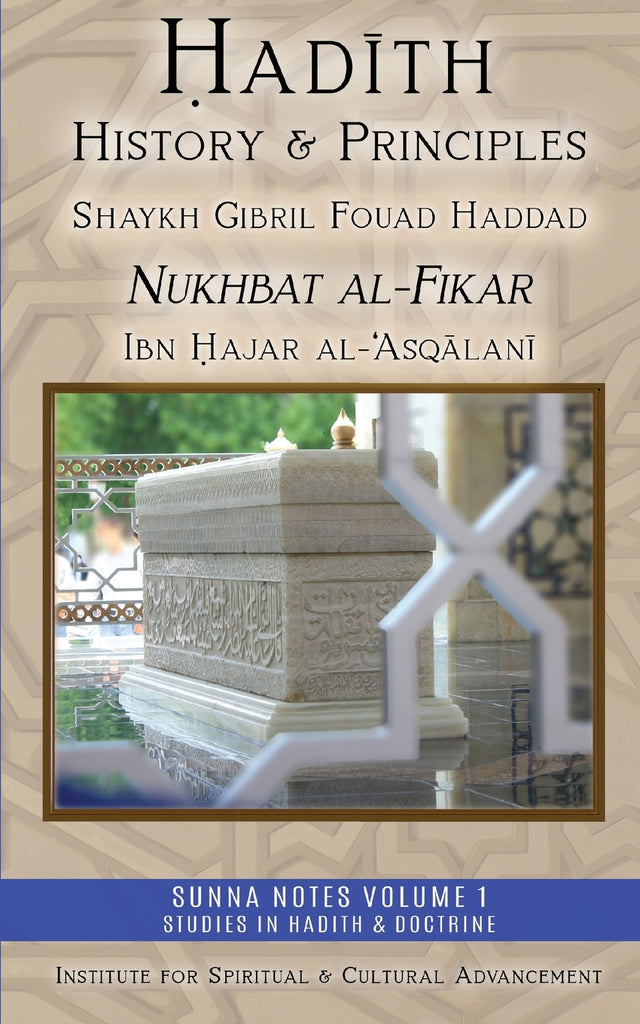
  • Forty Hadith on the Merits of Saying “La ilaha illAllah”

    1. The Prophet — Allah bless and greet him — said: “Whoever says: there is no god but Allah enters Paradise.”[1]

    2. The Prophet — Allah bless and greet him — said: “Whoever says there is no god but Allah enters Paradise even if he commits adultery and even if he steals (i.e. even if he commits great sins).” [2]

    3. The Prophet — Allah bless and greet him — said: “Whoever witnesses that there is no god but Allah and that Muhammad is Allah’s Messenger, Allah forbids the Fire from touching him.” [3] Ibn Hajar in Fath al-Bari, book of riqaq ch. 14 (1989 ed. 11:324) says that the hadiths of “Allah forbids the Fire from touching him” are even more explicit than those of “Allah will enter him into Paradise” in establishing that the one who declares Allah’s Oneness is saved even if he does not heed the orders and the prohibitions.

    4. The Companions were talking about Malik ibn Dukhshum, and they wished that the Prophet — Allah bless and greet him — would curse him so that he should die or meet some calamity. The Prophet — Allah bless and greet him — said: “Does Malik ibn Dukhshum not testify to the fact that there is no god but Allah and that I am the Messenger of Allah?” They said: “Yes, he no doubt says this but it is not in his heart.” The Prophet — Allah bless and greet him — replied: “No-one ever witnesses that there is no god but Allah and that I am Allah’s Messenger and then enters the Fire nor is consumed by it.” Anas said: “This hadith impressed me so much that I ordered my son to write it down and he did.” [4]

    5. The Prophet — Allah bless and greet him — said that Allah will save a man of his community the record of whose sins fills 99 books, each book extending as far as the eye can see. Against all this will be weighed the one good deed that he has, which is his witnessing that there is no god but Allah and that Muhammad is His Messenger, and it will outweigh all the rest. The Prophet — Allah bless and greet him — then said: “Nothing is of any weight with Allah’s Name.” [The hadith begins: innallaha sayukhallisu rajulan min ummati...] [5]

    6. Ma`bad ibn Hilal al-`Anazi relates: Some of us from Basra gathered and went to Anas bin Malik in company with Thabit al-Bunani so that he might ask Anas about the Hadith of Intercession on our behalf. Anas was in his palace, and our arrival coincided with his late morning (Duha) prayer. We asked permission to enter and he admitted us, sitting on his bed. We said to Thabit, “Do not ask him about anything else first but the Hadith of Intercession.” He said, “O Abu Hamza! Here are your brethren from Basra coming to ask you about the Hadith of Intercession.” Anas then said: The Prophet — Allah bless and greet him — talked to us saying: On the Day of Resurrection the people will surge one group after another like waves, and then they will come to Adam and say: “Please intercede for us with your Lord.” He will say: “I am not fit for this. You should go to Ibrahim as he is the Intimate Friend (khalil) of the Beneficent.” They will go to Ibrahim and he will say: “I am not fit for this, but you should go to Moses as he is the one to whom Allah spoke directly.” So they will go to Musa and he will say: “I am not fit for this, but you should go to `Isa as he is a soul created (directly) by Allah, and His Word (Be!).” They will go to `Isa and he will say: “I am not fit for this, but you should go to Muhammad.” They will come to me and I will say: “I can do it.” Then I will ask for my Lord’s permission and it will be given; then He will inspire me to praise Him with such praises as I cannot fathom. So I will praise Him with those praises and will fall down prostrate before Him. Then it will be said: “O Muhammad, raise your head and speak, for you will be heard; ask, for your will be granted your request; intercede, for your intercession will be accepted.” I will say: “O Lord, my Community! My Community!” And then it will be said: “Go and take out of the Fire all those who have in their hearts faith the weight of a barley grain.” I will go and do so and return to praise Him with the same praises, and fall down prostrate before Him. Then it will be said: “O Muhammad, raise your head and speak, for you will be heard; ask, for your will be granted your request; intercede, for your intercession will be accepted.” I will say: “O Lord, my Community! My Community!” And then it will be said: “Go and take out of the Fire all those who have in their hearts faith the like of a small ant or a mustard-seed.” I will go and do so and return to praise Him with the same praises, and fall down prostrate before Him. Then it will be said: “O Muhammad, raise your head and speak, for you will be heard; ask, for you will be granted your request; intercede, for your intercession will be accepted.” I will say: “O Lord, my Community! My Community!” And then it will be said: “Go and take out of the Fire all those who have in their hearts the smallest iota of faith.” I will go and do so.

    When we left Anas, I said to some of my companions: “Let us pass by al-Hasan (al-Basri) who is hiding himself in the house of Abu Khalifa and request him to recount to us what Anas ibn Malik has just told us.” So we went to him and we greeted him and he admitted us. We said to him: “O Abu Sa`id! We came to you from your brother Anas ibn Malik and he related to us a Hadith about the intercession the like of which I have never heard.” He said: “What is that?” We told him of the Hadith and at the end we said: “He stopped at this point.” He said: “What then?” We said: “He did not add anything after that.” He said: “Anas related the Hadith to me twenty years ago when he was a young fellow. I don’t know whether he forgot or if he did not like to let you depend overly on what he might have said.” We said, “O Abu Sa`id! Do tell us.” He smiled and said: “Man was created hasty. I only mentioned it because I was going to inform you of it. Anas told me the same as he told you and said that the Prophet — Allah bless and greet him — added: I will then return for a fourth time and praise Him similarly and prostrate before Him the same as before. And then it will be said: “O Muhammad, raise your head and speak, for you will be heard; ask, for your will be granted your request; intercede, for your intercession will be accepted.” I will then say: “O Lord, allow me to intercede for whoever said: La ilaha illallah.” Then Allah will say: By My Power, by My Majesty, by My Supremacy, and by My Greatness, I shall take out of the fire whoever said: La ilaha illallah. [6]

    7. This is confirmed by another well-known hadith whereby the Prophet — Allah bless and greet him — said: “My intercession is for those people of my Community who commit major sins.” [7]

    8. Adhana fi al-nasi anna man shahida an La ilaha illallah wahdahu la sharika lahu mukhlisan dakhala al-janna. “It was proclaimed among the people that whoever witnesses that there is no god except Allah, alone, without partner, enters Paradise.” [8]

    8a. Man shahida an La ilaha illallah dakhala al-janna. “Whoever witnesses that there is no god but Allah alone enters Paradise.” [9]

    9. Bashshir al-nasa annahu man qala La ilaha illallahu wahdahu la sharika lahu wajabat lahu al-janna. “Announce to the people the tidings that whoever says: No god except Allah alone, without partner, Paradise is guaranteed for him.” [10]

    10. `Uthman ibn `Affan said: I heard Allah’s Messenger say: “Verily, I know a phrase which no servant utters truthfully from his heart except the Fire is made unlawful for him.” `Umar ibn al-Khattab said: “I shall tell you what that phrase is. It is the kalima of sincerity with which Allah has empowered Muhammad and his Companions, the kalima of fear of Allah which Allah’s Prophet enjoined upon his uncle Abu Talib on his deathbed: the witnessing that there is no god but Allah.” [11]

    11. Sa`id ibn al-Musayyib relates: When the death of Abu Talib approached, Allah’s Apostle came to him and said: “Say: La ilaha illallah, a word with which I will be able to negotiate or argue (uhajju) for you in Allah’s presence.” [12]

    12. Mafatih al-janna shahadatu an La ilaha illallah. “The keys to Paradise are the witnessing that there is no god but Allah.” [13] It is confirmed by the next hadith.

    12a. Li kulli shay’in miftahun wa miftahu al-jannati shahadatu an La ilaha illallah. “Everything has its key, and the key to Paradise is the witnessing that there is no god but Allah.” [14]

    13. Ibn `Abbas narrated in his Commentary that the Prophet — Allah bless and greet him — said concerning the meaning of the verse: hal jaza’u al-ihsani illa al-ihsan – “Is the reward of goodness anything other than goodness?” (55:60): “Allah says: Can there be any other reward than Paradise in the Hereafter for one whom I blessed in his worldly life with the recitation of the kalima of La ilaha illallah?” `Ikrima and al-Hasan also said that the reward of La ilaha illallah cannot be anything but Paradise.

    14. “If anyone comes on the Day of Resurrection who has said La ilaha illallah sincerely with the intention to win Allah’s pleasure, Allah will make Hellfire forbidden for him.” [15] Tirmidhi comments on the preceding hadith: “It is narrated from al-Zuhri that he was asked about the Prophet’s saying whereby “Whoever says La ilaha illallah enters Paradise” and he said: “This was only in the beginning of Islam, before the revelation of obligations and the orders and prohibitions.” The hafiz Abu Bakr ibn al-`Arabi (d. 543) comments on this in `Aridat al-ahwadhi (10:105): “There is no justification for Ibn Shihab’s (al-Zuhri) explanation.” This is confirmed by the hadith of `Utban ibn Malik. Ibn Hajar in Fath al-Bari, Riqaq ch. 14 (1989 ed. 11:324) mentions that the opinion of al-Zuhri and of Sa`id ibn al-Musayyib that the hadith “Whoever says La ilaha illallah applied only in the beginning of Islam was incorrect since the hadith of Abu al-Darda’ and Abu Dharr whereby the Muslim enters Paradise “even if he commits adultery or steals” and the Prophet — Allah bless and greet him — mentioned this precisely to contradict the logic of those who say that great sins will prevent entry into Paradise.

    15. Lan yuwafiya `abdun yawma al-qiyamati yaqulu La ilaha illallah yabtaghi biha wajh Allah illa harrama Allahu `alayhi al-nar. “No servant is true to his word on the Day of Resurrection, saying: No god but Allah in order to seek Allah’s good pleasure, except Allah will make the Fire unlawful for him.” [16]

    16. “The best of my sayings and of the sayings of all Prophets before me is: There is no god but Allah alone, without partner, to Him belong all sovereignty and glory, and He has power over all things.” Narrated by Tirmidhi from `Amr ibn Shu`ayb, from his father, from his grandfather (hasan gharib).

    17. Afdalu al-a`mali al-imanu billahi wahdah, thumma al-jihad, thumma hujjatun mabrura, tufdilu sa’ir al-a`mali kama bayna matla` al-shamsi ila maghribiha. “The best deed is belief in Allah alone, then struggle in the way of Allah, then pilgrimage that is accepted: these outweigh all deeds the distance of East to West.” [17]

    18. Alaysa yashhadu an La ilaha illallah wa anni rasulullah? Qalu innahu yaqulu dhalika wa ma huwa fi qalbihi. Qala la yashhadu ahadun an La ilaha illallah wa anni rasulullah fa yadkhulu al-nara aw tut`imuhu. Qala anas fa a`jabani hadha al-hadith fa qultu li ibni uktubhu fa katabahu. It is narrated on the authority of `Utban ibn Malik that he came to Madina and said: Something was wrong with my eyesight, so I said to the Prophet: “It is my ardent desire that you should grace my house with your presence and pray there so that I should take the spot where you prayed as a place of worship.” (Another version also in Muslim has: I sent for the Prophet — Allah bless and greet him — the message: “Come and lay for me a place for worship [khutta li masjidan].” Imam Nawawi said: It means: “Mark for me a spot that I can take as a place for worship by obtaining blessing from your having been there [mutabarrikan bi atharika].”) So the Prophet — Allah bless and greet him — came there, with those of the Companions whom Allah wished. He entered (my home) and performed prayer. Then the Companions began to talk among themselves about Malik ibn Dukhshum, and they wished that the Prophet — Allah bless and greet him — would curse him so that he should die or meet some calamity. After the Prophet — Allah bless and greet him — finished praying he said: “Does Malik ibn Dukhshum not testify to the fact that there is no god but Allah and that I am the Messenger of Allah?” They said: “Yes, he no doubt says this but it is not in his heart.” The Prophet — Allah bless and greet him — replied: “No-one ever witnesses that there is no god but Allah and that I am Allah’s Messenger and then enters the Fire or consumes it.” Anas said: “This hadith impressed me so much that I ordered my son to write it down and he did.” Imam Nawawi says about: “In this hadith is evidence for obtaining blessings through the relics of saints (al-tabarruk bi athar al-salihin).” [18]

    19. Al-imanu bid`un wa sab`una baban fa adnaha imatat al-adha `an al-tariq wa arfa`uha qawlu La ilaha illallah. “Belief is seventy and some branches. Its lowest branch is the removal of harm from the road while its highest is to say: There is no god but Allah.” [19].

    20. Man kana akhir kalamihi La ilaha illallah dakhala al-janna. “Whoever breathes his last with the words:La ilaha illallah, enters Paradise.” [20]

    The hadith master Abu al-Baqa’ told us: Hafiz Abu Muhammad informed us: Abu Tahir al-Silafi informed us: Abu `Ali al-Burdani said: I heard Hannad ibn Ibrahim al-Nasafi saying: I heard Abu Ishaq Ibrahim ibn Muhammad al-Qattan saying: I heard Abu `Abd Allah `Umar ibn Ahmad Ibn Ishaq al-`Attar saying: I heard Abu `Abd Allah Muhammad ibn Muslim ibn Warah al-Razi saying: I and Abu Hatim Muhammad ibn Idris al-Razi were present with Abu Zur`a al-Razi at the time of his death, so I said to Abu Hatim: “Come, let us remind him to say the shahada.” Abu Hatim said, “I would be ashamed before Abu Zur`a to remind him of the shahada; but come, let us recall the hadith, perhaps when he hears it he will say it.” I started and said: Muhammad ibn Bashshar told us: Abu `Asim al-Nabil told us: from `Abd al-Hamid ibn Ja`far – then I got confused about the hadith as if I never heard it or read it. So Abu Hatim started and said: Muhammad ibn Bashshar told us: Abu `Asim al-Nabil told us: from `Abd al-Hamid ibn Ja`far – then he too got confused as if he never read it or heard it before. Then Abu Zur`a, may Allah be pleased with him, spoke and said: Muhammad ibn Bashshar told us: Abu `Asim al-Nabil told us: `Abd al-Hamid ibn Ja`far told us: from Salih ibn Abi `Urayb: from Kathir ibn Murrah: from Mu`adh ibn Jabal, may Allah be pleased with him, he said: the Messenger of Allah, may Allah bless him and give him peace, said: “Whoever speaks as his last words: La ilaha illallah” – then Abu Zur`a’s spirit came out with the letter ha’ (the last letter of the word Allah) before he could say “he will enter Paradise.” That was in the year 262 H. [21]

    21. Man mata wa huwa ya`lamu annahu La ilaha illallah dakhala al-janna. “Whoever dies knowing full well that there is no god but Allah, enters Paradise.” [22]

    22. Idhhab bi na`layya hatayni fa man laqita min wara’a hadha al-ha’it yashhadu an La ilaha illallah mustayqinan biha qalbahu fa bashshirhu bi al-janna. The Prophet — Allah bless and greet him — said to Abu Hurayra: “Go with these two sandals of mine and whoever you meet behind this wall that witnesses that there is no god except Allah with certitude in his heart, give him glad tidings that he will enter Paradise.” [23] The latter then met `Umar, who prevented him from announcing this to the people and the Prophet — Allah bless and greet him — agreed with him on the grounds that they would then rely upon it to the exclusion of everything else. The prevention of this news from reaching the ears of the ignorant is confirmed by the hadith of Mu`adh and that of `Ubada ibn al-Samit through al-Sunabihi, both narrated by Muslim in the same chapter (Book of iman ch. 10).

    23. Man shahida an La ilaha illallah wa anna Muhammadan rasulullah harrama Allahu `alayhi al-nar. `Abd al-Rahman ibn Usayla al-Sunabihi said: When I entered upon `Ubada ibn al-Samit at the time of his death I burst into tears so he said: “Why are you crying? By Allah, if I were asked to testify I would testify for you, and if I were given intercession I would intercede for you, and if it were in my power I would certainly help you! By Allah, I never heard a hadith from Allah’s Messenger in which there was benefit for you except I narrated it to you, all but one: and I shall narrate it to you now since I am about to breathe my last. I heard Allah’s Messenger say: “Whoever witnesses that there is no god but Allah and that Muhammad is Allah’s Messenger, Allah forbids the Fire from touching him.” [24] Qadi `Iyad said: “In this hadith is the proof for the permissibility of keeping certain types of knowledge away from the common people due to the inability of their minds to understand it correctly, as long as it does not concern an obligation of religion or stipulations for punishment.” [25]

    24. Ya Mu`adh ibn Jabal ma min ahadin yashhadu an La ilaha illallah wa anni rasulullah sidqan min qalbihi illa harramahu allahu `ala al-nar. Qala ya rasulallah afala ukhbiru al-nasa fayastabshiru? Qala idhan yattakilu. The Prophet — Allah bless and greet him — said: “O Mu`adh ibn Jabal! No one witnesses that there is no god but Allah and that I am Allah’s Messenger truthfully from his heart except Allah has made him unlawful for the Fire.” Mu`adh said: “O Messenger of Allah, shall I not tell the people so that they will be glad?” He replied: “If you do, they will rely on it (and leave everything else).” [26]

    25. As`adu al-nasi bi shafa`ati yawma al-qiyama man qala La ilaha illallah khalisan mukhlisan min qalbihi. Abu Hurayra inquired from the Prophet: “O Messenger of Allah, who will be the most fortunate of people to receive your intercession on the Day of Resurrection?” The Prophet — Allah bless and greet him — replied: “O Abu Hurayra, I knew, because of your love of what I say, that no one other than you would ask me of this hadith. The most fortunate of people to receive my intercession on the Day of Resurrection are those who said:La ilaha illallah purely and sincerely from the heart.” [27]

    26. Usama ibn Zayd killed an [enemy] idolater in battle after the latter had said: “There is no god but Allah” (La ilaha illallah). When news of this reached Allah’s Messenger he condemned Usama in the strongest terms and he said to him: “How can you kill him after he said La ilaha illallah?” He replied: “But he said it with the sword hanging over his head-” The Prophet — Allah bless and greet him — said again: “How can you kill him after he said La ilaha illallah?” He replied: “O Messenger of Allah, he said it in dissimulation (taqiyyatan).” The Prophet — Allah bless and greet him — said: “Did you split his heart open (to see)?” and he did not cease to reprove him until Usama wished that he had not entered Islam until after he had killed that man so that he might have been forgiven all his past sins through belief. [28]

    27. Al-Miqdad said: I asked, “O Messenger of Allah, suppose I and one of the idolaters battled and he cut off my hand, then I was positioned to strike him and he said: La ilaha illallah! Do I kill him or spare him?” He said: “Spare him.” I said: “Even if he cut off my hand?” He said: “Even so.” I asked him again two or three times whereupon he said: “If you kill him after he says La ilaha illallah then you are like him before he said it, and he is like you before you killed him.” [29]

    28. Innallaha la yu`adhdhibu min `ibadihi illa al-marid wa al-mutamarrid `ala Allah wa aba an yaqula La ilaha illallah. The Prophet — Allah bless and greet him — said: “Allah does not punish, of his servants, except the rebel against Allah who refuses to say: there is no god but Allah.” [30]

    29. afdalu al-dhikri La ilaha illallah. The Prophet — Allah bless and greet him — said: “The best remembrance of Allah is to say:There is no god but Allah.” [31]

    30. Al-tasbih nusfu al-mizan, wa al-hamdu lillah tamla’uhu, wa LA ILAHA ILLALLAH laysa laha duna Allahi hijabun hatta tukhlisu ilayh. The Prophet — Allah bless and greet him — said: “Saying subhan allah (glory to Allah) is half the balance and saying al-hamdu lillah (all praise belongs to Allah) fills it, and there is no veil between La ilaha illallah and Allah Himself (i.e. it is not even weighed in the Balance), it reaches Him directly.” [32]

    31. Kunna `inda al-nabiyyi sallallahu `alayhi wa sallam fa qala hal fikum gharib? ya`ni ahl al-kitab qulna la ya rasulallah fa amara bi ghalqi al-abwabi wa qala irfa`u aydikum wa qulu La ilaha illallah! farafa`na aydina sa`atan thumma qala al-hamdu lilla `allahumma innaka ba`athtani bi hadhihi al-kalimai wa wa`adtani `alayha al-jannata wa anta la tukhlifu al-mi`ad! thumma qala abshiru fa innallaha qad ghafara lakum. Ya`la ibn Shaddad relates that his father Shaddad ibn Aws told him as `Ubada ibn al-Samit was present and confirmed it: “We were sitting with Allah’s Messenger and he asked if there was any stranger – the narrator said: i.e. People of the Book – in the gathering. We said that there was none. He said: Shut the door, raise up your hands and say: “There is no god but Allah.” We raised our hands and recited the kalima tayyiba for some time. He then exclaimed: “al-hamdu lillah! O Allah, You have sent me with this word and have ordered me to teach it and have promised me Paradise for it, and You do not take back Your promise. Be glad, for Allah has forgiven you!” [33]

    32. `Abd Allah ibn Salam relates: As we were travelling with Allah’s Messenger he heard the people asking: “Which action is the best, O Allah’s Messenger?” He said: “Belief in Allah, fighting in Allah’s way, and pilgrimage that is accepted.” After this he heard a call coming from a valley saying: “I bear witness that there is no god but Allah and that Muhammad is the Messenger of Allah” whereupon he said: “And I bear witness to the same, and I bear witness that no one bears witness to the same except he clears himself of shirk (associating a partner to Allah).” [34]

    33. The Prophet — Allah bless and greet him — came out and heard the adhan. When he heard the mu’adhdhin say: La ilaha illallah, he said: khala`a al-andad, which means: “He (the speaker) has disowned (the existence of) partners (to Allah).” [35]

    34. Yakhruju min al-nari man qala La ilaha illallah wa kana fi qalbihi min al-khayri ma yazinu sha`ira, thumma yakhruju min al-nari man qala La ilaha illallah wa kana fi qalbihi min al-khayri ma yazinu badhra, thumman yakhruju min al-nari man qala La ilaha illallah wa kana fi qalbihi min al-khayri ma yazinu dharra. “There will come out of the Fire whoever said: There is no god but Allah, and there is in his heart a bead’s worth of goodness; then there will come out of the Fire whoever said: There is no god but Allah, and there is in his heart a grain’s worth of goodness; then there will come out of the Fire whoever said: There is no god but Allah, and there is in his heart an atom’s worth of goodness.” [36]

    35. Mu`adh ibn Jabal said that the last he spoke with the Prophet — Allah bless and greet him — he asked him: “What action is most beloved to Allah?” And the Prophet — Allah bless and greet him — replied: “That you die with your tongue still moist with the mention (dhikr) of Allah.” [37] Note that hadith #29 stipulates that the best dhikr is La ilaha illallah.

    36. Ala unabbi’ukum bi khayri a`malikum wa azkaha `inda malikikum wa arfa`iha fi darajatikum wa khayrin lakum min infaqi al-dhahabi wa al-waraqi wa khayrin lakum min an talqu `aduwwakum fa tadribu a`naqahum wa yadribu a`naqakum qalu bala qala dhikrullah. The Prophet — Allah bless and greet him — said: “Shall I tell you something that is the best of all deeds, constitutes the best act of piety in the eyes of your Lord, will elevate your status in the hereafter, and carries more virtue than the spending of gold and silver or taking part in just struggle and battling and being slewn in the Way of God? It is the dhikr or remembrance and mention of Allah.” [38]

    37. Ma `amila adamiyyun `amalan anja lahu min `adhabi al-qabri min dhikrillah. The Prophet — Allah bless and greet him — said: “A human being cannot do anything that is more effective in saving him from the punishment of the grave than the dhikr or remembrance of Allah.” [39]

    38. Anas reports that the Prophet — Allah bless and greet him — was once asked the same question as Mu`adh in hadith #35, and he replied: “Knowledge of Allah.” It was then asked: “And which action adds to this in merit?” He repeated: “Knowledge of Allah.” They said: “We ask about actions and you answer concerning knowledge?” The Prophet — Allah bless and greet him — said: “A few actions are greatly useful as long as there is knowledge; while a lot of actions are useless if there is ignorance.” Anas said: “He spoke of this at length [40] This hadith is confirmed by hadith #37 and by the first phrase of hadith #17 whereby “the best deed is belief in Allah alone.” The hadith is further confirmed by our decisive knowledge that the purpose of creation is knowledge of Allah, as indicated by Ibn `Abbas’s explanation of the verse wa ma khalaqna al-jinna wa al-insa illa li ya`budun “I did not create the jinn and humankind except to worship (= know) Me” (51:56) and the verse fa`lam annahu La ilaha illallah “Know that there is no god except Allah” (47:19).

    39. Wal-ladhi nafsi bi yadihi law ji’a bi al-samawati wa al-ardi wa man fihinna wa ma baynahunna fa wudi`na fi kaffati al-mizani wa wudi`at shahadatu an La ilaha illallahu fi al-kaffati al-ukhra la rajahat bihinna. “By Him in Whose hand is my soul, if the heavens and the earth and all that are in them and everything that is in between were brought and placed in one pan of the Balance, and the witnessing that there is no god but Allah were placed in the other, the latter would outweigh the former.”[41]

    40. After the passing of the Prophet — Allah bless and greet him — from this world Abu Bakr said to the Companions: “I asked Allah’s Messenger what basic thing was necessary for salvation and he replied that whoever accepts the Word which I brought and which I offered to my uncle Abu Talib and which he rejected: this Word constitutes salvation for him.” [42].


    NOTES

    [1] Tabarani narrated it from Abu Dharr in the Kabir (7:55), Ibn Hibban in his Sahih (31), al-Hakim in his Mustadrak (4:251), al-Mundhiri in al-Targhib (2:422), al-Haythami in Majma` al-zawa’id (1:18), Ibn `Adi (7:2639), Abu Nu`aym in the Hilya (7:174), and al-Bazzar from `Umar.
    [2] Nasa’i, Tabarani and others from Abu al-Darda’ – sahih.
    [3] Narrated by Bukhari and Muslim from `Ubada ibn al-Samit.
    [4] Muslim narrates it.
    [5] Narrated from `Abd Allah ibn `Amr ibn al-`As by Ahmad, Tirmidhi (Iman 17 – hasan gharib), al-Hakim, and Bayhaqi in Shu`ab al-iman.
    [6] Bukhari narrates in his Sahih (Volume 9, Book 93, Number 601):
    [7] Narrated by Tirmidhi, Qiyama 11; Abu Dawud, Sunna 31; Ibn Maja, Zuhd 37; and Ahmad 3:213.
    [8] Narrated by Ibn `Adi on the authority of `Umar.
    [9] al-Bazzar narrates it from `Umar.
    [10] Narrated by al-Nasa’i from Sahl ibn Hunayf and Zayd ibn Khalid al-Jahni.
    [11] Ahmad related it in his Musnad (1:63 #449).
    [12] Narrated by Bukhari in his Sahih (Volume 8, Book 78, Number 672). Muslim also narrates it in his Sahih.
    [13] Ahmad related it from Mu`adh and Haythami said in Majma` al-zawa’id: “The men in its chain has been declared trustworthy (thiqa) although there is interruption in the transmission.”
    [14] Narrated by Tabarani from Mu`qal ibn Yasar. Wahb confirmed its authenticity as related in one of the chapter-titles in Bukhari’s Sahih.
    [15] Narrated by Bukhari, vol. 8 p.288 #431.
    [16] Narrated by Ahmad and Bukhari from `Utban ibn Malik.
    [17] Narrated by Ahmad from Ma`iz with a sound chain.
    [18] Narrated by Muslim.
    [19] Narrated by Muslim, Tirmidhi, Nasa’i, Ibn Majah, and Ahmad
    [20] Narrated from Mu`adh by Ahmad, Abu Dawud, and al-Hakim.
    [21] Related by Imam Nawawi in his book al-Tarkhis fi al-ikram bi al-qiyam li dhawi al-fadl wa al-maziyya min ahl al-Islam (p. 84).
    [22] Narrated by Muslim and Ahmad from `Uthman.
    [23] Narrated by Muslim from Abu Hurayra.
    [24] Muslim and Tirmidhi narrated it.
    [25] Nawawi, Sharh Sahih Muslim (Iman Ch. 10 #47).
    [26] Narrated by Muslim, Ahmad and Bayhaqi from Anas. Muslim says: “Mu`adh narrated it at the time of his death to avoid sinning (by keeping it to himself).”
    [27] Narrated by Bukhari from Abu Hurayra.
    [28] Narrated by Bukhari, Muslim, Ahmad, Tayalisi, Abu Dawud, Nasa’i, al-`Adni, Abu `Awana, al-Tahawi, al-Hakim, and Bayhaqi.
    [29] Narrated by Ahmad, Abu Dawud, Nasa’i, Shafi`i in his Musnad, and Bayhaqi in the Shu`ab.
    [30] Ibn Majah narrated it.
    [31] Tirmidhi (hasan), Nasa’i, Ibn Majah, Ibn Hibban, Bayhaqi in Shu`ab al-iman, from Jabir ibn `Abd Allah.
    [32] Narrated by Tirmidhi from `Abd Allah ibn `Umar. Suyuti in al-Jami` al-saghir said it is sound (sahih).
    [33] The chain of this hadith is fair (hasan). Narrated from Ya`la ibn Shaddad’s father and `Ubada ibn al-Samit by Ahmad, Nasa’i, Tabarani, al-Hakim, al-Mundhiri in al-Targhib, and others. Al-Haythami said in Majma` al-zawa’id: “The sub-narrators in its chain are trustworthy.”
    [34] Ahmad and Tabarani in al-Awsat relate it with a sound chain, as stated by Haythami in Majma` al-zawa’id.
    [35] Ibn Abi al-Dunya narrated it, and Suyuti cites it in his commentary of verse 2:18 in al-Durr al-manthur.
    [36] Related by Bukhari, Muslim, Ahmad, Tirmidhi (hasan sahih), Bayhaqi, Nasa’i, Tabarani, Ibn Majah, and Ibn Khuzayma from Anas.
    [37] Related by Tabarani and al-Bazzar (hasan).
    [38] Narrated from Abu al-Darda’ by Ahmad, Tirmidhi, Ibn Majah, Ibn Abi al-Dunya, al-Hakim (sahih), al-Dhahabi (who confirmed al-Hakim), and others.
    [39] Narrated from Mu`adh ibn Jabal by Ahmad. Haythami said in Majma` al-zawa’id that the sub-narrators in its chain of transmission are the men of sound hadith, although the Tabi`i link is missing; however, Tabarani narrated it through a second chain which is entirely sound (sahih). Also narrated with the word al-`abd (Allah’s servant) instead of adamiyyun (a human being) by Malik in his Muwatta’, Tirmidhi, Ibn Majah, al-Hakim (sahih), and al-Dhahabi (who confirmed al-Hakim).
    [40] .” Ibn `Abd al-Barr reports it in Fadl al-`ilm with a weak chain. See also Ithaf al-sadat al-muttaqin (1:85), Suyuti’s al-Durr al-manthur (2:221), and al-Mundhiri’s al-Tarhib wa al-Targhib (3:525).
    [41] Related by Tabarani and by Suyuti in al-Durr al-manthur. Haythami in Majma` al-zawa’id stated that the sub-narrators in its chain are trustworthy, but that the Tabi`i link is missing.
    [42] Related by Ahmad (1:6), Tabarani in al-Awsat, Tayalisi in his Musnad, Ibn Sa`d in his Tabaqat (2/2:84-85), Abu Ya`la, Ibn Abi Shayba, Bayhaqi in Shu`ab al-iman (1:107-108 #92-93) and al-Bazzar. See above, hadiths #10-11. This hadith is sound although in Ahmad the link between al-Zuhri and Abu Bakr and `Uthman is not named other than “a man from the trustworthy people among the Ansar,” while Bayhaqi’s and Tayalisi’s narration from al-Zuhri is from Sa`id ibn al-Musayyib from `Abd Allah ibn `Amr ibn al-`As

    Peace and Blessings upon the Prophet, his Family, and his Companions
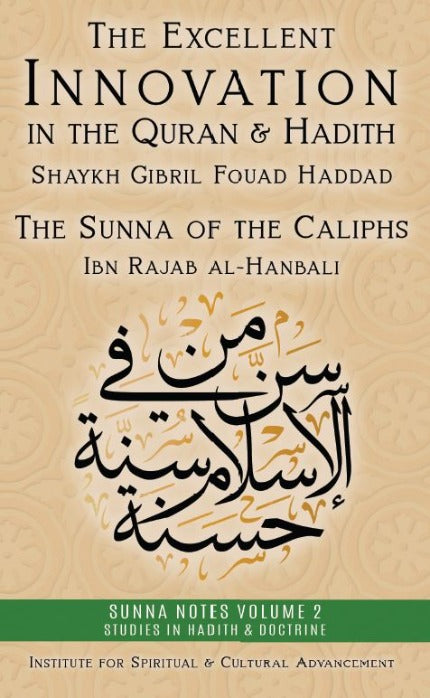
  • Al-Hallaj’s Doctrine

    DOCTRINE

    OF

    AL-HUSAYN IBN MANSUR AL-HALLAJ

    FROM THE

    CHAPTER ON THE EXPOSITION OF THE BELIEFS OF

    THIS FOLD [THE SUFIS] ON QUESTIONS OF DOCTRINE

    (Faslun fî bayân i‘tiqâd hâdhihi al-tâ’ifa fî masâ’il al-usûl)

    FROM

    AL-QUSHAYRI’S RISALA ILA AL-SUFIYYA

    TRANSLATED WITH NOTES BY DR. G.F. HADDAD

    [The numbering in brackets corresponds to our forthcoming translation of the paragraph chapters of al-Qushayri’s entire Chapter on Doctrine from the beginning of his Risala (Eds. ‘Abd al-Halim Mahmud and Mahmud ibn al-Sharif. Cairo: Rida Tawfiq ‘Afifi, 1974.)]

    AL-HALLAJ is Abu Mughith al-Husayn ibn Mansur al-Hallaj al-Baydawi al-Wasiti (d. 309) the ascetic, he hailed from Persia and was raised in Iraq. He first accompanied al-Junayd, al-Nuri and others then became known in 299. After accusations were raised to the ‘Abbasi Caliph al-Muqtadir Billah he was jailed on charges of heresy, then tortured to death in unspeakable fashion. Many if not most of the Ulema consider him one of the Friends (awliyâ’) of Allah, such as Ibn Khafif who visited him in jail, Abu al-Qasim al-Nasir Abadi, al-Qushayri, Ibn ‘Ata’ Allah, Ibn al-Hajj, Ibn ‘Aqil – who wrote Juz’ fi Nasr Karamat al-Hallaj (“Opuscule in Praise of al-Hallaj’s gifts”) –, Ibn Qudama, al-Tufi, Ibn al-Mulaqqin, al-Munawi, al-Sha‘rani, etc. Among his sayings: “Take care of your ego; if you do not make it busy, it shall make you busy” and “Whoever points to Him is an aspirant-Sufi whereas whoever points on His behalf is a Sufi.”

    AL-QUSHAYRI is Zayn al-Islam Abu al-Qasim ‘Abd al-Karim ibn Hawzan ibn ‘Abd al-Malik ibn Talha ibn Muhammad al-Qushayri al-Naysaburi al-Istiwa’i al-Shafi‘i al-Ash‘ari (376-465), the Teacher, “the absolute Imam, jurist, mutakallim, scholar of Principles, Qur’anic commentator, man of letters, grammarian, writer, and poet, the spokesman of his time, leader among his contempo­raries, the secret of Allah in His creation, the Shaykh of shaykhs, the Teacher of the Congregation and most advanced one of the Fold, the goal of those who tread the Path, the ensign of Truth, wellspring of Felic­ity, pole of Leadership, and grace personified. He never saw such as himself nor did any who saw him ever see such as him in his perfection and brilliance. He gathered together the two sciences of Sharî‘a and Haqîqa and explained in the best manner the principles of the Path” (‘Abd al-Ghafir al-Farisi). He was also an expert in horse and swords­manship. His Risala ila al-Sufiyya is the earliest complete treatise of its kind and probably the most respected Sufi treatise in Islam.

    DOCTRINE OF AL-HALLAJ ON THE DIVINE ATTRIBUTES

    AS NARRATED BY AL-QUSHAYRI

    [16] Shaykh Abu ‘Abd al-Rahman al-Sulami – Allah have mercy on him! – told us: I heard Muhammad ibn Muhammad ibn Ghalib say: I heard Abu Nasr Ahmad ibn Sa‘id al-Isfanjani say: al-Husayn ibn Mansur said: “You must categorically consider all to be contingent, for pre-existence belongs to Him [alone].

    [17] “All that appears through body is necessarily an accident (‘arad).

    [18] “That whose assemblage comes about through cause-and-effect (al-adât) is held together through its powers (quwâhâ).[1]

    [19] “All that comes together at one time, goes into dispersion at another time.

    [20] “All that something else causes to subsist is characterized by dependency.

    [21] “All that imagination can possibly apprehend can be pictured.

    [22] “All that is contained is subject to ‘where.’

    [23] “And all that has a genus is the object of a modality.

    [24] “No ‘above’ shades Him – Exalted is He! – nor does any ‘below’ carry Him.

    [25] “No limit/direction faces Him (walâ yuqâbiluhu hadd) nor does any ‘at’ (‘ind) beset Him.

    [26] “He is not confined by any ‘behind’ nor limited by any ‘before’.

    [27] “No ‘before’ caused Him to appear nor did any ‘after’ cause Him to vanish.

    [28] “No ‘all’ gathered Him.

    [29] “No ‘He is’ brought Him into existence (lam yûjidhu kân).

    [30] “No ‘He is not’ can cause Him to be missed (walam yufqidhu lays).

    [31] “His description: He has none (wasfuhu lâ sifata lahu).[2]

    [32] “His act has no cause (‘illa).

    [33] “His being has no duration (amad).

    [34] “He is transcendent beyond the states of His creatures: there is not for Him the least deliberation (mizâj) in His creation, nor working (‘ilâj) in His acts.

    [35] “He is clearly separate from them by His pre-existence (bâyanahum biqidamih) just as they are clearly separate from Him by their contingent nature (kamâ bâyanûh bihudûthihim).[3]

    [36] “If you ask ‘When?’ – His being is before Time.

    [37] “Should you say, ‘HÛ’ – the letters hâ’ and wâw are but His creation.

    [38] “And if you say, ‘Where?’ – His existence precedes Place.

    [39] “So letters are His Signs (fal-hurûfu âyâtuhu);[4]

    [40] “His existence is the affirmation of Him (wujûduhu ithbâtuh);[5]

    [41] “Gnosis of Him is the upholding of His Oneness (ma‘rifatuhu tawhîduh);[6]

    [42] “and His Tawhîd is to distinguish Him clearly from His creatures.

    [43] “Whatever you imagine in your imaginings, He is different from that (mâ tusawwiru fil-awhâmi fahuwa bikhilâfih).

    [44] “How can that which He Himself began analyze Him? (kayfa yahullu bihi mâ minhu bada’ahu).[7]

    [45] “Or how can that be part of Him which He Himself gave rise to? (aw ya‘ûdu ilayhi mâ huwa ansha’ahu).

    [46] “The pupils of the eyes cannot see Him.

    [47] “Nor can conjectures apprehend Him.

    [48]

    [49] “His nearness is His generosity (qurbuhu karâmatuhu).

    [50] “His distance is His contempt (wabu‘duhu ihânatuhu).

    [51] His elevation is without ascent (‘uluwwuhu min ghayri tawaqqul).[8]

    [52] His coming is without displacement (wamajî’uhu min ghayri tanaqqul).[9]

    [53] (He is the First and the Last and the Manifest and the Hidden) (57:3), the Near (al-qarîb), the Far (al-ba‘îd),[10] (There is nothing what­soever like unto Him, and He is the All-Hearing, the All-Seeing) (42:11).


    [1]“Such as life, death, poverty and wealth” (Sidi Mustafa Basir).

    [2]Al-Tabari narrates in his Tafsir on verses 39:67 and 114:1 from Sa‘id ibn Jubayr, as well as Ibn al-Mundhir, Ibn Abi Hatim, Abu al-Shaykh in al-‘Azama, and al-Suyuti in al-Durr al-Manthur: “A group of Jews came to the Prophet – Allah bless and greet him – and asked him: ‘O Muhammad! Now, Allah created creation, but who created Him?’ At this the Prophet – Allah bless and greet him – became angry so that his color changed and he upbraided them on behalf of His Lord, whereupon Gibril – upon him peace – came and calmed him, saying: ‘Lower your wing [of mercy], O Muhammad! for the answer came to me from Allah to what they are asking about. Allah says: [Say: He is Allah, the One! Allah, the eternally Besought of all! He begets not nor was begotten. And there is none comparable unto Him] (112:1-4).’ When the Prophet – Allah bless and greet him – recited it to them they said, ‘Describe for us your Lord, what is His physical appearance, how are His arms and upper arms?’ At this the Prophet – Allah bless and greet him – became even angrier than before and upbraided them again, whereupon Gibril came again and told him the same thing as before, bringing him as the answer to what they had asked: (And they esteem not Allah as He has the right to be esteemed. The whole earth is His handful on the Day of Resurrection and the heavens are rolled in His right hand. Glorified is He and High Exalted from all that they ascribe as partner (unto Him)) (39:67).”

    [3]“I.e. he completely differs from them because (There is nothing whatso­ever like unto Him) (42:11)” (Sidi Mustafa Basir).

    [4]“I.e. [letter are] the material of which are made His verses and evidences revealed to His Prophet Muhammad – Allah bless and greet him –” (Mahmud and Sharif).

    [5]“I.e. It is not enough to believe He exists, but the evidence for its firm proof must be shown up and established” (Mahmud and Sharif).

    [6]“I.e. Gnosis of Him with His Attributes is produced by upholding His Oneness” (Mahmud and Sharif). “Sidi ‘Abd al-Salam ibn Mashish said: “O Allah, my Lord! Snatch me up from the quicksands of Tawhîd and drown me in the wellspring of the ocean of your Unicity” (Allâhumma anshilnî min awhâli al-tawhîdi wa’aghriqnî fî ‘ayni bahri wahdâniyyatik) (Sidi Mustafa Basir). Cf. Shaykh Nuh Keller, trans., Invocations of the Shadhili Order (p. 77-78): “And pluck me from the mires of affirming unity, to the infinite space of singularizing the One, transcendently beyond absoluteness or conditionedness; And drown me in the very sea of Oneness” (wanshulnî min awhâli al-tawhîdi ilâ fadâ’i al-tafrîdi al-munazzahi ‘an al-itlâqi wal-taqyîdi wa’aghriqnî fî ‘ayni bahri al-wahda), cf. Awrad al-Tariqa al-Shadhiliyya (p. 77-78).

    [7]“I.e. the mind” (Sidi Mustafa Basir).

    [8]“I.e. His elevation is over His slave and consists in majesty and greatness, not an elevation of place” (Mahmud and Sharif).

    [9]“I.e. the coming of His favor and descent of His command is without [His] movement or displacement” (Mahmud and Sharif).

    [10]“I.e. from the disbelievers as proven by the verse [Allah is the Protecting Friend of those who believe. He brings them out of darkness into light. As for those who dis­believe, their patrons are false deities. They bring them out of light into dark­ness](2:257)” (Sidi Mustafa Basir). This is also in the sense of bâ’in as already stated.

  • Ibn `Arabi’s `Aqida

    Contents

    Shaykh Muhyi al-Din Ibn ‘Arabi

    His Teachers

    Concerning al-Khidr

    His Doctrine (‘Aqîda)

    His Rank of Mujtahid Mutlaq

    The Controversy Surrounding Him

    Al-Suyuti’s Response to al-Biqa‘i

    Ibn ‘Arabi’s Admirers

    Wahda al-Wujûd or Oneness of Being

    Ibn Taymiyya’s Unreliability

    Other Critics of Ibn ‘Arabi

    Al-Haytami’s Response

    The Ethics of the Mufti in Casting Judgment

    Al-Dhahabi’s Warning to Critics of Sufis

    Hadith “Whoso shows enmity to one of My Friends”

    Some of Ibn ‘Arabi’s Sayings

     Ibn ‘Arabi’s Islamic Doctrine

     The First Testimony of Faith

    The Second Testimony of Faith

    Final Supplication

    Bibliography

    Shaykh Muhyi al-Din Ibn ‘Arabi (d. 638)

    Muhammad ibn ‘Ali ibn Muhammad ibn al-‘Arabi, Abu Bakr Muhyi al-Din al-Hatimi al-Ta’i al-Andalusi al-Mursi al-Dimashqi, known as Ibn ‘Arabi to differentiate him from Abu Bakr Ibn al-‘Arabi the Maliki jurist. A scholar of Arabic let­ters at first, then tafsîr and tasawwuf, nicknamed al-Qushayri and Sultan al-‘Arifin in his time for his pre-eminence in tasawwuf, known in his lifetime for his de­voutness to worship, asceticism, and generosity, Ibn ‘Arabi was praised by al-Munawi as “a righteous friend of Allah and a faithful scholar of knowledge” (waliyyun sâlihun wa ‘âli­mun nâsih), by Ibn ‘Imad al-Hanbali as “the absolute mujta­hid without doubt,” and by al-Fayruzabadi as “the Imam of the People of Shari‘a both in knowledge and in legacy, the educator of the People of the Way in practice and in knowl­edge, and the shaykh of the shaykhs of the People of Truth through spiritual experience (dhawq) and understand­ing.”[1]

    His Teachers

    He travelled East and West in the study of hadith, taking knowledge from over a thousand shaykhs, among them Abu al-Hasan ibn Hudhayl, Muhammad ibn Khalaf al-Lakhmi, Ibn Zarqun, Abu al-Walid al-Hadrami, al-Silafi, ‘Abd al-Haqq al-Ishbili, Ibn ‘Asakir, Ibn al-Jawzi, and Ibn Bushku­wal. His principal shaykhs in tasawwuf were Abu Madyan al-Maghribi, Jamal al-Din Yunus ibn Yahya al-Qassar, Abu ‘Abd Allah al-Tamimi al-Fasi, Abu al-Hasan ibn Jami‘, and al-Khidr u.[2] He became known first as al-Shaykh al-Kabir (“The Great Shaykh”) then al-Shaykh al-Akbar (“The Great­est Shaykh”) with specific reference to the sciences of tasaw­wuf in which he authored hun­dreds of books.[3]

    His Doctrine (‘Aqîda)

    His greatest and best-known work is his last, al-Futuhat al-Makkiyya (“The Meccan Conquests”) which begins with a statement of doctrine – translated in the present volume – about which al-Safadi said: “I saw that from beginning to end it consists in the doctrine of Abu al-Hasan al-Ash‘ari without any difference whatso­ever.”[4]

    His Rank of Mujtahid Mutlaq

    In jurisprudence Ibn ‘Arabi is often said to follow the Zahiri school, but this is incorrect since he himself denies it, as quoted by Ibn ‘Imad from Ibn ‘Arabi’s two poems al-Ra’iyya and al-Nuniyya, which state respectively:

    Laqad harrama al-Rahmânu taqlîda Mâlikin

                wa Ahmada wa al-Nu‘mani wa al-kulli fa‘dhurû

    The Merciful forbade me to imitate Malik, Ahmad,

    Al-Nu‘man [Abu Hanifa] and others, therefore pardon me.

     Lastu mimman yaqûlu qâla Ibnu Hazmin

    lâ wa lâ Ahmadu wa la al-Nu‘mânu

     I am not of those who say: “Ibn Hazm said”—

    Certainly not! Nor “Ahmad said” nor “al-Nu‘man said.”[5]

    The Controversy Surrounding Him

    The name of Ibn ‘Arabi remains associated with contro­versy because of those who criticized him severely for the work attributed to him under the title Fusûs al-Hikam (“The Pre­cious Stones of the Wisdoms”). The attribution of this work in its present form to Ibn ‘Arabi is undoubtedly incor­rect as the Fusûs contradicts some of the most basic tenets of Islam expounded by Ibn ‘Arabi himself in his authen­tic works, such as the finality of Prophethood, the primacy of Prophets over non-Prophets, the abrogation of all religious creeds other than Islam, the everlastingness of the punish­ment of Hellfire and its dwellers, the abiding therein of anyone that does not accept the Prophet r after his coming, Pharaoh’s damna­tion, etc. Nevertheless the Fusûs have re­ceived commen­taries by the following scholars among others: Sadr al-Din al-Qunawi (d. 671), ‘Afif al-Din al-Tilim­sani (d. 690), Mu’ayyid al-Din al-Jundi (d. 700), Sa‘d al-Din al-Farghani (d. 700), Kamal al-Din al-Zamalkani (d. 727), Dawud al-Qaysari (d. 751), Kamal al-Din al-Qashani (d. 751), Sayyid ‘Ali al-Hamadani (d. 766), Khwaja Muham­mad Parsa (d. 822) the intimate friend of Shah Naqshband t, Mawlana Jami (d. 898), Isma‘il al-Anqa­rawi (d. 1042), ‘Abd al-Ghani al-Nabulusi (d. 1144), and others.

    Al-Suyuti’s Response to al-Biqa‘i

    In response to an attack by Burhan al-Din al-Biqa‘i (d. 885) entitled Tanbih al-Ghabi ila Takfir Ibn ‘Arabi wa Tahdhir al-‘Ibad min Ahl al-‘Inad (“Warning to the Ignoramus Concerning the Declaration of Ibn ‘Arabi’s Disbelief, and Cautioning the Servants of Allah Against Stub­born People”) Sayyid ‘Ali ibn Maymun al-Maghribi (d. 917) wrote a fatwa entitled Tanbih al-Ghabi fi Tanzih Ibn ‘Arabi (“Warning to the Ignoramus Concerning Ibn ‘Arabi’s Vindication”). Al-Suyuti wrote a fatwa with the same title, in which he stated:

    The scholars past and present have differed concerning Ibn ‘Arabi, one group considering him a friend of Allah (walî) – and they are correct – such as Ibn ‘Ata’ Allah al-Sakandari and ‘Afif al-Din al-Yafi‘i, another considering him a heretic – such as a large number of the jurists – while others expressed doubts concerning him, among them al-Dhahabi in al-Mizan. Two opposed verdicts are reported from Shaykh ‘Izz al-Din ibn ‘Abd al-Salam, one attacking him, and one describing him as the Spiritual Pole (al-qutb). What reconciles them is indicated by Shaykh Taj al-Din ibn ‘Ata’ Allah in Lata’if al-Minan [fi Manaqib Abi al-‘Abbas al-Mursi wa Shaykhihi Abi al-Hasan al-Shadhili], namely, that Shaykh ‘Izz al-Din at the beginning acted in the fashion of jurists in passing quick judgment on the Sufis. When Shaykh Abu al-Hasan al-Shadhili went to pilgrimage and returned, he came to Shaykh ‘Izz al-Din before entering his own house and con­veyed to him the Prophet’s r greeting. After that, Shaykh ‘Izz al-Din humbled himself and began to sit in al-Shadhili’s gatherings….[6] Our shaykh, Shaykh al-Islam, the last remnant of the mujtahids, Sharaf al-Din al-Munawi replied, concerning Ibn ‘Arabi, that silence was safest. And this is the stance that befits every truly God­wary person who fears for himself. For me, the last word concerning Ibn ‘Arabi – and this is accepted neither by his contemporary admirers nor by his detractors – is that he be considered a walî, but reading his books is forbidden.[7]

    Whatever is transmitted and attributed to the [Sufi] Shaykhs – may Allah be well pleased with them – if it contradicts external knowl­edge, bears various possibili­ties:

    First, we do not concede its attribu­tion to them until it is estab­lished as authentic.

    Second, after authentic­ity is established, it may have a figurative meaning; if not, then one should say: “Perhaps it has a figurative meaning for the people of internal knowledge and the knowers of Allah Almighty.”

     Third, this may have come from them in a state of intoxication and distraction, and the lawfully intoxicated person is not taken to task as he is not held responsible in such a state.

     Holding a bad opinion about them after all these resolutions is a sign of deprivement of success. We seek refuge in Allah from failure and a terrible verdict, and from all evils![8]

    Ibn ‘Arabi’s Admirers

    Al-Suyuti’s attitude and what he reports from al-Munawi is echoed by Imam al-Safadi who said of Ibn ‘Arabi: “He was a very great man, and whatever can be under­stood from his words is excellent and upright; as for what we find difficult, we leave its matter to Allah, for we were not tasked with following him nor with doing all that he said.”[9] Similarly al-Qari admitted in one of his fatwas against Ibn ‘Arabi and his works: “The safest course in Religion concerning the person of Ibn ‘Arabi is silence, as the scholars differed about him.”[10]

    The hadith master Ibn al-Najjar (d. 643) wrote a long notice on him in his biographical history in which he said: “I met him in Damascus and copied some of his poetry. What a wonderful shaykh he was!”[11] Among the famous authorities who held a good opinion of Ibn ‘Arabi are the following:

    ·           The Qur’anic commentator and jurist Imam al-Baydawi who called him “the Imam of Verification in reality and outwardly”;

    ·           The Qur’anic commentator Abu al-Su‘ud;

    ·           Imam al-Safadi, the author of al-Wafi bi al-Wafayat;[12]

    ·           Zayn al-Din al-Khafi al-Akbar Abadi;[13]

    ·           The hadith master al-Sakhawi who chronicled al-Biqa‘i’s fitna in his Ahsan al-Masa‘i fi Idah Hawadith al-Biqa‘i and went on to write al-Qawl al-Munabbi ‘an Tarjima Ibn ‘Arabi which he summarized in al-Kifaya fi Tariq al-Hidaya. He also authored another book titled Tajrid Asma’ al-Akhidhin ‘an Ibn ‘Arabi in which he listed all the scholars who borrowed material from the Shaykh.[14]

    ·           Al-Adnahwi (11th c.) who called him in his Tabaqat al-Mufassirin “the Peerless Shaykh in his Time.”a

    ·           Ibn ‘Imad al-Hanbali who called him “the Great Knower of Allah” (al-‘ârif al-kabîr);[15]

    ·           Kamal al-Din ‘Abd al-Wahid ibn ‘Abd al-Karim Ibn al-Zamalkani al-Dimashqi (d. 651) who called him “the Ocean re­plete with all kinds of divine knowledges”;

    ·           Safi al-Din al-Azdi al-Ansari in his epistle on the scholars of his time;

    ·           Shaykh Jalal al-Din al-Dawani (d. 907);[16]

    ·           Majd al-Din al-Shirazi al-Siddiqi in his fatwa entitled al-Ightibat bi Mu‘alaja Ibn al-Khayyat;[17]

    ·           Al-Sayyid al-Jurjani whose Ta‘rifat in­cludes Ibn ‘Arabi’s termino­logies;

    ·           The renowned lexicographer, hadith scholar and jurist al-Fayruzabadi who in his commentary on al-Bukhari’s Sahih often quotes Ibn ‘Arabi’s ex­planations;

    ·           Imam al-Yafi‘i who called him in his Tarikh “the Paragon of the Friends of Allah in knowledge and fiqh out­wardly and inwardly”;

    ·           The lexicographer and hadith master Murtada al-Zabidi who often cites Ibn ‘Arabi in his commentary on al-Ghazzali’s Ihya’ entitled Ithaf al-Sada al-Muttaqin.

    ·           Qadi al-Qudat Shams al-Din al-Bisati al-Maliki who opposed before the Sultan – in Ibn Hajar’s presence – ‘Ala’ al-Din al-Bukhari’s verdict of takfîr of Ibn ‘Arabi and whoever accepted him;[18]

    ·           Shaykh al-Islam Siraj al-Din al-Makhzumi who said: “Our shaykh, Shaykh al-Islam Siraj al-Din al-Bulqini and likewise Shaykh Taqi al-Din al-Subki used to criti­cize the Shaykh in the beginning, then they changed their position after they realized what he was saying and the explanation of his intent.”[19]

    ·           Al-Bulqini who was reported by his student al-Makhzumi as saying: “We seek refuge in Allah from say­ing that he [Ibn ‘Arabi] asserts indwelling (hulûl) or communion-with-the-divine (ittihâd)! He is far above that. Rather, he is one of the greatest imams and among those who have probed the oceans of the sciences of the Book and the Sunna.”[20]

    ·           Shaykh al-Islam Zakariyya al-Ansari in the chapter on apostasy in his book Sharh Kitab al-Rawd fi al-Fiqh wa al-Fatwa;[21]

    ·           Shaykh al-Islam Ibn Hajar al-Haytami in his Fatawa Hadithiyya;

    ·           Imam Shams al-Din Muhammad al-Bakri;

    ·           The hadith master and Qur’anic commentator Shaykh Isma‘il Haqqi in his book al-Khitab;

    ·           Imam Muhammad Ibn ‘Abidin, the foremost authority in the late Hanafi school;[22]

    ·           The Ottoman writer Katib Çelebi who devoted a chapter on Ibn ‘Arabi in his book Mizan al-Haqq fi Ikhtyar al-Ahaqq;

    ·           Shaykh Mulla al-Jami in Nafahat al-Uns;

    ·           The hadith master of Damascus and Renewer of the Fourteenth Islamic century, Shaykh Badr al-Din al-Hasani;[23]

    ·           The Wahhabi supporter, student of al-Shawkani, scho­larly nawab of Bhopal and author of Abjad al-‘Ulum Siddiq Hasan Khan al-Qinnawji in the third chapter of his Takhrij al-Wasaya which he titled: “Concerning the Instructions of One of the Pure People of Excel­lence Com­monly Named ‘Sufis’ – Allah Grant Us and All of Them Mercy Through the Immense Honor of the Master of Messengers e (bijâh sayyid al-mursalîn)” The chapter then begins: “The most sublime shaykh and knower of Allah (al-shaykh al-ajall al-‘ârif billâhi ta‘âlâ) said in al-Futuhat al-Makkiyya…” Al-Qinnawji then goes on to cite Ibn ‘Arabi for over forty pages.[24]

    ·           Sayyid Jamal al-Din al-Qasimi in his Qawa‘id al-Tahdith;[25]

    ·           Imam Muhammad Zahid al-Kawthari in his Maqalat.[26]

    ·           Muhammad ‘Abduh calls him al-Shaykh al-Akbar;b

    ·           Shaykh al-Islam al-Munawi who cited him over two hundred times in Fayd al-Qadir and elsewhere declared:

    A group of scholars professed suspension of judgment and benefit of good opinion (al-taslîm)… their Imam being Shaykh al-Islam al-Nawawi who replied, when asked about Ibn ‘Arabi: (Those are a people who have passed away. Theirs is that which they earned, and yours is that which you earn. And you will not be asked of what they used to do) (2:134). [Ahmad] Zarruq reported from his shaykh al-Nuri the words: “They differed about him from the verdict of disbelief to that of spiritual primacy (qutbâniyya); giving the benefit of good opin­ion is therefore an obligation.”[27]

    Wahda al-Wujûd or Oneness of Being

    Perhaps the most famous misrepresentation of the Shaykh that resulted from the Fusûs is the attribution to him of the doctrine of “one­ness of being” (wahda al-wujûd) in the pan­the­istic sense of the im­manence of the Deity in everything that exists. Al-Qari cites, for example, a verse of poetry which he references to the Fusûs, stating:

    Subhâna man azhara al-ashyâ’a wa huwa ‘aynuhâ

    Glory to Him Who caused things to appear

    and is those very things![28]

     This attribution and others of its type are evidently spurious and Ibn ‘Arabi’s ‘Aqida flatly contradicts them. Fur­thermore, verifying scholars such as Shaykh Ahmad Sirhindi in his epistles, Shaykh ‘Abd al-Ghani al-Nabulusi in al-Radd al-Matin ‘ala Muntaqid al-‘Arif Billah Muhyi al-Din and Idah al-Maqsud min Wahda al-Wujud, and al-Sha‘rani in al-Yawaqit wa al-Jawahir and Tanbih al-Aghbiya’ ‘ala Qatratin min Bahri ‘Ulum al-Awliya have re­phrased Ibn ‘Arabi’s ex­pression of “one­ness of being” (wahda al-wujûd) as “one­ness of per­ception” (wahda al-shuhûd) in the sense in which the Prophet r defined excel­lence (ihsân) as “worshipping Allah as if you see Him.”[29] And to see Him is to see nothing else. This is what is meant in such ex­pressions as the question uttered again and again by the late Shaykh ‘Abd al-Hamid Kishk: “Allah is my Lord! Is there in all existence any but He?” (Allâhu rabbî! Hal fi al-wujûdi siwâh?) or apho­rism 133 of Ibn ‘Ata’ Allah: “The universes are affirmed by His affirmation of them and they are erased by the unicity of His Essence” (al-akwânu thâbitatun bi ithbâtihi wa mamhuw­watun bi ahadiyyati dhâtihi). Shaykh ‘Abd al-Hadi Kharsa explained:

    Those who have come to know Allah I through His own self-disclosure to them (ta‘rîf Allâhi lahum) – they did not come to know Him via their minds – have known him with the light which Allah I imparted to their hearts and minds. This light then reflected itself upon all things. Then they saw that all things subsist in Allah, and they wit­nessed the Onenesse of Allah I in all those created aspects despite their multiplicity. For these aspects have no autonomy of existence. Their subsistence is only through the divine Sustainment (qayyûmiyya) and their affirmation is through the Support (imdâd) of Allah. [Allah chooses for Himself whom He will, and guides unto Himself him who turns (toward Him)] (42:13). The people of turning to Allah (ahl al-inâba) Allah guides unto Himself. The people of His choice (ahl al-ijtibâ’) are those whom He especially purifies(istafâhum). [And peace be on His slaves whom He has chosen] (27:59). O Allah, let us be of them and with them! Amin.[30]

    Al-Nabulusi said in his Diwan:

    Beware of witnessing any other [Causator] than Him!

    [Of this] cease your concern.

    There is neither “you” nor “I” in this existence.

    Verily, Existence is the True through Whom we appear

    And through Whom we return to extinction.

    When we return through Him, it is as if we never were

    And when we appear through Him, yet He appears without our help.

    O child of contingencies! Do not think yourself

    —for you certainly are not—the One without beginning

    Even if He caused you to appear and took care of you!

    Truly, indwelling is the delusion of the ignoramus

    Whose favorite occupation is finding fault

    With the discourse of the people of Allah.

    I never heard nor shall I ever hear a sane and reasonable person

    Declare that the Real inhabits a contingent being!

    Now, if some texts actually said this, they said it

    Only on the firmly-established basis of the Prophet’s e  pact.[31]

    Dr. Sa‘id al-Buti said:

    What is the meaning of the expression “one­ness of perception”? When I interact with causes with full respect to the ways of Allah, His orders, and His Law, knowing that the sustenance that comes to me is from Allah; the felicity that enters my home is from Allah Almighty; my food is readied for me by Allah – I mean even the smallest details; the wealth with which I have been graced, comes from Allah; the ill­ness that has been put in my being or that of a relative of mine comes from Allah Almighty; the cure that followed it is from Allah Almighty; my success in my studies is by Allah Almighty’s grant; the results which I have attained after obtaining my degrees and so forth, are from Allah Almighty’s grant – when the effi­cacy of causes melts away in my sight and I no longer see, behind them, other than the Causator Who is Allah Almighty: at that time, when you look right, you do not see except the Attributes of Allah, and when you look left, you do not see other than the Attributes of Allah. As much as you evolve in the world of causes, you do not see, through them, other than the Causator, Who is Allah. At that time you have become raised to what the spiritual masters have called oneness of perception. And this oneness of percep­tion is what the Messenger of Allah rexpressed by the word ihsân [which he defined to mean]: “That you worship Allah as if you see him.” You do not see the causes as a bar­rier between you and Allah. Rather, you see causes, in the context of this doctrine, very much like pure, trans­parent glass: the glass pane is present – no one denies it – but as much as you stare at it, you do not see anything except what is behind it. Is it not so? You only see what is behind it. The world is entirely made of glass panes in this fashion. You see in them the efficacy of Allah in perma­nence, so you are always with Allah Al­mighty. None has tasted the sweetness of belief unless he has reached that level of perception.[32]

    Ibn Taymiyya’s Unreliability

    Ibn Taymiyya is quoted in his Fatawa as being asked re­peatedly about “the verdict of Islam concerning Ibn ‘Arabi who asserted Oneness of Being,” and other similar questions. However, it seems that Ibn Taymiyya did not review the Shaykh’s huge Futuhat in its totality when he answered these questions. At times, his discussions about Ibn ‘Arabi depend, as he puts it, on “whether these are his actual words” while at other times he attacks him outright on the basis of these unverified assumptions, or himself levels specific accusations against the Shaykh. Muhammad Ghurab – a contemporary autho­rity on Ibn ‘Arabi’s works – in a book pub­lished in the 1980s by Dar al-Fikr in Damascus, states having read the Futuhat several times from cover to cover without finding the expressions for which Ibn Taymiyya took the Shaykh to task while citing this work. The late scholar of Damascus Shaykh Mahmud al-Rankusi similarly affirmed that Ibn Taymiyya an­swered questions about Ibn ‘Arabi without con­firming them against his actual writings, and that the sharp temper of the former further complicated his attitude towards the Shaykh. On the basis of these opinions and in the light of Ibn Taymiyya’s occasional reservations and his otherwise apparently correct approach to ambiguous expres­sions, it seems that the misquotations of Ibn ‘Arabi became so numerous in Ibn Taymiyya’s time that it became incon­ceivable to him that they were all incorrect, whereupon he treated them as facts. The errors causing these misquota­tions can also be inferred from the fact that since the misquota­tions revolved around issues of doctrine – in which misunderstand­ings are fraught with grave dangers – and in light of the Shaykh’s complex style and obscure expressions, queries would be commonly sent to muftis con­cer­ning what some people thought they had read, without actually citing nor understanding the expressions in ques­tion. All this could have been avoided by the due observance of faithfulness (amâna) in textual citation, as the early scholars insisted with reference to hadith transmission. Yet many later scholars, be­ginning with Ibn Taymiyya and after him, relied on second and third-hand paraphrases and attributions, endorsing the accusa­tions against Ibn ‘Arabi and even generalizing them so as to target all tasawwuf. Finally, Ibn Taymiyya in his letter to al-Munayji actually states his admiration for the Futuhat and reserves his criticism only for the Fusûs![33]

    Other Critics of Ibn ‘Arabi

    Among the scholars claimed by al-Qari as condemning Ibn ‘Arabi as an innovator or even an outright heretic (zindîq) and disbeliever because of Fusûs al-Hikam: Ibn ‘Abd al-Salam, al-Jazari, Sharaf al-Din ibn al-Muqri, Abu Hayyan al-Andalusi, Sa‘d al-Din al-Taftazani,[34] Jamal al-Din Muham­mad ibn Nur al-Din,[35] Siraj al-Din al-Bulqini who suppos­edly ordered his books burnt,[36] Burhan al-Din al-Biqa‘i, Ibn Taymiyya,[37] and his student al-Dhahabi who said:

    He may well have been one of the Friends of Allah Whom He strongly attracted to Himself upon death and for whom He sealed a good ending. As for his words, who­ever understands them, recognizes them to be based on communion-with-the-divine (ittihâdiyya), knowing the deviation of those people and comprehending theirs ex­pressions: the truth will be apparent to him as against what they say.[38]

    The Hanafi shaykh ‘Ala’ al-Din al-Bukhari, like Ibn al-Muqri, went so far as to declare anyone who did not declare Ibn ‘Arabi a disbeliever to be himself a disbeliever. This is the same ‘Ala’ al-Din al-Bukhari who said that anyone that gives Ibn Taymiyya the title Shaykh al-Islam is a disbe­liever.

    Al-Haytami’s Response

    Al-Haytami said in his Fatawa Hadithiyya:

     Our shaykh [Zakariyya al-Ansari] said in Sharh al-Rawd… in response to Ibn al-Muqri’s statement: “Whoever doubts in the disbelief (kufr) of Ibn ‘Arabi’s group, he himself is a disbeliever”:

    The truth is that Ibn ‘Arabi and his group are the elite of the Umma. Al-Yafi‘i, Ibn ‘Ata’ Allah and others have declared that they considered Ibn ‘Arabi a walî, noting that the language which Sufis use is appropri­ate among the experts in its usage and that the knower of Allah (‘ârif), when he becomes completely ab­sorbed in the oceans of Unity, might make some statements that are liable to be misconstrued as indwelling (hulûl) and union (ittihâd), while in reality there is neither indwelling nor union.

     It has been clearly stated by our Imams, such as al-Rafi‘i in his book al-‘Aziz, al-Nawawi in al-Rawda and al-Majmu‘, and others:

     When a mufti is asked about a certain phrase that could be construed as disbelief, he should not immediately say that the speaker should be put to death nor immediately make permissible the shed­ding of his blood. Rather, let him say: The speaker must be asked about what he meant by his statement, and he should hear his explanation, then act accordingly.[39]

    Look at these guidelines – may Allah guide you! – and you will find that the deniers who assault this great man (Ibn ‘Arabi) and posi­tively assert his disbelief, are riding upon blind mounts, and stumbling about like a camel affected with troubled vision. Verily Allah has blocked their sight and hearing from perceiving this, until they fell into whatever they fell into, which caused them to be despised, and made their knowledge of no benefit. The great knowledge of the Sufis and their utter renunciation of this world and of everything other than Allah testify to their inno­cence from these terrible accusations, therefore we prefer to dismiss such accusa­tions and consider that their statements are true realities in the way they expressed them. Their way cannot be denied without knowing the meaning of their statements and the expressions they use, and then turning to apply the expression to the meaning and see if they match or not. We thank Allah that all of their deniers are ignorant in that kind of knowledge, as not one of them has mastered the sciences of unveilings(mukâshafât), nor even smelled them from a distance! Nor has anyone of them sincerely fol­lowed any of the awliyâ’ so as to master their terminol­ogy.

    You may object: “I disagree that their expressions refer to a reality rather than being metaphorical phrases, therefore show me something clearer than the explana­tions that have been given.” I say: Rejection is stubbor­ness. Let us assume that you disagree with what I have mentioned, but the correct way of stating the objection is to say: “This statement could be interpreted in several ways,” and proceed to explain them. You should not say: “If it meant this, then… and if it meant that, then…” while stating from the start “This is kufr”! That is ignorance and goes beyond the scope of sincere faithfulness (nasîha) claimed by the critic.

    Do you not see that if Ibn al-Muqri’s real motivation were good advice, he would not have exagger­ated by saying: “Whoever has a doubt in the disbelief of the group of Ibn ‘Arabi, he himself is a disbeliever”? So he extended his judgment that Ibn ‘Arabi’s followers were disbelievers,  to everyone who had a doubt as to their dis­belief. Look at this fanaticism that exceeds all bounds and departs from the consensus of the Imams, and goes so far as to accuse anyone who doubts their disbelief. (Glori­fied are You, this is awful calumny!) (24:16) (When you welcomed it with your tongues, and uttered with your mouths that whereof you had no knowledge, you counted it a trifle. In the sight of Allah, it is very great) (24:15).

    Notice also that his statement suggests that it is an obligation on the whole Community to believe that Ibn ‘Arabi and his followers are disbelievers, otherwise they will all be declared disbelievers – and no one thinks likes this. As a matter of fact, it might well lead into something forbidden which he himself has stated clearly in his book al-Rawd when he said: “Whoever accuses a Muslim of being a disbeliever based on a sin committed by him, and without an attempt to interpret it favorably, he himself commits disbelief.” Yet here he is accusing an entire group of Muslims of disbelief.[40] Moreover, no con­si­deration should be paid to his interpretation, because he only gives the kind of interpretation that is detrimental to those he is criti­cizing, for that is all that their words have impressed upon him.

     As for those who do not think of Ibn ‘Arabi and the Sufis except as a pure light in front of them, and believe in their sainthood – how can a Muslim attack them by accus­ing them of disbe­lief? No one would dare do so un­less he is accepting the possibility to be himself called a disbe­liever. This judgment reflects a great deal of fanati­cism, and an assault on most of the Muslims. We ask Allah, through His Mercy, to forgive the one who uttered it.

     It has been narrated through more than one source and has be­come well-known to everyone that whoever opposes the Sufis, Allah will not make His Knowledge be­ne­ficial, and he will be inflicted with the worst and ugliest diseases. We have witnessed this taking place with many naysayers. For example, al-Biqa‘i – may Allah for­give him! – used to be one of the most distinguished scholars, blessed with many meritorious acts of worship, an excep­tional intelligence, and an excel­lent memory in all kinds of knowledge, especially in the sciences of tafsîr and hadith, and he wrote numerous books, but Allah did not allow them to be of any kind of benefit to anyone. He also authored a book called Munasabat al-Qur’an in about ten volumes, about which no-one knows except the elite, and as for the rest, they never heard about it. If this book had been written by our Shaykh Zakariyya [al-Ansari], or by anyone who believes [in awliyâ’], it would have been copied with gold because, as a matter of fact, it has no equal: for (Of the bounties of thy Lord We bestow freely on all, these as well as those: the bounties of thy Lord are not closed to anyone) (17:20).

    Al-Biqa‘i went to extremes in his denial and wrote books about the subject, all of them clearly and excessively fanatical and deviating from the straight path. But then he paid for it fully and even more than that, for he was caught in the act on several occasions and was judged a disbeliever. It was ruled that his blood be shed and he was about to get killed, but he asked the help and protection of some influential people who rescued him, and he was made to repent in Salihiyya, Egypt, and renew his Islam.[41]

    Al-Dhahabi’s Warning to Critics of Sufis

    Al-Dhahabi voiced something similar to al-Haytami’s warnings against those inclined to attack Sufis:

     Our Shaykh Ibn Wahb [= Ibn Daqiq al-‘Id] said – may Allah have mercy on him: ‘Among the predica­ments that mar the discipline of narrator-discreditation are the divergences that take place between the follow­ers of tasawwuf (al-mutasawwifa) and the people of ex­ternal knowledge (ahl al-‘ilm al-zâhir); animosity there­fore arose between these two groups and necessi­tated mutual criticism.’

    Now this [animosity against Sufis] is a plunge from which none escapes unscathed except one thor­oughly knowledgeable with all the evidentiary proofs of the Law. Note that I do not limit such knowledge to the branches [of the Law]. For, concerning many of the states de­scribed by the people of truth (al-muhiqqîn) among the Sufis, right can­not be told from wrong on the mere basis of knowledge of the bran­ches. One must also possess firm knowledge of the principles of the Law and be able to tell apart the obligatory from the possible, as well as the rationally impossible from the customarily impossible.

    It is, indeed, a position fraught with danger! For the critic of a true Sufi (muhiqq al-sûfiyya) enters into the hadith: “Whosoever shows enmity to one of My Friends, I shall declare war upon him.”[42] While one that abandons all condemnation for what is clearly wrong in what he hears from some of them, abandons the commanding of good and the forbidding of evil.[43]

    Some of Ibn ‘Arabi’s Sayings

    It is remarkable that there were very few contemporaries of Ibn ‘Arabi among his accusers, although he travelled and taught all over the Islamic world and, as Ibn Hajar stated, “he made his mark in every country that he entered”[44] while his admirers among the authorities of Islam lived both in his own lifetime and later.

    Among the Shaykh’s sayings:

    ·           “Whoever is truthful in something and pursues it diligently will obtain it sooner or later; if he does not obtain it in this world, he will obtain it in the next; and whoever dies before victory shall be elevated to the level of his diligence.”

    ·           “The knower of Allah knows through eyesight (basar) what others know through insight (basîra), and he knows through insight what virtually no-one knows. De­spite this, he does not feel secure from the harm of his ego towards himself; how then could he ever feel secure from what His Lord has foreordained for him?”

    ·           “The knower’s declaration to his student: ‘Take from me this science which you can find nowhere else,’ does not detract from the knower’s level, nor do other similar declarations that appear to be self-eulogy, because his intention is only to encourage the student to receive it.”

    ·           “The discourse of the knower is in the image of the lis­tener accor­ding to the latter’s powers, readiness, weak­ness, and inner reserva­tions.”

    ·           “If you find it complicated to answer someone’s question, do not answer it, for his container is already full and does not have room for the answer.”

    ·           “The ignorant one does not see his ignorance as he basks in its dark­ness; nor does the knowledgeable one see his own knowledge, for he basks in its light.”

    ·           “Whoever asks for a proof for the oneness of Allah, a donkey knows more than him.”

    Ibn ‘Arabi’s short book of poetry Tarjuman al-Ashwaq (“The Inter­preter of Desires”) is considered one of the mas­terpieces of classical Arabic poetry and has been translated in several languages. The Futuhat al-Makkiyya also contains some outstanding samples of the Shaykh’s poetry. Following is a poem he addresses to the Ka‘ba:

    1. In the Place of refuge my heart sought refuge,

          shot with enmity’s arrows.

    2. O Mercy of Allah for His slaves, Allah placed His trust

     in you among all inanimate forms.

    3. O House of my Lord, O light of my heart,

          O coolness of my eyes,[45] O my heart within,

    4. O true secret of the heart of existence,

          my sacred trust, my purest love!

    5. O direction from which I turn from every quarter and

     valley,

    6. From subsistence in the Real, then from the height,

          from self-extinction, then from the depths!

    7. O Ka‘ba of Allah, O my life,

          O path of good fortune, O my guidance,

    8. In you has Allah placed every safety

          from the fear of disaster upon the Return.

    9. In you does the noble Station flourish,

          in you are found the fortunes of the slaves of Allah.

    10. In you is the Right Hand that my sin has draped

          in the robe of blackness.[46]

    11. Multazam is in you – he who clings to love for it,

          will be saved on the Day of Mutual Cries.[47]

    12. Souls passed away longing for Her,

          in the pain of longing and distant separation.

    13. In sorrow at their news she has put on

          the garment of mourning.[48]

    14. Allah sheds His light on her court,

          and something of His light appears in the heart.

    15. None sees it but the sorrowful

          whose eyes are dark from lack of sleep.

    16. He circumambulates seven times after seven,

          from the beginning of night until the call to prayer.

    17. Hostage to endless sadness, he is never seen

          but bound to effort.

    18. I heard him call upon Allah and say, beside the Black

     Stone: “O my heart!

    19. Our night has quickly passed,

          but the goal of my love has not passed!”[49]

    Ibn ‘Imad said: “He died – may Allah have mercy on him! – in the house of the Qadi Muhyi al-Din ibn al-Zaki and was taken to Qasyûn [Damascus] and buried in the noble mound, one of the groves of Paradise, and Allah knows best.”[50]

    Shaykh Muhyi al-Din Ibn ‘Arabi

    Islamic Doctrine

    (‘AQÎDA AHL AL-ISLÂM)[51]

    The Blessings and Peace of Allah Upon the Messenger of Allah and Upon his Family and All his Companions

    [Al-Futuhat §130] My faithful brethren – may Allah seal your lives and mine with goodness! – when I heard the saying of Allah swt about His Prophet Hûd (as), as the latter told his folk who had belied him and his apostleship: (I call Allah to wit­ness, and do you (too) bear witness, that I am inno­cent of (all) that you ascribe as partners (to Allah)) (11:54), [I saw that] he called his folk to witness in his regard – although they belied him – that he was innocent of associating any partners to Allah, and that he positively con­firmed His Oneness; and since he knew that Allah swt will sum­mon human beings before Him and ask them about what he himself knew, either to exon­er­ate or convict them, until every single witness bears witness;

    [131]    And since it was related that the caller to prayer (mu’adhdhin) is wit­nessed to by every living and non-living thing as far as his voice can reach, and by everything and every­one that hears him; hence “The devil flees at the call to prayer, pas­sing wind”[52] so that he will not hear the caller’s call to prayer and then have to witness on the latter’s behalf, thereby becoming one of those who contribute to the felicity of the one being wit­nessed to, whereas he is the absolute enemy and does not bear for us an iota of good – may Allah curse him!

    [132]    Now, if the enemy himself is obliged to testify on your behalf to what­ever you call him to witness regarding your own person, it is even more cer­tain that your friend and beloved should testify on your behalf – for the latter shares your religion and belongs to your religious community – and it is more certain that you yourself should testify, in this world, for yourself, to Oneness (al-wahdâniyya) and Belief (al-îmân).

    The First Testimony of Faith

    [133]            Therefore, O my brethren, O my beloved – may Allah be well pleased with you! – a weak slave calls upon you to wit­ness, a poor one utterly depen­dent on His Lord in every glimpse of the eye, the author and maker of this book [al-Futuhat al-Makkiyya (“The Meccan Conquests”)]; he calls you to testify in his regard, after calling Allah I to witness, His angels, and who­ever is present with him and hears him among the believers, that he bears wit­ness in word and in full conviction (qawlan wa ‘aqdan) that:

    [134]    Allah the Exalted is One God, without second in His divinity;

    [135]            Transcendent above possessing a mate or a son;

    [136]            Absolute owner [of all] (mâlik) without partner; absolute king (malik) without minister;

    [137]    Creator (sâni‘) without any disposer of affairs (mudab­bir) with Him;

    [138]    Existing in Himself (mawjûdun bî dhâtihi), without any dependence on, or need for an originator (mûjid) to originate Him. Rather, every existing thing other than Him, depends on Him and needs Him to exist. The whole universe exists through Him, and He alone can be said to exist in Himself.

    [139]    There is no outset (iftitâh) to His existence nor end to His permanence. His existence is absolute and unconditioned.

    [140]    He is subsistent in Himself (qâ’imun binafsih): not as a spatially boun­ded substance (jawhar mutahayyiz) – for then place would be assigned to Him; nor as an accident (‘arad) – for then permanence would be impossi­ble for Him; nor as a body (jism) – for then He would have a direction (jiha) and a front (tilqâ’).

    [141]    He is transcendent (muqaddasun) above possessing directions (jihât) and regions (aqtâr).

    [142]    He can be seen with the hearts and the eyes, if He so wills.

    [143]    He established Himself over His Throne just as He said and in the mean­ing that He intended; also, the Throne and every­thing else was estab­lished by Him (bihi istawâ),[53] and (unto Him belong the after (life), and the former) (53:25).

    [144]    He has no conceivable equivalent whatsoever (laysa lahu mithlun ma‘qûl), nor can minds represent Him. Time does not confine Him, nor place lift nor transport Him. Rather, He was when there was no place, and He is now as He ever was.[54]

    [145]    He created fixity (al-mutamakkin) and place (al-makân),[55] brought time into existence, and said: “I am the One, the Ever-Living” (anâ al-Wâhid al-Hayy).[56] Preserving His creations in no way tires Him. Attributes which do not describe Him and are devised by creatures do not apply to Him.[57]

    [146]    Exalted is He far above being in­dwelt by originated matters, or indwel­ling them, or that they be “after Him” or that He be “before them”! Rather, we say: “He was and there was nothing with him.” For the words ‘before’ and ‘after’ are among the locutions of Time, which He invented.[58]

    [147]    He is the Self-Sustaining Sustainer of All (al-Qayyûm) Who sleeps not, the All-Compelling Subduer (al-Qahhâr) Whom one resists not. (There is noth­ing whatsoever like unto Him) (42:11).

    [148]    He created the Throne (al-‘arsh) and made it the boundary (hadd) of istiwâ’, and He created the Footstool (al-kursî) and made it encompass the earth and the heavens.

    [149]    The Sublimely Exalted (al-‘Alî) contrived the Tablet and the Sublime Pen, making them bring about the inscription of His Knowledge concerning His creation until the Day of Determina­tion and Verdict.

    [150]    He contrived the entire universe without precedent. He created crea­tion then caused what He created to wither.

    [151]    He sent down the souls (al-arwâh) into the specters (al-ashbâh) as cus­to­dians, and made those soul-endowed specters deputies on earth.

    [152]    He made subservient to us all that is in the heavens and the earth from Him, whereof not one atom moves except back to Him and because of Him.

    [153]    He created everything without need for it, and no neces­sity drove Him to do so, but with His foreknowledge that He would create whatever He created.

    [154]    (He is the First and the Last and the Manifest and the Hidden) (57:3), (and He is able to do all things) (5:120, 11:4, 30:50, 42:9, 57:2, 64:1, 67:1).

    [155]      (He surrounds all things in knowledge) (65:12) (and He keeps count of all things) (72:28), (He knows the traitor of the eyes and that which the bosoms hide) (40:19). (Should He not know what He created? And He is the Subtle, the Aware) (67:14).

    [156]    He knew all things before they came into existence, then He brought them into existence exactly as He knew them. He has known them without beginning to His knowledge, and such knowledge in no way becomes newer upon the renewal of origination (tajaddud al-inshâ’). He brought all things to perfec­tion in His knowledge, then He established them firmly (bi ‘ilmihi atqana al-ashyâ’a fa ahkamahâ). Likewise, He has full knowledge of their smallest details (juz’iyyât) according to the consensus and complete agree­ment of the people of sound scru­tiny.[59] (Knower of the invisible and the visible! and exalted be He over all that they ascribe as partners (unto Him)) (23:92).

    [156—A]  (Doer of what He will) (85:16), He is therefore willing (murîd) for existent entities in the earthly and heavenly worlds. However, His power is without link to anything (lam tata‘allaq bi shay’) until He wills it.[60]Like­wise, He does not will anything until He knows it. For it is impossible in the mind that He wills something of which He knows not, or that one who is endowed with the choice of not doing, should do what He does not want to do. Likewise, it is impossible that all these realities be attributed to one who is not living, and it is impossible that the Attributes subsist in other than an Entity described by them.

    [157]    There is not in all existence any observance nor sin, any gain nor loss, any slave nor free man, any cold nor hot, any life nor death, any happening nor elapsing, any day nor night, any moderation nor inclination, any land nor sea, any even nor odd, any substance nor accident, any health nor sickness, any joy nor sadness, any soul nor specter, any darkness nor light, any earth nor heaven, any assembling nor disjoining, any plenty nor scarcity, any morn­ing nor evening, any white nor black, any sleep nor wakefulness, any visible nor hidden, any moving nor still, any dry nor moist, any shell nor core, or any of all such mutually contrasting, variegated, or similar entities, except it is so willed by the Real – Exalted is He!

    [158]    How could He not will it when it is He Who brought it into existence? And how could the one endowed with free will, bring into existence what He does not want? None can turn down His command, and none can dispute His decision.

    [159]    ([He] gives sovereignty unto whom [He] will, and [He] withdraws sovereignty from whom [He] will. [He] exalts whom [He] will and [He] abases whom [He] will) (3:26). ([He] sends whom [He] will astray and guides whom [He] will) (7:155). What­ever Allah wants, comes into exis­tence (mâ shâ’a Allahu kân), and whatever He does not wish to be, does not come into existence (mâ lam yasha’ an yakûna lam yakun).

    [160]    If all creatures convened to want something which Allah does not want them to want, they cannot want it. Or, if they convened to do something which Allah does not want to bring into existence – although they willed it whenever He wanted them to will it – they cannot do it; nor can they even be capable of doing it; nor does He enable them to.

    [161]            Therefore, disbelief and belief, observance and sin, are all according to His desire (mashî’a), His wisdom (hikma), and His will (irâda). And He – Glorified is He! – is described as pos­sessing such will without beginning.

    [162]    The universe is in oblivion and nonexistence, although firmly estab­lished in itself in [the divine] knowledge. Then He brought the universe into existence without reflection (tafakkur) nor deliberation (tadabbur) such as accompany ignorance or un­awareness and would then presumably provide Him the know­ledge of what He knew not – greatly exalted and elevated is He above that! Rather, He brought it into existence on the basis of foreknowl­edge (al-‘ilm al-sâbiq), and the exact specification (ta‘yîn) of transcendent, pre-existent will (al-irâda al-munaz­zaha al-azaliyya) determining just how it brought the universe into being with respect to time, place, forms, masses, and color. None exists exerting will, in reality, other than He. For He says: (And you will not, unless Allah wills) (76:30, 81:29).

    [163]    Just as He knows, He determines (kamâ ‘alima fa ahkama); just as He wills, He details (arâda fa khassasa); just as He foreordains, He brings into existence (qaddara fa awjada). Likewise, He hears and sees what­ever moves or stands still and whatever utters a sound in all creation, whether in the low­est world or the highest. Distance (al-bu‘d) does not in any way hamper His hearing, for He is the Near (al-Qarîb). Nor does nearness (al-qurb) veil His sight, for He is the Far (al-Ba‘îd).[61] He hears the discourse of the self in itself (kalâm al-nafs fi al-nafs), and the sound of the hidden contact upon its touch. He sees the very blackness in darkness, and water inside water. Neither admixture (imtizâj), nor darkness, nor light veils Him,[62] (and He is the Hearer, the Seer) (42:11).

    [164]    He swt speaks, not after being previously silent nor fol­lowing pre­sumed tacitness, with a speech pre-eternal and begin­ningless like the rest of His attributes, whether His knowledge, will, or power. He spoke to Musa (as). He named it [His speech] the divine Bestowal (al-tanzîl), the Book of Psalms (al-zabûr), the Torah, and the Evangel. [All this] without letters (hurûf), sounds (aswât), tones (nagham), nor languages (lughât). Rather, He is the Creator of sounds, letters, and languages.[63]

    [165]    His speech is [spoken] without [the organs of] uvula and tongue, just as His hearing is without auditory meatus nor ears, His sight is without pupil nor eyelids, His will is without cogitation (qalb) nor inner reflection(janân), His knowledge is without compulsion (idtirâr) nor examination of any proof, His life is without the vapor which is caused in the cavity of the heart by the admixture of the elements. His Entity accepts neither increase nor decrease.

    [166]            Glorified, most glorified is He Who, from afar, comes near! To Him belongs tremendous majesty, surpassing goodness, magnificent generosity! Everything that is other than Him is but an outpouring of His munificence. His grace unfolds it and His justice folds it up again.

    [167]    He perfected the making of the universe and made it uniquely excellent (akmala san‘a al-‘âlami wa abda‘ahu) when He brought it into existence and invented it. He has no partner in His domain (milk) nor joint disposer of affairs (mudabbir) in His dominion (mulk).

    [168]            Whenever He shows favor He sends comfort and ease; and this is His kindness. Whenever He sends adversity He pun­ishes; and this is His justice. In no way does He intrude upon another’s domain so as to be attributed tyranny and injustice. Nor is anyone besides Him entitled to pass judgment on Him so that He could be attributed apprehension or fear from such. Eve­rything other than Him is under the authority of His subjugation(qahr) and subject to the disposal of His will and His command.

    [169]    It is He that inspires with Godwariness or rebelliousness the souls of those who are legally responsible. It is He that disre­gards the transgressions of whomever He will, and holds to task whomever He will, both here and on the Day of Resurrection. His justice does not hold sway (yahkum) over His kindness nor does His kindness hold sway over His justice.

    [170]    He brought forth the world as two handfuls (qabdatayn) to which He gave two levels (manzilatayn), saying: “These are for Paradise, and I care not (lâ ubâlî)![64] Those are for Hellfire, and I care not!”[65] No-one raised the least objection at that time. One handful stands under the Names of His adversity (balâ’), and one stands under the Names of His favors (âlâ’).

    [171]    If He wished that the whole universe be in felicity, it would be so; and [if He wished that it be] in misery, it would not have obtained the slightest degree of felicity. However, He did not wish it so, and it was exactly as He wished. Consequently, people are either miserable or happy, here and on the Day of Return. There is no possibility to change whatever the Pre-eternal One has decided. He has said, concerning prayer: “It is five al­though it counts as fifty.”[66] (The sentence that comes from Me can­not be changed, and I am in no wise a tyrant unto the slaves) (50:29) for My authority over the disposal of affairs in My domain and the accomplishment of My volition in My dominion.

    [172]    All this is because of a reality that sights and insights (al-absâr wa al-basâ’ir) are utterly unable to see, nor can mental powers and minds stumble upon its knowledge except through a divine bestowal and token of the All-Merciful’s generosity towards him whom He nourishes among His servants, and who was fore-chosen for this at the time he was summoned to witness. He then came to know – when He was given to know – that the Godhead (al-ulûha) devised this allotment and that it is one of the refinements of the One Who is without beginning.

    [173]    Glory to Him besides Whom there is no effecter (fâ‘il), nor any self-existent being (mawjûd li nafsih)! (And Allah has created you and what you make) (37:95), (He will not be questioned as to what He does, but they will be questioned) (21:23), (Say—For to Allah belongs the final argu­ment—Had He willed He could indeed have guided all of you) (6:149).[67]

    The Second Testimony of Faith

    [174]    Just as I have called upon Allah and His angels, as well as all His creation and yourselves, to testify in my regard to my declaration of His oneness, likewise, I call upon Him – glorified is He! – and His angels, as well as all His creation and your­selves, to testify in my regard to my firm belief in the one He elected and chose from the very time he existed. That is: our master Muhammad (s) whom He sent to all people without exception, (a bearer of glad tidings and a warner) (2:119, 34:28, 35:24, 41:4) (And as a summoner unto Allah by His permission, and as a light-giving lamp) (33:46).

    [175]    The Prophet (s) thus conveyed fully all that was revealed to him from his Lord, discharged His trust, and acted faithfully (nasaha) toward his Com­mu­nity. He stood, in his farewell Pil­grimage, before all those present among his followers, address­ing and reminding them, deterring and caution­ing them, giving them glad tidings and warning them, promising and threat­ening them. He showered them with rain and made them tremble with thun­der. He did not address anyone specifically at the exclusion of others in his ad­mo­nition. He did all this after permission from the One, the Everlasting I. Then he said: “Lo! Have I conveyed the message?” They replied: “You have conveyed the message, O Messenger of Allah!” So he said: “O Allah! Bear witness.”[68]

    [176]            Likewise, [I call upon all] to testify that I firmly believe in everything that the Prophet r brought – that which I know and that which I know not. Among the things which he brought is the decree that death comes at a time specified in the presence of Allah I and that, come that time, it is not delayed. I, for my part, firmly believe this, without the slightest reservation nor doubt.

    [177]    Just as I firmly believe and declare that the interrogation of the two examiners in the grave is true; the punishment in the grave and the rais­ing of the bodies from the grave are both true; the review in the presence of Allah I is true; the Basin is true; the Balance is true; the flying (tatâyur) of individual Records in every direction is true;[69] the Bridge is true; Paradise is true; Hell­fire is true; (A host will be in the Garden, and a host of them in the Flame) (42:7) truly; the agony of that day is true for one group; as for an­other group, (the Supreme Horror will not grieve them) (21:103);[70]

    [178]    The intercession of the angels, the Prophets, and the Believers, followed by the taking out of the Fire, by the most Merciful of those who show mercy, of anyone He wishes, is true; a group of the grave sinners among the Believers shall enter Hellfire and then exit it through intercession and gratification truly; eternal and everlasting world-without-end (al-ta’bîd) in the midst of the pleasures of Paradise is true for the Believers and those who affirm Oneness; eternal and everlasting world-without-end in the Fire for the dwellers of the Fire is true; and all that was announced by the Books and Messengers that came from Allah – whether one came to know it or not – is true.

    [179]    This is my witness in my own regard, and it is the responsibility of each and every person that it reaches, to bring it forward if asked about it, whenever and wherever he may be.

    Final Supplication

    [180]    May Allah grant us and grant you the greatest benefit with this faith. May He make us adhere to it firmly at the time of journeying from this abode to the abode of true life. May He replace for us this abode with the abode of munificence and good pleasure. May He intervene between us and a dwelling with (raiments of pitch) (14:50). May He count us in the troop that take their record with the right hand and return from the Pond fully sated, those in whose favor the Balance weighs down and whose feet stand firm on the Bridge. Truly He is the Munifi­cent (al-Mun‘im), the Giver of All Good (al-Mihsân)!

    [181]      (All praise to Allah, Who has guided us to this. We could not truly have been led aright if Allah had not guided us. Verily the messengers of our Lord did bring the Truth!) (7:43).

    Bibliography

    Abu Nu‘aym al-Asfahani. Hilya al-Awliya’ wa Tabaqat al-Asfiya’. 12 vols. Ed. Mustafa ‘Abd al-Qadir ‘Ata. Beirut: Dar al-Kutub al-‘Ilmiyya, 1997.

    Al-Adnahwi. Tabaqat al-Mufassirin. Ed. Sulayman ibn Salih al-Khazzi. Madina: Maktaba al-‘Ulum wa al-Hikam, 1997.

    Al-Bayhaqi. Al-Asma’ wa al-Sifat. Ed. Muhammad Zahid al-Kawthari. Beirut: Dar Ihya’ al-Turath al-‘Arabi, n.d. Reprint of the 1358/1939 Cairo edition.

    –––––––. Al-Asma’ wa al-Sifat. 2 vols. Ed. ‘Abd Allah al-Hashidi. Riyad: Mak­taba al-Sawadi, 1993.

    Al-Buti. Kubra al-Yaqinat al-Kawniyya. Beirut and Damascus: Dar al-Fikr, 1997.

    Al-Dhahabi. Mizan al-I‘tidal. 4 vols. Ed. ‘Ali Muhammad al-Bajawi. Beirut: Dar al-Ma‘rifa, 1963.

    –––––––. Mukhtasar al-‘Uluw li al-‘Ali al-Ghaffar. Ed. M. Nasir al-Din al-Albani. Beirut: al-Maktab al-Islami, 19912.

    –––––––. Al-Muqiza fi ‘Ilm Mustalah al-Hadith. Ed. ‘Abd al-Fattah Abu Ghudda. Aleppo: Maktab al-Matbu‘at al-Islamiyya, 19983.

    Al-Fattani. Tadhkira al-Mawdu‘at. Cairo: al-Matba‘a al-Muniriyya, 1343/1924-1925.

    Al-Hakim al-Tirmidhi. Nawadir al-Usul. Beirut: Dar Sadir, n.d. Repr. of Istanbul ed.

    Al-Haytami, Ahmad. Al-Fatawa al-Hadithiyya. Cairo: Mustafa al-Baba al-Halabi, Repr. 1970, 1989.

    Al-Haythami, Nur al-Din. Majma‘ al-Zawa’id wa Manba‘ al-Fawa’id. 3rd ed. 10 vols. Beirut: Dar al-Kitab al-‘Arabi, 1982.

    Hilmi. Al-Burhan al-Azhar fi Manaqib al-Shaykh al-Akbar. Cairo: Matba‘a al-Sa‘ada, 1326/1908.

    Ibn ‘Abd al-Salam. Al-Ishara ila al-Ijaz fi Ba‘d Anwa‘ al-Majaz. Ed. ‘Uthman Hilmi. <Bulaq?> Al-Matba‘a al-‘Amira, 1313/1895.

    –––––––. Al-Mulha fi I‘tiqad Ahl al-Haqq. In Rasa’il al-Tawhid. Ed. Iyad Khalid al-Tabba‘. Beirut and Damascus: Dar al-Fikr, 1995. Also in Ibn al-Subki, Tabaqat al-Shafi‘iyya al-Kubra, vol. 8 p. 219-229.

    Ibn ‘Arabi, Muhyi al-Din. Al-Futuhat al-Makkiyya. 1-  vols. Eds. ‘Uthman Yahya and Ibrahim Madkur. Cairo: al-Hay’a al-Masriyya al-‘Amma li al-Kitab, 1972- .

    Ibn al-Athir. Al-Nihaya fi Gharib al-Athar. 5 vols. Eds. Tahir Ahmad al-Zawi and Mahmud Muhammad al-Tabbakhi. Beirut: Dar al-Fikr, 1979.

    Ibn Hajar. Inba’ al-Ghumr bi A‘mar al-‘Umr. 4 vols. Ed. Hasan Habash. Cairo: Lajna Ihya’ al-Turath al-Islami, Wizara al-Awqaf, 1994.

    –––––––. Al-Isaba fi Tamyiz al-Sahaba. 8 vols. Calcutta, 1269/1853.

    –––––––. Lisan al-Mizan. 7 vols. Hyderabad: Da’ira al-Ma‘arif al-Nizamiyya, 1329/1911. Repr. Beirut: Mu’assassa al-A‘lami, 1986.

    Ibn ‘Imad. Shadharat al-Dhahab fi Akhbar Man Dhahab. 8 vols. Beirut: Dar Ihya’ al-Turath al-‘Arabi, n.d.

    Ibn Qayyim al-Jawziyya. Al-Manar al-Munif fi al-Sahih wa al-Da‘if. 6th ed. Ed. ‘Abd al-Fattah Abu Ghudda. Beirut: Dar al-Basha’ir al-Islamiyya; Aleppo: Maktab al-Matbu‘at al-Islamiyya, 1994.

    Ibn Taymiyya. Majmu‘a Fatawa Ibn Taymiyya. 36 vols. Cairo, 1984.

    Kabbani, Shaykh Muhammad Hisham. Encyclopedia of Islamic Doctrine. 7 vols. Moutain View: Al-Sunna Foundation of America, 1998.

    Al-Kattani, al-Sayyid Muhammad ibn Ja‘far. Nazm al-Mutanathir fi al-Hadith al-Mutawatir. Beirut: Dar al-Kutub al-‘Ilmiyya, 1980.

    Al-Kawthari, Muhammad Zahid. Maqalat. Ryad and Beirut: Dar al-Ahnaf, 1993.

    –––––––. Ed. Al-Bayhaqi, Abu Bakr. Al-Asma’ wa al-Sifat. Beirut: Dar Ihya’ al-Turath al-‘Arabi, n.d. Reprint of 1358/1939 Cairo edition.

    Al-Nawawi. Bustan al-‘Arifin fi al-Zuhd wa al-Tasawwuf. Beirut: Dar al-Kitab al-‘Arabi, 1985.

    Al-Qari. Firr al-‘Awn. See Risala Wahda al-Shuhud.

    –––––––. Risala fi Wahda al-Shuhud. Istanbul: Dar al-Ma‘arif, 1294/1877.

    Al-Qasimi. Qawa‘id al-Tahdith. Beirut: Dar al-Kutub al-‘Ilmiyya and Dar Ihya’ al-Sunna al-Nabawiyya, n.d.

    Al-Qinnawji [Siddiq Hasan Khan]. Takhrij al-Wasaya Min Khabaya al-Zawaya. Ed. ‘Abd Allah al-Laythi al-Ansari. Beirut: Mu’as­sasa al-Kutub al-Thaqafiyya, 1986.

    Al-Qurtubi. Al-Asna fi Sharh Asma’ Allah al-Husna. 2 vols. Ed. Muhammad Hasan Jabal, Tariq Ahmad Muhammad, and Majdi Fathi al-Sayyid. Tanta: Dar al-Sahaba li al-Turath, 1995.

    Al-Sakhawi, Muhammad ibn ‘Abd al-Rahman. Al-Daw’ al-Lami‘ li Ahl al-Qarn al-Tasi‘. 12 vols. in 6. Ed. Muhammad Jamal al-Qasimi. 1313/1896. Repr. Beirut: Dar al-Jil, 1992.

    Shatta, Ibrahim al-Dusuqi. Sira al-Shaykh al-Kabir Abi ‘Abd Allah Muhammad ibn Khafif al-Shirazi. Cairo: al-Hay’a al-‘Amma li Shu’un al-Matabi‘ al-Amiriyya, 1977.

    Al-Suyuti, Jalal al-Din.  Al-Durr al-Manthur fi al-Tafsir al-Ma’thur. 8 vols. Beirut: Dar al-Fikr, 1994.

    –––––––. Tanbih Al-Ghabi Fi Takhti’a [or Tanzih] Ibn ‘Arabi. Ed. ‘Abd al-Rahman Hasan Mahmud. Cairo: Maktaba al-Adab, 1990.


    [1]In al-Qari, Firr al-‘Awn (p. 141-142).

    [2]Ibn ‘Ata’ Allah in Lata’if al-Minan (1:84-98) states that there is con­sensus among the Sufis that al-Khidr is alive. Ibn al-Jawzi in his book ‘Ujala al-Muntazir fi Sharh Hal al-Khadir (cf. Hajji Khalifa, Kashf al-Zunun [2:1125] and Abu Ghudda infra) voices the extreme view that to suggest that al-Khidr is alive contradicts the Shari‘a, yet in his Mana­qib al-Imam Ahmad (p. 144) he himself narrates the report of a meeting of Bilal al-Khawass with al-Khidr! Ibn al-Qayyim in al-Manar al-Munif (p. 67-76) and his editor, ‘Abd al-Fattah Abu Ghudda, also claim that al-Khidr is not alive. Among the strongest transmitted proofs to the contrary are two reports, one narrated by Imam Ahmad in al-Zuhd whereby the Prophet (s) said that Ilyas and al-Khidr meet every year and spend the month of Ramadan in al-Qudus, and the other narrated by Ya‘qub ibn Sufyan from ‘Umar ibn ‘Abd al-‘Aziz whereby a man he was seen walking with was actually al-Khidr. Ibn Hajar declared the chain of the first fair and that of the second sound in Fath al-Bari (1959 ed. 6:435). He goes on to cite another sound report narrated by Ibn ‘Asakir from Abu Zur‘a al-Razi where­by the latter met al-Khidr twice, once in his young age, the other in his old age, but al-Khidr him­self had not changed.

    Al-Qadi ‘Iyad in his notice on Ibn Abi Zayd in Tartib al-Madarik narrates from al-Ajdabi: “I was sitting with Abu Muhammad [Ibn Abi Zayd] when Abu al-Qasim ‘Abd al-Rahman ibn ‘Abd al-Mu’min the mutakallim was with him. A man asked them about al-Khidr and whether it could he said that he was still in this world in spite of all this time and would not die until the Final Hour comes and whether this is refuted by the words of the Almighty,[We did not give any human being before you immortality](21:34). They both replied to him that that was possible and per­mitted and al-Khidr could live until the Final Trumpet was blown. For immortality is connected to remaining as long as the Next World remains, while remaining until the Trumpet is blown is not immortality. Do you not see that Iblis – may Allah curse him – is not immortal, but he is one of those deferred until the Day of a Known Time?”

    The hadith master al-Sakhawi stated: “It is well-known that al-Nawawi used to meet with al-Khidr and converse with him among many other unveilings (mukâ­shafât).” Al-Sakhawi, Tarjima Shaykh al-Islam Qutb al-Awliya’ al-Kiram wa Faqih al-Anam Muhyi al-Sunna wa Mumit al-Bid‘a Abi Zakariyya Muhyi al-Din al-Nawawi (“Biogra­phy of the Shaykh of Islam, the Pole of the Noble Saints and Jurist of Mankind, the Reviver of the Sunna and Slayer of Innovation Abu Zakariyya Muhyiddin al-Nawawi”) (Cairo: Jam‘iyya al-Nashr wa al-Ta’lif al-Azhariyya, 1354/1935 p. 33).

    Al-Barzanji in his book al-Isha‘a li Ashrat al-Sa‘a (1997 ed. p. 279-281; 1995 ed. p. 204-205) lists proofs to the effect that al-Khidr (as) is alive and shall face and belie the Antichrist (al-Dajjâl), as he is the one meant in the hadith whereby a man faces the Antichrist and belies him, whereupon the latter saws him in half then revives him only to be belied again. Narrated from Abu Sa‘id al-Khudri by Abu Ya‘la in his Musnad (2:332) and al-Hakim (1984 ed. 4:581=orig. ed. 4:537), both with a chain containing ‘Atiyya ibn Sa‘d who is weak, and with another chain (by Abu Ya‘la 2:535) containing Sufyan ibn Waki‘ who is weak; also narrated from Abu Umama al-Bahili by Ibn Majah in his Sunan (book of Fitan) with a chain containing Isma‘il ibn Rafi‘, who is weak in his memorization; also narrated by Nu‘aym ibn Hammad (d. 288) in Kitab al-Fitan (2:551) who said: al-Zuhri said: ‘Ubayd Allah ibn ‘Abd Allah [ibn] ‘Utba narrated to us that Abu Sa‘id al-Khudri said… The latter is a sound chain but there are several unnamed links between Nu‘aym and al-Zuhri. Also narrated by al-Dani (d. 444) in his book al-Sunan fi al-Fitan (6:1178) but with a chain that stops at the Tabi‘i Abu Mijlaz. None of the weakness mentioned above in the chains raised to the Prophet e is grave. If the weak links are at the same levels of the narrators’ biographical layers and are judged to strengthen each other, it would raise the grade of the hadith to “fair due to corroborative/witness chains” (hasan li ghayrih). It is confirmed by the hadith related from Abu ‘Ubayda ibn al-Jarrah whereby the Prophet e said: “It may be that one of those who saw me and heard my speech shall meet the Dajjal.” Narrated by Ibn Hibban in his Sahih (15:181) with a weak chain according to Shaykh Shu‘ayb al-Arna’ut, however, Imam al-Tirmidhi in his Sunan said it is also narrated from three other Companions and thus graded the hadith itself “fair and single-chained (hasan gharîb) as narrated from Abu ‘Ubayda,” and Allah knows best.

    [3]See Hilmi’s 284-entry bibliography in al-Burhan al-Azhar as well as the books of Prof. Michel Chodkiewicz (The Seal of Saints and An Ocean Without Shore) and his daughter Prof. Claude Addas (Quest for the Red Sulphur).

    [4]In al-Suyuti, Tanbih al-Ghabi (p. 71).

    [5]In Ibn ‘Imad, Shadharat al-Dhahab (5:200).

    [6]Cf. al-Suyuti’s Tanbih al-Ghabi (p. 52-54).

    [7]Al-Suyuti, Tanbih al-Ghabi fi Takhti’a Ibn ‘Arabi (p. 17-21). The correct title has tanzih instead of takhti’a as in Hajji Khalifa’s Kashf al-Zunun (1:488) and al-Qari’s works.

    [8]Al-Suyuti, Tanbih al-Ghabi (p. 59-60).

    [9]In al-Suyuti, Tanbih al-Ghabi (p. 70).

    [10]Al-Qari, Risala fi Wahda al-Shuhud (p. 62).

    [11]Ibn al-Najjar, Dhayl Tarikh Baghdad as quoted in al-Suyuti, Tanbih al-Ghabi (p. 64-66) and in Ibn Hajar, Lisan al-Mizan (5:311 #1038).

    [12]As related from al-Biqa‘i by al-Suyuti in Tanbih al-Ghabi (p. 40-41).

    [13]As related from al-Biqa‘i by al-Suyuti in Tanbih al-Ghabi (p. 42-43).

    [14]See al-Sakhawi, al-Daw’ al-Lami‘ (8:17) and al-Kawthari’s Maqalat (p. 412-413).

    aAl-Adnahwi, Tabaqat al-Mufassirin (p. 230 #276).

    [15]In Shadharat al-Dhahab (5:190).

    [16]Al-Qari wrote Firr al-‘Awn in reply to him.

    [17]Al-Qari addresses it towards the end of Firr al-‘Awn (p. 142f.).

    [18]See Ibn Hajar, Inba’ al-Ghumr bi A‘mar al-‘Umr (3:403-404), year 831.

    [19]In Hilmi, al-Burhan al-Azhar (p. 32-33).

    [20]Ibid. (p. 34).

    [21]As stated by his student al-Haytami, Fatawa Hadithiyya (p. 331).

    [22]See his Majmu‘a Rasa’il Ibn ‘Abidin (2:271).

    [23]On the hadith master Imam Badr al-Din al-Hasani see the biography by his student Shaykh Mahmud al-Rankusi entitled al-Durar al-Lu’lu’iyya fi al-Nu‘ut al-Badriyya (Damas­cus, 1951). Dr. Wahbe al-Zuhayli told us that Shaykh Badr al-Din al-Hasani fasted every day of the year except the two days of ‘Id, including on the Day of ‘Arafa during pilgrimage.

    [24]Al-Qinnawji, Takhrij al-Wasaya (p. 119).

    [25]Al-Qasimi, Qawa‘id al-Tahdith (p. 348-351).

    [26]Al-Kawthari, Maqalat (p. 412-413).

    bMuhammad ‘Abduh, Tafsir al-Manar (1:18).

    [27]In Ibn ‘Imad, Shadharat al-Dhahab (5:192).

    [28]In al-Qari, Risala fi Wahda al-Shuhud (p. 55).

    [29]Narrated from Abu Hurayra by Bukhari, Muslim, Ahmad, al-Nasa’i, and Ibn Majah; from ‘Umar by Muslim, al-Tirmidhi, Abu Dawud, Ibn Majah, Ahmad, and al-Nasa’i; and from Abu Dharr by al-Nasa’i, all as part of a longer hadith.

    [30]From his Damascus lessons on the Munajat of Ibn ‘Ata’ Allah, 21 September 1997.

    [31]I.e. if some texts seem to affirm indwelling, they do so metaphorically, as the literal given of divine Transcendence is not open to question.

    [32]From Dr. Sa‘id al-Buti’s unpublished commentary on the Hikam of Ibn ‘Ata’ Allah.

    [33]“I was one of those who, previously, used to hold the best opinion of Ibn ‘Arabi and extol his praise, because of the benefits I saw in his books, such as al-Futuhat, al-Kanh, al-Muhkam al-Marbut, al-Durra al-Fakhira, Matali‘ al-Nujum, and other such works.” Ibn Taymiyya, Tawhid al-Rububiyya in Majmu‘a al-Fatawa (2:464-465).

    [34]In the epistle attributed to him and entitled Fadiha al-Mulhidin or Risala fi Wahda al-Wujud, a title also used by al-Qari. Al-Kawthari revelad in his Maqalat (p. 413) that the real author of al-Taftazani’s supposed epistle was ‘Ala’ al-Din al-Bukhari. The Hanafi jurist Isma‘il Kalnabawi responded to that epistle in a fatwa cited in full in al-Burhan al-Azhar (p. 18-22).

    [35]As named by al-Qari in his Risala fi Wahda al-Wujud (p. 61).

    [36]In al-Qari, Firr al-‘Awn (p. 144). Al-Fayruzabadi said: “If the report whereby Ibn ‘Abd al-Salam and our shaykh al-Bulqini ordered Ibn ‘Arabi’s books burnt were true, not one of his books would have re­mained today in Egypt or Sham, and no-one would have dared copy them again after the words of these two shaykhs.” In Hilmi, al-Burhan al-Azhar (p. 32). Al-Hilmi adds (p. 34) that a further proof that al-Subki changed his position concerning Ibn ‘Arabi is that he wrote many refutations against the heresies of his time but never wrote against Ibn ‘Arabi, although his books were widely read in Damascus and elsewhere.

    [37]He wrote al-Radd al-Aqwam ‘ala ma fi Fusûs al-Hikam but is on record as not objecting to Ibn ‘Arabi’s other works, as noted.

    [38]Mizan al-I‘tidal (3:660). Al-Dhahabi in the same chapter makes derogatory com­ments and reports a strange story which Ibn Hajar cited in Lisan al-Mizan. Al-Qari also attributes negative comments on Ibn ‘Arabi to al-Suyuti in the latter’s al-Tahbir li ‘Ilm al-Tafsir and Itmam al-Diraya Sharh al-Niqaya.

    [39]Al-Khadimi wrote in the introduction to his Sharh Ma‘ani al-Basmala: “It was stated in al-Bazaziyya that if a certain question has a hundred aspects, ninety-nine of which entail disbelief and one precludes it, the scholar must lean towards the latter and not give a fatwa to the apostasy of a Muslim as long as he can give his words a good interpretation. Also, in al-Usul: No preference is given in the face of abundant evidence to the contrary.” As cited in al-Burhan al-Azhar (p. 17-18). In Bustan al-‘Arifin al-Nawawi states, after reporting Abu al-Khayr al-Tibyani’s apparent breach of the Shari‘a: “Someone that imitates jurists without understanding may imagine wrong and object to this, out of ignorance and stupidity. To imagine wrong here is plain recklessness in giving vent to suspicions against the Friends of the All-Merciful.  The wise person must beware from such behavior! On the contrary, if one did not understand the wisdoms from which they benefited and their fine subtleties, it is his duty is to understand them from one who does. You may witness such occurrences about which the superficial person gets the illusion of deviation, but which are actually not deviant. On the contrary, it is obligatory to interpret figuratively the actions of the friends of Allah.” As cited in al-Suyuti’sTanbih al-Ghabi (p. 45-46) and Ibn ‘Imad, Shadharat al-Dhahab (5:194). The rules spelled out by al-Nawawi, al-Haytami, and al-Khadimi refute the presumption that only the statements of the Prophet r may be interpreted figuratively (cf. al-Qunawi in al-Qari’sRisala fi Wahda al-Wujud p. 110 and al-Suyuti’s Tanbih al-Ghabi p. 44-45, as against ‘Ala’ al-Din al-Bukhari in al-Qari’s Firr al-‘Awn p. 153; cf. al-Munawi in Ibn ‘Imad, Shadharat 5:194) or that “every truth that contravenes the outward rule of the Law consists in disguised disbelief (zandaqa)” (al-Qari, Firr al-‘Awn p. 152). The most shining refutation of the latter claim lies in the Prophet’s r hadith of the straying desert traveller who, finding his mount and provisions after having lost them, is so over­whelmed by joy that he exclaims: “O Allah, You are my slave and I am Your master!” Narrated from Anas by Muslim in his Sahih.

    [40]Al-Sakhawi in al-Daw’ al-Lami‘ similarly points out this contradic­tion between al-Biqa‘i’s expressed principles and his actual practices.

    [41]Al-Haytami, Fatawa Hadithiyya (p. 331). For the account of the condemnation of al-Biqa‘i himself as a kâfir see al-Sakhawi’s al-Daw’ al-Lami‘ and al-Shawkani’s al-Badr al-Tali‘.

    [42]The complete hadith states: “Whosoever shows enmity to one of My Friends, I shall declare war upon him. My servant draws not near to Me with anything more loved by Me than the religious duties I have en­joined upon him, and My servant continues to draw near to Me with su­per­erogatory works so that I shall love him. When I love him I am his hearing with which he hears, his seeing with which he sees, his hand with which he strikes, his foot with which he walks. Were he to ask something of Me, I would surely give it to him. Were he to seek refuge in Me, I would surely grant him it. Nor do I hesitate to do any­thing as I hesi­tate to take back the believer’s soul, for he hates death and I hate to hurt him.” Narrated from Abu Hurayra by Bukhari. Ibn ‘Abd al-Salam inal-Ishara ila al-Ijaz (p. 108) said: “The ‘hesi­tancy’ of Allah I in this hadith is a meta­phor of the believer’s superlative rank in the presence of Allah and connotes a lesser hurt to prevent a greater harm, as in the case of a father’s severance of his son’s gangrened hand so as to save his life.”

    [43]Al-Dhahabi, al-Muqiza (p. 88-90).

    [44]Ibn Hajar, Lisan al-Mizan (5:311 #1038). See also his words in al-Intisar li A’imma al-Amsar and in al-Qari’s Risala fi Wahda al-Wujud (p. 113).

    [45]The mere sight of Ka‘ba is considered worship.

    [46]The hadith “The Black Stone is the right hand of Allah” is narrated from Ibn ‘Abbas, Jabir, Anas, and others by Ibn Abi ‘Umar al-Ma‘dani in his Musnad, al-Tabarani, al-Suyuti in al-Jami‘ al-Saghir (1:516), Ibn ‘Asakir in his Tarikh (15:90-92), al-Khatib in his (6:328), and others. Al-‘Ajluni stated that it is sahîh as a halted report from Ibn ‘Abbas as narrated by al-Quda‘i in the wording: “The Corner is the Right Hand of Allah on earth…,” and declared it hasan as a hadith of the Prophet r. Ibn Qu­tayba in Mukhtalaf al-Hadith (1972 ed. p. 215) attributes it to Ibn ‘Abbas and relates a saying of ‘A’isha that the Stone is the deposi­tory of the covenant of souls with Allah. Its mention in the Reliance of the Traveller (p. 853b) as “narrated by al-Hakim, who declared it sahîh, from ‘Abd Allah ibn ‘Amr,” is incorrect.

    [47]Multazam is the space between the Black Stone and the Ka‘ba’s door (including the two) where prayers are answered.

    [48]An allusion to the kiswa or black cloth covering the Ka‘ba.

    [49]Ibn ‘Arabi, Futuhat (original ed. 1:701).

    [50]Main sources: Hilmi, al-Burhan al-Azhar; Ibn ‘Imad, Shadharat al-Dhahab (5:190-202); al-Suyuti, Tanbih al-Ghabi.

    [51]From ‘Uthman Yahya’s edition of al-Futuhat al-Makkiyya (1:162-172), Part Three of “The Meccan Conquest,” chapter entitled “Attach­ment Comprising the Essential Creed of All, Which is the Doctrine of the People of Islam Agreed To Without Examining the Proof Nor the Pre­s­en­tation of Evidence” (Waslun Yatadammanu Mâ Yanbaghî an Yu‘taqad ‘alâ al-‘Umûm wa Hiya ‘Aqîdatu Ahl al-Islâmi Musallama­tan min Ghayri Nazarin ilâ Dalilin wa lâ ilâ Burhân). Also quoted in full in Hilmi’s al-Burhan al-Azhar(p. 69-77).

    [52]Part of a hadith of the Prophet r narrated from Abu Hurayra by Bukhari and Muslim.

    [53]Cf. al-Shibli in Ibn Jahbal’s Refutation of Ibn Taymiyya §27 (published in full separately): “The Merciful exists from pre-eternity while the Throne was brought into being, and the Throne was established and made firm (istawâ) by the Merciful.”

    [54]See Appendix entitled “Allah is Now As He Ever Was” in our translation of Ibn ‘Abd al-Salam’s al-Mulha fi I‘tiqad Ahl al-Haqq, published separately under the title The Belief of the People of Truth.

    [55]Or: “He created place and all that takes place.”

    [56]I.e. I am in no need of any of you.

    [57]Lâ tarji‘u ilayhi sifatun lam yakun ‘alayhâ min sun‘ati al-masnû‘ât. Ibn ‘Arabi apparently allows inferred attributes which do describe Him, such as “The Far” (see §163 below and note) in contradiction of the general principle that the divine Names and Attributes are ordained and non-inferable (cf. Appendix entitled “The Names and Attributes of Allah Are Ordained and Non-Inferable” in our translation of Ibn ‘Abd al-Salam’s The Belief of the People of Truth).

    [58]See our translation of Ibn Khafif’s Correct Islamic Doctrine (pub­lished in full separately) §10: “In no way does He subsist in originated matters (laysa bi mahall al-hawâdith) nor they in Him.” This is due to the mutually exclusive nature of contingency(hudûth) and incontin­gency (qidam). The former refer to whatever is created, the latter to the be­ginningless and uncreated, “and the twain never meet.”

    [59]This is directed against the Mu‘tazila and those affiliated with them.

    [60]The notion of “linkage” (ta‘alluq) between the pre-eternal Attributes of Act and the acts pertaining to creation was expressed by some scholars as a distinction between two types of linkage (ta‘alluq) to the act: “beginninglessly potential” (salûhî qadîm)and “actualized in time” (tanjîzî hâdith).

    [61]No such Attribute is established in the texts, but Ibn ‘Arabi here states it without contra­diction of his own precept (§145, cf. §180) that “Attributes which do not describe Him and are devised by creatures do not apply to Him” since He uses “the Far” in the same way that some have used the indefinite qualificative “Separate” (bâ’in) – like­wise not found in the Qur’an and Sunna – meaning “far and separate from crea­tion,” so that nearness in no way affects Him as it affects creatures. Al-Tabari (in his Tafsir on verse 17:79) relates from some of the Salaf a contrary position which states that Allah is not said to be “in contact with,” nor “separate from” anything. The latter is reminiscent of Abu Nu‘aym’s narration from ‘Ali in Hilya al-Awliya’ (1997 ed. 1:114 #227): “How can even the most eloquent tongues describe Him Who did not exist among things so that He could be said to be ‘separate from them’ (bâ’in)? Rather, He is described without modality, and He is (nearer to [man] than his jugular vein) (50:16).” Al-Bayhaqi reports the Ash‘ari position on the issue from Ibn Mahdi al-Tabari: The Pre-eternal One (al-Qadîm) is elevated over His Throne but nei­ther sitting on (qâ‘id) nor standing on (qâ’im) nor in contact with (mu­mâss), nor separate from (mubâyin) the Throne – meaning separate in His Es­sence in the sense of physical separation or distance. For ‘contact’ and its opposite ‘separation,’ ‘standing’ and its opposite ‘sit­ting’ are all the char­ac­ter­istics of bodies (ajsâm), whereas (Allah is One, Everlast­ing, neither begetting nor begotten, and there is none like Him.) (112:1-4) Therefore what is allowed for bodies is impermissible for Him.” Al-Bayhaqi, al-Asma’ wa al-Sifat (Kawthari ed. p. 410-411; Hashidi ed. 2:308-309). This shows with remarkable clarity that those who made it a categorical imperative to declare that “Allah is separate from creation” went to excess, although their intention was to preclude notions of indwelling. Examples of these well-founded excesses are given by Ibn Khuzayma: “Whoever does not defi­nitely confirm that Allah established Himself over His Throne above His seven heavens, separate (bâ’in) from His creation, he is a disbeliever who must be sum­moned to repent” [in al-Dhahabi’s Mukhtasar al-‘Uluw (p. 225-226)] and Sulayman ibn ‘Abd Allah ibn Muhammad ibn ‘Abd al-Wahhab: “It is obligatory to declare that Allah is separate (bâ’in) from His creation, established over His throne with­out modality or likeness or examplarity” [in al-Tawdih ‘an Tawhid al-Khallaq fi Jawab Ahl al-‘Iraq (1319/1901, p. 34, and new ed. al-Riyad: Dar Tibah, 1984)].

    [62]The Prophet (s) said: “His veil is light, and if He removed it, the glorifications (subuhât) of His face would burn everything His eyesight fell upon.” Narrated from Abu Musa by Muslim, Ibn Majah, Ahmad, Abu ‘Awana, Abu Dawud al-Tayalisi, Ibn Abi ‘Asim, al-Ajurri, and al-Bayhaqi in al-Asma’ wa al-Sifat (Kawthari ed. p. 180-181; Hashidi ed. 1:465-466 #392-394). Al-Bayhaqi said: “The veil mentioned in this and other reports refers to creatures for they are the ones who are veiled from Him by a veil He created in them. Allah said of the disbe­lievers: (Nay, but surely on that day they will be covered from (the mercy of) their Lord) (83:15). His saying: ‘if He removed it’ means if He lifted the veil from their eyes without empowering them to see Him, they would have been burnt and would have been unable to bear it.” Al-Qurtubi in al-Asna (2:92) said: “If he had removed from them the veil, His majesty (jalâl), awe (hayba), and subjugation (qahr) would have caused everything His sight fell upon to disappear – from the Throne to the undersoil, for there is no end to His sight, and Allah knows best.” Cf. Ibn Khafif’s ‘Aqida §12: “Nor does He hide Himself (istatara) with anything created.”

    [63]See Ibn ‘Abd al-Salam’s refutation of those who claimed the pre-eternality of letters and sounds in various passages of his Mulha.

    [64]In al-Nihaya, entry b-l-â: “Al-Azhari said that a number of scholars glossed ubâlî as ‘loathe’ (akrah).” Meaning: “It adds nor subtracts nothing from My greatness.”

    [65]Narrated from Anas by Abu Ya‘la with a chain of trustworthy narrators except for al-Hakam ibn Sinan al-Bahili who is weak, and by Ibn Marduyah; from ‘Abd al-Rahman ibn Qatada al-Sulami by Ahmad and al-Hakim who declared it sahîh, and al-Dhahabi concurred; from Mu‘adh ibn Jabal by Ahmad with a munqati‘ chain missing the Successor-link; from Abu Sa‘id al-Khudri by al-Bazzar and Ibn Marduyah; from Ibn ‘Umar by al-Bazzar and al-Tabarani; from a Companion named Abu ‘Abd Allah by Ahmad in hisMusnad with a sound chain according to Ibn Hajar in al-Isaba (7:258 #10198); from Abu Musa al-Ash‘ari by al-Tabarani in al-Kabir; from Abu al-Darda’ by al-Tabarani in al-Kabir and Ahmad with a sound chain in the Musnad according to al-Kattani. Also narrated, but without the words lâ ubâlî, from Abu Hurayra by al-Hakim al-Tirmidhi in Nawa­dir al-Usul; without mention of the handfuls, from ‘Umar by Malik in al-Muwatta’, Ahmad, Abu Dawud, al-Tirmidhi (hasan), al-Nasa’i, and others. Al-Suyuti in al-Durr al-Manthur under the verse (And remem­ber when your Lord brought forth from the Children of Adam, from their reins, their seed) (7:172) cited other narrations to that effect from Abu Umama, Hisham ibn Hakim, and other Companions. Al-Fattani inTadhkira al-Mawdu‘at said its chain was “muddled” (mudtarib al-isnâd) because of great varia­tions in it, which makes the narration mutawâtir al-ma‘na or mass-narrrated in its import – as opposed to its precise wording – as indicated by al-Kattani in Nazm al-Mutanathir, due to the great number of Companions that relate it.

    [66]Hadith qudsi within the narration of the Prophet’s r ascension: “The day I created the heavens and the earth I made obligatory upon you and upon your Commu­nity fifty prayers: therefore establish them, you and your Community…. Let them be five prayers every day and night, and let every prayer count as ten. That makes fifty prayers. This word of Mine shall not be changed nor shall My Book be abrogated.” See the translation of Shaykh Muhammad ibn ‘Alawi al-Maliki’s his collated text of the sound narrations of the Prophet’s r isra’ and mi‘raj entitled al-Anwar al-Bahiyya min Isra’ wa Mi‘raj Khayr al-Bariyya translated in full in Shaykh Muhammad Hisham Kabbani’s Encyclopedia of Islamic Doctrine.

    [67]For §168-173 see also Ibn Khafif, al-‘Aqida al-Sahiha §32-37:“[32] Allah is doer of what He will: [33] Injustice is not attributed to Him, [34] And He rules over His dominion as He will, without [anyone’s entitlement to] objection whatso­ever. [35] His decree is not revoked nor His judgment amended. [36] He brings near Him whomever He will without [need for] cause and He removes far from Him whomever He will without [need for] cause. [37] His will for His servants is the exact state they are in.” The Ash‘ari position is that Allah rewards and punishes without being obliged to do so by the actions of His servants (“Allah is doer of what He will”). He is free to place the disbeliever in Paradise and the believer in Hellfire without any injustice on His part (“Injustice is not attributed to Him”), since He owns all sovereignty over the heavens and the earth, and no one received any share or authority from Him to ob­ject to what He does.

    The evidence for this is in the verses: (Know you not that unto Allah belongs the Sovereignty of the heavens and the earth? He punishes whom He will, and forgives whom He will. Allah is Able to do all things) (5:40); (Say : Who then can do aught against Allah, if He had willed to de­stroy the Messiah son of Mary, and his mother and everyone on earth? To Allah belongs the Sovereignty of the heavens and the earth and all that is between them. He creates what He will. And Allah is Able to do all things) (5:17); (The sentence that comes from Me cannot be changed, and I am in no wise a tyrant unto the slaves) (50:29). At the same time it is obligatorily known that Allah does not take back His promise to reward those who believe and do good and punish evil-doers: (But as for those who believe and do good works We shall bring them into gardens underneath which rivers flow, wherein they will abide for ever. It is a promise from Allah in truth; and who can be more truthful than Allah in utterance?) (4:122). The scholars have described the former evidence as “based on reason” (dalîl ‘aqlî) and the latter as “based on law” (dalîl shar‘i), noting that it is the latter which takes precedence over the former. Cf. al-Buti, Kubra al-Yaqinat (p. 149).

    [68]Narrated from Abu Bakrah al-Thaqafi, Ibn ‘Umar, Ibn Mas‘ud, and Jabir by Bukhari, Muslim, Abu Dawud, Ibn Majah, Ahmad, and al-Darimi.

    [69]The Prophet r was asked by ‘A’isha – may Allah be well-pleased with her: “Will the beloved remember his beloved on the Day of Resurrection?” He replied: “On three occasions he will not: At the Balance until it either weighs for or against him; at the time the individual Records fly in every direction, so that he should be given his record either with the right hand or the left; and at the time a long neck comes out of the Fire, winding itself around them [at the Bridge over Hellfire]…” Narrated by Ahmad in his Musnad with a fair chain, ‘Abd al-Razzaq, Ibn Abi Shayba, Ibn al-Mundhir, al-Hakim who stated it is sahîh, al-Ajurri in al-Shari‘a, and ‘Abd ibn Humayd in his Musnad as stated by al-Suyuti in al-Durr al-Manthur. Abu Dawud narrates it in his Sunan without mention of tatâyur.

    [70]Another possible translation is: “the interrogation of the two examiners in the grave is real; the punishment in the grave and the rais­ing of the bodies from the grave are both real; the review in the presence of Allah is real; the Basin is real; the Balance is real; the flying (tatâyur) of individual Records in every direction is real; the Bridge is real; Paradise is real; Hell­fire is real; (A host will be in the Garden, and a host of them in the Flame) (42:7) really; the agony of that day is real for one group; as for an­other group,(the Supreme Horror will not grieve them) (21:103).” Cf. Ibn Khafif’s ‘Aqida §83: “Paradise is true; Hellfire is true; Resurrection is true; the Rendering of Accounts is true; the Balance of Deeds is true; the Bridge [over the Fire] is true; the punishment of the grave is true; and the questioning of the angels Munkar and Nakîr is true.”

  • Lone-Narrator Reports

    The lone-narrator report (khabar al-wâhid) lexically means something narrated by only one person, and in hadith nomenclature, any report that does not reach the conditions of mass narration (tawâtur), whether narrated by one, two, or more narrators.1

    Ahl al-Sunna concur, unlike the Mu`tazila, that the lone-narrator reports that are authenticated – “acceptable” (maqbûl) in hadith nomenclature – are obligatory to believe and put into practice. Al-Qari relates, on this point, the consensus of the Companions and the Successors.2

    Where scholars differ is whether the same hadiths convey certainty of knowledge (al-`ilm al-yaqînî) or only the compelling assumption of truth (al-zann al-ghâlib). These two categories differ insofar as obligatory practice and belief based on certainty of knowledge cannot be denied except on pains of apostasy, while the denial of obligatory practice and belief based on reports compellingly assumed to be true do not constitute apostasy but constitute sin.

    The scholars do concur that if one disbelieves in a sound lone-narrator report one commits a grave transgression (fisq) and is even considered misguided (dâll), but does not leave the fold of Islam.3 This is clearly unlike disbelief in a mass-transmitted report or in a verse of the Qur’an.

    Ibn Khafif (d. 371) said in his Correct Islamic Doctrine (al-`Aqida al-Sahiha):

    89. Lone-narrator reports (âhâd) make practice obligatory, but not knowledge (yûjib al-`amal lâ al-`ilm), while mass-narrated (mutawâtir) reports make both knowledge and practice obligatory.

    The meaning of the above position is that it is obligatory to integrate the content of an accepted lone-narrator report into one’s Islamic practice and belief; however, such a report does not impose the certainty of knowledge of a mass-transmitted report.

    The scholars classified the truth of acceptable reports into “definitive” (qat`î) and “assumed” (zannî). All of them agree that a mass-narrated report is qat`î al-thubût – “definitely established,” while a non-mass-narrated accepted hadith is zannî al-thubût – “assumed to be established.” However, the latter assumption carries various degrees of strength, the highest of which, according to Ibn Hajar and others, reaches definiteness.

    For example, if a lone-narrated hadith is narrated in the two Sahihs, has several (non-discrepant) chains of transmission, and counts among its narrators great Imams such as Malik and al-Shafi`i, “then it would not be far-fetched to declare it definitely true, and Allah knows best.”4 At the same time Ibn Hajar warned: “All the types of non-mutawâtir hadith which we have mentioned do not result in [certainty of] knowledge regarding their veracity except to the scholar of hadith who has reached the level of expertise, knows the situations of the narrators, and is fully acquainted with the minute defects of hadith.”5

    Thus certain indices or parallels (qarâ’in) raise the accepted lone-narrated hadith closer or up to the level of definitive, obligatory knowledge as already illustrated by Ibn Hajar’s words, and as stated by the scholars of usûl.6Among them are those mentioned by Ibn Hajar – the acceptance of the report by the entire Community, lack of discrepancy among its various narrations, and soundness of their chains of transmission. Examples of such hadiths are those that concern the punishment of the grave.7

    All of the scholars further agree, as already stated, that a non-mass-narrated accepted hadith, although merely zannî al-thubût, possesses the following properties:

    * Belief in it is obligatory (al-tasdîq bihi wâjib) * Denying it is a grave transgression (inkâruhu fisq)

    Beyond the above, the scholars disagreed on the point brought up by Ibn Khafif. Some have held that we are obliged only to assume as true accepted lone-narrator reports, although they do make belief and practice obligatory since such assumption is compelling (yufîd al-zann al-ghâlib) and thus precludes doubt. This is the position of Ibn Khafif and the Ash`aris, in conformity with the vast majority (al-jumhûr) of Ahl al-Sunna as stated by Ibn `Abd al-Barr:

    What the majority of the people of knowledge believe is as follows: Some hold that the lone-narrated hadith make practice obligatory but not knowledge (yûjib al-`amal dûna al-`ilm). This is the position of al-Shafi`i and the vast majority of the jurists and the scholars of principles. To them, the lone-narrated hadith does not make knowledge obligatory except on oath, providing definite preclusion of falsehood, and if there is no disagreement concerning it.8

    An illustration for the acceptance of lone-narrated hadiths on provision of oath is given by `Ali ibn Abi Talib – Allah be well-pleased with him: “When I heard something from the Messenger of Allah, Allah would benefit me with it as He wished; but when Someone other than him narrated it to me, I would make him swear to it; if he took an oath, I would believe him.”9 Ibn `Abd al-Barr goes on to say that part of the scholars of hadith and some of the scholars of principles consider that lone-narrated hadiths make both external knowledge10 and practice obligatory. He concludes: “Our position is that they make practice obligatory but not knowledge… and that is the position of most jurists and hadith scholars.”11 It is also the position of al-Bukhari and Ahmad12 as well as later scholars including al-Kawthari.13 Their position on doctrinal matters conveyed by âhâd reports is given by al-Bayhaqi:

    The perspicuous scholars (ahl al-nazar) among our [Ash`ari or Shafi`i] companions relinquish the use of lone-narrated reports as proofs in the divine Attributes if such reports do not have a foundation in the Qur’an or in scholarly consensus. Instead, they interpret them figuratively.14

    Others dissented, such as Ibn al-Qayyim and, lately, al-Albani, claiming that not only are âhâd-based belief and practice obligatory, but we are also obliged to know them as definitely true (yufîd al-`ilm al-qat`î) and they consider them part of obligatory doctrinal knowledge.15

    The position that sound âhâd impart definitive knowledge is a weak position since it blurs the unanimous, vital distinction between mutawâtir and Qur’anic reports on the one hand, and all other reports. An additional inconsistency of that position is its contradictory labeling of lone-narrated reports as “assumed” in the veracity of their transmission chains and yet “definitive” in the knowledge they impart. Some have reacted to these errors with another weak stand which consists in dismissing any and all lone-narrator reports as something one is free to reject, especially in the chapter of doctrine. Hence Dr. Nur al-Din `Itr characterized these contemporary positions with regard to âhâd hadiths as straddling two extremes: “Some exaggerate in accepting the sound lone-narrated hadith to the point that they seem to think none but they put it into practice, while others exaggerate to the point that they seem to consider the lone-narrated hadith as nothing binding.”16

    Finally, the Consensus of the scholarly Community of Ahl al-Sunna take precedence over the lone-narrated hadith in the hierarchy of juridical sources in the Religion. Al-Shafi`i said: “Consensus is greater than an lone-narrated hadith.”17 Al-Khatib explained: “This means that when a consensus is opposed by a lone-narrated hadith, the latter cannot be cited as proof.18 And Allah is Most Knowing.

    NOTES

    1Al-Qari, Sharh Sharh Nukhba al-Fikar (p. 209).
    2Ibid. (p. 211).
    3Al-Shafi`i, al-Risala (p. 460-461): “If one disbelieves in them [âhâd reports], we do not say to him: `Repent!’”
    4Ibn Hajar, Sharh Nukhba al-Fikar (p. 232).
    5Ibn Hajar, Sharh Nukhba al-Fikar (p. 230-231). The knowledge of the expert is named by by Dr. `Itr al-`ilm al-nazarî al-yaqînî ghayr al-darûrî and he places it midway between al-`ilm al-yaqînî al-qat`î al-darûrî which is absolutely binding, and `ilm ghalaba al-zann, which is relatively binding. From the inaugural lecture to the Preparatory Class of Abu al-Nur Institute, Damascus, October 1997.
    6Cf. al-Ghazzali, al-Mustasfa (1:135-136); al-Amidi, al-Ihkam fi Usul al-Ahkam, Part 1, section entitled Fi Haqiqa al-Khabar al-Wahid.
    7Cf. al-Sarakhsi, al-Usul (1:329-330 Bab fi Qabul Akhbar al-Ahad); al-Pazdawi, al-Usul (1:696).
    8Ibn `Abd al-Barr, al-Tamhid (1:7).
    9Narrated by al-Tirmidhi (hasan), Abu Dawud with a sound chain, Ahmad with two chains in the Musnad and also in Fada’il al-Sahaba (1:159 #142), and Abu Ya`la and al-Humaydi in their Musnads. It is cited in the books of Tafsir for the verse: {Yet whoso does evil or wrongs his own soul, then seeks pardon of Allah, will find Allah Forgiving, Merciful} (4:110).
    10By external knowledge is meant knowledge of obligations and prohibitions as opposed to internal knowledge which concerns doctrine.
    11Ibn `Abd al-Barr, al-Tamhid (1:7).
    12Cf. Hasan al-Saqqaf, Sahih Sharh al-`Aqida al-Tahawiyya (p. 141-142).
    13Cf. al-Ghazzali in al-Mustasfa, Ibn al-Salah in `Ulum al-Hadith, al-`Iraqi in Sharh `Ulum al-Hadith, Ibn Kathir in Mukhtasar `Ulum al-Hadith, al-Nawawi in Sharh Muqaddima Muslim, al-Qasimi in Qawa`id al-Tahdith, and the contemporary authorities such as Abu Zahra, Muhammad al-Khudari, al-Ghazzali, and al-Qaradawi, all as quoted from Samer Islambuli’s al-Ahad, al-Naskh, al-Ijma` (p. 27-30). Also see al-Khatib in al-Kifaya fi `Ilm al-Riwaya (p. 34-48) and `Abd al-Qahir al-Baghdadi in Usul al-Din (p. 12). “Any proof in the chapter of doctrine can only be from the revealed Book or the well-known sound hadiths.” Al-Kawthari, commentary on al-Subki’s al-Sayf al-Saqil (p. 173 n.).
    14Al-Bayhaqi, al-Asma’ wa al-Sifat (Kawthari ed. p. 357, Hashidi ed. 2:201).
    15Cf. Ibn al-Qayyim, al-Albani in his essay entitled “The Lone-Narrated Hadith is a Proof in Itself,” and those who followed them.
    16From the inaugural lecture to the Preparatory Class of Abu al-Nur Institute, Damascus, October 1997.
    17Siyar A`lam an-Nubala’ (10/20), Hilya (9:105), Ibn Abi Hatim’s Adab al-Shafi`i (p. 231) and others.
    18Al-Khatib al-Baghdadi, Al-Faqih wa al-Mutafaqqih (1:132).

  • The Prophetic Title: “The Best of Creation”

    The Prophetic Title: “The Best of Creation”

    Bismillah al-Rahman al-Rahim

    One of the names by which the Prophet Muhammad is known – upon him blessings and peace – is Khayru-l-Khalq or “Best of Creation.” Other similar names of his with identical meaning are Khayru-l-Bariyya, Khayru Khalqillah, Khayru-l-`Alamina Turra, Khayru-n-Nas, Khayru Hadhihi-l-Umma, and Khîratullah. These titles refers to his high status over all human Prophets and Messengers as well as over the Jinn and angels – upon them peace. The Consensus of Muslims past and present – i.e. Ahl al-Sunna wal-Jama`a – over the matter was indicated in Shaykh Ibrahim al-Laqqani’s (d. 1041) words, “steer clear of dissent” in his famous poem Jawharat al-Tawhid (“The Gem of Monotheism”):

    65. wa afdalu al-khalqi `ala al-itlâqi
    Nabiyyunâ fa mil `ani al-shiqâqi.

    Meaning:

    And the best of creatures in absolute terms
    is our Prophet, so steer clear of dissent.

    Al-Bajuri (d. 1276), Sharh Jawharat al-Tawhid (1971 ed. p. 290): “I.e. among jinn, humankind, and angels, in the world and the hereafter, in all the attributes of goodness.”

    Al-Sawi (d. 1241), Sharh Jawharat al-Tawhid (1999 ed. p. 295): “This assertion-of-superiority (tafdîl) is by Consensus (ijmâ`) of the Muslims, both Sunnis and Mu`tazila, except al-Zamakhshari [in al-Kashshaf (4:712), Surat al-Takwir] who violated the Consensus.”

    `Abd al-Salam ibn Ibrahim al-Laqqani (d. 1078), Sharh Jawharat al-Tawhid (1990 ed. p. 186): “It is obligatory (wâjib) on every legally responsible person to believe that he (SAWS) is the best of all, and one who denies it commits a sin, is guilty of innovation, and deserves to be taught a lesson.”

    66. wal-anbiyâ yalûnahu fil-fadli
    wa ba`dahum malâ’ikah dhil-fadli

    Meaning:

    And the Prophets follow him in preferability
    and after them the noble angels,

    Al-Bajuri (p. 293):

    Al-Qadi Abu `Abd Allah al-Halimi [see on him the introduction to our translation of al-Bayhaqi’s al-Asma’ wa al-Sifat] together with others, such as the Mu`tazila, considered that the angels are better than the Prophets except our Prophet Muhammad, sallallahu `alayhi wa Alihi wa Sallam. Al-Sa`d [al-Taftazani] said [in Sharh al-`Aqa’id al-Nasafiyya]: “There is nothing decisive in these issues.” Taj al-Din [ibn] al-Subki said [in Tabaqat al-Shafi`iyya al-Kubra]: “Safety lies in refraining from speech on this question and to enter it in detail without decisive evidence is to enter into great peril, a ruling over something over which we are incapable of ruling.”

    67. hâdhâ wa qawmun fassalû idh faddalû
    wa ba`du kullin ba`dahu qad yafdulu

    Meaning:

    This said, some [i.e. the Maturidis] narrowed its terms
    in preferring some [of the angels and Prophets]
    respectively over others [of the angels and Prophets]

    Al-Bajuri (p. 295): “And this is surely the more correct position (wa hâdhihi hiya al-tariqa al-râjiha).” Note that he prefers the Maturidi position here over that of the Jumhûr of the Ash`aris although he is Ash`ari, while the author’s son, Shaykh `Abd al-Salam al-Laqqani, said all angels were preferable to all human beings other than Prophets – may Allah have mercy on them and on all Ahl al-Sunna wal-Jama`a.

    Al-Laqqani (p. 186-187):

    It is obligatory to believe the preferability of the better (afdaliyyatu al-afdal) exactly according to whatever ruling was transmitted (`ala tabqi mâ warada al-hukmu bihi): if in detail then in detail, if in general then in general (tafsîlan fil-tafsîli wa ijmâlan fil-ijmâli). And it is not allowed to hasten to specific designation (al-hujûm `alâ al-ta`yîn) of something which was not divinely ordained (lam yarid fîhi tawqîf)…. Qadi Taj al-Din ibn al-Subki said: “The preferability of human beings over the angels is not among the matters one is obliged to believe nor harm those who ignore them. If one meets Allah without the least idea about the matter in its entirety, he would not have committed any sin. For people were not tasked to know it. And safety lies in refraining from speech on this question, etc.”

    Al-Sawi (p. 297-298), al-Bajuri (p. 296):

    Its conclusion being that our Prophet (SAWS) is the best of creation in absolute terms, then Ibrahim, then Musa, then `Isa, then Nuh – upon them peace – then the rest of the Messengers, then the non-Messenger Prophets – some of them being superior to others, but Allah alone knows in what detail, then Gibril, then Israfil, then Mika’il, then `Izra’il, then ‘common human beings’ (`awamm al-bashar) such as Abu Bakr, `Umar, `Uthman, and `Ali, then the mass of the angels.

    Proofs of the Prophet’s Superiority to All Creation

    A dear Muslim brother sent the following query: “some brothers even question that the Messenger of Allah was the Best of Creation. Do you have something handy that I can allude to as ‘evidence’ in this regard?”

    “They swear by Allah to you (Muslims) to please you [all], but Allah, with His messenger, hath more right that they should please H/him if they are believers” (9:62).

    Do they know any other Prophet or angel-brought-near with whom Allah Most High shared as many of His own Names in the Qur’an as He did with the Prophet (SAWS)? See the end of this post on this.

    With respect to his foremost name – Muhammad – sallallahu `alayhi wa Alihi wa Sallam, consider the poetic verse of Hassan ibn Thabit (RA):

    wa shaqqa lahu min ismihi liyujillahu
    fa dhul-`arshi Mahmûdun wa hâdhâ Muhammadu

    Meaning:

    And He drew out for him [a name]
    from His own Name so as to dignify him greatly:

    The Owner of the Throne is the Glorious [Mahmûd],
    and this is the Praiseworthy [Muhammad]!

    Do they know any other Prophet or angel whom Allah addressed directly and by whose life He swore? “By thy life (O Muhammad)!” (15:72);

    “And who is better in his discourse than he who calls unto Allah and does good and says: I am one of the Muslims?” (41:33) i.e. who is better in speech than the Prophet (SAWS)?

    “Lo! those who believe and do good works are the best of created beings” (98:7) i.e. the Prophet (SAWS) is the best of created beings;

    “Lo! the noblest of you, in the sight of Allah, is the best in conduct” (49:13) i.e. the Prophet (SAWS) is the noblest of those to whom the Qur’an is addressed in the sight of Allah;

    “And lo! thou (Muhammad) art [I swear] of a tremendous nature” (68:4). The reality of this compliment – khuluqin `azim – can be fathomed only by the Speaker Himself and whoever He wills;

    “Of those messengers, some of whom We have caused to excel others, and of whom there are some unto whom Allah spake, while _some of them He exalted (above others) in degree_”(2:253) i.e. the Prophet (SAWS).

    “And we preferred some of the Prophets above others” (17:55) then He said: “It may be that thy Lord will raise thee to a praised estate” (17:79), a Station which the Prophet (SAWS) said none but he would receive. and this is the Station of Intercession at the right of the Glorious Throne as we described at length in the posting “The Seating of the Prophet (SAWS) on the Throne.”

    “And [have We not] exalted thy fame?” (94:4) Mujahid said: “Meaning, every time I [Allah] am mentioned, you [Muhammad] are mentioned.” Ibn Kathir mentioned it in his Tafsir. Al-Shafi`i narrated the same explanation from Ibn Abi Najih and so did Ibn `Ata’ as cited by al-Nabahani in al-Anwar al-Muhammadiyya min al-Mawahib al-Laduniyya (p. 379). Al-Baydawi said in his Tafsir: “And what higher elevation than to have his name accompany His Name in the two phrases of witnessing, and to have his obedience equal His obedience??”

    “And My Mercy embraceth all things, therefore I shall ordain It for those who ward off (evil) and pay the poor due, and those who believe Our revelations” (7:156); and He said “truly the Mercy of Allah is near those who do good”: “Inna rahmat Allahi qaribun min al-muhsinin” (7:56) without putting qaribun in the feminine (qaribatun) although rahma is feminine, because in reality thatrahma is the Prophet (SAWS), as explicited in the verse: “wa ma arsalnaka illa rahmatan lil-`alamin”: “And We did not send you (Muhammad) except as a Mercy to the worlds” (21:107);

    “Say: In the bounty of Allah and in His mercy: therein [alone] let them rejoice. It is better than what they hoard” (10:58). Ibn `Abbas said: “The bounty of Allah is Knowledge [of Tawhid], and His mercy is the Prophet (SAWS).” Abu al-Shaykh narrated it as stated by al-Suyuti in al-Durr al-Manthur (4:367). Al-Alusi in Ruh al-Ma`ani (10:141) and Abu al-Su`ud in his Tafsir (4:156) said that the bounty is general while the mercy is specific and therefore emphasized. Al-Razi in al-Tafsir al-Kabir (17:123) said the command is emphatically restrictive, meaning that a human being should not rejoice in anything else than the mercy.

    “Truly, Allah and His angels send praise and blessings [forever] upon the Prophet. O ye who believe! Praise and bless the Prophet with utmost laud and blessing” (33:56);

    “That ye (mankind) may believe in Allah and His messenger, and may honor h/Him, and may revere h/Him, and may glorify h/Him at early dawn and at the close of day” (48:9). Al-Nawawi said that the scholars of Qur’anic commentary have given this verse two lines of explanation, one group giving the three personal pronouns “HIM” a single referent, namely, either Allah (“Him”) or the Prophet (“him”); the other group distinguishing between two referents, namely, the Prophet (SAWS) for the first two (“honor and revere him”), and Allah for the last (“glorify Him”). Those of the first group that said the pronouns all refer to the Prophet (SAWS) explained “glorify him” (tusabbihuhu) here to mean: “declare him devoid of inappropriate attributes and pray for him.”

    “And Allah sufficeth as a witness that Muhammad is the messenger of Allah” (48:28-29).

    Every Quranic Verse Proof of the Prophet’s Status as ‘Best of Creation’

    There are, in fact, 6,666 Qur’anic proofs that the Messenger of Allah – Sallallahu `alayhi wa Alihi wa Sallam – is (not “was”) without doubt the Best of creation, namely, the verses of the Holy Qur’an, since it is the greatest of all revealed Books and their Seal, the only Book that Allah guaranteed to preserve, and the universal Revelation for all creation (including angels, cf. al-Haytami,Fatawa Hadithiyya p. 69, 151-154) as opposed to previous Revelations which were only for the people among whom they were revealed. And this Book was revealed to the heart of the Prophet Muhammad (SAWS): “And lo! it is a revelation of the Lord of the Worlds which the True Spirit hath brought down upon thy heart” (26:192-194).

    They might be confused by the narrations forbidding the Companions from boasting the merits of one Prophet over the others, or preferring him over Musa, or preferring him over Yunus, Allah bless and greet our Prophet and them. However, these narrations denote humbleness on the part of the Seal of Prophets (SAWS). That is what all the Ulema said in reply to the superficial contradiction between the latter narrations and the verses and narrations that firmly establish his superior status.

    Ibn `Abbas (RA) said: “Allah has preferred (faddala) Muhammad over all Prophets and over the dwellers of the heavens (= the angels).” They said: “O Ibn `Abbas, how did He prefer him to the dwellers of the heavens?” He replied: “Allah Most High said: ‘And one of them [the angels] who should say: Lo! I am a God beside Him, that one We should repay with hell” (21:29) but He said:‘Lo! We have given thee (O Muhammad) a signal victory That Allah may forgive thee of thy sin that which is past and that which is to come, and may perfect His favor unto thee, and may guide thee on a right path’ (48:1-2).” They said: “And how did He prefer him over the Prophets?” He replied: “Allah Most High says: ‘And We never sent a messenger save with the language of his folk’(14:4) but He said: ‘And We have not sent thee (O Muhammad) save unto all mankind’ (34:28).”[1]

    There are many other more or less direct textual proofs to that effect, among them the fact that Allah ordered the angels to learn the names of things from Adam, but He ordered the universes to learn about Allah Himself from the Prophet (SAWS): “The Beneficent! Ask any one informed concerning Him” (25:59); the fact that the Prophet (SAWS) is to witness not only over his own Community but over all others (2:143 and 4:41); the fact that the Prophet (SAWS) alone, of all humankind, jinn, and angels, has been given the Maqam al-Mahmud (17:79) i.e. the Glorious Station (of intercession with Allah Most High) and, in the Sunna, the fact that Allah did not give His intimate friendship to any angel, but He gave it to the Messenger of Allah (SAWS) as well as to Sayyidina Ibrahim (AS), and He made the Messenger of Allah the Imam of all Prophets and Messengers when he prayed among them in Masjid al-Aqsa, the intercessor for all the Communities (in the hadith “People shall surge like waves…”), and the Master of Humankind (Sayyidu al-Nas) together with the fact that he was known in the Divine presence as a Prophet while Adam (AS) was still being created, and that the latter sought his intercession because he saw his name written on the Throne.

    Adam (as) asks sought intercession and forgiveness with the Prophet’s name

    In the chapter concerning the Prophet’s superiority over all other Prophets in his great book titled al-Wafa bi Ahwal al-Mustafa’, Ibn al-Jawzi states: “Part of the demonstration of his superiority to other Prophets is the fact that Adam (AS) asked his Lord through the sanctity (hurma) of Muhammad (SAWS) that He relent towards him.” The most authentic chain for this report is not that of al-Hakim’s narration from `Umar through `Abd al-Rahman ibn Zayd ibn Aslam who is weak (da`îf), but that of the Companion Maysarat al-Fajr who narrates it as follows:

    I asked: “O Messenger of Allah, when were you [first] a Prophet?” He replied: “When Allah created the earth ‘Then turned He to the heaven, and fashioned it as seven heavens’(2:29), and created the Throne, He wrote on the leg of the Throne: “Muhammad the Messenger of Allah is the Seal of Prophets” (Muhammadun Rasûlullâhi Khâtamu al-Anbiyâ’). Then Allah created the Garden in which He made Adam and Hawwa’ dwell, and He wrote my name on the gates, its tree-leaves, its domes and tents, at a time when Adam was still between the spirit and the body. When Allah Most High instilled life into him he looked at the Throne and saw my name, whereupon Allah informed him that ‘He [Muhammad SAWS] is the liege-lord of all your descendants.’ When Satan deceived them both, they repented and sought intercession to Allah with my name.”[2]

    Another great proof that the Messenger of Allah is the Best of Creation is the Consensus of the Imams and Ulema of Ahl al-Sunna, violating which are three scholars on record: the Zahiri Ibn Hazm; the Mu`tazili al-Zamakhshari; and the Mujassim Ibn Abi al-`Izz who was imprisoned for it as related by Ibn Hajar in his Inba’ al-Ghumr (1:258-260). Shaykh `Abd Allah al-Talidi said in hisTahdhib al-Shifa’ (p. 162): “The dissent of Ibn Hazm and al-Zamakhshari carries no weight.”

    Sayyid Abu al-Fadl `Abd Allah ibn Muhammad al-Siddiq al-Ghumari al-Hasani wrote a book titled, Dilalat al-Qur’ani al-Mubin `ala anna al-Nabiyya Afdalu al-`Alamin (“The Indication of the Manifest Qur’an that the Prophet is the Best of the Universes”), in which he listed the verses to that effect Sura by Sura and in the introduction of which he mentioned the following story:

    “Al-Sha`rani in Tabaqat al-Awliya’ narrated from [his Shaykh] the Knower of Allah Abu al-Mawahib al-Shadhili that the latter said: ‘A dispute took place between me and a certain person in the Mosque of al-Azhar over the statement of the author of al-Burda [Imam al-Busiri]:

    Famablaghu al-`ilmi fîhi annahu basharun
    wa annahu khayru khalqillâhi kullihimi

    Meaning:

    The apex of knowledge concerning him is that he is a human being
    and that he is the best of all the creation of Allah.

    Whereupon that person said: He has no proof for this. I said to him: Consensus (ijma`) has formed over this. He did not change his view. Later I saw the Prophet – Sallallahu `alayhi wa Alihi wa Sallam – and with him were Abu Bakr and `Umar, Allah be well-pleased with them, sitting at the pulpit of the Azhar Mosque. He said to me: Marhaban bihabibi – Welcome to my dear beloved! Then he said to his friends: Do you know what happened today? They said No, O Messenger of Allah. He said: So-and-so the Wretch (Fulan al-Ta`is) believes that the angels are better than me!… What is wrong with him, disbelieving in the Consensus?’”

    Following is a list of works containing proofs from the Qur’an and Sunna of the superiority of the Prophet (SAWS) over all creation:

    1. Al-Qadi `Iyad, al-Shifa’ fi Ma`rifati Huquq al-Mustafa (SAWS)
    2. Abu Nu`aym, Dala’il al-Nubuwwa
    3. Al-Bayhaqi, Dala’il al-Nubuwwa
    4. Al-Faryabi, Dala’il al-Nubuwwa
    5. Ibn al-Jawzi, al-Wafa bi Ahwal al-Mustafa (SAWS)
    6. Ibn `Abd al-Salam, Bidayat al-Sul fi Tafdil al-Rasul
    7. Ibn Dihya, al-Mustawfa li Asma’ al-Mustafa (SAWS)
    8. Al-`Azafi, Sharh Asma’ al-Nabi (SAWS)
    9. Ibn al-`Arabi’s Chapter on the Prophetic Names in `Aridat al-Ahwadhi
    10. Al-Bayhaqi’s Chapter on the Prophetic Names in Shu`ab al-Iman
    11. Al-Busiri, al-Burda
    12. Al-Busiri, al-Hamziyya
    13. Al-Busiri, al-Muhammadiyya
    14. Al-Suyuti, al-Khasa’is al-Kubra
    15. Al-Suyuti, al-Bahja al-Bahiyya fil-Asma’ al-Nabawiyya
    16. Al-Suyuti, al-Riyad al-Aniqa fi Sharh Asma’ Khayr al-Khaliqa
    17. Al-Jazuli, Dala’il al-Khayrat
    18. Al-Fasi, Sharh Dala’il al-Khayrat
    19. Al-Sakhawi, al-Qawl al-Badi` fi al-Salat `ala al-Nabi al-Shafi`
    20. Al-Qastallani, al-Mawahib al-Laduniyya
    21. Al-Zurqani, Sharh al-Mawahib
    22. Al-Qari, Sharh al-Shifa’
    23. Al-Qari, Sharh al-Shama’il al-Nabawiyya li al-Tirmidhi
    24. Al-Munawi, Sharh al-Shama’il al-Nabawiyya li al-Tirmidhi
    25. Al-Baghawi, Sharh al-Shama’il al-Nabawiyya li al-Tirmidhi
    26. Al-Nabahani, al-Asma fima li Sayyidina Muhammad min al-Asma
    27. Al-Nabahani, Wasa’il al-Wusul ila Shama’il al-Rasul
    28. Al-Nabahani, Shawahid al-Haqq
    29. Al-Nabahani, Nujum al-Muhtadin wa Rujum al-Mu`tadin
    30. Al-Nabahani, Jawahir al-Bihar fi Fada’il al-Nabi al-Mukhtar
    31. Al-Lahji, Muntaha al-Sul Sharh Wasa’il al-Wusul li al-Nabahani
    32. Al-Jamal, Hashiyat al-Hamziyya
    33. Al-Haytami, Hashiyat al-Hamziyya
    34. Al-Dabbagh, al-Ibriz min Kalam Sayyidi `Abd al-`Aziz
    35. `Abd Allah al-Ghumari, Dilalat al-Qur’ani al-Mubin `ala anna al-Nabiyya Afdalu al-`Alamin
    36. Al-Maliki, Muhammad (SAWS) al-Insanu al-Kamil (esp. p. 181-213, 4th ed.)
    |37. Sirajuddin, Sayyiduna Muhammad (SAWS)

    Al-Qadi `Iyad said in al-Shifa’, in the section entitled: “On Allah honoring the Prophet (SAWS) with some of His own Beautiful Names and describing him with some of His own sublime qualities”:

    Know that Allah has bestowed a mark of honor on many of the Prophets by investing them with some of His names, for instance, when He calls Ishaq and Isma`il “knowing” (`alim) and “forbearing” (halim), Ibrahim “forbearing”, Nuh “thankful” (shakur), `Isa and Yahya “devoted” (barr), Musa “noble” (karim) and “strong” (qawi), Yusuf “a knowing guardian” (hafiz, `alim), Ayyub “patient” (sabur), and Isma`il “truthful to the promise” (sadiq al-wa`d)… Yet He has preferred our Prophet Muhammad, may Allah bless him and grant him peace, since He has adorned him with a wealth of His names in His Mighty Book and on the tongue of His Prophets. We have gathered them together after reflecting on the subject and putting our memory to work since we were unable to locate anyone who had compiled more than two names nor anyone who had dealt with it to any great extent before. We have recorded some of these names… There about thirty of them. [He then proceeds to list and explain them. They are: Ahmad, al-Ra’uf, al-Rahim, al-Haqq, al-Nur, al-Shahid, al-Karim, al-`Azim, al-Jabbar, al-Khabir, al-Fattah, al-Shakur, al-`Alim, al-`Allam, al-Awwal, al-Akhir, al-Qawi, al-Sadiq, al-Wali, al-Mawla, `Afw, al-Hadi, al-Mu’min, al-Quddus/Muqaddas, al-`Aziz, al-Bashir, al-Nadhir, Ta Ha, Ya Seen.]

    May Allah send blessings and peace on the Prophet, his Family, and all his Companions. Even the Christians and Jews of old knew that the Prophet Muhammad (SAWS) is the best of creation, as evidenced by some of his names and attributes reportedly found in the Bible, such as “Ikleel = Crown [of creation]” and “Parakletos = Spirit of Holiness.”

    WAllahu a`lam. Wa SallAllahu wa Sallam `ala Sayyidina Muhammad. Wal-Hamdu lillahi Rabbi al-`Alamin.


    NOTES

    [1] Narrated from `Ikrima by al-Darimi in the Muqaddima to his Musnad with a sound chain according to Shaykh `Abd Allah al-Talidi (Tahdhib al-Shifa’ p. 167), al-Bayhaqi in Dala’il al-Nubuwwa, `Abd ibn Humayd in his Musnad, Abu Ya`la in his Musnad, Ibn Abi Hatim in his Tafsir, al-Tabarani in al-Mu`jam al-Kabir (11:240) with a chain of highly trustworthy narrators according to al-Haythami in Majma` al-Zawa’id (8:254), al-Hakim in al-Mustadrak (2:350 = 1990 ed. 2:381) where he declared it sahih and al-Dhahabi concurred, Ibn Marduyah in his Tafsir, al-Qadi `Iyad in al-Shifa’ within the “Sahih and Famous Reports on His Tremendous Status and Rank Before His Lord” (Part I ch. 3), and Ibn Kathir in his Tafsir.

    [2] Shaykh `Abd Allah al-Ghumari cited it in Murshid al-Ha’ir li Bayan Wad` Hadith Jabir and said, “its chain is good and strong” while in al-Radd al-Muhkam al-Matin (p. 138-139) he adds: “It is the strongest Companion-corroboration (shâhid) I saw for the hadith of `Abd al-Rahman ibn Zayd” as quoted also by Shaykh Mahmud Mamduh in Raf` al-Minara (p. 248).


    Peace and Blessings upon the Prophet, his Family, and his Companions
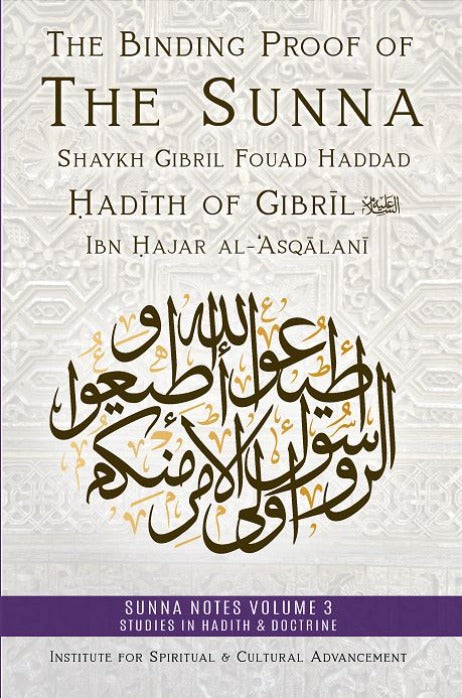
  • Origin of the term “Ahl as-Sunnah”

    Someone stated:

    “Naturally, the expression “Ahl al-Sunnah” was unknown in the early days of Islam.”

    The expression “Ahl al-Sunna” is reported from Ibn `Abbas and Ibn `Umar by al-Lalika’i in Sharh Usul I`tiqad Ahl al-Sunna; Muslim narrates it from Muhammad ibn Sirin in the Muqaddima to his Sahih; and al-Darimi in his Musnad from al-Hasan al-Basri. This is not to mention the Mujtahid Imams and those of the generation-layer immediately preceding them.

    I could look up al-Suyuti’s compilation Miftah al-Janna fi al-Ihtijaj bis- Sunna and the late Dr. `Abd al-Khaliq Abd al-Ghani’s Hujjiyyat al-Sunna for more reports, but this is probably enough to put to rest the false assumption that the expression was unknown in the early days of Islam.

    Peace and Blessings upon the Prophet, his Family, and his Companions


  • Foreordained Destiny and the Inefficacy of Material Causes-and-Effects

    AL-BUTI: Commentary on the Hikam (#3)

    Transcribed and adapted from a live lecture by Hajj Gibril Haddad

    —

    Eighth Lesson:

    Foreordained Destiny and the Inefficacy of Material Causes-and-Effects (Al-Qadar wa Lafa`iliyya al-Asbab) (Ibn `Ata’ Allah, Hikam No. 3)

    “The most truthful word any poet ever said is Labid’s: Lo! Everything other than Allah is vain.” Hadith of the Prophet – Allah bless and greet him.1

    —

    We had begun to speak about Ibn `Ata’ Allah’s Third hikma. In it he said – may Allah Almighty have mercy on him:

    #3. The foremost energies cannot pierce the walls of foreordained destinies.

    This hikma is in reality a completion for the hikma that comes before it. Ibn `Ata’ Allah – rahimahullah – had asked us to conform with the reality in which Allah has placed us. The measuring-scale for this reality is the most noble Law. If you see that Allah Almighty has placed you within the screens of ambient causes which are all forbidden: then Allah is testing you with dispossession (al-tajrid). What is required of you is to move away from these causes which Allah Almighty has not authorized, and rely on Allah for the obtainment of your wants. But if you see yourself placed within the screens of ambient causes to which the Law has unlocked wide and licit paths – and the way in which you use them is licit – then know, at that time, that Allah has placed you in the world of causes (`alam al-asbab). What is required of you is to interact with these causes, and not to substitute them with complete trust (tawakkul) in Allah Almighty. Complete trust is required anyway; however, you are obligated, in such a condition, to interact with those causes that are licit and, at the same time, trust in Allah. That is the gist of the previous hikma:

    #2. Your asking for dispossession when Allah has placed you in the midst of causes is a surreptitious lust, and your asking [to handle] causes when Allah has placed you in dispossession is a decline from a higher level.

    When Ibn `Ata’ Allah says this – we discussed it at length previously – one might infer that causes possess great efficacy (fa`iliyya) and that, when someone finds himself face-to-face with unproblematic, licit causes, he must interact with these causes in all his goals and all the essentials of life. One might therefore think that causes possess efficacy and influence, and that, therefore, one must interact with these causes and not say: “I shall substitute them with complete trust in Allah Almighty.” Because of this possibility – which might arise in the mind of whoever listens to the second hikma – Ibn `Ata’ Allah followed up with this third hikma and said: “The foremost energies cannot pierce the walls of foreordained destinies.”

    This question is related to doctrine (al-`aqida). It is the basis from which we should set forth, whether we have been tested through dispossession, or we have been tested and asked to interact with causes. In both cases, there is a doctrinal reality which we must all acquire in our very beings. What is that doctrinal reality? It is that causes, whatever they are, are subservient to Allah’s foreordained destiny (qadar), and it is not Allah’s foreordained destiny that is subservient to causes. This we must know.

    Causes that are represented by human endeavors to work, seek sustenance and so forth – such causes are troops among Allah’s other troops which all serve Allah’s qadar. These causes with which you interact, lead you to whatever Allah Almighty has foreordained for you. Whenever we have recourse to physicians and their medications, which are among the causes used to remedy illness, endeavoring to achieve a cure therefrom, we must know that the use of medication, the recourse to physicians – all this is subservient to Allah’s foreordainment (qada‘). This means that physicians, their remedies, their prescriptions, and all their means lead you, in the end, to whatever Allah has foreordained for you or against you. All the means with which you interact, those you use and seek after in order to obtain education or degrees, marry, start a family in the way you envisage, and whatever goals other than those – the Creator has filled the earth with causes! – you must know that these causes, whether you are now tasked with deprivation of them or with interacting with them – you must know that causes are troops which revolve around a single axis: execution of Allah Almighty’s foreordainment.

    That is the meaning of Ibn `Ata’ Allah’s words: “The foremost energies cannot pierce the walls of foreordained destinies.” Have the highest energy you like. Exert the greatest skills in marshalling causes to your advantage. As skillful as you may get in gathering together causes according to your wishes, that energy of yours, which has marshalled all causes for your sake, can never overcome Allah’s foreordained destinies. Yes, it is as if these foreordained destinies were a kind of fortified wall – like the fortified wall around the city which everyone knows – while the causes with which we interact are like arrows we shoot at that high wall. Can the arrows of causes, whatever they may be, ever pierce the bastions of foreordained destinies and go beyond them? Never in any way whatsoever.

    Each and everyone of us must know this doctrine. But first, what is the evidence for it? We do not want to open the file of doctrinal issues in the familiar style of the books of the science of Oneness (al-tawhid), theological discourse (al-kalam), and the like. Allah’s Book suffices for us, and the clear words which we use and repeat every day suffice for us. The Elect One – Allah bless and greet him – has taught us a sacred phrase which he ordered us to repeat always. What is that phrase? It is la hawla wa la quwwata illa billah – “There is no change nor power except by Allah.” What does this phrase mean? Reflect upon it. It means exactly what Ibn `Ata’ Allah is saying: There is no change for a human being, for causes, for means, for the universe and all that is in it – there is no change for all of that, nor power, except if that power comes from Allah Almighty. Is it not so?

    Among the names of Allah Almighty is al-Qayyum – “The Sustainer of All.” What is the meaning of this name? “Allah! There is no God other than He, the Living, the Sustainer of All” (2:255, 3:2). That is: the Sustainer of the universes, Who controls them as He wishes and organizes them as He likes. Nothing at all moves except by His Sustainment (qayyumiyya). That is the meaning of the word qayyum. Is there any efficacy left for causes after this?

    Our Almighty Lord says: “And of His signs is this: The heavens and the earth stand fast by His command” (30:35). It means that what you can behold of the movement of the celestial spheres – those we see and those we do not, – the ordering of the earth, all that is between the heaven and the earth, and all that lies within this universe, seen and unseen – it is one of His signs that “The heavens and the earth stand fast by His command.” It means that if you see in them causes and effects (asbab wa musabbabat), who is the one who threaded together these causes and effects, joining the former with the latter? It is Allah Exalted and Glorified!

    To elaborate: the nature of combustion in fire – so to speak, for there is no such thing as “nature”2 but we have to make what we say intelligible through approximations – that nature does not exist inside fire. It is but a divine Force (quwwa rabbaniyya) that has marshalled fire for its purpose. So it is Allah Who is the author of combustion (al-muhriq), not the fire. Our Exalted Lord says: “Lo! Allah grasps the heavens and the earth, lest they cease, and if they were to cease there is not one that could grasp them after Him” (35:41). It means that the existence of these spheres suspended in their orbits, these arrangements by which He has made these orbits stand together with the earth, these cosmic laws and patterns which we see all around us, from the farthest celestial bodies to the earth and thereunder – all that is by Allah Almighty’s arrangement. “Lo! Allah grasps the heavens and the earth, lest they cease, and if they were to cease there is not one that could grasp them after Him.” If you believe – and believe firmly – that this is Allah’s speech, is there any efficay left for causes?

    Our Exalted Lord says in His explicit disclosure: “And a token unto them is that We bear their offspring in the laden ship” (36:41). Have you reflected upon these words? The ship, externally, is a cause. Therefore it is the ship, apparently, which carries the people who board it, is it not? In our understanding, the phrasing should have been: “And a token unto them is that the laden ship bears them.” However, the divine disclosure came in a different form. “And a token unto them is that We bear their offspring in the laden ship.” Who, then, is the carrier for those who sought refuge in the ship? Is it the ship or is it Allah? So then, the ship possesses no efficacy.

    What does Allah say? “A token unto them is the dead earth. We revive it, and We bring forth from it grain so that they eat thereof; And We have placed therein gardens of the date palm and grapes, and We have caused springs of water to gush forth therein. That they may eat of the fruit thereof, and their hands made it not. Will they not, then, give thanks? Glory be to Him Who created all the sexual pairs, of that which the earth grows, and of themselves, and of that which they know not!” (36:33-36) In all this discourse you will notice that Allah attributes all these things to Himself while we find the causes present: we find the earth, we find agriculture, but Allah attributes all this to Himself.

    Allah says in Sura Nuh, as He speaks of the means by which He has saved our master Nuh ( and those who were with him: “And We carried him upon a thing of planks and nails, That ran (upon the waters) in Our sight, as a reward for him who was rejected.” (54:13) Consider well these words. Notice that what we aim to do by citing this evidence is to make firm our awareness and our certitude that the causes which we see have no efficacy in themselves. That is what we are aiming for. Allah is here recounting in a succinct and quick manner our master Nuh’s situation. When he was besieged and harmed by his people, what did he do? “So he cried unto his Lord, saying: I am vanquished, so give help.” (54:10). Two words: “I am vanquished,” and “so give help.” “Then opened We the gates of heaven with pouring water And caused the earth to gush forth springs, so that the waters met for a predestined purpose. And We carried him upon a thing of planks and nails, That ran (upon the waters) in Our sight, as a reward for him who was rejected.” (54:11-13) “We carried him” – He did not say: “It is the ship that carried him.” Further, He did not even use the word “ship” in His wording. What did He say? “And We carried him upon a thing of planks and nails.” [That is] “We carried him upon some planks and nails which were assembled” – so as to minimize the status of that ship and make it clear for you that the ship itself is less than [deserving of] being the one that rescued and the one that saved. Thus He first said: “And We carried him.” He did not attribute the carrying to our master Nuh nor to the ship. Then He said “upon a thing of planks and nails” to let you see that some planks which were put together are not strong enough to save those people from a perpetual deluge unknown to humanity heretofore nor hereafter.

    So then we have before us positive evidence that the creator of causes is Allah and that causes, all of them, melt under the authority of Allah’s Lordship. That is a truth which you are free to express in whatever theological fashion you wish. But that is what Allah Almighty’s Disclosure states. Nay, the vast majority of the Muslims hold that Allah has not deposited into these causes the least efficacy, unlike what some have said – such as the Mu`tazila – at one point. No, not at all! Allah did not deposit into fire the secret of combustion, thereafter leaving fire in charge of its mission, which consists in combustion. A simile would be a human being’s disposal of artificial intelligence, which is then left by him to do its job. No! The reality is certainly not so. Yet to some people, even among Muslims, this is imagined to be true. The latter say: “Fire burns by virtue of the force which Allah has deposited in it. Water quenches thirst by virtue of the force which Allah has deposited in it. Medicine heals by virtue of the force which Allah has deposited in it. Poison kills by virtue of the force which Allah has deposited in it.” Are these statements correct? Never.

    We do not charge [them] with disbelief. However, even scientifically, these statements are incorrect. The reason is that, if one believes that Allah has deposited healing within medicine and then left it so that medicine heals in permanence, it would mean that Allah now has a partner, which is this secret that He deposited within the medicine. As much as the Creator disassociates Himself from that medicine, the latter [allegedly] still performs its work, without the continuance (istimrariyya) of Allah Almighty’s efficacy. That is the meaning of that “deposited force.” We seek refuge in Allah from such belief! What have we done with “The Sustainer of All”? Similarly, if you say: “Fire burns by virtue of the efficacy which Allah Almighty has deposited in it.” The outcome of this statement is that Allah Almighty has deposited that secret – combustion – inside fire, then left fire so that the latter burns in perpetuity. So then that secret has become a partner with Allah! If Allah has left fire alone after depositing in it that secret, then [they claim] there is no problem with that: it shall always burn. That position is false, incorrect, and scientifically incorrect in any way one looks at it. Combustion only takes effect by the act of Allah at the time of contact between fire and the matter it burns.

    Allah creates satiation at the time you ingest food. Who is it that created satiation? Allah. If He wished, He could make you eat, and eat, and eat, and not be sated. Allah created quenchedness for you at the time you drink beverage. There are not, in these things, forces-in-residence which Allah has left alone so that they do their work. No – it is a mistake to think so. The Pious Predecessors (al-Salaf al-Salih), the People of the Way of the Prophet and the Congregation of the Companions (ahl al-Sunna wa al-Jama`a) hold otherwise.3 Just look at Allah’s words: “And a token unto them is that We bear their offspring in the laden ship” (36:41). If some self-sufficient physiological force had been deposited into the ship so that ships perform their tasks always, regardless to what extent Allah disconnects Himself from them – then His saying would no longer be correct that “And a token unto them is that We bear their offspring in the laden ship.” But He continues: “And if We will, We drown them, and there is no help for them, neither can they be saved” (36:43).

    Dear brethren: we must deal with this reality. Many are those that stray in this matter. One of us may say: “If this is the case, then why do we have to interact with these causes? Why does the sick person seek recourse in the physician? Why does he take medicine? Why do we take precautions against fire and its burning pain? Let us plunge into fire just as we plunge into water and swim in it. Why do we go out to the market and struggle, why work in trade and farming and so forth, if, as you said, there are no causes, and the one and only Causator is Allah, around Whose might all causes revolve?” What is the answer to this?

    Allah Almighty has made this lower-wordly existence stand on certain customs (sunan). He has tied together these things and those. Whatever comes first, appears to us to be a cause; whatever comes last, appears to us to be an effect. Allah has made the universe stand on that system. That is: Allah’s way is that He satiates you when you take food. His way is that He quenches your thirst when you take drink. His way is that He provides you with sustenance when you knock at the door of sustenance. His way is that He cures you when you rush to the doctor and ask him for the remedy that will benefit you. That is the way of Allah. He ties things together, but without there being actual efficacy for what we call a cause. It is proper conduct (adab) on our part with Allah to respect His system in the universe.

    It is proper conduct on our part with Allah to respect His universal customs. Thus has Allah Almighty willed it. If you have recognized what must be believed in the chapter of doctrine and then say: “For myself I shall not drink when I feel thirst, because Allah is the One that shall create quenchedness,” know that at that time you are committing misconduct with Allah Almighty. My Exalted Lord has willed to create quenchedness in your being at the time you take drink. If you say: “I shall not take drink,” then this is rebellion against Allah Almighty’s system.

    AL-BUTI: Commentary on the Hikam (#3)

    I will give you an example that will resolve the above to satisfaction. Lady Maryam – upon our Prophet and upon her peace – when birthpains came to her – you have all read the Sura of Maryam – felt pain and foresaw what was going to happen with her, what people were going to say about her: “And the pangs of childbirth drove her unto the trunk of the palm tree. She said: Oh, would that I had died before this and had become a thing of naught, forgotten! Then (one) cried unto her from below her, saying: Grieve not! Thy Lord has placed a rivulet beneath you, and shake the trunk of the palm tree toward you, you will cause ripe dates to fall upon you.” (19:23-25) The scholars all said here: She had rested her back against the trunk of a date-palm tree of huge size at a time there was not, at the head of that date-palm tree, any date nor fruit, for it was not yet the season for them. The tree was bare of fruit. Allah then created in front of her the rivulet, and He created for her in the height of the date-palm tree a bunch of ripe dates. Now, the God Who created the date-bunch instantly – is He not able to make it fall, or to make some of the dates fall in front of her? But He said: “And shake the trunk of the palm tree toward you, you wilt cause ripe dates to fall upon you.” Imagine, what can that weak hand of hers do to that trunk which is very much like that column [in the mosque]? You all know the strength of the trunk of the date-palm. What can one do? So then: Is there any efficacy to the hand? Yet Allah ordered her to do something; to exert some effort; to knock at Allah Almighty’s door. If Lady Maryam had said: “The God Who created the rivulet for me, and created those fresh, ripe dates for me, is able to let some of them fall in front of me just as He wishes; therefore I shall not move my hand, nor move the tree-trunk.” If she had said that, it would have been misconduct with Allah Almighty. She actually moved her hand, after which Allah Almighty made them fall. Was the fall of the ripe dates effected by the moving of the hand or by Allah’s subtle kindness? It was effected by Allah’s subtle kindness (lutf).

    So then, dear brethren: Our works in the marketplaces, our studies in the universities, our tilling of the fields and our farming, our medication at the hands of physicians – all the means that exist – are but the same thing as what Lady Maryam did when she was tasked with shaking the date-palm tree-trunk. If there were any efficacy to her hand, then it is the same with our works by which we strive and all our activities. But who is he that says there is any efficacy there? And that is the answer to the question mentioned before.

    I am tasked with rising in the morning and going out to knock at the door of Allah’s sustenance with the means which He has made licit. I am tasked with observing and respecting the causes which He has thus named for me: “causes” – and so I interact with them. That work in response to Allah’s command is part of worship, part of the condition of being Allah Almighty’s servant. This means that when you know that these causes have no actual efficacy, but [you say]: “Allah has commanded me, therefore, I hear and I obey” – at that time you are performing one of the greatest of all acts of worship to Allah Almighty. When the farmer goes out to his field, tills, plants, strives to his utmost, knowing that Allah has tasked him with a duty, and that it is Allah, thereafter, Who creates the results: that farmer is performing an act of worship which is among the greatest acts of worship. The young man who marries in order to practice continence, knowing, however, that it is Allah Who creates continence and it is He Who shall give him happiness through that marriage – it is Allah Himself Who gives him happiness – he is performing an act of worship which is among the greatest acts of worship. The sick man who knocks at the door of the physician to ask him for the remedy to his ailment, is performing an act of worship which is among the greatest acts of worship. This is all on condition that you know that efficacy belongs only to Allah Almighty. Whether you are in the world of dispossession (`alam al-tajrid) or in the world of causes (`alam al-asbab), you must know this. “The foremost energies cannot pierce the walls of foreordained destinies.”

    When a human being becomes immersed in this doctrine – his heart, not his tongue – he shall be far away from suffering, far from emotional and nervous upheavals; he shall no longer be affected. Why? If some merchant toils and gathers all the causes to use them to his benefit, after which it appears that his efforts all went to loss, and he goes back to his house with peace of mind, in his knowledge that efficacy does not belong to those causes but to Allah alone, Who wished that no [positive] outcome should be realized – he cannot say: had I done such-and-such, this result would not have happened; had I preceded so-and-so and submitted my project two days earlier, I would have been the one to succeed instead of him. The one who believes that efficacy belongs to Allah, his core does not ever burn with the flames of such words. Rather, he finds himself face-to-face with the words of Allah’s Messenger – Allah bless and greet him – in the authentic narration of Muslim in his Sahih: “If something bad happens to you, do not say: if only I had done such and such, then such and such would have happened. Say: Allah foreordained it to take place, and whatever Allah wishes, He does (qaddara Allah wa ma sha’a Allahu fa`al). For `if only’ begins Satan’s work.”4 But Satan cannot use `if’ and begin his work through it except in a heart that is devoid of such doctrine. Similarly, someone whose relative was afflicted by some illness, then he took that relative to the physicians and used all kinds of medicine and remedies, but Allah foreordained to take the patient away. Then someone might come to him and say: “You made a mistake. The physician you went to was not a specialist. You should have taken the patient to So-and-so. If you had done so, he would have known the cure. Someone ailed more than that and was healed at his hands.” If one’s doctrine is absent, one will [at those words] feel an anguish that will not let him sleep at night. He will say: “It is true, by Allah! Oh no, no, no! -” But look at him who possesses true doctrine and true belief in Allah, who has fastened his heart to Allah, and before whose eyes and insight all causes have melted away so that he no longer see anything other than the Causator. He shall sleep in all tranquility. He shall say: “Leave me alone, you and your talk! The physicians, their medicine, ailments and their remedies are all servants bound to obey Allah’s foreordained destiny, and it is not Allah’s foreordained destiny that is subservient to the knowledge of physicians and their remedies and all the rest.” His mind is at peace.

    Let us plant this certitude firmly in the core of our beings. It brings immense benefits to us. Among its other benefits is that this doctrinal certitude leads you to what the spiritual masters (al-rabbaniyyun) have called “oneness of perception” (wahda al-shuhud). I am not saying “oneness of being” (wahda al-wujud) – beware! What is the meaning of the expression “oneness of perception”? When I interact with causes with full respect to Allah’s ways, His orders, and His Law, and know that the sustenance that comes to me is from Allah; the felicity that enters my home is from Allah Almighty; my food is readied for me by Allah – I mean even the smallest details; the wealth with which I have been graced, comes from Allah; the illness that has been put in my being or that of a relative of mine comes from Allah Almighty; the cure that followed it is from Allah Almighty; my success in my studies is by Allah Almighty’s grant; the results which I have attained after obtaining my degrees and so forth, are from Allah Almighty’s grant – when the efficacy of causes melt away in my sight and I no longer see, behind them, other than the Causator Who is Allah Almighty, at that time, when you look right, you do not see except Allah’s Attributes, and when you look left, you do not see other than Allah’s Atttributes. As much as you evolve in the world of causes, you do not see, through them, except the Causator, Who is Allah. At that time you have become raised to what the spiritual masters have called oneness of perception. And this oneness of perception is what Allah’s Messenger – Allah bless and greet him – expressed by the word ihsan [which he defined to mean]: “That you worship Allah as if you see him.”5 You do not see the causes as a barrier between you and Allah. Rather, you see causes, in the context of this doctrine, very much like pure, transparent glass: the glass pane is present, no one denies it, but as much as you stare at it, you do not see anything except what is behind it. Is it not so? You only see what is behind it. The world is entirely made of glass panes in this fashion. You see in them Allah’s efficacy in permanence, so you are always with Allah Almighty.

    None has tasted the sweetness of belief (iman) unless he has reached that level of perception. At that time you will find yourself, when you enter your house, enjoying the pleasures of this house and whatever sustenance and good things are in it, you will know that it is Allah Who has bestowed all this upon you, so you will love Him. When you find that Allah has tied together your heart and the heart of your wife with mutual love, you will know that the secret of this love is not effected by your wife, but comes from Allah, the Lord of the worlds. When you look at yourself in the mirror, finding yourself in good health, you immediately know that it is Allah Almighty that has bestowed good health upon you. When food is placed before you and you look at it, you imagine that Allah – so to speak – has carried this food and placed it before you after he subordinated to this purpose His heaven, His earth, the pastures of His livestock, and then said to you: “Eat!” You will live with Allah Almighty! If you become thirsty and drink some cold water you will forget the water and remember only the One Who quenched your thirst. And when you lie down in bed at night and find yourself falling sleep, you will know that the One Who made you sleep is Allah – not sleeping pills at all, nor the efficacy which Allah subordinated to the physician. And so forth. You interact with causes, but this certitude shall make you as I described: you will see causes as very, very transparent glass panes which, as much as you stare at them, you will no longer see other than what is behind them.

    The disbeliever, on the other hand, or the denier, or the doubter, or the sceptic, will look at these causes as one of us would look at glass panes that have been completely painted over. These panes have become thick obstacles that prevent you from seeing what is behind them. As much as you look, you cannot see what is behind them. At that time one will divinize causes, and all those things. It is not permitted for the Muslim to fall into this spot in any way whatsoever.

    We have now determined the working relationship between the words of the Imam Ibn `Ata’ Allah al-Sakandari in his second hikma and his words in the third. There remains one question which might arise in the minds of some people: “If everything is according to qada’ and qadar, then the believer is foreordained by Allah to be a believer, and the disbeliever is foreordained by Allah to be a disbeliever. Therefore, the disbeliever’s disbelief is not by his free choice, nor is the believer’s belief by his free choice.” Our preceding discourse might lead some of you to this difficulty. What is the answer? It is actually a different question, unrelated to what we have said today. I shall answer this question, Allah willing, but what I say now will not suffice and I therefore direct you to what I said in detail, in depth, and at length in my book Al-Insanu Musayyarun aw Mukhayyar? (“Is Man Controlled or Endowed With Free Choice?”). I believe that I answered this problem there in great detail. However, I shall answer now succinctly.

    Everything is by qada’ and qadar, just as Allah’s Messenger – Allah bless and greet him – says, including helplessness and intelligence.6 Allah’s foreordained destinies are two kinds. The first kind is directly created by Allah Almighty. This is all part of “the world of creation” (`alam al-khalq): stars and their orbits, the order of the universe which is unrelated to man’s free choice, human birth and death, human illness and cure, vegetation, earthquakes, eclipses – all these matters are part of Allah’s foreordainment and created by Him directly, without any part for free choice. This comes under the heading of “creation” in the verse “His verily is all creation and commandment” (7:54). The Creator does not make you in any way responsible for what He created without any choice on your part. “Allah tasks not a soul beyond its scope” (2:286).

    The second kind of foreordained destinies is what Allah has foreordained – and what is foreordainment? It is Allah’s knowledge of what shall take place. Allah only creates something in correspondence with (tilqa‘) His knowledge. This second kind of foreordained destinies is one that takes effect or circulates through the free choices of human beings. For example: your prayer, your fasting, your pilgrimage, your purification-tax (zakat), your acts of obedience, your acts of piety, your acts of disobedience – we seek refuge in Allah! – and all your deeds freely undertaken: are they foreordained by Allah or not? They are foreordained by Allah, in the sense that Allah knows that you will pray by choice. When, according to Allah’s knowledge, you rose to pray, He put you in a position to pray (aqdaraka `ala salatik) and created in your entity the motions of your prayer. He is the Creator [of all this]. Allah knows that you will perform pilgrimage to the Sacred House. At the time you determined to go on pilgrimage, He put you in a position to do so and created for you the causes that facilitate it for you. Allah knows that So-and-so will disobey Him by drinking wine. At the time he finally determined to drink wine, Allah put him in a position to do so and created in his hand, his feet, and his mouth the power to do it.

    So then Who is the Creator of the acts of obedience? Allah. And Who is the Creator of the acts of disobedience? Allah. But to what does reward and punishment apply? Reward and punishment do not apply to the actual deed which is created by Allah, but to the resolution (al-qasd), the “earning” (al-kasb) as Allah Almighty said: laha ma kasabat wa `alayha ma iktasabat – “For it is what it has earned, and against it is what it has deserved” (2:286). If I determine to come to this place so that we should remind each other of one of the matters of this Religion, and say: “Ya Allah! O my Lord, I have determined to do this”- at that time the Creator creates power in my person, enables me to walk and come here, and when I sit in this place He enables me to think. He does all this, but on the Day of Resurrection what will He reward me for? Will He reward me for something which He Himself created? Rather, He will only reward me for my having determined (qasadtu). And so Allah has made my act subservient to my determination.

    This is a brief summary of the topic. Perhaps we shall elaborate on it in the next lesson, Allah willing. And praise belongs to Allah the Lord of the worlds.


    NOTES

    1 Narrated from Abu Hurayra by Bukhari and Muslim.

    2 I.e. in the sense of a personified force independent of the Creator, as in “Mother Nature.”

    3 “Things do not act of their own nature. Neither does water quench thirst, nor does bread sate hunger, nor does fire burn, but Allah creates satedness simultaneously with eating, and hunger at other times. Likewise, drinking is the drinker’s doing while quenchedness is from Allah, and killing is the killer’s doing while death is from Allah.” Ibn Khafif (d. 371), al-`Aqida al-Sahiha (§41), in Ibrahim al-Dusuqi Shatta, Sira Ibn Khafif (Cairo: al-Hay’a al-`Amma li Shu’un al-Matabi` al-Amiriyya, 1977) p. . A man asked al-Tustari (d. 283): “What is sustenance?” He said: “Perpetual dhikr.” The man said: “I was not asking about that, but about what sustains one.” He replied: “O man, things are sustained by nothing but Allah.” The man said: “I did not mean that, I asked you about what is indispensible!” He replied: “Young man, Allah is indispensible.” Abu Nu`aym, Hilya al-Awliya’ (10:218 #15022). “Satiation, quenching, and combustion are phenomena which Allah alone creates, since bread does not create satiation, nor does water create quenching, nor does fire create combustion, although they are causes for such results. But the Creator is Himself the Causator (al-Musabbib), not the causes. This is just as Allah said: “You threw not when you did throw, but Allah threw.” (8:17) He denied that His Prophet was the creator of the throw, although he was its cause. Allah also said: “And that it is He Who makes laugh, and makes weep, and that it is He Who gives death and gives life.” (54:43-44) Thus He dissociated making-laugh, making-weep, the giving of death and of life from their respective causes, attributing all to Himself. Similarly, al-Ash`ari (d. 330?) dissociated satiation, quenching, and combustion from their causes, attributing them all to the Creator Who said: “Such is Allah, your Lord. There is no God save Him, the Creator of all things.” (6:102) “Is there any creator other than Allah?” (35:3) “Nay, but they denied what they could not comprehend and whereof the interpretation had not yet come unto them.” (10:39) “Did you deny My signs when you could not compass them in knowledge, or what was it you did?” (27:84).” Ibn `Abd al-Salam (d. 660), al-Mulha fi I`tiqad Ahl al-Haqq in Rasa’il al-Tawhid (p. 11-27) and al-Subki, Tabaqat al-Shafi`iyya al-Kubra (8:219-229).

    4 Narrated from Abu Hurayra by Muslim, Ahmad, Ibn Majah, Malik in his Muwatta’, and al-Tabarani, all as part of a longer hadith which begins: “The strong believer is better and more beloved to Allah than the weak believer” (al-mu’min al-qawiyy khayrun wa ahabbu ilallâh min al-mu’min al-da`îf).

    5 Narrated from Abu Hurayra by Bukhari, Muslim, Ahmad, al-Nasa’i, and Ibn Majah; from `Umar by Muslim, al-Tirmidhi, Abu Dawud, Ibn Majah, Ahmad, and al-Nasa’i; and from Abu Dharr by al-Nasa’i, all as part of a longer hadith.

    6 “Everything is by qadar, including helplessness and intelligence.” Narrated from Anas and Ibn `Umar by Muslim; from Ibn `Umar by Ahmad and Malik; and from Ibn `Abbas by Bukhari in his Tarikh. The latter narrates it both with qada’ and qadar.

    Peace and Blessings upon the Prophet, his Family, and his Companions
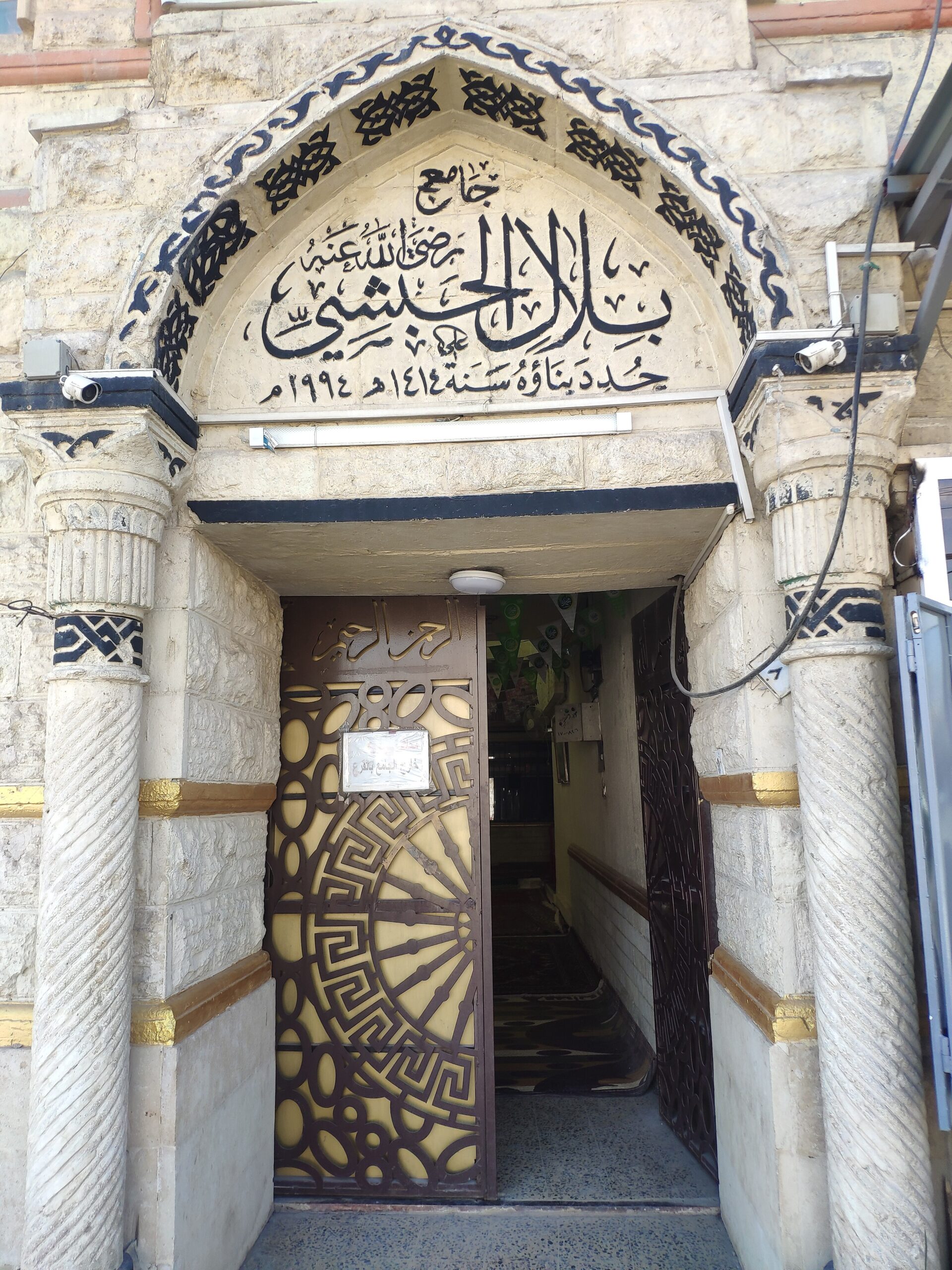
  • Ibn al-Qayyim on Life in the Grave

    Does The Spirit Die, Or Does Death Come to The Body Alone?

    People have differed on this. Some say, “The spirit dies and tastes death because it is a soul, and ‘every soul is a taster of death (Quran iii, 182, xxi,36, xxix,57 ).’” They say “The proofs indicate that only God remains. He said, ‘Everyone who is upon it is vanishing, and the face of your lord remains, possessor of majesty and honor (Quran Iv,26).’ And he said, ‘Everything perishes except this face (Quran Iv,26).’ And he said, ‘ Everything perishes except his face (Quran xxviii,88).’”

    They said, ” If angels die, then human souls are all the more likely to die.” They said, “He said concerning the people of the Fire, They said, ‘Our Lord, Thou hast killed us twice and hast brought us to life twice (Quran xl, 11).’ The first death is this seen one, which is the body’s; and the other one is the spirit’s.”

    Others said, “Spirits doe not die; for they are created for survival, and only bodies. die.” They said, “Those traditions point to this which indicate the bliss and punishment of the spirits after the separation, until God returns them to their bodies. If spirits died, bliss and punishment would be cut off from them. He said, ‘Do not consider those who have been killed in the way of God dead, but alive with their Lord, sustained, rejoicing in what God brought them of His favor, and being glad for those who have not reached them of those who come after them (Quran iii,163,164).’ This is stated along with decisive proof that their spirits have separated from their bodies and have tasted death.

    The true statement is that one should say, “The death of souls is their separation from their bodies, and their going out from them” So if there is meant by their death this measure, then they are “tasters of death;” But if there is meant that they become non-existent and vanish and become pure non-existence, they do not die in this sense, but rather remain after their creation in bliss (p.53) or in punishment, as will appear if God wills, after this, and as the test(of the Quran or the traditions) plainly states, that they are like that until God returns them to their bodies.

    Ahmad Ibn al-Husain al-Kindi put into poetry this difference of opinion in his statement :”People quarrel until there is no agreement among them -Except upon grief, and there are disagreements about grief for it is said, “The soul of man is safe and sound.’ And it is said, ‘It shares with the body of man in perishing.’”

    If it should be asked, ” at the blast on the trumpet, do spirits remain alive as they are, or die, then come to life?” one answers, “He said, “There is a blowing on the trumpet and a swooning of those in the heavens and those on the earth, except whom God wills (Quran xxxix,68).’: God has excepted some of those in the heavens and some of those on the earth from this swooning. It is said, ” They are the martyrs. “This is the statement of Abu Hurayrah and Ibn Abbas, and Said Ibn Jubayr.

    And it is said, “They are Gibril and Mikail and Israfil and the angel of death. This is the statement of Muqatil and others. And it is said, “They are those of the nymphs of Paradise who are in the Garden and those who are in the Fire and its storehouse, of the people of punishment.” Abu Ishad Ibn Shaqala of our school said it, and the Imam Ahmad has made a definite statement that the nymphs of Paradise and the youths do not die at the blast on the trumpet: “He gave information that the people of the Garden ‘do not taste death in it, except the first death (Quran xliv,56).’” This is a proof-text that they do not die other than that first death, for if they died a second time there would be two deaths. As for the statement of the people of Fire, “Our Lord, Thou hast killed us twice, and hast brought us to life twice (Quran xl,ll).” A commentary on this verse is the verse which is Surat al-Baqarah, which is His statement, “How do you disbelieve in God, when you are dead? For He gave your life, then He causes you to die, then He restores you to life (Quran ii,26).” They were dead when they were seed in the (p.54) loins of their fathers and in the wombs of their mothers. Then He brought them to life after that, then He caused them to die, then He restores them to life on the Day of Resurrection. There is not in that causing their spirits to die before the Day of Resurrection, for otherwise there would be three deaths.

    As for the fainting of the spirits at the blast on the trumpet, it is not necessary to infer from it their death. In the sound tradition, “People faint on the Day of Resurrection and I am the first who recovers, but behold Musa is grasping the support of the throne. I do not know whether he awoke before me or at the same time in the swooning on the day of al-Tur” (See Quran lii,45) . This is the swooning in the Standing (Mawqif) of the Resurrection, when God comes to the division of the judgement and the earth is illuminated with His light. At that time the creatures, all of them, swoon. God said, “Abandon them until they meet their day on which they swoon (Quran Lii,45).” If this swooning were a death, then it would be another death.

    A company of the excellent (Muslims) have drawn attention to this. Abu Abd Allah al-Qurtubi said, “The obvious meaning of this tradition is that this is a swooning, a fainting which is one the Day of Resurrection (Qimayah), not the swooning of death resulting from the blast of the trumpet.” He said, “our Shaykh, Ahmad Ibn Amr said, ‘The obvious meaning of the tradition of the Prophet indicates that this swooning is only after the second blast, the blast of the Resurrection (Bath), and the text of the Quran necessitates that this exception is only after the blast of the swooning.’” When this was (stated) one of the learned men said, “It is possible that Musa is one of the Prophets who did not die, and this is preposterous.”

    Al-Qadi Iyad said, “It is possible that the meaning of this swooning is fear after the Resurrection, when the heaven and the earth are split asunder.’” He said, “The traditions and the stories amount to little.” Abu ‘l-Abbas al-Qurtubi refuted him saying . “His statement in the sound tradition opposes this, that he, when he comes out from his grave meets Musa grasping the support of (p.55) the throne.” He said, “This is at the time of the blast of fear only.” Abu Abdullah said, “Our Shaykh, Ahmad Ibn Amr, said ‘The consideration not pure non-existence, but only a transition from one state to another. There points to that the fact that the martyrs, after their violent end and their death, are ‘alive with their Lord, sustained, rejoicing, glad (see Quran iii,163).’ This is an attribute of those living in the world. Since this was true of the martyrs, the prophets are more worthy and more suitable in regard to that; in addition the fact that it is valid on the Prophet’s authority that the earth does not consume the bodies of the prophets; and that he met with the prophets on the Night Journey (Quran xvii, 1) in Jerusalem and in the heavens , especially with Musa. And he has given information that no Muslim greets him without God returning his spirit to him, so that he may return the greeting to him, etc., with other arguments from the whole of which a decision may be obtained to the effect that the death of the prophets may be inferred only to the extent that they are absent from us where we do not overtake them, although they are in existence, alive. That is like the state among the angles, for they are alive, in existence, although we do not see them . If it is confessed that they are alive, then when the blast of the swooning is blown on the trumpet everyone in the heavens and in the earth swoons, except whom God wills. As for the swooning of other than the prophets, it means death. As for the swooning of the prophets, the clearest inference is that it is a fainting. When the blast of the Resurrection (Ba`th) is blown on the trumpet, whoever has died is made alive, and whoever has fainted recovers. Therefore he said in the tradition admittedly sound., ‘I am the first who recovers.’ So our Prophets is the first who leaves his grave before all men, except Musa. There results in it uncertainty whether he rises before him from his fainting, or remains in the state in which he was before the blast of the swooning, (p.56) awake, because he was reckoned with in the swooning of the day of al-Tur. This is a great favor to Musa ; but it is not necessary from some one merit of his to infer his superiority over our Prophet absolutely, because a particular does not necessitate a universal.

    Abu Abd Allah al-Qurtubi said, “The application of the tradition to the swooning of creation on the Day of Resurrection is no difficulty. But if it is applied to the swooning of death at the time of the blast on the trumpet, then the mention of the Day of Resurrection means is: When the blast of Resurrection is blown on the trumpet, I am the first to raise his head, but behold, Musa is grasping one of the supports of the throne. I do not know whether he recovered before me or at the same time, in the swooning of al-Tur.” I said, “Giving the tradition this meaning is not sound, because the Prophets questions whether Musa recovered before him, or did not swoon, rather at the same time, in the swooning of al-Tur.” So the meaning is, “I do not know whether he swooned or did not swoon.” He said in the tradition, “I am the first recovers.” This indicates that the Prophet ( swoons with those who swoon, and that the question results in whether Musa swooned and recovered from his swoon before him, or whether he did not swoon. Where the thing meant by it the first swooning, which is the swooning of death, then he would necessarily imply that his death occurred, and he would have questioned whether Musa died or did not die. This is preposterous from many aspects, for he knew that it was a swooning of fear and not a swooning of death’; and then the verse does not indicate that all the spirits die at the first blast. Truly it indicates that the death of the creatures is at the first blast, and every one who has not tasted death before it tastes it at that time . But as for those who have tasted death, or those on whom death has not been decreed, the verse does not indicate that they die a second death. And God knows best.

    If it is asked, “How do you deal with his statement (p.57) in the tradition, “People swoon on the Day of Resurrection and I am the first from whom the earth splits open, and I find Musa grasping the support of the throne”? one replies, “There is no doubt that this version occurred in this form, and questions have arisen from it. But the narrator came upon a tradition, and combined the two versions. This and the two traditions occur as follows. One of them is “People swoon on the Day of Resurrection, and I am the first who recovers.” The second is like this: “I am the first from whom the earth splits open on the day of Resurrection.” So in Al-Tirmidhi and others from the tradition of Abu Sid al-Khurdri, who said: “The Messenger of God said, ‘I am lord of the children of Adam on the Day of Resurrection, and there is no boasting. In may hand is the flag of praise, and there is no boasting. There is no prophet on that day, Adam or anyone else, who is not under my banner; and I am the first from whom the earth splits open and there is no boasting.’” Al-Tirmidhi said, “This is a tradition which is beautiful and sound.” ? The narrated interpolated this tradition in the other one. And our Shaykh, Abu ‘l-Hajjaj al-hafiz used to say that.

    If it is asked, “What do you do with his statement, ‘I do not know whether he recovered before me, or whether he was one of those whom God excepted’, when those whom God excepted are excepted only from the swooning of the blast, not from the swooning of the Day of Resurrection, as God said: ‘A blast was blown upon the trumpet, and those in the heavens and those on the earth swooned, except those whom God willed (Quran xxxiv.68),’ and the exception did not occur from the swoon of the creatures on the Day of Resurrection’? it is replied, “This (and God knows best) is not preserved, but it is a supposition on the part of some of the narrators. The thing preserved is what the sound narrative concur in from his statement, ‘I do not know whether he recovered before me or at the same time in the swooning of al-Tur.’” Some of the narrators are of the opinion that this swooning is the swooning of the blast, and that Musa enters among those whom He expected from it. This opinion does not fit in with the tenor (p.58) of the tradition absolutely. For the recovery then is the recovery of the Resurrection; so how could he say, “I do not known whether he rose before me or at the same time, in the swooning of al-Tur’? Consider it; this is contrary to the swooning in which the creatures swoon on the Day of Resurrection when God comes for the decision of the judging between the creatures, and reveals Himself to them, for they swoon al together. As for Musa, if he had not swooned with them, he would have been reckoned with by his swooning on the day his Lord appeared to the mountain, and he made it plain (an allusion to Quran vii.l39). The swooning of this appearance was made a substitute for the swooning of the creatures of the appearance of the Lord on the Day of Resurrection. Consider this great meaning; were there nothing in the answer but the disclosure of this tradition and its importance, it would be worth trying. And to God belong praise and favor, and in Him is help.

    Peace and Blessings upon the Prophet, his Family, and his Companions
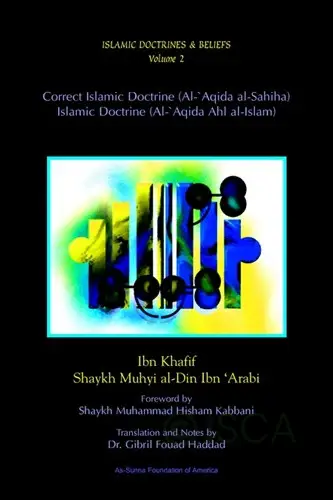
  • The Vision of Allah the Exalted in the World and the Hereafter

    Ibn `Abd al-Barr in al-Intiqa’ and others relate that Imam Malik adduced as proof of the believers’ vision of Allah Almighty in the hereafter the verses: {That day will faces be resplendent, Looking toward their Lord} (75:22-23) and {Nay! Verily, from their Lord, that day, shall they [the transgressors] be veiled} (83:15).1

    Imam Ibn Khafif stated in his al-`Aqida al-Sahiha:

    30. The believers shall see Allah on the Day of Resurrection just as they see the full moon on the nights when it rises. They will not be unfairly deprived of seeing Him.

    31. They will see Him without encompassment (ihata) nor delimitation (tahdid) within any given limit (hadd), whether from the front, the back, above, below, right, or left. …

    97. Sight in the world is impossible.

    The Mu`tazila and some other groups held that Allah Almighty could not be seen at all, even on the Day of Resurrection. They rejected the sound hadiths to the contrary, claiming that such vision necessitated corporeality and direction, which were precluded for Him. Ahl al-Sunna adduced the verse {That day will faces be resplendent, Looking toward their Lord} (75:22-23) and the mass-narrated hadiths to the effect that such vision will be real. In contrast to the Mu`tazila, the totality of the scholars of Ahl al-Sunna both excluded modalities of encompassment, delimitation, direction, and other corporeal qualities and, at the same time, held that Allah will be seen by the believers in the Hereafter without specifying how. However, they differed whether such unqualified sight was possible in the world as well.

    Al-Qari and al-Haytami reported that the agreement of Ahl al-Sunna is that sight of Allah Almighty in the world is possible but that it does not take place (except for the Prophet — Allah bless and greet him –), while two contrary opinions on the topic are narrated from al-Ash`ari in al-Qushayri’s Risala.2

    The proof that His sight is possible in the world was adduced from Musa’s — upon him peace — request to Allah: {My Lord! Show me Your Self, that I may gaze upon You} (7:143) as Prophets do not ask for the impossible.3 Imam al-Qushayri stated in the Risala that sight of Allah in the world does not take place for anyone except the Prophet — Allah bless and greet him — while al-Dhahabi, conceding that sight of Allah in the world is possible, held that it does not take place even for the Prophet — Allah bless and greet him –.4

    The best statement on the issue is that of Shaykh Muhyi al-Din ibn `Arabi: “He can be seen with the hearts and the eyes, if He so wills.”5 Most or all of these views are based on the Prophet’s — Allah bless and greet him — hadith: “Verily, you shall not see Allah until you die.”6 Ibn Hajar adduced the hadith: “Worship Allah as if you see Him” as further proof that there is no sight of Allah with the eyes of the head in this world but added: “The Prophet’s — Allah bless and greet him — sight of Allah is supported by other evidence.”7 The Prophet — Allah bless and greet him — saw Allah Almighty before death as is the doctrine of the majority of Ahl al-Sunna thus related from al-Nawawi by al-Qari.8 The evidence for this is the hadith of Ibn `Abbas whereby the Prophet — Allah bless and greet him — said: “I saw my Lord” (ra’aytu rabbi).9 Ibn Kathir cited it in his commentary on Sura al-Najm and declared its chain sound, but considered it part of the hadith of the dream cited below. Ibn al-Qayyim [see excerpt below] relates that Imam Ahmad considered such sight to be in the Prophet’s sleep — Allah bless and greet him — but remains a true sight – as the dreams of Prophets are true – and that some of the Imam’s companions mistakenly attributed to him the position that the Prophet — Allah bless and greet him — saw his Lord “with the eyes of his head.”10

    Al-Bayhaqi also narrated the hadith “I saw my Lord” in al-Asma’ wa al-Sifat with a sound chain but with the addition: “in the form of a curly-haired, beardless young man wearing a green robe,” a condemned, disauthenticated addition and concatenation with another hadith that refers to Gibril — upon him peace –.11 Hence al-Suyuti interpreted it either as a dream or, quoting his shaykh Ibn al-Humam, as “the veil of form” (hijab al-sura).12

    The latter explanation is echoed in al-Qari’s several commentaries of the similar hadith whereby the Prophet — Allah bless and greet him — said: “My Lord came to me in the best form – the narrator said: I think he said: `in my sleep’ – and asked me over what did the Higher Assembly (al-mala’ al-a`la)13 vie, and I said I did not know, so He put His hand between my shoulders, and I felt its coolness in my innermost, and knowledge of all things between the East and the West came to me.”14

    Al-Mubarakfuri relates from Ibn Kathir and al-Haytami the position that the above vision took place in the Prophet’s sleep — Allah bless and greet him. This is also the position of Ibn al-Jawzi based on what he termed the best chains of this hadith.15 Al-Haytami points out that the words “I woke up and saw my Lord” in Ahmad’s narration from Mu`adh are actually changed from “I dozed off and saw my Lord” due to a copyist’s corruption of “I dozed off” (istathqaltu) – in al-Tirmidhi’s narration from Mu`adh – into “I woke up” (istayqaztu).16 On the whole, the scholars’ interpretations of the Prophet’s vision — Allah bless and greet him — show that whether it took place in his dream or in a wakeful state, “with the eyes of the heart” or “with the eyes of the head,” does not change the fact that he saw Him in the real sense, as the Prophet’s dream-vision or heart-vision — Allah bless and greet him — is by far sharper, more accurate, and more real than the visions of ordinary people.

    Ahl al-Sunna scholars gave many interpretations of the above hadith. For example, al-Razi and, before him, al-Bayhaqi, interpreted the placing of Allah’s Hand as His extreme consideration and attention to the Prophet — Allah bless and greet him –, or as His immense favor to him, while its specific placing between his shoulders refers to the pouring of divine kindness and mercy into his heart, and the coolness refers to the completion and perfection of his knowledge as shown by his words “I knew all things between the East and the West.”17 Al-Qari wrote the following in the chapter on the Prophet’s — Allah bless and greet him — turban in his book Jam` al-Wasa’il fi Sharh al-Shama’il, a commentary on al-Tirmidhi’s Shama’il or “Characteristics of the Prophet”:

    Whether the Prophet — Allah bless and greet him — saw his Lord in his sleep or whether Allah the Glorious and Exalted manifested Himself to him with a form (bi al-tajalli al-suri), this type of manifestation is known among the masters of spiritual states and stations (arbab al-hal wa al-maqam), and it consists in being reminded of His disposition (hay’atihi) and reflecting upon His vision (ru’yatihi), which is the outcome of the perfection of one’s self-detachment (takhliyatihi) and self-adornment (tahliyatihi). And Allah knows best about the states of His Prophets and Intimate Friends whom He has raised with His most excellent upbringing, and the mirrors of whose hearts He has polished with His most excellent polish, until they witnessed the Station of Divine Presence and Abiding (maqam al-hudur wa al-baqa’), and they rid themselves of the rust of screens and extinction (sada’ al-huzur wa al-fana’). May Allah bestow on us their yearnings, may He make us taste their states and manners, and may He make us die in the condition of loving them and raise us in their group.18

    Al-Qari goes on to quote Ibn al-Qayyim’s relation from Ibn Taymiyya that when the Prophet — Allah bless and greet him — saw that his Lord put His hand between his shoulders, he honored that place with the extremity of the turban.19 Elsewhere he states:

    Ibn Sadaqa said that Abu Zur`a said: ‘The hadith of Ibn `Abbas [about the Prophet seeing His Lord] is sound (sahih), and none denies it except a Mu`tazili’… Ibn al-Humam said: ‘This is but the veil of form (hijab al-sura).’ It seems that he meant by this that the entire goal can be visualized if it is interpreted as a figural manifestation (tajalli suri), as it is of necessity absurd to interpret it as a real or literal manifestation (tajalli haqiqi). Allah Almighty has many forms of manifestations (anwa` min al-tajalliyat) according to His Entity and Attributes. Likewise, He possesses all power and encompassing ability, well beyond the angels and other than them, to fashion forms and appearances. Yet He is transcendent above possessing a body (jism), a form (sura), and directions (jihat) with regard to His Entity. These considerations help solve many of the purported difficulties in the ambiguous verses and the narrations of the Attributes. Allah knows best the reality of spiritual stations and the minutiae of objectives…. If the hadith is shown to have something in its chain that indicates forgery, then fine; otherwise: the door of figurative interpretation is wide and imposes itself (bab al-ta’wil wasi`un muhattam).20

    Elsewhere al-Qari states:

    If this vision took place in dream, then there is no difficulty…. However, if it took place in a wakeful state (fi al-yaqaza), as conveyed by the letter of Ahmad ibn Hanbal’s narration [but see al-Haytami’s comment quoted above], then the Salaf declared belief in the letter of such narrations – provided they were sound – without explaining them as one would explain the attributes of creatures. Rather, they negated modality (al-kayfiyya) and entrusted knowledge of their hidden meaning to Allah. For He shows to His Prophet — Allah bless and greet him — whatever He wishes from behind the curtains of the Unseen, including what our minds have no way of comprehending. However, to leave aside figurative interpretation (al-ta’wil) in our time fosters confusion (fitna) in the beliefs of people, due to the dissemination of the doctrines of misguidance (i`tiqadat al-dalal). Therefore, it is appropriate to interpret it in conformity with the Law as a possible interpretation, not a definitive one. Accordingly, the words ‘in the best form’ could signify `I saw my Lord as I was in the best form in the sense of His utmost favor and kindness to me’; or ‘in the Lord’s best form’ in the sense that the form of something is whatever distinguishes it from something else, whether it pertains to the thing itself or to whatever part of it is being characterized. This can be applied to meanings just as it is applied to material bodies. One speaks about ‘picturing a matter or a situation thus.’ Allah’s `form’ – and Allah knows best – would then be His specific Entity (dhatuhu al-makhsusa) separate from any other representation of the farthest levels of perfection, or the Attribute that is specific to Him, meaning `My Lord was more gracious and kinder than at any other time.’ Thus did al-Tibi and al-Tawrabashti relate it.21

    The above is reminiscent of Ibn al-Jawzi’s similar interpretation in the second hadith of his Daf` Shubah al-Tashbih:

    If we say that he — Allah bless and greet him — saw Him while awake, then the form, if we say that it refers to Allah Almighty, would mean: “I saw Him in the best of His Attributes in turning to me and being pleased with me.” If we say that it refers to the Prophet — Allah bless and greet him — himself, then it would mean: “I saw Him as I was in the best form.”22

    Others considered Ibn `Abbas’ narration to refer to a vision with the eyes of the heart, as elucidated by Ibn `Abbas’ other narrations in Sahih Muslim and al-Tirmidhi (hasan): “He saw him with his heart.” Another narration from Ibn `Abbas in Muslim states: “He saw him with his heart twice,” in commentary of the verses: {The heart lied not (in seeing) what it saw} (53:11), {And verily he saw him, yet another time} (53:13).

    Another explanation is that the Prophet — Allah bless and greet him — saw light. This is stated explicitly in the Prophet’s — Allah bless and greet him — reply, when asked by Abu Dharr if he had actually seen his Lord: “I saw light.”23

    Many sound reports show that the Companions differed sharply whether the Prophet — Allah bless and greet him — saw Allah or not. Ibn `Abbas related that he did, while Ibn Mas`ud, `A’isha, Abu Hurayra, and Abu Dharr related reports to the contrary, stating that the verses of Sura al-Najm and other Suras referred to Gibril — upon him peace –,24 and that the Prophet — Allah bless and greet him — said that he saw light.

    Al-Bukhari narrated from Masruq that the latter said:

    I said to `A’isha: “O my mother! Did Muhammad — Allah bless and greet him — see his Lord?” She replied: “My hair stands on end because of what you said. Have you no idea of three things – whoever tells them to you is lying? [First,] whoever tells you that Muhammad — Allah bless and greet him — saw his Lord, is lying.” She then recited: {Vision comprehends Him not, but He comprehends (all) vision. He is the Subtle, the Aware.} (6:103) {And it was not (vouchsafed) to any mortal that Allah should speak to him unless (it be) by revelation or from behind a veil} (42:51). “[Second,] whoever tells you that he knows what shall happen tomorrow, is lying.” She then recited: {No soul knows what it will earn tomorrow} (31:34). “And [third,] whoever tells you that he concealed something, is lying.” She then recited: {O Messenger! Make known that which has been revealed unto you from your Lord, for if you do it not, you will not have conveyed His message. Allah will protect you from mankind. Lo! Allah guides not the disbelieving folk.} (5:67) “However, he did see Gibril — upon him peace — in his actual form twice.”

    This hadith is also narrated from Masruq by Muslim thus:

    I was sitting back in `A’isha’s house when she said: “O Abu `A’isha [i.e. Masruq], there are three things, whoever says any of which, he is lying about Allah in the most hateful manner.” I asked: “Which things?” She said: “[First,] whoever tells you that Muhammad — Allah bless and greet him — saw his Lord, he is lying about Allah in the most hateful manner.” I was sitting back, so I sat up and said: “O Mother of the Believers! Give me a moment and do not rush me. Did not Allah Almighty say: {Surely he beheld him on the clear horizon} (81:23), {And verily he saw him, yet another time} (53:13)?” She replied: “I am the first in this entire Community to have asked Allah’s Messenger — Allah bless and greet him — about this, and he said: ‘It is but Gibril, I did not see him in the actual form in which he was created other than these two times. I saw him alighting from the heaven, covering it all. The magnitude of his frame spans what lies between the heaven and the earth.’” Then she said: “Did you not hear Allah say: {Vision comprehends Him not, but He comprehends (all) vision. He is the Subtle, the Aware} (6:103)? Did you not hear Allah say: {And it was not (vouchsafed) to any mortal that Allah should speak to him unless (it be) by revelation or from behind a veil, or (that) He sends a messenger to reveal what He will by His leave. Lo! He is Exalted, Wise} (42:51)?” She continued: “[Second,] whoever claims that Allah’s Messenger — Allah bless and greet him — concealed any part of Allah’s Book, he is lying about Allah in the most hateful manner when Allah is saying: {O Messenger! Make known that which has been revealed unto you from your Lord, for if you do it not, you will not have conveyed His message} (5:67).” She continued: “[Third,] whoever claims that he can tell what shall happen tomorrow, he is lying about Allah in the most hateful manner, since Allah is saying: {Say: None in the heavens and the earth knoweth the Unseen save Allah [and they know not when they will be raised again]} (27:65).”25

    Muslim mentions another wording which adds the phrase:

    She said: “If Muhammad — Allah bless and greet him — had concealed anything of what was revealed to him, he would have concealed this verse: {And when you said unto him on whom Allah has conferred favor and you have conferred favor: Keep your wife to yourself, and fear Allah. And you did hide in your mind that which Allah was to bring to light, and you did fear mankind whereas Allah had a better right that you should fear Him} (33:37).”

    A narration by al-Tirmidhi from al-Sha`bi cites the two positions in context:

    Ibn `Abbas met Ka`b [al-Ahbar] in `Arafa and asked him about something, whereupon Ka`b began to shout Allahu Akbar! until the mountains answered him. Ibn `Abbas said: “We are the Banu Hashim!”26 Ka`b said: “Allah Subhan wa Ta`ala has apportioned His vision and His speech between Muhammad — Allah bless and greet him — and Musa — upon him peace. Musa — upon him peace — spoke with Him twice and Muhammad — Allah bless and greet him — saw him twice.” Masruq said: “Later27 I went to visit `A’isha and asked: `Did Muhammad see his Lord?’ She replied: ‘You have said something that makes my hair stand on end.’ I said: ‘Do not rush!’ and recited [the verses which conclude with]28 the verse {Verily he saw one of the greater revelations of his Lord} (53:18). She said: ‘Where is this taking you? It was but Gibril. Whoever tells you that Muhammad — Allah bless and greet him — saw his Lord, or concealed something which he was commanded [to reveal], or knew the five things which Allah mentioned {Lo! Allah! With Him is knowledge of the Hour. He sends down the rain [and knows that which is in the wombs. No soul knows what it will earn tomorrow, and no soul knows in what land it will die. Lo! Allah is Knower, Aware]} (31:34) – he has told an enormous lie. Rather, he saw Gibril, whom he did not see in his actual form except twice: once at the Lote-Tree of the Farthest Boundary (sidra al-muntaha), and once in Jiyad [in Mecca], with his six hundred wings, he had filled the firmament.”

    Ibn al-Qayyim in Zad al-Ma`ad said:

    The Companions differed whether the Prophet — Allah bless and greet him — actually saw his Lord that night [of isra‘ and mi`raj] or not. It is authentically narrated from Ibn `Abbas that the Prophet — Allah bless and greet him — saw his Lord, and also authentically related that Ibn `Abbas said: “He saw Him with his heart.” It is also authentically related from `A’isha and Ibn Mas`ud that they denied such vision, saying that Allah’s words {And verily he saw him, yet another time, at the Lote Tree of the Farthest Boundary} (53:13) refer to Gibril — upon him peace –.29 It is also authentically related from Abu Dharr that the latter asked the Prophet — Allah bless and greet him: “Did you see your Lord?” and he replied: “[I saw] a huge light, how could I see Him?” (nurun anna arah?). That is: light came in between myself and His sight, as stated in the wording: “I saw light” (ra’aytu nuran).30 `Uthman ibn Sa`id al-Darimi [incorrectly] said that the Companions all agreed that the Prophet — Allah bless and greet him — did not see Him.31 Shaykh al-Islam Ibn Taymiyya – may Allah sanctify his soul! – said:

    Ibn `Abbas’s statement that “He saw Him” does not contradict that claim, nor his statement that “He saw Him with his heart.” For it is also authentically related that the Prophet — Allah bless and greet him — said: “I saw my Lord – glorified and exalted is He!”32 However, the latter was not during the isra’ but in Madina, when the Prophet — Allah bless and greet him — was occupied and could not be with the Companions at the time of the dawn prayer, after which he told them about his vision of Allah during his sleep that night. It is on that evidence that Imam Ahmad based himself when he said: “Yes, he saw him in reality (na`am ra’ahu haqqan), for the dream-visions of Prophets are real.” This is absolutely true, but Ahmad did not say that he saw Him with the eyes of his head while awake. Whoever said that he did, is mistaken. Ahmad said one time: “He saw Him” and another time: “He saw Him with his heart.” These are the two statements narrated from him on the issue. The third statement whereby “He saw Him with the eyes of his head” comes from the free paraphrase of some of his companions. Ahmad’s texts are present with us, and nowhere are such words found in them.33

    Ibn Hajar analyzed this issue at length in his works34 and compiled a monograph on the topic titled al-Ghunya fi al-Ru’ya.35 Al-Qari also gave an authoritative discussion of the topic in al-Mirqat.36

    NOTES

    1Both Pickthall’s and Yusuf `Ali’s translations parenthetically annul the meaning of Allah’s vision, respectively: {Nay, but surely on that day they will be covered from (the mercy of) their Lord} and {Verily, from (the Light of) their Lord, that Day, will they be veiled}.

    2Al-Qari, al-Mirqat (1892 ed. 5:303); al-Haytami, Fatawa Hadithiyya (p. 147-150). The latter said (p. 150): “If it is authenticated that al-Ash`ari held that the vision does take place in the world, then that position is ignored as he either did not know of the Consensus to the contrary, or took an anomalous (shadhdh) stance which cannot be taken into consideration.”

    3As stated by Imam al-Haramayn in al-Irshad (p. 169).

    4In the Siyar (8:430-431).

    5In al-Futuhat al-Makkiyya (1:164 §142).

    6Narrated from Abu Umama ibn al-Samit al-Bahili as part of a longer hadith by Ahmad with a sound chain, as stated by al-Zayn, in the Musnad (16:415 #22663), Ibn Majah, al-Nasa’i in al-Sunan al-Kubra (4:419 #7764), al-Hakim (4:456) who stated that it is sahih and al-Dhahabi concurred, Ibn Abi `Asim in al-Ahad wa al-Mathani (2:446 #1249) and al-Sunna (p. 186-187 #429) with a sound chain as stated by al-Albani, al-Ajurri in al-Shari`a, and Ibn Khuzayma in al-Tawhid. It is also narrated without mention of the Companion’s name by Muslim in his Sahih, al-Tirmidhi who declared it hasan sahih, Ahmad with a sound chain (17:72 #23562), and Ibn Abi `Asim in al-Sunna (p. 187 #430) with a sound chain.

    7In Fath al-Bari (1959 ed. 1:125 #50).

    8In al-Mirqat (1892 ed. 5:308).

    9Narrated by Ahmad with two chains of which one is sound, and al-Ajurri with a sound chain as stated by the editors of the former’s Musnad (3:165 #2580, 3:184 #2634) and the latter’s al-Shari`a (p. 495 #1047) as well as al-Haythami in Majma` al-Zawa’id (1:78-79). Also narrated by Ibn Abi `Asim in al-Sunna (p. 188 #433) with the same chain as the second of Imam Ahmad’s two narrations. Ahmad and Abu Zur`a considered this hadith authentic, as stated in Tabaqat al-Hanabila (1:312, 1:242), al-Suyuti’s al-La’ali’ (1:29-30), and al-Diya’ al-Maqdisi’s al-Mukhtara (1:79 #66).

    10Ibn al-Qayyim, Zad al-Ma`ad (3:34). On the difference between the dreams of Prophets and others, see al-`Iraqi, Tarh al-Tathrib (4:180-184, 8:204-220).

    11Al-Asma’ wa al-Sifat (Kawthari ed. p. 444-445, Hashidi ed. 2:363-364 #938). A “condemned” (munkar) narration according to Imam Ahmad as stated in al-Dhahabi’s Tartib al-Mawdu`at (p. 22 #22), and according to al-Ahdab in Zawa’id Tarikh Baghdad (8:37-40 #1662). Ibn al-Jawzi in Daf` Shubah al-Tashbih (1998 Kawthari repr. p. 34) states that the hadith is narrated through Hammad ibn Salama (see n. 411) and that his foster-son the zindiq Ibn Abi al-`Awja’ used to interpolate this kind of baseless narrations into his books. Al-Dhahabi also states that it is munkar in the Siyar (8:430-431), however, he seems to apply this condemnation to the entirety of the narrations in this chapter.

    12In al-La’ali’ (1:29-30).

    13I.e. “the angels brought near” according to Ibn al-Athir in al-Nihaya and others.

    14Narrated by al-Tirmidhi with three chains, all sahih according to al-Albani: two from Ibn `Abbas – in the first of which he said “the knowledge of all things in the heaven and the earth” while he graded the second hasan gharib – and one chain from Mu`adh (hasan sahih) which explicitly mentions that this took place in the Prophet’s ( sleep. Al-Bukhari declared the latter chain sahih as stated by al-Tirmidhi in his Sunan and in his `Ilal, and it towers over all other chains, according to Ibn Hajar in al-Isaba (2:397), in the facts that there is no discrepancy over it among the hadith scholars and its text is undisputed (cf. ASH 2:78). Also narrated by Ahmad with four sound chains according to Shakir and al-Zayn: one from Ibn `Abbas with the words “I think he said: `in my sleep’” (3:458 #3484); one from Mu`adh which Ahmad explicitly declared sahih as narrated by Ibn `Adi in al-Kamil (6:2244), with the words: “I woke up and lo! I was with my Lord” (16:200 #22008); and two from unnamed Companions in which no mention is made of the Prophet’s ( sleep or wakefulness (13:93-94 #16574, 16:556 #23103). Al-Haythami declared the latter sound as well as other chains cited by al-Tabarani in al-Kabir (20:109 #216, 20:141 #290) and al-Bazzar in his Musnad, and he declared fair the chain narrated from Abu Umama by al-Tabarani in al-Kabir (8:290 #8117). See Majma` al-Zawa’id (7:176-179). Shaykhs `Abd al-Qadir and Shu`ayb al-Arna’ut both declared sahih the seven narrations of al-Tirmidhi and Ahmad in their edition of Ibn al-Qayyim’s Zad al-Ma`ad (3:33-34 n. 4). Also narrated from Jabir ibn Samura by Ibn Abi `Asim in al-Sunna (p. 203 #465) with a fair chain according to al-Albani. Also narrated from `Abd al-Rahman ibn `A’ish by al-Darimi in his Musnad (2:170 #2149) and al-Tabarani through two chains in al-Ahad wa al-Mathani (5:48-50 #2585-2586) and another in Musnad al-Shamiyyin (1:339 #597), and from Umm al-Tufayl by al-Tabarani in al-Ahad (6:158 #3385). The latter chain actually states: “I saw my Lord in the best form of a beardless young man” and was rejected by al-Dhahabi in Tahdhib al-Mawdu`at (p. 22 #22). Also narrated from the Companion Abu Rafi` [al-Isaba 7:134 #9875] by al-Tabarani in al-Kabir (1:317 #938). Also narrated from Ibn `Abbas by Abu Ya`la in his Musnad (4:475 #2608). Some fair narrations of this hadith – such as al-Tabarani’s from `Abd al-Rahman ibn `Iyash and al-Khatib’s from Abu `Ubayda ibn al-Jarrah in Tarikh Baghdad (8:151) – have the words: “I saw my Lord” instead of “My Lord came to me,” hence Ibn Kathir’s conclusion previously cited. Al-Ahdab in Zawa’id Tarikh Baghdad (6:251-253) and al-Haytami also cited Abu `Ubayda ibn al-Jarrah, Ibn `Umar, Abu Hurayra, Anas, Thawban, and Abu Umama which brings to at least eleven (without Umm al-Tufayl) the number of Companions who narrated this hadith. The various chains and narrations of this hadith were collated and discussed by Ibn Rajab in his monograph Ikhtiyar al-Awla fi Sharh Hadith Ikhtisam al-Mala’ al-A`la, ed. Jasim al-Dawsari (Kuwait: Dar al-Aqsa, 1406). See also: Ibn Athir, Jami` al-Usul (9:548-550). Among those that considered this hadith as falling below the grade of sahih are al-Bayhaqi in al-Asma’ wa al-Sifat (Kawthari ed. p. 300 = Hashidi ed. 2:72-79), Ibn al-Jawzi in al-`Ilal al-Mutanahiya (1:34), Ibn Khuzayma in al-Tawhid (p. 214-221) and al-Daraqutni in his `Ilal (6:56). Some went too far and suggested that it was forged: see al-Saqqaf, Aqwal al-Huffaz al-Manthura li Bayan Wad` Hadith Ra’aytu Rabbi fi Ahsani Sura, appended to his edition of Ibn al-Jawzi’s Daf` Shubah al-Tashbih.

    15In Daf` Shubah al-Tashbih (Kawthari ed. p. 32).

    16In Al-Mubarakfuri Tuhfa al-Ahwadhi (9:74).

    17Al-Razi, Asas al-Taqdis, as quoted by al-Kawthari in Daf` Shubah al-Tashbih (p. 32-33 n.). Cf. al-Bayhaqi, al-Asma’ wa al-Sifat (Kawthari ed. p. 300-301).

    18Al-Qari, Jam` al-Wasa’il (p. 209).

    19Ibn `Umar said: “The Prophet – Allah bless and greet him – used to wind the turban around his head and tuck it in behind him, letting its extremity hand down between his shoulders.” Narrated by al-Bayhaqi in Shu`ab al-Iman (5:174) and al-Tabarani in al-Awsat with a sound chain as indicated by al-Haythami in Majma` al-Zawa’id (5:120). Cf. al-Tabarani, al-Kabir (12:379 #13405) and al-Awsat (1:227 #344).

    20Al-Qari, al-Asrar al-Marfu`a (2nd ed. p. 209-210 #209; 1st ed. p. 126 #478).

    21Al-Qari, al-Mirqat (1892 ed. 5:303). Al-Mubarakfuri in Tuhfa al-Ahwadhi (9:73-74) rejects al-Qari’s words “to leave aside figurative interpretation in our time fosters confusion due to the dissemination of the doctrines of misguidance” on the grounds that they contravene – in his view – the method of the Salaf, a proof of al-Mubarakfuri’s leaning towards unenlightened literalism. Al-Shatibi said in al-Muwafaqat (2:332): “The Congregation of [Sunni] Muslims follow Imam Malik’s position [in the detestation of kalam], except if one is obliged to speak. One must not remain silent if his purpose is to refute falsehood and guide people away from it, or if one fears the spread of misguidance or some similar danger.”

    22Ibn al-Jawzi, Daf` Shubah al-Tashbih (Kawthari ed. p. 32).

    23Narrated by Muslim, al-Tirmidhi (hasan), and Ahmad through four chains.

    24As stated by Ibn al-Qayyim in Zad al-Ma`ad (3:34).

    25Also narrated from Masruq by al-Tirmidhi (hasan sahih).

    26Al-Tibi said: “[Ibn `Abbas said] this in order to urge him to be quiet, stop his irritation, and reflect upon the answer, meaning: ‘We are people of science and knowledge, we do not ask about things which should be considered so far-fetched.’ Because of this, he reflected and gave him his answer.” In al-Mubarakfuri, Tuhfa al-Ahwadhi (9:118 #3496).

    27Al-Tibi said: “It appears from this wording that Masruq was present at the time of the exchange that took place between Ka`b and Ibn `Abbas.” In al-Mubarakfuri, Tuhfa al-Ahwadhi (9: 119).

    28This gloss is by al-Tibi, who said: “It is confirmed by al-Tirmidhi’s other narration stating: `O Mother of the Believers! Give me a moment and do not rush me. Did not Allah Almighty say: {And verily he saw him, yet another time} (53:13), {Surely he beheld him on the clear horizon} (81:23)?’” Al-Mubarakfuri confirmed al-Tibi’s reading. In Tuhfa al-Ahwadhi (9: 119).

    29`A’isha’s stance is narrated by al-Bukhari in four places, Muslim, and al-Tirmidhi; Ibn Mas`ud’s, by Bukhari and Muslim.

    30Narrated by Muslim.

    31This is flatly contradicted by the reports of Ibn `Abbas, but Ibn al-Qayyim does not reject it out of deference for Ibn Taymiyya, who defends al-Darimi’s claim.

    32See above, n. 9.

    33In Ibn al-Qayyim, Zad al-Ma`ad (3:33-34).

    34Cf. Fath al-Bari (1959 ed. 1:125-135 #50, 8:608-610, 11:463-469 #6204) and al-Isaba (2:405-406).

    35This work is briefly described in `Abd al-Mun`im’s Ibn Hajar (1:267-268).

    36Al-Mirqat (1892 ed. 5:306f.).

    Glory to You, O Allah! We have not encompassed Your praises. Truly You are as You have praised glorified Yourself.

    Peace and Blessings upon the Prophet, his Family, and his Companions
  • Hâdir and Nâzir and the Divine Attributes

    The Imam of Naqshbandiyya Hazrat Mujaddid Alif Thani Sheikh Ahmed Sirhindi writes:

    Allah swt is aware of each and every minor and major condition and is HÂZIR and NÂZIR. (One should) feel contrite before Him.

    The Divine Attributes are divinely ordained and non-inferable. Logic, reasoning, analogy, and other forms of interpretation are not relied upon to know an attribute but only Divine disclosure through the primary two sources of the Shari`a i.e. Qur’an and Sunna. This is an elementary point of `aqida that is present in most if not all books of `Aqida, including the Maturidi classics. So we cannot speak of al-Hâdir, while al-Nâzir is the same as al-Basir and al-Shahid. As for al-Hâdir it is precluded, because Hâdir in Arabic has the sense of a being physically present at a location, i.e. attributes of the created not the Creator. And Allah knows best.

    Concerning the authentic statement of Shaykh Ahmad Sirhindi – Allah sanctify his soul – that “[He] is Hâdir and Nâzir,” there are many caveats to make concerning this:

    1. Isolated statements cannot be used to invalidate a basic rule of Ahl al-Sunna in the Divine Names and Attributes, namely that spelled above and also in the forums and in several past posts related to al-Asma’ wa al-Sifat.

    2. Shaykh Ahmad Sirhindi was careful to frame his statement within an affirmation of the sincere murid‘s consciousness of the all-encompassing nature of Divine Knowledge within the ladder of spiritual process in the Naqshbandi Tariqa. That is NOT the sense meant by those being objected to, nor the cautious style followed by those objecting.

    3. Shaykh Ahmad Sirhindi means something other than what those who use hâdir in the Arabic language and in relation to the Prophet (s) mean. Namely, he means Hâdir NOT in the normal creatural sense of “present” but in the non-creatural sense of “Divine Knowledge of Things in their Essence” (al-`ilm al-huduri). This is explained by him at length in his epistle #48 of Volume Three to the Prince, Zadah Khwaja Muhammad Sa`id titled “The Secret of His Nearness and the Self-Disclosure of His Essence”. And this is a highly peculiar, specialized sense that should be treated thus unless one is interested in making Shaykh Sirhindi say other than what he means.

    4. Some of our contemporaries innovatively use the same phrase in terms of statements of `Aqida, giving rise to legitimate doubt as to what they mean by their use of the phrase, a doubt fortified by their adding provisions such as “Hâdir and Nâzir cannot be applied to anyone besides Allah.”

    5. Those who use Hâdir in relation to the Best of All Creatures, our Master Muhammad (s), mean it in the creatural sense of his noble soul or noble essence being physically and spiritually present wherever Allah Most High wishes. One who denies that the Prophet (s) can be present in that sense, has left Islam.

    6. None of what the opponents bring up as supposed proofs actually invalidates the use of Hâdir for the Prophet among many other shared Names. For example, Allah Most High is Ra’uf and Rahim, and He is Nur, all three attributes being also given by Him in His Own Pre-Existent Speech – the Qur’an – to the Prophet (s) himself .

    7. If it comes to scholarly quotations, they should accept that the attribute of Hâdir is applied to the Prophet by the Ulema of Ahl al-Sunna, for example Mulla Ali al-Qari in Sharh al-Shifa and countless others such as Shaykh Ahmad Zayni Dahlan, Shaykh Abu al-Hasan al-Shadhili, Shaykh `Abd al-`Aziz al-Dabbagh, and probably also by Shaykh Ahmad Sirhindi himself – may Allah sanctify their secrets.

    There is more to say on the topic but these are some of the main points from which I hope this discussion should gain.

    Hajj Gibril

    © 2003 as-Sunnah Foundation of America


    Peace and Blessings upon the Prophet, his Family, and his Companions