Sayyidina al-Hasan (as) Receives Training from Rasoolullah (s) through a Dream
أنبأنا بها أبو محمد عبد الجبار بن محمد – وحدثنا أبو الحسن علي بن أحمد عنه – أنبأنا أبو بكر أحمد بن الحسين البيهقي أنبأنا أبو عبد الله الحافظ، أخبرني أبو عبد اللهلعباس”>الحسين بن العباس الشهرزوري ببغداد، أنبأنا أبو بكر أحمد بن الفرج ، أنبأنا أحمد بن عبيد ، أنبأنا أبو المنذر هشام بن محمد ، عن أبيه، قال: أضاق بن علي<، وكان عطاؤه في كل سنة مائة ألف، فحبسها عنه معاوية في إحدى السنين، فأضاق إضاقة شديدة، قال: فدعوت بدواة لأكتب إلى معاوية لأذكره نفسي ثم أمسكت فرأيت الله صلى الله عليه وآله”>رسول الله صلى الله عليه وسلم في المنام، فقال: كيف أنت يا حسن؟ فقلت بخير يا أبة وشكوت إليه تأخر المال عني، فقال: أدعوت بدواة لتكتب إلى مخلوق مثلك تذكره ذلك؟ قلت: نعم يا رسول الله فكيف أصنع؟ قال: قل: اللهم اقذف في قلبي رجاءك، واقطع رجائي عمن سواك حتى لا أرجو أحدا غيرك. اللهم وما ضعفت عنه قوتي وقصر عنه عملي ولم تنته إليه رغبتي ولم تبلغه مسألتي ولم يجر على لساني مما أعطيت أحدا من الأولين والآخرين من اليقين فخصني به يا رب العالمين. قال: فوالله ما ألححت به أسبوعا حتى بعث إلي معاوية بألف ألف وخمسمائة ألف، فقل مد لله الذي لا ينسى من ذكره، ولا يخيب من دعاه، فرأيت الله عليه وآله”>النبي صلى الله عليه وسلم في المنام، فقال: يا حسن كيف أنت؟ فقلت بخير يا رسول الله وحدثته حديثي فقال: يا بني هكذا من رجى الخالق ولم يرج المخلوق.
Habib Umar bin Hafiz (may Allah preserve him and benefit us by him) tells the following story to illustrate the necessity of placing one’s hopes in Allah alone. (The story is narrated by Imam Ibn Asakir in Tarikh Dimashq)
When Imam Hasan bin Ali agreed to give the caliphate to Mu’awiyah, one of the conditions of the agreement was that Mu’awiyah would send Imam Hasan 100,000 Dinars every year for him to spend on his guests and upon the needy. Mu’awiyah duly sent this amount every year and this continued for some years, until one year the money did not come. As a result, Imam Hasan incurred many debts due to the large amounts that he would spend in charity. He thought about reminding Mu’awiyah of the agreement and he asked for paper and pen a so that he could write a letter to him. Then he decided against writing the letter.
That night he saw his grandfather, the Messenger of Allah ﷺ, in a dream and he explained his situation to him.
The Messenger of Allah asked him: “My son, did you ask for a pen and paper to write to a created being like you?”
“I thought about doing this. Then I stopped.”
“Do not do this.”
“What should I do then?”
“Say:
الَّلهُمَّ أَقْذِفْ في قَلْبِي رَجَاءَكَ و اقْطَعْ رَجَائِي عَمَّنْ سِواكَ حَتَّى لا أَرْجُو أَحَداً غَيْرَكَ الَّلهُمَّ و ما ضَعُفَتْ عَنْهُ قُوَّتي و قَصُرَ عَنْهُ عَمَلِي و لَمْ ْتَنْتَهِ إِلَيْهِ رَغْبَتِي ولَمْ تَبْلُغْهُ مَسْأَلَتي و لَمْ يَجْرِ عَلى لِساني مِمَّا آتَيْتَ أَحَداً مِنْ الأَوَّلِينَ و الآخِرينَ مِنْ اليَقِينِ فَخُصَّنِي بِهِ يا رَبَّ العَالمَين
“O Allah, cast into my heart hope in You and cut off any hope I have in other than You so that I have hope in no-one but You!
O Allah, however weak I am, however much my actions are deficient, however far short my desire (for good) falls, and in spite of the fact that I have not asked you, and that my tongue has not pronounced such a request, I ask You for the certainty that You have given any one of Your slaves from the first to the last of them, so bless me with it, O Lord of the Worlds.”
Sayyiduna al-Hasan repeated this dua, pleading with Allah, for a week. Mu’awiyah then sent him 500,000 Dinars and he was then able to repay his debts and spend freely on those in need.
He then saw the Messenger of Allah in a dream once again and he told him what had happened.
The Messenger of Allah said to him: “My son, this is what happens to those who put their hopes in the Creator and not in the creation.”
Habib Umar said: “Look at how the Messenger of Allah ﷺ completed the nurturing of his grandson from beyond the grave. Although he had left this life, he was still concerned with al-Hasan’s elevation to the highest stations of truthfulness (al-siddiqiyya al-kubra) and absolute certainty (haqq al-yaqin).
In defense against those who believe that Islam is devoid of spiritual ranks of merit, mysticism, or miracles; what is the basis for belief concerning the awliya and their hierarchy? What is agreed upon as regards their existence and the existence of the Qutb? Can anyone recommend a book demonstrating how the idea of the qutb has been mentioned in the works of Ahl al-Sunnah throughout history;
Answer:
Wa `alaykum as-Salam
The Holy Qur’an explicitly mentions the Awliya and describes them as the Believers who fear Allah. So we must all agree that there are Awliya and that they exist co-terminally, which means co-everlastingly, with the Religion.
Next, the Holy Qur’an explicitly mentions that the Believers have “levels” (darajaat), and that “He raises” (yarfa`u) some of the Believers above others, and that “above every knowledgeable one there is one more knowledgeable,” and that “those whom Allah has particularly graced” are defined as “the Prophets, the Siddiqs, the Shuhada‘, and the
Righteous” in that order, and that some Prophets were exalted above others. So we must all agree that there is a hierarchy of Believers in general, and hierarchies of Awliya and Prophets in particular.
The early scholars of hadith were very interested in the topic of the Awliya’ and they gathered not only the hadiths but even non-Prophetic accounts about their states and miraculous gifts, and even dreams. For example, Ibn Abi al-Dunya’s al-Awliya and the compilations respectively entitled al-Awliya‘ and Karaamaat al-Awliya’ by the two Hanbalis al-Khallal and al-Lalika’i.
These books are available to us but ignorance is human and people tend to be the enemies of what they don’t know, including “those who believe that Islam is devoid of spiritual ranks of merit… or miracles.” The Holy Prophet, upon him blessings and peace, said that the only cure for the malady of ignorance is to ask. Sufyan ibn `Uyayna said, “The learned scholar does not care for people’s positions or feelings when he disseminates the Divine wisdom; if you accept he praises Allah, and if you reject he praises Allah.” (As for the term “mysticism,” it is best to steer clear of it since it is largely misunderstood to mean something ethereal or purely spiritual and tends to betray the fact that the
Awliya are the most practical and act-oriented people of humankind.)
As for a specific terminology for the Awliya’ the Prophet, upon him blessings and peace, did use certain terms such as Abdal (substitutes), or certain qualifications of intercession such as the hadiths in which he refers to certain arch-intercessors such as our liegelords `Uthman ibn `Affan and Uways al-Qarani. Ibn `Asakir in his Tarikh (51:282)
narrates with his chain that when Imam al-Shafi`i finished memorizing the Qur’an he said to himself: “You have obtained the Qutb al-A`zam” i.e. the greatest axis or authority around which the Religion revolves.
However, the terms “ghawth”, “qutb” and the like to mean individuals among the Awliya’ may have been devised as a convention among later scholars (see, for example, the treatises by al-Suyuti in al-Hawi lil-Fatawi and Ibn `Abidin in his Rasa’il) and are not binding upon the Muslims as terminology. As the scholars say, “la mushahata fil-mustalah,” meaning: Don’t nag about how we call things.
The Risala of the Imam of fiqh and Sufi of superlative adab: Ibn `Abidin on these categories and their evidence, in print [in one such book]. Allah have mercy on him! It is part of his 2 volumes of Rasa’il. I got my copy in a
bookstore in Makka al-Mukarrama. It is sad and ironic that all other copies that I saw in Damascus have been expurged of that particular treatise as well as Ibn `Abidin’s treatise in defense of his Shaykh, Mawlana Khalid al-Naqshbandi.
There is no alternative that compares to the breadth and length of Ibn Abidin’s treatment since he recapitulates the dala’il and the entire literature with frequent reference to Shaykh Muhyi al-Din Ibn `Arabi, however, there is also the fatwa of Imam al-Suyuti in al-Hawi lil-Fatawi, entitled al-Khabar al-Dall `ala Wujud al-Qutbi wal-Ghawth wal-Abdal, which is a good start for brushing up on the proofs on the topic. This particular fatwa was also published by itself by Shaykh `Abd Allah al-Ghumari, Allah have mercy on all of them. See also the Yawaqit al-jawahir of Imam al-Sha`rani on which Inb Abidin also draws.
Imam Jalaluddin as-Suyuti wrote an essay in his collection of fatwas, al-Hawi lil Fatawi, and called it: “The narrations which demonstrate the existence of the Qutb and the Awtad and Nujaba and Abdal.” At the beginning of it, he writes:
“It has reached me that some of those who possess no knowledge deny what is famously known among the noble Awliya’, namely, that among them exist Abdal (substitutes), Nuqaba (chiefs), Nujaba (nobles), Awtad
(supports, or pegs), and Aqtab (poles, or axial pivots), while there are numerous hadiths and narrations which affirm their existence and reality. So I have collected these narrations in this booklet to be of benefit. And know that the denial of the stubborn is not to be given any weight or importance… So I say, it is authentically narrated from (and then he lists 18 Companions and Followers), and those after them, innumerable reports which attest to the above.”39
Then for the next 15 pages he lists over 50 narrations to demonstrate his point, from which we will choose a few, also adding some that he did not mention.1) From Umm Salamah: “Disagreement will occur at the death of a Khalif and a man of the people of Madina will come quickly to Makka. Some of the people of Makka will come to him…and swear allegiance to him between the Corner (Rukn) and Maqam. An expeditionary force will be sent against him from Syria…when the people see that, the Abdal of Syria and the best people of Iraq will come to him and swear allegiance to him…” 40
This hadith alone suffices as evidence of their existence to the end of times.
2) From Abu Sa’id al-Khudri: “The Abdal from my nation did not enter into Paradise with their actions, but rather through the mercy of Allah, through the unparalleled generosity of their souls, the fact that they hold no grudge or hatred against anyone and their hearts being at peace with everyone, and through mercy for the entirety of Muslims.” 41
3) From Abu Darda’: “The Abdal have not come to be greater than the rest of the people by performing much fasting or prayers or tasbih, but rather by excellent morals, being true in their scrupulousness, their sound intentions, their hearts being at peace with all Muslims, and giving others sincere counsel for the sake of Allah.” 42
4) Abu Darda’ said: “When Prophethood ended – and they were the supports (Awtad) of the earth – Allah substituted their places with 40 men from the nation of Muhammad (blessings and peace be upon him), who are named “Abdal” (the Substitutes). Not one of them dies except that Allah replaces him with another one to take his place, and they are now the supports of this earth. The hearts of 30 of them contain the same certainty (yaqin) which
Sayyidina Ibrahim (asws) had. They did not succeed or rise above the other people with much fasting or prayer…but rather through being truthful in their scrupulousness, having noble intentions, having sound wholesome hearts, and giving all the Muslims sincere counsel, desiring by that the Pleasure of Allah, with patient forbearance, and a merciful core (of being), and humility without being meek. They do not curse anyone, or harm anyone, nor
do they see themselves as being higher or nobler than anyone under them, or envy those above them. They do not fake their humility, nor fake their being dead to the world, nor are they ostentatiously impressed with themselves. They do not love the world, nor love for its sake…” 43
5) Hudhayfa ibn Yaman said: “The Abdal in my community are in Syria, and they are 30 men on the way of Ibrahim (asws)… And the group (of righteous Awliya’) in Iraq are 40 men… 20 of them are on the way of ‘Isa (asws), and 20 of them have been given some of the instruments which the Khalifa Da’ud (asws) was given.” 44
6) From ‘Ali: “The Abdal are in Syria, and they are 40 men. Whenever one of them dies, Allah substitutes another in his place. By means of them, Allah brings down the rain, gives victory over enemies, and diverts punishment from the people of Syria.” 45
7) Also from Imam ‘Ali: “Do not curse the people of Syria, for the Abdal are among them, but curse their injustice.” 46
8) Also from Imam ‘Ali: “The Abdal are from Syria, and the Nujaba’ are from Egypt, and the elite righteous servants (‘isaba) are from Iraq.” 47
9) From Anas: “The earth will never be empty of 40 men who are similar to the Intimate Friend of Allah (Sayyidina Ibrahim). By them rain falls and victory is granted. Not one of them dies except that Allah replaces him with another.” Qatada said, “We do not doubt that Hasan al-Basri is one of them.” 48
10) From ‘Ubada ibn Samit: “The Abdal in this community are thirty, their hearts like the heart of Ibrahim (asws) the Intimate of the All-Merciful. Whenever one of them dies, Allah substitutes another one in his place.” 49
11) Also from ‘Ubada: “The Abdal in my community are thirty. By them, the earth is established (bihim taqum al-Ard), and by them you are sent rain, and by them you are granted help and victory.” 50
12) Abu Hurayra said: “I entered upon the Messenger of Allah (blessings and peace be upon him) in the mosque, and he said to me, “O Abu Hurayra, in this hour, a man will walk through this door, who is one of the seven people of the world through whom Allah diverts punishment from the Earth’s inhabitants.” Just then a Habashi (Ethiopian) entered in through that door. He was bald and maimed, and was carrying a container of water on his
head. So he said, “O Abu Hurayra, that’s him,” and then said to the man three times, “Welcome to Yasaar (other versions mention Hilal).” This man used to sweep and clean the Mosque, and he was a servant of Mughira ibn Shu’ba. 51
13) From Abu Qilaba: “There will never cease to be in my Ummah seven, and they will never ask Allah without Him answering them. By means of them, you are given rain, victory, and protection (from enemies, harm, etc…).” 52
14) Abdullah ibn ‘Amr narrated that the Prophet (salla allahu alayhi wa sallam) said: “In every generation of my community, there will be Sabiqun (forerunners).” 53
15) “The land of greater-Syria (Sham) is the quintessence (safwa) of Allah’s lands on earth, and to it He draws His elect (safw) worshippers.” 54
16) “The folk (Ahl) of the Qur’an are the folk of Allah (Ahl ul-Laah) and His elect.” 55
The previous two hadiths support the meanings of the previous hadiths, which state that Allah has special elect servants, and that they are concentrated in Sham, among other places.
17) From Anas: Allah said, “The most beloved of My worshippers to Me are those who love each other purely for My sake, who frequent the masajid, and ask forgiveness in the predawn hours. These are the ones whom I would bring to My attention when I wish to punish My creation, and then I divert My punishment from My creation because of them.” 56
18) From Abu Hurayra: “Verily, there are supports (Awtad) for the masajid, whose sitting companions
are the angels, seeking them out. So if they are in need, they (the angels) help them; and if they fall ill, they visit them; … and when they are present (in the masajid), they say, “invoke Allah, may Allah invoke you.” 57
19) Another hadith which supports the meaning of many of the above narrations is related on the authority of Sa’d, which states: “Indeed, Allah supports this Ummah by their weak members, through their prayers, supplications, and sincerity,” and in another narration, “Is it not through the weak among the Ummah that you are granted provision and victory?” 58
Abu Hurayra and others also related that the Messenger of Allah (asws) said: “Were it not for servants of Allah bowing, infants feeding, and animals grazing, then Divine wrath would pour down upon you.” 59
And from Ibn ‘Umar: “Allah repels calamities from 100 households due to the presence of one righteous Muslim amongst them.” 60
20) Finally, Ibn ‘Asakir (1:299) and Ibn Abi Khaythama narrate that Uthman ibn ‘Ata was having a conversation with his father, who told him, “The Abdal are forty Insan (humans).” So he said to his father, “Forty men?” and his father replied, “Do not say men, but rather say humans, for there could be women among them.” 61
This indicates that this hierarchy of Awliya’ is not only occupied by men, but also by women. Hafiz Sakhawi in his Maqasid al-Hasana (p. 10 #8) and Hafiz Suyuti in his Hawi lil Fatawi (2:250-51) state that Ibn ‘Asakir (Tarikh Dimashq 1:300) and Hafiz al-Khatib (Tarikh Baghdad 3:75-76) both relate that Abu Bakr al-Kattani said: “The Nuqaba are 300, the Nujaba are 70, the Abdal are 40, the Akhyar are 7, the ‘Umud (supports) are 4, and the Ghawth is 1. So the dwelling of the Nuqaba are in the Maghrib, the Nujaba in Egypt, the Abdal in Sham, the Akhyar travel throughout the Earth, the ‘Umud are in the corners of the Earth, and the Ghawth is in Makka. So when a need arises among the commonality, the Nuqaba plead to Allah to fulfill it, then the Nujaba, then the Abdal, then the Akhyar, then the ‘Umud, and if they are answered by Allah (it stops with them), and if not, then the Ghawth pleads, and he
does not complete his request until it is answered.”Shaykh al-Yafi’i wrote in his book Kifayat al-Mu’taqid (“Sufficiency of the Believer”):
“The righteous (Saliheen) are many, and they mix with the common people for the sake of their worldly and other-worldly benefit. And the Nujaba’ are fewer in number than the righteous, and the Nuqaba’ are fewer in number than the Nujaba’, and they mix with the elect servants. And the Abdal occupy the great countries of the earth. They only occupy a country one after another, so blessed be the people of a land among whom are two Abdal. And the Awtad are 4, one in Syria, one in Yemen, one in the East, and one in the West. And Allah causes the Qutb to travel the four horizons of the Earth, just as the constellations travel their course across the sky. And the states of the Qutb are veiled from the common and the elect, out of Allah’s jealousy for him, except that he is seen to be (at the same time) knowledgeable and ignorant, dim-witted and intelligent, taking and leaving, near and far, gentle and harsh, safe and dangerous…(meaning that he combines in himself the opposites). And the states of the Awtad are revealed to the elect. And the states of the Abdal are revealed to the elect and the Gnostics (who are under the elect). And the states of the Nuqaba’ and the Nujaba’ are veiled from the common, but they are revealed to each other. And the states of the righteous are revealed to both the common and the elect, so that Allah’s plans may be enacted. The number of the Nujaba’ are 300, and the number of the Nuqaba’ are 40, and the number of the Abdal is said to be 30, or 14, or 7 (and this is the most correct number), and the number of the Awtad are four. So when the Qutb dies, Allah replaces him with the best of the four Awtad. And when one of the four die, Allah replaces him with the best of the seven Abdal…and so on. And when Allah desires to start the Day of Judgment, He takes the life of all of them. Because of them and through them, Allah sends down rain from the sky and averts His punishment and tribulations from His servants… And the Qutb is the one mentioned who is upon the heart of the angel Israfil (upon him be peace), and his relation to the rest of the Awliya’ is like the center of the circle in relation to the circumference, and thus it is through him that Allah sets right the affair of the world… the Prophet (upon him be blessings and peace) did not mention anyone as being upon his heart, since Allah never created anyone whose heart could be comparable to his heart in its luminousness, subtlety, and nobility. So the hearts of the remaining Prophets and Angels and Awliya’ are to his heart like the light of the distant stars compared to the perfect light of the proximate Sun.”
This was repeated and confirmed by Ibn Hajar al-Makki al-Haytami in his Fatawa Hadithiyya (p. 322-23), and by Ibn ‘Abidin al-Hanafi in his fatwa on the Abdal called “Ijabat al-Ghawth.” Hafiz Sakhawi states in his Maqasid (p. 9 #8):
“…And what strengthens these hadiths (about the Abdal) and confirms them, and indicates their prevalence among the ‘Ulama is that Imam Shafi’i would sometimes comment about someone and say, “We used to count so and-so as one of the Abdal,” and Bukhari would say, “They would not doubt that so-and-so
was one of the Abdal,” and other Imams and Huffaz 62 who would describe people in such a way.”
This shows that it was a known and accepted truth among the Salaf that these categories of Awliya’ existed. For more examples, see Suyuti’s Hawi lil-Fatawi (2:251-55).
Finally, Ibn ‘Abidin quoted Hafiz Ibn Hajar who said in his Fatwas:
“The Abdal were mentioned in numerous narrations, some of them authentic (Sahih), and others not authentic. As for the Qutb, he was mentioned in some later narrations (Athar). And as for the Ghawth – in the description given him common among the Sufis – it is not established (in any authentic narration).”
Then Ibn ‘Abidin commented:
“We will quote in what follows Imam Shafi’i’s explanation of the Ghawth as being the Qutb, and this proves its being established and that they refer to one and the same thing, so know this. And the intention of the Hafiz (Ibn Hajar) was that mention of the Ghawth is not found in any Sahih hadith, but the fact that it is widespread and well-known, and frequently mentioned among the people of this pure path (the Sufis), is enough to indicate its established basis.”
[This article is copied in its entirety from Askimam.org]
Category: Beliefs
Fatwa#: 18580
Asked Country: South Africa
Answered Date: Apr 01,2010
Title: Who are Qutubs and Abdaals? Could you please give some detail view from the Ahl Sunnah point of view.
Question
Who are Qutubs and Abdaals? Could you please give some detail view from the Ahl Sunnah point of view.
Answer
In the name of Allāh, Most Gracious, Most Merciful Assalāmu ῾alaykum wa Rahmatullāhi Wabarakātuh
The vast majority of Scholars from the Ahl as sunnah hold the view that Abdaals do exist. In fact, Hafidh Ibn as Salah has declared that there is consensus on this view. Hereunder follows the names of just a few illustrious Scholars who explicitly mentioned their views [Also refer to the introduction of Allamah Suyuti’s ‘Al Khabr ad daal’(Dar al usool)]
1) Allamah Ibn Abi ad Dunya (he has mentioned many Ahadith in his book, ‘Al Awliya’)
2) Allamah Abu az Zinaad (ibid 27)
3) Allamah Abdullah an Nabbaji (ibid 28)
4) Allamah Abu Muhammad Al Khallaal (he has dedicated an entire chapter to this subject in his ‘Karaamaat al Awliya’)
5) Allamah Ibn Asaakir (he has dedicated two chapters to this subject in his magnificent ‘Taarikh ad Dimashq’.)
6) Allamah Ibn Salah (as could be found in his Fatawa (1/184)
7) Allamah Zarkashi (he discussed this subject in his ‘At Tadhkirah fil Ahadith al mushtahirah (1/144)
8) Allamah Taqi ad deen Al Hisni (he has refuted the view of Ibn Taymiyyah in his ‘Daf shubahi man shabbaha wa tamarradah’(1/123)
9) Allamah Sakhawi (in Maqaasid al hasanah, he mentioned that he has written an entire treatise on this subject entitled ‘Nadhm al la’ali fi hadith al Abdaal’)
10) Allamah Suyuti (he has written on this in many of his works like Al Jami al Kabeer, Al Jami as sagheer, Al La’ali al masnoo’ah, Ad durar al muntathirah and he has written an entire work entitled ‘Al Khabr ad daal’)
11) Allamah Al Qastallani (he has dedicated an entire chapter in his ‘Al Mawaahib al laduniyah)
12) Allamah Ali bin Muhammad Al Kinani (he has discussed the issue of Abdaals in his ‘ Tanzeeh as Shariah al marfoo’ah)
13) Allamah Ibn Hajar Al Haytami (in his fatawa al hadithiyyah)
14) Mullah Ali Al Qari (he has discussed this subject in much detail in his famous commentary, ‘Mirqaat al mafaatih’.)
15) Allamah Murtadha Az Zubaidi (in his ‘Ithaaf As Saada al muttaqeen)
16) Allamah Ibn Abideen Al Hanafy (he has written an entire treatise on this subject entitled ‘Ijaabah al ghauth’)
17) Allamah Muhammad bin Jafar Al Kattani (as discussed in his ‘Nazm al mutanathir’)
18) Allamah Nuh bin Mustafah Al Hanafy (who wrote ‘Al Qawl ad daal ala hayaat al Khidhr wa wujood al Abdaal)
It is also surprising to note that the teacher and Shaykh of Allamah Ibn al Qayyim (may Allah Ta’ala be pleased with him), Allamah Ibn Taymiyyah (may Allah Ta’ala be pleased with him) also testified to the existence of the Abdaal. Thus, he mentions in his infamous ‘Al Aqeedah al wastiyyah’
لكن لما أخبر النبي صلى الله عليه و سلم أن أمته ستفترق على ثلاث وسبعين فرقة كلها في النار إلا واحدة وهي الجماعة وفي حديث عنه أنه قال : ( هم من كان على مثل ما أنا عليه اليوم وأصحابي ) صار المتمسكون بالإسلام المحض الخالص عن الشوب هم أهل السنة والجماعة وفيهم الصديقون والشهداء والصالحون ومنهم أعلام الهدى ومصابيح الدجى أولوا المناقب المأثورة والفضائل المذكورة وفيهم الأبدال وفيهم أئمة الدين الذين أجمع المسلمون على هدايتهم وهم الطائفة المنصورة الذين قال فيهم النبي صلى الله عليه و سلم : ( لا تزال طائفة من أمتي على الحق منصورة لا يضرهم من خالفهم ولا من خذلهم حتى تقوم الساعة ) فنسأل الله أن يجعلنا منهم وألا يزيغ قلوبنا بعد إذ هدانا وأن يهب لنا من لدنه رحمة إنه الوهاب والله أعلم «العقيدة الواسطية» (ج 1 / ص 32( و انظر «مجموع الفتاوى» (ج 3 / ص 159)
“However, since Nabi صلي الله عليه و سلم has predicted that the Ummah will divide into seventy three groups; all of who will be in the fire except one group which is the ‘Jama’ah; (The Jama’ah is) as described in another hadith: “They remain on the like of that which I am on and my companions”, it becomes (known that) the true adherents of Islam in its pristine purity are the Ahl al Sunnah wal Jama`ah. Amongst them are the truthful saints (siddiqoon), the martyrs and the righteous ones. Also found amongst them are those men who are signs of guidance and hallmarks of illumination, of recorded integrity and virtues were mentioned. The Abdaals are amongst them. Also the Imams who (the general) Muslim populace are in full accord concerning their guidance of religion are to be found among them. These are the Victorious Group about whom the Prophet said: “A group within my Community manifestly continues to be in the truth. Neither those who oppose them nor those who abandon them can do them harm, from now on until the Day of Resurrection….” (Al Aqeedah al waastiyyah 1/32. Also check Majmoah al fatawa 3/159)
In another place Hafidh Ibn Taymiyyah mentioned,
وأما أهل العلم فكانوا يقولون : هم ” الأبدال ” لأنهم أبدال الأنبياء وقائمون مقامهم حقيقة «مجموع الفتاوى » (ج 4 / ص 97)
((As for the people of knowledge, they used to say: (Scholars of hadith) are the Abdaals, because they are the Abdaal (substitutes) and representatives of the prophets…)) (Majmoah fatawa 4/97) (P.S We do acknowledge that there are other opinions mentioned in his other works).
Furthermore, when discussing a narrator, Muhaddithoon used to often describe some narrators as Abdaals. This is sufficient proof that many Scholars of Hadith also acknowledged the existence of Abdaals. Below are just a few examples.
1) In his ‘Al Ilal’ (6/29), Imam Ad Daar Qutni (may Allah Ta’ala be pleased with him) quoted Imam Ahmad (may Allah Ta’ala be pleased with him) as saying: “If there is any Abdaal in Baghdaad, it is Abu Ishaaq Ebrahim bin Hani.” At another place (6/63) it is mentioned that An Nadhr bin Katheer is said to be from the Abdaal.
2) Some Muhaddithoon considered Imaam Shaafi’ee (may Allah Ta’ala be pleased with him )to be an Abdaal (Al-Maqasid al Hasanah (pg.28) and Taarikh ad Dimashq)
3) Imam Bukhari (may Allah Ta’ala be pleased with him) has mentioned in his At Tarikh al Kabeer (7/127) that people had no doubt that Farwa bin Mujalid was an Abdaal.
4) In the Sunan of Abu Dawood it is mentioned that Abu Jafar bin Easa (r.a) considered Ambasa bin Abdul Wahid Al Qurahi to be an Abdaal (Hadith no. 2992).
5) In the Sunan of Ibn Majah it is mentioned that Yahyah bin Uthmaan bin Saeed was considered to be from the Abdaal (Hadith no. 3348).
6) In ‘As sunnah’ (2/596) of Ibn Abi Asim it is mentioned that Ziyaad Abu Umar was said to be from the Abdaals.
7) Ibn Hibbaan (may Allah Ta’ala be pleased with him) has mentioned in his ‘At thiqaat’ (5/549) that Yusuf Jawwal An Nuqad was from the Abdaals. In another place of the same book (8/64) it is mentioned that Imam Auzaa’i stated that Musa bin A’yun Al Jazari was from the Abdaals.
8) Ibn Abi Ad Dunya (may Allah Ta’ala be pleased with him) mentions in his ‘Al Awliyah’ (pg 35) that Saeed bin Sadaqah Abu Muhalhil was said to be from the Abdaals. In his book ‘Sifah an nar’ (pg 242) he mentioned that Al Fadhl bin Abbaas Al Kindi was from the Abdaal. In his book ‘Dham ad dunya’ (pg 31) there is mention that people considered Al Harith bin Muslim Ar Razi to be an Abdaal.
9) In Musnad Ad Daarimy it is mentioned that Zahra bin Mabad was an Abdaal (Hadith no. 3429).
10) Khateeb Baghdadi (may Allah Ta’ala be pleased with him) has quoted in his ‘Mudhi awhaam al jam wat tafreeq’ (2/348) that people used to say that Fahr bin Ziyaad Al Barqi was an Abdaal.
11) In ‘Al Ma’rifah wat tareekh’ (1/229) of Allamah Fasawi (may Allah Ta’ala be pleased with him) it is stated that the people of Makkah used to say, “Wuhaib is from the Abdaals”.
12) In Akhbaar Makkah of Allamah Fakihi (may Allah Ta’ala be pleased with him) it is mentioned that Ibrahim bin Easa Al Yashkuri was an Abdaal (Hadith no. 654) It is also mentioned that Yahyah bin Saeed bin Katheer is from the Abdaals (Hadith no. 877).
13) In four places in Musnad Ahmad it is mentioned that Musa bin Khalaf was from the Abdaals (Hadith no. 15671, 17170,17800,26911) The same is mentioned of him in ‘Ithaaf al khairah al mahara’.
14) In ‘Hilya al Awliya’ it is mentioned that the following were Abdaals. A) Muhammad bin Adam Al Misseesiy (2/144). B) Saeed bin Sadaqah Al Kaysani (4/250). C) Yahya al Jalla (9/191). D) Ali bin Abdul Hameed (10/366).
15) In Shuab al Iman of Imam Bayaqi (may Allah Ta’ala be pleased with him) it is mentioned that Harith bin Muslim Ar Razi was considered to be from the Abdaals (Hadith no. 10585).
16) In ‘At tamheed’ of Allamah Ibn Abdul Barr (may Allah Ta’ala be pleased with him) there are numerous places where certain narrators were said to be Abdaals. Amongst others, the following were said to be from the Abdaals. A) Ma’dy bin Sulayman Al Hannat (1/368). B) Ibnul Mubarak said that if there is any Abdaal in Khuraasaan, it is Ma’daan (7/142). C) Khalaf said “Insha Allah, Abdul Hameed bin Ahmad bin Easa Al Warraaq is a Abdaal (24/159).
17) Nawawi (may Allah Ta’ala be pleased with him) in Bustan al-`arifin (pg 31) mentions that Hammad bin Salimah was considered as an Abdaal.
18) Allamah Ayni (may Allah Ta’ala be pleased with him) mentions in his magnificent commentary of Al Bukhari, Umdah al Qari that Hammad bin Salimah bin Dinar was considered as an Abdaal. (Baab ma yaqool inda al khala) In another place (commentary of hadith 1432) it is mentioned that Abu Tawbah Rabi bin Nafi was considered to be from the Abdaal. Under the commentary of hadith 5532, it is mentioned that Khattab was from the Abdaals.
19) In Allamah Ayni’s commentary of Abu Dawood it is stated that Yahyah bin Maeen and Abu Hatim considered the brother of Mugheirah to be from the Abdaals.
20) In Fath al bari (1/357), Hafidh Ibn Hajar (may Allah Ta’ala be pleased with him) quoted a sanad of Musnad Abi Awwanah in which it is mentioned that Abu Ibrahim Az Zuhri was an Abdaal.
21) In Allamah Zurqani’s commentary of Muwattah Imam Malik it is stated that Shaadhkooni said: “…Ma’di was considered to be from the Abdaal.” Also quoted in Mir’aat (3/412).
22) In Faiz al Qadeer (2/538) it is mentioned that Ali bin Umar Al Harbi is from the Abdaals.
Similarly, Scholars of hadith also described some narrators as ‘Aqtaab’. Consider the following
1) Ibn al Atheer (may Allah Ta’ala be pleases with him) noted that Sufyan at Thawri was from the Aqtaab. (Jami al usool fi Ahadith ar Rasool 12/466)
2) Abu al Wafa Al Qurashi (may Allah be pleased with him) has also mentioned that Sufyan at Thawri was from the Aqtaab of Islam. (Tabaqaat al hanafiyyah 1/546)
3) Umar bin Ali Al Jazzairi (may Allah Ta’ala be pleased with him) wrote a kitab ‘Ibtisaam al uroos’ in which he termed Shaykh Ahmad bin Uroos as qutb al Aqtaab. (Al A’laam li az Zarqali 1/169).
4) Ibn Farhoon (may Allah Ta’ala be pleased with him) has described Ali bin Muhammad bin Abdul Haq Az Zurwaili as a Qutb. (Ad Debaaj al mudhahab fi ma’rifati a’yaan Ulama al madhab 1/116).
5) Ibn al Mulaqqin (may Allah Ta’ala be pleased with him) mentioned that Fudhail bin Ayaaz was from the Aqtaab. (Tabaqaat al Awliyah 1/44). At another place (1/64) he mentioned that Abu Sulayman Ad Daaraani Al Anasy was from the Awtaad and Aqtaab.
The above statements prove that the term ‘Abdaal’ and ‘Aqtaab’ were commonly known and used amongst the Muhaddithoon and other early scholars. (They are not something innovated, especially since Muhaddithoon-who were extremely precautious against innovations- mentioned them). Khateeb Al Baghdaadi (may Allah be pleased with him) has opined in his ‘Sharf Ashaab al Hadeeth’ (pg 100/101) that Abdaals are (mostly) found amongst the Scholars of hadith. The Shaykh of Allamah Ibn al Qayyim, Allamah Ibn Taymiyyah has also quoted in his majmoah al fatawa (4/97) that the knowledgeable always considered Abdaals to be from the Ashaab al hadeeth.
As for the statement which you have quoted from Allamah Ibn al Qayyim (may Allah be pleased with him), the exact wording of it is as follows
ومن ذلك أحاديث الأبدال والأقطاب والأغواث والنقباء والنجباء والأوتاد كلها باطلة على رسول الله صلى الله عليه و سلم «المنار المنيف» (ج 1 / ص 136)
This statement is incorrect. There are numerous Ahadith which proves the existence of Abdaals. Allamah Munawi (may Allah be pleased with him) quoted that the master in hadith, Hafiz Ibn Hajar (may Allah be pleased with him) mentioned in one of his verdicts
وقال شيخه ابن حجر في فتاويه : الأبدال وردت في عدة أخبار منها ما يصح وما لا وأما القطب فورد في بعض الآثار «فيض القدير» (ج 3 / ص 220 دار الكتب العلمية)
((Abdaals are mentioned in many Ahadith, some are authentic whereas others are weak. Qutb is also mentioned in some Ahadith)) (Faiz al Qadeer 3/220)
In fact, Imam Suyuti claimed that these Ahadith reached the status of tawaatur (A hadith which is narrated through so many different narrators in every era that it is not possible for so many people to concoct a lie) due to the numerous chains. (An Nukat al badee’aat, pg 280). In order to prove this, Imam Suyuti wrote an entire treatise entitled ‘Al Khabr ad daal ala wujood al Qutub wal Awtad wan Nujabah wal Abdaal.’
The following Hadith which is narrated in several books of hadith is authentic. It is interesting to note that Ibn Qayyim (r.a) himself mentioned that this hadith is suitable in the very same book which you have quoted from [i.e. Al Manaar al muneef no 331, pg 145]. He has also maintained silence on it in his footnotes of Abu Dawood which denotes on his acceptance of it. (Note- we have explained the chain of narrators in Arabic. This will be appreciated by Scholars and it will not be a means of confusion for the general layman)
قال أبو داود في سننه – (ج 4 / ص 175)
4288 – حدثنا محمد بن المثنى حدثنا معاذ بن هشام حدثنى أبى عن قتادة عن صالح أبى الخليل عن صاحب له عن أم سلمة زوج النبى -صلى الله عليه وسلم- عن النبى -صلى الله عليه وسلم- قال « يكون اختلاف عند موت خليفة فيخرج رجل من أهل المدينة هاربا إلى مكة فيأتيه ناس من أهل مكة فيخرجونه وهو كاره فيبايعونه بين الركن والمقام ويبعث إليه بعث من الشام فيخسف بهم بالبيداء بين مكة والمدينة فإذا رأى الناس ذلك أتاه أبدال الشام وعصائب أهل العراق فيبايعونه بين الركن والمقام ثم ينشأ رجل من قريش أخواله كلب فيبعث إليهم بعثا فيظهرون عليهم وذلك بعث كلب والخيبة لمن لم يشهد غنيمة كلب فيقسم المال ويعمل فى الناس بسنة نبيهم -صلى الله عليه وسلم- ويلقى الإسلام بجرانه إلى الأرض فيلبث سبع سنين ثم يتوفى ويصلى عليه المسلمون ». قال أبو داود قال بعضهم عن هشام « تسع سنين ». وقال بعضهم « سبع سنين ». (أخرجه أبو داود بالطريق المذكور و قال بعده «حدثنا هارون بن عبد الله حدثنا عبد الصمد عن همام عن قتادة بهذا الحديث وقال « تسع سنين » ثم قال أبو داود «وقال غير معاذ عن هشام « تسع سنين » و أخرج هذا الحديث ايضا ابن أبى شيبة (7/460 رقم 37223) وأحمد (6/316 ، رقم 26731) ، و إسحاق بن راهويه في مسنده (ج 4 / ص 170) ،و ابن عساكر (1/280) ، وأبو يعلى (12/369 ، رقم 6940) ، أبو جعفر ابن البختري – (ج 1 / ص 280) ، و ابن حبان (15/158 رقم 6757) و أظهر أن صاحب صالح هو مجاهد و كذا قال أبو يعلى – (ج 12 / ص 369) بعد قوله عن صاحب له قال «وربما قال صالح عن مجاهد »و قال ابن أبي حاتم فقلت لأبي: «من صاحبه هذا ؟» قال : «عبد الله بن الحارث». ]علل الحديث(ج 2 / ص 411)[ و روا هذا الحديث الطبراني في «المعجم الكبير» (ج 23 / ص 390) و «المعجم الأوسط» (ج 2 / ص 35) من طريق معمر عن قتادة عن مجاهد عن أم سلمة عن النبي صلي الله عليه وسلم و قال في آخره «قال عبيد الله فحدثت به ليثا فقال حدثنيه مجاهد لم يرو هذا الحديث عن معمر إلا عبيد الله» و قال الهيثمي في «مجمع الزوائد » (ج 7 / ص 613) «رواه الطبراني في «الأوسط »ورجاله رجال الصحيح» و قال ابن القيم في «المنار المنيف» (ج 1 / ص 145)«والحديث حسن ومثله مما يجوز أن يقال فيه صحيح » و قال العظيم آبادي في «عون المعبود» (ج 11 / ص 255)« قال ابن خلدون خرج أبو داود عن أم سلمة من رواية صالح أبي الخليل عن صاحب له عن أم سلمة ثم رواه أبو داود من رواية أبي الخليل عن عبد الله بن الحارث عن أم سلمة فتبين بذلك المبهم في الإسناد الأول ورجاله رجال الصحيحين لا مطعن فيهم ولا مغمز وقد يقال إنه من رواية قتادة عن أبي الخليل وقتادة مدلس وقد عنعنه والمدلس لا يقبل من حديثه إلا ما صرح فيه بالسماع مع أن الحديث ليس فيه تصريح بذكر المهدي نعم ذكره أبو داود في أبوابه انتهى قلت – القائل العظيم آبادي- لا شك أن أبا داود يعلم تدليس قتادة بل هو أعرف بهذه القاعدة من ابن خلدون ومع ذلك سكت عنه ثم المنذري وابن القيم ولم يتكلموا على هذا الحديث فعلم أن عندهم علما بثبوت سماع قتادة من أبي الخليل لهذا الحديث والله أعلم»
Umm Salama (r.a) said: “Disagreement will take place at the death of a Caliph. A man from Madinah will come forth fleeing to Makkah. Some of the people of Makkah will come to him, bring him out against his will and swear allegiance to him between the Corner of the Ka’bah and the Maqam. An expeditionary force will then be sent against him from Syria but will be swallowed up in the desert between Makkah and Madinah, and when the people see that, the Abdaal of Syria and the best people (`asaba) of Iraq will come to him and swear allegiance to him…”
(Narrated by Abu Dawood, Ibn Abi Shaybah,Ahmad, Ishaq bin Rahooyah, Ibn Asaakir, Abu Ya’la, Ibn Al Bukhtari, Ibn Hibbaan and many others. Allamah Al Haythami said that the narrators are authentic. Allamah Ibn al Qayyim said, “The hadith is good and could also be said to be authentic.”)
Moreover, we found the following two narrations which, although some Scholars say is weak, many also say it is authentic. (Again, we have explained the chains of narrators in Arabic)
قال أحمد بن حنبل في مسنده – (ج 5 / ص 322 رقم 22803)
22803 – حدثنا عبد الله حدثني أبي ثنا عبد الوهاب بن عطاء أنا الحسن بن ذكوان عن عبد الواحد بن قيس عن عبادة بن الصامت عن النبي صلى الله عليه و سلم أنه قال : الأبدال في هذه الأمة ثلاثون مثل إبراهيم خليل الرحمن عز و جل كلما مات رجل أبدل الله تبارك وتعالى مكانه رجلا قال أبي رحمه الله فيه يعني حديث عبد الوهاب كلام غير هذا وهو منكر يعني حديث الحسن بن ذكوان (وأخرجه الهيثم بن كليب في مسنده ، والخلال في «كرامات الأولياء» ، و الحكيم الترمذي في «نوادر الأصول» (1/248) ، وأبو نعيم في «أخبار أصبهان» (1/180) والخطيب في «تالي تلخيص المتشابه» (1/248) ، وابن عساكر (1/292) جميعا من طريق الحسن بن ذكوان به .و قال علي القاري في «الأسرار المرفوعة في الأخبار الموضوعة» (ج 1 / ص 78) قال العسقلاني «لا أصل له» وقال السخاوي بعد إيراد أحاديث بمعناه وكل هذا باطل وسبق الحكم بذلك الذ هبي وابن تيمية وغيرهما ذكره ابن الديبع و آفته عبد الواحد بن قيس قال ابن المديني عن يحيى بن سعيد كان شبه لا شئ كان الحسن بن ذكوان يحدث عنه بعجائب وقال الكناني عن أبي حاتم يكتب حديثه وليس بالقوي وقال صالح بن محمد البغدادي روى عن أبي هريرة ولم يسمع منه وأظنه مدنيا سكن الشام وقال في موضع آخر ليس بالقوي وقال ابن حبان يتفرد بالمناكير عن المشاهير وقال أبو أحمد الحاكم منكر الحديث وذكره أبو بكر البرقاني فيمن وافق عليه الدارقطني من المتروكين ]تهذيب التهذيب – (ج 6 / ص 389)[
هذا،و لكن أخرجه الطبراني في «الأوسط» (ج 4 / ص 247) و قال «قال (يعني سعيد بن ابي مريم) وسمعت قتادة يقول لسنا نشك أن الحسن منهم لم يرو هذا الحديث عن قتادة إلا سعيد ولا عن سعيد إلا عبد الوهاب تفرد به إسحاق» قال الهيثمي في «مجمع الزوائد» (ج 10 / ص 46) :« رجاله رجال الصحيح غير عبد الواحد بن قيس ، وقد وثقه العجلى وأبو زرعة ، وضعفه غيرهما» ، قال الزركشى : «حديث حسن» ، كما فى «الموضوعات الكبرى» للقارى (ص 48 ، رقم 146) . و قال العجلوني في «كشف الخفاء» – (ج 1 / ص 25) «قال ابن كثير وهو كما قال ، ووثق البخاري الحسن المذكور ، وضعفه الأكثرون ، حتى قال أحمد أحاديثه أباطيل ، ثم قال فيها أيضا ولا يخفى ما فيه من التحامل ، فإن رجال الحديث مختلف فيهم ، فهو حسن على رأي جماعة من الأئمة ، وقال الزركشي أيضا هو حسن ، وقال في التمييز تبعا للأصل له طرق عن أنس مرفوعا بألفاظ مختلفة وكلها ضعيفة انتهى . وأقول لكنه يتقوى بتعدد طرقه الكثيرة »
قال السيوطي في «الجامع الكبير» (ج 1 / ص 114)«(رواه) أحمد ، والحكيم ، والخلال فى كرامات الأولياء عن عبادة بن الصامت وسنده حسن» و قال نوح بن مصطفي في القول الدال (87) «و جزم – أي السيوطي- في النكت البديعات بصحة سند هذا الحديث.»
أما عبد الواحد بن القيس المذكور فروي له مسلم قال عثمان الدارمي عن يحيى بن معين ثقة وقال العجلي شامي تابعي ثقة وذكره أبو زرعة الدمشقي في نفر ثقات ]تهذيب التهذيب – (ج 6 / ص 389)[
Ubadah Bin As Samit (Radhi Allahu anhu) narrates that Nabi صلي الله عليه و سلم has said, “The Abdaals of this Ummah are thirty people whose hearts are like Ibrahim (Alayhi as salam). Every time one from amongst them passes away, Allah Ta’ala replaces him with another.”(Narrated by Imam Ahmad, Haytham bin Kulaib, Khilaal, Hakim At Tirmidhi, Abu Nuaim, Khateeb, Ibn Asaakir, At Tabrani and others. Allamah Zarkashi said, its (chain) is good)
قال الإمام أحمد بن حنبل في مسنده – (ج 1 / ص 112)
896 – حدثنا عبد الله حدثني أبي ثنا أبو المغيرة ثنا صفوان حدثني شريح يعنى بن عبيد قال ذكر أهل الشام عند علي بن أبي طالب رضي الله عنه وهو بالعراق فقالوا العنهم يا أمير المؤمنين قال لا إني سمعت رسول الله صلى الله عليه و سلم يقول : الأبدال يكونون بالشام وهم أربعون رجلا كلما مات رجل أبدل الله مكانه رجلا يسقى بهم الغيث وينتصر بهم على الأعداء ويصرف عن أهل الشام بهم العذاب (و رواه أحمد بن حنبل ايضا في «فضائل الصحابة »(ج 2 / ص 906) و أخرج عبد الرزاق في مصنفه (ج 11 / ص 249) أثرا بمعناه من طريق معمر عن الزهري عن عبد الله بن صفوان موقوفا عن علي بلفظ لا تسب أهل الشام جما غفيرا فإن بها الأبدال فإن بها الأبدال فإن بها الأبدال و كذا أخرجه الضياء المقدسي في «المختارة» (ج 1 / ص 272) و قال أبو المغيرة عبد القدوس بن الحجاج الخولاني شيخ البخاري وصفوان هو ابن عمرو بن هرم السكسكي من رجال الصحيح قال السيوطي في «جامع الأحاديث» (ج 10 / ص 489) (رواه أحمد عن على وسنده صحيح) و قال الهيثمي في «مجمع الزوائد» (ج 10 / ص 45) رواه أحمد ورجاله رجال الصحيح غير شريح بن عبيد وهو ثقة وقد سمع من المقداد وهو أقدم من علي) و قال أحمد بن أبي بكر بن إسماعيل البوصيري رواه إسحاق ، ورواته ثقات . «إتحاف الخيرة المهرة» (ج 7 / ص 356)
Ali (Radhi Allahu anhu) has narrated that Nabi صلي الله عليه و سلم has said, “Abdaals will be in Syria. They are forty men. Every time one of them passes away, Allah replaces him with another. Through them does the rain descend and you gain victory over your enemies. It is also because of them that punishment is averted from the people of Syria.” (Narrated by Imam Ahmad in his Musnad and Fadhaail as Sahabah, Allamah Abdur Razzaq, Allamah Dhiyah al Maqdasy and others. Allamah Suyuti, Busairi and others said that the chain is authentic)
Allamah Munawi (may Allah Ta’ala be pleased with him) has clarified an important misconception which could arise from the above hadith. He mentions
(تنبيه) في خبر لأبي نعيم في الحلية بدل قوله هنا بهم تقوم الأرض إلخ بهم يحيى ويميت ويمطر وينبت ويدفع البلاء قال : وقيل لابن مسعود راوي الخبر : كيف بهم يحيي ويميت ويمطر قال : لأنهم يسألون الله عز وجل إكثار الأمم فيكثرون ويدعون على الجبابرة فيقصمون ويستسقون فيسقون ويسألون فتنبت لهم الأرض ويدعون فيدفع بهم أنواع البلاء «فيض القدير» (ج 3 / ص 218)
The meaning of what was stated that “…Through them does the rain descend and you gain victory over your enemies. It is also because of them that punishment is averted from the people of Syria.” Is that these things take place because of their duas (Allah Ta’ala is the true doer of all these).
قال الطبراني في «المعجم الكبير» – (ج 18 / ص 65)
حدثنا أبو زرعة عبد الرحمن بن عمرو الدمشقي ثنا محمد بن المبارك الصوري ثنا عمرو بن واقد عن يزيد بن أبي مالك عن شهر بن حوشب قال : لما فتحت مصر سبوا أهل الشام فأخرج عوف بن مالك رأسه من ترس ثم قال : يا أهل مصر أنا عوف بن مالك لا تسبوا أهل الشام فإني سمعت رسول الله صلى الله عليه و سلم يقول : ( فيهم الأبدال وبهم تنصرون وبهم ترزقون (قال الهيثمي في مجمع الزوائد – (ج 10 / ص 47) رواه الطبراني وفيه عمرو بن واقد وقد ضعفه جمهور الأئمة ووثقه محمد بن المبارك الصوري وشهر اختلفوا فيه وبقية رجاله ثقات قلت حسن الترمذي احاديث كثيرة لشهر و حسن السيوطي هذا الخبر في الجامع الصغير و لم يعارضه المناوي في التيسير (ج 1 / ص 856) و كذا قال نوح بن مصطفي (88) قال السيوطي في النكت البديعات: سنده حسن
Auf bin Malik (r.a) told the people of Egypt, “O people of Egypt, I am Auf bin Malik, do not swear the people of Syria for verily I have heard Nabi صلي الله عليه و سلم saying, “Amongst them is the Abdaal through who you are aided and (you are also) given sustenance (by virtue of their prayers).” (Narrated by At Tabrani and graded as good by Suyuti and others)
There are also numerous statements mentioned from the Sahabah. Since this is a matter which cannot possibly be imagined by the human intellect, Scholars of hadith grade these statements of Sahabah on the same level as marfoo (a statement of Nabi صلي الله عليه و سلم). In his treatise, Imam Suyuti mentioned narrations of the following Sahabah. Many of these statements could also be found in Allamah Nuh bin Mustafa’s ‘Al Qawl ad daal ala hayaat al khidhr wa wujood al abdaal’.
1) Umar bin Khattab (Radhi Allahu anhu)
2) Ali (Radhi Allahu anhu)
3) Anas (Radhi Allahu anhu)
4) Hudhaifah (Radhi Allahu anhu)
5) Ubaadah bin As Saamit (Radhi Allahu anhu)
6) Ibn Abbaas (Radhi Allahu anhu)
7) Ibn Umar (Radhi Allahu anhu)
8) Ibn Masood (Radhi Allahu anhu)
9) Auf bin Malik (Radhi Allahu anhu)
10) Mu’aaz bin Jabal (Radhi Allahu anhu)
11) Waathilah bin Al Asqa (Radhi Allahu anhu)
12) Abu Saeed Al Khudri (Radhi Allahu anhu)
13) Abu Hurairah (Radhi Allahu anhu)
14) Abu Ad Darda (Radhi Allahu anhu)
15) Um Salamah (Radhi Allahu anhu)
In fact, the following statement of Ali (Radhi Allahu anhu) is said to be narrated with the most authentic chain. Ibn Salah (may Allah be pleased with him) has said that this has the strongest chain of narrators. Imam Sakhawi (may Allah be pleased with him) said that this is the best of what is narrated (on this subject). Some have also mentioned it as a hadith of Nabi صلي الله عليه و سلم
قال الحاكم في مستدركه على الصحيحين (ج 4 / ص 596)
8658 – أخبرني أحمد بن محمد بن سلمة العنزي ثنا عثمان بن سعيد الدارمي ثنا سعيد بن أبي مريم أنبأ نافع بن يزيد حدثني عياش بن عباس أن الحارث بن يزيد حدثه أنه سمع عبد الله بن زرير الغافقي يقول : سمعت علي بن أبي طالب رضي الله عنه يقول : ستكون فتنة يحصل الناس منها كما يحصل الذهب في المعدن فلا تسبوا أهل الشام و سبوا ظلمتهم فإن فيهم الأبدال و سيرسل الله إليهم سيبا من السماء فيغرقهم حتى لو قاتلتهم الثعالب غلبتهم ثم يبعث الله عند ذلك رجلا من عترة الرسول الله صلى الله عليه و سلم في اثني عشر ألفا إن قلوا و خمسة عشر ألفا إن كثروا إمارتهم أو علامتهم أمت أمت على ثلاث رايات يقاتلهم أهل سبع رايات ليس من صاحب راية إلا و هو يطمع بالملك فيقتتلون و يهزمون ثم يظهر الهاشمي فيرد الله إلى الناس إلفتهم و نعمتهم فيكونون على ذلك حتى يخرج الدجال( رواه الحاكم و قال «هذا حديث صحيح الإسناد و لم يخرجاه »، و علق الذهبي في التلخيص : «صحيح» ، قال علي القاري في «الأسرار المرفوعة في الأخبار الموضوعة » (ج 1 / ص 77) وعن ابن الصلاح «أقوى ما روينا في الأبدال قول علىٍ أنه بالشام يكون الأبدال» ، و أخرج الطبراني هذا الحديث في «المعجم الأوسط » (ج 4 / ص 176) من طريق زيد بن ابي الزرقاء قال ثنا ابن لهيعة قال نا عياش بن عباس القتباني عن عبد الله بن زرير الغافقي عن علي بن أبي طالب عن رسول الله صلى الله عليه و سلم و قال في آخره لم يرو هذا الحديث عن ابن لهيعة إلا زيد بن أبي الزرقاء ، قال ابن عساكر (1/331) «هذا وهم من الطبراني بل رواه الوليد بن مسلم أيضا عن ابن لهيعة» ثم رواه ابن عساكر بسنده إلي الوليد قال ثنا ابن لهيعة به و قال الهيثمي في «مجمع الزوائد» – (ج 7 / ص 616 دار الفكر) «رواه الطبراني في «الأوسط» وفيه ابن لهيعة وهو لين وبقية رجاله ثقات» و كذا أخرجه نعيم بن حماد في الفتن
Ali (Radhi Allahu anhu) has said, “There will be tribulations through people will gain (wealth) as gold is attained from a mine. So do not swear the people of Damascus, but rather speak out against their oppression, for verily, amongst them are Abdaals …..” (Narrated by Hakim who graded it as authentic. Dhahabi also agreed on its authenticity.)
Besides the above, there are numerous ‘inferior’ Ahadith which are also narrated concerning the Abdaals. Due to the large number, they could be cited to substantiate and prove the existence of Abdaals. The great Scholar, Allamah Munawi (may Allah be pleased with him) has stated,
قال المناوي في «الفيض» [3/170] «وهذه الأخبار وإن فرض ضعفها جميعها لكن لا ينكر تقوى الحديث الضعيف بكثرة طرقه وتعدد مخرجيه إلا جاهل بالصناعة الحديثية أو معاندة متعصب»
“These Ahadith are such, that even if you assume all of them to be weak; only an ignorant person of the science of hadith or a stubborn bigot will deny that weak Ahadith are strengthened due to many chains and many people narrating it.”
Having said this, we now go on to enumerate the Ahadith which Allamah As Sakhaawy has alluded to in his famous ‘Al Maqaasid al hasanah (pg 8-10)
المقاصد الحسنة للسخاوي – (ج 1 / ص 9/8)
حديث ( الأبدال )له طرق عن أنس رضي الله عنه مرفوعا بألفاظ مختلفة كلها ضعيفة
منها للخلال في «كرامات الأولياء» بلفظ ( الأبدال أربعون رجلا وأربعون امرأة كلما مات رجل أبدل الله رجلا مكانه وإذا ماتت امرأة أبدل الله مكانها امرأة )
ومنها للطبراني في «الأوسط» بلفظ ( لن تخلو الأرض من أربعين رجلا مثل خليل الرحمن عليه السلام فبهم يسقون وبهم ينصرون ما مات منهم أحدا إلا أبدل الله مكانه آخر
ومنها لابن عدي في كامله بلفظ ( البدلاء أربعون اثنان وعشرون بالشام وثمانية عشر بالعراق كلما مات منهم واحدا بدل الله مكانه آخر فإذا جاء الأمر قبضوا كلهم فعند ذلك تقوم الساعة )
وكذا يروى كما عند أحمد في «المسند» والخلال وغيرهما عن عبادة بن الصامت رضي الله عنه مرفوعا ( لا يزال في هذه الأمة ثلاثون مثل إبراهيم خليل الرحمن كلما مات واحد أبدل الله عز وجل مكانه رجلا )
وفي لفظ للطبراني في «الكبير» ( بهم تقوم الأرض وبهم يمطرون وبهم ينصرون )
ولأبي نعيم في «الحلية» عن ابن عمر رفعه ( خيار أمتي في كل قرن خمسمائة والابدال أربعون فلا الخمسمائة ينقصون ولا الأربعون كلما مات رجل أبدل الله مكانه آخر ) قالوا يا رسول الله دلنا على أعمالهم قال ( يعفون عمن ظلمهم ويحسنون إلى من أساء إليهم ويتواصلون فيما أتاهم الله عز وجل )
وفي لفظ للخلال ( لا يزال أربعون رجلا يحفظ الله بهم الأرض كلما مات رجل أبدل الله مكانه آخر وهم في الأرض كلها )
وفي «الحلية» أيضا عن ابن مسعود رضي الله عنه رفعه ( لا يزال أربعون رجلا من أمتي قلوبهم على قلب إبراهيم يدفع الله بهم عن أهل الأرض يقال لهم الابدال إنهم لم يدركوها بصلاة ولا بصوم ولا بصدقة ) قالوا فبم أدركوها يا رسول الله قال ( بالسخاء والنصيحة للمسلمين )
والجملة الأخيرة تروى كما للطبراني في «الأجواد» وغيره كأبي بكر ابن لال في «مكارم الأخلاق» عن أنس رضي الله عنه رفعه بلفظ ( إن بدلاء أمتي لم يدخلوا الجنة بصلاة ولا صيام ولكن دخلوها بسخاء الأنفس وسلامة الصدور والنصح للمسلمين )
وللخرائطي في «المكارم» من حديث أبي سعيد نحوه
“The hadith of Abdaal: “It has a number of different routes from Anas (RA) from the Prophet صلي الله عليه و سلم, with different wordings, all of which are da’eef. Amongst them are:
A) The hadith related by Al Khalaal in ‘Karaamaat al-Awliyaa’, “the Abdaal are forty men and forty women, every time a man passes away, Allaah substitutes another man in his place, and every time a woman dies, Allaah substitutes another woman in her place”
B) The hadith narrated by At Tabaraany in ‘Al Awsat’ with the following wording, “there will always be forty people on the earth who are like the Khaleel (friend) of the most merciful (Ebrahim), alayhis salaam, and by them the people will be given to drink (or have rain come down), andthrough them people will be aided, whenever one of them dies, Allaah (immediately)substitutes him with another (who take his place.)”
C) The hadith related by Ibn Adee in ‘Kaamil’, “The Abdaal are forty; twenty two from Shaam, and eighteen from Iraq, each time one of them dies Allaah substitutes another one in his place. And when the Command comes then all of them will be taken (qubidoo) and at that time the Hour (Qiyamah) will be established.”
D) Likewise, it is related by Ahmad, Al Khallaal and others from Ubaadah bin Saamit (RA) from the Nabiصلي الله عليه و سلم, “There will always be thirty people in this Ummah like Ebrahim, the friend of the most merciful, each time one of them dies Allaah substitutes another in his place.”
E) In the ‘Kabeer’ of At Tabaraany the following wording appears, “and by them the earth will remain established, and by them it will rain, and by them they (the Muslims) will be aided.”
F)The hadith of Abu Nu’aym in ‘Al-Hilya’ from Ibn Umar from the Nabi صلي الله عليه و سلم, ‘the chosen ones of my nation are five hundred in every generation, and the Abdaal are forty, neither the five hundred nor the forty will decrease, each time one of them dies Allah puts another in his place.” The Companions enquired, “Please inform us of their actions” Nabi صلي الله عليه و سلم replied, “They forgive those who oppress them, and they show kindness to those who ill treat them and they embrace what Allah has given them”
G) Al Khallaal has the wording, “There will constantly be forty people by virtue of whom Allah will preserve the earth, every time one of them dies Allah substitutes another in his place.”
H) Also the hadith in ‘Al Hilya’ narrated from Ibn Mas’ud (RA), “there will always be forty people from my Ummah whose hearts are like the heart of Ebrahim, Allah will avert (evil from) the people of the earth through them, they will be called the Abdaal. Indeed they did not attain it (this position of Abdaal) by (a great deal of) prayers or fasting or giving in charity.” Sahabah asked, “So how did they attain it, O Messenger of Allah?” Nabiصلي الله عليه و سلمreplied, “through generosity, and by advising the Muslims.”
I) The hadith reported by at-Tabaraany in “Al Ajwaad” and others like IbnLaal in ‘Makaarim al akhlaaq’ on the authority of Anas (RA) from the Messenger صلي الله عليه و سلم , “Indeed the Abdaal of this ummah will not enter Paradise due to (a great deal) of prayers or fasting, but they will enter due to generosity, clean hearts and advising the Muslims.”J) Al Kharaa’ity related a similar hadith from Abu Sa’eed (RA) in ‘Al Makaarim’
CONCLUSION
It would be ideal to conclude this discussion with the brief summary done by Imam Suyuti (May Allah Ta’ala be pleased with him). Imam Suyuti mentioned,
خبر الأبدال صحيح فضلا عما دون ذلك وإن شئت قلت متواتر وقد أفردته بتأليف استوعبت فيه طرق الأحاديث الواردة في ذلك والحاصل أنه ورد من حديث عمر رضي الله عنه أخرجه ابن عساكر من طريقين وعلى أخرجه أحمد والطبراني والحاكم وغيرهم من طرق أكثر من عشرة بعضها على شرط الصحيح وأنس وله ست طرق منها طريق في معجم الطبراني الأوسط حسنه الهيثمي في مجمع الزوائد وعبادة ابن الصامت أخرجه أحمد بسند صحيح وابن عباس أخرجه أحمد في الزهد بسند صحيح وابن عمر وله ثلاث طرق في المعجم الكبير للطبراني وكراميات الأولياء للخلال والحلية لأبي نعيم وابن مسعود وله طريقان في المعجم الكبير والحلية وعوف بن مالك أخرجه الطبراني بسند حسن ومعاذ بن جبل أخرجه الديلمي وأبي سعيد الخدري أخرجه البيهقي في الشعب وأبي هريرة وله طريق آخر غير التي أوردها ابن الجوزي أخرجها الخلال في كرامات الأولياء وأم سلمة أخرجه أحمد وأبو داود في سننه والحاكم والبيهقي وغيرهم ومن مرسل الحسن أخرجه ابن أبي الدنيا في السخاء والبيهقي في الشعب ومن مرسل عطاء أخرجه أبو داود في مراسيله ومن مرسل بكر بن حنيش أخرجه ابن أبي الدنيا في كتاب الأولياء ومن مرسل شهر بن حوشب أخرجه ابن جرير في تفسيره وأما الآثار عن الحسن البصري وقتادة وخالد بن معدان وأبي الزاهرية وابن شوذب وعطاء وغيرهم من التابعين فمن بعدهم فكثيرة جدا ومثل ذلك بالغ حد التواتر المعنوي لا محالة بحيث يقطع بصحة وجود الأبدال ضرورة انتهى (النكت البديعات 280-282 دار مكة المكرمة)
The hadith of Abdaals is authentic, leave alone being lesser than that. If you desire, you can even say it is mutawatir. I have dedicated an entire treatise to this topic in which I covered the various chains of narrators pertaining to this subject. The summary is that it is narrated by
1) Ibn Umar (radhi Allahu anhu) as narrated by Ibn Asaakir via two chains.
2) Ali (radhi Allahu anhu) as narrated by Ahmad, At Tabrani, Al Hakim etc with over ten channels; some of which are (in conformity) with the conditions of Saheeh (Al Bukhari).
3) Anas (radhi Allahu anhu). Narrated through six chains, amongst them is the chain mentioned in Al Mujam al Awsat of At Tabrani which Allamah Al Haythami has graded as good in Majma az zawaaid.
4) Ubaadah bin as Samit (radhi Allahu anhu) as narrated by Imam Ahmad with a authentic chain.
5) Ibn Abbaas (radhi Allahu anhu). Imam Ahmad mentioned it in Az Zuhdwith an authentic chain.
6) Ibn Umar (radhi Allahu anhu) which is narrated through three different chains in Al Mujam al kabeer, Karaamaat al Awliyaa of Khallal and Abu Nuaim.
7) Ibn Masood (radhi Allahu anhu). This is narrated through two chains; (one in) Al Mujam al Kabeer and (the other) is in Al Hulya.
8) Auf bin Malik which is narrated in At Tabrani with a good chain.
9) Muaaz bin Jabal. Imsm Daylami narrated his report.
10) Abu Saeed Al Kudri. Imam Bayhaqi narrated his report in ‘As Shu’ab’.
11) Abu Hurairah. It is narrated through a different chain from what Ibn al Jawzi narrated. (This chain) is transmitted By Al Khallaal in ‘Karaamaat al Awliyah’.
12) Umm Salamah. The chain has been transmitted by Ahmad, Abu Dawood, Al Hakim, Al Bayhaqi and others.
From the Mursal, (there are narrations from the following Tabi’een) (Note-Majority of the Scholars accept Mursal Ahadith, although Imam Shafi puts just a few conditions)
1) Hasan which is narrated by Ibn Abi ad dunya in his ‘Sakha’ and Al Bayhaqi in ‘Ash Shuab’.
2) Ata. It has been narrated by Abu Dawood in his ‘Maraasil’
3) Bakr bin Hunaish. Ibn Abi ad Dunyanarrates it in his book ‘Al Awliyah’.
4) Shahr bin Hawhab which has been narrated by Ibn Jareer in his Tafseer.
As for he Aathaar, there is narrations recorded from the following
1) Hasan Basri
2) Qatadah
3) Khalid bin Madaan
4) Abi az Zaahiriyyah
5) Ibn Shawdhab
6) Ata
There are numerous other traditions transmitted from many more Tabi’een and Scholars who came after them. There is no doubt that the like of this has most definitely reached the status of tawaatur ma’anawi. Out of necessity, a person has to have firm conviction on the existence of Abdaals. (An Nukat al badi’aat 280-282)
2) As for the issue of tauheed, it is obvious that if a person does not accept the oneness of Allah Ta’ala, he will not accept the Quraan, hadith and the consensus of Companions as the source of guidance. It is precisely for this reason that Allah Ta’ala exhorted the disbelievers in numerous verses to apply their mind and intellect. Hereunder, we have cited just a few as examples
It should be noted that we differ with the philosophers in the sense that philosophers treat reason as equal to the Quran (i.e. if there is contradiction between Quran and intellect, they would prefer one), whereas we consider reason to be a tabi of the Quran (i.e. reason will only be accepted if it is in conformity with Quran and hadith; Quran and hadith is the basis). This can well be understood from a text mentioned in Nibraas (an authoritive book in Matureedi Aqeedah) which is similar to the one you transmitted. The author says
الرابع إن أساس العقائدهي نصوص الكتاب و السنة و علم الكلام أساس الكتاب و السنة- أما المقدمة الثانية فقد مر بيانها وأماالمقدمة الأولي فلأن العقائد قسمان قسم لا يستقل العقل بإثباته كعذاب القبر و الحوض و الصراط و الشفاعة و توقفه علي النصوص ظاهر و قسم يستقل بإثباته كوجود الواجب و وحدته و علمه و قدرته و حدوث العالم و هو و إن لم يكن موقوفا علي النصوص من حيث الإثبات لكنه موقوف عليها من حيث الاعتبار بها فان المسائل العقلية التي لا يشهد الشرع بحقيتها غير معتبرة في العقائد….
…و أجيب بان العقائد بحسب اعتدادها موقوفة علي الكتاب و السنة الموقوفين علي العقائد بحسب ذاتها فباختلاف الحيثية لا يلزم الدور
In short, according to the Ahl as sunnah wal Jama’ah (Matureedis and Asharies), reason is suspended on Quran and hadith. Only that reason will be accepted which is in conformity to Quran and Hadith.
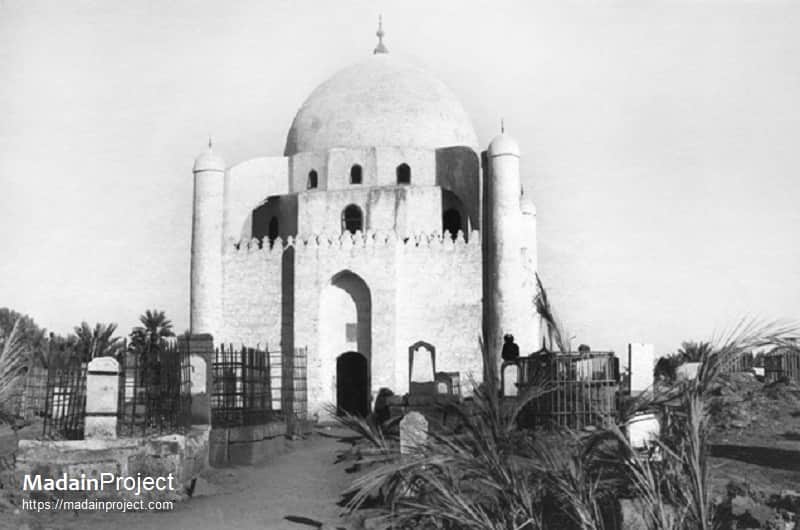
Holy Grave of Sayyidina ‘Uthman (r) in Jannat al-Baqi` in the past covered by a magnificent dome.
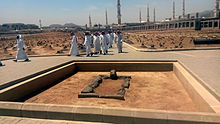
Holy Grave of Sayyidina ‘Uthman (r) in Jannat al-Baqi` today.
قال ابن أبي الدنيا: حدثنا إسحاق بن إسماعيل، ثنا يزيد بن هارون، عن فرج بن فضالة، عن مروان بن أبي أمية، عن عبد الله بن سلام. قال: أتيت عثمان لأسلم عليه وهو محصور فدخلت عليه فقال: مرحبا بأخي، رأيت رسول الله صلى الله عليه وسلم الليلة في هذه الخوخة – قال: وخوخة في البيت – فقال: « يا عثمان حصروك؟ قلت: نعم!
قال: عطشوك؟
قلت: نعم،
فأدلى دلوا فيه ماء فشربت حتى رويت، إني لأجد برده بين ثديي وبين كتفي،
وقال لي: إن شئت نصرت عليهم، وإن شئت أفطرت عندنا » فاخترت أن أفطر عنده، فقتل ذلك اليوم. البداية والنهاية – الجزء السابع
It is related in Ibn Kathir’s al-Bidaya wa’n-Nihaya:
Sayyiduna Abdullah bin Salam (r) has stated: When the rebels had laid siege to the sanctified house of `Uthman ibn `Affan (r) even a single drop of water was not allowed to supply his blessed home. Sayyiduna `Uthman Al-Ghani would feel restless due to severe thirst. He was observing fast during the day and I went to see him. He looked at me and said, “O! `Abdullah bin Salam, I beheld the Noble Prophet ﷺ through this skylight. The Most Merciful Prophet ﷺ said in a very sympathetic manner, ‘O Uthman! These people have made you restless by thirst blocking the water?’ I respectfully replied, ‘Yes.’ So, the Noble Prophet ﷺ immediately lowered a bucket towards me that was filled with water. I quenched my thirst. I can still feel the soothing effect of that water between both of my breasts and both of my shoulders.”The Prophet ﷺ then said, ‘O `Uthman! If you wish, I’ll help you against these people; or if you like you may come to me and break your fast in my company.’ I respectfully replied, ‘Ya RasoolAllah; breaking my fast in your graceful court is dearer to me.’ Sayyiduna `Abdullah bin Salam stated that he returned that day and Sayyiduna `Uthman was martyred on that same day by the rebels.
[ibn Abi ad-Dunya, Kitab al-Manamat, Vol. 3, Page 74, Hadith 109]
Imam Jalal al-Din Suyuti has narrated that Shaykh Ibn Batish deduced that this event of the sighting of the Noble Prophet ﷺ was not a dream, rather it took place whilst awake. [Al-Hawi lil-Fatawi, Vol. 1, Page 151]
الحمد لله رب العالمين، والصلاة والسلام على سيد الخلق والمرسلين، وعلى آله وأصحابه وأحبابه إلى يوم الدين، وبعد:
فهذا جواب علمي على مقال الأخ الفاضل عبد الخالق العلوي: “رد على متاهات العدل والإحسان في ملفها الغيبي”-سبق أن نشرته أسبوعية الأيام-، أثبت فيه جواز رؤية النبي صلى الله عليه وسلم يقظة، وقبل عرض الأدلة على ذلك، أقدم بهذه المقدمات:
المقدمة الأولى:
أولا: إن معارف العقل البشري محدودة بما توصله إليه الحواس الخمس، فهو يسلم بوجود الشمس تصديقا للعين، ويسلم بملوحة ماء البحر تبعا لقوة الذوق، ويعترف بنهيق الحمار استنادا لجارحة السمع، وهكذا.
فإذا أعلم بخبر لا تدركه تلك الحواس، حار أمره واضطرب رأيه، فانقسم إلى عقل معترف بالعجز، ماسك نفسه عن إصدار أي حكم، أو إلى عقل متكبر يسيطر عليه العجب والعناد، فينكر ما لا تعرفه حواسه ويجحد ما لا يدخل تحت طوقه.
إن العقل الأول عقل المومن، أو الكافر المتضلع من العلوم العصرية مع التواضع، فإن كثيرا، من الفيزيائيين وغيرهم من العلوميين، يقرون بأن العقل لا يمتلك القدرة على إثبات أو نفي ما لا تحصره حواس الإنسان.
وقد سلموا بهذه الحقيقة بناء على كثير من الفرضيات العلمية التي أنكرها كثير من “العقلاء” والعلوميين، ثم أصبحت أمرا بديهيا لا نزاع فيه، ككروية الأرض وحركة الشمس ..
وبناء أيضا على كثير من الظواهر الكونية المشاهدة، والتي يقف العقل عاجزا عن تفسيرها.
ينتج عن هذا أن الخوارق التي تنقل عن بعض الناس، ويستحيل إخضاعها للتجربة المخبرية، تقابل بالتسليم أو التوقف، أما إنكارها بدعوى عدم قبول العقل لها، فغرور وجهل مركب.
ثانيا: من المسلمات عند المومنين بكتاب الله، أن للقلب قدرة على الرؤية والسماع والفهم وغير ذلك.
ومن الآيات الدالة على هذا: (لهم قلوب لا يفقهون بها)، و(فإنها لا تعمى الأبصار ولكن تعمى القلوب التي في الصدور). وإن هذه اللطيفة المسماة قلبا، لا ترى ولا تسمع إلا إذا تنورت وتهذبت بالمجاهدة القائمة على التعبد المتواصل، مع الإخلاص وإصابة السنة، ومنها صحبة ولي عارف مرشد.
فإذا تساندت هذه الشروط، صار لك قلب يرى ويسمع ويدرك الحقائق من غير واسطة.
ومن ينصف نفسه، فعليه بمطالعة سير وتراجم الصحابة والتابعين ومن تبعهم، فإنه سيجد من شواهد ما تقرر هنا العجب العجاب.
ثالثا: إن الله تعالى هو الذي أوجد قوانين الكون وسننه، فهو سبحانه قادر على إبطالها متى شاء وكيفما شاء، ويسمى هذا الإبطال خارقة أو معجزة أو كرامة أو غير ذلك.
وهذه الحقيقة لا يستطيع أي عاقل أن ينكرها أو يماري فيها، بل يوقن بها الكافر قبل المؤمن.
ومن القوانين التي جعلها الله في خلقه، أن لا يرى الميت حيا ولا يسمع صوته، إذا أراد الجبار خرقه فيكشف للأحياء شيئا من ذلك.
ولهذا الخرق شواهد في الكتاب والسنة والواقع كثيرة، يأتي بعضها قريبا.
رابعا: الكرامة شيء خارق للعادة وقوانين عالم الشهادة، يفتح بها الكريم الوهاب على أحد من عباده تبشيرا أو تكريما أو ابتلاء.
ولم يرد في الشرع ما يدل على حصر الخوارق في مجال محدد، فإذا أخبر المومن الصادق بأمر مخالف لسنن الكون، وجب تصديقه والتلسم بحاله، مهما كان هذا الخارق.
وإن الإيمان بالكرامات من أصول الإسلام، وهي أنواع، منها الكشف (المشاهدات)، والكشف هو تجلي المغيبات، كالملائكة والجنة والنار وغير ذلك، في اليقظة، وأدلتها كثيرة جدا، جمعتها في تأليف، يسر الله طبعه.
وإن رؤية المصطفى صلى الله عليه وسلم يقظة يندرج في الكشف، ومن يكذبه سيكون متهما للقدرة والحكمة الربانية.
المقدمة الثانية:
قال الأخ الفاضل في مقاله: “أرجو صادقا أنه إذا أسالت هذه الكلمات مدادا أن يكون مداد علم يخدم دين الله عز وجل ويساهم في تأسيس مبدأ الحوار الذي هدفه الأسمى قبول الحق والنقد البناء بصدر رحب”. انتهى.
أقول: هذا كلام جميل جدا، يشير إلى أن صاحبه رجل موضوعي يبحث عن الحق، ويقبل تبديل رأيه إذا بان له خطأه، فأرجو أن يجد في هذا الجواب ما يتمناه ويطلبه.
وهو كلام جميل، لأنه يدعو للمناقشة العلمية النزيهة، لكنه لم يسلك هذا المسلك، فقد ناقضه وأفسده، وهذا البيان:
أولا: سمى مقاله هكذا “ردا على متاهات العدل والإحسان في ملفها الغيبي”.
فبدأ بالهجوم والمجازفة، واصفا شريحة عظيمة، تضم فئة من العلماء الصادقين بالتيه، وهو من لوازم الجهل والضلال.
ثانيا: عندما نقل المشاهدة التي ينصب عليها مداده، وفيها أن المشاهد سمع النبي صلى الله عليه وسلم يقول: إن النصر قد حان، فاستعدوا له.
أعقبها بقوله: “إن الاستعداد للنصر لا يكون بمثل هذه الأماني الكاذبة، وأقول الكاذبة تبعا لجهابذة العلم كابن حجر العسقلاني ..”.
قلت: أين أنت من النزاهة والنقد البناء إذا كنت تصف رجلا بالكذب؟ وأين أنت منهما عندما تتهم الإمام ابن حجر بما لم يخطر بباله، فالرجل ممن يقبل رؤية النبي صلى الله عليه وسلم ومشاهدته كما سأذكره لك بعد قليل؟
ثم أقول: إن البشارة التي سمعها صاحب المشاهدة، تدعو للاستعداد والتهيؤ للنصر، فهي موافقة للنصوص المبشرة بعودة الخلافة الثانية والداعية إلى العمل لتحقيق ذلك، فلم تذكر الأماني الكاذبة، وليس في كلام المذكور أي شيء من ذلك؟!
ثالثا: جاء في المشاهدة: “شاهدت سيدنا محمد صلى الله عليه وسلم يخرج من وسط اللافتات وهو يقول: إن النصر قد حان، فاستعدوا له” فقال صاحب المقال: “لا يمكننا أن نصف رسول الله صلى الله عليه وسلم بالحلول في اللافتة، فالحلول والاتحاد ووحدة الوجود عقيدة الصوفية المتفلسفة، والتي كان روادها ابن عربي والحلاج وابن سبعين وغيرهم أخذوها عن الغنوصية، وكنت أظن أنها قد باءت مع أهلها إلا أننا نفاجأ اليوم بهؤلاء يريدون إحياءها من جديد”.
أقول وبالله التوفيق:
– لم يرد في المشاهدة لفظ يشير، من قريب أو من بعيد، لقضية الحلول والاتحاد، فما فيها إلا أن المشاهد رأى النبي رسول الله صلى الله عليه وسلم يخترق اللافتات أو يمر بينها، فلم التأويل والتعسف؟
– يبدو أن الأخ الفاضل لا يفهم معنى الحلول والاتحاد، لذلك اتهم عقائد الناس بما هم براء منه، وها آنذا أشرحه له:
يقصد بالحلول، أن تحل الذات الإلهية في مخلوق من المخلوقات، حلولا يؤدي للامتزاج والاختلاط، فتتحد الذاتان، وهي عقيدة فاسدة باطلة، اعتقدها طوائف من النصارى في سيدنا عيسى عليه الصلاة والسلام، فأين هذا من المشاهدة المذكورة يا طالب النقد النزيه! فهذا نموذج لكثير من التهم الباطلة، والشائعات الكاذبة، التي يلصقها من لا يحجزه الورع والتقوى بجماعة العدل والإحسان.
انظر كيف اتهم الأخ الفاضل، رزقه الكريم العلم والورع، هذه الجماعة الطاهرة بإحياء فكرة الحلول بناء على سوء فهم المشاهدة، أو تعسفا وليا لألفاظها، فاتقوا الله في الجماعة المذكورة هداكم الله، ولا تتهموها من غير بينة ولا برهان!
رابعا: إذا لم يوقعني اضطراب صاحب المقال في الفهم المقلوب لمجمل كلامه، فإن موقفه من مشاهدة النبي صلى الله عليه وسلم هو القبول والتسليم، لكنه مشروط عنده بأن يكون الرائي من الأولياء تبعا للإمام ابن أبي حمزة رحمه الله، فإنه قال في آخر كلامه: فالفيصل في المسألة إذن أن نرى حال الرائي هل هو متبع للكتاب والسنة، هل هو ولي الله.
قلت: إذا كان رأيك هو هذا، فإنه يناقض وصفك للمشاهدة بالأماني الكاذبة والأحلام المسلية، فإنك كذبت الرائي ورميته أبشع الأوصاف، وأنت غير مؤهل لمعرفة هل هو ولي أم لا، بل إنك لا تعرف شخصه أصلا.
إن النزاهة العلمية، والنقد البناء، يلزمان بدراسة الفكرة والبحث في مضمونها بعيدا عن صاحبها، فكان عليك أن تطرح موقفك من مسألة مشاهدة المصطفى صلى الله عليه وسلم من غير تعرض لصاحب المشاهدة.
ثم أقول: إن حصر رؤية المصطفى صلى الله عليه وسلم في الأولياء، لم يقله الإمام ابن أبي حمزة رحمه الله، بل صرح بأن غيرهم قد يقع له ذلك في النادر، فكن أمينا عند نقل أقوال الرجال.
ومن جهة أخرى، فإن كل مسلم موحد ولي لله تعالى.
نعم، الولاية درجات، لكن أهل القبلة مشتركون في أصل الولاية، قال الحق تعالى: (إنما وليكم الله ورسوله والذين آمنوا)، فأثبت أن جميع المسلمين أولياء له.
وأما هذه الآية: “ألا إن أولياء الله لا خوف عليهم ولا هم يحزنون، الذين آمنوا وكانوا يتقون ..”، فإنها تتحدث عن الولاية الخاصة، وهي التي يبلغها العبد بالاصطفاء الرباني.
خامسا: قال الأخ الفضال “فهو صلى الله عليه وسلم حي في قبره لا خارج قبره كما جاء في الحديث “أنا حي في قبري”، فعقيدة المسلمين في رسول الله صلى الله عليه وسلم أنه بشر وأنه خير الخلق كلهم، قال ربنا عز وجل (قل إنما أنا بشر مثلكم …) إذن فرسول الله صلى الله عليه وسلم لا يملك خاصية الملائكة التي هي نورانية وهي المخولة للحضور مع المؤمنين طاعة لله واستجابة لأمره: (وما نتنزل إلا بأمر ربك، له ما بين أيدينا وما خلفنا وما بين ذلك، وما كان ربك نسيا، وبمقتضى ذلك لا يمكننا أن نصف رسول الله صلى الله عليه وسلم بالحلول في اللافتة)، أقول: هذا الكلام القليل مسلسل بالأخطاء والمجازفات، يشهد على صاحبه بأنه دخل في موضوع خطير لا يدري أنفه من ذيله، ويثبت أن الكثير من ينكر ما لا تتسع له حويصلته من غير بحث وتمحيص.
يؤكد هذا، أن الأخ الفاضل يبني رده كله على مرجع واحد هو “فتح الباري” لابن حجر رحمه الله.
أما سلسلة الأخطاء فهي:
الخطأ الأول: لا يوجد في أي من كتب السنة حديث بهذا اللفظ: “أنا حي في قبري”، وإنما فيها: “الأنبياء أحياء في قبورهم يصلون”، أخرجه أبو يعلى (6/147) والبزار وابن عدي في الكامل (2/327)، وغيرهم، وهو حديث حسن.
الخطأ الثاني: زعم الأخ الفاضل أن حياة المصطفى محصورة بالقبر، وهو فهم لم يسبق إليه ولا يحسد عليه، أوقعه فيه سوء فهمه للحديث المذكور آنفا.
والحق أن أهل القبلة متفقون على أن الأنبياء أحياء في قبورهم، وأنهم ممكنون من مفارقتها، وقد بنوا ذلك على عدة أمور:
أولها: اجتماع النبي صلى الله عليه وسلم بالأنبياء جميعا، ليلة الإسراء والمعراج، ببيت المقدس، وببعضهم في السموات، ومعنى هذا أنهم يفارقون قبورهم ويجولون في الملكوت.
وثانيهما: روى الإمام البخاري في صحيحه، مع الفتح (3/414)، ومسلم (1/152)، وغيره، عن ابن عباس أن رسول الله صلى الله عليه وسلم مر بوادي الأزرق فقال: أي واد هذا؟ فقالوا: هذا وادي الأزرق. قال: كأني أنظر إلى موسى عليه السلام هابطا من الثنية، وله جوار إلى الله بالتلبية ثم أتى على ثنية هرشي فقال: أي ثنية هذه؟ قالوا: ثنية هرشي. قال: كأني أنظر إلى يونس بن متى عليه السلام، على ناقة حمراء جعدة، عليه جبة من صوف، خطام ناقته خلبة، وهو يلبي.
قلت: فهل يتوافق ما تضمنه هذا الحديث، من رؤية موسى ويونس عليهما السلام، في جزيرة العرب، وهما مدفونان خارجها، مع ما قرره صاحب المقال؟!
وثالثها: تصريح آيات وأحاديث عدة بحياة الشهداء في الجنة، والأنبياء أولى بذلك منهم جزما، فالجمع بين هذا، وبين النصوص الدالة على حياة الأنبياء في قبورهم، يقتضي أن نقول بسياحتهم صلوات ربي وسلامه عليهم في عالمي الملك والملكوت. وهو مذهب أهل التحقيق.
إليك كلام بعضهم، وهو الحافظ الإمام المتفنن جلال الدين السيوطي رحمه الله، فقد ألف في إثبات رؤية المصطفى صلى الله عليه وسلم في اليقظة رسالة نفيسة سماها: “تنوير الحلك بإمكان رؤية النبي والملك”، وهي مطبوعة ضمن كتابه الفخم: “الحاوي للفتاوي”، وإن كثيرا من المنكرين لم يروها ولم يطالعوها، ومما جاء فيها: فحصل من مجموع هذا الكلام والنقول والأحاديث أن النبي صلى الله عليه وسلم حي بجسده وروحه، وأنه يتصرف ويسير حيث شاء في أقطار الأرض وفي الملكوت، وهو بهيئته التي كان عليها قبل وفاته لم يتبدل منه شيء، وأنه مغيب عن الأبصار كما غيبت الملائكة مع كونهم أحياء بأجسادهم، فإذا أراد الله تعالى رفع الحجاب عمن أراد إكرامه برؤيته رآه على هيئته التي هو عليه الصلاة والسلام عليها، لا مانع من ذلك ولا داعي إلى التخصيص برؤية المثال.
الخطأ الثالث: زعم الأخ الفاضل أن النبي رسول الله صلى الله عليه وسلم، باعتباره بشرا، ليس مخولا للحضور مع المومنين، لأنه غير نوراني كشأن الملائكة، وهذا من فواقر الإيمان، ومن فحش الكلام في سيد الخلق.
إننا نعتقد أن النبي رسول الله صلى الله عليه وسلم بشر، ولد من أب وأم، لكننا نقول: إن الله تعالى إذا شاء أجرى له الخوارق والمعجزات، فيفوق ببعضها الملائكة كما حصل له في المعراج، وإن معجزات رسول الله صلى الله عليه وسلم لم تنقطع بموته، بل هي مستمرة.
ثم إنني أنبه الأخ الفاضل إلى قضية مهمة، يعرفها عامة المسلمين قبل خاصتهم، وهي أن أحكام البرزخ غير أحكام الدنيا، فإذا كان النبي رسول الله صلى الله عليه وسلم قبل وفاته يتصرف بمقتضى روحانيته النورانية، وللروح قوة تماثل قوة الملائكة، وقد تزيد عليها، ألم تقرأ في صحيح الأحاديث أن النبي رسول الله صلى الله عليه وسلم يرد السلام على كل من يصلي عليه باسمه؟! وأن أعمال أمته تعرض عليه، فما كان من خير حمد الله عليه، وما كان من سيء استغفر له؟!
فهل يقبل عقلك أن يسمع بشر أصوات ملايين الخلق، إنسهم وجنهم وملكهم ودوابهم وجمادهم .. في وقت واحد، مع تمييز صوت كل واحد، ثم يرد على كل فرد منهم!
ألا يذكرك هذا بملك الموت الذي يقبض أرواح آلاف الموتى في لحظة واحدة؟!
الخطأ الرابع: ادعى الفاضل أنه لا يمكن وصف رسول الله صلى الله عليه وسلم بالحلول في لافتة.
وأقول: سبق وذكرت لك أن المشاهدة لا تشير إلى الحلول بأي وجه.
وإذا كان اختراق اللافتات يستحيل في عقل صاحب المقال وغيره، فإني وكل مسلم عاقل، نعتقد أن ذلك سهل جدا، فإن اللافتة لن تكون أمتن من السماوات ولا من طبقات الجو التي جاوزها رسول الله صلى الله عليه وسلم ليلة المعراج.
بل إنك طالعت فيما سلف ما يثبت خروج الأنبياء من قبورهم، فأين اللافتة منها؟!
ثم لا تنسى أن للروح قدرة على اختراق كل الأشياء، تماما كالشمس والهواء
.
أدلة إمكانية مشاهدة النبي رسول الله صلى الله عليه وسلم في اليقظة:
بعد الذي قدم، أنتقل بالقارئ المتشوف، إلى سرد الأدلة على جواز رؤية المصطفى رسول الله صلى الله عليه وسلم بعد موته، وقبل ذلك أتقدم بالاعتذار إلى الأخ الفاضل، عبد الخالق العلوي، على ما قد يكون في كلامي السابق من شطط.
وأشير إلى أن هذه الأدلة ملخصة من مؤلف لي في الموضوع، أسأل الباري تعالى تيسير إخراجه لينتفع به المومنون. أشير إلى ذلك، حتى لا يعترض علي من يجدني أنأى عن توثيق بعض النقول، فإنني لا أريد إثقال هذا المقال بذلك.
فكل حديث أذكره هنا، هو مخرج في الأصل، وكل أقوال أئمتنا هي موثقة فيه.
الدليل الأول:
روى الإمامان البخاري ومسلم في صحيحيهما عن أبي هريرة قال: سمعت النبي صلى الله عليه وسلم يقول: “من رآني في المنام فسيراني في اليقظة، ولا يتمثل الشيطان بي”.
فهذا الحديث صريح في أن من رأى النبي صلى الله عليه وسلم في المنام لن يموت حتى يكرمه الله سبحانه بتحقق رؤياه، والمعلق على الممكن ممكن، وقد فهم جمع من المحققين، هذا الذي ذكرناه، وأجمع عليه علماء الصوفية.
الدليل الثاني:
تبث لدينا بالقطع أن النبي صلى الله عليه وسلم اجتمع بعدد من الأنبياء وخاطبهم قبل وفاته، وهذا من معجزاته، وقد نص الأئمة على أن ما جاز للنبي معجزة جاز للولي كرامة، وهذا محل اتفاق.
فلا يجوز تخصيصه بمثل هذه الخارقة بغير دليل، وكيف يجوز وقد نص في الحديث السابق على أن رؤيته أمر ممكن الوقوع!
الدليل الثالث:
روى الإمام أبو يعلى في مسنده بإسناد صحيح عن النبي رسول الله صلى الله عليه وسلم قال: “والذي نفس أبي القاسم بيده، لينزلن عيسى ابن مريم إماما مقسطا وحكما عدلا، فليكسرن الصليب وليقتلن الخنزير وليصلحن ذات البين وليذهبن الشحناء، وليعرضن عليه المال فلا يقبله ثم لئن قام على قبري فقال: يا محمد، لأجيبنه”.
قلت: صرح هذا الحديث بأن النبي رسول الله صلى الله عليه وسلم سيجيب نداء عيسى عليه اسلام، ومعلوم أن عيسى لن يكون وحده، فسيراه معه كل من يحضره.
فإذا قلت: الإجابة المشار إليها في الحديث تكون بالصوت من غير صورة، فلا يصلح الاحتجاج بهذا الخبر.
أقول: بل ألفاظ الحديث تحتمل الوجهين معا، وما داما لا يتناقضان، ولا يخالفان نصا قطعيا، فلا مجال لترجيح واحد منهم على الآخر، لأن الترجيح يحتاج إلى دليل، ولا حجة لمن يحصر الإجابة في وجه معين، فظهر أن الاستدلال به على ما تفرزه هنا استدلال يوافق قواعد الشريعة.
وإياك أن تعترض بقولهم: مع الاحتمال يسقط الاستدلال، فإن هذه القاعدة لا تصلح إذا كان اللفظ مشتركا بين معان عدة، ألم تر أن المجتهدين اختلفوا في عدة المطلقة هل هي ثلاثة أطهار أو ثلاث حيضات، وسبب ذلك تعدد معاني القرء في لغة العرب، والله تعالى يقول: (والمطلقات يتربصن بأنفسهن ثلاثة قروء)، ولم يقل أحد: لا يجوز الاستدلال بالآية لأنها تحتمل وجهين، بل كل فريق عضد قوله بما هو خارج عن الآية من النصوص أو كلام العرب، فانتبه!
الدليل الرابع:
ثبت لدينا بنصوص عديدة، أن كثيرا من الموتى غادروا قبورهم، فرآهم الأحياء وكلموهم، وإن حصول ذلك لرسول الله صلى الله عليه وسلم أولى وأحرى، ومن يزعم استثناء صلى الله عليه وسلم من ذلك فعليه أن يقيم برهانا علميا واحدا، وإننا نقطع باستحالته لما تقدم من أدلة ساطعة. فإن قلت: اذكر لي أمثلة على خروج غير الأنبياء من قبورهم، أقول:
إن أمثلة ذلك كثيرة، ذكرت جملة منها في أصل هذا المقال، لكنني أتحفك بشيء منها لعلك تزداد يقينا واطمئنانا:
المثال الأول:
قال الله عز وجل في سورة البقرة: (ألم تر إلى الذين خرجوا من ديارهم وهم ألوف حذر الموت، فقال لهم الله موتوا ثم أحياهم، إن الله لذو فضل على الناس، ولكن أكثر الناس لا يشكرون).
قال ابن عباس رضي الله عنهما: كانوا أربعة آلاف، خرجوا فرارا من الطاعون، قالوا: نأتي أرضا ليس فيها موت، حتى إذا كانوا بموضع كانوا كذا وكذا قال لهم الله: (موتوا) فمر عليهم نبي من الأنبياء فدعا ربه أن يحييهم فأحياهم فتلا هذه الآية: (إن الله لذو فضل على الناس ولكن أكثر الناس لا يشكرون).
المثال الثاني:
قال الله عز وجل في المائدة: (يا عيسى بن مريم اذكر نعمتي عليك وعلى والدتك إذ أيدتك بروح القدس تكلم الناس في المهد وكهلا، وإذ علمتك الكتاب والحكمة والتوراة والإنجيل، وإذ تخلق من الطين كهيئة الطير بإذني فتنفخ فيها فتكون طائرا بإذني، وتبرئ الأكمه والأبرص وإذ تخرج الموتى بإذني).
وفي آل عمران: (وأبرئ الأكمه والأبرص وأحيي الموتى بإذن الله).
قلت: كان الموتى يستجيبون لعيسى عليه السلام، فيخاطبهم ذووهم.
فإن قلت: إن ذلك من معجزات عيسى، أقول له: وتجلي المصطفى بعد موته من معجزاته، ثم إن كثيرا من الموتى ظهروا من غير وجود نبي كما سترى في المثال الآتي، فبطل تقييد الأمر بالمعجزات.
المثال الثالث:
أخرج عبد الله بن أحمد في “الزهد 16” وتمام الرازي في “الفوائد 1/99” بإسناد صحيح عن جابر بن عبد الله قال: قال النبي صلى الله عليه وسلم: “حدثوا عن بني إسرائيل فإنه كانت فيهم الأعاجيب”، ثم أنشأ يحدث قال: خرجت رفقة مرة يسيرون في الأرض، فمروا بمقبرة فقال بعضهم لبعض: لو صلينا ركعتين ثم دعونا الله لعله يخرج لنا بعض أهل هذه المقبرة، فيخبرنا عن الموت، قال: فصلوا ركعتين ثم دعوا، فإذا هم برجل خلاسي، قد خرج من قبر ينفض رأسه بين عينه أثر السجود، فقال: يا هؤلاء، ما أردتم إلى هذا؟ لقد مت منذ مائة سنة فما سكنت عني حرارة الموت إلى الساعة! فادعوا الله أن يعيدني كما كنت”.
أئمة نصوا على جواز رؤية المصطفى صلة الله عليه وسلم يقظة
لاشك أن المتسلح بالعلم، المتشوف للحقيقة، البعيد عن التعصب والعناد، يرى في الأدلة المعروضة أعلاه مقنعا وكفاية، ولمن يعرف الحق بالرجال أذكر جملة من الأعلام الذين نصوا على إمكان مشاهدة النبي صلى الله عليه وسلم بعد موته:
– ابن بطال علي بن خلف البكري القرطبي القاضي العلامة المحدث [ت 449]:
قال الحافظ في الفتح: قال ابن بطال: قوله “فسيراني في اليقظة”، يريد تصديق تلك الرؤيا في اليقظة وصحتها وخروجها على الحق، ولي المراد أنه يراه في الآخرة، لأنه سيراه يوم القيامة في اليقظة، فتراه جميع أمته من رأه في النوم ومن لم يره منهم.
– الإمام حجة الإسلام أبو حامد محمد بن محمد الغزالي [ت 505]:
صرح لذلك في مواطن عدة من “الإحياء”:
– الإمام المجتهد المتفنن القاضي أبو بكر بن العربي المعافري:
قال في “قانون التأويل”: رؤية الأنبياء والملائكة وسماع كلامهم، ممكن للمؤمن كرامة وللكافر عقوبة.
نقله السيوطي في “تنوير الحلك”:
– ابن المنير علي بن محمد بن منظور الإمام المجتهد القاضي:
نقل عنه الحافظ في فتح الباري، ضمن شرح حديث: “من رآني في المنام..” أنه قال: يجعل الله لروحه مثالا، فيرى في اليقظة كما يرى في النوم.
– الإمام أبو عبد الله القرطبي المفسر الكبير:
قال في “التذكرة في أحوال الموتى وأمور الآخرة” 1/212: قال شيخنا أحمد بن عمر: موت الأنبياء إنما هو راجع إلى أن غيبوا عنا بحيث لا ندركهم وإن كانوا موجودين أحياء ولا يراهم أحد من نوعنا، إلا من خصه الله بكرامة من أوليائه.
– سلطان العلماء عز الدين بن عبد السلام: حكاه عنه السيوطي في “تنوير الحلك”.
– الإمام الحافظ عبد الله بن أبي حمزة (710). وقد نقل بعض كلامه صاحب المقال، فلا نعيده، وهو في “فتح الباري”.
– الإمام الفقيه الرباني محمد بن محمد العبدري الفاسي المصري المالكي المعروف بابن الحاج (ت 737).
قال في كتاب “المدخل 3/194: بعضهم يدعي رؤيته عليه الصلاة والسلام وهو في اليقظة، وهذا باب ضيق، وقل من يقع له ذلك الأمر، إلا من كان على صفة عزيز وجودها في هذا الزمان، بل عدمت غالبا، مع أننا لا ننكر من يقع له هذا من الأكابر الذين حفظهم الله تعالى في ظواهرهم وبواطنهم.
– الإمام الفقيه ابن عطاء الله الإسكندري (ت709)، فقد أورد في “لطائف المنن” رؤية النبي يقظة في كرامات الشيخ أبي العباس المرسي رحمه الله.
– الإمام قاضي القضاة شرف الدين ابن البارزي (ت738)، ذكره السيوطي في “التنوير”.
– الإمام عفيف الدين أبو محمد اليافعي اليمني المكي (ت 768).
قال في “روض الرياحين في حكايات الصالحين”: “قوله: تلقاني الخليل” قول حق لا ينكره إلا جاهل بمعرفة ما يرد عليهم من الأحوال، التي يشاهدون فيها ملكوت السماء والأرض، وينظرون الأنبياء أحياء غير أموات كما نظر النبي صلى الله عليه وسلم إلى موسى عليه السلام في الأرض، ونظره هو وجماعة من الأنبياء في السموات وسمع منهم مخاطبات، وقد تقرر أن ما جاز للأنبياء معجزة جاز للأولياء كرامة بشرط عدم التحدي. انتهى من “تنوير الحلك” للسيوطي.
– الحافظ الكبير المتفنن ابن حجر العسقلاني (ت852).
قال في “الفتح” 7/4: من رآه بعد موته وقبل دفنه، فالراجح أنه ليس بصحابي، وإلا لعد من اتفق أن يرى جسده المكرم وهو في قبره المعظم ولو في هذه الأعصار، وكذلك من كشف له عنه من الأولياء فرآه كذلك على طريق الكرامة، إذ حجة من أثبت الصحبة لمن رآه قبل دفنه أنه مستمر الحياة، وهذه الحياة ليست دنيوية وإنما هي أخروية لا تتعلق بها أحكام الدنيا.
– الإمام الحافظ جلال الدين السيوطي (ت 911)، له في إثبات المشاهدة “تنوير الحلك بإمكان رؤية النبي والملك”، فانظرها لزاما.
وبعد، فقد ذكرنا لك أدلة تكفي اللبيب وتشفي الكئيب، وسردنا عليك أسماء ضخام الأئمة المقررين لجواز رؤية الحبيب، فإن شفيت من الإنكار فذاك المطلوب، وإلا فأمسك لسان التبديع والتأنيب.
وصلى الله وسلم على سيدنا محمد وعلى آله وأحبابه إلى يوم الدين.
And know that the Messenger of Allah is among you (The Holy Qur’an 49:7)
They encompass nothing of His knowledge save what He will (2:255) (He is) the Knower of the Unseen and He reveals unto none His secret, save unto every Messenger whom He has chosen (72:26-27) Nor does he withhold grudgingly a knowledge of the Unseen
Hadara hudûran wa hadâratan: diddu ghâba…
wahuwa hâdirun min huddarin wa hudûrin.
“To be present (hadara)… is the opposite of being absent…
said of the attendee () among other attendees.”
Ibn Khafif al-Shirazi said in his al-‘Aqida al-Sahiha (§48):
[The Prophet, sall-Allahu `alayhi wa sallam,] is knower of what is and what shall be and he gave news of the Unseen (wa [ya‘taqidu] annahu al-‘âlimu bimâ kâna wa mâ yakûnu wa akhbara ‘an ‘ilmi al-ghayb).
Meaning, in the sense of being imparted by Allah whatever He imparted to him. Our teacher the Faqîh Shaykh Adib Kallas said: “Note that Ibn Khafif did not say ‘He knows all that is and all that shall be.’”
Shaykh ‘Abd al-Hadi Kharsa told us:
The Prophet, sall-Allahu `alayhi wa sallam, possesses knowledge of all that is and knows the created universes in the same way that one knows a room in which one sits. Nothing is hidden from him. There are two verses of the Holy Qur’an that affirm this, [But how (will it be with them) when we bring of every people a witness, and We bring you (O Muhammad) a witness against these] (4:41) and [Thus We have appointed you a middle nation, that you may be witnesses against mankind and that the messenger may be a witness against you] (2:143) nor can the Prophet, sall-Allahu `alayhi wa sallam, be called to witness over what he does not know nor see
The above evidence is confirmed by the authentic Prophetic narration from Abu Sa‘id al-Khudri in the Sahih, Sunan, and Masanid:
The Prophet, sall-Allahu `alayhi wa sallam, said: “Nuh and his Community shall come <also: ‘shall be brought’> and Allah Most High shall say: ‘Did you convey [My Message]?’ He shall say, ‘Yes, indeed! my Lord.’ Then He shall ask his Community, ‘Did he convey [My Message] to you?’ and they shall say, ‘No, no Prophet came to us.’ Then Allah shall ask Nuh, ‘Who is your witness?’ and he shall reply, ‘ Muhammad , sall-Allahu `alayhi wa sallam, and his Community.’ Then we shall bear witness that he conveyed [the Message] indeed, and this is [the meaning of] His saying, [Thus We have appointed you a middle nation (ummatan wasatan), that you may be witnesses against mankind] (2:143), al-wasat meaning ‘the upright’ (al-‘adl).”[2]
Ibn Hajar in his commentary of the above narration in Fath al-Bari said that another same-chained, similar narration in Ahmad and Ibn Majah shows that such witnessing applies to all the Communities and not just that of Nuh,`alayhis salaam:
The Prophet, sall-Allahu `alayhi wa sallam, said: “One Prophet shall come on the Day of Resurrection with a single man [as his Community]; another Prophet shall come with two men; others, with more. The nation of each Prophet shall be summoned and asked, ‘Did this Prophet convey [the Message] to you?’ They shall reply, no. Then he shall be asked, ‘Did you convey [the Message] to your people?’ and he shall reply, yes. Then he shall be asked, ‘Who is your witness?’ and he shall reply, ‘Muhammad and his Community.’ Whereupon Muhammad and his Community shall be summoned and asked, ‘Did this man convey [the Message] to his people?’ They shall reply, yes. They shall be asked, ‘How do you know?’ They shall reply, ‘Our Prophet came to us and told us that the Messengers have indeed conveyed [the Message].’ This is [the meaning of] His saying, [Thus We have appointed you a middle nation] – He means upright (yaqûlu ‘adlan) – [that you may be witnesses against mankind and that the messenger may be a witness against you] (2:143).”
Al-Qari said in commentary of the narration of Nuh, `alayhis salaam, cited in Mishkat al-Masabih:
“And he shall reply, ‘Muhammad and his Community’” means that his Community are witnesses while he vouches for them, but his mention came first out of reverence (li-t-ta‘zîm). It is possible that he, sall-Allahu `alayhi wa sallam, too witnesses for Nuh, since it is a context of help and Allah Most High said [When Allah made (His) convenant with the Prophets] until He said [you shall believe in him and you shall help him] (3:81). In this there is a remarkable warning that the Prophet, sall-Allahu `alayhi wa sallam, is present and witnessing in that Greatest Inspection (wafîhi tanbîhun nabîhun annahu sallallâhu ‘alayhi wa sallama hâdirun nâzirun fî dhâlika al-‘ardi al-akbar), when the Prophets are brought, Nuh being the first, and the latter’s witnesses are brought, namely, this Community.[3]
There are other verses that affirm that the Prophet, sall-Allahu `alayhi wa sallam, hears and sees the deeds of human beings. Allah Most High said: [And know that the Messenger of Allah is among you] (49:7). In the verses [Allah and His Messenger will see your conduct] (9:94) and [Act! Allah will behold your actions, and (so will) His Messenger and the believers] (9:105), the Prophet’s, sall-Allahu `alayhi wa sallam, perception is put on a par with that of the Lord of the worlds Who sees and encompasses all on the one hand and, on the other, that of all the living believers.
Shaykh ‘Abd Allah ibn Muhammad al-Ghumari said:
The saying of Allah Most High [O you who believe! Observe your duty to Allah, and give up what remains (due to you) from usury, if you are (in truth) believers. And if you do not, them be warned of war (against you) from Allah and His Messenger] (2:278-279) indicates that the Prophet, sall-Allahu `alayhi wa sallam, is alive in his noble grave, fighting the usurers with his supplication against them or with whatever suits his isthmus-life. I do not know anyone that inferred this from the verse before me.[4]
The above is further confirmed in the Sunna by the following evidence:
(1) Ibn Mas‘ud’s authentic narration of the Prophet’s, sall-Allahu `alayhi wa sallam, witnessing of all the deeds of the Umma from his Barzakh:
The Prophet, sall-Allahu `alayhi wa sallam, said: “My life is a great good for you, you will relate about me and it will be related to you, and my death is a great good for you, your actions will be exhibited to me, and if I see goodness I will praise Allah, and if I see evil I will ask forgiveness of Him for you.” (Hayâtî khayrun lakum tuhaddithûna wa yuhaddathu lakum wa wafâtî khayrun lakum tu‘radu a‘malukum ‘alayya famâ ra’aytu min khayrin hamidtu Allâha wa mâ ra’aytu min sharrin istaghfartu Allâha lakum.)[5]
(2) The authentic narration of “the Supernal Company” (al-mala’u al-a‘lâ) from Mu‘adh ibn Jabal (RA) and others
The Prophet, sall-Allahu `alayhi wa sallam, said: “My Lord came to me in the best form” – the narrator said: “I think he said: ‘in my sleep’” – “and asked me over what did the Higher Assembly (al-mala’ al-a‘lâ)[6] vie; I said I did not know, so He put His hand between my shoulders, and I felt its coolness in my innermost, and knowledge of all things between the East and the West came to me.”[7]
(3) The staying back of Sayyidina Gibril, `alayhis salaam, at the point the Prophet, sall-Allahu `alayhi wa sallam, went beyond the Lote-Tree of the Farthermost Boundary (sidrat al-muntaha) and heard the screeching of the pens writing the Foreordained Decree then saw his Lord,[8] although Gibril is the closest of all creatures to Allah U and the angels do see Him according to Ahl-al-Sunna.[9]
Al-Qadi ‘Iyad in al-Shifa, in the section titled “Concerning the places where it is desirable to invoke blessings and peace upon him” cited from ‘ Amr ibn Dinar al-Athram (d. 126) the explanation of the verse [when you enter houses salute one another] (24:61): “If there is no-one in the house then say: ‘as-salâmu ‘alâ al-Nabiyyi wa rahmatullâhi wa barakâtuh.’”[10]
Al-Qari said in his commentary on al-Shifa’: “Meaning, because his soul, sall-Allahu `alayhi wa sallam, is present in the house of the Muslims (ay li’anna rûhahu ‘alayhi al-salâmu hâdirun fî buyûti al-muslimîn).”[11]
What ‘Iyad cited from al-Athram is only narrated by al-Tabari in his Tafsir from Ibn Jurayj, from ‘Ata’ al-Khurasani (d. 135):
Hajjaj narrated to me from Ibn Jurayj: I said to ‘Ata’: “What if there is no-one in the house?” He said: “Give salâm! Say, al-salâmu ‘alâ al-Nabiyyi wa rahmatullâhi wa barakâtuh, al-salâmu ‘alaynâ wa ‘alâ ‘ibâdillah al-sâlihîn, al-salâmu ‘alâ ahli al-bayti wa rahmatullâh.” I said: “This statement you just said about my entering the house in which there is no-one, from whom did you receive it?” He replied: “I heard it without receiving it from anyone in particular.”[12]
‘Ata’ was a pious muhaddith, mufti, and wâ‘iz from whom Yazid ibn Samura heard the statement: “The gatherings of dhikr are the gatherings of [teaching] the halâl and the harâm.”[13] His trustworthiness and/or memory were contested by al-Bukhari, Abu Zur‘a, Ibn Hibban, Shu‘ba, al-Bayhaqi, al-‘Uqayli, and Ibn Hajar, but he was nevertheless declared thiqa by Ibn Ma‘in, Abu Hatim, al-Daraqutni, al-Thawri, Malik, al-Awza‘i, Ahmad, Ibn al-Madini, Ya‘qub ibn Shayba, Ibn Sa‘d, al-‘Ijli, al-Tabarani, and al-Tirmidhi, while Ibn Rajab concludes he is “thiqa thiqa.”[14]
A Deobandi’s False Assertion against Mullah Ali al-Qari
Recently, a Deobandi writer forwarded the strange claim that al-Qari’s text in Sharh al-Shifa’ actually stated, “NOT THAT his soul, sall-Allahu `alayhi wa sallam, is present in the houses of the Muslims” (lâ anna rûhahu hâdiratun fî buyûti al-muslimîn) that is, the diametrical opposite of what al-Qari actually said!:
He [al-Qari] discussed the issue in the Sharh of Shifa, that lâ anna rûhahu hâdiratun fî buyûti al-muslimîn i.e. this notion is incorrect that the soul of our Master Hazrat Mohammed, sall-Allahu `alayhi wa sallam, is present in the homes of the Muslims. In some copies the word lâ has been dropped and has without any reason created confusion for some individuals, including Mufti Ahmed Yar Khan sahib (see Jaa al-Haqq p. 142). … In all his explicit quotes Hazrat Mulla Ali al-Qari himself negates the belief of hâdir wa nâzir. Those who have relied on his brief, indistinct quotes (out of context) are absolutely and definitely wrong.[15]
That one can actually dare to make the above claim is only because of ignorance of the Arabic language since al-Qari prefaces the statement with the word “meaning (ay),” which would be grammatically incorrect if it were followed by a disclaimer such as “not that his soul is present in the houses of the Muslims.” The truth is that no such word as lâ has been dropped because there was no such word there in the first place, and the claim that there was is nothing short of tampering (tahrîf). Furthermore, the word al-Qari used for “present” is hâdir in the masculine, not hâdiratun in the feminine, as rûh can have either gender but the masculine is more appropriate here to refer to the Prophet, sall-Allahu `alayhi wa sallam.
A Deobandi’s Denial of Prophetic Attributes
Another one of those of the same School considered by some to be knowledgeable objected to attributing the characteristics of hâdir nâzir to the Prophet, sall-Allahu `alayhi wa sallam, because, he claimed, these attributes belong to Allah U. Even if the latter premise were true, the reasoning is spurious and is like saying that because al-Ra’ûf and al-Rahîm are Divine Attributes, they cannot be also Prophetic Attributes. This sophistry was refuted by al-Qadi ‘Iyad in al-Shifa where he said:
Know that Allah has bestowed a mark of honor on many of the Prophets by investing them with some of His names: for example He calls Ishaq and Isma‘il “knowing” (‘alîm) and “forbearing” (halîm), Ibrahim “forbearing” (halîm), Nuh “thankful” (shakûr), Musa “noble” (karîm) and “strong” (qawî), Yusuf “a knowing guardian” (hafîz, ‘alîm), Ayyub “patient” (sabûr), ‘Isa and Yahya “devoted” (barr), and Isma‘il “truthful to the promise” (sâdiq al-wa‘d)… Yet He has preferred our Prophet Muhammad, sall-Allahu `alayhi wa sallam, since He has adorned him with a wealth of His names in His Mighty Book and on the tongue of His Prophets.[16]
The above evidence establishes beyond doubt that there is no impediment to the possibility of hâdir nâzir to be Attributes shared by Allah Most High with some of His servants if such two Names should be established to be His. In fact, it is known that the two angel-scribes, the qarîn, the angel of death, and Shaytan, are also present, seeing, hearing, and fully witnessing the deeds of human beings at any given time.
Furthermore, are Hâdir and Nâzir among the Divine Names and Attributes? Imam Ahmad al-Sirhindi was quoted to say: “Allah Most High is aware of each and every minor and major condition and is Hâdir and Nâzir. One should feel shame before Him.”[17]
However, the Divine Attributes are ordained and non-inferable.[18] Logic, reasoning, analogy, and other forms of interpretation are not used to infer an attribute but only Divine disclosure through the primary two sources of the Shari‘a i.e. Qur’an and Sunna. This is an elementary point of doctrine that is present in most if not all books of ‘aqîda, including the Maturidi classics. So we cannot speak of al-Hâdir, while al-Nâzir is the same as al-Shahîd where the divine Sight means His Knowledge. Imam al-Bayhaqi said:
The meaning of “The Witness” (al-Shahîd) is He Who is well aware of all that creatures can know only by way of witnessing while being present. . . because a human being who is far away is subject to the limitation and shortcomings of his sensory organs, while Allah Most High is not endowed with sensory organs nor subject to the limitations of those who possess them.[19] (Shâhid is also a Prophetic Name in the Qur’an.)
As for al-Hâdir it is precluded, because Hâdir in Arabic has the sense of a being physically present at a location, i.e. attributes of the created that are absolutely precluded from the Creator. Therefore Hâdir in relation to Allah Most High, like the attribute of omnipresence, may only be applied figuratively to mean that He is All-Knowledgeable, but neither “Omnipresent” nor Hâdir have actually been reported or mentioned among the Divine Attributes in the Qur’an, the Sunna, and the texts of the early Imams. Allah knows best.
When some of these rebuttals were presented to the above-mentioned objector, he replied verbatim, that “By Haazir and Naazir, we mean Allah’s knowledge is complete and comprehensive. Nothing is hidden from the absolute knowledge of Allah. In other words, he is Aleem and this quality of Allah is repeatedly mentioned in the Qur’aan.” By thus replying he has acknowledged that:
1. He used the Attributes Hâdir and Nâzir figuratively, to mean ‘Alîm.
2. He has done so on the basis of his own interpretation of the former two terms as meaning the latter term, neither (a) on linguistic bases nor (b) according to a Law-based stipulation (nass shar‘î).
To return to the statement of Shaykh Ahmad Sirhindi – Allah sanctify his soul – that “[He] is Hâdir and Nâzir,” there are also caveats:
1. Isolated statements cannot be used to invalidate a basic rule of Ahl al-Sunna in the Divine Names and Attributes, namely that spelled above as found in the doctrine of the Salaf and Khalaf on al-Asmâ’ wa al-Sifât.
2. In practical terms, Shaykh Ahmad Sirhindi was careful to frame his statement within an affirmation of the sincere murîd’s consciousness of the all-encompassing nature of Divine Knowledge within the ladder of spiritual process in the Naqshbandi Tarîqa, just as the Shuyukh of the Shadhili Tarîqa teach their murîds to say, “Allâhu hâdirî, Allâhu nâziri, Allâhu ma‘î.” These expressions are meant to induce scrupulous Godwariness and in fact all refer to the attributes of Divine Knowledge without any resemblance whatsoever to the hudûr or nazâr of created beings other than in name.
3. In doctrinal terms, Shaykh Ahmad Sirhindi means something other than what those who use hâdir in the Arabic language and in relation to the Prophet, sall-Allahu `alayhi wa sallam, mean. Namely, he means hâdir not in the normal creatural sense of “present” but in the non-creatural sense of “Divine Knowledge of Things in their Essence” (al-‘ilm al-hudûrî). This is explained by him at length in his epistle 48 of Volume Three to the Prince, Zadah Khwaja Muhammad Sa‘id, titled “The Secret of His Nearness and the Self-Disclosure of His Essence.” This is a highly peculiar, specialized sense that should be treated thus unless one is interested in making Shaykh Sirhindi say other than what he means.
4. Some of our contemporaries – who are known by the title of Mufti – innovatively use the same phrase in terms of a stipulation of ‘Aqîda, giving rise to legitimate doubt as to what they mean by their use of the phrase, a doubt fortified by their adding made-up provisions or conditions such as “Hâdir and Nâzir cannot be applied to anyone besides Allah.” By saying this they have invalidated the sine qua non pre-requisites of the judge for receiving witnesses to any and all cases that require witnesses. Rather, they mean to say, “cannot be applied to anyone besides Allah in the sense they are applied to Allah” while they can be applied to others besides Allah in the sense that applies to creatures.
5. Those who use Hâdir and Nâzir in relation to the Best of Creatures, our Master Muhammad, sall-Allahu `alayhi wa sallam, , mean it in the creatural sense of his noble soul or noble essence being physically and spiritually present wherever Allah Most High wishes. One who denies that the Prophet, sall-Allahu `alayhi wa sallam, can be present in that sense, has left Islam.
6. None of what the opponents bring up as supposed proofs actually invalidates the use of Hâdir and Nâzir for the Prophet, sall-Allahu `alayhi wa sallam, among other shared Names as we have already demonstrated. For example, Allah Most High is Ra’ûf and Rahîm, and He is Nûr, and He is al-Shâhid – the Witness – and al-Shahîd – the Giver of testimony – all five attributes being also given by Him in His Own Pre-Eternal Speech – the Qur’an – to the Prophet himself, sall-Allahu `alayhi wa sallam.
7. If it comes to scholarly quotations, they should accept that the attributes of Hâdir and Nâzir are applied to the Prophet, sall-Allahu `alayhi wa sallam, by the Ulema of Ahl al-Sunna such as Mulla Ali al-Qari as cited above, and countless others such as the Friends of Allah known to keep company with the Prophet, sall-Allahu `alayhi wa sallam, day and night, among them Shaykh Abu al-‘Abbas al-Mursi, Shaykh Abu al-Hasan al-Shadhili, and Shaykh ‘Abd al-‘Aziz al-Dabbagh, probably also Shaykh Ahmad Sirhindi himself – may Allah sanctify their secrets.
Ibn al-Qayyim said in al-Ruh:
This is a subject about which men are troubled. There are those who say, “The sciences, all of them, are latent in the soul, and only its occupation with the world of sensation prevents its examination of them; so, if it is detached in sleep, it see some of them in accordance with its preparation; and when its detachment by death is more perfect, its sciences and its experiential knowledges there are more perfect.” This statement has in it both what is right and what is groundless; not all of it is to be rejected and not all of it is to be accepted. For the detachment of the soul informs it of the sciences and experiential knowledges which are not received without detachment. But if it should be detached altogether, it would not be informed of the knowledge of Allah with which His Messenger was sent, and of the details of what He told by past messengers and peoples that are gone; and details of the Return and regulations of the Hour and details of command and prohibition, and Divine Names and Attributes and Acts, etc., that are not known except by Revelation; although the detachment of the soul is an aid to it for knowledge of that, and the drawing of it from its source is easier and nearer and greater than what is given to the soul engaged in the labors of the body.[20]
Another objection was raised and disseminated on a website titled, “The Belief that the Prophet Comes to the Milad Meeting” with the following text:
Some people also believe that Rasulullah, Sall-Allahu alayhi wa sallam, comes to this function and due to this belief, they stand up in respect and veneration. This is absolutely untrue. Rasulullah, Sall-Allahu alayhi wa sallam, does not arrive at any “Eid-e-Milad-un Nabee,” function. He is in his Rawdha-e-Mubarak (grave) at Madinah Munawwarah and will emerge from it at the onset of Yawmul-Qiyaamah, or the Day of Judgement. … The following Ayat and Hadith testify to this fact: The Qur’an, addressing Rasulullah, sall-Allahu `alayhi wa sallam, announces explicitly: [Lo! Thou wilt die, and Lo! They will die. Then Lo! On the day of resurrection, before your sustainer, you will dispute]. [Az-Zumar 39:30-31] At another place, Rasulullah, sall-Allahu `alayhi wa sallam, is addressed together with the rest of mankind: – [Then Lo! After that you surely die, then Lo! On the day of resurrection you are raised (again)] [Al-Muminun 23:16] Rasulullah, sall-Allahu `alayhi wa sallam, himself has said in a Hadith: – “My grave will be the first to be opened on the day of Qiyamah and I shall be the first person to intercede and the first person whose intercession shall be accepted.” These Ayat and Hadith as well (and there are others) prove that all of mankind will be raised from their graves on the day of Qiyamah, with Rasulullah, sall-Allahu `alayhi wa sallam, being no exception. On this, there is consensus of the entire Ummah.[21]
The Reply of Ahl as-Sunna wal-Jama`at
The reply is: Does this Mufti have knowledge of the unseen and the gift of ubiquity? For he positively affirms that the Prophet, sall-Allahu `alayhi wa sallam, (1) is not present at a given Mawlid function and (2) is not possibly present at any place other than in Madina, in his grave! So then, he allows that the other Prophets can be in Bayt al-Maqdis praying, and in Makka making tawâf, and in the Seven Heavens, but he insists that our Prophet – upon him and them blessings and peace – is confined to his Noble Grave?
Yet testimonies from the great Awliyâ’ and Sâlihîn of this Umma have flown uninterruptedly for a thousand years to the effect that the Prophet, sall-Allahu `alayhi wa sallam, was and continues to be seen by countless pure eyes in countless different locations. Read the fatwa to that effect in Shaykh al-Islam al-Haytami’s Fatawa Hadithiyya (p. 297), entitled: “Question: Can the Prophet, sall-Allahu `alayhi wa sallam, be seen in a wakeful state?” The answer is yes, and if he is seen, then he is present. There is no need to ask “how”. Sayyid Ahmad Zayni Dahlan said in his book al-Usul li al-Wusul ila Ma‘rifat Allah wa al-Rasul, that when the walî is said to see the Prophet, sall-Allahu `alayhi wa sallam, “in a waking state” (yaqazatan), “it means that he sees only the spiritual form (rûhaniyya) of the Prophet, sall-Allahu `alayhi wa sallam, , not his physical form.” But our Shaykh, Sidi Mustafa al-Basir commented on this: “Is there any impediment to seeing him in his physical form, or to his coming to a place in his physical form?” and Shah Waliyyullah al-Dihlawi said in his book Fuyud al-Rahman (p. 116-118) that the presence of the Prophet, sall-Allahu `alayhi wa sallam, in the office of imam at every prayer “is a fact” and that “the noble Rûh of the Prophet, sall-Allahu `alayhi wa sallam, is similar to a physical body.” Many valuable pages were recorded from the disclosures of Shaykh ‘Abd al-‘Aziz al-Dabbagh on this issue by his student `Ali ibn al-Mubarak in al-Ibriz
Yes, we do know with positive knowledge that he is in al-Madina al-Munawwara – but in the state of Barzakh. That state, by the decree of Allah Most High, is governed by laws other than phenomenal laws of time and place. Imam Malik said in the Muwatta’: “It has reached me [i.e. from the Prophet, sall-Allahu `alayhi wa sallam, with an authentic chain as is well-known concerning Malik’s balâghât] that the souls [of the dead] are free to come and go as they please.” Further readings about this can be found in Sayyid Muhammad ‘Alawi al-Maliki’s Manhaj al-Salaf,[22]Kitab al-Ruh by Ibn al-Qayyim, or al-Tadhkira by al-Qurtubi.
Furthermore, there is an Islamic rule of law (qâ‘ida) that says, al-ithbâtu muqaddamun ‘ala al-nafy meaning: “Affirmation takes precedence over denial”; and another one that states, man ‘alima hujjatun ‘alâ man lam ya‘lam, meaning: “The one who knows is a conclusive proof against the one who does not know.” Even in the matter of a simple hadith narration there are things we know and things we do not know, as that Mufti is eminently aware.
As for the verses and hadith quoted by the objector to the effect that the Prophet, sall-Allahu `alayhi wa sallam, will die and be raised, the quoter himself concludes, “These Ayat and Hadith as well (and there are others) prove that all of mankind will be raised from their graves on the day of Qiyamah, with Rasulullah, sall-Allahu `alayhi wa sallam, being no exception. On this, there is consensus of the entire Ummah.” This is like the Arabic saying, “I spoke to him in the East and he answered me in the West.” There is no question about the fundamental tenet of Resurrection in Islam, and such evidence is irrelevant to the specific matters of (1) seeing the Prophet, sall-Allahu `alayhi wa sallam, present in a wakeful state or (2) his presence in the gatherings of the Sâlihîn in Dunyâ and Âkhira nor should it have been brought up in this fatwa. So this purported evidence is true, and so is the rest of the evidence that we have adduced in affirmation of the Prophet’s, sall-Allahu `alayhi wa sallam, presence with the Umma and full awareness of their states, including the saying of Allah Most High: [And know that the Messenger of Allah is among you] (49:7). Meaning, according to the majority of the commentaries: Do not lie.
NOTES
[1] This Appendix complements the material adduced in the section titled “The Prophet’s Knowledge of the Unseen” in the third volume of Shaykh Hisham Kabbani’s Encyclopedia of Islamic Doctrine.
[2] Narrated by al-Bukhari with three chains, al-Tirmidhi (hasan sahîh), and Ahmad.
[3] Al-Qari, al-Mirqat (Dar al-Fikr 1994 ed. 9:493=Imdadiyya Maltan (Pakistan) ed. 10:263-264=Cairo 1892 ed. 5:245).
[4] ‘Abd Allah al-Ghumari, KhawatirDiniyya (1:19 ).
[5] Narrated from Ibn Mas‘ud by al-Bazzar in his Musnad (1:397) with a sound chain as stated by al-Suyuti in Manahil al-Safa (p. 31 #8) and al-Khasa’is al-Kubra (2:281), al-Haythami (9:24 #91), and al-‘Iraqi in Tarh al-Tathrib (3:297) – his last book, as opposed to al-Mughni‘an Haml al-Asfar (4:148) where he questions the trustworthy rank of one of the narrators in al-Bazzar’s chain. Shaykh ‘Abd Allah al-Talidi said in his Tahdhib al-Khasa’is al-Kubra (p. 458-459 #694) that this chain is sound according to Muslim’s criterion, and Shaykh Mahmud Mamduh in Raf‘al-Minara (p. 156-169) discusses it at length and declares it sound. Their shaykh, al-Sayyid ‘ Abd Allah ibn al-Siddiq al-Ghumari (d. 1413/1993) declared it sound in his monograph Nihaya al-Amal fi Sharh wa TashihHadith‘Ard al-A‘mal. Opposing these six or more judgments al-Albani declares it weak in his notes on al-Qadi Isma‘il’s Fadl al-Salat (p. 37 n. 1). It is also narrated with weak chains from Anas and – with two sound mursal chains missing the Companion-link – from the Successor Bakr ibn ‘Abd Allah al-Muzani by Isma‘il al-Qadi (d. 282) in his Fadl al-Salat ‘ala al-Nabi (SAWS) (p. 36-39 #25-26). The latter chain was declared sound by al-Qari in Sharh al-Shifa’ (1:102), Shaykh al-Islam al-Taqi al-Subki in Shifa’ al-Siqam, his critic Ibn ‘Abd al-Hadi in al-Sarim al-Munki (p. 217), and al-Albani in his Silsila Da‘ifa (2:405). A third, weak chain is related from Bakr al-Muzani by al-Harith ibn Abi Usama (d. 282) in his Musnad (2:884) as per Ibn Hajar in al-Matalib al-‘Aliya (4:23) and Ibn Sa‘d in his Tabaqat as per al-Munawi in Fayd al-Qadir (3:401 #3771). Al-Qadi ‘Iyad cites it in al-Shifa (p. 58 #6) and al-Sakhawi in al-Qawl al-Badi‘. Al-Albani declared the hadith weak on the grounds that some authorities questioned the memorization of the Murji’ hadith master ‘Abd al-Majid ibn ‘Abd al-‘Aziz ibn Abi Rawwad. However, he was retained by Muslim in his Sahih and declared thiqa by Yahya ibn Ma‘in, Ahmad, Abu Dawud, al-Nasa’i, Ibn Shahin, al-Khalili, and al-Daraqutni, while al-Dhahabi listed him in Man Tukullima Fihi Wa Huwa Muwaththaq (p. 124) as stated by Mamduh in Raf‘ al-Minara (p. 163, 167). Al-Arna’ut and Ma‘ruf declare him thiqa in Tahrir al-Taqrib (2:379 #4160) as well as Dr. Nur al-Din ‘Itr in his edition of al-Dhahabi’s Mughni (1:571 #3793) and Dr. Khaldun al-Ahdab in Zawa’id Tarikh Baghdad (10:464). Even if al-Albani’s grading were hypothetically accepted, then the weak musnad narration in conjunction with the sound mursal one – graded sahîh by al-Albani – would yield a final grading of hasan or sahîh, not da‘îf. In addition to this, Mamduh quoted al-Albani’s own words in the latter’s attempted refutation of Shaykh Isma‘il al-Ansari entitled Kitab al-Shaybani (1:134-135) whereby “The sound mursal hadith is a proof in all Four Schools and other than them among the Imams of the principles of hadith and fiqh, therefore it is apparent to every fair-minded person that the position whereby such a hadith does not form a proof only because it is mursal, is untenable.” This is one of many examples in which al-Albani not only contradicts, but soundly refutes himself.
Shaykh Hasanayn Muhammad Makhluf wrote in his Fatawa Shar‘iyya (1:91-92): “The hadith means that the Prophet (SAWS) is a great good for his Community during his life, because Allah the Exalted has preserved the Community, through the secret of the Prophet’s (SAWS) presence, from misguidance, confusion, and disagreement, and He has guided the people through the Prophet (SAWS) to the manifest truth; and that after Allah took back the Prophet (SAWS), our connection to the latter’s goodness continues uncut and the extension of his goodness endures, overshadowing us. The deeds of the Community are shown to him every day, and he glorifies Allah for the goodness that he finds, while he asks for His forgiveness for the small sins, and the alleviation of His punishment for the grave ones: and this is a tremendous good for us. There is therefore ‘goodness for the Community in his life, and in his death, goodness for the Community.’ Moreover, as has been established in the hadith, the Prophet (SAWS) is alive in his grave with a special ‘isthmus-life’ stronger than the lives of the martyrs which the Qur’an spoke of in more than one verse. The nature of these two kinds of life cannot be known except by their Bestower, the Glorious, the Exalted. He is able to do all things. His showing the Community’s deeds to the Prophet (SAWS) as an honorific gift for him and his Community is entirely possible rationally and documented in the reports. There is no leeway for its denial; and Allah guides to His light whomever He pleases; and Allah knows best.”
[6] I.e. “the angels brought near” according to Ibn al-Athir in al-Nihaya and others.
[7] Narrated by al-Tirmidhi with three chains: two from Ibn ‘Abbas – in the first of which he said “the knowledge of all things in the heaven and the earth” while he graded the second hasan gharîb – and one chain from Mu‘adh (hasan sahîh) which explicitly mentions that this took place in the Prophet’s (SAWS) sleep. Al-Bukhari declared the latter chain hasan sahîh as reported by al-Tirmidhi in both his Sunan and ‘Ilal, and it towers over all other chains, according to Ibn Hajar in al-Isaba (2:397), in the facts that there is no discrepancy over it among the hadith scholars and its text is undisputed (cf. Asma’ Hashidi ed. 2:78). Also narrated by Ahmad with four sound chains according to the typically lax grading of Shakir and al-Zayn: one from Ibn ‘Abbas with the words “I think he said: ‘in my sleep’” (Shakir ed. 3:458 #3484=al-Arna’ut ed. 5:437-442 #3483 isnâduhu da‘îf); one from Mu‘adh which Ahmad explicitly declared sahîh as narrated by Ibn ‘Adi in al-Kamil (6:2244), with the words: “I woke up and lo! I was with my Lord” (al-Zayn ed. 16:200 #22008); and two from unnamed Companions in which no mention is made of the Prophet’s (SAWS) sleep or wakefulness (al-Zayn ed. 13:93-94 #16574=al-Arna’ut ed. 27:171-174 #16621 isnâduhu da‘îf mudtarib; al-Zayn ed. 16:556 #23103). Al-Haythami declared the latter sound as well as other chains cited by al-Tabarani in al-Kabir (20:109 #216, 20:141 #290) and al-Bazzar in his Musnad, and he declared fair the chain narrated from Abu Umama by al-Tabarani in al-Kabir (8:290 #8117). See Majma‘ al-Zawa’id (7:176-179). Shaykhs ‘Abd al-Qadir and Shu‘ayb al-Arna’ut both declared sahîh the seven narrations of al-Tirmidhi and Ahmad in their edition of Ibn al-Qayyim’s Zad al-Ma‘ad (3:33 -34 n. 4). Also narrated from Jabir ibn Samura by Ibn Abi ‘Asim in al-Sunna (p. 203 #465) with a fair chain according to al-Albani. Also narrated from ‘Abd al-Rahman ibn ‘ A’ish by al-Darimi in his Musnad (2:170 #2149) and al-Tabarani through two chains in al-Ahad wa al-Mathani (5:48 -50 #2585-2586) and another in Musnad al-Shamiyyin (1:339 #597), and from Umm al-Tufayl by al-Tabarani in al-Ahad (6:158 #3385). The latter chain actually states: “I saw my Lord in the best form of a beardless young man” and was rejected by al-Dhahabi in Tahdhib al-Mawdu‘at (p. 22 #22). Also narrated from the Companion Abu Rafi‘ [al-Isaba 7:134 #9875] by al-Tabarani in al-Kabir (1:317 #938). Also narrated from Ibn ‘Abbas by Abu Ya‘la in his Musnad (4:475 #2608). Some fair narrations of this hadith – such as al-Tabarani’s from ‘Abd al-Rahman ibn ‘Ayyash and al-Khatib’s from Abu ‘Ubayda ibn al-Jarrah in Tarikh Baghdad (8:151) – have the words: “I saw my Lord” instead of “My Lord came to me,” hence Ibn Kathir’s conclusion previously cited. Al-Ahdab in Zawa’id Tarikh Baghdad (6:251-253) and al-Haytami also cited Abu ‘Ubayda ibn al-Jarrah, Ibn ‘Umar, Abu Hurayra, Anas, Thawban, and Abu Umama which brings to at least eleven (without Umm al-Tufayl) the number of Companions who narrated this hadith. The various chains and narrations of this hadith were collated and discussed by Ibn Rajab in his monograph Ikhtiyar al-Awla fi Sharh Hadith Ikhtisam al-Mala’ al-A‘la, ed. Jasim al-Dawsari (Kuwait: Dar al-Aqsa, 1406). See also: Ibn Athir, Jami‘ al-Usul (9:548-550). Among those that considered this hadith as falling below the grade of sahîh are al-Bayhaqi in al-Asma’ wa al-Sifat (Kawthari ed. p. 300, Hashidi ed. 2:72-79), Ibn al-Jawzi in al-‘Ilal al-Mutanahiya (1:34), Ibn Khuzayma in al-Tawhid (p. 214-221) and al-Daraqutni in his ‘Ilal (6:56). Al-Saqqaf went so far as to suggest that it was forged in Aqwal al-Huffaz al-Manthura li Bayan Wad‘HadithRa’aytuRabbi fi Ahsani Sura, appended to his edition of Ibn al-Jawzi’s Daf‘ Shubah al-Tashbih.
[8] “FarafadanîGibrîl ” in Ibn Abi Hatim and Ibn Kathir’s Tafsirs, while al-Salihi in Subul al-Huda (3:129) has “Fata’akhkhara Gibrîl” – both meaning “he left me and stayed back.” Cf. al-Maliki, Wa Huwa bil-Ufuqi al-A‘la (p. 73, 279) and al-Anwar al-Bahiyya (p. 75-77).
[9] See Abu al-Shaykh, al-‘Azama and al-Suyuti, al-Haba’ik. This leads to the issue of the precedence and preferability of the Prophet (SAWS) over all creation and his title Afdalu al-Khalq which is documented elsewhere.
[10] Al-Qadi ‘Iyad, al-Shifa (p. 555-556=Ithaf Ahl al-Wafa p. 369).
[11] Al-Qari, Sharh al-Shifa’ (2:117).
[12] 1Al-Tabari, Tafsir (18:173 #19894).
[13] Narrated by al-Dhahabi in the Siyar (6:360).
[14] Ibn Rajab , Sharh ‘Ilal al-Tirmidhi (2:780-781). Cf. al-Dhahabi’s Mizan (3:73) and al-Mughni (1:614-615 #4122) with the notes of Dr. Nur al-Din ‘Itr, and al-Arna’ut and Ma‘ruf’s Tahrir Taqrib al-Tahdhib (3:16-17 #4600) although the latter misattributes tawthîq to al-Bukhari while ‘Itr misattributes tad‘îf to Ahmad!
[16] Al-Qadi ‘Iyad, al-Shifa’ as translated by ‘A’isha A. Bewley, MuhammadMessenger of Allah: al-Shifa’ of Qadi ‘Iyad (Granada: Madinah Press, 1992) p. 126.
[17]Maktubat-e-Imam Rabbani, Volume 1, Letter 78 addressed to Jabbari Khan.
[18] See Appendix titled “The Divine Names and Attributes are Tawqîfiyya: Ordained and Non-Inferable” in our translation of Imam Ibn ‘Abd al-Salam’s The Belief of the People of Truth.
[19] Al-Bayhaqi, al-Asma’ wa al-Sifat (Kawthari ed. p. 46-47; Hashidi ed. 1:126-127).
[20] Ibn al-Qayyim, al-Ruh (1975 ed. p. 30).
[21] Mufti Ebrahim Desai FATWA DEPT. Jamiat Ulema Islam. South Africa http://www.albalagh.net/qa/milad_qa2.shtml.
[22] See our translated volume titled The Prophets in Barzakh available at As-Sunna Foundation of America Publications.
Some people cite the verses of the Holy Qur’an which they translate to mean that Allah commands the Prophet to tell the companions that he has no knowledge of the Unseen. I was surprised at hearing this and decided to write to you for your view. The stand of the real Ahl al-Sunna with respect to Rasulullah’s knowledge of the Unseen will be appreciated. Also, what is the belief of Ahl al-Sunna regarding the awliya’s knowledge of the Unseen?
Al-hamdu lillah wa al-salat wa al-salam `ala rasulillah: Knowledge of the Unseen is one of Allah’s prerogatives, exclusive to Him except insofar as He discloses it to His elect servants:
“He discloses not His unseen (ghayb) to anyone, except only to such a Messenger as He is well-pleased with.” (72:26)
Al-Hafiz Ibn Hajar al-`Asqalani explained this verse thus:
It follows from this verse that Prophets can see some of the Unseen, and so do the saints (wali, pl. awliya’) that follow each particular Prophet also, as each takes from his Prophet and is gifted (yukram) with his knowledge. The difference between the two is that the Prophet looks at this knowledge through all kinds of revelation, while the saint does not look upon it except in dreams or through inspiration, and Allah knows best.1
Ibn Hajar quotes al-Qurtubi’s words confirming this:
The truthful, righteous Muslim (al-muslim al-sadiq al-salih) is he whose state matches that of Prophets and thereby is bestowed (ukrima) some of the same kind of gift they were, and that is to behold the unseen (wa huwa al-ittila` `ala al-ghayb). As for the disbeliever (al-kafir), the corrupt person (al-fasiq), and the contentious one who confuses matters for the listeners (al-mikhlat)— then no.2
It is incorrect and improper, therefore, to say that the Prophet did not know the Unseen except if such a statement is qualified, such as saying: “He did not know that of the Unseen which only Allah knows.” Otherwise it is untrue that the Prophet did not know the Unseen. How could such a claim be true of any truthful Prophet who brings news from His Lord, especially one who ascended above the seven heavens and the eight Paradises to His Lord’s presence, one who told of the events that attended creation, one who saw the events after resurrection, and one to whom was revealed the inimitable Qur’an? And Allah said to him:
And We granted you knowledge of what you knew not, and the bounty of Allah for you has been infinite. (4:113)
This is of the tidings of the Unseen which we reveal to you. You did not know it before this, nor your people. (11:49)
Say: … Allah has already informed us of the true state of matters concerning you: It is your actions that Allah and His Apostle will observe… (9:94)
And some of them hurt the Prophet and say, “He is all ear!” (i.e. gullible). Say: An ear of good for you: he believes in Allah, and believes the Believers, and is a Mercy to those of you who believe… (9:61)
Imam al-Baydawi commented: “This verse is a warning that It is not due to his ignorance of your true position that the Prophet accepts what you say but out of leniency and mercy for you.“3
However, the Prophet did not like to boast and he always stressed that certain matters of the Unseen were Allah’s exclusive domain, especially knowledge of the Last Hour, and “the five things” mentioned at the end of Surat Luqman (31:34). This is confirmed by the hadiths:
1. Utiytu mafatihu kulli shay’in illa al-khams. “I have received the keys to everything (unseen) except the Five (which Allah alone knows).”4
Ibn Mas`ud similarly narrates: Utiya mafatihu kulli shay’in ghayr al-khams. “He has received the keys to everything (unseen) except the Five (which Allah alone knows).”5
Ibn Hajar al-`Asqalani also cites, without weakening them, two very similar hadiths in Fath al-Bari:
“Your Prophet has received everything except these Five.”
“I have received the keys of the Unseen.”6
These five things are:
Knowledge of what is in the wombs
Knowledge of when the Hour will rise
Knowledge of what one will gain tomorrow
Knowledge of the land in which one will die
Knowledge of the time Allah will send rain
(Hadith of Ibn `Umar in Ahmad and Bukhari.)
2. A man from Banu `Amir, after asking the Prophet certain questions, said: “Is there any knowledge left which you do not know?” whereupon the Prophet said: “Allah has taught me a great good, and there is a kind of Unseen knowledge which Allah alone knows: He has knowledge of the Hour, He sends down the rain, He knows what lies in the womb, no one (but He) knows what one will gain tomorrow, and no one (but He) knows in what land one shall die.”7
3. It is confirmed by Ibn Mardawayh’s narration from `Ali cited in the chapter of Surat Luqman in Kanz al-`ummal, as a commentary for the verse 28:66 in Surat al-Qasas, “On that day tidings will be darkened for them,” whereby `Ali said: “Nothing was darkened for your Prophet except five matters from the secrets of the Unseen.” (lam yu`ma `ala nabiyyikum shay’un illa khamsun min sara’ir al-ghayb.)
4. In Tirmidhi (hasan sahih) and Baghawi in Sharh al-Sunna on the authority of Mu`adh ibn Jabal:
The Prophet said: “My Lord came to me in the best image and asked me over what did the angels of the higher heaven vie, and I said I did not know, so He put His hand between my shoulders, and I felt its coolness in my innermost, and the knowledge of all things between the East and the West came to me.”
`Ali al-Qari wrote about this hadith in the chapter on the Prophet’s turban in his book Jam` al-wasa’il fi sharh al-shama’il, a commentary on Tirmidhi’s Shama’il or Characteristics of the Prophet:
Whether the Prophet saw his Lord during his sleep or whether Allah the Glorious and Exalted manifested Himself to him with a form (bi al-tajalli al-suwari), this type of manifestation is known among the masters of spiritual states and stations (arbab al-hal wa al-maqam), and it consists in being reminded of His qualities (hay’atihi) and reflecting upon His vision (ru’yatihi), which is the outcome of the perfection of one’s inner detachment (takhliyatihi) and self-adornment (tahliyatihi).
And Allah knows best about the states of His Prophets and Intimate Friends whom He has raised with His most excellent upbringing, and the mirrors of whose hearts He has polished with His most excellent polish, until they witnessed the Station of Divine Presence and Abiding (maqam al-hudur wa al-baqa’), and they rid themselves of the rust of screens and extinction (sada’ al-huzur wa al-fana’).
May Allah bestow on us their yearnings, may He make us taste their states and manners, and may He make us die in the condition of loving them and raise us in their group.8
al-Qari also said in al-Asrar al-marfu`a:
Ibn Sadaqa said that Ibn Zar`a said: “The hadith of Ibn `Abbas [about the Prophet seeing His Lord] is sound (sahih), and no-one denies it except a Mu`tazili” [!]… Ibn al-Humam answered that “this (representation) is the veil of form(hijab al-sura).” It seems that he meant by this that the entire goal can be visualized if it is interpreted as a formal manifestation (tajalli suwari), as it is incontrovertibly absurd to interpret it as a real or literal manifestation (tajalli haqiqi)… for Allah is exalted from possessing a body, a form (sura), and directions with regard to His essence… And if the hadith is shown to have something in its chain that indicates forgery, then fine; otherwise: the door of figurative interpretation is wide and imposes itself (bab al-ta’wil wasi`un muhattam).9
5. The Prophet’s “knowledge of all things between the East and the West” is confirmed by the famous narration with a grade of hasan (fair) from al-Bara’ ibn `Azib whereby:
At the time of the Battle of Ahzab or the battle of the Trench, the Prophet went down to hit a rock with his pick, whereupon he said: “Bismillah” and shattered one third of the rock. Then he exclaimed: “Allahu akbar! I have been given the keys of Syria. By Allah, verily I can see her red palaces right from where I stand.” Then he said: “Bismillah,” and shattered another third and exclaimed: “Allahu akbar! I have been given the keys of Persia. By Allah, I can see her cities and her white palace right from where I stand.” Then he said: “Bismillah” and shattered the remainder of the rock and exclaimed: “Allahu akbar! I have been given the keys of Yemen. By Allah, I can see the gates of San`a’ right from where I stand.”10
6. Another version of the above is related from Salman al-Farisi. Ibn Hisham relates it in his Sira through Ibn Ishaq thus:
Salman al-Farisi said: “I was digging in one corner of the trench at which time one rock gave me difficulty. Allah’s Messenger came near me and saw my difficulty as I was digging. He came down and took the pick from my hands. Then he struck and a great spark flashed under the pick. He struck again and another spark flashed. He struck a third time and a third spark flashed. I said to him: My father and mother (be ransomed) for you, O Messenger of Allah! What is that I saw flashing under the pick as you were striking? He said: Did you see this, O Salman? I said: Yes! He said: The first time, Allah opened Yemen [in the South] for me; the second time, He opened the North (al-Sham) and the West(al-Maghrib) for me; and the third time, he opened the East (al-Mashriq).”11
7. The above two narrations are confirmed by Abu Hurayra’s words related by Ibn Hisham in his Sira directly after the above narration:
Ibn Ishaq said: A reliable source narrated to me that Abu Hurayra used to say, when these countries were conquered in the time of `Umar and in the time of `Uthman and after `Uthman: “Conquer what comes within your sight. By the One in Whose hand lies Abu Hurayra’s soul, you do not conquer any city nor will you conquer any city until the Day of resurrection except that Allah the Exalted gave Muhammad its keys beforehand.”12
8. A further confirmation of the above is the hadith in Muslim:
The earth was collected together for me so that I was shown its Easts and Wests. And the kingdom of my Community will reach to the extent that it was brought together for me.
9. A further confirmation is the hadith in Bukhari:
Narrated Asma’ bint Abu Bakr: I came to ‘Aisha during the solar eclipse. The people were standing (offering prayer) and she too, was standing and offering prayer. I asked, “What is wrong with the people?” She pointed towards the sky with her hand and said, Subhan Allah!” I asked her, “Is there a sign?” She nodded with her head meaning, yes. When Allah’s Apostle finished (the prayer), he glorified and praised Allah and said, “There is not anything that I have not seen before but I have seen now at this place of mine, even Paradise and Hell. It has been revealed to me that you people will be put to trial nearly like the trial of Ad-Dajjal, in your graves. As for the true believer or a Muslim (the sub-narrator is not sure as to which of the two (words Asma’ had said) he will say, ‘Muhammad came with clear signs from Allah, and we responded to him (accepted his teachings) and believed (what he said)’ It will be said (to him) ‘Sleep in peace; we have known that you were a true believer who believed with certainty.’ As for a hypocrite or a doubtful person, (the sub-narrator is not sure as to which word Asma’ said) he will say, ‘I do not know, but I heard the people saying something and so I said the same.’” (Bukhari, Volume 9, Book 92, Number 390)
10. A further confirmation of the above is the hadith of Hudhayfa in Bukhari and Muslim:
The Messenger of Allah gave us an address in which he did not leave out anything that would happen until the Last Hour came. Whoever remembered it remembered it and whoever forgot it forgot it. Many companions of mine have known it. When any of it came to pass, I would recognize it and remember it as a man remembers the face of a man who has gone away and which he recognizes when he sees him again.” Then Hudhayfa said: “I do not know whether my companions may have forgotten or pretended to forget [i.e. to prevent fitna], but Allah’s Messenger did not leave out the instigator of a single disaster that was going to happen until the end of the world. There were more than three hundred of them. He named them for us, each with his own name, the name of this father and his tribe.
11. A further confirmation is the hadith in Bukhari:
…Then Allah’s Apostle said, “By Him in Whose Hand my life is, Paradise and Hell were displayed before me across this wall while I was praying, and I never saw such good and evil as I have seen today.” (Bukhari, Volume 9, Book 92, Number 397)
12. A further confirmation is the hadith of Abu al-Darda’ in Tabarani and Ahmad, which is sound (sahih) according to Haythami in Majma` al-zawa’id:
When the Messenger of Allah left us there was not a bird that flies in the sky but that he had given us some knowledge about it.
And all this profusion of knowledge of the Unseen on the part of the Prophet has been characterized by Allah as perspicuity and ability to reveal knowledge of the Unseen in the two verses:
His sight swerved not, nor swept astray. (53:17)
He is not stingy of (his knowledge of) the Unseen. (81:24)
13. Nor is the Prophet’s knowledge after his life in dunya in any way lessened. Rather, the contrary is true, as established in the following hadith:
My life is a great good for you, you will relate about me and it will be related to you, and my death is a great good for you, your actions will be presented to me (in my grave) and if I see goodness I will praise Allah, and if see other than that I will ask forgiveness of Him for you.13
Qadi` Iyad in his al-Shifa’ fi ma`rifat huquq al-mustafa (The Healing Concerning the Knowledge of the Rights of the Elect One), al-Qastallani in his al-Mawahib al-laduniyya bi al-minah al-muhammadiyya (The Gifts from Allah: the Muhammadan Dispensations), and other scholars of Ahl al-Sunna included in their excellent books on the Prophet extensive chapters establishing his knowledge of the unseen and future events.
In the light of the above evidence, such statements as that of Muhammad ibn `Abd al-Wahhab at the end of his leaflet paradoxically entitled “The Three Principles of Oneness” are false whereby:
One who claims to know something from knowledge of the Unseen is a taghut or false deity (Ibn `Abd al-Wahhab, Three Principles of Oneness)!
This is utterly rejected as false and gross falsehood spoken against the Prophet by those who would deny his status and the prerogatives of his rank established by Allah in His speech and by the sound hadith of the Prophet. We seek refuge in Allah from such statements as signify extreme ignorance, indeed enmity to the Prophet and to Allah’s Pure Religion. And Allah knows best.
QADI `IYAD’S CHAPTER ENTITLED:
“THE PROPHET’S KNOWLEDGE OF THE UNSEENAND FUTURE EVENTS”
[MA ITTALA`A `ALAYHI MIN AL-GHUYUBIWA MA YAKUN]
FROM HIS BOOK AL-SHIFA’
WITH SOME OF MULLA `ALI AL-QARI’S COMMENTARY ON THIS CHAPTER14
Qadi `Iyad says:
The hadiths on this subject are like a vast ocean whose depths cannot be plumbed and which does not cease to overflow. This is one aspect of his miracles which is definitely known. We have many hadiths which have reached us by multiple paths of transmission (tawatur) regarding his familiarity with (ittila`) the Unseen.
Hudahyfa said: “The Messenger of Allah gave us an address in which he did not leave out anything that would happen until the Last Hour came. Whoever remembered it remembered it and whoever forgot it forgot it. Many companions of mine have known it. When any of it came to pass, I would recognize it and remember it as a man remembers the face of a man who has gone away and which he recognizes when he sees him again.” Then Hudhayfa said: “I do not know whether my companions may have forgotten or pretended to forget [i.e. to prevent fitna; Qari said: to turn to what is more important], but Allah’s Messenger did not leave out the instigator of a single disaster that was going to happen until the end of the world. There were more than three hundred of them. He named them for us, each with his name, the name of this father and his tribe.”15
Abu Dharr said [from Abu al-Darda’]: “When the Messenger of Allah left us there was not a bird that flies in the sky but that he had given us some knowledge about it.”16
The compilers of the Sahih17 and the Imams18 have related what he taught his Companions and family about regarding his promises to them of victory over his enemies, the conquest of Mecca, Jerusalem, the Yemen, Syria and Iraq, and the establishment of security so that a woman could go from Hira in Iraq to Mecca fearing none but Allah.
He said that Madina would be raided and Khaybar would be conquered by `Ali the next day. He foretold those parts of the world that Allah was going to open up to his community and what they would be given of its flowers and fruits, such as the treasures of Chosroes and Caesar. He told about what would happen among them with regard to sedition, disputes and sectarianism., acting as those before them had done, their splitting into seventy-three sects, only one of which would be saved, that they would spread out in the earth, that people would come would would wear one garment in the morning and another in the evening, and dish after dish would be placed before them. They would embellish their houses as the ka`ba is embellished. Then he said at the end of the hadith: “Today you are better than you will be on that day.”
He said that they would strut about on the earth and that the girls of Persia and Byzantium would serve them. Allah would would withdraw their strength from them and the evil ones would overcome the good. They would fight the Turks and the Khazars and Byzantium. Chosroes and Persia would be obliterated so that there would be no Chosroes or Persia afterwards. Caesar would pass away and there would be no Caesar after him. He mentioned that Byzantium would continue generation after generation until the end of time. The noblest and best people would be taken away. When the time grew near, knowledge would be taken away, and sedition and bloodshed would appear. He said: “Alas for the Arabs for an evil that draws near!”
The earth was rolled up for him so that he could see its eastern and western extremities and the dominion of his community was to reach what was rolled up for him. That is why it has extended from the east to the west, from the Indies in the east to the sea of Tangier, beyond which is no civilization. That was not given to any of the nations. Islam did not extend to the north and south in the same way.
He said: “The people of the west (ahl al-gharb) will know the truth until the Hour comes.” Ibn al-Madini19 believed that his refers to the Arabs because they are distinguished by drinking from a certain kind of leather bucket (al-gharb). Another believed that it refers to the people of the Maghrib.
In a hadith from Abu Umama, the Prophet said: “A group of my Community will remain constant to the truth, conquering their enemy until the command of Allah comes to them while they are still in that condition.” He was asked, “Messenger of Allah, where are they?” He replied: “In Jerusalem.”20
He foretold the kingdom of the Umayyads and the rule of Mu`awiya and counselled him and said that the Umayyads would make the kingdom of Allah a dynasty. He said that the descendents of al-`Abbas would emerge with black banners and would rule a far larger area than they now ruled.
He said that the Mahdi would appear and told about what the Ahl al-Bayt, the People of his house, would experience and about their slaughter and exile.
He foretold the murder of `Ali and said that the most wretched of people would be his killer [this is `Abd al-Rahman ibn Muljam] and that `Ali would be the apportioner of the Fire — his friends would enter the Garden and his enemies the Fire. Among those who would oppose him would be the Kharijis and the Nasibiyya and a sgroup who claimed to follow him among the Rafidis would reject him.
He said: “`Uthman will be killed while reciting the Qur’an. Perhaps Allah will have him wearing a shirt [i.e. the Caliphate]. They will want to remove it and his blood will fall on his utterance of Allah’s words: “Allah is enough for you against them.” (2:137).
He said that sedition would not appear as long as `Umar was alive, al-Zubayr would fight against `Ali, the dogs of al-Haw’ab21 would bark at one of his wives and many would be killed around her and she would barely escape. They barked at `A’isha when she went to Basra.
He said that `Ammar would be killed by an unjust group and the companions of Mu`awiya killed him [at Siffin].
He said to `Abdullah ibn Zubayr [after he drank the blood which had been cupped from the Prophet (s)]: “Woe to the people from you [i.e. they will be punished for killing him unjustly] and woe to you from the people [i.e. al-Hajjaj will attack you]!”
He said about Quzman [one of the worst hypocrites]: “He will be tested together with the Muslims although he is one of the people of the Fire,” and later Quzman committed suicide.
He said that a group which included Abu Hurayra, Samura ibn Jundub and Hudhayfa: “The last of you will die in a fire [in this world, not the next].” They kept asking about each other, and Samura was the last of them to die when he was old and senile. He tried to warm himself over a fire and burned himself in it.
He said about Hanzala al-Ghasil (Washed-by-the-Angels): “Ask his wife about him. I saw the angels washing him.” They asked her and she said: “He left (for jihad) in janaba (state of major ritual defilement after sexual intercourse) and died before he could do ghusl (major ablution).” Abu Sa`id said: “We found his head dripping with water.”
He said: “The khalifate is with Quraysh. This business will remain with Quryash as long as they establish the Religion.”
He said: “There will be one liar and one destroyer (kadhdhab wa mubir) from Thaqif.” It was thought that this referred to al-Hajjaj ibn Yusuf and al-Mukhtar ibn `Ubayd.22
He said that Musaylima would be destroyed by Allah and that Fatima would be the first of his family to follow him to the grave (she died six months later).
He warned about the Great Apostasy (al-ridda) and said that the khalifate after him would last for thirty years and that it would then become a kingdom. This happened in the period of al-Hasan ibn `Ali.
He said: “This business began as prophethood and mercy, then mercy and a khalifate, then a voracious kingdom and then arrogance and tyranny and corruption will enter the community.”
He told of the existence of Uways al-Qarani and that there would be Amirs who would delay the prayer beyond its time.
In one hadith he says that there would be thirty liars in his community and four of them would be women. Another hadith says thirty liars, one of whom would be the Dajjal or Antichrist. They would all deny Allah and his Messenger.
He said: “The time is near when there will be a lot of non-Arabs among you who will consume your property and strike your necks. The Last Hour will not come until a man from Qahtan drives the people with his staff.”
He also said: “The best of you are my generation, then those after them, and then those after them. After that, people will come who give testimony without being asked to do so, who will be treacherous and are not trustworthy, who promise and do not fulfill. There will be corpulence among them.”
He said: “A time is only followed by one worse than it.”
He also said: “My community will be destroyed at the hands of young men from Quraysh.” One version from Abu Hurayra says: “If I had wanted to, I would have named them for you — the Banu so-and-so and the Banu so-and-so.”
He told about the appearance of the Qadariyya and the Rafidis (those who curse the Companions and declare Ahl al-Sunna to be disbelievers), and said that the last of this community would curse the first of it. The Ansar would diminish until they became like the salt in food (i.e. rare). Their position would continue to dissipate until not a group of them remained. He said that they would meet with despotism after him.
He told about the Kharijites, describing them down to the malformed one among them, and said that their mark would be tahliq or shaved heads.23
He said that shepherds would become the leaders of the people and the naked barefoot ones would vie in building high buildings. Mothers would give birth to their mistresses.
He said that Quraysh and their confederates would not conquer him, but that he would conquer them.
He foretold “the Death” — a plague which occurred in the time of `Umar and in which seventy thousand people perished — which would come after the conquest of Jerusalem and described what the houses of Basra would be like.
He said that they would raid in the sea like kings on thrones. He said that if the Religion had been hung in the Pleiades, men from Persia would have obtained it.
A wind blew up during one of his raids and he said: “It blows for the death of a hypocrite.” When they returned to Madina, they discovered it was true.
He told some people sitting with him: “The tooth of one of you in the Fire will be greater in size than the mountain of Uhud.” Abu Hurayra said: “The people eventually were all dead except for me and one other man. Then he was killed as an apostate during the Ridda in the battle of Yamama.”
He told about the man who stole some pearls from a Jew and the jewels were found in that man’s saddle-bag, and about the man who stole a cloak and it was found where he said it would be. He told about his she-cmael when she had strayed and how she was tied to a tree with her halter. He told about the letter of Hatib (Ibn Abi Balta`a) to the people of Mecca.
He told about the case where Safwan ibn Umayya persuaded `Umayr ibn Wahb to go to the Prophet and kill him. When `Umayr arrived where the Prophet was, intending to kill him, the Messenger of Allah told him about his business and secret, and `Umayr became Muslim.
He informed them about the money which his uncle, al-`Abbas, had left concealed with Umm al-Fadl. al-`Abbas said: “No one except she and I knew where it was.” So he became Muslim.
He informed them that he would kill Ubayy ibn Khalaf and that `Utba ibn Abi Lahab would be eaten by one of Allah’s beasts of prey. He knew about the deaths of the people of Badr and it happened as he said it would.
He said about al-Hasan: “This son of mine is a master (sayyid) and Allah will make peace between two groups through him.”
He said to Sa`d (Ibn Abi Waqqas): “Perhaps you will survive until some people profit by you and others seek to harm you.”
He told about the killing of the people of Mu’ta on the very day they were slain, even though there was more than a month’s distance between he and them.
The Negus died and he told them about it the very day he died although he was in his own land.
He informed Fayruz (the Persian minister) of the death of Chosroes on the very day that a messenger came to him bearing the news of his death. When Fayruz verified the story, he became Muslim.
One time when the Prophet found Abu Dharr sleeping in the mosque in Madina he told him how he would be exiled. The Prophet said to him: “How will it be when you are driven from it?” He said: “I will dwell in the Masjid al-Haram.” He asked: “And when you are driven from there?” The Prophet told him of his life alone and of his death alone.24
He said that the first of his wives to join him would be the one with the longest hand. It was Zaynab bint Jahsh because of the length of her hand in giving sadaqa.
He foretold the killing of al-Husayn at Taff [Karbala’]. He took some earth [which Jibril had shown him] from his hand and said: “His grave is in it.”
He said about Zayd ibn Suhan: “One of his limbs will precede him to the garden.” His hand was cut off in Jihad.
He said about those who were with him on Mount Hira: “Be firm. On you is a Prophet, a true man, and a martyr.” `Ali, `Umar, `Uthman, Talha and al-Zubayr were killed and Sa`d was attacked.
He said to Suraqa: “How will it be when you wear the trousers of Chosroes?” When they were brought to `Umar, Suraqa put them on and said: “Praise be to Allah who stripped Chosroes of them and put them on Suraqa.”
The Prophet said: “A city will be built between the Tigris and Dujayl and Qutrubull and al-Sara. The treasures of the earth will be brought to it which the earth will swallow up,” clearly indicating Baghdad.
He said: “There will be a man called al-Walid in this Community and he will be worse for this Community than Pharaoh was for his.” [This is al-Walid ibn Yazid ibn `Abd al-Malik.]
He also said: “The Hour will not come until two parties fight each other with the same claim.” [This was the battle of Siffin which took place around the khilafa. The people of Syria were 60,000 and 20,000 died; while the people of Iraq were 120,000 and 40,000 died.]
He said to `Umar about Suhayl ibn `Amr: “Perhaprs he will be in a position which will delight you, `Umar.” That happened. He stood up in Mecca in a similar way to Abi Bakr on the day when they heard about the Prophet’s death. He addressed them with a similar speech [i.e. similar to Abu Bakr’s speech in Madina that day] and strengthened their insight.
When he sent Khalid to Ukaydir, he said: “You will send him hunting for wild cows,” and he did.25
All these matters took place during his lifetime, and after his death, just as he had said they would.
He also told his Companions about their secrets and inward thoughts. He told them about the secrets of the hypocrites and their rejection and what they said about him and the believers, so that one of the hypocrites would say to his friend: “Be quiet!By Allah, if he does not have someone to inform him, the very stones of the plain would inform him.” [These were `Itab ibn Usayd and al-Harith ibn Hisham, both of whom became Muslims when the Prophet subsequently told them that they had said this.]
He described the magic which Labid ibn al-`Asim used against him and how it was in the comb, the combings and the spathe of the male palm and that he had thrown them into the well of Dharwan. It was found to be just as he had described it.
He told Quryash that the termites would eat what was in the paper which they issued against the Banu Hashim by which they cut off relations with them. He said that every mention of Allah would remain. It was found to be as he had said.
He described Jerusalem to the unbelievers when they did not believe what he had said as is related in the hadith of the Night Journey, describing it to them as someone who really knows it. He told them about their caravan which he had passed on his way and told them when it would arrive.
All of these things happpened as he had said, including all that he told them regarding events which would take place and things whose beginnings had not yet even appeared, such as his words: “The flourishing of Jerusalem will prove the ruin of Yathrib. The ruin of Yathrib will result in the emergence of fierce fighting. The emergence of fierce fighting will encompass the conquest of Constantinople.”
He mentioned the preconditions of the Hour, the signs of its arrival, the Rising and the Gathering, and told about what would happen to the good and those who deviated, the Garden and the Fire and the events of the Rising.
A whole volume could be devoted to this subject, but there is enough for you in what we have indicated. Most of the hadiths are in the Sahih volumes and have been mentioned by the Imams.
FROM SOUTUL ISLAM PUBLICATIONS (PRETORIA, SOUTH AFRICA)
ON THE SIGHT OF THE PROPHET
The eyes of the Holy Prophet were matchless in their outward beauty as well as in their vision and sight. Ibn Abbas in describing his beauteous eyesight states:
The Holy Prophet could see equally well during the darkness of the night and the brightness of the day. (Bukhari)
Anas narrates: The Holy Prophet himself said:
O people! I am your Imam. Do not precede me in ruku` and sajda because in addition to seeing what is in front of me I also see what is behind me. (Muslim)
Abu Huraira similarly narrates the Prophet’s words:
I swear on Allah Almighty, neither your ruku` is hidden from me nor your sajda because I can see you behind my back as well. (Muslim and Bukhari)
The gist of the commentary which the great scholar Sheikh `Abd al- Haqq Muhaddith Dehlvi has written on these traditions is as follows:”Only Allah Almighty exactly knows the truth [i.e. the extent] of his vision. In addition, every blessed limb too falls in this category [of piercing sight], because no one can fully understand what they were.” They are without doubt beyond one’s imagination and intellect. Any assumption falls short of their virtuosity. Allah Almighty has full Power to bestow vision to every part of the body, or grant this unique sight as His Favour and Grace on His beloved Messenger.
If by this sight is meant vision of the heart, then it is that knowledge which was bestowed upon him by Allah Almighty.
Some people tend to incorrectly rely on the inauthentic tradition whereby the Holy Prophet said: “I do not know what is behind the wall.” No origin is known (la asl) for such a hadith. Even if such an improbable saying were attributable to the Prophet, then its purpose would to show personal humility and not to negate such knowledge. The meaning would then be: “I do not know that on my own, nor do I have such knowledge on my own,” but as far as Bestowed Knowledge is concerned, i.e knowledge given by Allah Almighty, the Holy Prophet was fully equipped with it by his Creator.
The Holy Qur’an bears the testimony to this:
And We granted you knowledge of what you knew not, and the bounty of Allah for you has been infinite. (4:113)
CONCLUSION :
THE PROPHET KNOWS AND CAN BUT HE IS HUMBLE AND DOES NOT BOAST
The “Salafis” are often seen adducing the following verses in support of their view that the Prophet is no more than an ordinary individual:
Say [O the Prophet]: I have no power to benefit myself nor to harm it, except that which Allah wills. Had I knowledge of the Unseen, I would have acquired much good, and adversity would not have touched me… (7:188)
Say: I am but a man (or: a mortal) like yourselves (18:110, 41:6)
And they say: We will not put faith in thee till thou cause a spring to gush forth… Or thou have a garden… and cause rivers to gush forth… Or thou cause the heaven to fall… or bring God and the angels… have a house of gold; ascend up into heaven… bring down for us a book… Say: My Lord be glorified! Am I naught save a mortal messenger?” (17:90-93) etc.
You will see them quoting such verses continually to try to prove that the Prophet was an ordinary person. They never remember the last part of the verse that states:
Say: I am but a mortal like yourselves, but I receive revelation.
Of course, they also try to extend this Communist-like doctrine of perfect ordinariness and equality to the awliya as being even more ordinary. Such behavior is typical of certain groups standing in the way of the propagation of true Islam to whom Nuh Keller refers in his notice on Yusuf al-Rifa`i in his Reliance of the Traveller (p. 1112):
He (Yusuf al-Rifa`i) takes a keen interest in the problems of Muslims today, and at a recent symposium in Amman with Sheikh Abdullah Muhammad Ghimari and Sheikh Hassan Saqqaf, he voiced his concern for the obstacles to the current Islamic revival and world propagation of Islam that are being put in its way by “fundamentalists” whose view of Allah is anthropomorphic, view of the Prophet is that he is over-venerated and loved by Muslims, and view of Muslims is that they are unbelievers or immersed in unlawful innovations.
To go back to the above verses, the scholars’ explanation for them is not that the Prophets declare their mortality as an expression of their ordinariness, but rather of their dignity and humbleness on the one hand, and on the other hand to destroy any claim of a nature other than human — e.g. god or angel — that might be attributed to them.
These verses also came in answer to some people who asked the Prophet for signs in a spirit of disbelief and mockery, such as a group who claimed that they would attest to his prophethood only if he performed for them certain miracles, while it is established by the scholars of asbab an-nuzul (Context for Revelation) that the Prophet disliked being asked for miracles by unbelievers. To quote these verses in an attempt to prove the supposed ordinariness of the Prophet is an aberrant practice and a true under-estimation of his rights and of Allah’s generosity towards Him. The Prophet certainly was not limited in the reductive sense that disbelievers claimed about prophets in the verse: “They said: Ye are but mortals like unto us” (36:15).
Finally another reason for the disclaimers concerning the Prophet was his humbleness. The explanation of Ibn `Abbas quoted by Qadi `Iyad in al-Shifa’ and al-Khazin in his Commentary (18:110) suffices for anyone who looks at the Prophet with the eyes of belief rather than those of skepticism: “Allah has taught modesty to His Prophet Muhammad, lest he boast before His creation. He has therefore ordered him to be dignified and say: I am but a mortal man like you, except that I was chosen for Revelation.”
We close this section with an excerpt from Qadi `Iyad’s al-Shifa’ on the angelic nature of Prophets:
Allah says: “Muhammad is only a Messenger, and Messengers have passed away before him. Why, if he should die or be killed…” (3:144) and “The Masih (Christ), son of Maryam, is only a Messenger. Messengers have passed away before him and his mother was a truthful woman. They used to eat food” (5:75) and “We only sent Messengers before that are food and walked in the markets” (25:20) and “Say: I am a mortal like you to whom revelation has been given” (18:10).
Muhammad and all the Prophets of mankind were sent to men. If it had not been for that, people would not have been able to meet them face-to-face, to have accepted from them and spoken with them.
Allah says, “If We had made him an angel, We would have made him a man” (6:9). That is to say, the angel would have taken the form of a man to whom they could speak since they would not be able to face an angel and speak with it if they saw it in its true form.
Allah says, “Say: if there had been angels on the earth walking at peace, We would have sent down upon them an angel as a Messenger from heaven” (17:95). That is to say, it is not possible in the Sunna of Allah to send an angel except to one who is the same as it or one to whom Allah gives a special gift, choses and makes strong enough to be able to face it, such as the Prophets and Messengers.
Prophets and Messengers are intermediaries between Allah and His creation. They convey His commands and prohibitions, His warning and threat to His creatures and they acquaint them with things they did not know regarding His command, creation, majesty, power and His Malakut. Their outward form, bodies and structure are characterised by the qualities of men as far as non-essential matters such as illnesses, death and passing away are concerned and they have human traits.
But their souls and inward parts have the highest possible human qualities, associated with the Highest Assembly, which are similar to angelic attributes, free of any possibility of alteration or evil. Generally speaking the incapacity and weakness connected with being human cannot be associated with them. If their inward parts had been human in the same way as their outward, they would not have been able to receive revelation from the angels, see them, mix and sit with them in the way other mortals are unable to do.
If their bodies and outward parts had been marked by angelic attributes as opposed to human attributes, the mortals to whom they were sent would not have been able to speak with them as Allah has already said. Thus they have the aspect of men as far as their bodies and outward parts are concerned, and that of angels in respect of their souls and inward parts.
It is in this way that the Prophet said, “If I had taken a close friend from my Community, I would have taken Abu Bakr as a friend, but it is the brotherhood of Islam. Rather your companion is the close friend of the Merciful.”26
He said, “My eyes sleep and my heart does not sleep.”27
He said, “I am not made the same as you but my Lord gives me food and drink.”28
Their inward parts are disconnected from evil and free from imperfection and weakness.
This summary will certainly not benough for all those who are concerned with this subject…29
1 Fath al-Bari, Tafsir Surat Luqman, ayat: “Allah has knowledge of the Hour.” (1989 ed. 8:660).
2 al-Qurtubi as quoted by Ibn Hajar in Fath al-Bari (1989 ed.) 12:449.
3 al-Baydawi, Anwar al-tanzil in Majma` al-tafasir 3:149.
4 Narrated from Ibn `Umar by Ahmad (2:85); Tabarani in the Kabir (12:361), Hatythami in Majma` al-zawa’id (8:263), Ibn Kathir in his Tafsir 6:355, and Suyuti in his Tafsir al-Durr al-manthur (5:169). Haythami said: “The sub-narrators in Ahmad’s chain are the men of sound (sahih) narration.”
5 Narrated from Ibn Mas`ud by Ahmad and Ibn `Adi. Haythami in Majma` al-zawa’id (8:263) says: “The sub-narrators in both chains are the men of sound (sahih) narration.”
6 Ibn Hajar, Fath al-Bari (Dar al-fikr ed. 1:124 and 8:514).
7 Ahmad narrated it and Ibn Kathir mentions it in his Tafsir for Surat Luqman. al-Haythami said in Majma` al-zawa’id (#116): “Abu Dawud narrates part of it, and all of the sub-narrators in Ahmad’s chain are trustworthy and they are Imams.”
8 al-Qari, Jam` al-wasa’il (Cairo, 1317 H) p. 209
9 al-Qari, al-Asrar al-marfu`a (#478, p. 126).
10 al-Haythami said: “Ahmad (4:303 #18718) narrated it and its chain contain Maymun Abu `Abd Allah. Ibn Hibban declared him trustworthy while a group of others declared him weak. The remainder of its sub-narrators are trustworthy.”
11 Ibn Hisham relates it in his Sira (Beirut, dar al-wifaq ed. 3-4: 219) and also Ibn Kathir in al-Bidaya (4:99).
12 Ibn Hisham, Sira 3-4:219.
13 Haythami says in Majma` al-zawa’id (9:24 #91): “al-Bazzar relates it and its sub-narrators are all sound (rijaluhu rijal al-sahih).” Qadi `Iyad cites it in al-Shifa (1:56 of the Amman edition). Suyuti said in his Manahil al-safa fi takhrij ahadith al-shifa (Beirut 1988/1408) p. 31 (#8): “Ibn Abi Usama cites it in his Musnad from the hadith of Bakr ibn `Abd Allah al-Muzani, and al-Bazzar from the hadith of Ibn Mas`ud with a sound (sahih) chain.” Ibn al-Jawzi mentions it through Bakr and then again through Anas ibn Malik in the penultimate chapter of the penultimate section of al-Wafa, and also mentions the version through Aws ibn Aws with a sound chain: “The actions of human beings are shown to me every Thursday on the night of (i.e. preceding) Friday.” See also Fath al-Bari 10:415, al-Mundhiri’s al-Targhib wa al-Tarhib 3:343, and Musnad Ahmad 4:484.
14 The translation from Qadi `Iyad is by `A’isha Bint `Abdurrahman Bewley with slight modifications, from the Madinah Press edition entitled Muhammad Messenger of Allah: ash-Shifa’ of Qadi `Iyad, 2nd ed. (Granada: Madinah Press, 1992) p. 186-193.
15 Bukhari, Muslim, Abu Dawud.
16 Narrated in Tabarani and Ahmad with a sound (sahih) chain according to Haythami in Majma` al-zawa’id. Also narrated by Abu Ya`la and Ibn Mani`.
17 Those who strictly bound themselves to the criteria of soundness in narrating hadith, such as Bukhari, Muslim, Ibn Hibban, Ibn Khuzayma, and al-Hakim in their well-known books.
18 Such as Malik, Ahmad, and the rest of the authors of the Six Books and others, i.e. those who did not strictly bind themselves to to the criteria of soundness in narrating hadith.
19 al-Imam al-hafiz Abu al-hasan `Ali ibn `Abd Allah al-Madini (pr. ma-dEE-ni). He narrated hadith from his father and from Hammad ibn Zayd and a large number of hadith masters. From him narrated Bukhari, Abu Dawud, al-Baghawi, Abu Ya`la. His shaykh `Abd al-Rahman ibn Mahdi said: “`Ali ibn al-Madini is the most knowledgeable of all human beings in the hadith of Allah’s Messenger, especially concerning what Ibn `Uyayna narrates. Do you blame me for loving `Ali ibn al-Madini too much? By Allah, I learn more from him than he does from me.” Yahya al-Qattan (al-Madini’s shaykh and that of Ahmad ibn Hanbal) said the same about him. Bukhari said: “I did not think little of myself except in front of `Ali (ibn al-Madini).” al-Nasa’i said: “It is as if Allah created him only for this science (hadith).” He died in Samarra. The name of Madini is related to the city of the Prophet. This was said by Ibn al-Athir. As for al-Jawhari, he said that the latter would be “Madani” (pr. ma-da-nEE) and that “Madini” was related to the city built by the caliph al-Mansur.
20 Ahmad and Tabarani from Abu Umama.
21 A place between Basra and mecca where `A’isha stayed when she was trying to intercede between `Ali and Mu`awiya.
22 al-Hajjaj was a tyrant while al-Mukhtar was a Khariji.
23 I.e. exaggeration in shaving the head. This was one of the marks of the Wahhabis as pointed out by al-`Alawi al-Haddad and others. It is known that Ibn `Abidin called the Wahhabis Kharijis in his Hashiyat al-durr al-mukhtar. It is also said that tahliq here means: sitting in circles.
24 From Asma’ Bint Yazid: Abu Dharr (al-Ghifari) used to serve the Prophet and when he finished he would go to the masjid and sleep, and the masjid was his house. One time the Prophet came in and found Abu Dharr lying on the ground. He nudged him with his foot and Abu Dharr sat up. The Prophet said: “Sleeping?” He replied: “O Messenger of Allah, where else can I sleep? I have no house other than this.” The Prophet said: “What will you do if they expel you from it?” He said: “I will repair to Syria, for verily Syria is the land of migration, the land of the Gathering (on the Day of Judgment), and the land of Prophets. I shall be one of its dwellers.” The Prophet said: “What will you do if they expel you from Syria?” He said: “I will come back here and make it my house and my dwelling.” The Prophet said: “What if they expel you from it a second time?” He replied: “Then I will take up my sword and fight them off until I die.” The Prophet looked displeased and he held him firmly and said: “Shall I tell you of a better way?” He said: “Yes, may my father and mother be ransomed for you, O Messenger of Allah!” The Prophet said: “Let them lead you whither they lead you, and let yourself be taken whither they take you, until you meet me again in that very state.” Ahmad narrated it with one weak sub-narrator (Shahr ibn Hawshab), however, some have declared him reliable, e.g. Ibn Hajar in “Fath al-Bari” 3:65 and al-Hafiz al-Dhahabi. The hadiths of Abu Dharr’s death and the prediction of its circumstances are narrated by Ibn Rahawyh, Ibn Abi Usama, and al-Bayhaqi: Umm Dharr (his wife) wept as he lay on his deathbed and upon his questioning she replied: “Why should I not weep seeing you die in a desert land and I have not even enough in my possession for my own shroud, nor yours?” He said: “Good tidings to you, and don’t weep! for I heard the Prophet say to a large group as I was among them: One of you will die in a deserted land, with a handful of Muslims for witnesses. None of that large group remains and all of them died in a town surrounded by many. Therefore I am that one…” From Ibn Mas`ud: When the Prophet went out on the campaign of Tabuk Abu Dharr lagged behind due to his old camel. They complained of it to the Prophet who said: “Leave him be, for perhaps there is good in it, and Allah will make him catch up with you.” When Abu Dharr saw that his camel was too slow, he carried his own gear and continued on foot, following the traces of Allah’s Messenger alone in the heat. When the Prophet saw him his eyes filled with tears and he said: “May Allah have mercy on Abu Dharr! He walks alone, and he shall die alone, and he shall be resurrected alone. Ibn Hajar mentions in al-Isaba that Ibn Ishaq narrated it with a weak chain.
It was so when he died in al-Rabdha, for there was no one with him except his wife and his young boy. After they washed him and shrouded him they waited by the side of the road for someone to help bury him. `Abd Allah ibn Mas`ud came with a following of the people of Iraq. When the boy saw them he jumped up to them and said: “This is Abu Dharr, the Companion of Allah’s Messenger! Therefore, help us to bury him.” Ibn Mas`ud came down and wept saying: “Allah’s Messenger told the truth.”
Abu Dharr had heard from the Prophet that one must not hoard up provision for more than a certain time. During the caliphate of
Sayiddina `Uthman, people became quite well-off. Abu Dharr used to come out and preach against this and say they were wrong to store up and save. The people complained to Sayyidina `Uthman. Whenever Abu Dharr met sayyidina `Uthman, may Allah be well pleased with both of them, Abu Dharr would recite to him the verse:
9:35 On the day when it will (all) be heated in the Fire, and their foreheads and their flanks and their backs will be branded therewith (and it will be said unto them): Here is that which ye hoarded for yourselves. Now taste of what ye used to hoard. Finally he called Abu Dharr and told him to stop. When Abu Dharr refused, saying he must convey what was told to him, `Uthman exiled him from Madina. al-Qari says: `Uthman exiled him to Syria, then he brought him back to Madina, then exiled him again to al-Rabdha, a village in ruins, where he stayed until his death.
Abu Dharr was evidently the strictest and most austere of the Companions in light of the ahadith related from and about him. He was a Sufi-like Companion and is known as “al-zahid” or the ascetic in the biographical dictionaries. He was extremely scrupulous and direct. The author of Hayat al-Sahaba mentions Sufyan al-Thawri’s relation that Abu Dharr used to stand by the Ka`ba and shout at the people: “Greed has killed you! You can never fulfill your greed!”
The following is illustrative of Abu Dharr’s manner:
Ahmad (1:63) relates on the authority of Abu Dharr that the latter came to ask something from `Uthman ibn `Affan and he had his staff in his hand. `Uthman then asked, “O Ka`b, `Abd al-Rahman [ibn `Awf] has died and has left money behind. What is your opinion on it?” He replied, “If he paid Allah’s dues with his money [i.e. his debts], then we may use it.” Abu Dharr raised his staff and hit Ka`b with it. Then he said: “I heard the Prophet say: If this entire mountain of gold were mine to spend and it were accepted, I would not like to leave behind even six ounces of it.” I adjure you by Allah, `Uthman, did you hear it? Did you hear it? Did you hear it?” `Uthman said: na`am (Yes)!
This is the account of Abu Dharr’s conversion in Sahih Bukhari:
[English by Khan with slight modifications. Volume 5, Book 58, Number 201:]
Narrated Ibn `Abbas:
When Abu Dharr received the news of the Advent of the Prophet he said to his brother, “Ride to this valley (of Mecca) and try to find out the truth of the person who claims to be a prophet who is informed of the news of Heaven. Listen to what he says and come back to me.” So his brother set out and came to the Prophet and listened to some of his talks, and returned to Abu Dharr and said to him. “I have seen him enjoining virtuous behavior and saying something that is not poetry.” Abu Dharr said, “You have not satisfied me as to what I wanted.” He then took his journey-food and carried a water-skin of his, containing some water till be reached Mecca. He went to the Mosque and searched for the Prophet and though he did not know him, he hated to ask anybody about him. When a part of the night had passed away, `Ali saw him and knew that he was a stranger. So when Abu Dharr saw `Ali, he followed him, and none of them asked his companion about anything, and when it was dawn, Abu Dharr took his journey food and his water-skin to the Mosque and stayed there all the day long without being perceived by the Prophet, and when it was evening, he came back to his retiring place. `Ali passed by him and said, “Has the man not known his dwelling place yet?” So `Ali awakened him and took him with him and none of them spoke to the other about anything. When it was the third day. `Ali did the same and Abu Dharr stayed with him. Then `Ali said “Will you tell me what has brought you here?” Abu Dharr said, “If you give me a firm promise that you will guide me, then I will tell you.” `Ali promised him, and he informed `Ali about the matter. `Ali said, “It is true, and he is the Apostle of Allah. Next morning when you get up, accompany me, and if I see any danger for you, I will stop as if to pass water, but if I go on, follow me and enter the place which I will enter.” Abu Dharr did so, and followed `Ali till he entered the place of the Prophet, and Abu Dharr went in with him, Abu Dharr listened to some of the Prophet’s talks and embraced Islam on the spot. The Prophet said to him, “Go back to your people and inform them (about it) till you receive my order.” Abu Dharr said, “By Him in Whose Hand my life is, I will proclaim my conversion loudly amongst them (i.e. the pagans).” So he went out, and when he reached the Mosque, he said as loudly as possible, “I bear witness that there is no god except Allah, and Muhammad is the Apostle of Allah.” The People got up and beat him painfully. Then al-`Abbas came and knelt over him (to protect him) and said (to the people), “Woe to you! Don’t you know that this man belongs to the tribe of Ghifar and your trade to Sha’m is through their way?” So he rescued him from them. Abu Dharr again did the same the next day. They beat him and took vengeance on him and again al-`Abbas knelt over him.
Ibn Hajar says about him in al-Isaba fi tamyiz al-sahaba:
“The famous ascetic who spoke frankly… His full name was Jundub ibn Janada ibn Sakan; it was also said he was called Ibn `Abd Allah, or Barir, or Burayr, or al-Sakan ibn Janada… He was tall, of dark complexion, and thin… al-Tabarani cited the hadith from Abu al-Darda’ whereby the Prophet always looked for Abu Dharr when he was present, and missed him when he was absent. Ahmad mentioned the hadith whereby the Prophet said: “The one of you sitting closest to me on the Day of rising is he who leaves this world in the same condition as on the day I left him;” Abu Dharr added: and, by Allah there is none among you except he has lusted for something in the world except I.” Its sub-narrators are trustworthy except that the link [of the Tabi`i] is missing, as I don’t think `Arrak ibn Malik narrated from Abu al-Darda’…
Abu Dawud cited with a good chain `Ali’s saying: “Abu Dharr is a large vessel full of knowledge, and he became helpless about it.” Abu Dawud and Ahmad narrated from `Abd Allah ibn `Umar that the Prophet said: “Neither dust has carried nor green has shaded one more frank of speech than Abu Dharr.”… After he met the Prophet, Abu Dharr went to the Ka`ba and began shouting at the top of his lungs: I bear witness that there is no god but Allah and that Muhammad is His servant and Messenger! whereupon the people pounced on him and beat him until he could not get up. al-`Abbas rescued him and said to the people: Woe to you! He is from Ghifar, on the trade route to Damascus. Then Abu Dharr came back the next day and did the same, whereupon they beat him again and al-`Abbas rescued him again… He died in al-Rabdha in the year 31 or 32. The majority think the latter. It is said in a story related with a passable chain that Ibn Mas`ud led the funeral prayer over him. al-Mada’ini (i.e. al-hafiz `Ali al-Madini) says the same and adds that Ibn Mas`ud then returned to Madina and died shortly afterwards.” End of Ibn hajar’s words in al-Isaba. 25 al-Bayhaqi narrates it. `Ali al-Qari in his commentary on Qadi `Iyad said: al-Khatib said: He became Muslim. Others said: He died as a Christian. The contradiction is resolved by the fact that he became Muslim and then apostatized. Ibn Mindah and Abu Nu`aym in their books entitled “Ma`rifat al-sahaba” (Knowledge of who the Companions were) said He became Muslim and gifted the Prophet a mantle of brocade [hillatun siyara‘ — note that the latter adjective also denotes, as a noun, the veil over the heart] which the Prophet gave to `Umar. Ibn al-Athir said [in his own dictionary of the Companions entitled Usd al-ghaba]: Concerning the approach and the gift they are right, but concerning his Islam they were mistaken, for there is no disagreement among the authors of biographies that he was not a Muslim [i.e. when he died]. He was a Christian when the Prophet approached him, then he went back to his stronghold and remained there until Khalid surrounded him in the time of Abu Bakr, and killed him as a Christian idolater for breaching his trust. Ibn al-Athir continues: al-Baladuri mentioned that Ukaydar came to the Prophet and then went back to Duma, also called Duma al-Jundul, a place between Hijaz and Syria, then, when the Prophet died, he apostatized. When Khalid marched from Iraq to Syria he killed him. 26 Narrated by Bukhari. 27 Narrated by Bukhari. 28 Narrated by Bukhari and Muslim. 29 From the translation of Qadi `Iyad al-Maliki’s al-Shifa’ by `A’isha Bewley, Madinah Press, p. 277-278.
In 1994 a long debate took place on the Internet concerning the validity of Tasawwuf in Islam. The primary participants in this debate were Shaykh Hisham Mohammed Kabbani and Shaykh Muhammad Adly. A representative of the Muslim World League (Rabitat al-`alam al-Islami), the originator of the questions, Shaykh Adly, failed to respond to the presentations of Shaykh Kabbani, in which he presented the details of the daleels (evidences) for the validity of the Science of Tasawwuf, according to the Qur’an and Sunnah, the practice of the Sahaba, the practice of the Tabi’een, the Tabi’ Tabi’een and the Salaf as-Salih and according to the Khalaf scholars, including Ibn Taymiyya.
What follows is this debate as it appeared on the Internet, formatted for easy reading.
Tasawwuf – the Islamic Science of Perfection of Character
Introduction
Shaikh M. Adly, addressed us with six questions on Tasawwuf via Internet’s MSA-Net.
‘ILM AT-TASAWWUF – THE SCIENCE OF SUFISM
ANSWERS TO SIX QUESTIONS ON TASAWWUF
by Shaikh Muhammad Hisham Kabbani
Dedication
To our brother Shaikh Adly and to the new Muslims he mentioned in his article and to anyone that likes to have a short definition of the subject of Tasawwuf.
INTRODUCTION
Bismillah ir-Rahman ir-Raheem
Brothers and Sisters in Islam,
We greet you with the greetings of Islam. Allah says: Wa idhā ḥuyyītum bi-taḥiyyatin fa-ḥayyū bi-aḥsana minhā aw ruddūhā, which means, “And when you are greeted with a greeting, greet in return with one better than it or [at least] return it [in a like manner].” (Surat an-Nisa, 4:86)
So we are greeting you with the ‘tahyat al-Islam,’ as-salaam alaykum wa rahmatullah. And we hope you greet us in the same or better way, without any ill-feelings or accusations. Because we see that on the network an extreme form of unfairness is occurring–something that is forbidden in Islam. That injustice is coming from only one side. What we perceive is that whatever we say some people come against us with accusations and whatever they say is presumed to be accepted.
The Solution to Differences of Opinion in Islam
We are not expressing our own point of view–we are expressing the point of view that MANY, MANY Muslims have accepted. From this we see that there is a difference of opinion, ikhtilaf. Sometimes there might be differences in opinion (ikhtilaf) in Islam, and that is because opinions (ijtihad) might differ. For that reason, ACCORDING TO SOME SCHOLARS, the Door of Jurisprudence, (Bab al-Ijtihad) is still open. This is not the time to open a discussion of this subject, but for those who accept that opinion, it is considered open so that people who came in later times than the Four Imams, who have more knowledge or have a different point of view can make new ijtihad.
Therefore, when Muslims disagree, they must not accuse each other–it is not from Islamic good manners (adab). The more appropriate thing to do, instead of making accusations, would be for them to become aware of what is written about the matter under discussion by the scholars representing the differing opinion. Therefore we say, “if someone is not aware of certain things that have been explained by many scholars of Islam, over 1400 years of Islamic history, then that person should go read the existing books in order to understand the subject and in order to develop a clear point of view which takes into consideration all the other viewpoints and essential doctrines on that subject as they have been explained by the scholars of Islam.”
What we are expressing today and trying to bring before the network is a subject that all ‘ulama have brought up and studied thoroughly. It is one in which they obtained a tremendous amount of knowledge and which they checked out thoroughly, verifying that its roots are deep within Islam. Moreover they expressed their opinions, saying that true Tasawwuf complies with Sunnah and Shari’ah because it originates from the heart of the Sunnah and Shari’ah.
TASAWWUF – A TECHNICAL TERM
Tasawwuf is a technical term which describes the state of Ihsan, as mentioned in the famous hadith of Jibril, and the process of Tazkiyyat an-Nafs, purification of the self which is mentioned in the Holy Qur’an. That is acceptable in Islam, as long as it does not contain superstition (shawwaza). We have said many times that we do not believe in nor follow superstition. We accept Tazkiyyat an-Nafs and the state of Ihsan, purification of the heart, as it is an *important* part of the Sunnah of the Prophet (s) and the teachings of the Holy Qur’an. We are following the definition of Tasawwuf that was clearly and extensively explained by Ibn Taymiyya, Ibn Qayyim and Ibn Kathir and all other great scholars of the other four schools of Islamic Shari’ah.
Now if some our brothers and sisters in Islam are not aware of that matter, it doesn’t mean that matter doesn’t exist. The word Tasawwuf by itself is simply a term, which can be interchanged by any other appropriate term. It is used to explain the concepts of Tazkiyyat an-Nufus and Ihsan. To say one is Sufi is like one saying “I graduated from Azhar, I am Azhari.” It is simply applying a title or an adjective. It doesn’t mean one isn’t Muslim. The word “Azhari” isn’t found in Qur’an or Hadith. However, it is a term which is used to identify a concept quickly.
If one doesn’t like the *term* Tasawwuf he shouldn’t use it. He can use some other term, of which there are many, which we will present here and in the forthcoming reply to Shaikh Adly’s questions, which we are working hurriedly to complete before we begin travelling on Friday. However, just because one doesn’t like the term Tasawwuf, perhaps because of some negative connotations that have been attributed by modernists and Orientalists, that doesn’t mean great scholars didn’t define the term and explain it, as a science in Islam and an essential part of the Din. Ibn Taymiyya did so in 1400 pages of Volume 10 (`Ilm as-Sulook) and Volume 11 (at–Tasawwuf) of his lifework, “The Gathered Fatawas of Ibn Taymiyya” (Majmu’a Fatawi Ibn Taymiyya), which we have summarized elsewhere. And as we are all Muslims and we know that Ibn Taymiyya was one of the Shuyukh al-Islam, for one to deny Tasawwuf is like denying and disavowing what Ibn Taymiyya and other great scholars said on this matter. Since we respect Ibn Taymiyya’s teachings, and most of the readers respect them as well, then it is necessary to know his opinion on this subject, which he explained in detail. However, to translate his vast work on this subject, encompassing 1400 pages, is a huge task and will take a great deal of time. Insha-Allah, at our leisure, we are going to explain and bring out the meaning, concepts and terminology of this subject, to the best of our ability.
As I am not an English speaker, I am an Arab, it takes time to translate, explain and give definitions. So you must excuse us, because we don’t want to write hurriedly and give a haphazard answer in our spare time. Rather we wish to define Tasawwuf precisely according to Qur’an and Holy Hadith in order to answer Shaikh Adly’s questions. We intend to answer in depth insha-Allah, to give the meaning of the term Tasawwuf, which doesn’t differ from the meaning of Tazkiyyat an-Nufus or Ihsan. Ihsan is the state of the heart which brings tears to the eyes when reading the Qur’an or Hadith, causes one to feel regret for time wasted in pursuit of the worldly life, and causes one to yearn for the presence of God and for the blessings of the Afterlife.
Some writers need two or three years to write a book. I don’t think any reasonable person expects us to give a definition of this huge subject in a short space when it deserves a whole book. Nonetheless, we will continue to translate slowly, the quotations of Ibn Taymiyya and Ibn Qayyim on Sufism, ‘Ilm as-Sulook, Ittihad, Fana’, Praising the Prophet (s), the matter of Intercession and numerous subjects which were mentioned in the books of Ibn Taymiyya, Ibn Qayyim and Ibn Kathir. Some brothers and sisters are not aware of these important subjects, because these books are in Arabic and are difficult to obtain.
As of now, we didn’t translate from any scholars other than Ibn Taymiyya, Ibn Kathir and Ibn Qayyim. We haven’t yet begun to translate how other scholars of Islam explained these terms. Because this life will end, yet the teachings of Islam will never end. Allah said, “Qul law kaana al-bahru midaadan li-kalimaati rabbi,lanafid al-bahru qabl an tafadu kalimaatu rabbi wa law ji’na bi-mithilhi maddada.” “Say: if the Ocean were ink [wherewihth to write out] the words of my Lord, sooner would the Ocean be exhausted than would the words of my Lord were to end, even if We added another Ocean like it as aid.” (Kahf, 109)
Allah’s Knowledge as mentioned in Surat al-Kahf, is like an ocean which never ends and that is why the exegesists (mufassarin) such as Ibn Kathir and Sayyid Qutb have written many volumes of explanations of the Holy Qur’an. What these scholars wrote is from the Qur’an and the Sunnah, though the average person reading it might not be able to determine that fact.
The Sciences Contained in the Qur’an and Hadith
The Qur’an is contained in approximately 500 pages. The Hadith of Prophet (s), accepted in Bukhari and Muslim, are only around 5000-7000 hadith. Yet we see that thousands of books have been put forth explaining hadith and Qur’an. If we quote only one person, Ibn Taymiyya, whom we like to quote, we find he has 37 volumes devoted purely to fatwas, not even explanations. Therefore how can one say for everything “where is it in Qur’an or in hadith?”
Scholars developed ‘Ilm an-Nahu, ‘Ilm al-‘Ajaaz, ‘Ilm ul-Kalam, ‘Ilm at-Tawhid, ‘Ilm al-‘Aqida, ‘Ilm al-Qur’an, ‘Ilm al-Fiqh, ‘Ilm al-Hadith, ‘Ilm as-Sirah, ‘Ilm as-Sarf, ‘Ilm al-Bayan, ‘Ilm at-Tafsir, ‘Ilm al-Tajweed, ‘Ilm at-Tarteel, ‘Ilm at-Tasawwuf (‘Ilm ul-Ihsan), ‘Ilm ul-Mirath and many other sciences (‘Ulum), all of which came from the Holy Qur’an and the hadith of the Prophet (s). [These are respectively: the Science of Grammar, the Science of Explaining the Miraculous Eloquence of Qur’an, the Science of the Unity of God, the Science of Belief, the Science of Qur’an, the Science of Jurisprudence, the Science of the Traditions of the Prophet (s), the Science of the Life of the Prophet (s), the Science of Linguistic Analysis, the Science of Clarification, the Science of Exegesis of Qur’an, the Science of Harmonious Recitation, the Science of Fluid Recitation, the Science of Purification of the Self–also known as the Science of Perfection of Character and the Science of Inheritance]. None of these sciences nor their terminology existed in the time of the Prophet(s). Whereas their realities did exist, as the Sahaba were practicing them better than anyone after them.
ALLAH SUBHANAHU WA TA’ALA MENTIONS PURIFICATION (TAZKIYYAH)
The Science of Tasawwuf, or Science of Purification of the Self is mentioned in the Holy Qur’an: “Hua alladhee ba`atha fil-ummiyyin rasulan minhum, yatlu `alayhim ayaatihi wa yuzakihim wa yu`alimahum al-kitaba wal-hikmata wa in kanu min qablu lafee dallaaalim mubeen.”
“He it is Who raised among the inhabitants of Mecca an Apostle from among themselves, who recites to them His communications and purifies them, and teaches them the Book and the Wisdom, although they were before certainly in clear error.” (Jumu’ah, 2,3)
In this verse we find four essential principles. One of these four principles mentioned in this verse, purification (Tazkiyya), is mentioned under the words “wa yuzzakihim.” It means to purify the believers from all kinds of shirk (association with Allah) and to purify their hearts and to prepare them for the state of Ihsan. Ibn Kathir’s explanation of that verse goes to many pages. “Tazkiyya” means “to sanctify,” which means to raise the individual from a state of materialism to a state of purification of the heart.
The state of Ihsan, which is the second component of the Science of Tasawwuf, is mentioned in the Sunnah of the Prophet (s). This term is mentioned in the hadith of Jibril, when he appeared to the Prophet (s) while the Prophet (s) was sitting among his Sahaba, and questioned the Prophet (s) about the definitions of the terms “Islam” (the Corpus of Islam), “Iman” (the Beliefs of Islam) and “Ihsan,” (the Way of Perfecting Character). We are only mentioning this subject glancingly at this time, but we intend to expand the explanation of this subject in our answer to Shaikh Adly’s questions which we are currently in the process of preparing, due to the eagerness of the readers to hear our response.
So all these sciences, as well as those we didn’t name, came from 5000-7000 hadith and the 500 or so pages of Holy Qur’an. From this we say: “from an individual, personal reading of the Holy Qur’an and Holy Hadith scholars wrote thousands of books whose roots are Qur’an and Hadith and don’t deviate from them, AND INCLUDE EXPLANATIONS.”
Ibn Taymiyya’s “Majmu’a Fatawa” is 37 volumes, Ibn Kathir’s “Tafsir” is 20 volumes. Sayyid Qutb’s tafsir of Qur’an, “In the Shade of the Qur’an” is voluminous. Therefore what some people are saying, “if it isn’t explicitly spelled out in a verse of Qur’an or in hadith then it doesn’t exist in Islam” doesn’t coincide with the understanding of a person of intellect.
We are not saying something which has no roots in Islam, in Qur’an nor in the Sunnah. For example, Ibn Kathir who was a Shaikh ul-Islam, from childhood until the day he died, spent time memorizing Qur’an and Hadith. We cannot simply disregard or discard his explanations of the Qur’an by saying “where is the daleel?” That contradicts the reality of the knowledge these scholars had FROM QURAN AND HADITH.
And we have to say that every science from the sciences (‘ilmun min al ‘ulum) we mentioned has to have its root in the Qur’an and Sunnah. It cannot be otherwise. And we as Muslims must not accept for ourselves to take any superstitions or to take anything from a philosophy or an ideology. We don’t accept that — we only accept what is in Qur’an and Sunnah. Just because some of our brothers are not aware of the sources, doesn’t mean we are deviating from Islam. It does means they have to go deeper in reading and verifying these sources, instead of throwing out accusations that we are against Sunnah and Shari’ah.
We are sinful persons and we are only servants to Allah. Yet even the Prophet (s), who was the most Honorable Servant of Allah, used to pray “O Allah, don’t leave me to my ego [nafs] for the blink of an eye.” We are not perfect as he was and we are not Sahaba, nor are we great scholars. We must confess that we are poor servants, who are trying to imitate the way of the Prophet and Sahaba. May Allah forgive us and we repeat on the network, for all to witness, “Ashhadu an laa ilaha ill-Allah wa ashhadu anna muhammadn rasulullah” –“we testify that there is no god except Allah, and we testify that Muhammad is His Messenger, peace be upon him.” And we say that we are worshipping Allah Alone, and we are happy to praise the Prophet as His Favored Servant, peace be upon him.
We will take some time to answer the questions of Shaikh Adly. But we say again to our brothers and sisters, “please go and find books that are available in many libraries and read about Sufism from the Islamic point of view, not from a superstitious point of view. Don’t take what the charlatans do and apply that to us, but take what Ibn Taymiyya said about Tasawwuf and apply it to us.”
There are 3-4 pages in Qur’an on ‘Ilm al-‘Irth (the Science of Inheritance). Yet from these verses, thousands of volumes have been written on that subject. On the subject of the Science of the Unity of Allah, (‘Ilm at-Tawhid), which is mentioned here and there in ayats of Qur’an and in the hadith, thousands of volumes have been written by many different authors expressing many different opinions.
The Science of Tawhid (‘Ilm at-Tawhid)
Take for example the Science of Beliefs, (‘Ilm al-‘Aqida). Regarding the one verse “Al-rahman `ala al-`arsh istiwa“- “The Merciful was established on the Throne”, about Allah’s Establishment on the Throne, thousands of books have been written by scholars that came after the Sahaba and the Tabi’een up to the time of Ibn Taymiyya, among them as-Subki, as-Suyuti and Ibn Hajar al-Haythami.
Even Ibn Taymiyya, who wrote many volumes on that topic, was in disagreement with many eminent scholars who preceded him, as well as with many in his time, on the explanation of that verse. That one verse resulted in thousands of books coming into existence. What about the subject of Tazkiyyat un-Nafs (Purification of the Self) and the ways to reach the state of Ihsan–one of the main things emphasized by the Prophet (s)? Will it not need many thousands of books and intensive explanations by the greatest scholars of Islam?
This science is known as Tasawwuf in LINGUISTIC TERMINOLOGY. For example, if we look up in the dictionary the meaning of the word “hadith,” we find “opposite of ancient (qadeem), new (jadeed)” or alternatively, “something spoken.” Yet if we examine the common UNDERSTANDING of the TERM “hadith,” we find it means “Tradition of the Prophet (s)” or “the Science of the Traditions of the Prophet (s).” And if we look up the word “Sunnah” we find its linguistic definition is “tariqat, i.e. a way.” So when we say “a way,” (i.e. tariqat), scholars immediately understand that it means Sunnah. When we say “hadith,” scholars know that it means “new.” But the meaning given to that word, after the time of the Prophet (s) is anything that has been done by the Prophet (s) such as behavior, manners, speech or actions. In the time of the Prophet (s), the term “hadith” was RARELY used as it is COMMONLY used now. It began to be take on that meaning in the time of the Sahaba, after the passing of the Prophet (s), when it became a technical term to describe what the Prophet (s) used to say to them, how he used to act with them, stories about himself and them, and descriptions of what existed in the time of the Prophet (s).
The Meaning of the Term ‘Hadith’
The Prophet said, “`Alaykum bi-sunnatee wa sunnat khulafa’i min ba`adi” – “follow my Sunnah and the Sunnah of my caliphs after me.” He DIDN’T say “alaykum bi-hadithi wa hadithi khulafa’i min ba`di.” HE DID NOT SAY “follow my hadith and the hadiths of my caliphs after me.” Linguistically what he said means “follow my ‘tariqat‘ and the ‘tariqat‘ of my caliphs after me.” The word the Prophet used is “sunnah.” This shows how the term “hadith” as it is commonly understood today, came to take on that meaning after the Prophet, which is “the complete Science of the transmissions of knowledge about and from the Prophet (s)”. You can say here that the development of ‘Ilm ul-Hadith defined a science which did not exist in the time of the Prophet (s), but which Islamic scholars found necessary to develop in order to preserve the knowledge of the words, saying, practices and deeds of the Prophet (s) and his Companions and which has become integral to Islam.
That is why we find that after the time of the Sahaba and after the recording of the hadith, scholars of ‘Ilm al-Hadith‘ began to develop the rules and methods for classifying and formulating hadith. And we find that many terms are used technically to describe the different types of hadith.
For example in ‘ilm al-hadith we find many classifications of hadith. One of them is ‘sahih,‘ which is defined as “opposite of wrong.” The description of the meaning of the term ‘sahih‘ takes at least one volume to explain. The term ‘hadith hasan‘ needs another volume to explain its meaning.
The Classifications of Ahadith
The next level of classification is ‘hadith da’eef.’ Following that is ‘hadith marfu`‘, then ‘hadith musnad,‘ then ‘hadith muttassil,‘ then ‘hadith mawquf,‘ then ‘hadith maqtu`‘, then ‘hadith munqati`‘, then ‘hadith mu’adal,’ then ‘hadith mursal,’ then ‘hadith mu’alaq,‘ then ‘hadith musalsal,‘ then ‘hadith gharib,‘ then ‘hadith ‘aziz,’ then ‘hadith mashhur,’ then ‘hadith mutawwatir,’ then ‘hadith mu’ana’an,’ then ‘hadith mubham,’ then ‘hadith mudallas,’ then ‘hadith ash-shaaz,’ then ‘hadith mahfouz,’ then ‘hadith munkar,’ then ‘hadith ma’ruf,‘ then ‘hadith ‘aliy wan-naazil,’ then ‘hadith mudarraj,’ then ‘hadith muddabaj,’ then ‘hadith muttaffaq,’ then ‘hadith muftarak,’ then ‘hadith mu’talif,‘ then ‘hadith mukhtalif,‘ then ‘hadith maqloub,‘ then ‘hadith mudtarib,‘ then ‘hadith mu’allal,’ then ‘hadith matruk,’ and then ‘hadith mawdu`.’
So we find 35 precise classifications of hadith, that scholars use when they read hadith, according to which they classify them. This is how scholars knew whether a hadith could be accepted or not. A logical question arises here, “where are these terms to be found literally in the Qur’an or Sunnah?” And what follows on logically from this is, from whence came the PERMISSION to create this science and to develop these classifications and terms, because this was not done by the Prophet (s)?
These classifications came into existence when the hadith scholars such as Imam Bukhari and others came and developed the principles (usul) of ‘ilm al-hadith‘, and their gradations, which did not exist in the time of the Prophet (s). In other words these classifications of hadith are not explicitly mentioned in Qur’an or Sunnah, or in the time of the Sahaba, but were defined later by scholars.
In the time of the Prophet (s), and the Sahaba, the knowledge of the hadith and the Sunnah existed, as the Sahaba used to discuss the sayings and actions of the Prophet (s) and teach this knowledge. But it was not known as a science at that time. Then as the Sahaba began to pass away, and the Tabi’een were trying to find out what the Prophet (s) and his caliphs said and did, it became more and more necessary to formalize methods for recording and transmitting the sayings and anecdotes of the Prophet and the Sahaba. So as time passed, and the distance from the time of the Prophet (s) increased, it became necessary to add formal structure and verification methodology to the natural mechanism of transmission, which always incorporated the ‘sanad,‘ the verifiable chain of transmission of a given piece of information about the Prophet (s) or his Sahaba.
And as many, many non-Arab speakers were entering Islam and were memorizing hadith, it became necessary to establish the Science of Men and the Science of Transmission which developed the 35 different categorizations of ahadith WHICH DIDN’T EXIST IN THE TIME OF THE PROPHET. So we find from the one word “hadith” which the Prophet (s) was urging his Sahaba to learn and promulgate, developed a vast science, with its own terms and methods, which did not exist in the time of the Prophet (s). In the time of the Prophet (s), the propagation and verification of hadith was natural and was not formalized. Now ‘Ilm al-Hadith is a Science by itself. Today many scholars specialize in that science, and they are called the “muhaddithun.”
Similarly grammar and tashkil (diacritical marking) of Arabic was not formally established until after the time of the Prophet (s), when the need arose to keep the language of the Qur’an and hadith pure from changes and mispronunciation. Arabs today need must learn nahu and tashkil in order to preserve classical Arabic, whereas in the time of the Prophet (s), even a child, through its state of fitra (innocence), knew correct Arabic.
Similarly, Tasawwuf, which has its roots in Qur’an and Sunnah, is a vast science which has been divided into many areas and classifications and has numerous technical terms used to describe its depths. So do you want us–when we see that Islam comprises such vast knowledge, each subject and science (‘ilmin min al ‘ulum) going into many classifications and terms–to define the term tasawwuf in one short word, when the 35 classifications of hadith mentioned above were never been mentioned in the Qur’an or the Sunnah? Keep in mind that even the term hadith was not used in the time of the Prophet in the way it is used today by all Muslims.
The Scholars of Hadith
So we can say from what was mentioned above, that it is impossible to understand the Sunnah of the Prophet (s) without going to the Hadith of the Prophet (s). And it is impossible to obtain the hadith of the Prophet (s) without going to the scholars of the hadith, the first of whom was Imam Malik bin Anas (95 H.), Imam of fiqh and hadith in Hijaz, whose book of hadith al-Muwatta, took 40 years to prepare. Following him in time was Imam Ahmad bin Hanbal (164-241 H.), who wrote al-Musnad, wherein he chose his authentic ahadith from the 750,000 ahadith which he had memorized. These scholars came before Bukhari and put forth the principles of the Science of Hadith (usul). So we find these eight Imams, including Ahmad and Malik, collected the hadith quite some time after the Prophet (s). So if it took Imam Malik 40 years to collect and write a book of hadith, how can one expect that someone will give a definition and explanation of a similarly large science, ‘Ilm at-Tasawwuf, in only a brief time and short space.
The problem with many students of Islam nowadays is that they want to understand Islam from a very shallow, ready-made and pre-digested perspective. The greatness of this religion is that it is vast, wide and deep and has not been confined by the narrowness of human intellect, as has occurred in all other religions.
I am asking our brothers and sisters to acknowledge what I am saying. Any true scholar must know and use these classifications of hadith. Therefore I would like to know where in the Qur’an and Sunnah these 35 classifications have been defined verbatim. This is one simple example. We can go on and on in a similar vein for each of the sciences (‘ulum) mentioned above. In fact the question arises here: Where are the names of the Sciences of Islam (`Ulum ad-din) to be found in the Quran or Hadith?”
In a hadith narrated in Bukhari and Muslim, Abdullah bin Mas’ud said, that the Prophet said, “the best century is my century and the one after it” and in some narrations “the first century and the second and the third.” And after the Sahaba were the Tab’ieen and then the Tabi’ Tabi’een. All scholars of Islam said that the century of the Tabi’een was the end of 150 Hijri, and the 220 Hijri was the end of the century of the Tabi’ Tabi’een. And we find that Imam Abu Hanifa and Imam Malik and Imam Shafi’I and Imam Hanbali were living in that period of time. Imam Abu Hanifa was born in 80 H. and Imam Malik 95 H., and Imam Shafi’I was born around 150 H. and Imam Ahmad bin Hanbal was born in 160 H., so we see that all these great scholars came in the time which the Prophet described as “the best time,” in contrast to the scholars who came after them. And all of them were accepting the new terms which were given to the Sciences (‘ulum) which were developed after the time of the Prophet, such as ‘Ilm an-Nahu, ‘Ilm al-ajaz, ‘Ilm al-Kalam, ‘Ilm at-Tawhid, ‘Ilm al-‘Aqida, ‘Ilm al-Qur’an, ‘Ilm al-Fiqh, ‘Ilm al-Hadith, ‘Il as-Sirah, ‘Ilm as-Sarf, ‘Ilm al-Bayan, ‘Ilm at-Tafsir, ‘Ilm al-Tajweed, ‘Ilm at-Tarteel, ‘ILM AT-TASAWWUF, [‘ILM AL-IHSAN,] and ‘Ilm ul-Mirath.
So our brothers and sisters in Islam, we are happy that we have been involved in discussing this matter and in getting to know each other, while keeping respect for each other and respecting the point of view of each other and benefiting from each others’ viewpoints. But we must be aware of accusations and avoid that as it might put us under sins. Because Allah said, “Inna ba`ad adh-dhanni ithm” – “surely some suspicion is a sin.” So we say, “may Allah forgive us and forgive you. And may Allah give us strength to worship him ALONE and not to deviate from the Sunnah of the Prophet (s).”
So as you can see from the above reply, that we are not intending to run away from the questions put to by Shaikh Adly. However, because of the vastness of the subject about which he has asked, we feel it would be unfair to those who are awaiting our answer to respond with anything less than what the topic deserves. We wished to bring to the attention of the respected audience that there are many terms and knowledges that were defined and developed after the time of the Prophet (s).
So we hope you will not be disappointed that we are not quickly answering the questions put to us by Shaikh Adly. It is not sufficient as a response to give a simple explanation of two or even ten pages, but it needs great juhd (effort) to mention the ayats and ahadith which are the definitional roots of the Science of Tazkiyya and the state of Ihsan. And if our brothers and sisters in Islam should ask why we mentioned the subject of hadith science here, they should understand that we brought forth this science intentionally as an example because the majority of us have a background and understanding of that subject. Therefore, when we give an explanation based on that subject it is easy for everyone to relate to it. And even though this subject is well-known, from the 35 categories of ahadith mentioned above, it is clear that most of us have only a rudimentary understanding of this science.
However when we mention a science such as Tasawwuf, with which the audience is not well-acquainted, we need to build an understanding of this science in order to explain it and define it later with its appropriate terms and principles, to give its aim and to show its roots in the Sunnah and the Holy Qur’an. To do this we must build up the background of the audience from history and hermeneutics. So again, we request the readers not express to us that we are “beating around the bush,” but to realize that we are preparing the ground for the foundations of the answers to the questions presented by Shaikh Adly. And if one believes that our answer should be short and to the point, then we ask “is possible to understand the classification of hadith in only a brief answer taken only from Qur’an and Hadith?” So we say here what Imam Ali said, “Al-insān ʿaduwun limā yajhal” — “man is the enemy of that which he is ignorant.” It is essential that we open our minds and our intellect, instead of shutting out that which we are unaware of–in this case the Science of Purification, ‘Ilm at-Tazkiyyah, also known as Tasawwuf.
Now since we were pushed to give an answer, and as Shaikh Adly mentioned it is for the sake of informing new Muslims and Muslims who are not familiar with the term “tasawwuf,” and we didn’t want to give a brief answer, but since we were being accused of running from the question, we decided to put the answer quickly, before I begin my travels. So since we were pushed to give a quick answer, though our original intention was to give a lengthy and well-developed answer, we will present a short answer tomorrow or the next day, Insha-Allah.
Jazakum Allah Khairan Akhukum,
–Shaikh Hisham Muhammad Kabbani
THE SIX ANSWERS
Bismillah ir-Rahman ir-Raheem, was-sallaat was-salaam ‘ala Nabiyyina Muhammad, wa ‘ala aalihi wa sahbihi wa salaam. Our respected Shaikh Adly,
As-salaam alaykum wa rahmatullah.
Please excuse the brevity of this answer, because we feel the subject deserves a much more thorough discussion. However, this is adequate treatment for a WWW site. We will list a number of references which the interested reader can go to, in order to increase his understanding of the Islamic Science of Tasawwuf.
Answer to the First Question: “What is Tasawwuf?”
In response to the first question:
>> 1. What is Tasawwuf? Please give a detailed definition and explanation of the meaning of this terminology and the word itself?
we say:
To answer your first question, from our point of view, we see here that you are referring in your question “what is Tasawwuf” to your wanting a detailed explanation of the term and the word. This means you accept that it is only a TERM, which has been used to explain a STATE that WAS MENTIONED in the time of the Prophet (s). You then ask to define the word itself–implying that you understood that Tasawwuf is a TERM used to express a concept.
We shall try to be very precise in defining this term, because after receiving so many accusations, from here and from there, we have decided to give a concise and short definition, though we would prefer to spend more time to build up a background for the readers. But due to the number of accusations that we are running away from answering these questions, we are making it very concise at this time.
It is obvious and well-known to everyone that in this century people have differences in understanding the subject of Tasawwuf. Some people believe it is against Islam and is not mentioned in Shari’ah, Qur’an or Sunnah. On the other hand, followers of Ibn Taymiyya’s school, followers of the four Imams schools’ and followers of many other Imams who came later, such as as-Subki , as-Suyuti, Ibn Hajar al-Haythami, and many many others, accepted it and knew that Tasawwuf has its roots deep in Qur’an and Sunnah and the Shar’iah. These great scholars accepted Tasawwuf because they knew the reality of the meaning of that term.
The term Tasawwuf was not known in the time of the Prophet (s). However, [“Wa in kānat at-tasmiyatu muḥdathah “] even though the name is new, the essence of it is part and parcel of the religion and cannot be separated out from it. The purpose of Tasawwuf is to purify the heart from all kinds of bad desires and inclinations and the dirtiness that accumulates upon it due to sins and wrongdoing, either externally or internally, and to remove these bad manners and sins and to clean the self and to dress and decorate the heart with the good behavior and good manners that are demanded by the Holy Qur’an and the Holy Sunnah of the Prophet (s). Its purpose is to create the state of Ihsan, perfection of character, which was the state of the Prophet (s), and the state which each of his Companions (s) was striving to achieve.
Tasawwuf = Tazkiyyat an-Nafs
The term Tasawwuf was used to identify the way of cleansing the heart, originally called Tazkiyyat an-Nafs in the Qur’an, but which became known later as the Science of Tasawwuf. Originally this ‘ilm (science) was known by the terms the Scinece of Austerity (Zuhd), the Science of Purification (Tazkiyyah) and the Science of Perfection of Character (Ihsan). The terms Zuhd, Tazkiyyat and Ihsan were the terms used in the time of the Prophet (s). Later these terms were defined in extensive detail and were refined as were the other sciences of Islam such ‘Ilm al-Hadith, ‘Ilm al-Kalaam, ‘Ilm an-Nahu, and the many other sciences, including ‘Ilm at-Tasawwuf. These Sciences were defined and their schools were established, based on what the Prophet (s) was doing, explaining and speaking in his time.
The Necessity of the Development of Islamic Sciences After the Prophet (s)
We see that in the time of the Prophet (s) there was no need for ‘Ilm an-Nahu to be taught, even to a child. Because in their natural state (fitra), raised in the land of Hijaz , even a child could read a poem or Arabic text without any need for diacritical marks (tashkil). It came naturally as they were raised knowing it. But later, when many non-Arabs entered Islam, they were reading the Qur’an incorrectly. It therefore became necessary to create new disciplines to assist new Muslims in reading Quran, so ‘Ilm an-Nahu and ‘Ilm at-Tashkil were established.
Similarly the State of Perfection (Ihsan), the State of Austerity (Zuhd), the State of God-fearingness (Wara’) and the State of God-consciousness (Taqwa) were naturally practiced by the Sahaba because they were in the company of the Prophet (s) and those states were a direct result of that association. It was for this reason that they were called Sahaba, because they were the Associates of the Prophet (s) and it was that Association with him which allowed them to become purified.
Similarly after the Sahaba, as many impure people entered Islam, who did not have the opportunity to meet the Prophet (s) nor the Sahaba, and many new Muslims of that time left the true path of Islam, it became necessary to establish a school with its foundation, just as ‘Ilm an-Nahu was established with its schools. It was necessary to establish schools through which were developed the disciplines ‘Ilm at-Taqwa, ‘Ilm al-Wara’, ‘Ilm al-Ihsan, ‘Ilm az-Zuhd, and these matters were combined under the main discipline ‘Ilm at-Tasawwuf, the Science of Tasawwuf.
It is obvious and well-known that any term may be used to name a science and one is free to define or use any term one wishes. Similarly ‘Ilm al-Ihsan is not changed by giving it a different name. What I wish from all my heart is that no one will be prevented or forbidden from learning this important science, as mentioned in Qur’an and in Hadith, due to prejudice against the term Tasawwuf. If the term is problematic to someone, let him give it a different name, but let him learn the science, by whatever name he wishes to call it.
We must know that Tasawwuf is not something new in Islam nor something innovated. Rather it is something taken from the Prophet (s) and from the Sahaba and its roots are in Islam. It is not as some enemies of Islam–Orientalists and their students–have said. they have innovated many new names for tasawwuf in order to attack the science and state of Ihsan which the Prophet mentioned in his Holy Hadith. They attempted to apply the term “superstition” (shawwaza) to the Science of Tasawwuf.
The Linguistic Roots of the Word ‘Tasawwuf‘
There are four roots given to the word “tasawwuf.” The first of the roots of the word tasawwuf is from the Arabic word “safa.” This word means “pure like crystal, transparent like water.” It is used to refer to the purity and transparency of a clean heart.
There are many other explanations for the word “tasawwuf.” Another one is that it is derived from “Ahl as-Suffa,” (the People of the Bench), who were the people who lived in the Mosque of the Prophet (s) during his life and who were mentioned in the Qur’an in the following verse: “Wasbir nafsaka ma`a alladheena yad`una rabbahum bil-ghadaati wal-`aashiyi yureeduna wajhahu wa laa ta`duw `aynaaka `anhu tureedu zeenat al-hayaat id-dunya wa laa tuti` man aghfalna qalbahu `an dhikrina wat-tabba`a hawaahu wa kaana amruhu furuta.” (Kahf, 28).
“[O Muhammad,] keep yourself content with those who call on their Lord morning and evening seeking His Face; and let not your eyes pass beyond them, seeking the pomp and glitter of this life; nor obey any whose hearts whom We have permitted to neglect the Remembrance of Us, the one who follows his own desires, whose case has gone beyond all bounds.“
This verse emphasizes how much the believers have to keep themselves in the state of Dhikr, Recollection of God on the tongue, in the mind and through the heart.
The third of these roots is the word “as-siffa“–“the characteristics or attributes of carrying goodness and leaving badness”
The fourth linguistic root is from “Souffattul-kaffa” which means “a soft sponge” as the Sufi, which is the noun derived from that word, is like a sponge, whose heart is very soft due to its purity. That is why the Prophet (s) was always showing such concern for his Sahaba, in order to purify their hearts and to show them that improvement of the self is based on the improvement of the heart and its being cured of all diseases, internal and external.
The Prophet Mentions the Condition of the Heart
Therefore the Prophet said, as Bukhari narrated:
“alaa wa inna fil-jassadi mudghattan, idhaa saluhat saluhal-jassadu kulluh wa idha fassadat fassad al-jassadu kulluhu, alaa wa hiya al-qalb.”
This means: “Surely there is in the body a small piece of meat; if it was good the whole body is good and if it is corrupted the whole body is corrupted and that is the heart.”
And he said in a hadith narrated by Muslim in the Chapter of al-Birr,
“Inn-Allah laa yandhuru ila ajsaadikum wa laa ila suwarikum wa lakin yandhuru ila qulubikum”
which means “Surely Allah does not look at your bodies nor at your faces but He looks at your hearts.”
So we see here that the Prophet (s) was tying everything to the good condition of the heart. When we leave bad manners and dress good manners, then we will have a perfect and healthy heart. That is what Allah mentioned in the Qur’an:
“Yawman laa yanfa`u maalun wa laa banoon illa man att-Allah bi-qalbn saleem.” (Shu’ara, 88, 89).
“the Day wherein neither wealth nor sons will avail but only he will prosper who brings to Allah a sound heart.”
Imam Suyuti said, “the Science of the Heart [at-Tasawwuf], and to know the heart’s diseases such as jealousy, arrogance and pride, and to leave them is an obligation on every Muslim.”
Muffassirun said that jealousy (hasad), ostentation (ar-riya), hypocrisy (an-nifaq) and hatred (al-hiqd) are the bad manners which Allah mentioned in Qur’an
“Qul innamaa haramma rabbi al-fawaahisha maa dhahara minha wa maa batan” (al-‘Aaraaf, 33)“
say the things that my Lord has indeed forbidden are: shameful deeds whether open or secret;”
Al-fawaahisha here means hatred (hiqd), envy, jealousy and hyprocisy. And Allah’s mentioning ‘whether open or SECRET’ is the daleel for the need to not simply make the exterior actions correct, but to cleanse that which is hidden by a person in his heart and is known only to his Lord.
And the Prophet (s) said, as narrated in Muslim in “Kitab al-Iman”:
“laa yadkhulul-jannata man kana fi qalbihi mithqaala dharratin min kibar.”
“No one will enter Paradise who has even an atom of pride in his heart.”
Tasawwuf is the science and knowledge whereby one learns to purify the self of the bad desires of the ego, such as jealousy, cheating, ostentation, love of praise, pride, arrogance, anger, greediness, stinginess, respect for the rich and disregard of the poor, just as one must purify the external self. The Science of Tasawwuf teaches one to look at one’s self and to purify oneself according to the Holy Qur’an and the Sunnah of the Prophet and teaches one to dress oneself with the perfect attributes (as-siffat ul-kamilah), such as Repentance (tawba), God-Consciousness (taqwa) , keeping to the Straight Way (istiqaama), truthfulness (sidq), sincerity (ikhlaas), Abstention (zuhd), Piety (war’a), Reliance on Allah (tawakkul), contentment with the decree (ar-ridaa’), surrender to Allah (at-tasleem) , good manners (al-adab), love (muhabbat), remembrance (Dhikr), watchfulness (muraqaba), and many, many other qualities too numerous to mention in detail here.
So we see that just as the Science of Hadith, mentioned in our introduction to this answer, has 35 classifications of hadith, so too does the Science of Tasawwuf have numerous classifications of both the good characteristics (akhlaaqan hassana) which are obligatory for the believer to develop, and the bad characteristics (akhlaaq idh-dhameema) which it is obligatory to eliminate, in order to attain the state of Ihsan–i.e. to become a Doer of good muhsin.
From here we can see the importance of the Science of Tasawwuf and its benefit. It manifests to us clearly the essence of Islam and its lifeblood, (ruh al-islam wa qalbahu an-naabid). Islam in not only an external practice, but it also has an internal life. This is as Allah says:
“Wadharu dhaahiral-ithmi wa baatihah” – “Leave the outwardness of sin and its inwardness.”
Allah also says in the Qur’an:
“Min al-mu’mineena rijaalun sadaqu maa `ahad-allaha `alayh”– “Among the Believers are men who have been true to their Covenant with Allah” (al-Ahzab, 23).
Not all believers are included in this selected group of “those who kept their covenant with Allah.” It means one can be a believer, but will not be among ‘those who have kept their covenant’ until one has reached the state of “an-nafs az-zakkiyya” the cleansed self, and the state of Ihsan, Perfection of Behavior, which the Holy Prophet mentioned in the Holy Hadith. As we have repeated many, this is what became well-known later as the Science of Tasawwuf.
What Ibn Taymiyya Says About the Term ‘Tasawwuf‘
And now permit us to mention what Imam Ibn Taymiyya, (ra) mentioned about the definition of Tasawwuf.
“Alhamdulillah, the pronunciation of the word tasawwuf has been thoroughly discussed. From those who spoke about it were not just the the Imams and Shaikhs, but also included were Ahmad bin Hanbal, Abi Sulayman ad-Daarani, As-Sirr as-Saqati, al-Junayd, M’aruf al-Karkhi, Abdul Qadir Jilani, Bayazid al-Bistami and many others. This is a term that was given to those who were dealing with that kind of science [tazkiyyat an-nafs and Ihsan]. And it is like when one uses the term “from the Quraishi family” or from the Madani people or from the Hashemi family. It is a lineage (nasab), just as we say Hashemi for the descendants of the Prophet (s) or Quraishi for his tribe and Madani for those of his city, we say Sufi (nisbatan) indicating the relationship of those people to that science.”
He continues, “the majority of the scholars (jumhour al-‘ulama) did not deny that science since it complies with the Shari’ah and the Sunnah and they were supporting it.”
Imam Ibn Taymiyya says:
“thumma at-tasawwuf ‘indahu haqaiqun wa ahwaalun…[man saffa min al-qadari wa amtala’a min al-fikri wasstawa ‘indahu adh-dhahab wal-hajjar. At-tasawaffu kitmaanul ma’ani wa tarku-da’awi’”
“Tasawwuf has realities and states of experience which they talk about in their science. Some of it is that the Sufi is that one who purifies himself from anyting whihc distracts him from the remembrance of Allah and who will be so filled up with knowledge of the heart and knowledge of the mind to the point that the value of gold and stones will be the same.to him. And tasawwuf is safeguarding the precious meanings and leaving behind the call to fame and vanity in order to reach the state of Truthfulness, because the best of humans after the prophets are the Siddiqeen, as Allah mentioned them in the verse:
‘Fa-ula’ika ma`a alladheena an’amm-Allahu `alayhim min an-nabiyyin was-siddiqeen wash-shuhada’i was-saaliheena wa hassuna ‘ula’ika rafeeqa”
‘(And all who obey God and the Apostle) are in the company of those on whom is the grace of Allah: of the prophets, the sincere lovers of truth, the martyrs and the righteous; Ah! what a beautiful fellowship.’” (an-Nisa’, 69,70)
This translates: “And the Sufi is in reality a kind of Siddiq (Truthful One), that Siddiq who specialized in zuhd and worship.”
Ibn Taymiyya continues,
“some people criticised Sufiyya and Tasawwuf and they said they were innovators, out of the Sunnah, but the truth is they are striving in Allah’s obedience [mujtahidin fi ta’at-illahi], as others of Allah’s People strove in Allah’s obedience. So from them you will find the Foremost in Nearness by virtue of his striving [as-saabiq ul-muqarrab bi hasab ijtihadihi]. And some of them are from the People of the Right hand [Ahl al-Yameen mentioned in Qur’an in Sura Waqi’ah], but slower in their progress. For both kinds, they might make ijtihad and in that case they might be correct and they might be wrong. And from both types, some of them might make a sin and repent. And this is the origin of tasawwuf. And after that origin, it has been spread and (tasha’abat wa tanawa’at) has its main line and its branches. And it has become three kinds:
1. Sufiyyat il-Haqa’iq – the True Sufis
2. Sufiyyat il-Arzaaq – the Professional Sufis (those who use Sufism for personal gain)
3. Sufiyyat il-Rasm – the Caricature Sufis. (Sufi by appearance only). “
‘Abdullah bin Muhammad bin ‘Abdul Wahhab On Tasawwuf
Ad-Dia’aat Mukathaffa Di’d ash-Shaikh Muhammad bin ‘Abdal Wahhab:
We are going to stop here, because it will be too lengthy for our readers and our time is limited, since we said we needed more time people accused us of avoiding the issue. And what we have said here is only a drop in an ocean of what can be said about this subject. And we are still addressing only the first question.
Answer to The Second Question
You see from the first question that we have answered it in brief. And if you carefully read our first answer, you will find that most of your other five questions are already answered there.
You asked:
>> 2. “Are there any *dhaleels* (proofs & evidences) from the Quran in regards to Tasawwauf? If there are, then please state them expilicitly?”
Allah Describes Tazkiyyat an-Nafs as One Duty of the Prophet (s)
As we mentioned previously, the daleel from the Qur’an:
“Hua-alladhee ba`atha fil-ummiyyeena rasulan minhum yatlu `alayhim ayaatihi wa yuzakkihim wa yu`allimahum al-kitaaba wal-hikmata wa in kaanu min qablu lafee dalaalin mubeen”
“He is the one Who raised among the inhabitants of Mecca an Messenger from among themselves, who recites to them His communications and PURIFIES THEM, and teaches them the Book and the Wisdom, although they were before certainly in clear error.” (Jumu’a,2)
That term ‘wa yuzakkihim‘ (PURIFIES THEM) we have explained above and in the preceding introduction yesterday.
Then Allah mentioned in another verse,
“Wa nafsin wa maa sawwaaha fa-alhamaha fujuraha wa taqwaaha. qad afalah man zakaaha wa qad khaaba man das-saaha.”
“By the nafs and the proportion and order given to it, and its inspiration as to its wrong and its right; Truly he succeeds who purifies it, and he fails that corrupts it.” (Shams, 7-10)
We see here that verse of Qur’an stating the necessity of purifying and cleaning the nafs (tazkiyyat an-nafs) in order to succeed, in this life and the next.
“O ye who believe, fear Allah and keep company with those who are True to their word”
The Sadiqeen mentioned here are the ones mentioned above in Ibn Taymiyya’s quotations. And the verse above is a daleel for the need to accompany and to associate with Allah’s Near Ones, the Sadiqeen, who are the highest-level of awliya, (saints), as mentioned in Qur’an:
“ALAA AWLIYA-ULLAHI LAA KHAWFUN ‘ALAYHIM WA LAA HIM YAHZANUN.”
(Yunus, 62) “Nay they are the Friends of God, no fear shall come upon them neither shall they grieve.”
The Sadiqeen are the ones who reached one of the highest stations of faith and they are mentioned again in Qur’an:
“MIN AL-MU’MINEENA RIJAALUN SADAQU MAA ‘AHADU-ALLAHA ‘ALAYH” (al-Ahzab, 23).
“Among the Believers are men who have been true to their Covenant with Allah“
this verse continues:
“FA MINHUM MAN QADA NAHBAHU WA MINHUM MAN YANTATHIR WA MAA BADDALU TABDEELA”
“and of them some have died and some still wait but they have never changed their determination (in the least.)“
This means that in every time there are people who are holding fast to the Covenant of Allah.
Allah Describes Someone Who Learns Directly From His Presence
Here we will mention some of the verses, when Sayiddina Musa (as) met with Sayiddina Khidr. Allah describes this meeting eloquently:
“FAWAJADA ‘ABDAN MIN ‘IBAADINA, ATAYNAAHU RAHMATAN MIN ‘INDINA WA ‘ALLAMNAAHU MIN LADUNNA ‘ILMA. QALA LAHU MUSA, HAL ATTABI’UKA ‘ALAA AN-TU’ALIMMANEE MIMMA ‘ULLIMTA RUSHDA? QALA INNAKA LAN TASTATI’ MA’AYA SABRA.” (Kahf, 66,67).
“So they found one of Our servants on whom we had bestowed mercy from Ourselves and whom we had taught knowledge from Our Own Presence. Moses said to him, ‘may I follow you on the condition that you teach me something of the Higher Truth which you have been taught?’ The other said, ‘Surely you will not be able to have patience with me.’”
From these verses, we see that even though Sayiddina Musa (as) was a prophet, and was the only prophet to speak with Allah directly (Kalimullah), nevertheless Sayiddina Khidr possessed knowledge which Musa did not have, and which Musa sought to obtain from him, because Sayiddina Khidr was receiving knowledge directly from the Presence of Allah (‘allamnaahu min ladduna ‘ilma). And that person was one of Allah’s Friends, as described in the verse above. From these verses, as well as the ones mentioned above, we see one of the many daleels for following a guide, or shaikh at-tarbiyya, in the technical terminology of Tasawwuf.
Allah Almighty Promises to Guide Aright The Muhsineen
And Allah says:
“WALLADHEENA JAAHADU FEENA LA-NAHDI-ANNAHUM SUBULANA WA ANNA ALLAHA LA-MA’A AL-MUHSINEEN” (al-‘Ankabut, 69)
“those who are striving in Our Way, we will guide them to Our paths, for verily Allah is with those who do right.”
Most of the great scholars of Islam were practicing tazkiyyat an-nafs and trying to reach the state of Ihsan. They are the ones who spread Islam in Central Asia, India, Pakistan, Turkey, Bosnia, Indonesia, Malaysia, China, Indo-China, Spain, Eastern Europe, and MOST of Africa. All of these scholars who were practicing Tasawwuf spread Islam through these countries through their states of zuhd, wara’, taqwa and tazkiyya, which made them so attractive and so appealing to the people with whom they associated, that they were automatically drawn to Islam.
Allah Mentions the Hearts of the ‘Ulama
And Allah mentioned:
“BAL HUM AYAATUN BAYYINATTUN FI SUDUR-ILLADHEENA UTUL ‘ILMA…” (al-‘Ankabut, 49)
“know here are signs self-evident in the hearts of those who have been endowed with knowledge, and none but the unjust reject our signs.“
And Allah says:
“WAT-TAB’I SABEELA MAN ANAABA ILAYA” (Luqman, 15).
“follow the path of those who have turned to Me“
That is the way of those who love Allah (commentary of Yusuf Ali). That is the state of love mentioned which is related to the heart, not to the mind.
Allah Orders Believers to Find a Means of Approach to Him
“O Believers, be wary of Allah and find a means to approach Him and strive in His Way that perhaps you may be of the successful.”
That means that one must strive in Allah’s way–not in the ego’s way, or towards the ego and desires, if anyone wishes to be successful. And it indicates the necessity to follow the footsteps of the Prophet as the wasilah (the means of approach) to Allah Almighty.
Allah Almighty Mentions Tazkiyyat an-Nafs
Allah says:
“yatlu ‘alayhim ayaatika wa yu’allimahum al-kitaaba wal-hikmata wa yuzakihim.”
“(a Messenger) who shall rehearse Your signs to them and instruct them in the Book and wisdom and Sanctify them [tazkiyyat an-nafs].” (Baqara, 129)
and
“kama arsalna feekum Rasulan minkum, yatulu ‘alaykum ayaatina wa yuzakikum…”
“A similar (favour have you already received), in that we have sent among you an Messenger of your own, rehearsing to you Our signs, and sanctifying you [Science of Tasawwuf]…” (Baqara, 151)
and
“qad aflaha man tazzaka wa dhakar asma Rabbihi fa-salla”
“those will prosper who Purify themselves and glorify the Name of their Lord and pray.” (al-‘Aala, 14)
Here, Allah Almighty is mentioning the characteristics of the mutassawifs, those who are Purifying Themselves. They are always remembering their Lord, by recalling His Names and Attributes and they are attentive to their prayers.
He, Almighty and Glorified says,
“wa man tazzaka fa-innama yatazaka li-nafsihi wa ila-Allah il-maseer.”
“and whoever Purifies himself does so to his own soul’s benefit; and to Allah is the Journeying” (Faatir, 18)
We find here the deep essence of Tasawwuf, the Science of the Purifying the Self. We remind the reader here that this is only a technical term, which can be replaced by any other word. This is Islam. If someone is claiming to follow or practice Islam, then they must partake in this struggle to purify the self, as it is so clearly ordered in these verses. Indeed it is meaningless to claim that there could be any Islam [surrender to Allah] without this pursuit of self-purification. Whether one is successful or not in this pursuit, is not the question, but its necessity is incumbent on every Muslim, man or woman.
“wa maa yudreeka la’alahu yazzaka aw yadh-dhakara fa-tanfa’ahu dhikra”
“but what could tell you that perchance he might grow in Purity? or that he might receive admonition and the teaching might profit him.” (Abasa, 3,4)
And He, Glorified and Exalted says,
“fa aaradna an yubdillahuma Rabbahuma khairan minhu zakaatan wa aqrabu ruhma”
“and We desired that the Lord would give them in exchange (a son) better in Purity and closer in affection.” (Kahf, 81).
and Allah, subhanahu wa ta’ala says,
“li-ahhaba laki ghulaman zakiyya”
“…to give as a gift to you a Pure son” [here the word zakiyya is mentioned again, referring to Sayiddina ‘Isa (as)] (Maryam, 19)
and He, Glorified and Majestic, says:
“khudh min amwaalihim sadaqatan tutaahirhum biha wa tuzakkihim biha wa salli ‘alayhim inna salaatuka sakanun lahum”
“of their wealth take alms so you might Sanctify them and pray on them, verily your prayers are a source of security for them.” (Tawba, 99)
and He said,
“wa law laa fadlullahi ‘alaykum wa rahmatuhu ma zakka minkum min ahadin abadan wa lakin-Allaha yuzzaki man yasha’u w’Allahu sami’un ‘aleem.”
“if not for the Grace and Mercy of Allah on you, not one of you would ever have been Pure. But Allah Purifies whom He pleases. And Allah is One who Hears and Knows all things.” (Nur,21)
These are some of the verses in the Holy Qur’an that mention the need to purify the self. And purification of the self, Tazkiyyat an-Nafs, is one of the essentials of the Science of Tassawuf.
The Dictionary Meaning of Tazkiyya
If we take the dictionary and look up the meaning of the word tazkiyya, in all its meanings, we see ‘zaka‘ means “was clean”, yuzakki means”to clean,” and “to be purified.” Also ‘zaka‘ means “cleansed.” ‘Tazkiyya‘ is defined as “to purify, clean.” ‘Yuzakki‘ means “cleanseth and purifieth”
The word ‘Zakaatun‘ is translated “an Islamic tax, poor-due, poor-rate or charity, but none of them renders the full meaning of the term. Thus it is reasonable to use the term as such: purity, piety.”
The word ‘Azkaa‘ translates as “the purest.” ‘Zakiyyatan‘ means “pure, innocent”
The above definitions are found in “Vocabulary of the Holy Qur’an,” page 243.
Verses of Qur’an About the State of Perfected Character, Ihsan
Those were some of the verses addressing the discipline of Tazkiyyat an-Nafs, purification of the self. Now we wish to quote some of the verses addressing the state of Ihsan. We are not yet quoting the very important hadith, in which Jibril (as) asked about Ihsan in Umm ul-Hadith in Bukhari. Ihsan is mentioned in Holy Qur’an in many places and we will mention some of them here:
“INNA RAHMATULLAHI QAREEBUN MIN-AL MUHSINEEN.” (al-‘Aaraaf, 56) “For the Mercy of God is near to those who are good (muhsineen)”
and,
“INNA ALLAHA MA’A-ALLADHEENA ‘TTAQAW WALLAHDHEENA HUM MUHSINUN” (Nahl, 128) “For Allah is with those who restrain themselves and who are good.”
and “HAL JAZA’ UL-IHSANI ILLA AL-IHSAN” (Rahman, 60) “is there any reward for Goodness other than Good?” [the word Ihsan, translated here as Good or goodness, is not adequately conveyed by these English terms, as it is a much more comprehensive meaning.]
and “WA YAJZILLADHEE AHSANU BIL-HUSNA” (Najm, 31) “and He rewards those who do good with what is best.”
and we all have memorized the ayat, read at every khutbat il-Juma‘: “INN-ALLAH YA’MURU BIL ‘ADLI WAL-IHSAANI WA ‘ITTA’I DHIL QURBA…” (Nahl, 90)
“Allah command justice, the doing of good [ihsan], and giving to kith and kin and he forbids all indecent deeds and evil and rebellion: He instructs you that you may receive admonition.”
and “BALAA MAN ASLAMA WAJAHAHU LILLAHI WA HUA MUHSINUN FALAHU AJRAHU ‘INDA RABBIHI” (Baqara, 112)
“nay, whoever who submits his whole self to Allah and is a Muhsin (in the state of Ihsan), his reward is with His Lord, on those shall be no fear nor shall they grieve“
and “WA MAN YUSLIM WAJHAHU ILL-ALLAHI WA HUA MUHSINUN FAQAD ASTAMSAKA BIL ‘URWATUL-WUTHQA” (Luqman, 21)
“whoever submits his whole self to Allah and is in a state of Ihsan has grasped indeed the firmest handhold, and to Allah will all things return.”
and “WA MAN AHSANU DINNAN MIMMAN ASLAMA WAJHAHU LILLAHI WA HUA MUHSINUN” (Nis’a, 125)
“who can be better in religion than one who submits his whole self to Allah and does good in the way that Allah likes …”
The Dictionary Meaning of Ihsan and its Derivatives
Verses about the state of Ihsan are so numerous that what we have quoted is sufficient. The true meaning of Ihsan, as the Prophet (s) defined it, which we will mention in the hadith we are coming to later, is to worship Allah in such a way that you strive and progress to make that worship perfect in both its outward form and its inward reality. One example of this is praying with humility and submission, (khudhu and khushu) as if you are seeing Allah and are aware that He is seeing you.
If we take the dictionary we find that the word Ihsan and its derivatives has many meanings and they are: ‘hasuna‘: “become excellent, to make good, to seem good, to be beautiful” [To be beautiful means to decorate oneself with good attributes, to beautify inwardly and outwardly]. Other derivatives are:
Ihsanan – ‘ means “to do excellently”
‘aahsanu‘: “they did good”
‘ahsantum‘: “thou did good”
‘ahsin‘: “thou do good!”
‘ahsinu‘: “you do good!”
‘ihsaanun‘: “kindness”
‘husna‘: “reward”
‘hisaanun‘: “beautiful ones”
We see here the difference in the meaning. When used as an adjective, it means kindness and an internal attitude and composure.
So the state of Ihsan mentioned in the Holy Qur’an is a very high state, which Jibril (as) showed to be an intrinsic part of the Din, and which he placed at the same level as the states of Islam and Iman. Din consists of three states, Islam, Iman and Ihsan, each of which has its own complete definition. That is why it was mentioned in the Holy Qur’an in so many places and why the Prophet (s) when asked about it by Jibril, gave it the same importance as he gave to Islam and Iman.
This is the meaning of the whole Science of Tasawwuf. You can change that term if you don’t like it, but we like because it is a well-known and well-used term. In Arabic we say “mustallahat laa talghi al-ahkaam wal haqaa’iq” “terms don’t change the basic nature or the fundamental reality of a thing.” In English we say “a rose by any other name would smell as sweet.”
If we continue quoting, we can present many verses, but we will stop now as we didn’t want to make it a long answer, but we may return to this subject at a later time.
Answer to the Third Question:
What are Daleels from Hadith on Tasawwuf?
The third question of our esteemed brother, Shaikh Muhammad Adly is:
>> 3. Are there any *dhaleels* (proofs & evidences) from the Ahadeeths of our Prophet (saw) on Tasawwuf and its practices? If there are, then please verify their authenticity and state them explicitly?
We say:
Yes of course without a doubt there are daleels and proofs from the Sunnah of the Prophet (s) on Tasawwuf and its practices. As we said before, the term Tasawwuf is a technical term, which originated from the various meanings we quoted in the first and second answers. It has deep roots in the Sunnah of the Prophet (s) as well. And its origin is Ihsan, the state of Excellence, that is mentioned in the Sunnah of the Prophet, in the hadith of Jibril (as) which is known to all scholars as Source of the Sunnah (Umm as-Sunnah and Umm al-ahadith) and the Source of all hadith. It is considered that all hadith took their root from it. It is one of the most important hadiths in Islam, and therefore needs no additional support:
Umm ul-ahadith, The Hadith of Jibril (as)
“‘An ‘Umar (r), qala: baynama nahnu julus ‘inda Rasul-Allahi (s), dhaata yawmin idhtal’a rajulan shadeed bayaad ith-thiyaab, shadeedu thawaad ash-sha’ari laa yuraa ‘alayhi athar us-saffari wa laa ya’rifuhu minna ahadun hatta jalasa ila an-Nabi (s), fa-athnada rukbatayhi ila rukbatayhi, wa wada’a kaffayhi ‘alaa fakhidhayhi, wa qala ‘Ya Muhammadu akhbirni ‘an il-Islami?’ Faqala Rasul-allahi (s) ‘al-Islam an tashhada an laa ilaha illa-allah wa anna Muhammadan Rasul-Allah, wa tuqeem as-salaat, wa tu’ti az-zakaat, wa tasuma Ramadana, wa tahujj al-bayta in istata’a ilayhi sabila.’ Qala: ‘sadaqta’ Fa-‘ajibna lahu yas’aluhu wa yusadiquhu. Qala ‘fa-akbirnee ‘an il-imani.’ Qala ‘an tu’mina billahi, wa malaa’ikatihi wa kutubih wa rusulihi wal-Yawm il-Aakhiri wa tu’mina bil-qadari khayrihi wa sharrihi.’ Qala: ‘sadaqta.’ Qala: ‘fa-akhbirni ‘an il-Ihsaani?’ Qala: ‘an ta’budallaha ka-annaka taraah. Fa in lam takun taraahu fa-innahu yaraaka.’ Qala: ‘fa-akhbirni ‘an is-saa’ati?’ Qala: ‘maa al-mas’ulu ‘anha bi-‘aalama min as-sa’ili’ Qala: ‘fa-akbirnee ‘an aamaaraatiha?’ Qala: ‘an talida al-ammatu rabbataha, wa an tara al-hufaata al-uraata al-‘aalata riya’ ash-sha’i yattataawaluna fil-bunyani.’ thum antalaqa fa-labithtu malliyan. thumma qala ‘Ya ‘Umar atadri man as-sa’il?’ Qultu: ‘Allahu wa Rasulahu ‘aalam.’ Qala: ‘fa-innahu Jibril ataakum yu’allimukum deenakum.’ (Muslim, Bukhari and others)
This translates:
In this hadith, Jibril (as) has divided Din (religion) into categories or main branches, from which all religion, all ahadith and all Sunnah flow. And he emphasized each branch by asking each question separate from the other. The first branch was related to his question “what is Islam?” the second was realted to the question “what is Iman?” and the third is related to the question “what is Ihsan?” We cannot say the Din is only Islam, or only Iman or only Ihsan. We say that each of these branches is essential to the Din, and none can be left out. The Prophet (s) in his answers to these questions confirmed this and said to his Sahaba after Jibril left, “Jibril came to teach you your religion.”
We see from this hadith of Jibril (as), that he categorized religion into three pillars or essential components. The first is the pillar of Islam. The second is the pillar of Iman and third is the pillar of Ihsan. The first pillar, Islam, is the practical side of the religion, including worship, deeds and other obligations. The state of that pillar is the external side of the self, which is related to the body and the community. Scholars call that pillar Shari’ah. Scholars specialized in this and it was given the name Science of Fiqh (Jurisprudence). The second pillar, Iman is the aspect of Belief through the mind and heart. This means belief in Allah, His Messengers, His Books, the Angels, the Last Day, and Destiny. And this was known to scholars as ‘Ilm at-Tawhid.
The Third Component of Din al-Islam – Ihsan (Perfection of Character)
The third aspect of the Din is known as the spiritual aspect of the heart, to make one aware when combining the first pillar–which is worship, and the second–which is belief, to keep the state that you are in the Presence of Allah, as if seeing Him, in all your actions and thoughts. And if you cannot see Him–because no one can see Allah in this life–then it means you must keep the continuous awareness of Allah’s Presence in your heart, knowing that He is Aware of every atom and every particle in your worship and in your belief–the states and qualities of your ‘Ibadaat and Iman. As a result it will produce in you a state of excellence, a state of high quality, by keeping awareness of Allah’s vision on oneslef and making one taste the spiritiual pleasure and that spiritual light of knowledge that Allah will direct to your heart from His favors and His grants. That is what scholars have termed the Science of Truth, ‘ilm al-Haqiqat, and it was known by this name in the time nearest to the Prophet, during the lives of the Sahaba, as as-Siddiqiyya, the Path of the Siddiqs. Only later did it become known by the name of Tasawwuf.
We can summarize this by saying, Islam prescribes the behaviour of a Muslim, Iman relates to his beliefs and defines them, and Ihsan refers to the state of the heart which determines whether one’s Islam and Ihsan will bear fruit in this life and the next. The evidence (daleel) for this is found in the hadith mentioned above: “alaa wa inna fil-jassadi mudghattan, idhaa saluhat saluhal-jassadu kulluh wa idha fassadat fassad al-jassadu kulluhu, alaa wa hiya al-qalb.” which means; “Surely there is in the body a small piece of meat; if it was good the whole body is good and if it is corrupted the whole body is corrupted and that is the heart.”
So from the hadith of Jibril (as), known as Umm al-ahadith, we see that Din consists of three states: Islam, Iman and Ihsan. The first pillar, Islam is divided into five components: shahada, salaat, zakat, sawm, hajj. Iman is divided into six: al-Imanu billahi, malaa’ikatihi, kutubihi, rusulihi, Yawm al-aakhir, Qadar. Ihsan is divided into many parts, including all good character and qualities of a believer under its umbrella. These parts include but are not limited to: God-consciousness (taqwa), Fear of God (wara‘), Abstention (zuhd), reverence and humility, (khu’shu and khudhu), patience (sabr), Truthfulness (sidq), Trust in God (tawakkul), morality and good character (adab) which the Prophet (s) emphasized when he said: “adabanee Rabbi fa-ahsana ta’deebee,” [My Lord taught and trained my in good manners and He perfected my manners], Forbearance (hilm), Compassion (ruhma), Generosity (karam), Humbling one’s self (tawada’a), Modesty (haya), Courage (shuja’a) and many other qualities which were dressed on the Prophet (s) by Allah Almighty.
Hazrat ‘Ayesha said, ‘khuluquhul Qur’an’ “His character was the Qur’an” And the Prophet (s) in his turn, dressed these qualities on all his Sahaba (r) such that they became perfect and shining examples to mankind of how human beings should exist in perfect harmony with the Creator and with each other.
Later we intend to translate Imam Nawawi’s explanation of Umm ul-ahadith, which consists of over eight pages. There he speaks at length on the subject of Ihsan under the terms ‘Ilm al-Mushahada (the Science of Witnessing) and ‘Ilm al-Haqiqa (the Science of Reality) which are some of the branches of Tasawwuf. However we don’t have time or space here to do that now.
The School of Ihsan and Tazkiyya
That school of which the Sahaba partook did not die with the passing of the Prophet (s). No, on the contrary, the methods and knowledge with which he was endowed (peace be upon him), were by turn given to his Companions, may Allah be pleased with them all, and each of them in turn was a school from which the Ummah derived its learning of these methods and knowledge. With the passing of time, these schools developed and formalized their methods and created a distinct science termed the Science of Tasawwuf. Just as the schools of Shari’ah formed in the first three centuries of Islam, so too did distinct and clearly visible schools of Tasawwuf form to pass on this knowledge and science to the succeeding generations of Muslims. And just as the Shari’ah did not develop outside the framework of Islam, the Qur’an and the Sunnah, even though it branches and knowledge encompassed many areas not mentioned verbatim in these sources, so too did Tasawwuf develop based on the framework established by the Book and the Sunnah and never did it step out of the bounds of these parameters.
The Relationship Between Shari’ah and Haqiqat
We give here an example for explaining what we said here about the relationship between Sharia’ah, known as Science of Jurisrudence and Fiqh, known as the Science of Ihsan or Tasawwuf. Take prayer for example. It is obligatory to offer the prayers with all its requirements in the movements, its essentials and rules, as mentioned in the Shari’ah, according to the Science of Fiqh. This is known as jassad as-salaat, the body of the prayer. On the other hand one of the essentials of the prayer is to keep the heart in Allah’s Divine Presence and to know that Allah is looking at you, during the entire salaat. That will give you the Reality and Essence of the prayer. And we can know from the practice of the salaat, that people might do the outward essentials of salaat, but their hearts may not be present. What we mean by the state of Ihsan is to keep the heart pure and clean from bad manners and attachment to the distractions of the dunya. the Prophet (s) was practicing that way, because he said that he came to take people away from the attractions of dunya and its distractions.
So we see here that the external form of the salaat is its body, and the humility and self-effacement (khushu‘) is its soul (ruh). So what is the benefit of the body without the soul? If salaat is movement without presence, then it is like a zombie. As the soul needs the body to be alive in it, so too does the body need the soul to give it life. From here we find the true relationship between Shari’ah and Haqiqa, is like the relationship between body and soul. The perfect believer who has reached the state of Ihsan is the one who can cojoin Shari’ah and Haqiqat. This is the essential understanding of Tasawwuf–to combine soul and body, to combine Shari’ah and Haqiqat.
What Great Imams Said About Tasawwuf
For that reason the Shaikh ul-Islam of his time, Imam Malik–who was born in 95 H. and who was considered from the Tabi’een–said in his famous aphorism:
“man tassawaffa wa lam yatafaqah faqad tazandaqa wa man tafaqaha wa lam yatsawwaf faqad fasadat, wa man tafaqaha wa tassawafa faqad tahaqqaq.”
which means: “whoever studied tasawwuf without fiqh is a heretic and whoever studied fiqh without tasawwuf is corrupted; and whoever studied tasawwuf and fiqh will find the Truth and Reality of Islam.”
Imam Malik didn’t accept shari’ah without haqiqat and he never accepted haqiqat without shari’ah, fiqh and truth, the state of Islam and the state of Ihsan.
Imam Shafi’i said,
“hubbaba ilaya min dunyakum thalath: tark at-takkaluf, wa ‘ishratul-khalqi bit-tallatuf, wal-‘iqtida’u bit-tareeqi Ahli tasawwuf.”
Which means “I love from his life three things: first to leave behind bad attitudes, and to show kindness to others, and to be guided by the way of Tasawwuf.”
Imam Ahmad said to his son, advising him,
“Ya walladee ‘alayka bi-jallassati ha’ula’i as-Sufiyya. Fa innahum zaadu ‘alayna bikathuratil ‘ilmi wal murqaba wal khashiyyata waz-zuhda wa ‘uluwal himmat.”
“O my son, you have to keep the association with the Sufi people because they acheived more than us in knowledge, in watchfulness, fear of Allah, austerity and intensity of their devotion to reach the state of excellence.”
Imam Ibn Taymiyya’s Opinion of One Who Rejects the Four Madhabs
And these three Imams were from the well-known Imams of Ahl as-Sunnah wal Jam’a which Ibn Taymiyya described in his book al-Mukhtasir al-Fawati al Masriyyah Published by Madani Publisher, 1980, p. 45 when he was asked “what is your opinion if someone doesn’t accept the four Imams?”
Imam Ibn Taymiyya replied:
“it is not necessary to keep one madhab, but you can take from all of them and this is good. But if you say ‘we don’t want to comply with the four Madhabs and I want to practice according to my own ijtihad, ‘then you are completely mistaken. Because truth is in these four madhabs and complies with what they have described.”
From Ibn Taymiyya here we understand that to respect the knowledge of the Four Imams is recommended and that is why Ibn Taymiyya accepted them and took their opinions. At the same time he was a mujhtahid and therefore we, who are coming in the 20th Century are accepting our Muslim scholars who came in the time of the Tabi’een (i.e. the Four Imams) and those who came later up to the time of Ibn Taymiyya and we are accepting Ibn Taymiyya and those in his time. We are quoting them, just as they have quoted each other.
We are stating here that we consider any disagreement with us on a topic about which we refer to their position as a disagreement with them and not with us. Because we are only quoting what we learned from them in their books, and which complies with the Shari’ah and Sunnah. So if we are defining Tasawwuf from the point of view of Ibn Taymiyya or other scholars, then any decision one makes must be rendered on their opinions. So we say: may Allah protect us and make us students for such great Imams and let us learn from them, because they derived their knowledge from Quran and Sunnah of the Prophet (s).
From here one can go deeper and deeper into what scholars said on this topic. Because this is a vast science, for which reason we asked for more time to define and explain that science.
The Answers to the Fourth, Fifth and Sixth Questions
The remaining three questions are:
>> 4. Was our Prophet(saw) a Sufi? If yes, then please give vivid evidences from the Quran and the Sunnah only?
>> 5. Did the Prophet(saw) practice Sufism or Tasawwuf? If yes, then please give evidences from the Quran and Sunnah only?
>> 6. Did the Prophet(saw) tell/order or even recommend this, meaning Sufism and Tasawwuf? If yes, then please give us evidences from the Quran and Sunnah of the Prophet(saw) only?
The fourth, fifth and sixth questions you asked, have already been answered in our answers to the first three questions. And as we know that our audience is intellectual, we are sure they will immediately understand that the fourth, fifth and sixth questions have been answered in the responses to the first three questions. Additionally, Mateen Siddiqui, in his posting yesterday, examined the fourth question in detail and gave an adequate reply to it.
We hope that we have given the reader and our dear brother Shaikh Adly, the answer they expected, although we were very brief in our answers. We had originally intended to give each question a complete and detailed answer. But due to the shortage of time, due to the pushing of people from here and there, we have curtailed our answer. This will show how vast a subject Tasawwuf is, which now they have tried to minimize in six questions.
And may Allah forgive us any mistakes we made as we are simply human beings and we are asking that all our brothers and sisters to extend their hands with our hands together, as Allah ordered in the Holy Quran:
“hold fast altogether to the rope of Allah and do not separate.”
Your brother in Islam,
–Shaikh Muhammad Hisham Kabbani
References
1.Majmu’a Fatawa Shaikh ul-Islam Ibn Taymiyya, Imam Ibn Taymiyya, published in Egypt by Dar ar-Rahma, 1984. page 190, volume 11.
2. al-Mukhtasar al-Fatawa al-Masriyya, Imam Ibn Taymiyya, published by al-Madani Publishing House, 1980, page 603.
4. ‘Ilm as-Sulook [the Science of Travelling the Way to God], volume 10 Majmu’a Fatawa Ibn Taymiyya , Imam Ibn Taymiyya, page 516.
5.Majmu’a Fatawa Ibn Taymiyya, published by Dar ar-Rahmat, Cairo, Vol, 11, Book of Tassuwuf, p. 497.
6.Majmu’a Fatawa Ibn Taymiyya, published by Dar ar-Rahmat, Cairo, Book 2, volume 2, pages 396-397.
Wrapup of Debate with Shaykh Adly,
Testimony of the Scholars on Tasawwuf
Finally, to our respected brother Shaykh Muhammad Adly, and to our dear Internet readers, we would like to present our final conclusions of the “debate” between myself and Shaykh Adly in the following two parts. In the first part we will mention some of the views of the Salaf and Khalaf scholars, as well as some relatively modern scholars on the subject of Tasawwuf. In the second part we will discuss Ibn Taymiyya’s views on Tasawwuf.
Further Information on Tasawwuf 3
The Evidence
Let us look more closely at the facts:
FACT #1:
Ibn Taymiyya’s supposed anti-Sufism sentiment is a clearcut misrepresentation of the truth. To conclude that Ibn Taymiyya opposed Sufism/Tasawwuf as a whole, simply because he considered particular activities or statements by some individuals and group is as unacceptable in shari’ah, is like concluding that he opposed the Science of Fiqh because he criticized the viewpoints and practices of certain fuqaha (jurists). This would be more than an exagerration, it is completely inaccurate.
FACT #2:
Ibn Taymiyya received iniation as a Sufi shaykh. The fact that Ibn Taymiyya himself was a Sufi has been conveniently ignored by those who chose to misrepresent him, and with good reason: how could someone say that Ibn Taymiyya opposed Sufism/Tasawwuf and that he was a Sufi/mutasawwif in one and the same breath? Hence the corollary statement to Ibn Taymiyya’s alledged anti-Tasawwuf stance is that “he could certainly not have been a Sufi,” compounding inaccuracy with speculation.
Clear proof that most of the great ‘ulama and the major figures of the Four Schools of Islam were trained in Tasawwuf exists in the specialized biographical books known as Tabaqat. Tasawwuf was part and parcel of the complete education of a Muslim scholar, from the beginning of the formation of the Islamic curriculum until the gradual weakening and dismantling of the institutions and figures of Islamic higher ecucation in the twentieth century. This resulted in the replacement of the Islamic ‘ijaza system (being “licensed” or recieving permission to teach from one’s own teacher), with the modern doctoral system of degrees, inherited from the West.
Far from denigrating or attacking the Sufi component of the Islamic sciences like of some of our contemporaries who claim him as their reference, Ibn Taymiyya in fact praised it in his time, endorsed it, participated in it, and acheived its highest formal level, which is to receive the khirqa, the equivalent of the ‘ijaza or permission in Sufi terms, from a Sufi shaykh. The khirqah, representing the cloak of the Prophet (s), is passed to a student of a Sufi shaykh, only when he is seen to be fit and fully qualified to pass on the teachings he has acquired from his shaykh in turn to students of his own. In this he as simply one of many among the Hanbali ‘ulama who both educated him or were educated by him, to undergo the expected training and instruction in the various disciplines of Tasawwuf appropriate to the scholarly vocation.
Many well-read specialists of Islam are to this day still surprised to hear that the Sufis al-Ansari al-Harawi (d. 481 H.) and ‘Abdul Qadir al-Jilani (d. 561 H) were both very strong Hanbalis. When one refers to their biographical notices in Ibn Rajab’s [student of Ibn Qayyim] Dhail ‘ala Tabaqat al-Hanabila, one finds al-Ansari referred to as “as-Sufi” and Jilani referred to as “az-zahid.” Ibn Rajab’s use of these terms in close proximity, indicates their interchangeability.
Ibn Rajab’s two volume biographical work covers a period of three centuries, from the middle of the 5th century Hijri to the middle of the 8th.. Identifiable as Sufis are over one-third of all the Hanbalis scholars treated by Ibn Rajab and other sourcesfrom the same time period.
The theory, presented by some Orientalists, that Abul Faraj Ibn al-Jawzi (d. 597 H) and Ibn Taymiyya (d. 728 H), were antithetical to Tasawwuf does not stand up to scholarly scrutiny. In fact neither of these Hanbali doctors of law qualifies as in any way antithetical to Tasawwuf. Let us examine their record.
Ibn al-Jawzi’s work Talbis Iblis is perhaps the most important single factor in keeping alive the notion of this hostility towards Sufism. In reality, this work was not written against Tasawwuf as such at all, nor against Sufis alone. However, it was an indictment of all unorthodox doctrines and practices, regardless of their sources, and opposed any which were innovations in the rule of shari’ah–i.e. not found in the Qur’an and Sunnah, wherever found in the Islamic community, especially in Ibn al-Jawzi’s time. It was written against specific innovated practices of many groups, including: philosophers (mutakallimun), theologians, traditionalists (‘ulama al-hadith), jurists (fuqaha), preachers, philologists, poets and Sufis. It is in no way an indictment of the subjects they studied and taught, but was an indictment of specific introductions of innovation into their respective disciplines and fields.
Ibn al-Jawzi has written other works which are not only in favor of Tasawwuf, but present its greatest figures in the most complimentary light. Two works considered as pillars in the field of Tasawwuf are Safwat as-Safa and Minhaj al-Qasidin wa Mufid as-Sadiqin. In addition, full length biographies in praise of the early Sufis have been penned by Ibn al-Jawzi, including Fada’il Hasan al-Basri (The Gracious Character of Hasan al-Basri), and Manaqib Ibrahim bin Adham, (The Good Qualities of Ibrahim bin Adham), Manaqib Bishr al-Hafi, Manaqib Ma’ruf al-Karkhi, Manaqib Rabi’a al-Adawiyya. In sections of his book al-Muntazam many biographical notices may be found in praise of Mutasawwifeen.
Further Information on Tasawwuf 4
Ibn Taymiyya’s Donning of the Qadiri Cloak
As for Ibn Taymiyya, one would search in vain to find in his works the least condemnation of Sufism as a discipline. He opposed the seemingly pantheist descriptions of certain Sufis, known as ittihadiyya, but he showed his great admiration for the works of the Sufis Junayd Baghdadi, Sahl at-Tustari, Bayazid al-Bistami, Abu Talib al-Makki, al-Qushayri, ‘Abdul Qadir Jilani and Abu Hafs as-Suhrawardi.
At present we are in the position to go much farther and show that this allegedly great opponent of Sufism was himself a Sufi, who belonged to more than one tariqat, but especially to that of ‘Abdul Qadir Jilani.In a manuscript of the Hanbali ‘alim, Shaykh Yusuf bin ‘Abd al-Hadi (d. 909H), entitled Bad’ al-‘ula bi labs al-Khirqa [found in Princeton, Sorbonne and Damascus], Ibn Taymiyya is found in a Sufi spiritual genealogy with other well-known Hanbali scholars, all except one (Say. Jilani) heretofore unknown as Sufis. The links in this genealogy are, in descending order:
1. ‘Abdul Qadir Jilani (d. 561 H.)
2.a. Abu ‘Umar bin Qudama (d. 607 H.)
2.b. Muwaffaq ad-Din bin Qudama (d. 620 H.)
3. Ibn Abi ‘Umar bin Qudama (d. 682 H.)
4. Ibn Taymiyya (d. 728 H.)
5. Ibn Qayyim al-Jawziyya (d. 751 H.)
6. Ibn Rajab (d. 795 H.)
(Both Abu ‘Umar b. Qudama and his brother Muwaffaq received the khirqa directly from Abdul Qadir Jilani himself.)
Further corroboration of two links separating him from ‘Abdul Qadir Jilani comes from Ibn Taymiyya himself, as quoted in a manuscript of the work al-Mas’ala at-Tabriziyya (manuscript, Damascus, 1186 H):
“labistu al-khirqata mubarakata lish-Shaykh ‘Abdul Qadir wa bayni wa baynahu ‘than”
“I wore the blessed Sufi cloak of ‘Abdul Qadir, there being between him and me two.”
Ibn Taymiyya is quoted by Yusuf ibn ‘Abd al-Hadi, affirming his Sufi affiliation in more than one Sufi order:
“have worn the Sufi cloak [khirqata at–Tasawwuf] of a number of shaykhs belonging to various tariqas [min turuqi jama’atin min ash-shuyukhi], among them the Shaykh ‘Abdul Qadir al-Jili, whose tariqa is the greatest of the well-known ones.”
Further on he continues:
“The greatest Sufi Way [ajallu-t-turuqi] is that of my master [sayyidi], ‘Abdul Qadir al-Jili, may Allah have mercy on him.”
[found in Al-Hadi manuscript in Princeton Library, Collection fol. 154a, 169b, 171b-172a and Damascus University, copy of original Arabic manuscript, 985H.; also mentioned in at-Talyani, manuscript Chester Beatty 3296 (8) in Dublin, fol. 67a.]
Additional evidence of Ibn Taymiyya’s connection to the Qadiri silsila (lineage) is found in his lengthy commentary on the seminal Sufi work by his grand-shaykh, ‘Abdul Qadir Jilani, entitled Futuh al-Ghayb. [this is found in a Princeton manuscript, uncataloged, also in Leipzig University Library, Arabic manuscript #223, and Istanbul University, Turkish translation, Futuh ul-Gayb Hakkinda Yorum]
The essence of his commentary on Futuh al-Ghaib is to show that Sufism, when orthodox, is completely in consonance with the Qur’an and hadith and the consensus of the community [ijma’a]. A Tasawwuf not based on the revealed law is heretical. In his commentary, Ibn Taymiyya upholds ilham, or Sufi inspiration, as evidence stronger than weak analogy [qiyas], or a weak tradition [hadith,] or istis-hab cited by those who are immersed in fiqh, or divergences of the law [khilaf], or the principles and sources of the law [usul al-fiqh]. He places inspiration [ilham] on the level of legally valid evidence on which to base a preference for one action as against another when all other sources fail.
Perfection of the soul, says Ibn Taymiyya, does not consist inmere knowledge. On the contraray, along with the knowledge concerning Allah, there must necessarily be love [mahabba] of Allah, worship of Allah, and the turning back to Him in repentance. Real tawhid consists in worshipping no one but Allah, and worship calls for perfect love [kamal al-hubb], perfect veneration [kamal at-ta’zim], perfect hope, fear, reverence, and respect [kamal ar-raja’ wal-khishya wal-ijlal wal-ikram].We intend to publish a translation of that lengthy commentary by Ibn Taymiyya on Futuh al-Ghaib in the future.
Allah Most High made our Prophet – Allah bless and greet him – hear His Speech without intermediary on the Night of Ascension, and of Musa – upon him peace – also He took the Covenant without intermediary, but our Prophet – Allah bless and greet him – enjoyed an additional state: in addition to hearing the words addressed to him, an unveiling of vision. – Al-Qushayri.[1]
An example of the ambiguous verses are the individual letters that open certain suras. Another example is the affirmation of the vision of Allah Most High with the sight of the eyes in reality in the hereafter, according to the explicit text of the Qur’an: (On that day will faces be resplendent, looking towards their Lord) (75:22-23). For He exists with the Attribute of perfection, and the fact that He can be seen both by Himself and others, is among the characteristics of perfection; moreover, the believer is apt to receive such bestowal of the gift of Allah. However, the affirmation of direction is precluded. It follows that the description of the vision is among the ambiguities, ans so it is obligatory to acquiesce to it while believing in its reality. – Al-Pazdawi.[2]
Ibn `Abd al-Barr in al-Intiqa’ and others relate that Malik and al-Shafi`i adduced as proof of the believers’ vision of Allah Most High in the hereafter the verses: (That day will faces be resplendent, Looking toward their Lord) (75:22-23) and (Nay! Verily, from their Lord, that day, shall they [the transgressors] be veiled) (83:15).[3]
Imam Ibn Khafif stated in his al-`Aqida al-Sahiha:
30. The believers shall see Allah on the Day of Resurrection just as they see the full moon on the nights when it rises. They will not be unfairly deprived of seeing Him.
31. They will see Him without encompassment (ihâta)nor delimitation (tahdîd)within any given limit (hadd), whether from the front, the back, above, below, right, or left….
97. Sight in the world is impossible.
The Mu`tazila and some other groups such as the Shi`a held that Allah could not be seen at all, even on the Day of Resurrection. They rejected the sound hadiths to the contrary, claiming that such vision necessitated corporeality and direction, which were precluded for Him. In contrast, Ahl al-Sunna held that Allah will most certainly be seen by the believers without our specifying how, adducing the verse (That day will faces be resplendent, Looking at their Lord) (75:22-23) and the mass-narrated hadiths to the effect that such vision will be real. Al-Ash`ari authored several refutations of the Mu`tazili and Shi`i view, and early Hanbalis considered that the belief that Allah will not be seen on the Day of Resurrection entails kufr.[4] The totality of the scholars of Ahl al-Sunna both excluded modalities of encompassment, delimitation, direction, and other corporeal qualities and, at the same time, held that Allah will be seen by the believers in the Hereafter without specifying how. However, they differed whether such unqualified sight was possible in the world as well.
Al-Qari and al-Haytami reported that the agreement of Ahl al-Sunna is that sight of Allah in the world is possible but that it does not take place (except for the Prophet – Allah bless and greet him), while two contrary opinions on the topic are narrated from al-Ash`ari in al-Qushayri’s Risala.[5] The proof that His sight is possible in the world was adduced from Musa’s – upon him peace – request to Allah Most High: (My Lord! Show me Your Self, that I may gaze upon You) (7:143) as Prophets do not ask for the impossible.[6] Imam al-Qushayri stated in the Risala that sight of Allah in the world does not take place for anyone except the Prophet – Allah bless and greet him – alone, while al-Dhahabi, conceding that sight of Allah in the world is possible, held that it does not take place even for the Prophet – Allah bless and greet him – .[7] The best statement on the issue is that of Shaykh Muhyi al-Din ibn `Arabi: “He can be seen with the hearts and the eyes, if He so wills.”[8] Most or all of these views are based on the Prophet’s – Allah bless and greet him – hadith: “Verily, you shall not see Allah until you die.”[9] Ibn Hajar adduced the hadith: “Worship Allah as if you see Him” as further proof that there is no sight of Allah with the eyes of the head in this world but added: “The Prophet’s – Allah bless and greet him – sight of Allah is supported by other evidence.”[10]
The Prophet – Allah bless and greet him – saw Allah before death as is the doctrine of the majority of Ahl al-Sunna thus related from al-Nawawi by al-Qari.[11] The evidence for this is the hadith of Ibn `Abbas whereby the Prophet – Allah bless and greet him – said: “I saw my Lord” (ra’aytu rabbî).[12] Ibn Kathir cited it in his commentary on Sura al-Najm and declared its chain sound, but considered it part of the hadith of the dream cited below. Ibn al-Qayyim [see excerpt below] relates that Imam Ahmad considered such sight to be in the Prophet’s – Allah bless and greet him – sleep but remains a true sight – as the dreams of Prophets are true – and that some of the Imam’s companions mistakenly attributed to him the position that the Prophet – Allah bless and greet him – saw his Lord “with the eyes of his head.”[13]
Al-Bayhaqi also narrated the hadith “I saw my Lord” in al-Asma’ wa al-Sifat with a sound chain but with the addition: “in the form of a curly-haired, beardless young man wearing a green robe,” a condemned, disauthenticated addition and concatenation with another hadith that refers to Gibrîl (as).[14] Hence al-Suyuti interpreted it either as a dream or, quoting his shaykh Ibn al-Humam, as “the veil of form” (hijâb al-sûra).[15]
The latter explanation is echoed in al-Qari’s several commentaries of the similar hadith whereby the Prophet – Allah bless and greet him – said: “My Lord came to me in the best form” – the narrator said: “I think he said: `in my sleep’” – “and asked me over what did the Higher Assembly (al-mala’ al-a`lâ)[16] vie; I said I did not know, so He put His hand between my shoulders, and I felt its coolness in my innermost, and knowledge of all things between the East and the West came to me.”[17]
Al-Mubarakfuri relates from Ibn Kathir and al-Haytami the position that the above vision took place in the Prophet’s – Allah bless and greet him – sleep. This is also the position of Ibn al-Jawzi based on what he termed the best chains of this hadith.[18] Al-Haytami points out that the words “I woke up and saw my Lord” in Ahmad’s narration from Mu`adh are actually changed from “I dozed off and saw my Lord” due to a copyist’s corruption of “I dozed off” (istathqaltu) – in al-Tirmidhi’s narration from Mu`adh – into “I woke up” (istayqaztu).[19] On the whole, the scholars’ interpretations of the Prophet’s – Allah bless and greet him – vision show that whether it took place in his dream or in a wakeful state, “with the eyes of the heart” or “with the eyes of the head,” does not change the fact that he saw Him in the real sense, as the Prophet’s – Allah bless and greet him – dream-vision or heart-vision is by far sharper, more accurate, and more real than the visions of ordinary people.
Ahl al-Sunna scholars gave many interpretations of the above hadith. For example, al-Razi and, before him, al-Bayhaqi, interpreted the placing of the Hand of Allah Most High as His extreme consideration and attention to the Prophet – Allah bless and greet him – , or as His immense favor to him, while its specific placing between his shoulders refers to the pouring of divine kindness and mercy into his heart, and the coolness refers to the completion and perfection of his knowledge as shown by his words “I knew all things between the East and the West.”[20] Al-Qari wrote the following in the chapter on the Prophet’s – Allah bless and greet him – turban in his book Jam` al-Wasa’il fi Sharh al-Shama’il, a commentary on al-Tirmidhi’s Shama’il or “Characteristics of the Prophet”:
Whether the Prophet – Allah bless and greet him – saw his Lord in his sleep or whether Allah the Glorious and Exalted manifested Himself to him with a form (bi al-tajallî al-sûrî), this type of manifestation is known among the masters of spiritual states and stations (arbâb al-hâl wa al-maqâm), and it consists in being reminded of His disposition (hay’atihi) and reflecting upon His vision (ru’yatihi), which is the outcome of the perfection of one’s self-detachment (takhliyatihi) and self-adornment (tahliyatihi). And Allah knows best about the states of His Prophets and Intimate Friends whom He has raised with His most excellent upbringing, and the mirrors of whose hearts He has polished with His most excellent polish, until they witnessed the Station of Divine Presence and Abiding (maqâm al-hudûr wa al-baqâ’), and they rid themselves of the rust of screens and extinction (sada’ al-huzûr wa al-fanâ’). May Allah bestow on us their yearnings, may He make us taste their states and manners, and may He make us die in the condition of loving them and raise us in their group.[21]
Al-Qari goes on to quote Ibn al-Qayyim’s narration from Ibn Taymiyya that when the Prophet – Allah bless and greet him – saw that his Lord put His hand between his shoulders, he honored that place with the extremity of the turban.[22] Elsewhere he states:
Ibn Sadaqa said that Abu Zur`a said: `The hadith of Ibn `Abbas [about the Prophet seeing His Lord] is sound (sahîh), and none denies it except a Mu`tazili’… Ibn al-Humam said: `This is but the veil of form (hijâb al-sûra).’ It seems that he meant by this that the entire goal can be visualized if it is interpreted as a figural manifestation (tajallî sûrî), as it is of necessity absurd to interpret it as a real or literal manifestation (tajallî haqiqî). Allah Almighty has many forms of manifestations (anwâ` min al-tajalliyât) according to His Essence and Attributes. Likewise, He possesses all power and encompassing ability, well beyond the angels and other than them, to fashion forms and appearances. Yet He is Transcendent beyond possessing a body (jism), a form (sûra), and directions (jihât) with regard to His Essence. These considerations help solve many of the purported difficulties in the ambiguous verses and the narrations of the Attributes. Allah knows best the reality of spiritual stations and the minutiae of objectives . If the hadith is shown to have something in its chain that indicates forgery, then fine; otherwise: the door of figurative interpretation is wide and imposes itself (bâb al-ta’wîl wâsi`un muhattam).[23]
Elsewhere al-Qari states:
If this vision took place in a dream, then there is no difficulty . However, if it took place in a wakeful state (fî al-yaqaza), as conveyed by the letter of Ahmad ibn Hanbal’s narration [but see al-Haytami’s comment quoted above], then the Salaf declared belief in the letter of such narrations – provided they were sound – without explaining them as one would explain the attributes of creatures. Rather, they negated modality (al-kayfiyya) and entrusted knowledge of their hidden meaning to Allah. For He shows to His Prophet – Allah bless and greet him – whatever He wishes from behind the curtains of the Unseen, including what our minds have no way of comprehending. However, to leave aside figurative interpretation (al-ta’wîl) in our time fosters confusion (fitna) in the beliefs of people, due to the dissemination of the doctrines of misguidance (i`tiqâdât al-dalâl). Therefore, it is appropriate to interpret it in conformity with the Law as a possible intrepretation, not a definitive one. Accordingly, the words ‘in the best form’ could signify ‘I saw my Lord as I was in the best form in the sense of His utmost favor and kindness to me’; or `in the Lord’s best form’ in the sense that the form of something is whatever distinguishes it from something else, whether it pertains to the thing itself or to whatever part of it is being characterized. This can be applied to meanings just as it is applied to material bodies. One speaks about ‘picturing a matter or a situation thus.’ The ‘form’ of Allah Most High – and Allah knows best – would then be His specific Essence (dhâtuhu al-makhsûsa) separate from any other representation of the farthest levels of perfection, or the Attribute that is specific to Him, meaning ‘My Lord was more gracious and kinder than at any other time.’ Thus did al-Tibi and al-Turibishti relate it.[24]
The above is reminiscent of al-Nawawi’s and Ibn al-Jawzi’s similar interpretation, respectively in Sharh Sahih Muslim[25] and in the second hadith of Daf` Shubah al-Tashbih:
If we say that he – Allah bless and greet him – saw Him while awake, then the form, if we say that it refers to Allah Almighty, would mean: “I saw Him in the best of His Attributes in turning to me and being pleased with me.” If we say that it refers to the Prophet – Allah bless and greet him – himself, then it would mean: “I saw Him as I was in the best form.”[26]
Others considered Ibn `Abbas’ narration to refer to a vision with the eyes of the heart, as elucidated by Ibn `Abbas’ other narrations in Sahih Muslim and al-Tirmidhi (hasan): “He saw him with his heart.” Another narration from Ibn `Abbas in Muslim states: “He saw him with his heart twice,” in commentary of the verses: (The heart lied not (in seeing) what it saw) (53:11), (And verily he saw him, yet another time) (53:13).
Another explanation is that the Prophet – Allah bless and greet him – saw light. This is stated explicitly in the Prophet’s – Allah bless and greet him – reply, when asked by Abu Dharr if he had actually seen his Lord: “I saw light.”[27]
Many sound reports show that the Companions differed sharply whether the Prophet – Allah bless and greet him – saw Allah or not. Ibn `Abbas related that he did, while Ibn Mas`ud, `A’isha, Abu Hurayra, and Abu Dharr related reports to the contrary, stating that the verses of Sura al-Najm and other Suras referred to Gibrîl u,[28] and that the Prophet – Allah bless and greet him – said that he saw light.
Al-Bukhari narrated from Masruq that the latter said:
I said to `A’isha: “O my mother! Did Muhammad – Allah bless and greet him – see his Lord?” She replied: “My hair stands on end because of what you said. Have you no idea of three things – whoever tells them to you is lying? [First,] whoever tells you that Muhammad – Allah bless and greet him – saw his Lord, is lying.” She then recited: (Vision comprehends Him not, but He comprehends (all) vision. He is the Subtle, the Aware.) (6:103) (And it was not (vouchsafed) to any mortal that Allah should speak to him unless (it be) by revelation or from behind a veil) (42:51). “[Second,] whoever tells you that he knows what shall happen tomorrow, is lying.” She then recited: (No soul knows what it will earn tomorrow) (31:34). “And [third,] whoever tells you that he concealed something, is lying.” She then recited: (O Messenger! Make known that which has been revealed unto you from your Lord, for if you do it not, you will not have conveyed His message. Allah will protect you from mankind. Lo! Allah guides not the disbelieving folk.) (5:67) “However, he did see Gibrîl u in his actual form twice.”
This hadith is also narrated from Masruq by Muslim thus:
I was sitting back in `A’isha’s house when she said: “O Abu `A’isha [i.e. Masruq], there are three things, whoever says any of which, he is lying about Allah in the most hateful manner.” I asked: “Which things?” She said: “[First,] whoever tells you that Muhammad – Allah bless and greet him – saw his Lord, he is lying about Allah in the most hateful manner.” I was sitting back, so I sat up and said: “O Mother of the Believers! Give me a moment and do not rush me. Did not Allah Almighty say: (Surely he beheld him on the clear horizon) (81:23), (And verily he saw him, yet another time) (53:13)?” She replied: “I am the first in this entire Community to have asked the Messenger of Allah – Allah bless and greet him – about this, and he said: ‘It is but Gibrîl, I did not see him in the actual form in which he was created other than these two times. I saw him alighting from the heaven, covering it all. The magnitude of his frame spans what lies between the heaven and the earth.’” Then she said: “Did you not hear Allah say: (Vision comprehends Him not, but He comprehends (all) vision. He is the Subtle, the Aware) (6:103)? Did you not hear Allah say: (And it was not (vouchsafed) to any mortal that Allah should speak to him unless (it be) by revelation or from behind a veil, or (that) He sends a messenger to reveal what He will by His leave. Lo! He is Exalted, Wise) (42:51)?” She continued: “[Second,] whoever claims that the Messenger of Allah – Allah bless and greet him – concealed any part of the book of Allah, he is lying about Allah in the most hateful manner when Allah is saying: (O Messenger! Make known that which has been revealed unto you from your Lord, for if you do it not, you will not have conveyed His message) (5:67).” She continued: “[Third,] whoever claims that he can tell what shall happen tomorrow, he is lying about Allah in the most hateful manner, since Allah is saying: (Say: None in the heavens and the earth knows the Unseen save Allah [and they know not when they will be raised again]) (27:65).”[29]
Muslim mentions another wording which adds the phrase:
She said: “If Muhammad – Allah bless and greet him – had concealed anything of what was revealed to him, he would have concealed this verse: (And when you said unto him on whom Allah has conferred favor and you have conferred favor: Keep your wife to yourself, and fear Allah. And you did hide in your mind that which Allah was to bring to light, and you did fear mankind whereas Allah had a better right that you should fear Him) (33:37).”
A narration by al-Tirmidhi from al-Sha`bi cites the two positions in context:
Ibn `Abbas met Ka`b [al-Ahbar] in `Arafa and asked him about something, whereupon Ka`b began to shout Allahu Akbar! until the mountains answered him. Ibn `Abbas said: “We are the Banu Hashim!”[30] Ka`b said: “Allah Most High has apportioned His vision and His speech between Muhammad – Allah bless and greet him – and Musa (as). Musa (as) spoke with Him twice and Muhammad – Allah bless and greet him – saw him twice.” Masruq said: “Later[31] I went to visit `A’isha and asked: `Did Muhammad see his Lord?’ She replied: ‘You have said something that makes my hair stand on end.’ I said: ‘Do not rush!’ and recited [the verses which conclude with][32] the verse (Verily he saw one of the greater revelations of his Lord) (53:18). She said: ‘Where is this taking you? It was but Gibrîl. Whoever tells you that Muhammad – Allah bless and greet him – saw his Lord, or concealed something which he was commanded [to reveal], or knew the five things which Allah mentioned (Lo! Allah! With Him is knowledge of the Hour. He sends down the rain [and knows that which is in the wombs. No soul knows what it will earn tomorrow, and no soul knows in what land it will die. Lo! Allah is Knower, Aware]) (31:34) – he has told an enormous lie. Rather, he saw Gibrîl, whom he did not see in his actual form except twice: once at the Lote-Tree of the Farthest Boundary (sidra al-muntaha), and once in Jiyâd [in Mecca], with his six hundred wings, he had filled the firmament.”
Ibn al-Qayyim in Zad al-Ma`ad said:
The Companions differed whether the Prophet – Allah bless and greet him – actually saw his Lord that night [of isrâ’ and mi`râj] or not. It is authentically narrated from Ibn `Abbas that the Prophet – Allah bless and greet him – saw his Lord, and also authentically related that Ibn `Abbas said: “He saw Him with his heart.” It is also authentically related from `A’isha and Ibn Mas`ud that they denied such vision, saying that the words of Allah Most High (And verily he saw him, yet another time, at the Lote Tree of the Farthest Boundary) (53:13) refer to Gibrîl (as).[33] It is also authentically related from Abu Dharr that the latter asked the Prophet – Allah bless and greet him – : “Did you see your Lord?” and he replied: “[There was] a great light, how could I see Him?” (nûrun annâ arâh?). That is: light came in between myself and His sight, as stated in the wording: “I saw light” (ra’aytu nûran).[34] `Uthman ibn Sa`id al-Darimi said that the Companions all agreed that the Prophet – Allah bless and greet him – did not see Him.[35] Shaykh al-Islam Ibn Taymiyya – may Allah sanctify his soul! – said:
Ibn `Abbas’s statement that “He saw Him” does not contradict that claim, nor his statement that “He saw Him with his heart.” For it is also authentically related that the Prophet – Allah bless and greet him – said: “I saw my Lord – glorified and exalted is He!”[36] However, the latter was not during the isrâ’ but in Madina, when the Prophet – Allah bless and greet him – was occupied and could not be with the Companions at the time of the dawn prayer, after which he told them about his vision of Allah during his sleep that night. It is on that evidence that Imam Ahmad based himself when he said: “Yes, he saw him in reality (na`am ra’âhu haqqan), for the dream-visions of Prophets are real.” This is absolutely true, but Ahmad did not say that he saw Him with the eyes of his head while awake. Whoever said that he did, is mistaken. Ahmad said one time: “He saw Him” and another time: “He saw Him with his heart.” These are the two statements narrated from him on the issue. The third statement whereby “He saw Him with the eyes of his head” comes from the free paraphrase of some of his companions. Ahmad’s texts are present with us, and nowhere are such words found in them.[37]
Ibn `Abd al-Salam said in his Fatawa:
Concerning the vision of Allah Most High in the hereafter, He shall be seen with the light which He created in the eyes in addition to the light of knowledge. For vision unveils what knowledge does not unveil, and if the exalted Lord wanted to create in the heart a light such as the one He created in the eyes so that it could look at Him by means of it, it would not be difficult for Him at all. Nay – if He wanted to create the light of the heart and that of the eyes in the hands and the feet and the nails it would not be difficult for Him at all![38]
Ibn Hajar analyzed this issue at length in his works[39] and compiled a monograph on the topic titled al-Ghunya fi al-Ru’ya.[40] Al-Qari also gave an authoritative discussion of the topic in al-Mirqat.[41]
[2]Al-Pazdawi in `Ala’ al-Din al-Bukhari’s commentary on al-Pazdawi’s Usul entitled Kashf al-Asrar (1:55-60).
[3]Cf. Ibn `Abd al-Barr, al-Intiqa’ (p. 73, 145-136). Both Pickthall’s and Yusuf `Ali’s translations parenthetically annul the meaning of Allah’s vision, respectively: (Nay, but surely on that day they will be covered from (the mercy of) their Lord) and (Verily, from (the Light of) their Lord, that Day, will they be veiled).
[5]Al-Qari, al-Mirqat (1892 ed. 5:303); al-Haytami, Fatawa Hadithiyya (p. 147-150). The latter said (p. 150): “If it is authenticated that al-Ash`ari held that the vision does take place in the world, then that position is ignored as he either did not know of the Consensus to the contrary, or took an anomalous (shâdhdh) stance which cannot be taken into consideration.” In his Kitab al-Ru’ya al-Kabir, al-Ash`ari did not hold that vision does take place, but he held with the jumhûr that it can.
[6]As stated by Imam al-Haramayn in al-Irshad (p. 169).
[9]Narrated from Abu Umama ibn al-Samit al-Bahili as part of a longer hadith by Ahmad with a sound chain, as stated by al-Zayn, in the Musnad (16:415 #22663), Ibn Majah, al-Nasa’i in al-Sunan al-Kubra (4:419 #7764), al-Hakim (4:456) who stated that it is sahîh and al-Dhahabi concurred, Ibn Abi `Asim in al-Ahad wa al-Mathani (2:446 #1249) and al-Sunna (p. 186-187 #429) with a sound chain as stated by al-Albani, al-Ajurri in al-Shari`a, and Ibn Khuzayma in al-Tawhid. It is also narrated without mention of the Companion’s name by Muslim in his Sahih, al-Tirmidhi who declared it hasan sahîh, Ahmad with a sound chain (17:72 #23562), and Ibn Abi `Asim in al-Sunna (p. 187 #430) with a sound chain.
[12]Narrated by Ahmad with two chains of which one is sound, and al-Ajurri with a sound chain as stated by the editors of the former’s Musnad (3:165 #2580, 3:184 #2634) and the latter’s al-Shari`a (p. 495 #1047) as well as al-Haythami (1:78-79). Also narrated by Ibn Abi `Asim in al-Sunna (p. 188 #433) with the same chain as the second of Imam Ahmad’s two narrations. Ahmad and Abu Zur`a considered this hadith authentic, as stated in Tabaqat al-Hanabila (1:312, 1:242), al-Suyuti’s al-La’ali’ (1:29-30), and al-Diya’ al-Maqdisi’s al-Mukhtara (1:79 #66).
[13]Ibn al-Qayyim, Zad al-Ma`ad (3:34). On the difference between the dreams of Prophets and others, see al-`Iraqi, Tarh al-Tathrib (4:180-184, 8:204-220).
[14]Al-Asma’ wa al-Sifat (Kawthari ed. p. 444-445, Hashidi ed. 2:363-364 #938). A “condemned” (munkar) narration according to Imam Ahmad as stated in al-Dhahabi’s Tartib al-Mawdu`at (p. 22 #22), and according to al-Ahdab in Zawa’id Tarikh Baghdad (8:37-40 #1662). Ibn al-Jawzi in Daf` Shubah al-Tashbih (1998 al-Kawthari repr. p. 34) states that the hadith is narrated through Hammad ibn Salama ( who presents certain problems) and that his foster-son the zindîq Ibn Abi al-`Awja’ used to interpolate this kind of baseless narrations into his books. Al-Dhahabi also states that it is munkar in the Siyar (8:430-431), however, he seems to apply this condemnation to the entirety of the narrations in this chapter.
[16]I.e. ”the angels brought near” according to Ibn al-Athir in al-Nihaya and others.
[17]Narrated by al-Tirmidhi with three chains, all sahîh according to al-Albani: two from Ibn `Abbas – in the first of which he said “the knowledge of all things in the heaven and the earth” while he graded the second hasan gharîb – and one chain from Mu`adh (hasan sahîh) which explicitly mentions that this took place in the Prophet’s – Allah bless and greet him – sleep. Al-Bukhari declared the latter chain sahîh as stated by al-Tirmidhi in his Sunan and in his `Ilal, and it towers over all other chains, according to Ibn Hajar in al-Isaba (2:397), in the facts that there is no discrepancy over it among the hadith scholars and its text is undisputed (cf. ASH 2:78). Also narrated by Ahmad with four sound chains according to Shakir and al-Zayn: one from Ibn `Abbas with the words “I think he said: ‘in my sleep’” (3:458 #3484); one from Mu`adh which Ahmad explicitly declared sahîh as narrated by Ibn `Adi in al-Kamil (6:2244), with the words: “I woke up and lo! I was with my Lord” (16:200 #22008); and two from unnamed Companions in which no mention is made of the Prophet’s – Allah bless and greet him – sleep or wakefulness (13:93-94 #16574, 16:556 #23103). Al-Haythami declared the latter sound as well as other chains cited by al-Tabarani in al-Kabir (20:109 #216, 20:141 #290) and al-Bazzar in his Musnad, and he declared fair the chain narrated from Abu Umama by al-Tabarani in al-Kabir (8:290 #8117). See Majma` al-Zawa’id (7:176-179). Shaykhs `Abd al-Qadir and Shu`ayb al-Arna’ut both declared sahîh the seven narrations of al-Tirmidhi and Ahmad in their edition of Ibn al-Qayyim’s Zad al-Ma`ad (3:33-34 n. 4). Also narrated from Jabir ibn Samura by Ibn Abi `Asim in al-Sunna (p. 203 #465) with a fair chain according to al-Albani. Also narrated from `Abd al-Rahman ibn `A’ish by al-Darimi in his Musnad (2:170 #2149) and al-Tabarani through two chains in al-Ahad wa al-Mathani (5:48-50 #2585-2586) and another in Musnad al-Shamiyyin (1:339 #597), and from Umm al-Tufayl by al-Tabarani in al-Ahad (6:158 #3385). The latter chain actually states: “I saw my Lord in the best form of a beardless young man” and was rejected by al-Dhahabi in Tahdhib al-Mawdu`at (p. 22 #22). Also narrated from the Companion Abu Rafi` [al-Isaba 7:134 #9875] by al-Tabarani in al-Kabir (1:317 #938). Also narrated from Ibn `Abbas by Abu Ya`la in his Musnad (4:475 #2608). Some fair narrations of this hadith – such as al-Tabarani’s from `Abd al-Rahman ibn `Ayyash and al-Khatib’s from Abu `Ubayda ibn al-Jarrah in Tarikh Baghdad (8:151) – have the words: “I saw my Lord” instead of “My Lord came to me,” hence Ibn Kathir’s conclusion previously cited. Al-Ahdab in Zawa’id Tarikh Baghdad (6:251-253) and al-Haytami also cited Abu `Ubayda ibn al-Jarrah, Ibn `Umar, Abu Hurayra, Anas, Thawban, and Abu Umama which brings to at least eleven (without Umm al-Tufayl) the number of Companions who narrated this hadith. The various chains and narrations of this hadith were collated and discussed by Ibn Rajab in his monograph Ikhtiyar al-Awla fi Sharh Hadith Ikhtisam al-Mala’ al-A`la, ed. Jasim al-Dawsari (Kuwait: Dar al-Aqsa, 1406). See also: Ibn Athir, Jami` al-Usul (9:548-550). Among those that considered this hadith as falling below the grade of sahîh are al-Bayhaqi in al-Asma’ wa al-Sifat (AS p. 300, ASH 2:72-79), Ibn al-Jawzi in al-`Ilal al-Mutanahiya (1:34), Ibn Khuzayma in al-Tawhid (p. 214-221) and al-Daraqutni in his `Ilal (6:56). Some went too far and suggested that it was forged: see al-Saqqaf, Aqwal al-Huffaz al-Manthura li Bayan Wad` Hadith Ra’aytu Rabbi fi Ahsani Sura, appended to his edition of Ibn al-Jawzi’s Daf` Shubah al-Tashbih.
[18]In Daf` Shubah al-Tashbih (Kawthari ed. p. 32).
[22]Ibn `Umar said: “The Prophet – Allah bless and greet him – used to wind the turban around his head and tuck it in behind him, letting its extremity hand down between his shoulders.” Narrated by al-Bayhaqi in Shu`ab al-Iman (5:174) and al-Tabarani in al-Awsat with a sound chain as indicated by al-Haythami (5:120). Cf. al-Tabarani, al-Kabir (12:379 #13405) and al-Awsat (1:227 #344).
[23]Al-Qari, al-Asrar al-Marfu`a (2nd ed. p. 209-210 #209; 1st ed. p. 126 #478).
[24]Al-Qari, al-Mirqat (1892 ed. 5:303). Al-Mubarakfuri in Tuhfa al-Ahwadhi (9:73-74) rejects al-Qari’s words “to leave aside figurative interpretation in our time fosters confusion due to the dissemination of the doctrines of misguidance” on the grounds that they contravene – in his view – the method of the Salaf, a proof of al-Mubarakfuri’s leaning towards unenlightened literalism. Al-Shatibi said in al-Muwafaqat (2:332): “The Congregation of [Sunni] Muslims follow Imam Malik’s position [in the detestation of kalâm], except if one is obliged to speak. One must not remain silent if his purpose is to refute falsehood and guide people away from it, or if one fears the spread of misguidance or some similar danger.”
[25][On the “form” and vision of Allah I in the same hadith of Abu Hurayra:] “So what is meant by `the form’ (al-sûra) here is the attribute, in the sense that Allah I manifests Himself (yatajallâ) to them in the attribute that they know and by which they recognize Him. For they only know Him through His Attribute even if they never saw Him before – Exalted is He! – as they shall see that He does not resemble any of His creatures – and they know that He does not resemble any of His creatures – so they will realize that this is their Lord and say: `You are our Lord!’ So the word `attribute’ was expressed by means of the word `form’ out of logical kinship (mushâbaha) and similarity of speech (mujânasa al-kalâm) since there had already been mention of the form.” Al-Nawawi, Sharh Sahih Muslim (3:20).
[26]Ibn al-Jawzi, Daf` Shubah al-Tashbih (Kawthari ed. p. 32).
[27]Narrated by Muslim, al-Tirmidhi (hasan), and Ahmad through four chains.
[28]As stated by Ibn al-Qayyim in Zad al-Ma`ad (3:34).
[29]Also narrated from Masruq by al-Tirmidhi (hasan sahîh).
[30]Al-Tibi said: “[Ibn `Abbas said] this in order to urge him to be quiet, stop his irritation, and reflect upon the answer, meaning: `We are people of science and knowledge, we do not ask about things which should be considered so far-fetched.’ Because of this, he reflected and gave him his answer.” In al-Mubarakfuri, Tuhfa al-Ahwadhi (9:118 #3496).
[31]Al-Tibi said: “It appears from this wording that Masruq was present at the time of the exchange that took place between Ka`b and Ibn `Abbas.” In al-Mubarakfuri, Tuhfa al-Ahwadhi (9: 119).
[32]This gloss is by al-Tibi, who said: “It is confirmed by al-Tirmidhi’s other narration stating: `O Mother of the Believers! Give me a moment and do not rush me. Did not Allah Almighty say: (And verily he saw him, yet another time) (53:13), (Surely he beheld him on the clear horizon) (81:23)?’” Al-Mubarakfuri confirmed al-Tibi’s reading. In Tuhfa al-Ahwadhi (9: 119).
[33]`A’isha’s stance is narrated by al-Bukhari in four places, Muslim, and al-Tirmidhi; Ibn Mas`ud’s, by al-Bukhari and Muslim.
[35]This is flatly contradicted by the reports of Ibn `Abbas, but Ibn al-Qayyim does not reject it out of deference for Ibn Taymiyya, who defends al-Darimi’s claim.